With deep sadness we report the death of long-time Community member Dora Abromsonienė on January 9, 2021. Our deepest condolences to her family and friends.
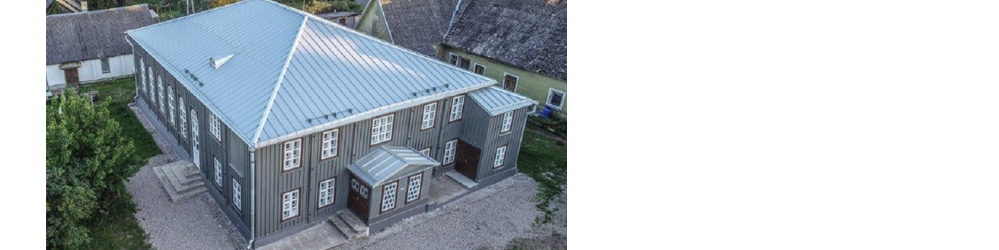
Wooden Synagogue in Alanta Renovated
Read more







With deep sadness we report the death of long-time Community member Dora Abromsonienė on January 9, 2021. Our deepest condolences to her family and friends.
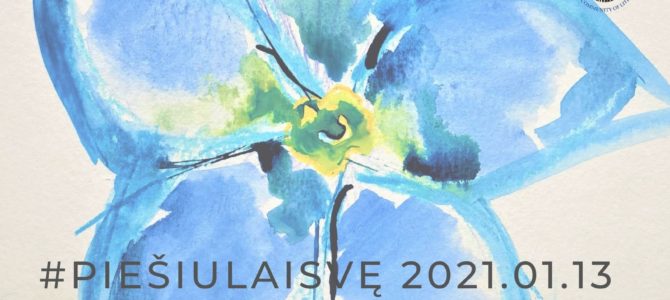
Dear leaders, members and friends of the Lithuanian Jewish Community,
As January 13th, Lithuania’s Day of the Defenders of Freedom, approaches we intend to mark the 30th anniversary of the blood events at the Vilnius Television Tower when Soviet troops killed unarmed civilian protestors.
On January 13, 1991, Soviet tanks and troops attempted to take over the television tower, the Radio and Television Committee headquarters and other sites in the capital of the breakaway Soviet republic.
The LJC invites children and young people to use the day to learn about this history and to don in solidarity with Lithuanians the forget-me-not flower symbol. Please draw your own forget-me-not and send in a high resolution photograph of the drawing or of you holding the drawing in your hand.
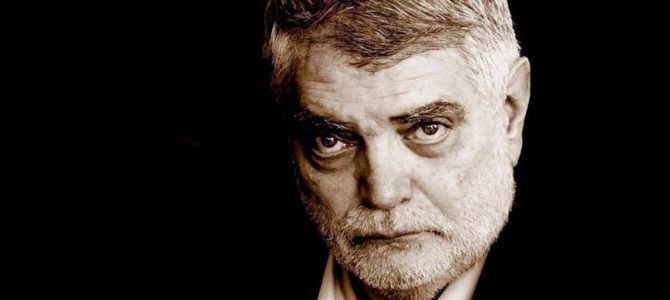
Tribute: Emil Kalo z”l
06.01.21
We are deeply saddened to learn of the passing of Emil Kalo, former member of the World ORT Board of Trustees.
Dr. Kalo was the leading light of ORT Bulgaria and had chaired the organization since 2007.
An economist and doctor of philosophy, he was also a key figure in Sofia’s Jewish community and a former chairman of Shalom, the organization of Jews in Bulgaria.
Robert Singer, World ORT Board of Trustees chair, said: “Our dearest Emil was a wonderful person and a true friend. He was highly educated, an extraordinary professional, and was devoted to making the world a better place for the Jewish people. He wholeheartedly believed in education as the ultimate tool to achieving this.
“Emil was a true ORT-ist in his spirit: he immensely contributed to the success of ORT, including by building the ORT Sofia school together with the Lauder Foundation, achieving milestones that will touch upon current and future generations of Jewish students.
“We will deeply miss him, and he will remain forever with us in our hearts.”
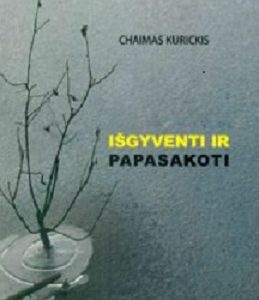
Chaimas Kurickis was born in Utena, Lithuania, in 1921. He and his mother fled east as the German army approached in June of 1941. They were arrested, separated and imprisoned in Daugavpils, Latvia, his mother being sent to the ghetto and he to jail.
The hero of his book was also in the ghetto and several concentration camps, where he fought to survive right up till May 5, 1945, when Germany was defeated finally. Chaimas Kurickas set down his recollections and experiences along with several poems in a book called “To Survie and Tell the Tale,” translated to Lithuanian under the title “Išgyventi ir papasakoti” by Edmundas Kutka. The book has also been translated to Hebrew and Russian, and has caught the interest of Latvians who utilize it to talk about the tragic events of the Daugavpils ghetto, and Germans. The Lithuanian translation is expected to be of keen interest to Lithuanians and especially people from Utena who might be interested in the native author’s youth and experiences.
The launch of the Lithuanian translation of the book, published with aid from the Goodwill Foundation, included a panel of speakers, including tour guide and historian Chaim Bargman, Vilna Gaon Jewish History Museum RIghteous Gentiles Department director Danutė Selčinskaja, teacher and historian Danguolė Jonaitienė who knew Kurickas from before the war, translator Tamara Jefremova and the translator of this book Edmundas Kutka.
The 20-year-old Utena native learned of the onset of war in his hometown. The rapid progress and unexpected moves of the German military forced him to adapt quickly to change. He and his mother and sisters were forced to flee, but the Kaunas-Daugavpils route was overcrowded with much military transport, Russian tanks and hundreds if not thousands of fleeing civilians, mainly Jews, trying to make their way towards Russia.
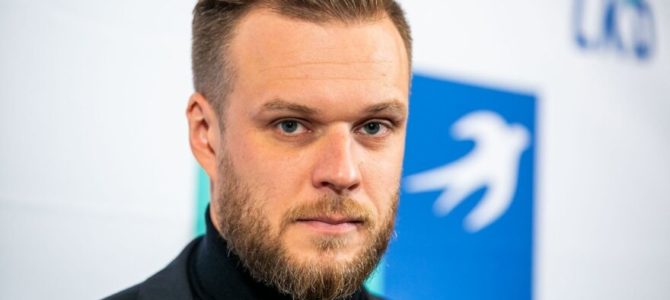
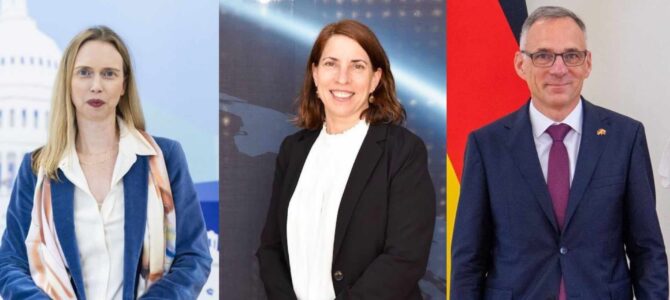
by Lithuanian foreign minister Gabrielius Landsbergis and Israeli foreign minister Gabi Ashkenazi, DELFI.lt
“The purpose of redemption is to protect the truth,” the Vilna Gaon said. One of the most renowned scholars and exegetes of the Torah and the Talmud, the Vilna Gaon held great influence through his works on the religious and cultural identity of Litvaks. The Lithuanian parliament declared 2020, the 300th anniversary of his birth, the Year of the Vilna Gaon and Litvak history.
The year 2020 was dedicated to the extraordinarily rich, continuing 700-year history of Jews in Lithuania. The unique Lithuanian shtetlakh gave birth to many religious authorities and sages, and also to Jewish artists of world renown. The painter Marc Chagal bloomed under Lithuanian skies. Memories of Lithuania live in contemporary author Grigoriy Kanovitch’s work. The land inspired Emmanuel Levinas to ponder the secrets of existence and provided the nostalgic ring to Lea Goldberg’s poems. When we talk about the exceptional history of the Jews of Lithuania, we also remember the horrific tragedy of the Holocaust. All of us must pledge never to forget what happened, and to judge honestly and objectively our shared past, no matter how painful it might be.
Michail Špiz passed away December 30. He was born in 1955. We extend our deepest condolences to LJC board member Ela Gurina on the loss of her brother, to his mother and to his son as well as his many friends and relatives.
Dear Friends,
I hope you are well.
We’re looking for brighter days in the feature and with this hope we’re opening the recruitment process for the Paideia One-Year Jewish Studies Program 2021-2022.
The program is dedicated to future educators, activists and leaders wanting to broaden their knowledge of Jewish culture and history and to establish a net of connection with over 700 of our graduates.
by Ilona Rūkienė
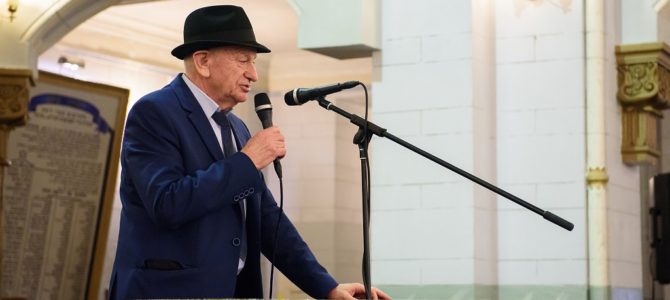
The entire Lithuanian Jewish community knows Simas Levinas as the head of the Lithuanian Jewish Religious Community, which includes two Jewish religious communities in Kaunas and the Klaipėda and Vilnius Jewish Religious Communities. Mr. Levinas was the first principal at the post-war Jewish school in Vilnius and has also served as the head of the Lithuanian Jewish Community’s Social Center.
Vilnius has only one working synagogue [excluding Chabad Lubavitch House], the Choral Synagogue on Pylimo street. How are prayer services conducted there?
Prayer services are held three times daily. There are sufficient numbers of those who come to pray. Judaism is complicated, people come to prayer in the morning, afternoon and evening. Life is structured by coming and going to synagogue. They only come once during Sabbath. There are a lot of people in attendance during the summer and famous rabbis come, the followers of the Vilna Gaon. People are frequently proud of their Lithuanian roots, because being Litvak means the continuation of the Gaon’s school, meaning that their parents or ancestors came from the Lithuanian Grand Duchy, many of them from [the smaller ethnically-defined nation-state of] Lithuania. They dedicate an entire day to prayer, then travel on to Volozhin, where Chaim of Volozhin [1749-1821], a disciple of the Vilna Gaon, taught the Gaon’s method of textual analysis at the yehsiva he [Chaim] established especially for that purpose. During the Jewish holy days the synagogue is packed, at least before the pandemic, and it’s not just Jews who come, many Lithuanian guests do as well. Ambassadors from many countries resident in Vilnius also participate.
by Rasa Jakubauskienė and Vaidas Banys for 15min.lt

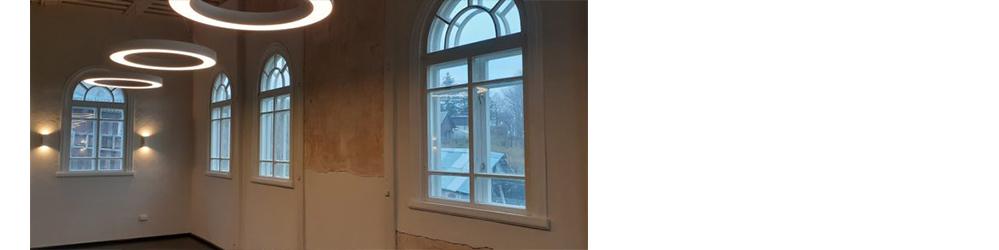
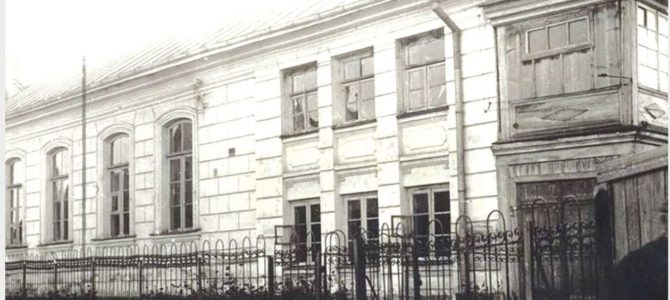
Kėdainiai [Keydan] is a city rich in history, culture, heritage and synagogues. Currently one of the synagogues houses the Multicultural Center of the Kėdainiai Regional History Museum, another an art school, and yet another is undergoing restoration. Restoration of the exterior of the latter was finished last year and this year the interior is being restored.
Jorūnė Liutkienė, advisor to the mayor of the Kėdainiai regional administration, said work is ongoing inside and isn’t complete. Kėdainiai historian Vaidas Banys reported, as we were writing this article, that he had discovered interesting facts never before published concerning the emergence of this synagogue, and shared them for the first time with readers of the newspaper Rinkos aikštė [local Kėdainiai newspaper].

The Lithuanian Jewish Community and the Šiauliai Regional Jewish Community join in greeting a member of the family, Righteous Gentile Leona Levinska, on her latest birthday. Much health and a long life, Leona!
by Gediminas Pilaitis, Lrytas.lt

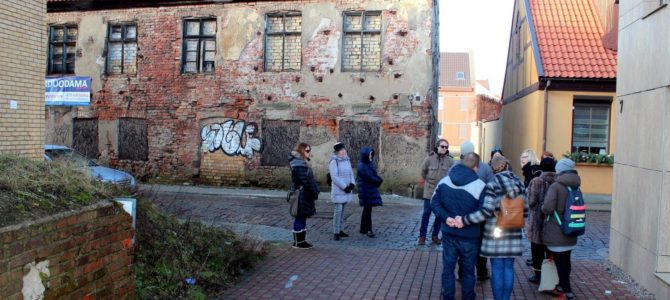
Many residents of Klaipėda don’t know the city’s largest synagogue once stood on Daržų street.
There are plans to commemorate the synagogue which operated in the interwar period in the Klaipėda Old Town. A commemorative plaque is to be placed on the hotel which now occupies the location. The city has approved the plan initiated by the local Jewish community.

Grigorijus Gordonas passed away December 15 at the age of 72. We will remember him as the soloist at the State Philharmonic who began his career under the tutelage of Hermanas Perelšteinas in the Ąžuoliukas choir. We extend our deepest condolences to son Simonas Gordonas and his many friends and relatives.
We are saddened to report the death of Baruch Shub. Born in Vilnius, a Holocaust survivor and a young Jewish partisan in the Vilnius ghetto, Shub went on to work as a member of the board of the Conference on Jewish Material Claims against Germany for many years. Our deepest condolences to children, grandchildren and many friends.
by Geršonas Taicas
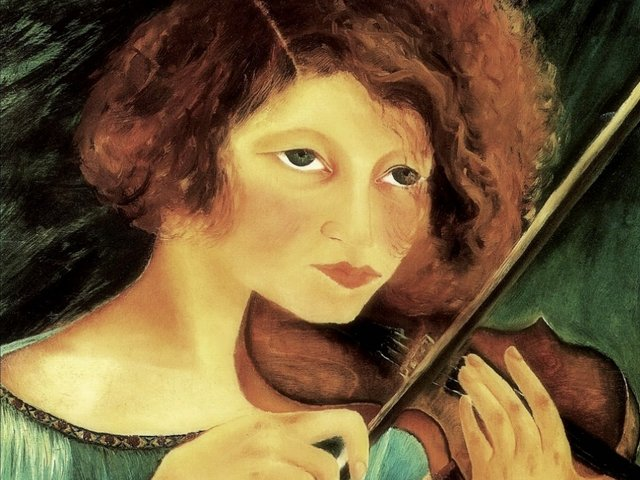
This year marks 125 years since the birth in Lithuania of the famous artist and sculptor Antonietta Raphaël-Mafai. She was born in what is now the Kaunas neighborhood of Viljampolė, aka Slobodka, although the town didn’t extend that far then, to a large family. According to archival information the family had 12 children, although other sources say 14, but Antonietta was the only girl.
Her father Simon Rafael was a melamed, Hebrew for teacher, and he taught Hebrew and Jewish traditions at a heder, or primary school. Her mother Mariam was a seamstress and tailor. Simon died in 1903 and her mother took the remaining children to live in London in 1905.
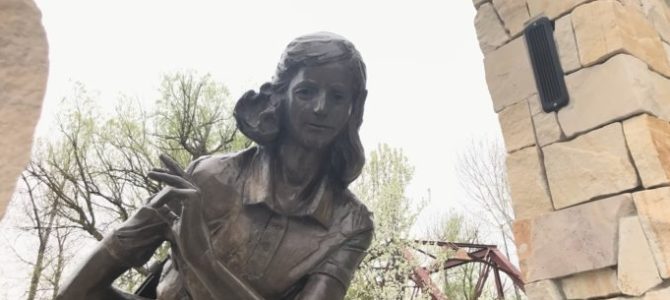
Dozens of local business leaders signed on to a letter to Boise and Idaho’s political leaders decrying recent vandalism at the Idaho Anne Frank Human Rights Memorial.
An unidentified person or group placed nine stickers on the memorial with a swastika and the words “we are everywhere” sometime between late December 7 and early December 8. The stickers were promptly removed and community members quickly showed up to place flowers, signs saying “love is everywhere” and other materials near the statue of Frank at the center of the memorial.
“This kind of attack has no place in our city and the message behind it has no place in our community. We are saddened, angered, and disgusted by the desecration, defamation and vandalism of the memorial,” the letter said.
Full article here.

After a short break, the Bagel Shop Newsletter has returned with a new and much-anticipated end-of-2020 issue. The magazine has shifted to a newsprint folded edition, so the layout is slightly different from earlier issues. We hope you enjoy.
Beigelių krautuvėlė-EN-internetWe are sad to report long-time community member Anatolijus Šeštokas passed away December 19. He was born in 1939. Together with the entire Šiauliai Regional Jewish Community we extend our deepest condolences to his widow Lidija.
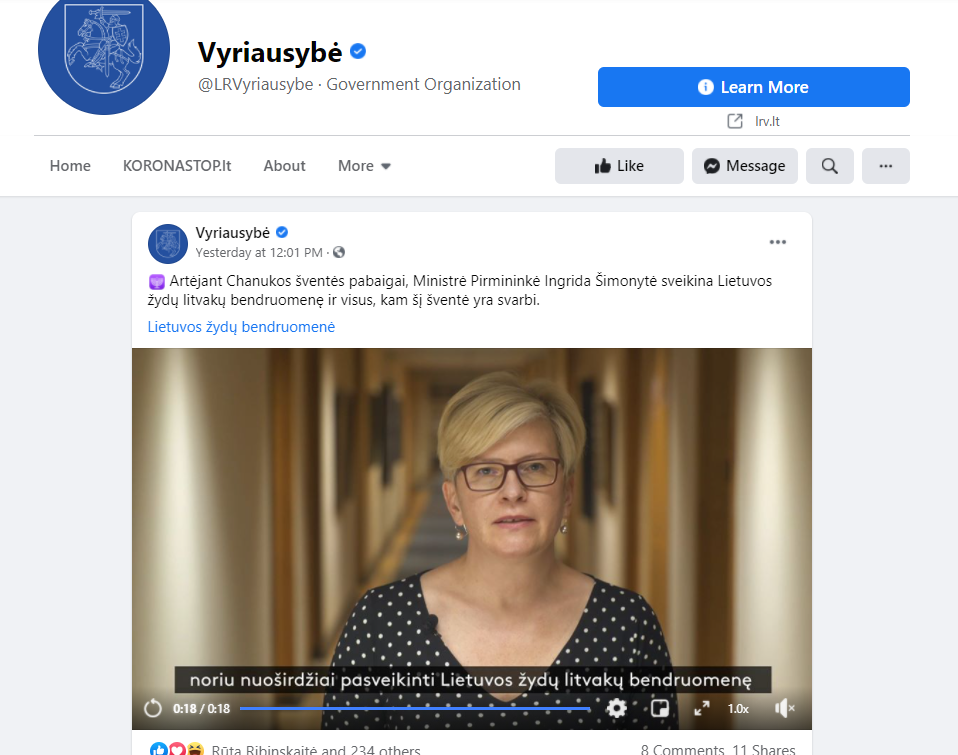
Today Hanukkah ends and the period in the run-up to the next holidays begins. We wanted to share some memories of the first light lit eight days ago and the light display at LJC headquarters at the former Tarbut Gymnasium in Vilnius.