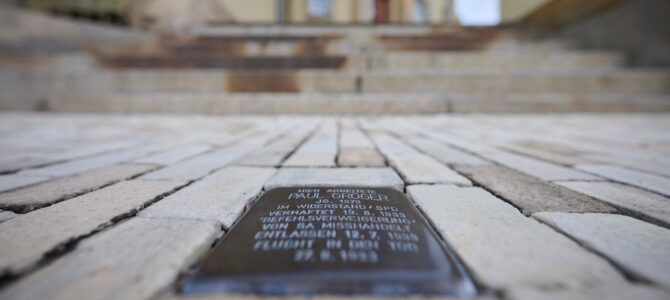
Photo: Stolperstein commemorating Nazi victim Paul Gröger embedded in the sidewalk in front of Heidenau City Hall. Robert Michael/picture alliance via Getty Images.
by Toby Axelrod, September 27
Transparent maneuver by AfD to suppress German commemorative culture, Jewish leader and Holocaust survivor says
A decision to bar the “stumbling stone” memorials to victims of the Nazis has touched a nerve in one small German town, and beyond.
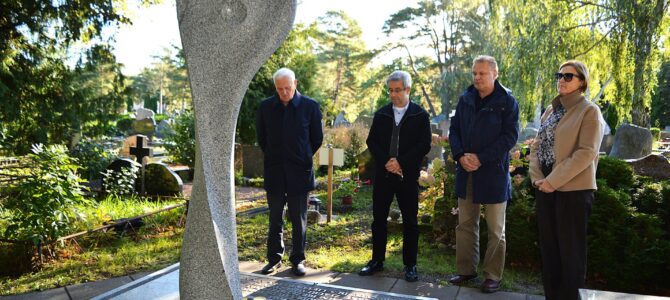
At issue is a motion passed September 25 by the city council of Heidenau in the former East Germany [in Saxony] to stop installation of such memorials in local sidewalks, calling them disrespectful, and to use the town’s North Cemetery instead.
Set into the ground, the small, engraved brass Stolpersteine, or stumbling stones, are meant to make pedestrians stop and think about the fate of former residents. There are currently some 116,000 stones laid in 1,860 municipalities across Europe, mostly in Germany, according to the project’s website.