Learning

Rendezvous with Living Family History in Panevėžys

Rendezvous with Living Family History in Panevėžys

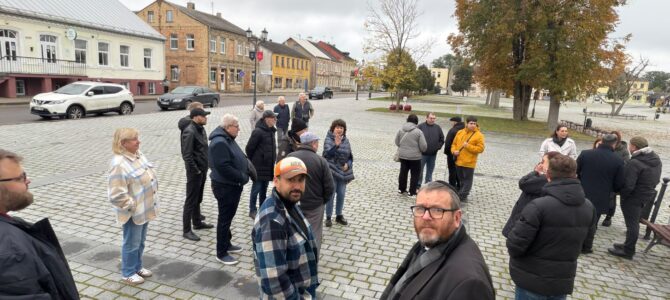
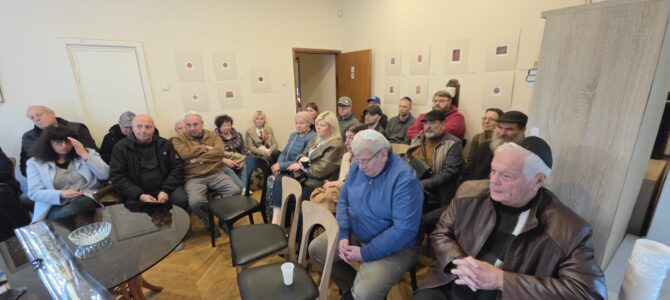
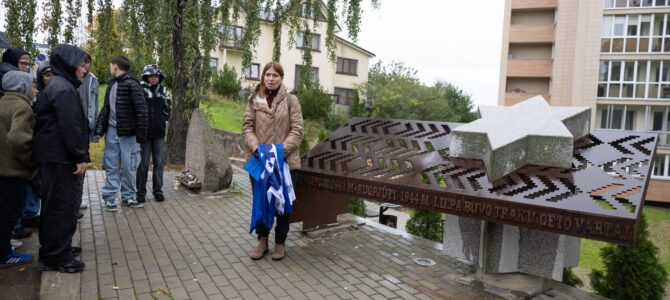
The Panevėžys Jewish Community received visitors from France: Mr. Matt Nguyen and his mother. The warm meeting with Community members was more than just a search for roots, it was a return to the place where their family called home more than a century ago.

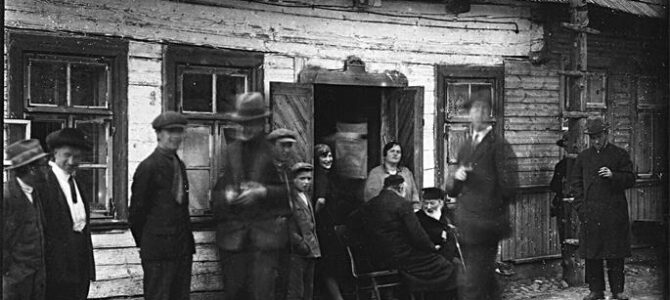
Nguyen’s father was Maurice Hendel, aka Moshe Lozer Gendel, who immigrated from Panevėžys to the United States in 1922, although the family hearth isn’t Panevėžys but Pastovys now in Belarus (Postavi). Following the path of Rabbi Yosef Shlomo Kahaheman, the Hendel family moves to Panevėžys during the First World War. Moshe’s future wife Rochel Lea Tuvman moved later from Vidžiai, Lithuania, to Panevėžys. They built a family together in Panevėžys, traces of which remain to this day.

Moshe died at the Panevėžys Jewish Hospital in 1938 and was buried in the city’s Jewish cemetery. The cemetery was destroyed during Soviet times to build a city park. Moshe’s mother, sister and daughter-in-law remained in Panevėžys during the Holocaust and were murdered there.

I Was Not the First to File

I Was Not the First to File

by Grant Gochin, August 4, 2026

Since 2015 I have filed forty-nine formal submissions with Lithuanian state bodies. Eight lawsuits and international filings. Eleven to the Genocide and Resistance Research Centre. Five criminal complaints under Article 170-2. Eleven institutional submissions. Two to the Commission of Journalist Ethics. Twelve letters. Not one produced a finding on the merits.

Lithuania’s answer has been consistent. I am a foreigner with a grievance. The controversy is manufactured. In February 2025 Laurynas Kasčiūnas–member of the Seimas, former Minister of National Defence, newly elected chairman of the Homeland Union–called me a Russian agent and called me trash.

That answer rests on a premise: that the file begins with me.

It begins in Paris on December 30, 1921, in a letter signed by Leo Motzkin.

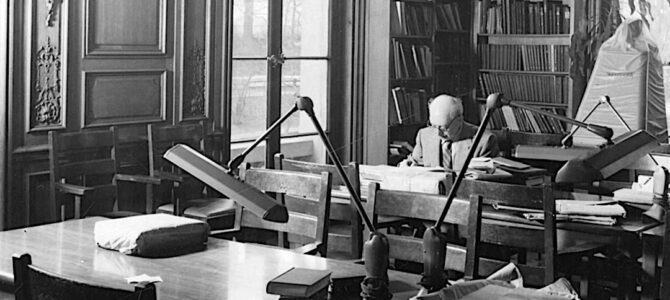
I know that because of a book almost nobody reads. In July I borrowed it through interlibrary loan from Duquesne University. Herbert von Truhart, Völkerbund und Minderheiten-Petitionen, Vienna and Leipzig, 1931. I could locate no openly accessible full-text scan. To consult the complete inventory you borrow the physical volume.

Jewish Heritage Walking Tour in Palanga

Jewish Heritage Walking Tour in Palanga

The Palanga Jewish Community is pleased to announce a guided tour of the traces of Jewish life in Palanga. The tour starts at 4:00 P.M. on Friday, August 7, at the main entrance to Birutė Park, by the gates, Vytauto street no. 19. The walking tour will proceed from there through the city and end up at the city square and the plaque commemorating the former synagogues there. The tour is free and open to the public, but registration is necessary. Please indicate the number of people in your party while registering by sending an email to palangoszb@gmail.com or by calling+370 682 55164.

International Day of Remembrance of Roma Genocide Marked in Ponar

International Day of Remembrance of Roma Genocide Marked in Ponar

Members of the Lithuanian Roma community gathered August 3 at the Ponar Memorial Complex to remember their compatriots murdered during the Holocaust. According to EU reports, 1 in 3 Roma still experience discrimination in EU member-states. Approximately 500 to 1,000 Roma were murdered at Ponar along with the largest mass murder of Jews in Lithuania and a number of Poles, Soviet POWs and Lithuanian anti-Nazi dissidents.

Condolences

With great sadness we report the death of Arie Ben-Ari Grozdensky on July 29. He was born in 1946. He was chairman of the Association of Lithuanian Jews in Israel, a member of the Lithuanian Jewish Community, a long-time supporter of the Litvak community and a member of the board of the Goodwill Foundation. Born and raised in Lithuania, Grozendsky and family were able to repatriate to Israel in 1972. He was a tireless defender of Litvak heritage and proponent of Holocaust justice and remembrance. His grandparentsm uncles and cousins were murdered in the Alytus region in Lithuania.. The Lithuanian Jewish Community and chairwoman Faina Kukliansky extend our deepest condolences to his wife Bella, children, grandchildren, many friends and the entire Litvak community. May his memory be a blessing.

Voices of the Departed

Voices of the Departed

The Klaipėda Jewish Community will hold a ceremony at the old Jewish cemetery there to name the names of 1,225 people buried there and to unveil a monument to the lost Jewish community and lost Jewish graves. Ruth Leiserowitz will speak about the history of Jewish cemeteries in Klaipėda, formerly known as Memel. The Jewish actors troupe Shatil will perform as well.

Time: 4:00 P.M., July 30
Place: Old Jewish cemetery, Sinagogų street no. 13, Klaipėda

Holocaust Commemorations in Šiauliai and Kužiai

Holocaust Commemorations in Šiauliai and Kužiai

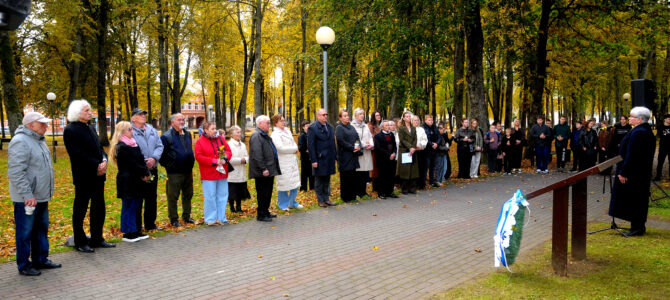
The Šiauliai District Jewish Community commemorated the establishment of the Šiauliai ghetto 85 years ago, its liquidation several years later and Holocaust victims buried at the mass grave in Kužiai on July 20.

The International Commission to Assess the Crimes of the Nazi and Soviet Occupational Regimes in Lithuania organized the procession to the Kužiai mass grave in the Luponiai Forest.

Šiauliai District Jewish Community chairwoman Rašella Galinienė addressed the gathering at the ghetto site in central Šiauliai and Choral Synagogue cantor Shmuel Yaatom performed kaddish. Šiauliai deputy mayor Justinas Švėgžda also spoke about the need to keep memory alive.

The commemoration continued indoors at the Chaim Frankl villa where Lithuanian Jewish Community chairwoman Faina Kukliansky spoke about how her mother, an inmate at the Šiauliai ghetto, was marched with other prisoners to Radviliškis, where they were put on trains and sent to different concentration camps. Her mother was sent to the Stutthof concentration camp in what is now Poland surviving against all odds the barbarity of the camp.

Ukmergė Jewish Community Planning Holocaust Commemoration for Early September

Ukmergė Jewish Community Planning Holocaust Commemoration for Early September

The Ukmergė Jewish Community is planning a series of events on Sunday, September 6, to remember the victims of the Holocaust in Pivonija Forest. A ceremony will be held in the forest at one or more the mass graves, followed by the opening of an exhibit on Righteous Gentiles and a presentation of a new web site about the Jews of Ukmergė (Vilkomir).

Tentative program:

12:00 noon Commemoration of victims in Pivonija Forest
1:00 P.M. Righteous Gentiles exhibit opening at Tolerance Center, Ukmergė
1:30 P.M. Presentation of web site on Jews of Vilkomir, Tolerance Center, Ukmergė

Natalja Cheifec on Tisha b’Av

Natalja Cheifec on Tisha b’Av

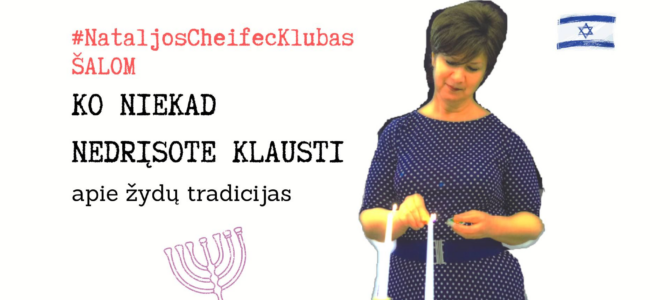
Natalja Cheifec continues here internet lecture series and discussion club with a presentation of Tisha b’Av, which starts at sundown Wednesday. Log on and find out why this is the saddest holiday in Judaism, what this date on the Jewish calendar commemorates, why this fast day is different from others and the various stories and traditions associated with Tisha b’Av. Natalja will also discuss what fast days mean in general in Judaism., Everyone interested in Jewish culture, customs and religion is invited. To receive zoom credentials, click here.

Time: 6:00 P.M., Wednesday, July 22
Place: internet

Šiauliai Regional Jewish Community Marks Ghetto Anniversaries

Šiauliai Regional Jewish Community Marks Ghetto Anniversaries

July 15 was the 82nd anniversary of the liquidation of the Shavl ghetto. In July of 1941 two ghettos were set up in the northern Lithuanian city to imprison around 6,000 Jews from there and surrounding locations. Thousands were tortured and murdered there. By Himmler’s order the ghetto was renamed a concentration camp in 1943. From July 15 to 19, 1944, the 3,000 or so survivors were sent to Dachau and Stutthof concentration camps where the majority were murdered and the Shavl ghettos were closed.

Members of the Šiauliai Regional Jewish Community gathered at the stone stele marking the entrance to the ghetto to remember both anniversaries on July 15 with a minute of silence, flowers, stones and candles to remember the victims.

This was followed by a film at the Povilas Višinskis Public Library. Professor Hektoras Vitkus from Klaipėda University spoke about the prevailing circumstance when the Nazis set up the two ghettos in the Lithuanian documentary. He said the city had a population of about 14,000 Jews on June 26, 1941.

The testimony of late Holocaust survivor and author Markas Petuchauskas was then presented. His testimony is well known in Lithuanian Holocaust historiography and the Holocaust Museum in Washington, D.C., and the Vilna Gaon Jewish History Museum in Lithuania both conserve recordings of his testimony.

Israeli Team Returns to Shulhoyf Site

Israeli Team Returns to Shulhoyf Site

Jonathan Seligman and other archaeologists from the Israeli Antiquities Authority have arrived back for summer and are working the Shulhoyf or Great Synagogue site in central Vilnius.

Seligman said they have uncovered already new finds this summer and plan to work down from the bimah to the ground floor in the main hall. The bimah stood about 1 meter high according to Seligman, and the upper surface is completely exposed now.

People interested in taking a guided group tour of the site are able to book a time on July 27, 29 or 30 by calling +370 650 91521 or writing info@gvf.lt. The minimum group size is five people and the cost is 20 euros per person, with an anticipated duration of 45 minutes. The tours are being organized by the Goodwill Foundation. More information available here.

The Dreyfus Test: Is Europe Failing Again?

The Dreyfus Test: Is Europe Failing Again?

Photo: Moshe Kantor, president, EJC, courtesy EJC.

by Moshe Kantor

Society is again being tested on whether it can distinguish legitimate political disagreement from collective hatred directed at an entire people.

On July 12, Europe marks Alfred Dreyfus Day, commemorating the French Jewish army officer whose wrongful conviction for treason became one of the defining symbols of modern antisemitism. More than a century later, Europe likes to believe that the Dreyfus Affair belongs safely to history, a reminder of prejudices overcome and lessons learned.

Nonetheless, the uncomfortable truth is that while the language has changed, many of the underlying patterns have not.

The challenge facing European Jews today does not resemble the antisemitism of the late nineteenth century. It is rarely expressed through crude racial theories or open declarations of hatred. Instead, it increasingly arrives wrapped in the language of politics, activism and social justice. The result is not always easier to recognize, but it can be just as damaging.

Israeli Ambassador Visits Šiauliai

Israeli Ambassador Visits Šiauliai

Israeli ambassador to Lithuania Shelly Hugler Livne visited Šiauliai last week where she toured Jewish sites and met with the Šiauliai Jewish Community. The ambassador visited Righteous Gentiles Square, the site of the Jewish ghetto during the Holocaust, Chaim Frankl’s villa and the home of the Venclauskas family. She also discussed current events and plans for the future with members of the Šiauliai District Jewish Community.

From the Other Side of the Photograph

From the Other Side of the Photograph

Photo: celebrate. My grandfather, Jonas Noreika, is in the third row. My mother, then two years old, is among them. Source: Silvia Foti, The Nazi’s Granddaughter (Regnery History, 2021).

by Silvia Foti

An open letter to Liam, on his bar mitzvah

Dear Liam,

You do not know my background and what I carry, as I know your background and your family history. You barely know me, and there is no gentle way to tell you who I am. I read about you in an article your cousin Grant Gochin published in The Times of Israel, about your family and mine. I am writing to a boy I have met just once, for a singular moment, at your cousin Grant’s home, to bless you shortly after the day you were called to the Torah and became a man. I am the granddaughter of the man whose orders helped empty your family’s world of Jews.

My grandfather was Jonas Noreika. He governed the Lithuanian district of Šiauliai, where the town of Papilė lies. He signed orders that confined its Jews and gave away what was stolen from them. Your family was murdered inside the system he ran. Tsile Gochin, the sister of your great-grandmother Sarah, was one of them. My grandfather bears responsibility for her murder, and that of your cousins, relatives, friends and neighbors.

Rabbi Visits Ukmergė

Rabbi Visits Ukmergė

Rabbi Harry Pell whose family roots lie in Ukmergė (Vilkomir) visited the Ukmergė Jewish Community recently. Pell teaches Judaism and Israeli studies in the United States and also works as a chaplain in the armed forces.

Ukmergė Jewish Community chairman Artūras Taicas provided Pell a tour of Jewish sites in the town and they spoke about Jewish history and heritage there. They also sampled imberlakh at a local restaurant.

Movement at the Shulhoyf

Movement at the Shulhoyf

For the last two weeks a Lithuanian crew of diggers have been uncovering new archaeological strata at the site of the Great Synagogue or Gros-Shul in Vilnius. No Israeli Antiquities Authority archaeologists have been seen this summer, although they were always in charge during past summers. Several teams of mostly young men were seen digging at the bimah and northern wall of the synagogue, but not at the mikvot which remain under a make-shift shed. The young men were wearing t-shirts identifying them as working for Lithuania’s Cultural Heritage Protection Department. They used shovels to pile mounds of debris on the western side of the synagogue and appeared to collect bricks at the northeast corner inside a gate next to the Vilna Gaon statue. No archaeological sieves were visible during several visits to the site. The dig at the eastern side of the complex appeared to reveal a descending staircase made of stone and an eastern wall of the synagogue just to the west of the staircase.

Tour of Choral Synagogue in Vilnius Thursday

Tour of Choral Synagogue in Vilnius Thursday

Jewish educator Natalja Cheifec will lead a tour of the Choral Synagogue in Vilnius this Thursday, July 9, at 6:00 P.M. She’ll tell the story of the only traditional synagogue still operating in Vilnius and explain its architectural secrets, symbolism and storied traditions. Cantor Shmuel Ya’atov will also be on hand to offer his extensive knowledge of the edifice and to talk about his work there as cantor. The tour will be followed by an informal discussion with questions and answers. Natalja asks participants to make a 5 euro donation to the synagogue. To register, click here.

Time: 6:00 P.M., Thursday, July 9
Place: Pylimo street no. 39, Vilnius, around the corner from the Conti Hotel and the egg statue, across the street from the Leonard Cohen statue

Šiauliai District Jewish Community News

Šiauliai District Jewish Community News

Last weekend Goodwill Foundation co-chairpeople Rabbi Andrew Baker and attorney and Lithuanian Jewish Community chairwoman Faina Kukliansky visited the Šiauliai District Jewish Community, where they discussed the local LJC affiliate’s activities and on-going projects, and shared ideas for future cooperation.