The Bagel Shop Café will repoen at 11:30 A.M. on April 29 for coffee and lunch as a sidewalk café. We have a new coffee blend served as espresso and drip and a new menu. so come check it out.
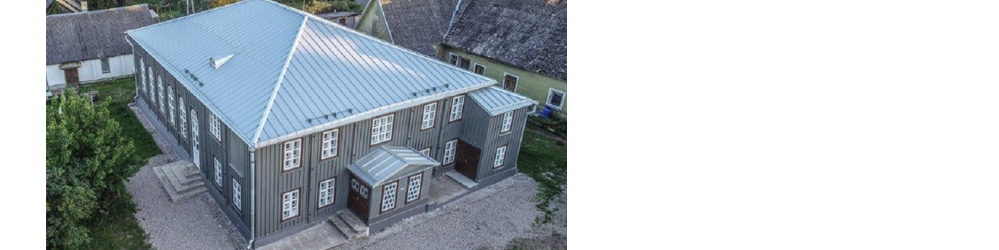
Wooden Synagogue in Alanta Renovated
Read more











The Bagel Shop Café will repoen at 11:30 A.M. on April 29 for coffee and lunch as a sidewalk café. We have a new coffee blend served as espresso and drip and a new menu. so come check it out.
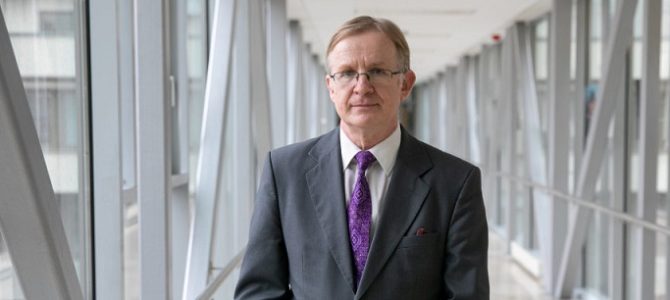
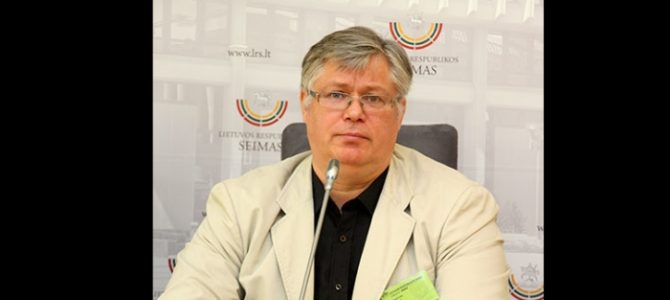
The Lithuanian parliament Thursday held a secret vote to appoint Arūnas Bubnys to a five-year term as head of the country’s Orwellian-named Center for the Study of the Genocide and Resistance of Residents of Lithuania. Seventy-six MPs voted for him, 34 against, 8 abstained and 2 MPs ruined their ballots in apparent protest.
Bubnys had been director of the Center’s Research Department. When he was nominated for the new position by the speaker of parliament, he told the assembly if he were appointed he would seek to restore the institution’s “recently damaged prestige” and to normalize the work atmosphere there.
He also pledged “to disperse and negate the artificial opposition between Center researchers and public organizations, to restore an atmosphere of confidence and exemplary cooperation with political prisoner, deportee and partisan institutions, and other organizations of those who suffered under the occupational regimes.”
Bubnys has worked at the Center since 2009 and was part of the successful push to have the last general director, Adas Jakubauskas, removed from the post by parliament for alleged mismanagement. In 2020 Bubnys ran for parliament on the ticket of the little-known political party Nacionalinis susivienijimas, or National Unification. According to his personal statement, he was graduated from the History Faculty of Vilnius University in 1985 and defended his doctoral dissertation in 1994.
Full story in Lithuanian here.
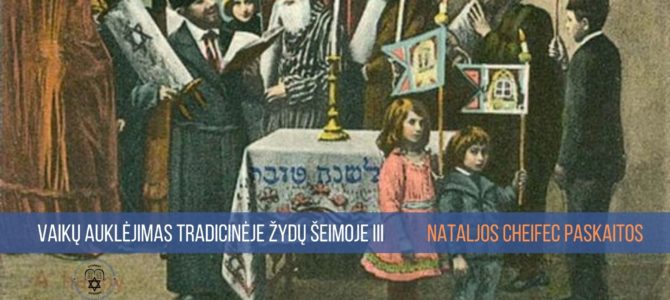
Kleiner kinder — klein zorgn, groise kinder — groise zorgn.
This Jewish saying means small children pose worries and bigger children bigger problems.
Natalja Cheifec invites you to her third lecture on the subject, “Raising Children in the Traditional Jewish Family,” in Lithuanian.
The lecture will teach you about innate features children have and how to encourage them, and why Jewish children end up learning their entire lives. The issue of whether children should pay attention to the opinions of others and which way to choose–to act like everyone else, or to go one’s own way–will be addressed.
Together with Natalja you will learn how to turn an enemy into a friend, how to teach children to behave morally and the effects loneliness and a bad environment have on children.
The lecture is free and will be held on the Lithuanian Jewish Community’s Zoom page from 5:30 P.M. to 7:00 P.M. on April 22.
The lesson will be repeated in Russian a week from now, on April 29.
To register, go to http://bit.ly/3arwHRn
#NataljosPaskaitos
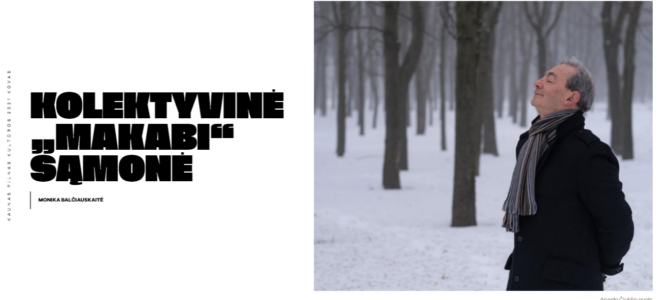
The March issue of the magazine “Kaunas pilnas kultūros” [Kaunas Full of Culture] featured the history of the Lithuanian Makabi Athletics Club.
Gercas Žakas, chairman of the Kaunas Jewish Community, wrote on his facebook profile:
“I believe a number of Kaunas residents have discovered and come to love the publication ‘Kaunas pilnas kultūros’ which is published monthly in a small format but with rich content (incidentally, it’s free! While they say there’s no such thing as a free lunch, if you get this magazine with your lunch at a café, it’s worth the cost of your meal  ).
).
“Sports was the theme for March, and I had the honor of being interviewed as well. We spoke about youth, soccer, the Jewish community, the history of the Makabi Athletics Club and about its resurrection in Lithuania. I am grateful to Kotryna Lingienė for the initiative, to Monika Balčiauskaitė for the sincere discussion and to Arvydas Čiukšys for his photographs and warm communication. I was echanted by these enthusiastic young people who are keen on their country’s history and seek to show the multiculturalism which enriches it.”
Berelis Vaineris passed away April 19. He was born in 1923 and was a veteran of World War II, having served in the 16th Lithuanian Division. Our deepest condolences go to entire his family suffering this painful loss and to his wife Jelena and son Raimondas.

The Bagel Shop Café is looking for an experienced and an assistant barista. Candidates must be able to be legally employed in Lithuania and should be prepared to deal with customers in Lithuanian and Russian. Please send your CV to aiste@lzb.lt or call +370 611 52760.
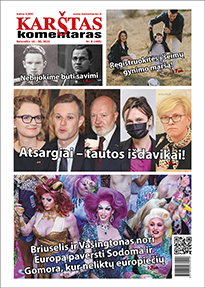 The Lithuanian biweekly newspaper Karštas Komentaras, which describes itself as a sort of insider’s view of Lithuanian politics, published as its main article in the current issue for April 16 to 30 an editorial titled on the cover “Let’s Not Be Afraid to Be Ourselves” by professor Gediminas Merkys, PhD habil. The subheading is “Will We Celebrate and How Will We Celebrate the Anniversary of the June, 1941 Uprising?” The cover image is a combined portrait of Lithuanian Nazi collaborators Jonas Noreika and Kazys Škirpa.
The newspaper singled out the following lines in the article for special attention as a separate text box:
The current colonial Lithuanian administration, it is to be believed, received an informal request from the supreme international master class to insure this important date not be marked officially in any way, i.e., in the name of the Lithuanian state. It was namely the competent patriotic director of the Center for the Study of the Genocide and Resistance of Residents of Lithuania [former director Adas Jakubauskas] and the Center itself which would have posed an obstacle to fulfilling this aforementioned order of political servility. For that reason the leadership of the Center had to be changed quickly and the institution itself immediately reformed.
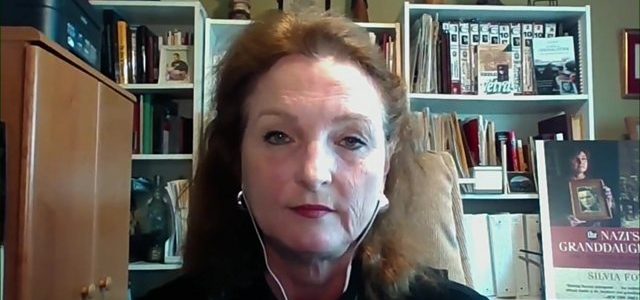
The BBC television interview program HARDtalk interviewed granddaughter of Lithuanian Nazi Jonas Noreika on April 16, 2021, and has been airing the episode this week.

The description for the episode called “Silvia Foti: When truth trumps family loyalty. Silvia Foti on grappling with family responsible for the Holocaust” reads:
“Silvia Foti’s grandfather was a Lithuanian man hailed as heroic patriot who paid with his life resisting the Soviets. But according to her, Jonas Noreika was no hero–he had the blood of thousands of Jews on his hands. She’s chosen to speak out, angering many in Lithuania. What happens when truth trumps family loyalty?”
Interviewer Stephen Sackur pressed Silvia Foti for documentary proof her grandfather was responsible for the murder of around 1,800 in Plungė–the entire Jewish population–in 1941. Foti went further and said she had reliable documents and sources showing Noreika was responsible for mass murders of Jews in Plungė, Telšiai and Šiauliai. Sackur was interested in Foti’s journey from that of a proud Lithuanian-American to the point where she had to confront Holocaust crimes within her immediate family. Foti countered the problem was much more widespread than her family, that the perpetrators and their descendants were still covering up the Holocaust in present-day Lithuania, and cited the Center for the Study of the Genocide and Resistance of Residents of Lithuania as one party involved in the nation-wide cover-up. She said her and Grant Gochin’s legal battles to have the plaque commemorating Noreika on the Lithuanian Academy of Sciences building in Vilnius was really a battle for the soul of Lithuania. Sackur asked whether Efraim Zuroff of the Simon Wiesenthal Center was correct in calling Lithuania the locomotive in the train of Holocaust distortion in Eastern Europe. Foti admitted she didn’t know the situation in Eastern Europe in general, but that this was possible.
An audio recording of the interview is available here and here.
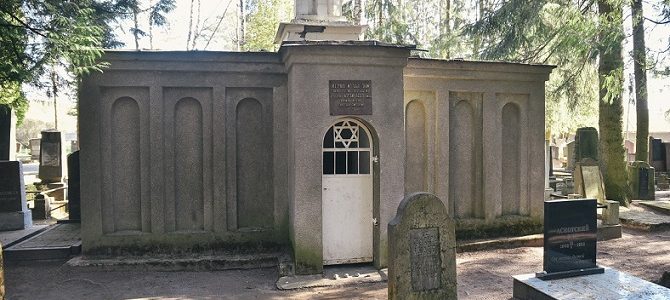
Photo: The Jewish cemetery on Sudervės road in Vilnius
Following winter and the spring thaw, we’ve noticed the effects of the weather and neglect, with toppled trees and fallen branches having knocked over several headstones, and there are fewer visitors due to restrictions on movement. Now that the quarantine restrictions have been eased, please visit your relatives’ graves and put them in order if need be and to the extent you are able.
We are asking those who are tending to graves to dispose of used candle containers, leftover plastic and other waste at the places intended for this. Also, if you leave tools or other items at the grave used to put sites in order, please make sure these don’t intrude on others or detract from the general tone of the cemetery. We would also like to invite people in charge of the following graves to take special care because the headstones have suffered in the last storm and so far no one has done anything to put them back in order:
Малинкович Лев Вениаминович 1897-1974
Шульман Гирш Абрамович 1881-1978
Fridman Chaja Zlata Jantelevna 1921-1978
Бер Иосиф Беняминович 1902-1985
Шмуйлович Рива Янкелевна 1903-1978
Бунис Люся 1922-1964
Серебрянный Лёня 1973-1975
For more information, contact the Vilnius Jewish Cemetery Administration, Sudervės raod no. 28, Vilnius, tel. +370 670 25750
As was completely predicable from the start of the latest power struggle inside Lithuania’s Orwellian Center for the Study of the Genocide and Resistance of Residents of Lithuania, the news website 15min.lt reports the Lithuanian parliament will consider historian Arūnas Bubnys as director following their dismissal of Adas Jakubauskas:
Arūnas Bubnys Nominated to Head Genocide
A new candidate for director of the Center for the Study of the Genocide and Resistance of Residents of Lithuania has been presented to the Lithuanian parliament: Center for the Study of the Genocide and Resistance of Residents of Lithuania Genocide and Resistance Research Department director Arūnas Bubnys. MPs fired former director Adas Jakubauskas April 1 after an inquiry panel set up by the leaders of the parties in parliament found he was unable to guarantee the smooth operation of the institution.
Parliamentary speaker Viktorija Čmilytė-Nielsen nominated Bubnys to serve as director, a term which is usually five years long. “I have nominate Bubnys following comprehensive consultations with Lithuania’s historians and my colleagues and members of parliament from different factions. This candidacy has firm support in the community of historians and inside the Center for the Study of the Genocide and Resistance of Residents of Lithuania itself. Bubnys has earned confidence which, I hope, will allow him to insure smooth operation by introducing objectivity and transparency standards in the Center for the Study of the Genocide and Resistance of Residents of Lithuania, and to return the public’s trust to this institution,” the speaker of parliament said introducing her candidate.
Full story here.


Vilnius marked Israel’s 73rd independence day by illuminating three main bridges in the colors of the Israeli flag, blue and white, for the duration of the 24-hour period.
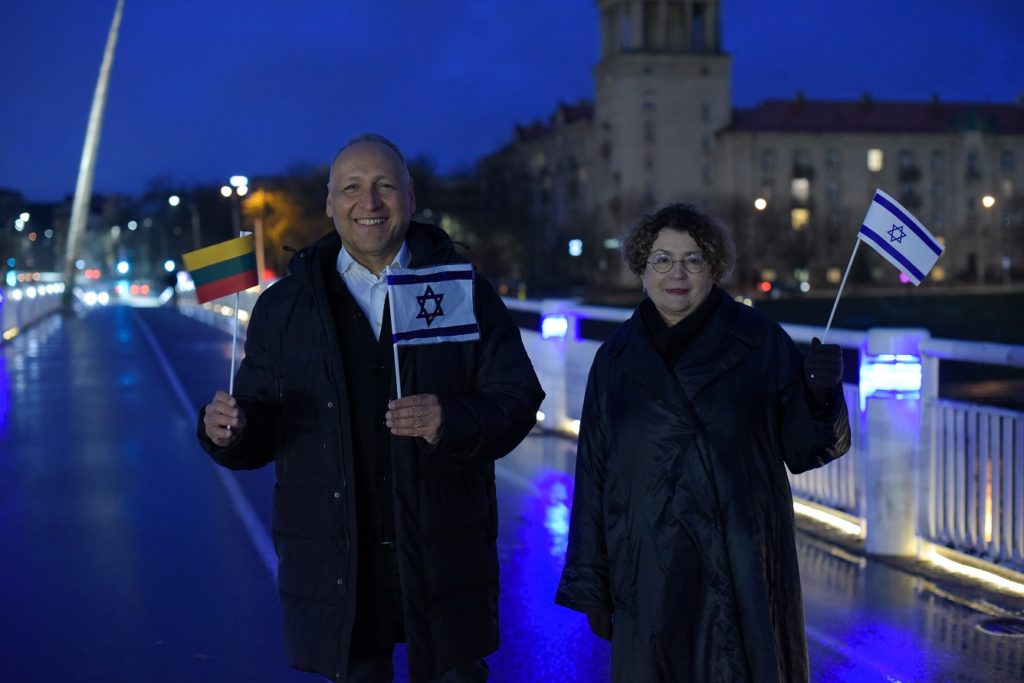
Israeli ambassador to Lithuania Yossi Avni-Levy and Lithuanian Jewish Community chairwoman Faina Kukliansky on the White Bridge in Vilnius April 14, 2021.
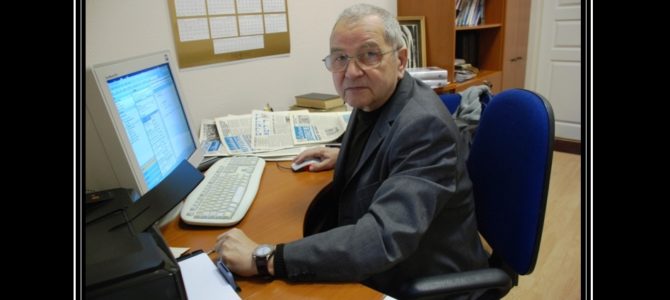
Milan Cheronskis passed away April 14. He was born in 1937 and grew up on Sakhalin Island in the Soviet Far East. Our deepest condolences to his wife Svetlana, daughter Polina and many, many friends within the Jewish community.
Cheronskis was a director at the Yiddish People’s Theater and a journalist. He was graduated from the Leningrad State Theater, Music and Comedy Institute in 1964. He directed the Yiddish People’s Theater in Vilnius from 1979 to 1999.
Besides serving on the board of directors of the Lithuanian Jewish Community, Milan was the force behind the Community’s long-time press organ, Jerusalem of Lithuania, which was at one time published in four languages simultaneously. The newspaper was published from 1989 to 2010. Following the newspaper’s cancellation and his retirement, Milan continued to fight against Holocaust distortion and the falsification of Lithuanian history in the press and on the internet.

The Recommendations aim to deepen the understanding of the Holocaust by asking crucial questions concerning the historical context of the Holocaust, its scope and scale and why and how it happened.
Download the full IHRA Recommendations for Teaching and Learning about the Holocaust here.
Educators should be confident that the Holocaust can be taught effectively and successfully with careful preparation and appropriate materials. The section “How to teach about the Holocaust” discusses possibilities and challenges for teaching and learning about the Holocaust by presenting practical approaches and methods to apply in both formal and informal educational settings.
Read more from the Recommendations for Teaching and Learning about the Holocaust
No single “correct” way of teaching, no ideal methodology appropriate for all educators and their learners exists for any subject. The recommendations offered here are, however, based on practical experiences and intended to be useful to schoolteachers and other educators in constructing their own schemes of work, taking into account the learning needs of individuals.
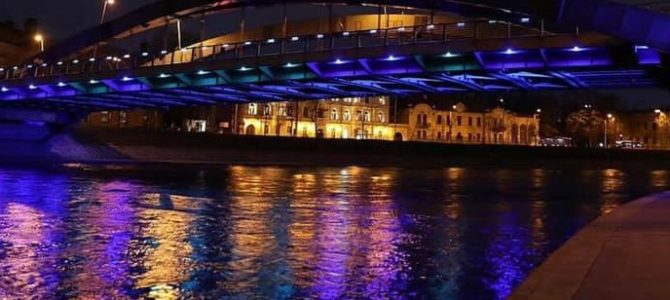
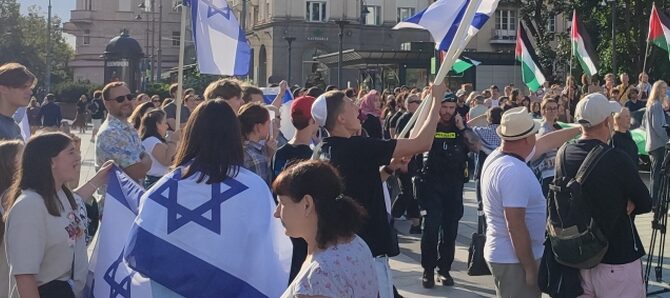
The Lithuanian Jewish Community in cooperation with the Vilnius city municipality will light up three bridges in the Lithuanian capital on the evening of April 14 to celebrate the 73rd Israeli independence day.
From Wednesday evening to sundown on Thursday blue and white lights will illuminate the White, Green and King Mindaugas Bridges. These colors were chosen for the flag of the state of Israel by Dovid Volfson who was born in the small town of Darbėnai in Lithuania in the mid-19th century.
“Around the world Vilnius is known as the Jerusalem of the North because of the important Jewish cultural and historical figures who were born, grew up and studied here. A number of them actively contributed to the creation of fortification of the independent state of Israel, forging extremely strong and deep ties between Vilnius and Israel and its people,” LJC chairwoman Faina Kukliansky said.
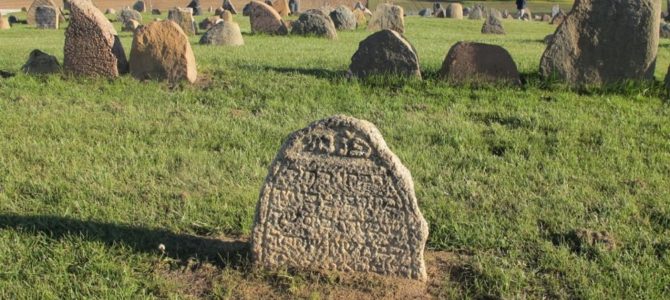
Photo: Restored Jewish cemetery in Šeduva, Lithuania.
Mazl tov to Maceva, the Litvak Cemetery Catalogue, which is celebrating a milestone: ten years of activity documenting, cleaning, digitizing, and restoring Jewish cemeteries in Lithuania.
“Beit Olam, cemeteries are the house of living. It is the place were our memory comes to life,” the non-profit organization, established in 2011, said in an anniversary statement on its facebook page.

The Lithuanian Jewish Community and the Choral Synagogue in Vilnius will hold try-outs for a new choir being planned. Everyone who likes to sing is invited to come and share their talents. The choir once it’s formed will perform during Jewish holidays, at Community events and in other venues. Choir master and experienced conductor Avraham G. Tal-Or will be in charge of all musical arrangements and will coordinate choral activities. He will conduct activities in English.
To register, fill out the form here.
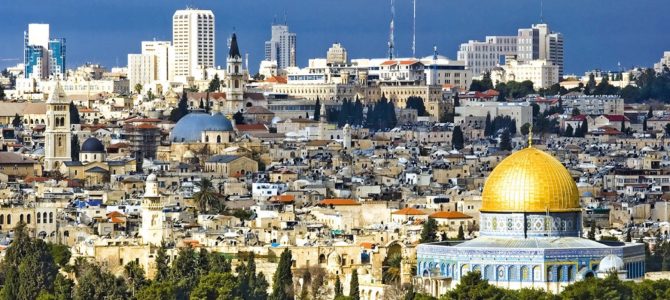
Ambassador Yossef Avni-Levy sends greetings to the Lithuanian Jewish Community on the occasion of Yom haAtzma’ut, Israeli independence day, and a letter from Israeli president Reuven Rivlin greeting Jews around the world on this Israeli holiday.
The Israeli embassy notes this holiday is being celebrated today, April 14, beginning at sundown and continues on till sundown on Thursday, April 15. This is a national holiday in Israel and an official non-working day throughout the country.

Today is Yom haZikaron. Yom haZikaron is memorial day in Israel, dedicated to remembering all Israeli soldiers who have fallen in battle. The holiday always falls one day before Yom haAtzma’ut, Israeli independence day on Iyar 5, but if Iyar 5 falls on the Sabbath as it does this year, independence day and thus memorial day are moved up one day.
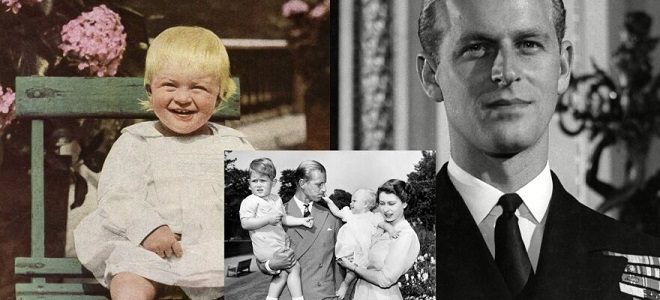
Over centuries of persecution and viewing history “from the bottom,” most Jews have a healthy sense of criticism when it comes to celebrity, which is regularly reinforced by anti-Semitic statements issuing from the most unlikely people. The recent death of the United Kingdom’s prince Philip is different.
While Philip might have been, as Buckingham Palace likes to put it in hindsight, “authentically himself,” making off-the-cuff ethnic and racial statements deemed universally offensive, Jews are more likely to look back with respect and sadness on the passing of the queen’s consort. Philip’s mother princess Alice, wife of the Greek prince, rescued a Jewish family–the widow of Greek member of parliament Khaimaki Cohen and two of their five children–and hid them in her basement in Athens during the Nazi occupation.
The good deed might never have to come to light if not for a request from a member of the Cohen family to the Jerusalem municipality to name a street after princess Alice. Yad Vashem got involved, checked the facts and awarded the title of Righteous Gentile to the late princess. Prince Philip and his sister Sophia attended the awards ceremony and planted a tree at Yad Vashem in honor of their mother.
Strangely enough, Alice was reburied at the Orthodox Church of Mary Magdalene on the Mount of Olives in 1988, two years after her death but several years before being awarded the Yad Vashem title in 1993. This was reportedly done at her own request.
On the Jewish scale of values, one could say prince Philip came from a very good family, and deeds say so much more than words.

NEW YORK–The World Jewish Congress mourns the passing of Australian cardinal Edward Idris Cassidy, long-time Vatican diplomat and former president of the Commission for the Religious Relations with the Jews, who died in Newcastle, Australia, at the age of 96.
Cardinal Cassidy served for 33 years in the diplomatic service of the Holy See before returning to Rome in 1988 to the Vatican’s Secretariat of State. In 1989 he was appointed president of the Pontifical Council for Promoting Christian Unity, undertaking at the same time the role of president of the Commission for Religious Relations with Jews. In 1991 he was elevated to cardinal.