
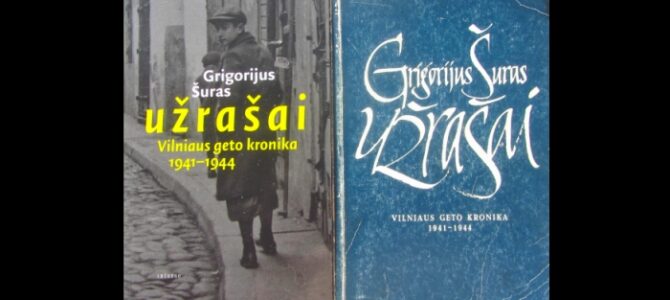
Screening of the film “Sudie, Lietuvos Jeruzale” [“Farewell, Jerusalem of Lithuania”] and meeting with the director, Saulius Beržinis.
12 noon, November 15






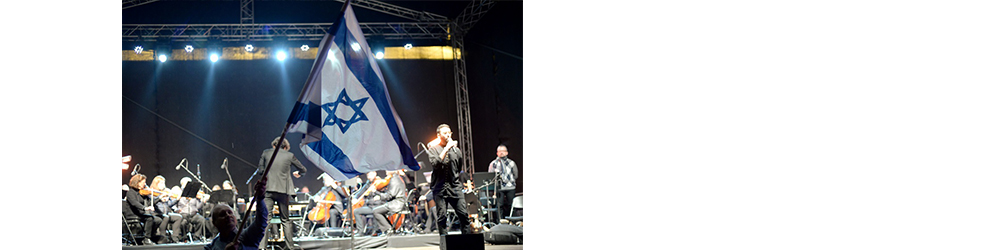
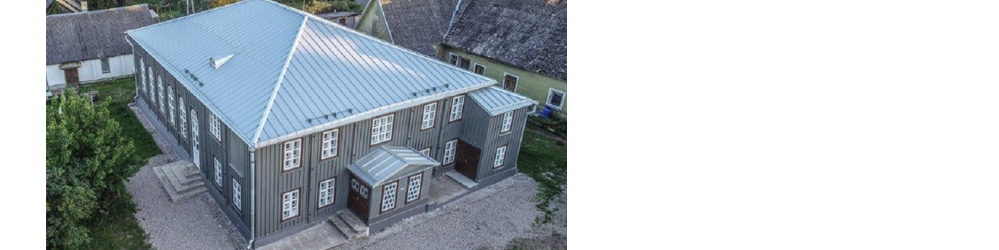


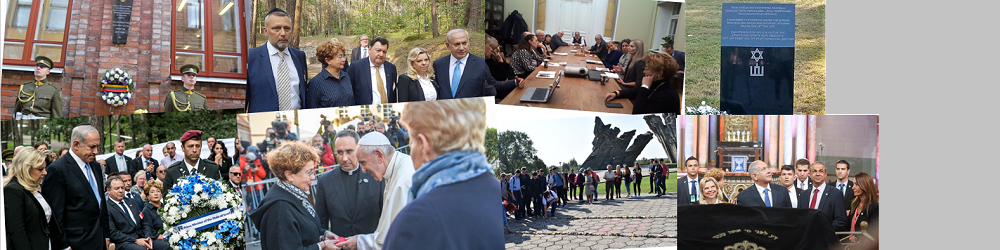

Screening of the film “Sudie, Lietuvos Jeruzale” [“Farewell, Jerusalem of Lithuania”] and meeting with the director, Saulius Beržinis.
12 noon, November 15
Netanyahu sends condolences to families of those killed in Paris, and wishes speedy recovery to the wounded.
The Prime Minister’s Office has called for bolstered security at Israel’s embassy in Paris along with Jewish institutions after a string of attacks late Friday left over a hundred dead in the French capital.
According to the report by Channel 2, the PMO instructed the Foreign Ministry to contact security authorities in France in order to carry out the measures.
Prime minister Benjamin Netanyahu was following the events developing in Paris and was receiving updates from the Foreign Ministry and security agencies, the report cited the PMO as stating.
“The attacks mean the necessity of an even deeper revision of the European policy towards the migrant crisis,” Konrad Szymanski said at a Saturday briefing.
Poland cannot accept migrants relocated under a European Union quota system after the attacks in Paris without security guarantees, its incoming European affairs minister said on Saturday, in a sign that the attacks may seriously undermine EU refugee policy.
Konrad Szymanski will take up his post on Monday in the government formed by the winners of last month’s election, the conservative and euro-skeptic Law and Justice (PiS) party.
“The attacks mean the necessity of an even deeper revision of the European policy towards the migrant crisis,” he said at a Saturday briefing.

“In Israel, as in France, terrorism is terrorism and standing behind it is radical Islam and its desire to destroy its victims,” Netanyahu said before the start of the weekly cabinet meeting on Sunday.
“The time has come for the world to wake up and unite in order to defeat terrorism. The time has come for countries to condemn terrorism against us to the same degree that they condemn terrorism everywhere else in the world,” he said.
Picture: The Grand Synagogue of Paris
Embassy of Israel
Vilnius
The Embassy of the State of Israel is very saddened to hear about the passing of Abram Lešč. We would like to express our heartfelt condolences to the family and friends of Abram Lešč.
Yehuda Gidron
Deputy Chief of Mission
Abramas Leščius, son of Chaim, always emphasizes he’s from Raseiniai.
In profoundest sorrow and with our deepest condolences to his survivors, we regret to announce that Abramas Leščius passed away on November 12. The Lithuanian Jewish Community as a whole feels the painful loss of this sincere, honest and intelligent man who served as gabbai of the Vilnius Choral Synagogue minyan for many years.
He was born on April 18, 1932. He will be buried according to Jewish tradition. The burial ceremony is to take place at 11:00 A.M. on November 13 at the Vilnius Jewish Cemetery, located at Sudervės road No. 28. A bus will transport those who want to bid him farewell from the Lithuanian Jewish Community at Pylimo street No. 4 at 10:30 A.M.
Abramas Leščius agreed to share passages from his life on the lzb.lt webpage just six months ago.
This year marks 150 years since the birth and 85 years since the death of Dr. Meir.
A ceremony to honor the memory of Dr. Shakhnel Avrahom Meir will be held in Panevėžys, Lithuania on November 13, the famous Lithuania doctor’s hometown.
He studied medicine at Moscow University and began his medical practice in Chernigov guberniya in the Ukraine before returning to Lithuania in 1891, where he first set up practice in Pasvalys and then moved back to Panevėžys in 1914. He had a reputation for selflessness and devoted all his time and energy to healing everyone who needed help. He improved his skills by working in clinics abroad and kept up with the latest advances in medicine, applying them at home. The Jewish Hospital was built and opened in Panevėžys in 1919 on his initiative. It served people of all ethnicities.

Vilnius, November 12, BNS–The Israeli Ministry of Foreign Affairs has said the country won’t participate in several planned meetings with EU officials after the European Commission announced Wednesday a decision to label products imported from Israeli settlements in the occupied territories. The ministry announced Israel had suspended dialogue with the EU at several venues where meetings had been scheduled for the coming weeks in response to the EU decision. Israel earlier strongly condemned the EU measure as politically motivated, but the suspension of talks represents the first concrete step taken in response to product labeling.
The European Union reported earlier the decision to adopt special labeling rules for products from Israeli settlements in the occupied Palestinian territories was made for legal reasons regarding product country of origin requirements. “This is a technical issue, not a political position,” European Commission deputy chairman Valdis Dombrovskis told reporters earlier, when the highest executive body of the EU initially approved the labeling scheme. “The EU does not support any boycott of or sanctions against Israel,” he said then, adding the new measures were connected with consumer policy in the Union. “The Commission is presenting recommendations to EU members and economic operators in order to ensure the uniform application of labeling rules for products from the Israeli settlements,” Dombrovskis said. He said the EU decision “is not a new legal act or a new policy” and that it elucidated certain issues connected with the interpretation and effective implementation of existing EU laws.
BNS

AP Photo/Jim Hollander
As you will be aware, and after much fanfare, the EU published its guidelines on labelling of products in the West Bank and Golan Heights.
Here at EIPA we think that in the midst of a continuing wave of indiscriminate terror attacks against Israel’s civilian population, the decision to publish these guidelines makes zero political sense from a set of EU institutions that want to be seen as an honest broker in the Peace Process.
The EU’s Foreign Policy Chief can try and dress this move up as consumer protection, a technical trade detail or as a non-binding set of guidelines, but to the vast majority of Israelis it will be viewed very simply: as a slap in the face and an overt political move to punish Israel.
After long deliberation, the European Commission has adopted rules requiring products from Israel’s occupied territories be labeled as such on EU store shelves.
Proponents of the measure argued it was needed for harmonization of the EU’s non-recognition of Israel’s right to occupy the territories and that it was a compromise to avoid a complete boycott of Israeli goods and preserve preferential treatment of Israeli products in EU markets under an agreement signed in 1995. They said it would also give EU consumers more freedom of choice in their purchasing decisions.
Opponents have called it an anti-Israel initiative veiled as a pro-consumer initiative, an attack on Israeli statehood which comes at a critical time, as Israel faces renewed Palestinian violence. Some have compared the singling out of Israeli goods to laws requiring Jews to wear yellow Stars of David during the Holocaust.
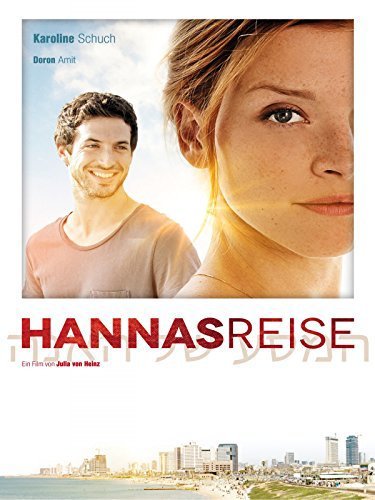
The Vilna Gaon State Jewish Museum, the Germany Embassy and the Goethe Institut in Lithuania warmly invite you to celebrate International Tolerance Day this November 16 by attending a screening of Hanna’s Journey (2013), a film by Julia von Heinz, at 5:30 P.M., Monday, November 16 at the Tolerance Center at Naugarduko street no. 10/2 in Vilnius.
The film runs for 100 minutes. The film is in English, German and Hebrew, to be shown with Lithuanian subtitles. Entry is free to the general public.
from IMDB: “A German girl travels to Israel to help people with disabilities, where she learns about the role of her grandparents in WWII and meets a man who wants to move to Berlin.”

Francine Klagsbrun
Special To The Jewish Week
Watching “Antique Roadshow” on PBS the other night, I was intrigued by one of the items on display. It was a doll someone had inherited, which the show’s expert evaluated at several thousand dollars in today’s market. It had been manufactured, he said, in the early 1900s by Kammer & Reinhardt, a well-known German doll-making company, in business from 1886 to 1932. It was the cutoff date that caught my attention—could this have been a Jewish company that closed down as the Nazis rose to power? The company’s logo on the doll’s back confirmed my suspicion. It showed the initials K and R separated by a Star of David. That star set my mind racing. Did the company’s owners end up wearing the proud symbol of their firm as the oppressive yellow star that marked Europe’s Jews during their darkest days?
This week we commemorated Kristallnacht, the Night of the Broken Glass, when, between November 9 and 10, 1938, Nazi thugs smashed thousands of windows in Jewish storefronts and houses all over Germany and Austria. It struck me as I contemplated, yet again, the horror of those days, how instant had been my reaction to the 1932 closing date of the German doll company, immediately assuming because of that date that the company was Jewish-owned. Those of us who were alive during the Holocaust years, even as children, will always make such associations, always filter 20th-century events through the lens of that century’s Jewish catastrophe.
And what of our children, grandchildren and great-grandchildren? It’s been said many times that as Holocaust survivors pass on, we have a greater responsibility than ever to keep their stories alive. But as the 21st century unfolds with its own stories of atrocities and desperate refugees, we also have to make sure that, while deeply sympathetic to suffering everywhere, succeeding generations of Jews understand the uniqueness of the Holocaust and its impact on all of Jewish life.
Dear friends,
You’re invited to the Mini-Limmud educational conference on Judaism December 11-13 at the Vilnius Grand Resort hotel.
Mini-Limmud is and includes:
● Three days of meeting and talking with friends and the like-minded;
● The best speakers from the Baltics, Israel, Russia and elsewhere;
● A special program for children;
● An unforgettable Hanukkah evening with special performers.
The Lithuanian version of the Economist IQ publication has published an interview with Nobuki Sugihara, the son of the famous war-time Japanese diplomat who rescued Jews from the Holocaust in Kaunas against instructions from his ministry. The youngest Sugihara son was in Lithuania partly to attend the premiere of a new film about his father called Persona Non Grata: The Chiune Sugihara Story.
Ieva Rekštytė asked him “What impression did you come away with after the premiere at the movie theater?”
Nobuki Sugihara responded: “The film was beautiful visually, the actors were good, but in no way are all the historical facts in it true. You have to realize that this is entertainment, after all, and not a film intended to expand knowledge. For example, my father wasn’t so soft and sentimental as he’s made out to have been. Further, his supposed lover Irinia plays a major part in his life in the film, but this is the first time I’ve ever heard of her. The impression is the film was created in a hurry, not even as a cinematic production, but as a television serial. I think the Japanese audience (to whom, most likely, the film is oriented) will like it, but it’s unlikely the international viewer will take an interest.
Full interview in Lithuanian here.
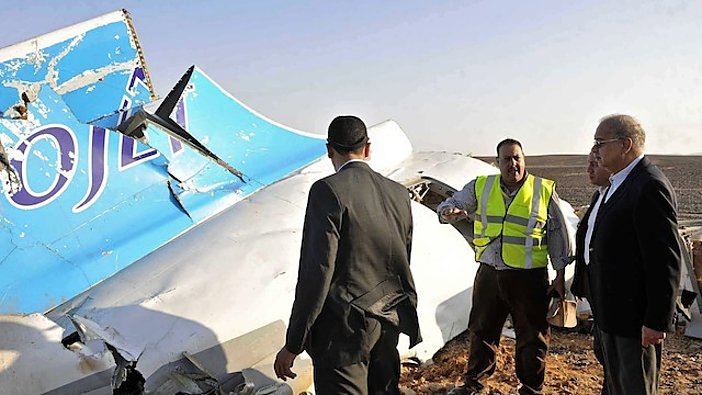
photo courtesy of www.lrytas.lt
The Lithuanian newspaper Lietuvos rytas published an article on their website www.lrytas.lt Tuesday, November 10 titled “Air Disaster Investigation Demonstrates Israeli Intelligence Muscles” in which they claimed US and British reports of a bomb on the Russian Metro Jet airliner which crashed in the Sinai came from Israeli intelligence.
The article says Israeli intel intercepted telephone conversations between members of the Islamic State organization and shared that information with American and British agencies.
“Little was hitherto known of the capabilities of Israeli intelligence. But the current situation shows the secret services of this state are able to intercept conversations and other communication outside the country’s borders,” the main Lithuanian daily newspaper claimed.
The article went on to claim Egyptian authorities had changed their tune and now believe the aircraft crashed as a result of a bomb on board, and that Russian prime minister Dmitri Medvedev was also now allegedly entertaining the same thought as one of the possibilities in the crash which claimed 224 lives.
Full story in Lithuanian here.
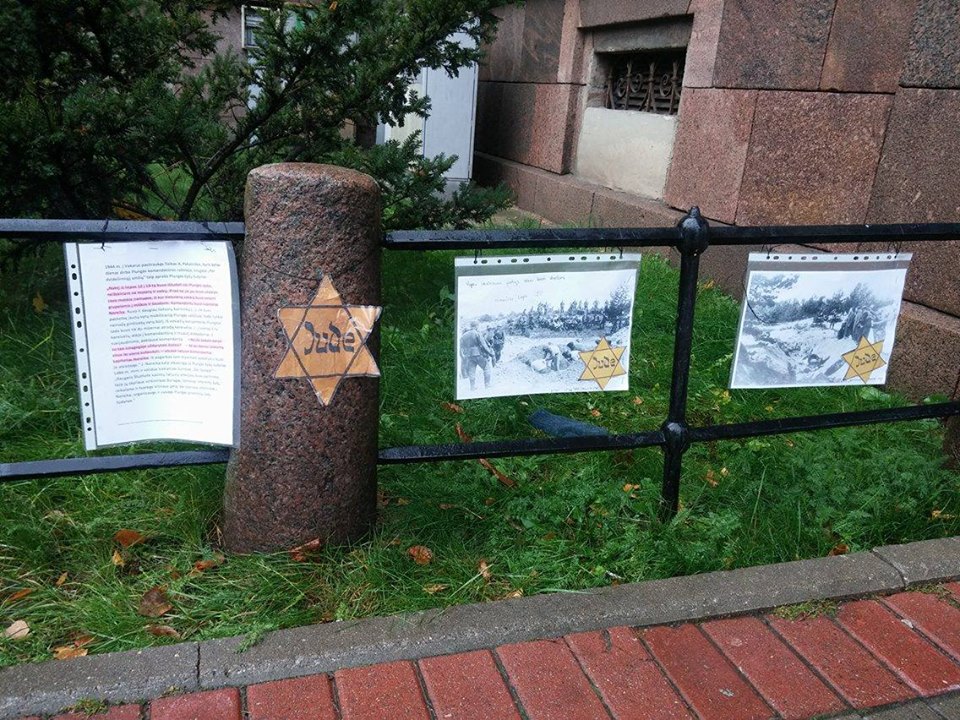
Lithuanian Jewish young people held a small protest against the commemoration of Jonas Noreika/General Vėtra on the wall of the Lithuanian Academy of Sciences building. THey hung banners with images from the ghetto where Litvak Lithuanian citizens were sent by order of Noreika.
The organizers of the protest said they are trying to bring attention to how commemoration of Noreika is shameful to the European city of Vilnius.
“I and other young people are not trying to anger or offend anyone with our initiative, we simply want to inform people, passers-by, of the controversial memorial plaque to Noreika which has been much discussed lately. I believe history must be presented objectively so that our generation and future generations who haven’t and hopefully will not experience personally what war means will understand the mistakes of the past and learn from them, European Jewish Student Union board member Amit Belaitė said.
The Lithuanian Jewish Community is deeply saddened to learn Israel’s fifth president, Yitzhak Navon, has passed away. He will be remembered as an intellectual, a wise leader and an inspiration by many Jews around the world. Israel has lost a great son. We send our deepest condolences to the entire Navon family.
The Tel Aviv Maccabi basketball club, fishing for a new trainer, has cast a line into the Lithuanian basketball market. The Israeli media are reporting the post of senior trainer for Maccabi was offered to Šarūnas Jasikevičius, but the 39-year-old assistant to Gintaras Krapikas wasn’t intrigued by the offer and decided to stay on with the Kaunas Žalgiris team.
There were also reports in the Israeli media that Jonas Kazlauskas recommended Šaras for the post of senior trainer at Maccabi.
Full story in Lithuanian here.
VILNIUS, November 9, BNS–Lithuanian Jewish Community chairwoman Faina Kukliansky has called an assessment of actions by Lithuanian officer Jonas Noreika during World War II released by the Center for the Study of the Genocide and Resistance of the Residents of Lithuania “contradictory.”
At the end of October the center announced Noreika hadn’t taken part in the mass murder of Jews in Lithuania during World War II, but that the Nazi occupational regime had involved him in the ordering of affairs connected with the isolation of Jews.
“It appears to us, the Lithuanian Jewish Community, that this assessment of the actions of Jonas Noreika is very contradictory,” the statement Faina Kukliansky issued said. She said: “the imprisoning Jews in ghettos, or any other kind of ‘isolation,’ or ‘ordering of affairs connected with the isolation of the Jews,’ is nothing other than the extermination of Jews.”