Prize Recipients Chosen for Best Final Academic Work on Ethnic Minorities in 2016

Išrinkti 2016 m. Premijos už geriausią baigiamąjį mokslo darbą tautinių mažumų tematika laimėtojai

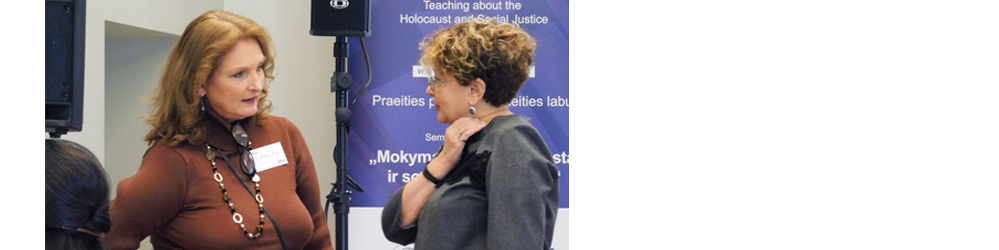
On September 14 the Academic Council of the Lithuanian Department of Ethnic Minorities selected the winners of a new prize created this year for best final academic work on ethnic minorities.

Department of Ethnic Minorities director Dr. Vida Montvydaitė made the final decision on recommendations from her Academic Council and selected Julijana Leganovič in the first nomination category for her bachelor’s work “Comparative View of the Development of the Vilnius and the Kaunas Jewish Communities in the Interwar Period.”

The second category was for master’s work and the winners were Rūta Anulytė with her “Heritage Protection and Maintenance of Historical Jewish Cemeteries in Lithuania: Practice and Recommendations” and Mantas Šikšnianas with his “Jews of Švenčionys from the mid-18th Century to the mid-20th Century: Shtetl, Sabbath, Shoah.”

Full story in Lithuanian here.

Ponar: Thirty Meter Escape Tunnel Dug by Hand and Spoons

Trisdešimties metrų tunelis Paneriuose,iškastas rankomis ir šaukštais

by Jūratė Juškaitė
manoteises.lt

At the beginning of this century documentary film makers from Israel combed Ponar just outside Vilnius, looking for an answer to the question of why local residents did nothing when they saw columns of thousands being led to firing squads in the forest of Ponar. The filmmakers brought in Mordechai Zeidel. Unlike the locals, in 1943 Zeidel was among those condemned to death at Ponar. He was taken there by the Nazis to destroy evidence of their mass murder, and sometimes also to recognize corpses, including relatives. For more than two months Zeidel and another eighty prisoners hauled corpses out of the pits using cables and burned them. The remains of approximately 100,000 people were contained in those pits. The entire time, the prisoners used spoons and their hands to dig a tunnel thirty meters long, which brought Zeidel to freedom. Although only eleven of the forty escapees in total survived, the story has become the stuff of legend.

Full story in Lithuanian here.

The Bloody Stones of the Towns

by Aras Lukšas
lzinios.lt

On September 23, 1943, the Nazis and collaborators concluded the liquidation of the Vilnius ghetto. Twenty-two years ago this date was officially made the Day of Remembrance of the Lithuanian Jewish Victims of Genocide. Now let’s remember the Jews of the rural towns and villages whose entire communities were destroyed during the first four months of war. Keydan, Yaneve, Vilkomir, Zager, Shadeve, Nayshtot-Tavrig… What do these strange words mean? Most likely not everyone would know these are the names of Lithuanian towns: Kėdainiai, Jonava, Ukmergė, Žagarė, Šeduva, Žemaičių Naumiestis. This was how the Jews who lived here for centuries called their homes in their native Yiddish language. In many of the locations just mentioned, they constituted half or even the majority of the population. For instance, before the war half the population of Ukmergė was Jewish, and Jonava’s was 80% Jewish, including traders, craftsmen, artisans, butchers and dairymen, attorneys and doctors…

Full story in Lithuanian here.

Lithuanian President Awards 46 Rescuers

VILNIUS, September 26, BNS – Lithuanian President Dalia Grybauskaitė on Monday signed a decree to award Life Saving Crosses to 46 people who rescued Jews from the Holocaust during World War II.

Most of them were honored posthumously.

The president honors Jewish rescuers every year on the occasion of the National Memorial Day for the Genocide of Lithuanian Jews, which is marked on September 23 to commemorate the liquidation of the Vilnius ghetto on that day in 1943.

The Nazis assisted by Lithuanian collaborators murdered more than 90 percent of the Lithuanian pre-war Jewish population of around 208,000 during World War II.

Around 3,500 Jews currently reside in Lithuania.

BNS_logotipas

Israeli President Sends Condolences over Death of Leonidas Donskis

VILNIUS, September 26, BNS – Israeli president Reuven Rivlin has expressed his condolences to Jolanta Donskienė, the wife of Lithuania’s late philosopher Leonidas Donskis.

“We grieve together with you and all people of Lithuania as the world has lost a remarkable man, a prominent philosopher, a devoted defender of human rights and civil liberties, a true humanitarian and an outstanding political figure, a great person, who always opposed violence in all its forms,” the president said in his letter to Donskienė, a copy of which was shared by the Israeli embassy with BNS.

Rivlin said that as a deputy chairman of the Lithuanian Jewish Community, Donskis “greatly contributed to preserving the country’s Jewish culture and heritage and promoted the highest human values of tolerance, love and respect toward every individual”.

“Professor Donskis was a great friend of Israel, who has never hesitated to stand together with our country. He will always remain in hour hearts,” he said.

Vilnius Mayors Change, But None Can Find Suitable Place for Monument to Rescuers

cc1c
photo courtesy BNS

An interview by Nemira Pumprickaitė on the Lithuanian state television program Savaitė, www.LRT.lt

The Day of the Genocide of the Jews of Lithuania is marked on September 23. For long years there was silence on the topic of the Holocaust in Lithuania, and when [former late] Lithuanian president Algirdas Brazauskas apologized to the Jewish people, there was hardly unanimous support. Now even Germans are saying Lithuania is the first country in Eastern Europe to openly raise the question of its own citizens’ complicity. About a month ago the respected Frankfurter Allgemeine Zeitung published a feature on Lithuania’s efforts to address the history of the Holocaust. Lithuanians didn’t earn condemnation alone during the Holocaust; there were those who risked their lives of those of the families to save Jews. The appellation Righteous Gentile has been awarded to 889 Lithuanian citizens. Experts say proportionally, according to population size, Lithuania has the most rescuers among the countries of Eastern and Central Europe. Lithuanian Jewish Community chairwoman Faina Kukliansky on the Lithuanian state television program Savaitė…

Full interview in Lithuanian here.

On the Need for a Monument to Lithuanian Rescuers of Jews

Paminklas Lietuvos žydų gelbėtojams

Faina Kukliansky, chairwoman, Lithuanian Jewish Community

Today we mark 75 years since the Holocaust began. Someone born on June 1, 1941, would be 75-years-old today, and his children all grown up, and his grandchildren as well. Today when we watch films about the Holocaust, we cry because we still remember what we went through, indescribably brutal atrocities against Jews, and our children cry because of it, too. After a few more decades pass there will be no more tears because the events will no longer move anyone. I might compare it to Napoleon’s invasion of Russia in 1812. It is an interesting historical fact that Napoleon and field marshal Kutuzov were in Vilnius, but it no longer moves anyone. Today, 75 years later, many people are moved and grieve over the Holocaust, the mass murder of the Jews, and their rescue. We lived through the Soviet era, we have lived in a free Lithuania for 26 years now, but those who dared rescue Jews have not received the honor due them. Till the present day there is no monument, no sign where Jews could pray, meditate or give thanks to those who saved their lives.

Seventy-five years after the Holocaust, the Jewish community received a nice gift from the city of Vilnius: a sign in Yiddish and Hebrew on Jewish Street. It was truly a beautiful event: the mayor smiled as did I, the Israeli ambassador and other important people took part and there were Jewish songs. That same day just several hours after that ceremony, it was decided at the Vilnius municipality that the site selected for a monument to the rescuers was inappropriate, but they didn’t specify an appropriate site. The decision was postponed yet again, always with the promise to take care of the matter. Mayors change, and still there is no monument. I would call this spitting in the face of the entire Jewish community and especially in my face, because I am from a family of Jews who were saved. I am ashamed in front of all my relatives spread around the world. My 94-year-old uncle is one of those who were rescued, and I cannot explain to him why this has happened. It needs to be understood that the LJC with the Center of Genocide and Resistance have for many years exerted enormous efforts so that any site at all in Vilnius might bear witness. Our feeling is that the best location would be somewhere around Ona Šimaitė Street, at the intersection of Misionierių and Maironio streets. It was the courtyard of the monastery at Misionierių street where the final selection of thousands of Vilnius Jews took place when the Vilnius ghetto was liquidated. Ghetto resistance members were murdered there. It is a site where the condemned awaited the decision on their continued existence. The selection was carried out. Some had a terrible fate in store: they were to be sent to Ponar. Others faced the “good” prospect of being sent to concentration camps in Latvia, Estonia and to Stutthof in German-occupied Poland, where Jews were locked in cellars and condemned to death. LJC member and Holocaust survivor Fania Brancovskaja’s mother and sister were sent to Kaiserwald concentration camp outside Riga. Women over 35 were drowned at sea as unfit for labor. Her mother was then 42. Her father was sent to the Klooga concentration camp in Estonia where there were electro-mechanical workshops. He died just a few days before the camp was liberated in 1944. The final selection was carried out on Rosa Square at the monastery of the Church of the Missionaries where the Lithuanian Jewish Community sought permission from the municipality to erect a commemorative statue to the rescuers.

One of the most famous rescuers, the Lithuanian woman Ona Šimaitė, recognized by Yad Vashem for her work saving Jews, has had a street named after her, but Vilnius maps show the street as Ona Širvaitė Street instead, because no one here knows who Ona Šimaitė was. They don’t discuss the rescuers at school. Now we have a street named after Ona Šimaitė, and we would like the monument to stand close by.

In 2004 famous Jewish author and rescued Jew Icchokas Meras wrote a testament to the president of Lithuania, the parliamentary speaker and other high-ranking state officials: “Intentionally or unintentionally, they opposed the destructive power of the Nazis and their tools, those who committed the murders. We must remember and honor their heroism based on conscience, morality, love of their neighbors and simple human mercy. Their names are commemorated on the Mountain of Memory in Jerusalem. Their names should be inscribed in golden letters in independent Lithuania as well. A monument should be raised to the Righteous Gentiles of the Lithuanian nation, to those who in the time of greatest darkness bore in their unarmed and burning palms the ember of conscience, morality and love of neighbor. Sadly, it all remains merely words. Until now there is no monument, no street named, no alley of rescuers, and the rescuers receive no support from the state. Why the state doesn’t appreciate its most noble people is unknown. Speculations about Holocaust education, different programs and seminars will not bear any fruit if there isn’t official, loud and understandable esteem given to the rescuers in the state, and if those who needed to be rescued are punished instead. Otherwise the heroic deeds of the rescuers are simply derided.”

Not erecting a monument to the rescuers is not a decision by one or another mayor or a commission. No one has invited me as chairwoman of the Lithuanian Jewish Community to hearings at the municipality. Instead dilettantes with no knowledge of the history of the Jews or the heroism of the rescuers deliberate the issue. More than 200,000 Jews were murdered during the Holocaust in Lithuania and more than 800 people have been recognized as rescuers. In this sense the Yad Vashem motto, “When you save one life, you save an entire world,” takes on a special significance. The Jewish Community is ready to erect this monument at our own expense. The Lithuanian state should bow down and give thanks to those people, if not for whom Lithuania’s honor and reputation would be entirely associated with those who committed mass murder. The heroic actions of the Righteous Gentiles were a ray of humanity during the darkest times for Lithuania filled with hatred for Jews.

Did perhaps the rescuers act incorrectly? Should their awards be rescinded? The argument over a monument is not anything like the issue of whether to erect a monument to Jonas Basanavičius in Vilnius. It is an argument over principle, not over location. And this is Lithuanian policy. The rescuers are treated like dirt. Worse.

Lithuanian Parliaments Hosts Conference “They Rescued Jews, They Rescued Lithuania’s Honor”

Seime organizuota konferencija „Gelbėję Lietuvos žydus, gelbėję Lietuvos garbę“

Vilnius, September 25, BNS– The Lithuanian Seimas Sunday hosted a conference to mark the Jewish Genocide Memorial Day.

The conference called “They Rescued Jews, They Rescued Lithuania’s Honor” was organized by the Lithuanian Jewish Community, the parliament’s press service said.

Those taking part in the conference included Faina Kukliansky, chairwoman of the Lithuanian Jewish Community, Andrew Baker, director of International Jewish Affairs for the American Jewish Committee, and Howard Solomon, chargé d’affaires ad interim at the US embassy in Vilnius.

The program includes presentations by historian Alvydas Nikzentaitis on the life of Jews in Lithuania, Joachim Tauber of the University of Hamburg on “Hitler, Stalin and Anti-Semitism in Lithuania in 1939-1940” and historian Algimantas Kasparavicius on “Lithuanian Political Illusions, the ‘Policy’ of the Provisional Government of Lithuania and the Beginning of the Holocaust in Lithuania.”

Holocaust Commemoration at Ninth Fort in Kaunas

Students from the Lithuanian Health Sciences University Gymnasium displayed a sensitive and moving artistic composition called Memory Road at the mass murder site. Kaunas deputy mayor Vasilijus Popovas, Ninth Fort Museum director Jūratė Zakaitė and deputy museum director Marius Pečiulis spoke of the need to remember and never forget painful and even shameful parts of history. Kaunas Jewish Community chairman Gercas Žakas said it’s important for young people to get to know a different culture and a different ethnic group personally, because this sort of knowledge allows them to understand someone from a different ethnicity is still a person just like they are. Chairman Žakas thanked the students and teachers of the Health Sciences University Gymnasium and other Kaunas schools as well as school Tolerance Center directors for teaching pupils respect, tolerance, sympathy and historical memory.

Later there was a screening introduced by director of the Polish Institute in Vilnius Marcin Łapczyński of director M. T. Pawłowski’s film Touch of an Angel (2015) which is movingly narrated by a Jewish child in Auschwitz who survived the Holocaust with his family. In the film Polish Jew Henryk Schoenker revisits his childhood where the specter of war still lives, and talks about his family, hiding and tremendous efforts made to survive. Many members of the audience cried.

World Litvak Museum, Return of YIVO Proposed for Vilnius

Vilnius, September 25, BNS–A proposal has been made to establish a World Litvak Museum and reopen the Jewish research institute YIVO in Vilnius, and to commemorate Jews who contributed to the restoration of Lithuanian statehood at the Government, to pay homage to Jewish heritage.

The proposal was made at a conference at the Lithuanian parliament Sunday by the historian Alvydas Nikžentaitis. He said it would make sense to put the museum presenting the history of the Jews of Lithuania at the site of the former Great Synagogue in the center of Vilnius. “The most important goal of all would be to restore the Great Synagogue, the place where Jews, without regard to viewpoints, all gathered, where the most import things were deliberated. This is the place, I think, where the World Litvak Museum should be built,” the professor said at parliament.

Happy Birthdays!

Nuoširdūs sveikinimai su gimtadieniu! Geros sveikatos linkime!
Happy birthday and mazl tov to all members born in September!

Vilnius Jewish Community and Social Programs Department members:

Sofija Ivšina (September 10)
Jefim Levin (September 16)
Mark Burbaickij (September 22)
Ala Tiktina (September 26)
Borechas Judelis Kacas (September 26)
Sonia Aron (September 26)

Klaipėda Jewish Community:

Meri Sluckaja (September 25)

Kaunas Jewish Community:

Inda Feldman (September 28)
Judita Mackevičienė (September 13)

Conference at Lithuanian Parliament: “They Rescued Jews, They Rescued Lithuania’s Honor”

Seime organizuota konferencija „Gelbėję Lietuvos žydus, gelbėję Lietuvos garbę“

Vilnius, September 25, BNS–The Lithuanian parliament held a commemoration of the Lithuanian day of Holocaust remembrance Sunday. The Lithuanian Jewish Community organized a conference there called “They Rescued Jews, They Rescued Lithuania’s Honor.”

LJC chairwoman Fainia Kukliansky, American Jewish Committee international affairs director Andre Baker and US embassy chargé d’affaires ad interim Howard Solomon participated.

Historian Alvydas Nikžentaitis surveyed Jewish life in Lithuania, academic Joachimas Tauberis from Hamburg spoke about Hitler and Stalin’s policies and anti-Semitism in Lithuania from 1939 to 1941, historian Algimantas Kasparavičius gave a presentation about the policies of the Provisional Government of Lithuania and the beginning of the Holocaust in 1941 and recordings of testimonies by survivors and rescuers were played.

The Day of Remembrance of the Lithuanian Jewish Victims of Genocide has been marked in Lithuania since 1994. It is held on September 23, the day the Vilnius ghetto was liquidated in 1943.

Lithuanian Radio To Revisit Litvak Past

lrtradijas

Beginning September 25 Lithuanian state radio will broadcast a series about Lithuanian shtetls. Radio journalists will talk about nine small Lithuanian towns where only a few buildings stand in silent testimony to their once thriving Jewish life, and will interview people now in their 80s who remember that legacy from childhood.

The episodes in the series will be broadcast every second Sunday after the 11 o’clock news and during the Ryto garsai progream on Tuesdays at 9:00 A.M. The first episode for broadcast September 25 is about Molėtai.

Lithuanians and Jews lived in common in the shtetls before World War II and not only made a life for themselves, but contributed deeply to the creation of the Lithuanian state and the economic and cultural development of the towns. War and the Holocaust, which saw the complete destruction of entire Jewish shtetl communities, and the various roles played by Lithuanian neighbors, followed by decades of occupation, have largely pushed this part of history into oblivion.

Not all who remember the time of Jewish prosperity are eager to talk about it. Many people are still steeped in feelings of fear, guilt and shame. At the same time descendants of Holocaust survivors are coming back in ever greater numbers to the birthplaces of their parents, grandparents and great-grandparents and making sense of a land which for many years only kindled negative emotions. Some of them are working to strengthen Lithuanian-Jewish relations, others seek to preserve the memory of their ancestors.

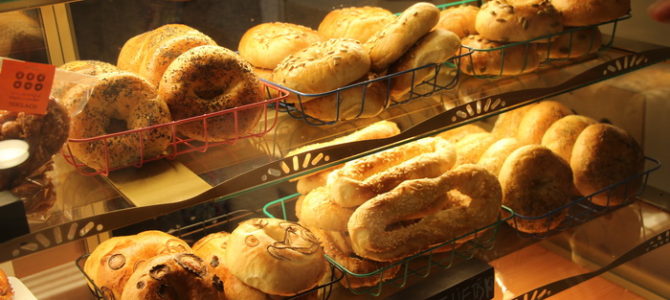
This documentary series won’t be easy listening. Even 75 years later, witnesses to the Jewish tragedy aren’t able to quell their tears and many are unable or unwilling to understand this darkest period in Lithuania’s history. On the other hand, they also recall the happy life of Lithuanians and Jews before the war, including childhood friends, the many Jewish shops and the taste of fresh bagels.

Lithuanian national radio frequencies:

Vilnius 89.0 MHz

Kaunas 102.1 MHz

Klaipėda 102.8 MHz

Šiauliai 100.9 MHz

Panevėžys 107.5 MHz

First episode about Molėtai available in Lithuanian here.

Remembering the Holocaust in Panevėžys

Žydų tautos tragedija nepamiršta

Marking the Day of Remembrance of the Genocide of the Jews of Lithuania, in Panevėžys they remembered the Jews who lived here and those who saved them as well as the victims.

Darkest Page

September 23 wasn’t chosen arbitrarily. This was the day in 1943 when the Vilnius ghetto was liquidated. Some of the residents were shot, while others were taken to concentration camps.

Panevėžys Jewish Community chairman Gennady Kofman noted 75 years had passed since the first group of Jews were shot in the city and the arrests began. Fifty-seven Jews were arrested and then murdered in the Staniūnai Forest.

In July of 1941 a Jewish ghetto was set up in Panevėžys. Kofman said over its 42 days of existence, more than 14,000 Jews “passed through” the ghetto. The Community said initially there were 4,423 inmates. When the ghetto was liquidated, all the Jews were shot: 8,000 in Kurganava Forest and 4,500 in Žalioji Forest. Ninety-five percent of Jews of Panevėžys were murdered during the war.

Full story in Lithuanian here.

LJC Chairwoman Faina Kukliansky Speaks at Ponar September 23, 2016

LŽB pirmininkės F. Kukliansky kalba Paneriuose Holokausto aukų pagerbimo ceremonijoje

Dear participants,

I am sincerely thankful that you have gathered here today together with the Jewish Community to honor the memory of Holocaust victims.

But can we truly speak about honoring Holocaust victims when multiple streets in Lithuania are named after Kazys Škirpa, there is a school named after Jonas Noreika and the monument to Juozas Krikštaponis has still not been torn down?

We don’t have public spaces named after Ozer Finkelstein, Katz Motel or Volf Kagan. How many know the name of Liba Mednikienė, a scout in the Lithuanian battles for independence? Despite her service, she was murdered by Lithuanians during the Holocaust.

This and similar fates awaited the victims at Ponar. Our younger generation still doesn’t know about 650 years of Jewish history in Lithuania, before, during and after the Holocaust. Will the history textbooks teach this to the young citizens of Lithuania someday?

The Lithuanian Jewish Community has more questions than answers. The only sure thing is that an irreversible process has taken place and the country will never again be what it was before the Holocaust. But the Jewish Community is still here, and as long as it is, it will seek justice. But the highest value, truth, can only be restored when Lithuania works up the courage to name the perpetrators of the Holocaust. To remain silent about the Holocaust perpetrators, to forget the victims of the Holocaust and to disregard the living Jewish community is the same thing as killing the Jews again.

Today we mark the 75th anniversary of the beginning of the mass murder of the Jews in Lithuania. Our hope is that the smaller towns of Lithuania will remember their lost Jewish communities all year round, not just during Holocaust commemorations. From sporadic, random and often simply superficial events, memory of the Holocaust needs to become general knowledge, to become an integral part of the worldview of every conscientious citizen of Lithuania.

Thank you all who are not indifferent to the memory of the Holocaust, the Jewish tragedy, Lithuania’s tragedy.

Lithuanian Jewish Genocide Victims Honored at Ponar

Paneriuose pagerbtos Lietuvos žydų genocido aukos

lrkm.lrv.lt

A ceremony to honor the victims of the genocide of the Jews of Lithuania was held at the Ponar Memorial Complex on September 23. The event was organized by the Ministry of Culture, Ministry of Foreign Affairs, National Defense Ministry, the Lithuanian Jewish Community, the International Commission to Assess the Crimes of the Nazi and Soviet Occupational Regimes in Lithuania and the Vilnius municipality.

A minute of silence was observed and wreaths and flowers were laid at a monument to Holocaust victims. Students sang the Vilnius ghetto anthem. Vilnius ghetto inmates shared their thoughts. A cantor performed kaddish and an Israeli choir performed songs and hymns.

Before the ceremony participants in the Way of Memory civic initiative read the names of people murdered at Ponar, including the age and profession of victims, bringing the dead and the living closer together.

Lithuanian Defense Minister and Commander of Ground Forces Honor Victims at Ponar

Paneriuose rugsėjo 23 d. krašto apsaugos ministras Juozas Olekas ir Lietuvos kariuomenės Sausumos pajėgų vadas pagerbė Holokausto aukas

On September 23 Lithuanian defense minister Juozas Olekas and commander of Lithuanian ground forces brigadier general Valdemaras Rupšys participated at a ceremony to honor the victims of the Lithuanian genocide of Jews at the Ponar Memorial Complex. They placed a wreath at a monument there in the name of the ministry and the military.

Also participating at the ceremony were Lithuanian Independence Act signatory and chairman of the Lithuanian Supreme Soviet/Constituent Parliament Vytautas Landsbergis, members of parliament, other representatives from national defense and soldiers in the Lithuanian military’s honor guard.

Information courtesy the Lithuanian Ministry of National Defense.

Vilkaviškis Jewish Life before World War I (continued)

Vilkaviškio miesto žydų gyvenimas prieš Pirmąjį pasaulinį karą (tęsinys)
Photo from Ralph Salinger’s archive

Santaka.info (Part II) A Continuation, published in issue no. 103

A Frigid Climate and No Hospitals

There were no hospitals in Vilkaviškis, home to about 8,000 people. There were only two doctors and one midwife. Later, when I was a teenager, a dentist stayed in the community for a while. In cases of the unexpected, for example, appendicitis, the deeply afflicted either got better by themselves, or they died, because there were no surgeons. And there wasn’t even talk of health education. In every courtyard people had their own wells for drinking water which often stood… right next to excrement. So it was no surprise typhoid fever was epidemic. The disease took many lives.

Full story with continuation in Lithuanian here.