






Jewish Cultural Tourism Route Association Established

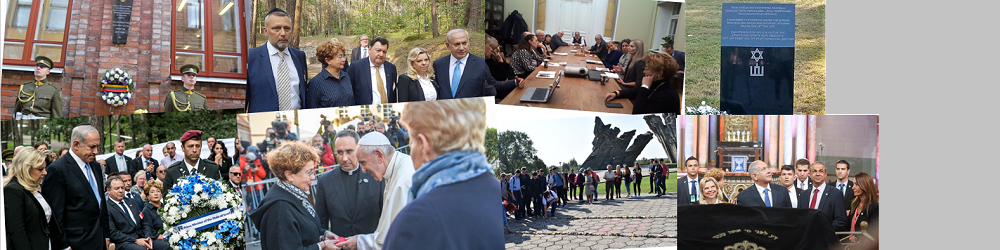
The Jewish Cultural Route Association was officially established at a meeting at the Lithuanian Economics Ministry on December 5, 2015. The group is tasked with drafting and developing a Jewish cultural tourism program with a consistent itinerary of sites in Lithuania.

The meeting at the ministry was called at the initiative of the Cultural Heritage Department. Department director Diana Varnaitė presented the plan there and State Tourism Department director Jurgita Kazlauskienė presented the idea of a Lithuanian Jewish cultural tourism program as a competitive product in the market.

Lithuanian Jewish Community chairwoman Faina Kukliansky spoke at the meeting and said it wouldn’t have been possible to achieve the results achieved so far without the participation of all the various institutions involved. “I would like to thank you for the efforts made to preserve our cultural heritage and to present it to the world. Synagogues and Jewish cemeteries are today being renovated and put in order. There is still some suspicion in talk about us, characterizing relations with Jews as ‘us and them,’ but I would disagree with that sort of attitude,” she said.
Wooden Synagogues as Tourist Attractions

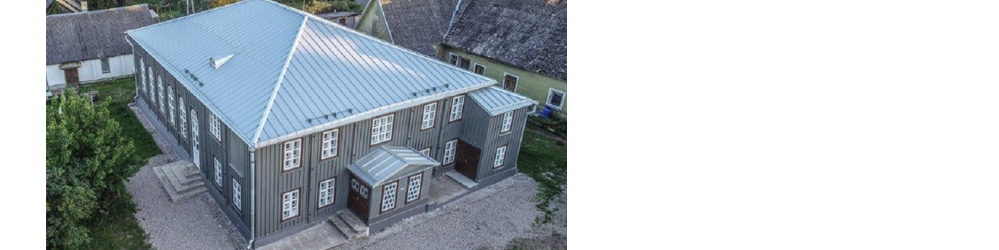
The Lithuanian Cultural Heritage Department under the Ministry of Culture has posted a PDF file on their website about wooden synagogues in Lithuania and their potential as tourist attractions called “Road of Wooden Synagogues”:

The Road of Wooden Synagogues

The 16th and the 17th centuries were a period of rapid growth and expansion for Jewish communities in Lithuania. These communities could not exist without a synagogue which was their socio-economic, administrative and spiritual centre. The synagogue was where members of the community prayed, studied Torah, and dealt with the problems of the entire community or those of individual members. The synagogue was the first building which a newly established Jewish community would construct as soon as possible to fulfill their vital needs, and thus, of course, they would use the most widespread and cheapest material for constructing the building. The material that served this purpose in the territory of Lithuania was wood which was also used widely in Lithuanian folk architecture. Later, after becoming economically stronger, the Jewish community would build a stone synagogue right next to the wooden one thus forming a courtyard of synagogues. The importance of wooden synagogues would then decrease slightly. Jewish people gathered in wooden synagogues during holidays. Due to the risk of fire, these synagogues would in most cases not be heated therefore they acquired the name cold synagogues (in the territory of the Grand Duchy of Lithuania.)

A Disappearing Legacy: The Architecture of Wooden Synagogues

Medine sinagogu architektura-41c316a8e10282ce68adf4917b0b01fb

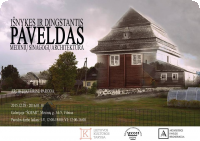
The Jewish Culture and Information Center’s Shofar Gallery (Mėsinių g. 3a/5, Vilnius) will host an exhibition of three-dimensional architectural models called “A Disappearing Legacy: The Architecture of Wooden Synagogues” opening at 6:00 P.M. on Friday, December 18, 2015.

The cultural heritage educational project was the unique idea of the architect Aurimas Širvys. Protection and adaptation of wooden synagogues is one of the most urgent problems in wooden-building heritage protection. This project will attempt to bring public attention to the documentation of wooden heritage using the latest computer modeling tools and to present non-invasive techniques for restoring damaged heritage sites.

Jewish Cultural Heritage in Lithuania

The Cultural Heritage Department under the Lithuanian Ministry of Culture has posted a PDF document called Jewish Cultural Heritage in Lithuania:

Jewish Cultural Heritage in Lithuania

Jews settled in the territory of historic Lithuania during the rule of Grand Duke Gediminas in the first half of the 14th century. Economic and historic conditions in the Lithuanian lands proved to be conducive for the emergence of a unique community of Lithuanian Jews, which later became known as the Litvaks. The growing Lithuanian Jewish communities attracted rabbis, who were knowledgeable and experienced in the field of education. Jewish quarters were formed in each town, with a synagogue and a synagogue yard as a prayer house and schooling and administrative centre of the local community. As the authority of Lithuania-based rabbis grew and the Lithuanian Jewish communities prospered, yeshivas, Jewish spiritual high schools, were founded in various Lithuanian towns. From the end of the 19th century, and with yet greater intensity after World War I, a network of secular educational institutions developed in the Republic of Lithuania, in Vilnius, and in the surrounding areas, offering instruction in the Yiddish and Hebrew languages. Local printing houses produced sacred and secular books needed for the educational process. All this collectively created a solid foundation for the Jewish press and high culture—theatre, art and literature—to grow and flourish. The Lithuanian Jewry, like Jewish people everywhere else in Europe, was subjected to the horrors of the Holocaust in 1941–1945. Their cultural heritage fell victim to the destruction alongside its creators. In present day Lithuania, the quiet witnesses of this formerly glorious culture can be encountered in various Lithuanian towns and villages.

ISIS-Inspired Terror Plot Targets Israeli Embassy in Berlin

Two charged in Berlin with “planning a massive act of violence.”

BERLIN–The public prosecutor in Berlin charged two men, both believed inspired by the Islamic State group, with conspiracy to attack the Israeli embassy or another Israeli institution between December, 2014 and July, 2015, Tobiah Kaehni, a spokesman for Berlin’s Criminal Court, told Jerusalem Post Wednesday.

Both men are Berlin-born with Palestinian roots.

The prosecution in Berlin opened its case Tuesday against Mohamed el-N. and Ali el-I., both 21. The men were charged with “planning a massive act of violence.”

Lithuanian Community in Israel Attend Hanukkah and Christmas Event

U

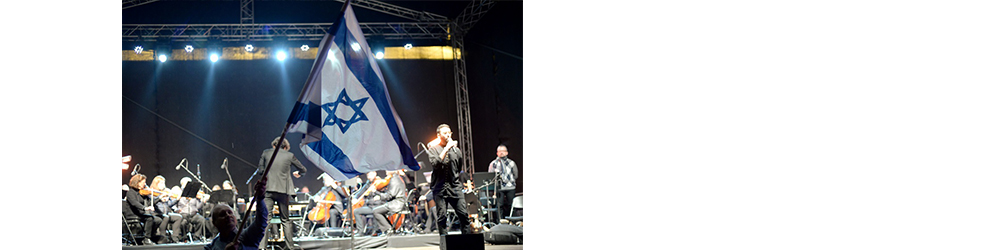
Holiday jazz rang out at the Felicja Blumenthal Music Center in Tel Aviv on December 11, in celebration of Hanukkah and anticipation of Christmas. The Nerija Lithuanian community in Israel invited compatriots and their family members, and all people with an artistic bent, to attend the second musical event called “Sounds of December: From Hanukkah to Christmas.” Lithuania’s ambassador to Israel Edminas Bagdonas and cultural attaché Saulius Pilinkus honored the community with their presence.

“Jazz is the universal language of the soul and freedom, it has no borders,” community member Ilona Sakalauskaitė, who ended up acting as hostess at the event, said. She invited the public to come hear one of Lithuania’s most talented saxophonists, Danielius Praspaliauskis. The pieces performed by him and Gary Libson, originally from Kaunas and resident in Israel now, received sustained applause. When the audience heard the duet had only formed several hours before the concert, they were amazed. “If this is what they can do after practicing together only once, just imagine what they could with more time!” ambassador Bagdonas exclaimed.

Full story in Lithuanian here.

A Happy Hanukkah for the Children of Panevėžys and Ukmergė

DSC_0110

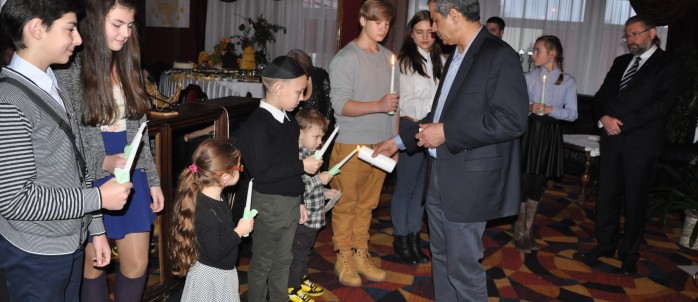
It has become something of a tradition for the Panevėžys and Ukmergė Jewish communities to celebrate Hanukkah together. This year Hanukkah was celebrated at the Vakarinė Žara restaurant with a program drafted by both communities. About 100 members turned out for the holiday celebration including children and adults. Israeli ambassador to Lithuania Amir Maimon also attended with his wife Tal, as did Panevėžys mayor Rytis Račkauskas, members of the Panevėžys city council, Ukmergė regional administration Culture Department deputy director Julius Zareckas, Ukmergė Regional History Museum director Vaidutė Sakolnikienė, Ukmergė Tolerance Center director Vida Pulkauninkienė and other honored guests. The ceremony began with the lighting of the menorah. Israeli ambassador Amir Maimon lit the shamash candle and as Hanukkah music played lit the eight candles held by children.

The ambassador’s wife Tal Maimon lit the main menorah with mayor Račkauskas, Julius Zareckas, city council member Petrauskas, Panevėžys Jewish Community board of directors member Jurij Grafman, alderman Michail Grafman, Artūras Taicas and Panevėžys Jewish Community chairman Gennady Kofman. The room was filled with warmth and light, appropriate to Hanukkah, the festival of lights. Everyone danced to Hava Nagila.

Ambassador Maimon briefly told the story of Hanukkah and greeted all the participants with Hanukkah greetings. Panevėžys mayor Račkuskas also gave a greeting and wished for understanding, light and peace for all those present. Artūras Taicas passed on the greetings of Lithuanian Jewish Community chairwoman Faina Kukliansky. Chairman Gennady Kofman explained the holiday foods, what the pancakes and doughnuts symbolize, and told of the three miracles which occurred 2,160 years ago. Toasts were made and celebrants tried the pancakes and doughnuts. Halfway through the celebration gifts were presented to the children, the children improvised a concert, Jewish music was played and the children played dreidl.

  • DSC_0157
  • DSC_0172
  • DSC_0195

Sex and Judaism

Miami, December 13, 2015–Targum Shlishi is supporting two innovative programs developed by JOFA (Jewish Orthodox Feminist Alliance) to disseminate knowledge and foster greater understanding of the intersection between sexuality and Judaism: Chatan and Kallah Teacher Training Workshop and the Joy of Text Podcast.

“One might think that in an age of technology when knowledge is easily accessible, that the Orthodox community would be fairly educated about sexuality. Unfortunately, this is not true. Many enter marriages without adequate knowledge of biology, the mechanics of sex and the range of sexual acts permitted by Jewish law,” notes Sharon Weiss-Greenberg, executive director of JOFA.

These two programs are part of JOFA’s efforts to educate the Orthodox community about issues of Jewish law and sexuality, to improve marriages and to promote healthy sexual activity in the Orthodox community.

A Mehaye Winter Camp 2015

The A Mehaye Winter Camp is an event for children and juveniles aged 7 to 17 and will take place from December 24 to 30 this year. You are urged to register now.

Cost: 100 euros (plus 30 euros deposit) per individual, 180 euros for two siblings (plus 30 euros deposit).

For more information, please call +37068542463 or +37069920212.

LJC Social Center Jewish Family Service Celebrates Hanukkah

VaikCha2

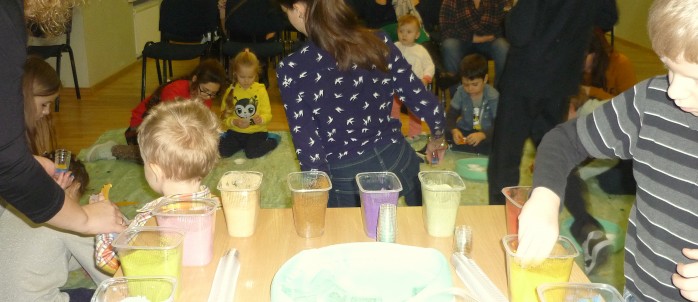
The Jewish Family Service of the Social Center at the Lithuanian Jewish Community held a Hanukkah celebration December 10 for children and parents which included a creative workshop. An experienced developmental psychologist who several years ago led Purim programs for children served as guide at the event. First the children watched a short film about Hanukkah and associated traditions, then in the art workshop portion of the program the children and their parents used colored sand to create a decorative menorah. The children enthusiastically used many different colors to represent the flames. They framed their pictures and then continued to work on them using different decorations. After the work was done, there was a treasure hunt for Hanukkah gelt, gift-giving, dreidl play and snacks of fresh doughnuts.

Approximately thirty children and parents participated. They reported having a lot of fun and said they would remember the event for a long time to come.

More snapshots from the event here.

LJC is looking for partnerships in EC project

LJC is looking for partnerships in EC project

Call for proposals:  Action grants to support transnational projects to prevent and combat racism, xenophobia, homophobia and other forms of intolerance – JUST/2015/RRAC/AG

The deadline for this call for proposals is 18/02/2016 12:00 (noon) CET.

MORE

Lithuanian Jewish (Litvak) Community in Vilnius, Lithuania – is non profit organization expanding its activities and seeks for partnerships under the call Action grants to support transnational projects to prevent and combat racism, xenophobia, homophobia and other forms of intolerance.

We would like to share our experience in the field of prevention and monitoring and also looking for organization across EU that are experts in this field. We would join the project or agree to become a coordinating institution.

The proposals under this call shall focus on the priorities described below:

  • 2.1 Best practices to prevent and combat racism, xenophobia, homophobia and other forms of intolerance (BEST)
  • 2.2 Training and capacity building for strengthening criminal responses to hate crime and hate speech (TRAI)
  • 3 Empowering and supporting victims of hate crime and hate speech (VICT)

Our goal: We would like to share and expand our experience in the field of 2.1 (BEST) as we have developed and maintain The Bagel Shop social campaign aimed to promote tolerance, prevent and combat anti-Semitism and other forms of hatred in Lithuanian society. Interconnected educational, awareness raising and empowerment initiatives take place in Lithuania promoting multicultural understanding among society, strengthening Lithuanian Human rights coalitions and its dialog with stakeholders. The Bagel Shop educates  Lithuanian society about the significance of Jewish contributions to Lithuanian history and culture, facilitate dialogue among various ethnical groups and actively engage young Jews and other Lithuanian citizens in order to help them to both re-examine the shared past and build a shared future together.  

Mini Limmud Opens with Lighting of Sixth Hanukkah Candle

The Lithuanian Jewish Community and guests from Estonia, Latvia and Russia turned out for the three-day annual traditional event Mini Limmud at the Vilnius Grand Resort Hotel. Families with small and adult children attended. Mini Limmud is a series of lectures, films and meetings with interesting people. The event opened with a Sabbath dinner on December 11 and the opening included Hanukkah celebrations with Jewish song and dance. LJC chairwoman Faina Kukliansky, Israeli ambassador Amir Maimon, Kaunas Jewish Community chairman Gercas Žakas, Klaipėda chairman Feliks Puzemskis and Šiauliai chairman Josifas Buršteinas lit candles. Žana Skudovičienė hosted the evening.

Snapshots available here.

Spectacular Menorah Display Lit in Central Vilnius

ChanukaViln

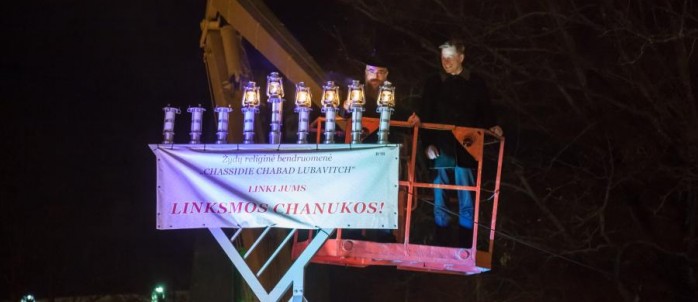
The square in front of the Lithuanian Government in Vilnius, Lithuania, again featured the large menorah exhibit for Hanukkah this year, placed there annually by members of the Chabad Lubavitch movement. This year Vilnius mayor Remigijus Šimašius lit the first light.

Story here.

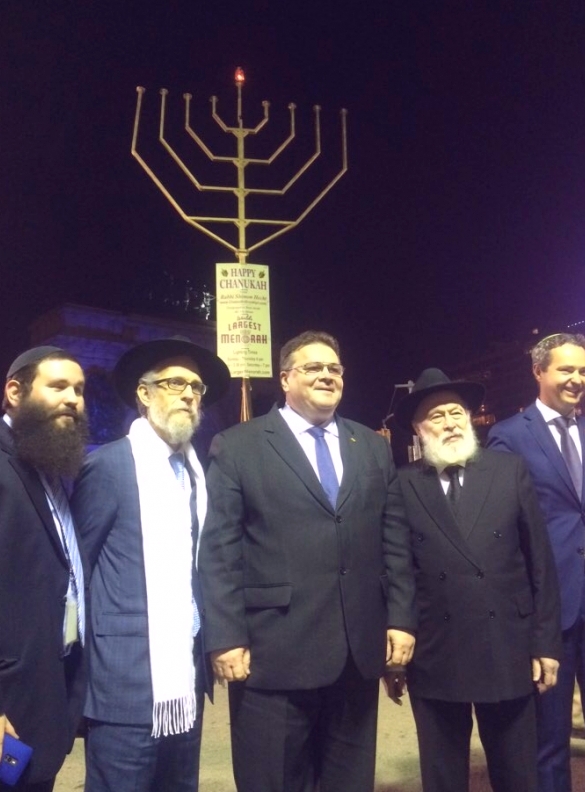
Lithuanian Foreign Minister Lights World’s Largest Menorah in New York

linkaslink_new_york
photo courtesy Ministry of Foreign Affairs

VILNIUS, December 11, BNS–Lithuanian foreign minister Linas Linkevičius
lit the world’s biggest menorah in New York as part of his official visit to the United States. During the festival in New York Linkevičius said the people of Lithuania were discovering their rich Jewish heritage and taking pride in the significant contribution of Lithuanian Jews to world culture, the Foreign Ministry reported.

The nearly 10-meter-tall menorah in Grand Army Plaza at Prospect Park in Brooklyn, New York,
is considered the largest in the world. Inviting guests to light the menorah has been practiced there since 1985, the press release said. This annual menorah-lighting ceremony takes places during the eight-day holiday of Hanukkah. This year Hanukkah is celebrated from December 6 to 14.

BNS

Maestro Anatolijus Šenderovas at the “Destinies” Series at the LJC

likimai7

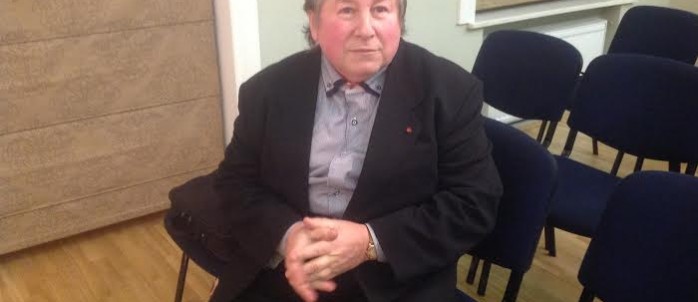
The twenty-second installment of the “Destinies” series regularly organized by Lithuanian Jewish Community deputy chairwoman Maša Grodnikienė featured one of the most famous of contemporary Lithuanian composers, National Prize recipient Anatolijus Šenderovas. Kamilė Rupeikaitė-Mariniuk, PhD, deputy director of the Vilna Gaon Jewish State Museum and an expert in cantillation and music, led the conversation with the composer.

Šenderovas, considered modern composer of unique talent, spoke cheerfully of his life and his musical career. Lithuanians seem quite proud of their composer. His works are performed by many musicians and orchestras, and new variations upon them constantly appear. Many people turned out for the “Destinies” event and left the auditorium inspired by his amazing energy.

Square Named after Emmanuel Levinas in Kaunas

December 11, BNS–The Kaunas city council executive body has agreed to rename the square next to lift carrying passengers to the neighborhood of Žaliakalnis after the philosopher Emmanuel Levinas, the municipality reported Friday. Levinas is considered one of the most famous of Kaunas’s sons. He was born and lived there. Viktoras Bachmetjevas, an early proponent of the project to rename the square, said the proposal is four or five years old.

“I was thinking about how Levinas was one of the most important people ever born in Kaunas, and that there is almost no sign of him here. As a resident of Kaunas, I felt it my duty to increase the number of those signs. If he becomes an attraction in the city, that will be the best way to remember him,” Bachmetjevas commented. Levinas was an existentialist philosopher and a professor at the Sorbonne. He was born and lived in Kaunas’s Old Town and met his future wife there, whom he later married in Paris. His family living in Kaunas were murdered at the beginning of World War II.

A street in Kaunas was named earlier in his honor and there is a memorial plaque to mark his place of birth on a building on Karaliaus Mindaugo prospect.

BNS

Israeli Security Forces Arrest Five-Member ISIS Cell in Nazareth

With the spread of global terrorism and ISIS on the march, Israel is clamping down on domestic Islamic terrorist threats.

Israeli security forces arrested five Arabs with Israeli citizenship from Nazareth on suspicion of planning terror attacks on behalf of the Islamic State (ISIS) terror organization, the Shin Bet (Israel’s Security Agency) revealed Tuesday.

The suspected terrorists, aged 19, 20, 22, 23, and 27, were exposed as members of the Salafia Jihadiya organization, which adheres to the ISIS ideology.

Trump to Visit Israel in December as Controversy Rages over Proposed Ban on Muslims

AP_23045808279
Photo: Associated Press/Mic Smith

After calling for a sweeping temporary ban on all Muslims trying to enter the US, 2016 presidential candidate Donald Trump has angered many including in the Middle East where he is expected to visit Israel later this month.

Donald Trump’s call to keep Muslims from traveling to the United States is causing dismay among business leaders in the Middle East, where the billionaire presidential candidate has done business for years, a region viewed as well-suited for his brand of over-the-top luxury.

Trump announced Tuesday he intends to visit Israel in the coming weeks, and his announcement has already generated a stir among Israel’s Arabs and left-wing lawmakers.

Darbėnai: Žemaitijan, Jewish, Japanese

Darbėnai, getting more beautiful by the day, has finished erasing its blemishes. Maintaining respect for its past, the town has reconstructed its main square and the areas around it, and has finally torn down the Soviet Palace of Culture which had become an abandoned eye-sore long ago. There’s only one thing left for the residents of Darbėnai to do: to come to terms with historical memory and let the Jewish past back into town, and learn how to live with it.

by Jūratė Kiliulienė, veidas.lt

While the ever-more-frequent chill winter winds still haven’t brought snow, the beauty of the small town is plain to see. Most likely the residents themselves still haven’t got used to it, and the changes so pleasant to the eye are a topic of conversation among the townspeople, who can now show the place off to outsiders. After archaeological digs, the sidewalks and pavement have been put back in order, there are new street lights and modern benches. Several years back the changes began in Darbėnai from the center, the old Market Square. In line with the preferences of residents, here, in front of the pre-war Jewish houses, paving stones were laid.

Full story in Lithuanian here.