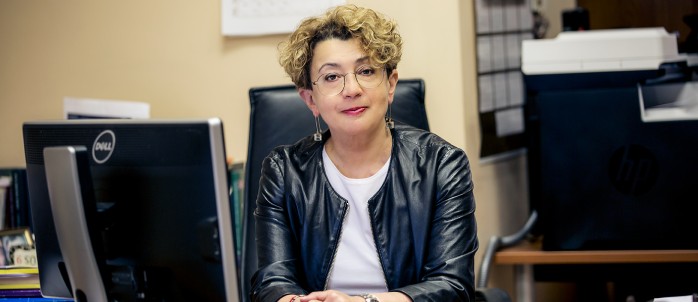
Ethnic Minorities Department Holds Seminar in Kaunas on Project Funding

DSC_4369
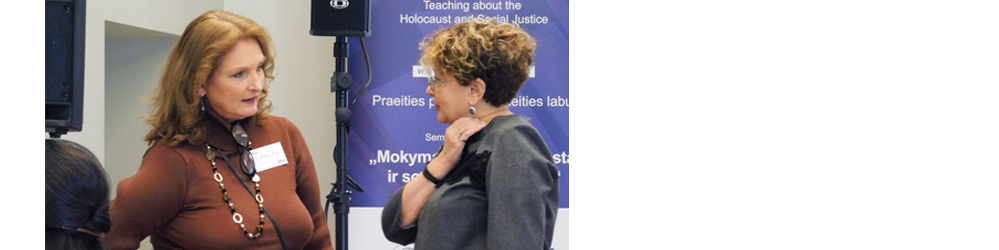
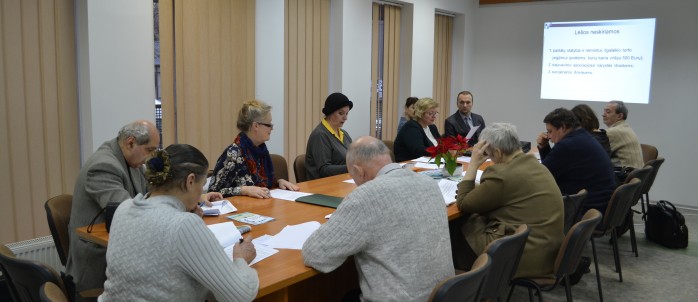
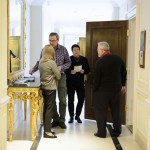
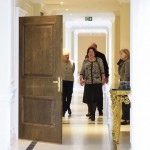
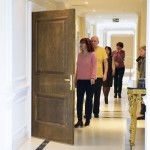
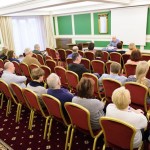
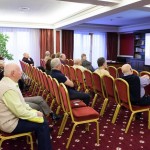
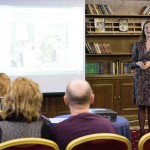
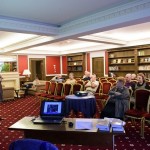
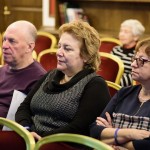
Right in the middle of holiday preparations, a seminar/meeting was held at the Center for the Various Ethnic Cultures of Kaunas on December 22, 2015 with representatives of the ethnic minority communities and Rasa Paliukienė, director of the Contacts with Ethnic Communities Department of the Ethnic Minorities Department of the Government of the Republic of Lithuania. The seminar/meeting was held for representatives of the ethnic communities who plan to submit applications for funding for projects in 2016 to strengthen minority cultures. The seminar detailed the entire process of preparing a project, implementing it and reporting, and examined in detail project application forms and how they should be completed with an example provided. It also answered questions by attendees. Representatives of eight ethnic minority community associations operating in Kaunas attended, including Kaunas Jewish Community chairman Gercas Žakas and administrator Ieva Černevičiūtė. Representatives from the Ethnic Minorities Department strongly encouraged the ethnic communities to apply for financial aid for projects before January 5, 2016 for making real their creative ideas for spreading the culture and traditions of their minority, encouraging civic-mindedness among ethnic minority children and youth, preserving the ethnic minority cultural heritage, sites and values and for Saturday and/or Sunday schools for the ethnic minorities.

Review of Mini Limmud Conference 2015

2. sestadienis (340)
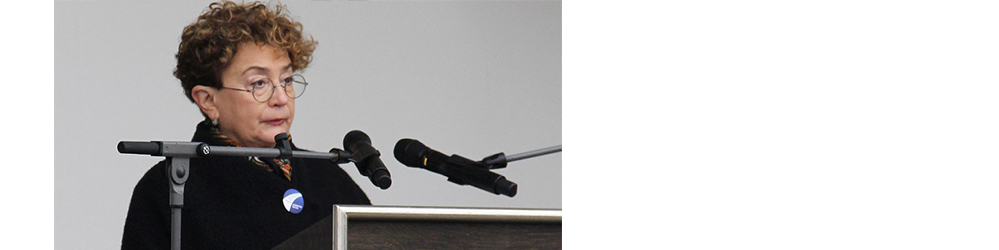
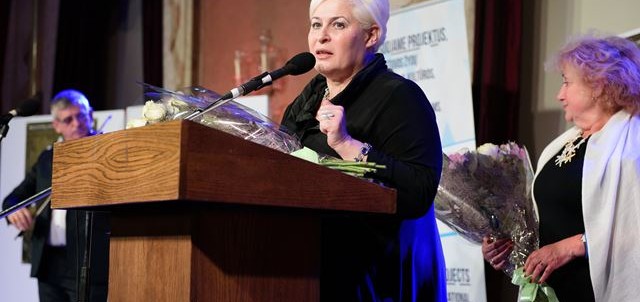
Organizer Žana Skudovičienė at the podium at Mini Limmud 2015.

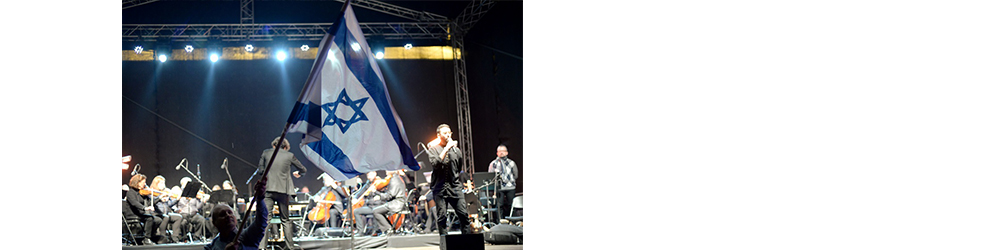
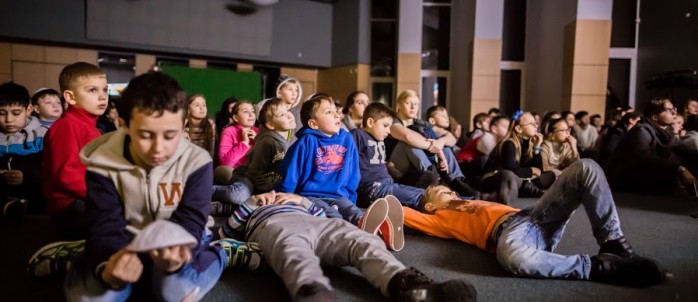
The Mini Limmud conference is a large educational and entertainment event for Jewish families. The three-day program with overnight stays and entertainment at a hotel was instituted so that everyone might find something of interest and importance in learning about Jewish history, traditions, religion, Yiddish culture and current events. This year the organizer was Žana Skudovičienė. Responses by participants were positive and they expressed their thanks as well as a preference for more interesting speakers next year. Organizer Skudovičienė said they hadn’t been able to invite all the speakers they wanted this year.

“It’s hard for me to evaluate my success because this was the first year I was the organizer,” Skudovičienė said. “Junona Berznitski organized all the earlier Limmuds and I just participated as an MC, and I just had to worry about my clothes and appearance, create some scenes and write a text. But now it was a great challenge for me. I met all the potential speakers and selected only the most interesting people. These all agreed to participate, but there were others who wanted to participate but couldn’t because of plans made earlier. People requested we get reporter Viktor Topaller but everything was limited by funding. We were in touch with Viktoras Šenderovičius who wanted to come but couldn’t, but plans to next time. I wanted to find more Judaism and Jewish history experts, not necessarily from outside the country. Giedrius Jakubauskis delivered an extremely interesting presentation. Attendees were happy with the presentation of Saulius Šaltenis’s new book “Žydų Karalaitės dienoraštis” [“Diary of a Jewish Princess”]. They bought up all the copies of the book brought to Limmud, and we might have brought more from the publisher.”

Conference participants enjoyed meeting Israel’s ambassador to Lithuania Amir Maimon and were eager to learn about Israeli current events. There was a real discussion and people were concerned with why Israel always seems to be at the losing end of the propaganda war in the media. There wasn’t enough time for a comprehensive answer from the ambassador, but we hope to continue this discussion at the Community.

Report from the A Mehaye Winter Camp 2015

713

Pavel Guliakov, the LJC’s new director ew coordinator of youth programs, reports the A Mehaye winter camp is drawing to a close and was a wonderful success.

He said the winter camp is the largest annual youth program event with the greatest participation and requiring the most organizational work. This year a parents’ committee was called to help with organization and to draw up safety measures, rules and disciplinary measures, Guliakov reported.

A team of young but incredibly responsible and talented coordinators, counselors and professionals aided the camp leaders in their work this year. Guliakov noted there was a high level of comfort and familiarity because all of the members of the time except one (the Judaism coordinator) had themselves participated as children in Community youth programs, and besides working as camp guides were involved in all sorts of other outside activities including Jewish music and dance, art workshops and even professional cinematography.

A Wake-Up Call

The days are ticking by. The year is almost over, and another one about to begin. Yet, these past twelve months will linger with me for some time.

2015 was a wake-up call.

The year began with the brutal rampage at Charlie Hebdo, followed by murderous attacks at Jewish targets in Paris and Copenhagen and a terror wave in Israel. It ended with the slaughter of 130 innocent souls enjoying food, sport, and music in the City of Light.

First they came for the journalists. Then they came for the Jews. Finally, they came for all of us.

2015 was a wake-up call and a challenge. A challenge to all of us to rise up and meet the moment facing us.

We can’t afford not to.

AJC [American Jewish Committee for Global Jewish Advocacy] is working around the world and around the clock to meet the moment. Our global advocacy architecture spans six continents. We understand the issues in depth, maintain relationships with the world’s key leaders, and are having a real impact on policy decisions.

But our vital work requires your sustained support. From now until December 31, generous donors will match new gifts to AJC, up to $225,000.

It’s not too late to meet the moment with us.

With heartfelt thanks,

David Harris
Executive Director
Edward and Sandra Meyer Office of the Executive Director
ajc.org

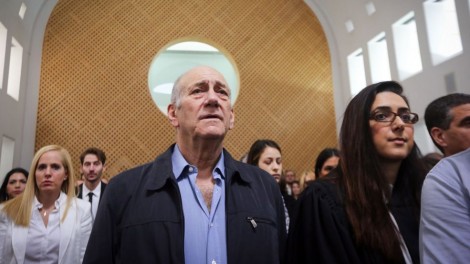
Israeli Supreme Court Reduces Ex-PM’s Sentence to 18 Months

F151229FFGY106-e1451382794859-470x264
Israel’s Supreme Court Tuesday partially upheld the conviction of Ehud Olmert in the Holyland corruption trial, making history by sending the former prime minister to prison. Olmert was one of eight officials and businessmen convicted in March 2014 in a real estate corruption case called the largest in Israel’s history.

While it struck down one bribery conviction for Olmert’s part in the so-called Holyland scandal, it upheld another, reducing the former prime minister’s sentence from six years to 18 months. He and others whose convictions were upheld Tuesday will begin to serve sentences February 15.

Speaking to reporters after the decision was issued, Olmert emphasized relief over his acquittal in the more severe of the two bribery counts while maintaining his innocence in the second one as well.

“The last four years were difficult,” he said, describing “a dark cloud that hung over” him and his family, and asserting that “a heavy weight had been lifted” from his shoulders.

Full story here.

European Commission Considering Redefinition of Anti-Semitism

by Raphael Ahren

At Israel’s request, the European Union may formulate a clear definition of anti-Semitism in a bid to better fight the phenomenon, the EU’s new point person for combating hatred of Jews said.

“The definition of anti-Semitism is very disputed, even among Jews themselves. The main dissent revolves around the question of manifestations against the State of Israel. We’re currently looking into this issue,” Katharina von Schnurbein told the Times of Israel in a telephone interview last week from Brussels. “One thing is clear: anti-Semitism can sometimes hide behind anti-Zionism. That is certainly our understanding here.”

German national von Schnurbein was named the European Commission’s coordinator on combating anti-Semitism earlier this month. Last week she participated in the ninth EU-Israel Seminar on Combating Racism, Xenophobia and Anti-Semitism in Brussels, together with about 30 representatives from the Israeli Foreign Ministry, the European Commission, the EU’s External Action Service, the Fundamental Rights Agency, technology experts and NGOs.

Lithuanian Jewish Community Chairwoman Takes Stock of Accomplishments over Past Year

MILDAR-0138web

Lithuanian Jewish Community chairwoman Faina Kukliansky said 2015 was an important year for the Community and that she is hoping for changes in school curricula in 2016 to take into account the Jewish contributions to Lithuanian history, Jewish culture and the Holocaust.

The year 2015 was an important one for us, the community. Important changes in Lithuanian-Israeli relations were seen. An Israeli embassy was opened in Lithuania and ambassador Amir Maimon began work here. Ambassador Maimon has dedicated a lot of time to the Jewish community and has proven a reliable partner in solving various problems. Lithuanian president Dalia Grybauskaitė and prime minister Algirdas Butkevičius paid serious attention to the Jewish community and both visited Israel in 2015 and met with top leaders of the Jewish state. It was said Israeli-Lithuanian relations have never been so good and efforts to expand economic and cultural ties continue.

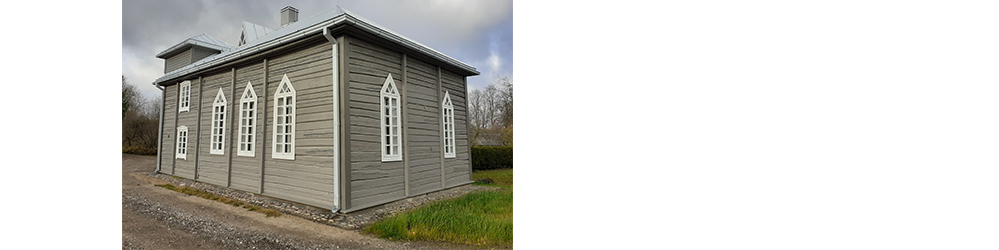
The Lithuanian state began to pay more attention to preserving Jewish heritage and cemeteries. Old synagogues left in small towns without any Jews were the subject of utilization agreements with local municipalities to be used for cultural uses by the public. The Lithuanian National Martynas Mažvydas Library began a significant project to digitize the archive of YIVO, which operated in Vilnius until World War II, together with the YIVO institute now located in the USA.

The Lithuanian Jewish Community appreciates that representatives of our Community are included in state visits by top leaders. This is very important to us. I took part in almost all meetings, and this fact testifies not only to the respect shown the Community, but also to the opportunity to present information first-hand, which is important to the leader as well as the Community. We are taking a successful part at all international organizations and continue our many years of cooperation with the Joint Distribution Committee, and appreciate this global organization’s support for our Community. We also thank the ORT, EJC, WJC, AJC, the Goodwill Fund, the Lithuanian Human Rights Monitoring Institute, EEA Grants and the Howard Margolis Foundation for their help. Thank you all.

Currently I am seriously reviewing the operating rules of the Community’s Social Center. We have established a steering committee for the Social Center and are seeking to expand the circle of people eligible to receive social benefits, which should go not only to support the elderly, but more to children as well. Jews are also concerned that people evacuated during the war do not enjoy equal status with deportees. After all, they didn’t leave their homes voluntarily, but receive no pensions from the state.

We should not forget that last year saw the establishment of three governmental commissions. The first was the Commission for Teaching and Holocaust Education. The goal of this commission is to place greater emphasis in the schools on Jewish history and Jewish contributions to Lithuanian history. The second is the Heritage Commission which is tasked with taking care of cemeteries and mass murder sites as well as all surviving Jewish heritage sites in Lithuania. The third commission is for the restoration of property rights to private individuals who did not have Lithuanian citizenship during the period when the law for such restitution was in force. This issue will require negotiations with the Government. Another issue is a decision on non-inherited property which will never be inherited because it belonged to people murdered in the Holocaust. The program approved by the Government back in 2011 to rename the streets of Lithuanian cities and towns in honor of rescuers of Jews and famous Jewish figures, unfortunately, still hasn’t been implemented.

After the brutal terrorist attacks in Europe last year which shook the entire continent, we also hope the issue of the safety and security of members of the Lithuanian Jewish Community will receive more attention from state institutions.

The Šnipiškės cemetery and the cemetery on Olandų street were the subject of much discussion, but I’d like to say that all issues connected with the Šnipiškės cemetery are being and will be solved under supervision by rabbis, and an agreement was signed with the rabbis in 2009. We thank mayor of Vilnius Remigijus Šimašius and director of the Pavilniai Regional Park Vida Petiukonienė, among others, for their concern with and care of the Olandų street cemetery.

We consider ourselves Europeans but to make our Jewish identity real we still have to renew our knowledge of Judaism. This year we bade farewell to our rabbi whose employment contract ended. We intensively conducted a search for a new rabbi from among many candidates, the successors to the Gaon, who wanted to begin working in Vilnius and Lithuania, to continue the Judaic Mitnaged tradition in this country, to work not just at the Choral Synagogue in Vilnius, but also in the community.

I am pleased that the number of Vilnius residents joining the Community is quickly growing. Although we have always said that all Jews living in Vilnius are members of the Community, today we see them becoming true members and paying membership fees, which have been greatly reduced. And non-Jews are also taking part in the Community’s work, and just as we ask for tolerance for others, we strive to be tolerant people ourselves.

The Community is hoping for more participation by the youth because we are not just elderly people. Taking a more active part means each individual may contribute according to their desire, talent and ability. If an individual wants to preserve his or her Jewish identity and those of his or her children and grandchildren, we welcome any and all such initiatives.

Hezbollah Developing Navy, Israeli Defense Expert Claims

Hezbollah has more than 100,000 rockets in its arsenal, Israeli reserves major general Amos Gilad told the Israeli news website nrg in an exclusive interview Friday.

Gilad, director of the Political Military Affairs Bureau at the Israeli Defense Ministry, also told nrg the Lebanese-based terrorist group has been building up its capacities for naval warfare, including acquiring Russian anti-ship P-800 onyx missiles, also known as the yakhont.

“These missiles can be used against maritime and land targets, but also offshore gas rigs,” Gilad said, referring to Israel’s new and lucrative natural gas infrastructure.

Happy Holidays from the LJC!

image003

The Lithuanian Jewish Community, which recently celebrated the Jewish holiday of Hanukkah,

symbolizing Victory and the Miracle of Light, wishes all the friends and partners of the Community

a Merry Christmas and a Happy New Year. We wish you the best holiday experience ever!

Thank you for your friendship, help, ideas and for caring about the history and culture of the Jews of Lithuania.

We hope to share the next year, 2016, with you as well.

Lithuanian Jewish Community chairwoman Faina Kukliansky

Ukrainian President Calls on Israel to Take a Stand on Conflict with Russia


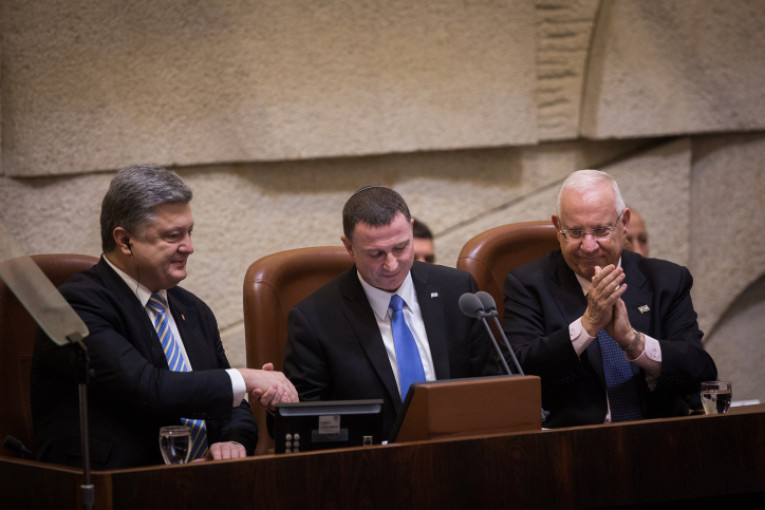
Poroshenko shakes hands with Knesset chairman Yuli Edelstein while Israeli president Reuven Rivlin claps during special session held December 23, 2015. Photo courtesy of Hadas Parush/Flash 90

“Russia supplied systems to Syria that can change the balance of power in the region,” Poroshenko warns in speech to Knesset

Israel should take a side in the Ukraine-Russia conflict, Ukrainian president Petro Poroshenko said in his address to the Israeli parliament the Knesset Wednesday.

“When evil wins in one place, it will try to continue to another,” Poroshenko warned. “We need to act in coöperation and Israeli politicians should make their stance towards Ukraine very clear.”

Poroshenko said that over the last 21 months, 9,000 Ukrainians were victims of “Russian-funded terror,” and warned that the 17,000 Jews on the Crimean Peninsula may find themselves in danger.

“The occupiers have started encouraging anti-Semitism,” he said.

How Hassidic Jews in the Diaspora Observe Christmas

The origins of Nittel Nakht customs are murky, and even the name itself is a matter of some debate.

NEW YORK–Christmas is a day like any other in most Hassidic neighborhoods in New York: children go to school, shops are open and tinsel and holly are nowhere to be seen.

But Christmas Eve occupies a special place on the Hasidic calendar as a kind of “silent night,” when beit midrash study halls fall silent.

Europe and Migration: Five Challenges

Writing in Huffington Post and the Times of Israel, David Harris of the American Jewish Congress discusses five challenges Europe faces as a result of new immigrants.

Europe and Migration: Five Challenges
by David Harris
December 14, 2015

As Europe seeks to absorb a massive wave of newcomers, the challenges are becoming strikingly apparent.

First, with no advance planning, European countries have had to move quickly to address the immediate issues of shelter and other urgent needs, all the more so as winter arrives and options like tents for housing become unfeasible.

The task is formidable. More than one million new arrivals have come to Germany, the preferred destination, in 2015 alone. Each individual, as I know from my own experience working with refugees from behind the Iron Curtain, is a world unto his or her own, often with medical or psychological issues, concerns for family members left behind, anxiety about the uncertainty of what lies ahead, and a ton of questions about a new and totally unfamiliar country.

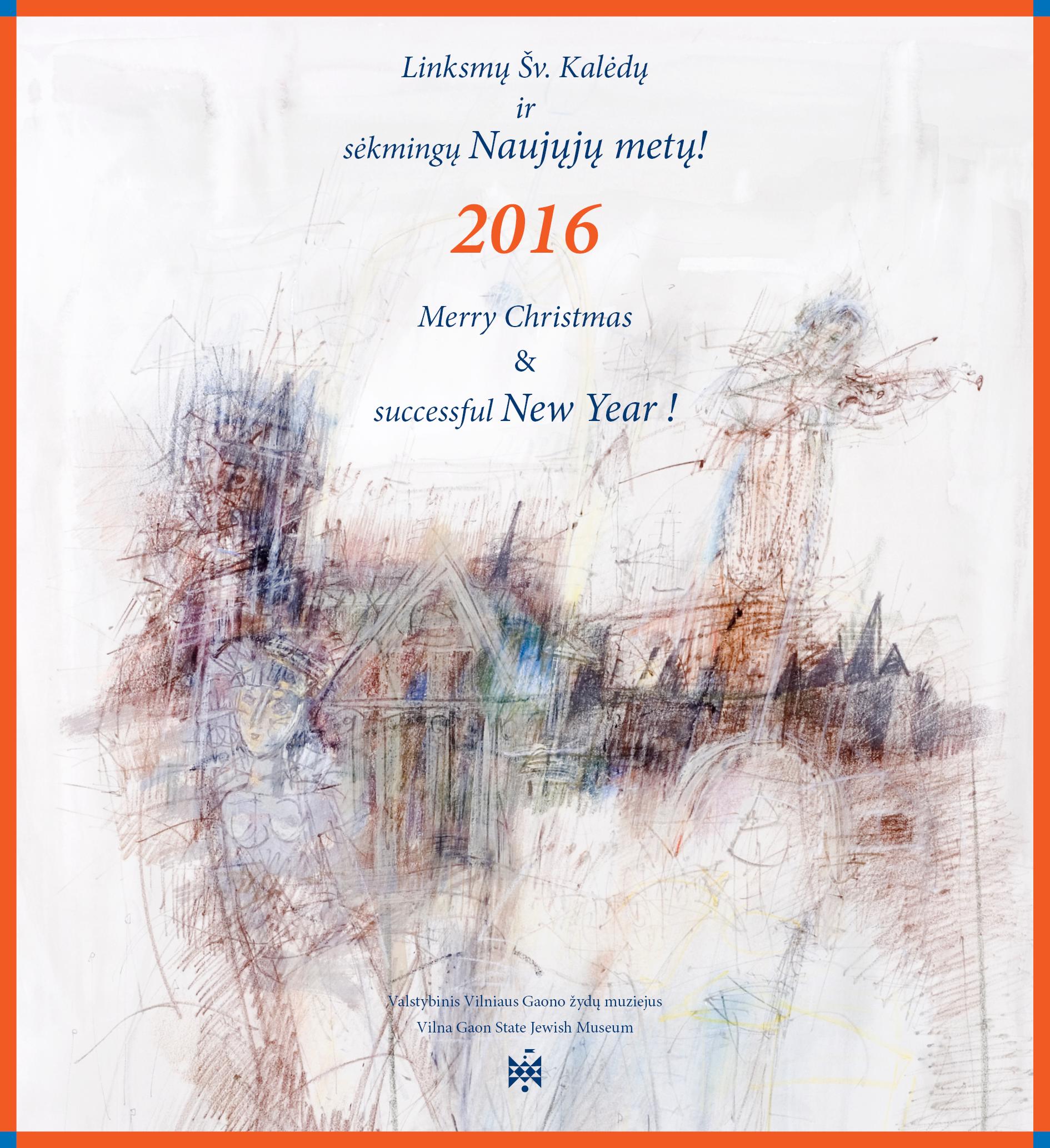
Vilna Gaon State Jewish Museum greetings

Dear Friends and Partners of the Museum,

Wishing you a Happy Holidays and a Happy New Year we’re taking this opportunity to thank you for your support, for following our news and for participating in our events during the whole year around!!

Sincerely,

Team of the Vilna Gaon State Jewish Museum

tc

Steering Committee for Social Center Activities Formed

Lithuanian Jewish Community chairwoman Faina Kukliansky has issued a directive to establish the Steering Committee of Stakeholders for Social Committee Activities. The task of the committee is make and implement essential decisions on Social Center activities, including the need for specific actions, structure of the center, its budget, new programs and other matters.

The committee is constituted of the following community leaders: Faina Kukliansky; deputy chairwoman Maša Grodnik; the doctors Ella Gurina (a member of the LJC executive board) and Arkadijus Goldinas; Kaunas Jewish Community chairman Gercas Žakas; Šiauliai Jewish Community chairman Josifas Buršteinas; ghetto organization representatives Rozeta Ramonienė and Gita Grinmanienė; and JDC representatives Baltic Region director Moni Beniosev and Baltic States Welfare director Marina Astanovskaja. Simas Levinas and Michailas Segal represent the LJC Social Center on the committee. The meeting was exemplary with Žakas, Grodnikienė, Beniosev and the doctors Gurina and Goldinas sharing interesting ideas.

Chairwoman Faina Kukliansky summed up the meeting and promised to consider the committee’s proposals in drawing up the LJC budget for 2016. Meetings are planned every quarter.

Holocaust Information Exempted from EU Data Protection Measure

The International Holocaust Remembrance Alliance and the World Jewish Restitution Organization have both issued statements hailing a decision by the EU to exempt Holocaust materials from a draft regulation on data protection called the General Data Protection Regulation.

IHRA reports that although the law won’t be considered until next year, “after two years of research and analysis, IHRA had determined definitively that researchers and research organizations were already being denied access to Holocaust-related materials on the premise that the GDPR would not permit the use of these materials.”

When Czesław Miłosz Met Chiune Sugihara, Sort of

by Geoff Vasil

Czesław Miłosz is sometimes called Lithuania’s Nobel Prize winner, although he never claimed to be Lithuanian. Neither did he call himself Polish exactly. His “national identity” was as complex as that of his uncle, Oskar Miłosz, the “French symbolist poet” who was the son of a father from a noble family from the Grand Duchy of Lithuania and a Jewish mother.

Czesław Miłosz was born in the village of Šeteniai (Szetejnie) just outside Kėdainiai on June 30, 1911, a period when Lithuania was firmly inside the Russian Empire. He moved to Vilnius and attended the Sigismund Augustus Gymnasium, then studied law at Stefan Batory University (Vilnius University), visiting his uncle Oskar in Paris in 1931. Oskar Miłosz ran in exalted literary circles including some very famous names from the period. This might have influenced the younger Miłosz in helping found the Polish literary circle Żagary in Vilnius that same year. After being graduated from the law faculty he went back to Paris for a year, and then worked at Radio Wilno when he returned to Vilnius.

He spent the period right up to World War II in Vilnius before removing himself to Warsaw, where he helped rescue Jews and was eventually recognized as a Righteous Gentile as well as later becoming a winner of the Nobel Prize for Literature. He describes the period when Lithuania and Vilnius hung in geopolitical limbo in a chapter in his 1959 autobiography, Rodzinna Europa, published in English as Native Realm in 1968, called “Peace Boundary,” the name then used by both sides to describe the Molotov-Ribbentrop line under the peace agreed by Hitler and Stalin.

Condolences

We mourn the loss of Yevgeniya Korotkina, a member of the Jewish Community and Social Center. Our deepest condolences to her family and friends.

May 13, 1927—December 18, 2015

Our Condolences

We are saddened to report the death of Lithuanian Jewish Community member Leonid Feldman of Vilnius. He passed away December 20. He was born on July 29, 1933. Our condolences to his loved ones.