









World Jewish Congress Meets in Buenos Aires March 15-17

Buenos-Aires-Avenida-9-de-Julio

World Jewish Congress to meet in Buenos Aires March 15-17; Argentine president Macri to address delegates

International Jewish leaders to convene in Argentina to discuss unresolved terror attacks

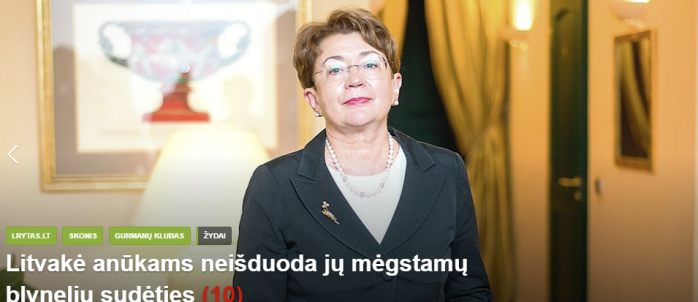
Lithuanian Jewish Community chairwoman Faina Kukliansky to attend plenary session

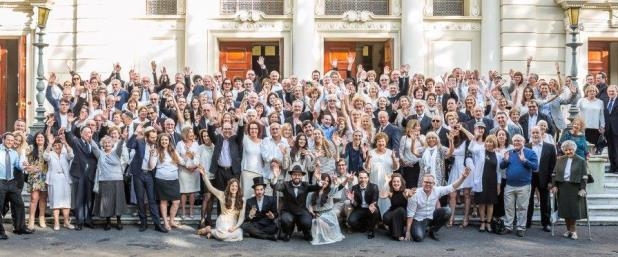
NEW YORK/BUENOS AIRES–More than 400 Jewish community leaders from around the world are expected to gather in Buenos Aires next week, as the World Jewish Congress (WJC) holds a special session of its Plenary Assembly, the organization’s highest decision-making body. Argentina’s [resident Mauricio Macri will deliver a keynote speech at the opening event of the assembly, and Paraguay’s president Horacio Cartés will be awarded the Latin American Jewish Congress’ Shalom Prize for his support for Israel.

WJC President Ronald S. Lauder said ahead of the Plenary Assembly meeting: “This will perhaps be the largest gathering of international Jewish leaders in Latin America in recent decades. We look forward to fruitful discussions and to a show of solidarity with the Jewish community of Argentina, the largest and most vibrant in Latin America.

Rina Zak: “Markas Petuchauskas: Theater in the Shadow of Death”

Publisher, translator and editor Rina Zak [Zhak, Žak, Рина Жак], one of the iconic figures in Russian-speaking Israel, is also well known outside of the biggest linguistic community in the country. Rina also engages in educational activities, in the everyday activities of the Geographical Society of Israel and in the periodical press, writing in Isrageo magazine, as well as on facebook, where she posts little-known passages from Jewish and Israeli history. Rina Zak was born in Kaunas and was graduated from the Journalism Faculty of Vilnius University.

We are pleased to offer for your consideration a passage by Rina Zak:

Markas Petuchauskas: Theater in the Shadow of Death

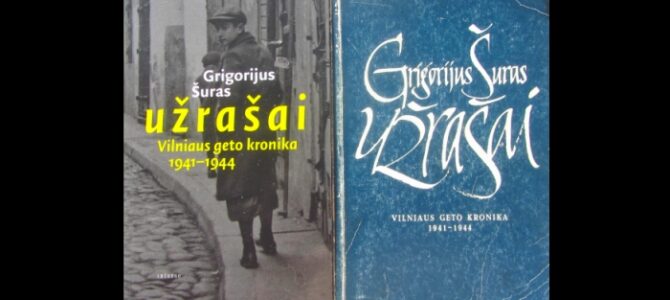
In 2015 he published a book of memoirs of his time as a young prisoner of the Vilnius ghetto called “Price of Concord.”

Strange as it might seem to some, the ghetto was a venue for musical performances and festivals, literary competitions and art exhibitions. There clinics and hospitals, schools and kindergartens, a youth club and a café. There were plans for a museum, a publishing operation… but these ideas were not destined to happen. The Vilnius ghetto lasted only two years, and its population of about 40 thousand people was almost completely exterminated.

Come Join the March 11 Holiday Procession

Lithuania is celebrating 26 years of the restoration of independence this year. We’re inviting members and friends of the Lithuanian Jewish Community to assemble at Independence Square in front of the Martynas Mažvydas National Library at 11:45 A.M. on March 11 to watch the ceremonial raising of the flags of the three Baltic states and to join the holiday procession from there to Cathedral Square. Together, let’s create a tolerant Lithuania free from stereotypes and hate!

Serious Work Planned at Old Jewish Cemetery in Žaliakalnis District of Kaunas

Posėdis kaune

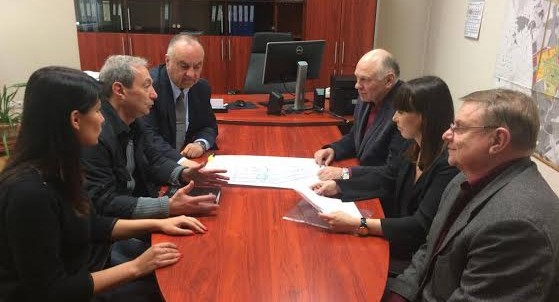
A working group for refurbishing the old Jewish cemetery in Žaliakalnis neighborhood of Kaunas met March 3. Under an agreement with the municipal administration, experts from the public agency Registrų centras [Registry Center] performed a survey and inventory of the Žaliakalnis Jewish cemetery. All gravestones were counted (5,808) and every grave was assigned a number and its exact location determined. This work took about 2 months and cost 8,000 euros. It was financed by the city of Kaunas. The work performed so far will allow the next steps to be taken: to photograph each grave, to read and translate headstone inscriptions, to identify the graves (to determine the identity of the people buried) and to create a virtual database. After that’s done, drafting and implementing a technical plan for refurbishing the cemetery will be possible. So far there is no funding for these tasks, so the plan is to approach different foundations, and the idea of recruiting volunteers for grave identification is also being considered.

The municipality is preparing a territorial planning document (designating the plot of land) for the cemetery and is planning to set up surveillance cameras at cemeteries this spring. The cemetery is always mowed and maintained.

Kaunas Jewish Community Members Take to Water for Makabi Swimming Activities

baseinas

A large group of Kaunas Jewish Community members are spending their weekends attending swimming exercises held by the Makabi Athletics Club at the newly renovated Girstutis pool complex. The Lithuanian Jewish Community and the Goodwill Fund have extended financial support to the Kaunas Makabi Athletics Club so that members can make use of the sports and recreation center.

Bagel Shop Café on Television

bern

The Catholic newspaper and website bernardai.lt now has a video outlet as well and has presented a feature on the new Bagel Shop Café located at the Lithuanian Jewish Community in Vilnius. The video presentation in Lithuanian, Hebrew and English features short conversations with Lithuania’s two new rabbis on the meaning of kosher food and cooking, as well as a brief interview with Smhuel Levin, the chairman of the Lithuanian Jewish Religious Community, among others.

To view the interview, please direct your browser here.

bbb

Jewish Summer Camp in Hungary Fosters Next Generation of Leaders–and Romance


Photo courtesy JDC

by Cnaan Liphshiz

SZARVAS, Hungary (JTA)–Escaping a sudden downpour in the summer of 2012, Andras Paszternak and Barbi Szendy ran to find cover inside an empty cabin at their Jewish summer camp, Szarvas, 100 miles east of Budapest.

The two senior counselors, then 31 and 36 respectively, chatted as rain drenched the sprawling compound where they had passed every summer since their early teens.

“I suddenly noticed I was holding Barbi’s hand,” Paszternak, a Hungarian Jew from Slovakia, said in recalling the day when he began his romantic relationship with his Hungarian Jewish wife.

Lithuanian Jewish Community Statement on the March 11 Holiday and Neo-Nazi Chants

0311

March 4, 2016, No. 197

To:

the honorable Algirdas Butkevičius
Government of the Republic of Lithuania
Gedimino prospect 11
Vilnius 01103

the honorable Remigijus Šimašius
Konstitucijos prospect 3
LT-09601 Vilnius

the honorable Visvaldas Matijošaitis
Laisves alley 96
LT-44251 Kaunas

cc:

Chancellory of the President of the Republic of Lithuania
S. Daukanto square 3
LT-01122 Vilnius

Statement
March 4, 2016
Vilnius

The Lithuanian Jewish Community proposes the Government of the Republic of Lithuania and the municipal governments of the cities of Vilnius and Kaunas take all possible measures to ensure the holiday to mark the 26th anniversary of the restoration of the Lithuanian state does not include neo-Nazi chants, marches and symbols and events of a similar nature.

We would like to underline the importance of this holiday for all of Lithuania’s citizens, including the Litvak community in Lithuania with its unique and long-standing traditions, and the importance of fostering in the international arena an image of Lithuania as a modern state based on democratic principles and celebrating a tradition of multiculturalism over many centuries.

We would like to remind you of the march held by the Union of Patriotic Youth and the Lithuanian National center on March 11, 2015 with permission from the Vilnius municipality. This march featured fascist and racist symbols and chants and slogans promoting ideas of segregation.

The Government and the municipal institutions should continue to make efforts so that neo-Nazi ideas do not become acceptable in Lithuanian society and especially that they shouldn’t be propagated under cover of state holidays and through manipulation of the concept of patriotism.

Sincerely,

Faina Kukliansky
chairwoman
Lithuanian Jewish Community

Lithuanian Government Publishes 2016 Funding to Religious Communities

BNS reports the Lithuanian Government is planning to allocate 697,000 euros this year to traditional Lithuanian religious communities for refurbishing houses of prayer and other needs. The lion’s share–626,500 euros–will go to the Lithuanian Bishops’ Conference of the Catholic Church, according to the Government’s draft plan.

The Metropolitan of the Orthodox Church of Lithuania is to get 36,100 euros, the supreme council of the Old Believers of Lithuania will come away with 8,300 euros, the Lithuanian Lutherans take 7,800 euros, and the Synod of the Lithuania Evangelical Reform Church will take 4,700 euros.

The Muftiate of the Lithuanian Islamic Sunnis is to receive 3,600 euros, the Basilian Monastery of St. Yosaphat take 3,000 euros, the Lithuanian Karaïte Religious Community also gets 3,000 while the Lithuanian Jewish Community is to get 2,000 euros, the Eastern Old Believers Church and the Vilnius Old Believers Religious Community will come away with 800 euros, the Kaunas Jewish Community is to get 600 euros and the Panevėžys Jewish Community gets the same amount as the Chabad Lubavitch Hassidic group in Vilnius, 300 euros each, according to BNS. Last year the Lithuanian Government allocated 637,164 euros to traditional religious communities.

Fayerlakh Concert

Untitled1

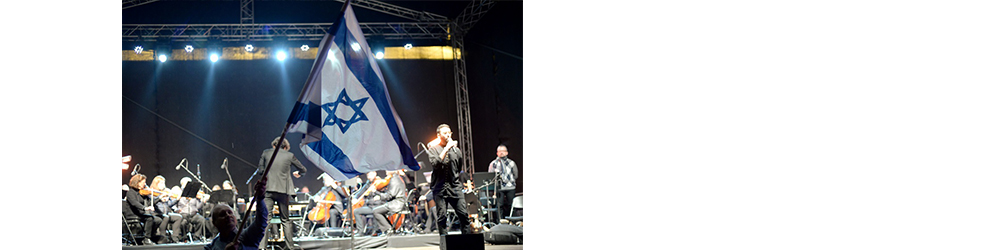
The Jewish song and dance Ensemble celebrate their 45th anniversary with a concert at the Russian Drama Theater in Vilnius. The concert is scheduled for 6:00 P.M. on March 22. Tickets cost 12 euros for the general public, 9 euros for Community members and 2 euros for students and senior citizens. To purchase tickets, see here.

Shtetl at Kaziukas Fair

Shtetl at Kaziukas Fair

Kaz16

>>Photo album

The Jewish shtetl section of the annual Kaziukas Fair in Vilnius came to life at 4:00 P.M. last Friday when the Jewish ensemble Fayerlakh performed on the adjacent stage. Jewish music including those sung in the pre-WWII Lithuanian Republic rang out from the Old Town Hall and enveloped fair-goers. On-lookers swayed to the beat as Fayerlakh performed wedding melodies and love songs. As the afternoon turned into Sabbath evening, there was a prayer and those assembled had the chance to hear it, observe Sabbath rituals and listen to the music.

A line of people wanting to get a taste of a Jewish bagel formed at the Bagel Shop Café booth and more than a thousand bagels were sold on Friday afternoon alone. Some scenes from the shtetl exhibit are provided below and at the facebook link provided above.

Lithuania Pledges Support to Japan’s Bid to Include Sugihara Documents on UN Register

VILNIUS, March 4, BNS–Lithuania will support a Japanese application to include the documents issued by its vice-consul Chiune Sugihara in Kaunas in the UNESCO Memory of the World Program.

“Lithuania supports the initiative. Sugihara’s heroic deed must be remembered, immortalized and promoted as triumph of humanity even in the face of deadly threat. I am glad our nations share values,” Lithuanian parliamentary speaker Loreta Grauziniene said after meeting with Japanese prime minister Shinzo Abe in Tokyo.

During World War II Japanese vice-consul Sugihara issued Japanese visas to Jewish nationals fleeing Nazi oppression, saving many lives.

BNS_logotipas

Traditional St. Casimir’s Fair Kicks Off in Vilnius

VILNIUS, March 4, BNS–The traditional St. Casimir’s Fair is starting in Vilnius on Friday, for the 1st time including a Jewish Township.

During the fair on March 4-6, the township will be based in the Town Hall Square, featuring traditional Jewish crafts, Jewish literature and Jewish food.

The township will include about a dozen of craft tents and marketplaces with Jewish souvenirs, a bookstore, a fabric shop, a laundry and a gramophone shop.

About 500 guests from 16 foreign countries are expected at the St. Casimir’s Fair this year.

St. Casimir’s Fair evolved from the Casimir’s processions that date back from 1604.

BNS_logotipas

Fayerlakh Concert and Bagel Shop at the Kaziukas Fair in Vilnius

Kaziukas2

The opening of Vilnius’s annual street fair will feature a concert by the Jewish song and dance ensemble Fayerlakh, at 5:00 P.M. at the Vilnius Old Town Hall square. The group is promising a whole range of music and performances, including a traditional Sabbath prayer and song.

Don’t forget, the Bagel Shop Café will also be at the fair on Friday, Saturday and Sunday. LJC staff, members and volunteers are all invited to come and help sell Jewish bagels during the fair. It should be a lot of fun and this year the annual street fair will include a Jewish shtetl section.

Makabi Club Book Launch

Makabi knyga

A large group turned out for the launch of the new book “Lietuvos sporto klubas ‘Makabi’ 1916-2016” [The Lithuanian Athletics Club Makabi, 1916-2016] at the Lithuanian Jewish Community on the last day of February, 2016. The appearance of the book is a milestone not just for the Lithuanian Jewish Community, but for Lithuanian sport as a whole, because Makabi is the oldest athletics club in Lithuania. The book tells the story of the origins of Makabi a century ago, activities in the first Lithuanian Republic, how the club was reconstituted after Lithuanian independence from the Soviet Union and its activities since then over the last 25 years. It includes information on Makabi’s participation at European and World Maccabiah Games and other sporting events, and showcases athletes. The book is richly illustrated with photographs depicting the history of Makabi.

This year is the 100th anniversary of the club, which began in German-occupied Vilnius. On October 23, 1916, the Makabi Jewish Sports and Gymnastics Association was established in the ancient Lithuanian capital. Kaunas Makabi was established in 1919. The entire Maccabee athletics movement took place as part of the early spread of Zionism.

Taglit 2016

If you’re between 18 and 26 and always wanted to visit the Promised Land, the Taglit Program offers a wonderful opportunity to make this dream come true. For more information, contact Pavel Guliakov, telephone 8 685 42463, email p.guliakov@gmail.com

Rabbi Heschel’s “Sabbath” Issued in Lithuanian by Catholic Publisher

A new Lithuanian edition of “Sabbath” by Abraham Heschel (1951), translated by Asta Leskauskaitė and published by Katalikų pasaulio leidiniai [Catholic World Publications] was launched at the Vilnius Book Fair last week.

Rabbi Heschel became a rabbi at age 16 and was graduated from the Vilna Mathematics and Natural Science Gymnasium in Vilnius before going on to study under some of the greatest Jewish teachers in Germany. He was arrested by the Gestapo and deported to Poland in October of 1938. He fled to Britain weeks before the Nazi invasion of Poland, and then went on to the United States in early 1940, where he became one of the most important and respected Jewish thinkers of the mid-20th century. His first book, apparently, “Der Shem Hamefoyrosh: Mentsch,” was written when he was a member of the Jung-Vilne group of writers in Vilnius, a book of poems in Yiddish published in Warsaw in 1933. Heschel’s poems attracted attention, including a letter of praise Chaim Nachman Bialik sent to the author from Israel.

Prosecutor General Responds to Lithuanian Jewish Community Call to Release the List of Suspected Holocaust Perps

March 2, 2016 No. 37

Office of Prosecutor General
of the Republic of Lithuania

February 29, 2016 No. 17.2.-2521
re: February 11, 2016, No. 179

To: Faina Kukliansky, attorney, chairwoman,
Lithuanian Jewish Community

Re: possible actions in connection with a list compiled by the Center for the Study of the Genocide and Resistance of the Residents of Lithuania of people suspected of committing or otherwise abetting the murder of people of Jewish ethnicity during World War II

Directed by the leadership of the Office of Prosecutor General, the Criminal Prosecution Department has examined your letter of February 11, 2016, to the Prosecutor General of the Republic of Lithuania and the director general of the Center for the Study of the Genocide and Resistance of the Residents of Lithuania (henceforth CSGRRL) containing proposals by the Lithuanian Jewish Community on possible actions in connection with the list of people alleged to have committed or otherwise abetted the genocide of people of Jewish ethnicity during World War II compiled by the CSGRRL, and having considered these suggestions, we affirm that the Prosecutor General’s Office, operating within its area of competence and under the criminal code of the Republic of Lithuania, and under the law of the Republic of Lithuania of May 2, 1990, on the restoration of rights of people repressed for opposing the occupational regimes, after receiving from the CSGRRL a detailed list based on complete archival data of people alleged to have taken part in the genocide of the Jewish people, will assess all information received. After assessing it and only if there is a legal foundation for beginning a pretrial investigation of one of the aforementioned people on the list for the aforementioned criminal actions, for which there is no statute of limitations for criminal prosecution, the prosecutor will undertake the appropriate decisions for proceeding with the case.

Farewell Herr Schwarz (Schnee von gestern, 2013)

You’re kindly invited to the preview of the documentary “Farewell Herr Schwarz” (2013, Germany / Israel) and the meeting with the director Yael Reuveny. The event is to be held at the Tolerance Center of the Vilna Gaon Jewish State Museum (Naugarduko street 10/2) at 4.00 P.M. on March 10, 2016.

The documentary is in several langaugues with English and Lithuanian subtitles. The discussion with the director is to take place in English. 

Kvietimas_EN