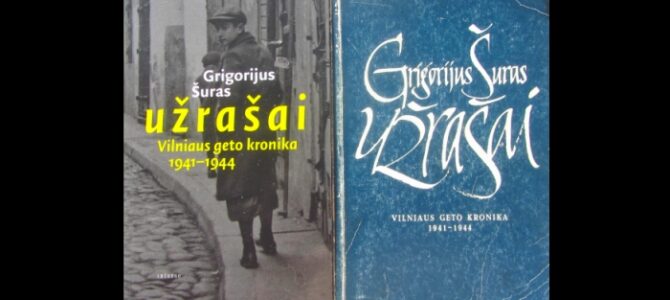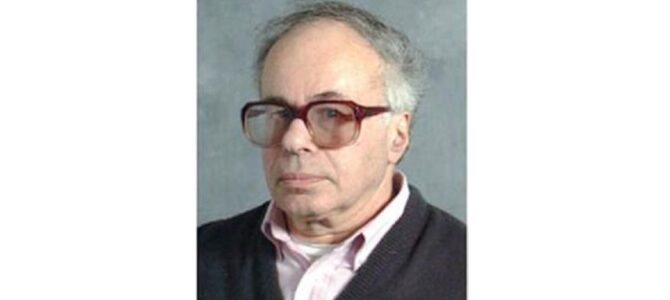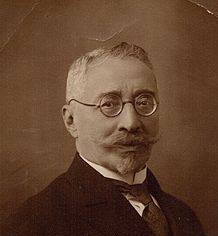
Jakub Wygodzki, Vilnius Doctor

Vygodskis Jakovas

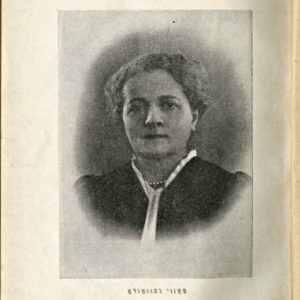
In her memoirs Alexandra Brushtein, the only child of famous prewar Vilnius doctor Jakub Wygodzki, said her father was the only person who could explain to her why one or another person is stupid. She said it was sad her father didn’t have time to talk with her because he was a busy doctor.

Besides being a doctor, Wygodzki was a member of the council for the restoration of Lithuanian statehood, the minister for Jewish affairs in the first government and the chairman of the Vilnius Jewish Community.

But he is best known because of his good heart and selflessness. He treated poor patients and came back from operations at night so tired he couldn’t eat. Later, in old age, he saved Jews fleeing persecution, and his life was cut short at the Gestapo prison in Vilnius.

Full story in Lithuanian here.

Clarification

To whom it may concern,

In light of Mr. Gary Eisenberg’s recent article about Lithuanian citizenship for Litvaks published in Israel and South Africa, the Lithuanian Jewish Community states for the record:

1. There is no special legislation or program for recruiting Litvaks for Lithuanian citizenship. This is disinformation. The existing legislation on applications for Lithuanian citizenship by prewar citizens of Lithuania and their offspring was only reworded slightly to prevent misinterpretations of the intent of legislators by public servants to the detriment of Jewish applicants and applicants of other ethnicities. As far as we are aware, there is no “Lithuanian Citizenship Programme” for Litvaks in Lithuania or anywhere else, despite what was written in Mr. Eisenberg’s article.

2. The Lithuanian Jewish Community and the Choral Synagogue in Vilnius with the Vilnius Religious Jewish Community are firm followers of the traditions of the Vilna Gaon and have nothing to do with Chabad Lubavitch or their rabbi. We have a rabbinate of two rabbis who are firmly within the mitnagedic tradition. Mr. Eisenberg’s statements he celebrated Sabbath with Chabad Lubavitch Rabbi Krinsky, followed by the statement he visited the Choral Synagogue, could mislead some readers into thinking the Choral Synagogue in Vilnius is a Chabad Lubavitch center, which it is not.

Sincerely,

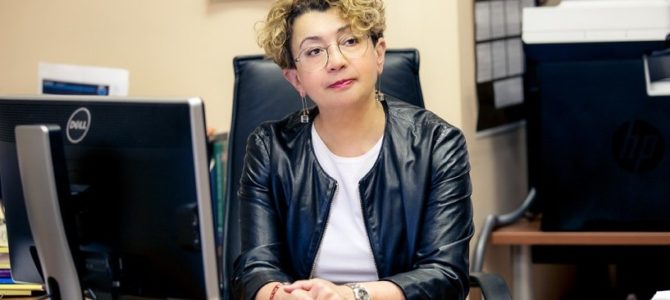
Faina Kuklianskay, attorney,
chairwoman,
Lithuanian Jewish Community

Yiddish Vegetarian Potluck

head

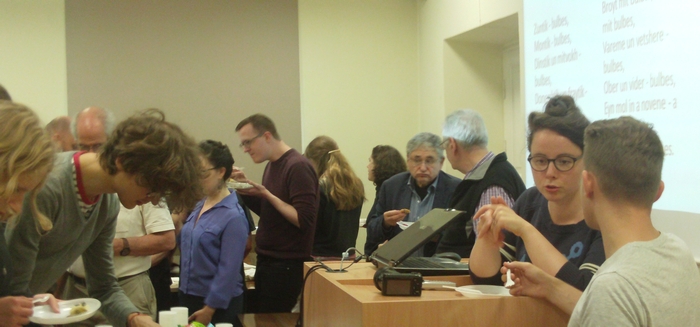
As another successful summer program of the Vilnius Yiddish Institute at Vilnius University wound down, writer Ellen Cassedy and the students, faculty and staff held a vegetarian potluck August 10.

Cassedy gave a brief presentation in Yiddish about the remarkable prewar vegetarian cookbook by Fania Lewando and spoke about her life and her vegetarian restaurant which was located on what is now Vokiečių street in Vilnius. Using slides Cassedy showed period photographs and pictures of foods featured at the restaurant, occasionally clarifying her remarks in English.

A full classroom of perhaps 30 people listened intently as latecomers filtered in, some bearing plates and bowls of food. A long table in front of the podium enticed the eye with a variety of dishes made by the students and staff themselves.

Summer Camp in Švenčionys

IMG_4003

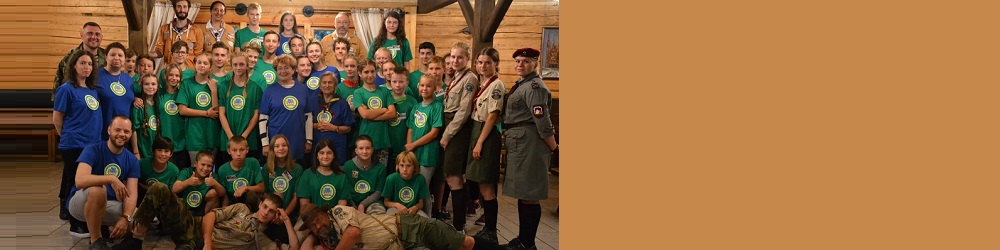
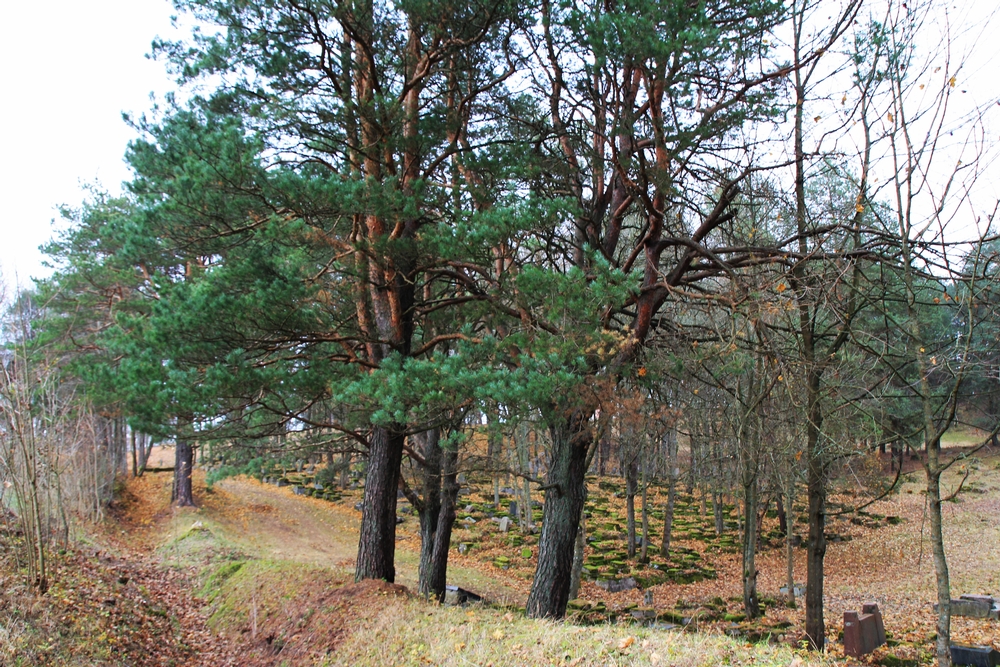
This summer in August, a two-week international camp is being organised in Švenčionys. Our goal is to clean the old Jewish Švenčionys cemetery, remove trash, document gravestones and discover what we are able about Švenčionys Jewish history. We will be teaching our volunteers about Litvak culture, history and Jewish burial traditions in general.

The old Jewish Švenčionys cemetery is one of the oldest Jewish burial places in Lithuania, dating back to the 17th century. The cemetery covers approximately 39,670 sq. meters (47,445 square yards) with existing gravestones estimated to number in the thousands. The number was higher prior to the Holocaust when gravestones were stolen for use in local construction, including for the construction of a horse stable. Much of the remaining cemetery was desecrated. In 1993, the stables were taken apart and many stones returned to the cemetery, and a remembrance monument was built.

Many ornate gravestones survive from the period 1900- 1930, and their condition varies. Many, if not most, are in fragile condition and need urgent repair and restoration.
We do not have data defining dates for the cemetery, we hope to discover that during our work.

The camp is organised in partnership with Action Reconciliation Service for Peace

http://www.actionreconciliation.org/

and will be our second joint project in consecutive years. We expect between 10-15 youngsters will visit Lithuania from Germany and other countries, to volunteer in this effort. More information can be found at https://www.asf-ev.de/en/summer-camps/activities/lithuania.html

If you are interested in the project and/or have any questions, please contact us via info@litvak-cemetery.info or sandra@litvak-cemetery.info

From http://www.litvak-cemetery.info/events/summer-camp-in-svencionys

Note: although the camp started today, there are still free spaces for interested volunteers, with housing and three meals per day provided. Please contact the email addresses above for more information.

Maya Pennington Concert

Mayos Pennington koncertas Vilniuje, Lietuvos žydų (litvakų) bendruomenėje

Maya Pennington’s concert at the Lithuanian Jewish Community August 4 drew a large crowd.

Maya spoke about her Litvak roots, her tender feelings for Vilnius which she is visiting for the second time to study Yiddish and her love of music.

Maya said music is the best international language.

Condolences

On August 4 Ana Orlova, a member of the Kaunas Jewish Community, passed away. She was born August 20, 1920. We send our condolences to her loved ones in this difficult time of loss.

Condolences

With sadness we report the death of Roza Ševcova, a member of the LJC Social Club, on August 4. She was born December 21, 1929. Our deepest condolences to her family members.


Event in Dieveniškės to Commemorate Regional Jewish History

Dieveniškėse vyko renginiai, skirti regiono žydų istorijai

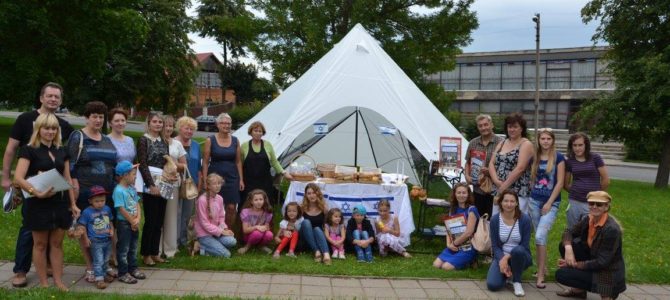
On August 4 Lithuanian Jewish Community representatives sold traditional Litvak bagels and sweets and spoke about Jewish tradition under the aegis of the LJC Bagel Shop Café at the Dieveniškės town square. The bagels quickly disappeared but local residents stuck around for the events to commemorate regional Jewish history.

The Dieveniškės Technological and Business School hosted the lectures “Jewish Funeral and Cemetery Traditions” and “Synagogues: How They’re Built, What Happens in Them and Why.” Participants manufactured models of synagogues from cardboard and other materials, and bricks made of clay to mark the locations of former Jewish buildings.

Let’s Celebrate Together

Dear Friends,

As you know, today is the World Jewish Congress’ 80th anniversary. In 1936, representatives from 32 countries gathered in Geneva to build a global organization unlike any other. I’m proud of our countless accomplishments, and prouder still that we’re making great strides in achieving what WJC President Ambassador Ronald S. Lauder has put high on WJC’s agenda: helping the next generation re-discover the Jewish flame that burns inside them.

Together, with your help, we have made tremendous achievements over the past eight decades. In celebration of our 80th, we put together this short video

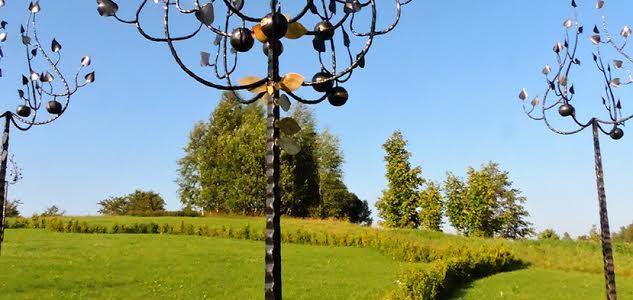
Unveiling of Apple Grove Sculpture Park Commemorating Jewish Rescuers at the Litvak Commemorative Garden

Gelbėtojų obelies atidengimas Litvakų atminimo sode (Medsėdžių kaime, Platelių seniūnijoje);

Congress of Residents of Šarnelė, 2016

August 13, Šarnelė Community Center, Plungė Region, Lithuania

Educational conference “They Lived in Šarnelė

10:30 Unveiling of Apple Orchard of Rescuers at the Litvak Commemorative Garden (Medsėdžiai Village, Plateliai Aldermanship);

12:00 Catholic Mass for the Šarnelė village community, for those who perished and those Šarnelė residents who survived deportation, and their friends;

1:00 Agape. Presentation of book by Tomas Viluckas;

2:00 Conference opening;

Road map

A Jewish Culinary Legend Reborn: Fania Lewando’s Vilnius

Lewando Fania2
by Jūratė Važgauskaitė Šaltinis, manoteises.lt

If you happened to be walking on Vokiečių street in Vilnius eighty years ago, you would surely have noticed the sign for the Dieto-Yarska Yadlodaynia restaurant, and if you stepped inside you would probably have bumped into Marc Chagall, the famous artist, as well as discovering good food. The vegetarian restaurant beloved of connoisseurs belonged to Faina Lewando-Fiszelewicz aand her husband Lazar Lewando. These members of the Vilnius Jewish community established their Dieto-Yarska Yadlodaynia (“Dietary/Vegetarian Cafeteria”) in the building that was marked no. 14 on Vokiečių street then and created a food revolution in Vilnius at that time, then called Wilno.

A vegetarian restaurant in the 1930s was a big sensation. Although vegetarian dishes were nothing new in the Jewish culinary traditions of Eastern Europe, they were often eaten by solitary diners or if no other kosher food choice was available. A vegetarian restaurant was extraordinary.

Ashkenazi food traditions, named after the word for Jews living in Eastern and Northern Europe, dominated the city and entire region when Faina Lewando opened her vegetarian restaurant and a culinary school right next to it in Vilnius. These traditions made much use of meat products and fat and heart meat dishes for holidays and to warm up during winter, without which the Jewish dinner table was inconceivable. It was to be expected that a luxury vegetarian restaurant in interwar Vilnius would create so much wonder and interest among the public.

Full story in Lithuanian here.

Eleven Israeli Victims of 1972 Munich Olympics Massacre Commemorated in Rio

(JTA) — More than four decades after they were held hostage and then murdered, the 11 Israeli victims of the 1972 Munich Summer Olympics massacre were commemorated in an official International Olympic Committee ceremony on Thursday.

The ceremony was held at a memorial site in the Olympic Village in Rio de Janeiro, the Jerusalem Post reported.

Called the Place of Mourning, the Olympic Village memorial site honors the memory of the Israelis as well as four other people who were killed during Olympic Games. The others are the German policeman who was killed in a failed rescue attempt in Munich; two victims of a bombing at the 1996 Summer Olympics in Atlanta and a Georgian athlete who died in an accident at the 2010 Winter Olympics in Vancouver, British Columbia.

Full story here.
jta

Happy 80th!

Liusia Sperling

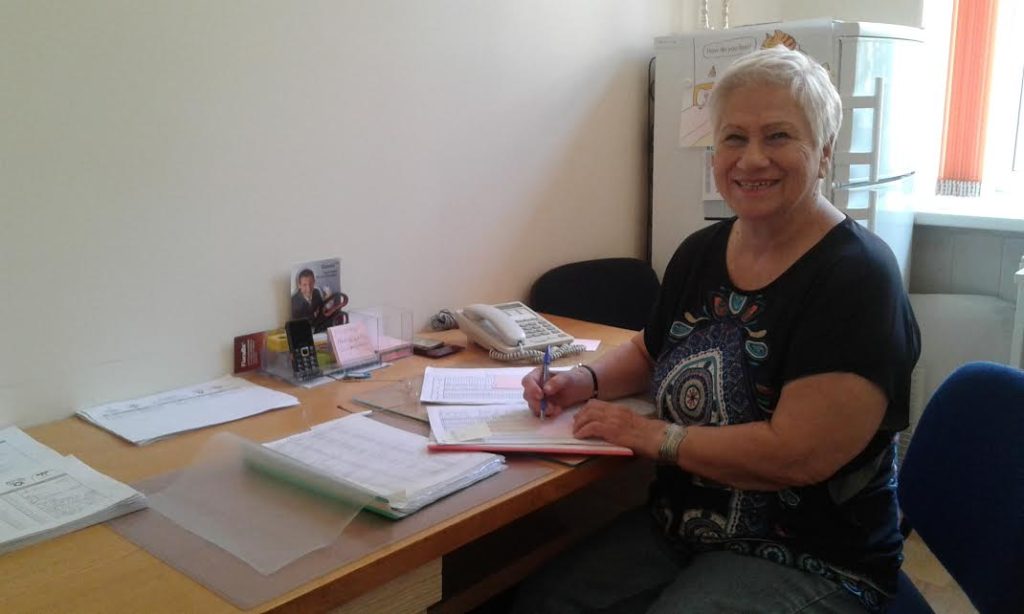
On August 3, 2016, Liusia Šperling, the volunteer Community doctor of many years, turns 80!

For 15 years Dr. Šperling has volunteered in the Community’s Social Center.

We all wish her and her family perfect health!

Happy 90th!

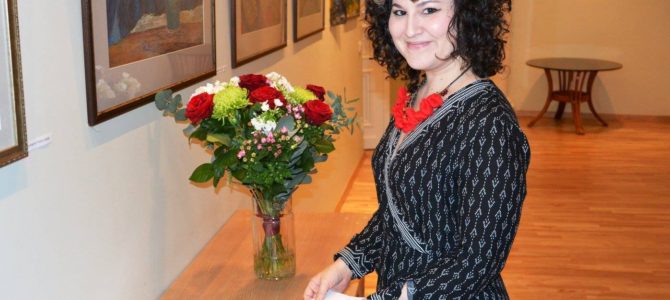
<img width=”670″ height=”300″ src=”http://www.lzb.lt/wp-content/uploads/2016/08/rozes-raudonos-670×300.jpg” class=”attachment-featured size-featured wp-post-image” alt=”Sveikiname su 90-uoju jubiliejumi!” title=”Sveikiname su 90-uoju jubiliejumi!” />

The Lithuanian Jewish Community and the Social Center congratulate Feiga Koganskienė, a Holocaust survivor and active member of the Kaunas Jewish Community, on the occasion of her 90th birthday.

We all wish her perfect health. Mazl tov!

Lithuanian Media on Children’s Experiences of the Ghetto: to Live to Tell the Story

Vaikiškos geto istorijos – išgyventi ir pasakoti

Children’s Experiences of the Ghetto: to Live to Tell the Story
by Jūratė Važgauskaitė
manoteises.lt

“Wednesday the 10th of December. It dawned on me that today is my birthday. Today I became 15 years old. You hardly realize how time flies. It, the time, runs ahead unnoticed and presently we realize, as I did today, for example, and discover that days and months go by, that the ghetto is not a painful, squirming moment of a dream which constantly disappears, but is a large swamp in which we lose our days and weeks…In my daily ghetto life it seems to me that I live normally but often I have deep qualms. Surely I could have lived better. Must I day in day out see the walled-up ghetto gate, must I in my best years see only the one little street, the few stuffy courtyards?” So wrote Yitzchak Rudashevski, a student at the Real Gymnasium in Vilnius, a talented writer and a prisoner of the Vilnius ghetto.

Rudaševskio dienoraštis

The ghetto swallowed up the life of this young man, leaving us only his diary. A diary which reveals the personal world of a young man who grew up too soon and experienced terrible experiences.

Full treatment in Lithuanian here.

Remembering the Murdered Jewish Community of Ukmergė

Commemorative ceremony to remember the Jewish community murdered during the Holocaust in Ukmergė

12:00 noon, Sunday, September 4, 2016
Pivonija forest, Ukmergė

Sponsored by the Lithuanian Jewish Community, the Goodwill Foundation and the Ukmergė Jewish Community

Lithuanian Citizenship for Litvaks

According to various reports in the Israeli media, there has been a sharp increase in South African Litvak applications for Lithuanian citizenship.

Some authors have even mentioned some sort of “Lithuanian Citizenship Programme,” whose existence is unknown to the Lithuanian Jewish Community.

Because of the seemingly increased interest, we are placing some of our earlier reporting back at the top of page one of the English version of the webpage.

We would like to take this opportunity to remind readers the amendment to the Lithuanian law on citizenship, the initiative of both the Lithuanian Jewish Community and the Lithuanian parliament, only removed and changed language which might have led to discrimination against Jews and Litvaks by individual public servants. There is no language about welcoming Litvaks with open arms, unfortunately. The amended law only levels the playing field to make sure Litvaks are treated equally with ethnic Lithuanians and others in the application process.

While the law doesn’t express welcoming Litvaks with open arms, the Lithuanian Jewish Community does welcome Litvaks from around the world, including South Africa, to become members, and does support Litvaks’ bids for Lithuanian citizenship. It has been our honor to have played a part in the amended legislation signed into law by the president of Lithuania last month.

LJC Chairwoman on Lithuanian Citizenship Law: Why Is It So Important to Livaks?

F.Kukliansky apie pilietybės įstatymą. Kodėl jis litvakams toks svarbus?

Articles on this web page and the Lithuanian Jewish Community’s facebook section about citizenship for Litvaks have been the subject of great interest. Thousands of people around the world are reading everything written about citizenship. Lithuanian Jewish Community chairwoman Faina Kukliansky therefore would like to talk about why this issue is of such tremendous importance to Litvaks.

Many Litvaks died during the Holocaust and they are now scattered around the world. These people identify themselves with Lithuania, but have lost Lithuanian citizenship. Truly this is not just a moral issue, but also a legal one. We are talking about Jews who survived the Holocaust, and truly no one rescinded their citizenship in the concentration camps. No one sent them to the concentration camps with their passports. They were deported, isolated and murdered as Jews, not as citizens of Lithuania. Of those who were deported to Siberia, likewise no one asked for their Lithuanian citizenship, but deported them because they owned property, or were firefighters or volunteer soldiers. Thus arises the legitimate question: when did these people lose Lithuanian citizenship, when was it taken away from them?

Reading the laws of restored Independent Lithuania, we see Jews were deprived of Lithuanian citizenship during in already independent Lithuania, when the law on citizenship was adopted. Many Jews who survived the war and the Holocaust went to their ethnic homeland, Israel, Jews who consider themselves citizens of Lithuania but who, when the Republic of Lithuania law on citizenship was adopted in 1991, which clearly states Lithuanian citizenship is lost upon acquisition of citizenship of another state, lost that citizenship.

President Signs Citizenship Amendment for Litvaks into Law

grybauskaite

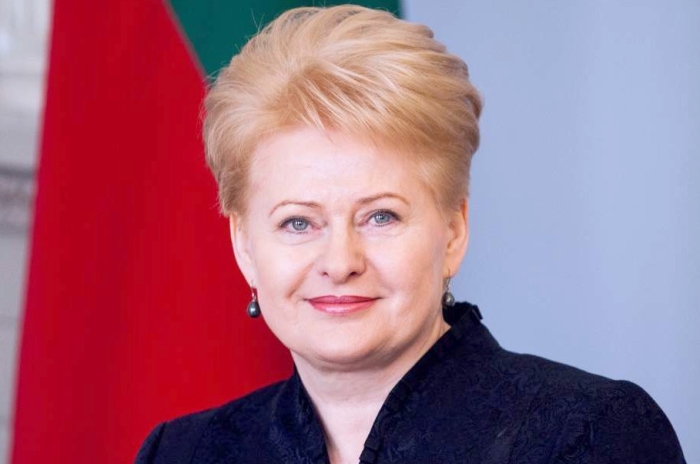
Lithuanian president Dalia Grybauskaitė signed into law amendments to the country’s citizenship law on June 6, 2016. The parliament adopted the amendment to impose stricter language to insure Litvaks and others are able to obtain Lithuanian citizenship without greater bureaucratic obstacles. A copy of the act of law is provided below in Lithuanian.