






Lithuanian Film Festival Features Experiences of Discrimination

„Nepatogus kinas“ skatina prabilti apie patirtą diskriminaciją
Image courtesy Nepatogus Kinas

manoteises.lt

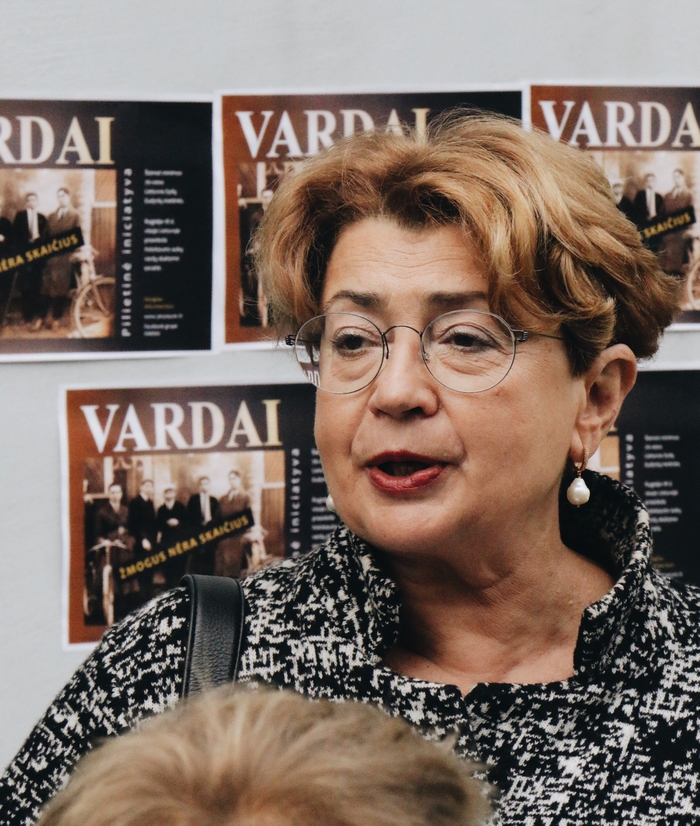
The Lithuanian documentary film festival Nepatogus Kinas [Uncomfortable Cinema] is to present a thematic program on discrimination this fall. To bring attention to how widespread this problem is, organizers are inviting people to share specific examples of the violation of their rights. The festival organizers are hoping their call to the public for personal experiences of discrimination will help break the existing wall of silence surrounding the subject. All examples provided, publicly or anonymously, will be presented to readers in the press and on social media.

“The word ‘discrimination’ often doesn’t mean anything, it’s an abstraction. But very specific personal stories are described by this word. Sometimes painful, sometimes inspiring. These stories allow us to realize we will all face discrimination at some stage in life,” festival director Gediminas Andriukaitis commented.

Lithuanian law forbids direct or indirect discrimination and harassment based on age, gender, sexual preference, disability, racial and ethnic identity, religion and beliefs. Uncomfortable Cinema organizers have also provided categories of language, social status, gender identity and family status for people who want to tell their stories.

Full story in Lithuanian here.

LJC Social Programs Department Staff Develop Skills at Warsaw Jewish Community

Staff from the Lithuanian Jewish Community’s Social Programs Department are currently visiting the Warsaw Jewish Community whose webpage is jewish.org.pl

The main community building is located in the center of the Polish capital with a Scandinavian-model kindergarten, a senior citizens day center and a kosher cafeteria adjacent to it.

Currently ten employees are building their skills set in Germany, France and Poland under the Erasmus + program in order to expand the social services network for the elderly and improve quality of services provided to clients.

Israeli Embassy Contributes to Summer Program for Children

The Israeli embassy to Lithuania June 12 invited more than 150 children from all over Lithuania to Vilnius where they saw a film at a movie theater, visited the President’s Office and ate pizza and ice cream near the White Bridge in the Lithuanian capital. The Israeli embassy contributed in this way to the Give a Child a Summer campaign. Ambassador Amir Maimon said projects to help children from at-risk families are important and the embassy follows Jewish traditions of caring for the community and neighbors. This is the second time the Israeli embassy has financed a holiday for children from families receiving social welfare support. Last year the embassy was part of the For a Safe Lithuania campaign initiated by president Dalia Grybauskaitė.

Vilna Gaon to Screen Defiance

The Tolerance Center of the Vilna Gaon State Jewish Museum invites the public to come watch the film Defiance (2008) made in Lithuania and based on historical facts, and to meet some of the Lithuanian actors in the film as well as meet attorney Leora Tec, the daughter of the author of the book upon which the screenplay was based, Nechama Tec.

The film, slightly over two hours, tells the story of the Bielski brothers and the partisan group they founded in Belarus near the Lithuanian border. Their struggle for life ended up saving around 1,200 Jews from the ghettos in Belarus and Vilnius.

Defiance is one of the highest-budget and most successful films ever made in Lithuania. The main roles were filled by English “James Bond” actor Daniel Craig as Tuvia Bielski, Liev Schreiber as Zus Bielski, Jamie Bell as Asael Bielski, and George MacKay as Aron Bielski. The Lithuanian side of the cast comprises a constellation of stars from the dramatic and musical stage as well and includes Leonardas Pobedonoscevas, Antanas Šurna, Rimatė Valiukaitė, Dalius Mertinas, Edita Užaitė, Dalia Michelevičiūtė and Vidas Petkevičius, among others.

The screening and meeting will take place at 5:30 P.M. on Wednesday, June 21, 2017, at the Tolerance Center located at Naugarduko street no. 10/2 in Vilnius. The film will be screened in the Lithuanian language and the discussion to follow will be in Lithuanian and English. The event is free to the public and members of the film crew, actors, extras and others involved in the making of Defiance are highly encouraged to come.

Israeli Citizen Borisas Joselovich Comments on Draft Amendments to Citizenship Law

Borisas Joselovich has sent Lithuanian Jewish Community chairwoman Faina Kukliansky a letter from Israel in Lithuanian. A translation follows.

Your thoughts in the text published on the issue of proposed draft amendments to the law of the Republic of Lithuania on citizenship about returning citizenship to former Jewish citizens of Lithuania who left for Israel after 1990 exactly mirror my own personal thoughts and probably the position and hopes of a large number of Litvaks living in Israel.

Spain, which deported the entire Jewish community 500 years ago, adopted a fair and honest decision to return national citizenship to Jews exiled from Spain. This decision by the Spanish government has been carried out successfully for several years now.

Lithuania, in whose territory almost the entire Jewish community was physically exterminated, is simply morally obligated to take the exact same step towards those several thousand descendants of murdered Jews living in Israel, and to return them the citizenship taken away from them earlier.

You are doing very important work in restoring what was for centuries the natural Jewish element of Lithuanian society to the place it belongs, and so I wish you the highest success in achieving your goals in this difficult mission.

Respectfully,

Borisas Joselovich
(Israeli citizen since 1993)

Jewish Deportations Just as Painful as Lithuanian Deportations, Forgotten by Lithuanians

Žydo tremtinio sąvoka Lietuvos visuomenėje šiandien yra beveik užmirštama. Ji tokia pat skausminga kaip lietuvių tremtis

About 1.3% of members of the Lithuanian Jewish community were deported to the Soviet Union in 1941. This percentage of deportations is the highest for any ethnic group in Lithuania. The deportations failed, however, to extinguish Jewish nationalism, and Zionist groups operated underground, organizing Hebrew education and exerting all efforts to allow Jews to leave for Palestine. According to Jewish historiography, in June of 1941 alone about 3,000 Jewish activists from the right and the left and Jewish owners of large industrial concerns and factories were deported. It is a great shame Lithuanian society today has almost no understanding of these deportations, or has chosen to ignore them, designating deportation an exclusively ethnic Lithuanian tragedy.

Historian Solomon Atamuk found there were 16 Jewish daily newspapers, 30 weeklies and 13 intermittent periodicals along with about 20 collections of literature published in Lithuania before World War II. After the June 14, 1940, ultimatum by the Soviet Union to Lithuania and the occupation which quickly followed, the Jewish community bore the brunt of social and cultural repressions. All leftist and rightist Jewish newspapers were shut down. Even Folksblat, popular among Communists and the organ of the Jewish People’s Party, was banned. Beyond the ban on the Jewish newspapers, editors of Jewish publications were fired and the new regime undertook a complete reorganization and shutting down of existing academic institutions. YIVO was made to heel, employees were fired, various books, newspapers and collections were seized. Opportunities to read in Hebrew were systematically lessened and Jewish libraries were shut down.

Fayerlakh Group Competes at St. Petersburg International Music and Art Festival-Contest

The Fayerlakh Jewish song and dance ensemble performed at the White Nights music and art festival-contest in St. Petersburg, Russia, from June 8 to 11, 2017.

Fayerlakh competed in the category Folk Ensembles and Folk Songs, along with 65 other contestants. Fifty-nine finalists competed in the final concert, where Fayerlakh took first place. The Lithuanian Jewish group was also presented a gift certificate for high art in celebrating Jewish culture and traditions, which they will be able to use at the next festival-contest.

Their performances at such festivals not only demonstrate the ensemble’s excellence and professionalism, but also stimulates tolerance between peoples and faiths. Besides presenting Jewish culture, Fayerlakh also presents multicultural Lithuania on the international stage. These sorts of tours and performances abroad also build real solidarity among members of the song and dance collective, crucial for further creative work.

The competition also provided members of the collective the opportunity to see one of the world’s most beautiful cities, an important education inspiring and expanding the horizons of younger members of the ensemble. Fayerlakh performed a small concert at the Choral Synagogue in St. Petersburg.

Director Larisa Vyšniauskienė and the entire Fayerlakh collective thank the Lithuanian Jewish Community, the Goodwill Foundation and the Joint Distribution Committee for their full support.

Jokūbas Furmanas Has Died

Long-time member of the Šiauliai Jewish Community doctor Jokūbas Furmanas passed away at the age of 102 on June 14, 2017. He was born April 25, 1916.

The Lithuanian Jewish Community sends our sincere condolences to his entire circle of friends and relatives. The Šiauliai Jewish Community and the Lithuanian Jewish Community have lost a remarkable man, a real Shavl Jew, a doctor and an intellectual.

Furmanas’s life was inseparable from health care, to which he devoted five decades of his life, almost 45 of them as department head at the Šiauliai Municipal Sanitary Epidemiological Station (now Šiauliai department of the National Public Health Center under the Lithuanian Ministry of Healthcare). The station was established in 1944. Then it was constituted of one room on Vasario 16-osios street, with a microbiology lab at Pakalnės street no. 5. The lab conducted clinical bacteriological and serological tests for the entire region. Transportation was a cart and horse. Furmanas was appointed sanitary hygiene inspector in 1946. His job dealt with controlling infectious disease, including spotted fever, typhoid fever, Salmonella paratyphi B (paratyphoid fever), dysentery and others.

Four Days with the Lithuanian Jewish Community, Now with Subtitles

Welcome to the Lithuanian Jewish Community, welcome to Vilnius.

You will soon experience it for yourself. This isn’t a promotional film, it’s the reality, slightly beautified. Beautified, because you won’t see all the hard work that goes on every day and the people who do it.

I thank them. We work, we make mistakes, we fall down and we get back up and work harder. But we’re here. There are not so many of us, of course, and we are all different, and sometimes we argue, sometimes we embrace, but we are all here together and we are beautiful, able, talented, loving and dedicated. We’re the Lithuanian Jewish Community, the family of Lithuanian Jews, a part of our country. We have been here for six centuries now. We have experienced the greatest afflictions and disasters but we never gave up and we have remained.

We have to pass something on to our children and grandchildren. I personally want to pass on to them our Jewish identity, my story and deeds and those of my ancestors. I am trying to do this together with the community because I know that I alone will not succeed. I believe it is better to act and to make mistakes than to do nothing.

I wish everyone the greatest success. Let’s take pride in our Lithuanian Jewish Community.

Sincerely yours,

Faina Kukliansky, chairwoman
Lithuanian Jewish Community

§§§

The activities of the Lithuanian Jewish Community are broad-ranging and interesting, and the makers of the following film decided to include footage from just four days in the life of the LJC. To show more would require a series of films.

One of the most important goals of the Community is listening to and taking care of our members, children, adolescents and senior citizens. Care and aid from the Community’s Social Programs Department is allocated to Holocaust survivors, the ill, disabled and socially marginalized.

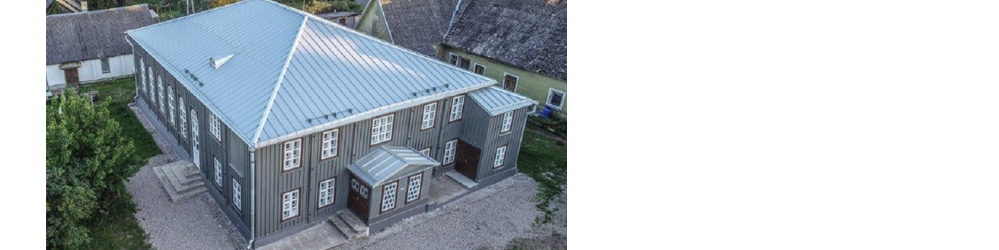
An important benchmark in our work recently was the restoration and protection of our country’s wooden synagogues, unique in Europe. The opening ceremony for the restored and reconsecrated synagogue in Pakrojis, Lithuania, is included in the film. Work was conducted with the Lithuanian Cultural Heritage Department under the Ministry of Culture and with local municipal and regional administrations.

If the film were continued, we would have included more young people, students, the young Jewish parents clubs, of course our regional Jewish communities and lots of fun moments from the different events and holidays put on by the Lithuanian Jewish Community.

Enjoy.

© 2017 Lithuanian Jewish Community

Position of the Lithuanian Jewish Community on New Amendments to the Law on Citizenship

One hundred and fourteen members of parliament have registered draft amendments to the law on citizenship of the Republic of Lithuania to provide for the preservation of Lithuanian citizenship for people who left the country for European Union and NATO countries after Lithuanian independence in 1990 and who acquired citizenship in those countries.

The Lithuanian Jewish Community is in favor of dual citizenship for Lithuanian citizens who have emigrated, LJC chairwoman Faina Kukliansky said, “but we believe the rights of Lithuanians of Jewish origins should not be less than that of other Lithuanians. Lithuanians of Jewish origin who left Lithuania after independence for the historical homeland of Israel do not have less ties with Lithuania than those of an ethnic Lithuanian living in the European Union or the United States of America. The current draft amendments to the law on citizenship, however, would allow Lithuanians of Jewish descent who moved to the United States to hold dual citizenship, whereas Lithuanians of Jewish descent who moved to Israel after independence would not. For Litvaks in South Africa this doesn’t matter so much, because the majority of them left well before World War II,” the chairwoman commented.

“Nonetheless, there are a large number of people who left Lithuania after 1990. In light of the current geopolitical situation and current events, the geographical selection in the new draft amendment—EU and NATO countries—hardly seems rational or well-founded. This is especially true of an ethnic group which was one of the largest ethnic minorities in Lithuania but which was almost exterminated during World War II. In light of that and regarding these people, the law should make use of so-called positive discrimination instead, with the aim not of providing special rights or status to a specific group, in this case Lithuanians of Jewish ethnicity, but to redress their existing inequality with other subjects under law, in this case, other people of Lithuanian origin who left Lithuania after 1990. Criteria of concentration also apply: there is a large percentage of people in Israel who have connections and ties with Lithuania, and an interest and valid hope to hold Lithuanian citizenship,” chairwoman Kukliansky continued.

“The doctrine of Lithuanian citizenship since 1919 has lacked clarity and this continues now. The first law on Lithuanian citizenship appeared on January 9, 1919, and was amended and changed many times over. Debates as to whether the law conforms to the aspirations and hopes of the majority of Lithuanians are on-going right up to the present day,” she said.

“Currently preparations are underway to change article 7 of the law on citizenship. The draft language says a citizen of Lithuania may be a citizen of another country if he is a citizen of Lithuania and left Lithuania after March 11, 1990 and subsequently acquired citizenship in an EU or NATO member-state. In light of this geopolitical element in the language of the draft amendment, the Lithuanian Jewish Community wonders what values, principles and logic led the authors of the legislation to appreciate the Lithuanian-Israeli and partnership less than other partnerships, and to the interpretation that a Lithuanian of Jewish ethnicity living in Israel has less of a civic, social and historical relationship with Lithuania than, for example, someone who went to live in Ireland based on economic motivations,” Lithuanian Jewish Community chairwoman Faina Kukliansky stated. She added it wasn’t fair Lithuanians of Jewish origin living in Israel have a lower legal status than that ofa compatriot living in an EU of NATO state.

Under Lithuanian law, a Lithuanian citizen is a person who has acquired or holds Lithuanian citizenship, which entails specific rights and duties and is based on a relationship with the state. The majority of Lithuanian Jewish community members have children or relatives who have gone to Israel since 1990, many of them Lithuanians of Jewish origin.

Tel Aviv Gay Pride March 2017

Friday afternoon around 200,000 people, including tens of thousands of tourists, gathered to watch and march in Tel Aviv’s annual gay pride march. Bisexuality was a major theme this year. Police blocked traffic along main streets for the marchers. Bicycles were banned and police checked participants and on-lookers for weapons.

Animated Documentary for Teaching Children about the Holocaust

To date Fettle Animation, a Marsden-based company, have won a BAFTA and two Royal Television Society awards for their animated Holocaust documentaries. We wanted to know how they’re being used to help children understand this pivotal moment in history

From the Cold War to the bombing of Hiroshima, our children learn about important but traumatic moments in history while they’re at school. But although most of us are aware of the atrocities of the Holocaust, can anyone truly understand what it felt like to be a child in the concentration camps? It’s an emotionally complex scenario for anyone to comprehend. But a Marsden-based company, Fettle Animation, are leading the way with engaging and educative animated films for children. We spoke to their founder and Producer Kath Shackleton to find out more about this great company and their award-winning films.

Fettle Animation was created by Kath (a former art development officer) and her partner Zane Whittingham, who has over 25 years of experience working in animation. After the birth of their daughter, they decided to leave London and move back to Kath’s native Yorkshire, to set up in Marsden. “We set the company up hoping to get some work-life balance, but I think we’ve exploited ourselves far harder than any employer would in the end,” Kath jokes, “But it’s definitely worth it.”

Surrounded by rolling hills and the idyllic countryside, Kath and Zane have an enviable lifestyle. But both have they worked hard. In the five years since they set up their company, which specializes in the production of animated films from freehand drawings, they’ve flown all over the world appearing at prestigious film festivals and collecting awards. Alongside the Children’s BAFTA, and two Royal Television Society awards, they have countless other international commendations. They’re so popular that two awards that they’ve been nominated for recently, the Japan Prize in Tokyo and the Prix Europa in Berlin, are being presented on the same night. What to do?

And There Shall Be No Jewish Museum at the Palace of Sports, Lithuanian PM Decrees

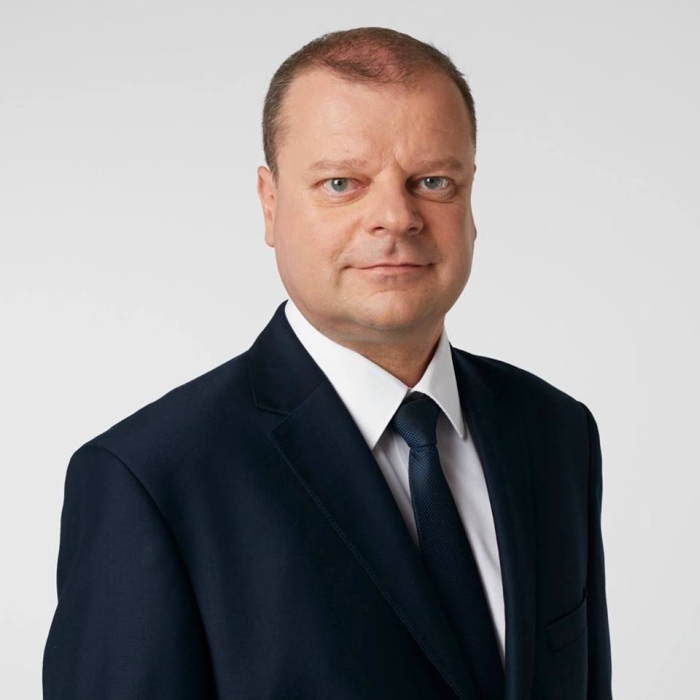
Vilnius, June 13, BNS–A new tender for construction of a proposed Congress Center to replace the former Vilnius Palace of Sports is planned for this fall and there will be no Jewish history museum there, Lithuanian prime minister Saulius Skvernelis said.

“We confirm an international tender will be announced very soon, taking into account that the earlier process was halted because of a possible lack of transparency. This project will be continued and developed further, but, unfortunately, the deadlines will be extended now,” the prime minister told BNS after meeting with Vilnius mayor Remigijus Šimašius. “I will check, but this should be accomplished by the month of September,” he said after being asked when the tender for a new contractor would be announced.

A few months back Skvernelis and Šimašius met and said following that meeting that they were considering setting up a Jewish history museum inside the building during reconstruction. The idea drew swift criticism from Jewish representatives in Lithuania and the USA. Skvernelis now says the idea for a museum isn’t being considered any longer.

Makabi Athletics Club Holds Mini-Maccabiah Games to Celebrate 100th Birthday

The Makabi Lithuanian athletics club held a mini-Maccabiah May 21 to celebrate the hundredth anniversary of the club’s founding in Lithuania. The Maccabiah Games are an annual international sporting competition in Israel to which Lithuanian Makabi sends athletes. In the mini-Maccabiah, 74 athletes from Vilnius, Kaunas, Klaipėda, Panevėžys, Šiauliai and Ukmergė competed in five sports: indoor soccer, three-on-three basketball, volleyball, men’s and women’s table tennis and chess. Everyone received participation medallions.

The Kaunas basketball team defeated the Vilnius and Klaipėda teams. Kaunas player Elvis Ušpicas won in foul shots (9 players) with six hoops in a row.

The Vilnius team on home ground won in indoor soccer and volleyball.

Catholic Priest Recognized as Righteous Gentile in Kupiškis

Panevėžys Jewish Community chairman Gennady Kofman and Community member Grafman attended a ceremony at the Povilas Matulionis Pre-Gymnasium in Kupiškis, Lithuania, May 30 held by the Israeli embassy to Lithuania to award the title of Righteous among the Nations posthumously to the priest Feliksas Ereminas (1890-1962). The Catholic cleric rescued the Jewish girl Rachel Rozenberg during World War II. For rescuing and further taking care of her, ambassador Amir Maimon presented Ereminas’s relative Tauras Budzys the Righteous among the Nations medallion and certificate issued by the Yad Vashem Holocaust authority in Israel.

The ambassador said the event is a lesson for our future. Professor Aldona Vasiliauskienė told the moving story of the rescue and how she collected the material required for the award.

Ambassador Maimon said: “We are happy and proud to have the opportunity today to recognize Feliksas Ereminas. Eighty years have passed since that time. Today we can only imagine those difficult times when Jews had to seek asylum.”

Congratulations

The Lithuanian Jewish Community has been receiving congratulations from far and wide on the re-election of Faina Kukliansky as chairwoman for a second term. She participated at a reception for a team of disabled athletes at the Israeli embassy with Lithuanian social welfare and labor minister Linas Kukuraitis to mark the start of her second term, where Israeli ambassador to Lithuania Amir Maimon congratulated her on her re-election as chairwoman of the LJC. Guests were presented a specially minted coin as a keepsake.

Notes of congratulation have also been received from the Lithuanian bar association wishing the LJC unifying and fortifying work in the future. Mickey Kantor, chairwoman of the Association of Vilna Jews in Israel, congratulated Kukliansky, wished her success and hoped for the same quality of good work accomplished during Kukliansky’s first term.

Faina Kukliansky Wins Election to Head Lithuanian Jewish Community

Faina Kukliansky was elected to a second term as chairwoman at Lithuanian Jewish Community elections held last Sunday. Monika Antanaitytė, Chief of Staff at the LJC, said the chairwoman won with a majority of votes, explaining all votes were cast for her with three abstentions. No votes were cast for Simonas Gurevičius, Antanaitytė told Lithuanian media.

Are Russian-Speaking Jews Less Worthy? No Way!

by Arkadijus Vinokuras

You have to have malice to call me a Russophobe. I am addressing several Russian-speaking Jews of Vilnius who are spreading this lie. I have the highest regard for all kinds of Russian art. By personal invitation of legendary clown Yuri Nikulin I performed in his circus in Moscow. Also at the invitation of legendary Taganka Theater director Yuri Lubimov, I performed in his presentation of Master and Margarita at Sweden’s Royal Dramatic Theater. Several of my best poems were written in Russian. Incidentally, I write poetry in Lithuanian, Russian, Swedish, English and Spanish.

So what horrible thing has happened to begin this malicious campaign against my person? Is it that I have foundation to say the Vilnius Jewish Community elections for chairman initiated by Simonas Gurevičius have nothing in common with democratic principles? If that’s it, no one has even attempted to rebut my arguments. So what else is left? To turn my well-founded criticism into the accusation that I am insulting the Russian-speaking Jews of Vilnius. That’s just cheap. But if anyone does feel falsely “suspected” of something, I sincerely apologize.

The accusation is without basis. When the fascists of any European state murdered our parents, grandparents, aunts and uncles, they didn’t care a bit which language they were speaking. After the 1917 Revolution around 100,000 Jews were murdered in pogroms. When Lithuanian Jews were deported to the gulag by order of Josef Stalin, it didn’t matter what language they spoke. Before and after World War II Russian Jews were subject to “cleansing” and tens of thousands of Russian Jews died in the gulags.

This is my statement which brought on the storm: “There is another problem, that of mentality, afflicting the Vilnius Jewish Community. For instance, the majority of those 260 VJC members who assembled speak Russian exclusively among themselves. They only watch Russian television channels. The don’t understand terms such as democratic elections and democratic election and democratic election campaign procedures.” I am clearly talking only about 260 people and I stress “the majority of them.” In other words, my statement has nothing to do with the 2,000 other Jews in Vilnius, many of whom are Russian speakers. On what considerations was my statement based? I wanted to explain what I believed were the reasons the democratic rules of the game were violated and ignored. After all, 260 people voted in elections which clearly violated the principles of fair elections and the community was divided. The easiest thing to do was to reject my arguments at a primitive and emotional level, shouting “Gospodin Vinokuras padsadnaya utka Faini.” And also by accusing me of belittling Russian-speaking Jews.

Annual ORT Sholem Aleichem Gymnasium Bar/Bat Mitzvah Ceremony


Photos by Eli Rabinowitz

As the school year comes to an end and summer vacation begins, the ORT Sholem Aleichem Gymnasium held their annual combined bar and bat mitzvah ceremony Monday at the Choral Synagogue and the Lithuanian Jewish Community.

Parents and children arrived in their finest attire for the symbolic coming-of-age service which was conducted in Russian and Hebrew. Proud parents watched their boys and girls of different ages receiving Rabbi Samson Izakson’s blessing as they stood under the hoopa or canopy, praents took pictures and the audience rained candies down on the hoopa as the service concluded. Sholem Aleichem school principal Miša Jakobas delivered a moving address to his students in Russian. The service ended with children passing by the Torah scroll but no readings by boys or girls.

The party then moved to the third floor of the Lithuanian Jewish Community where the children or young adults had a candle-lighting ceremony to honor their parents, school, homeland, Israel and fallen Israeli soldiers. The festivities here were in Lithuanian and Hebrew. Israeli ambassador Amir Maimon spoke in a very genuine manner, translated to Lithuanian by Sholem Aleichem Hebrew teacher Ruth Reches, and recounted the parable of rabbi asked to repeat the whole of the law while standing on one foot. The young people performed songs, dance and did short skits in Lithuanian based on the writings of the author Sholem Aleichem and other Yiddish writers. After the young people were presented token gifts from the Lithuanian Jewish Community, the party moved into the foyer where there was abundant snacks, juice, coffee, wine and water. A series of artworks by students made especially for the occasion lined a long table as people helped themselves to hors d’oeuvres and waiters and waitresses circulated through the crowd with plates laden with food.