“Forever Yours, Anne Frank” Farewell Performance

For over 10 years Panevėžys theater director Valerijus Jevsejevas has been putting on an Anne Frank drama based on the diary on stages around Lithuania.

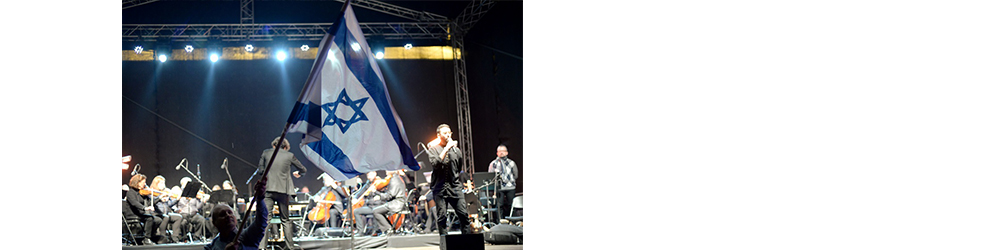
On February 4 there the play “Forever Yours, Anne Frank” gave its farewell performance at the Juozas Miltinis Drama Theater in Panevėžys, attended by members of the Panevėžys Jewish Community. Tenor Rafailas Karpis performed a concert concluding with kaddish.

Seminar Series Continues

Rabbi Sholom Ber Krinsky’s series of seminars continues this Sunday at 5:30 P.M. at the Choral Synagogue in Vilnius. Admission is free and open to everyone. Call +370 650 18270 for more information.

Dr. Saulius Sužiedėlis Explains Why Gas Chambers Weren’t Used in Lithuania

Interview by Ieva Elenbergienė

Professor emeritus of history at Millersville University Saulius Sužiedėlis explains the Nazis didn’t need gas chambers in Lithuania. While 40 percent of Holocaust victims were murdered in gas chambers, this wasn’t the case in Lithuania, where the Nazis discovered sufficient man-power for mass murder. Although there were informal attempts to stop the violence in Lithuania, Dr. Sužiedėlis says there was no universal condemnation, nor public statements against by authorities. Church officials were also silent. Sužiedėlis says we must stop denying ugly things and look our past squarely in the face.

At the end of November Saulius Sužiedėlis was invited by the Lithuanian Jewish Community to speak at the conference #AtmintisAtsakomybėAteitis held in Vilnius.

When people are talking publicly and the topic turns to Lithuanian collaboration in the Holocaust, there is often a defensive reaction expressed as an attack on Jews: “But they did this and this and that to us!”

It’s not just characteristic of us, the human reaction of trying to place guilt on others. For instance, in the USA for a long time the destruction of the Indians was completely ignored, there was talk of the wars of the Wild West, but new studies show these so-called Indian wars were in many cases nothing more than the massacre of peaceful local residents. Of course some people didn’t like this, and accusations came up, for example, “But what did they do to the cowboys?” and so on. I personally, though, have no concern about what Jews have done. I’m concerned with what Lithuanians have done. Of course there were Jews, just as there were Lithuanians and Russians, who were involved in deportations. What does that have in common with, let’s say, Jewish children murdered in Telšiai? I don’t feel personal shame–I wasn’t even born yet–but I do feel a kind of collective shame, that people of my ethnicity were able to act this way in this Catholic, religion-practicing country.

New Board of Directors Elected

A meeting of the executive council of the Lithuanian Jewish Community Monday discussed topical issues, shared examples of best practices and voiced suggestions for expanding LJC activities. Current administrative issues and the future of support for Holocaust rescuers were discussed. The council elected a new LJC board of directors including Faina Kukliansky, Gercas Žakas, Feliksas Puzemskis, Gennady Kofman, Shmuel Levinas, Daumantas- Levas Todesas and Semionas Finkelšteinas. The board of directors is in charge current activities and maintenance between conferences based on the regulations of the LJC and under decisions made by the executive council.

LJC Chairwoman Meets Parliamentary Speaker

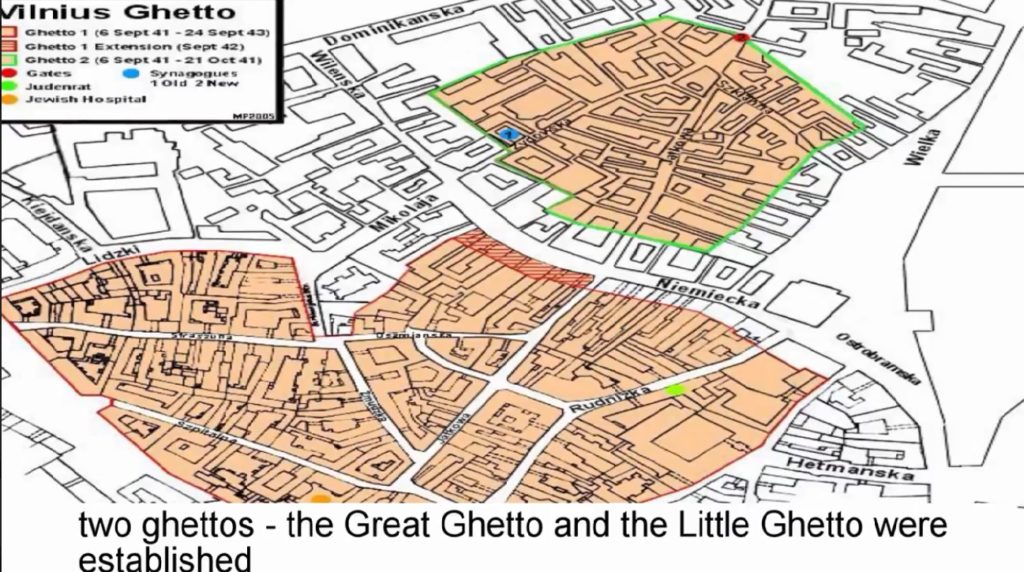
Lithuanian Jewish Community chairwoman Faina Kukliansky and executive director Renaldas Vaisbrodas met speaker of the Lithuanian parliament Viktoras Pranckietis Wendesday. They discussed current issues in the Lithuanian Jewish Community regarding protection of Jewish heritage sites and the transfer of the former Hassidic synagogue in Kaunas for use by the Jewish Community, and agreed to work together to mark the 75th anniversary of the liquidation of the Vilnius ghetto with an academic conference at parliament.

Photo: O. Posaškova/Lithuanian parliament

Gita-Enta Broidi Sings in Šiauliai

Gita-Enta Broidi performed at an evening of Yiddish song at the Šiauliai Jewish Community February 4. Chaim Bergman of Kaunas attended and said he was pleasantly surprised to learn almost all members of the Šiauliai Jewish Community speak Yiddish well. Many lingered after the concert for coffee and conversation and the vocalist spoke of her work in Israel. She studied under the famous Nekhama Lifshits and has her own reputation and record of accomplishment around the world. She is a past winner of the International Yiddish Song Festival prize.

New Bereznickas Exhibit: “It Would Be Sad If It Weren’t Funny”

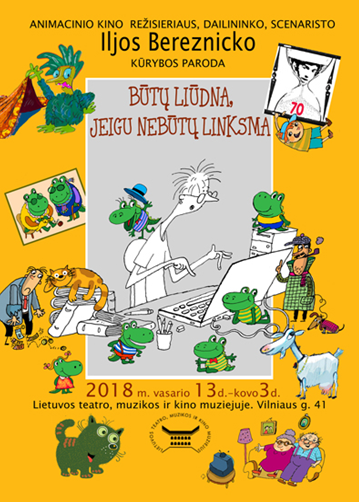
The Museum of Lithuanian Theater, Music and Film is celebrating cartoonist Ilja Bereznickas’s 70th birthday with a new show called “It Would Be Said If It Weren’t Funny” showcasing the animator, director, artist and author’s work.

The exhibit is to include cartoons, comics, caricatures, book illustrations and animation sketches and cels. Stills from his newest film “Happiness Is Not Found in the She-Goat” will be displayed publicly for the first time. The museum also plans to screen some of his earlier animated features. The author will also present his latest book “Animation: From Idea to Screen” at the exhibition.

The exhibition is to run from February 13 till March 3, 2018.

Verėna Wooden Synagogue Listed as Heritage Site

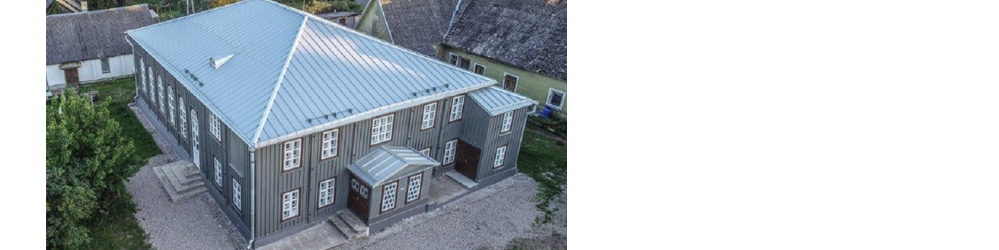
The two-storey wooden synagogue in Varėna, Lithuania, has been listed on the registry of cultural heritage treasures.

It was listed as being of local significance and important for its architecture and as a memorial. The synagogue has a stone and mortar foundation under the compact wooden building. Some of the original windows have survived.

The synagogue was mentioned in an account by a traveler from the Crimea in 1930, who wrote: “There were three Jewish synagogues and about 600 families in Varėna before the war. Now there are barely 70. There were three public schools, now there is only one. The only synagogue [left] was rebuilt in 1922. The Jews have their own People’s Bank established in 1920 with a turnover of one million litai in 1929.”

AJC Opposes Polish Effort to Criminalize Claims of Holocaust Responsibility

January 27, 2018, New York–AJC Central Europe is firmly opposed to legislation which would penalize claims that Poland or Polish citizens bear responsibility for any Holocaust crimes.

The bill approved by the lower chamber of the Polish parliament makes it a crime punishable by up to three years in prison to use statements such as “Polish death camps,” suggesting Poland bears responsibility for crimes against humanity committed by Nazi Germany.

“This kind of legislation is both provocative and totally unnecessary. It will inflame the debate over historical responsibility,” said Agnieszka Markiewicz, director of AJC Central Europe.

“Education, not punitive laws, is essential to building greater awareness of all the facts of what transpired in Poland during World War II and the Holocaust,” Markiewicz continued. “The Polish government should reconsider this measure aimed at penalizing the use of language, even if we agree this language should not be used.”

Sixth Graders Ask Passers-By about Vilnius Ghetto

A group of students in the sixth grade at the Sholem Aleichem ORT Gymnasium in Vilnius decided to make a presentation on the Holocaust and the Vilnius ghetto. Saulius Vinokuras, Danielius Bedulskis, Aleksandras Kormilcevas and Kajus Maksimaitis came up with the idea of asking complete strangers, resident in Vilnius, what they know about the Vilnius ghetto and the Holocaust. The result is a six minute video with captions in English edited by Saulius Vinokuras. Watch it below.

Condolences

With deep sadness we announce the passing of Sima Sturonienė of Tauragė on January 31. She was born December 25, 1939. Our condolences to her family and friends.

Vilna and Mezhrich: Two Schools of Torah Study

Vilna ir Mežrič: dvi Toros studijų mokyklos

Natalja Cheifec invites you to a lecture on the following topics:

Who are Litvaks?
Lithuanian Jewish traditions and customs
What is Hassidism, how it arose and a short history
Mitnagdim: the heirs of the Vilna Gaon
Mitangdim and Hassidim: is there a real reason for the communal conflict?

Time: 3:00 P.M., February 11, 2018
Place: Meeting hall, second floor, Lithuanian Jewish Community, Vilnius

Please register for free here: goo.gl/JbypwU

Lithuania in the Period between the Wars Would Have Recognized Jerusalem


Simon Rozenbaum at the consulate in Tel Aviv. Photo: LTV program Menora

by Aidanas Praleika

Lithuania recently supported the United Nations against Donald Trump’s initiative supporting Jerusalem. How would Lithuania have voted a century ago?

Many today association Zionism with conspiracy theories, but a century ago the basic “conspiracy” was the foundation of the State of Israel. An idea which Lithuania, a state based on ethnicity, supported. If Lithuania had been asked back then to give her verdict on recognizing the capital of the Jewish state, she would have almost certainly voted the other way. Lietuvos Žinios spoke with publicist and Menora television program producer Vitalijus Karakorskis about the connection between the Zionists and Lithuania back then.


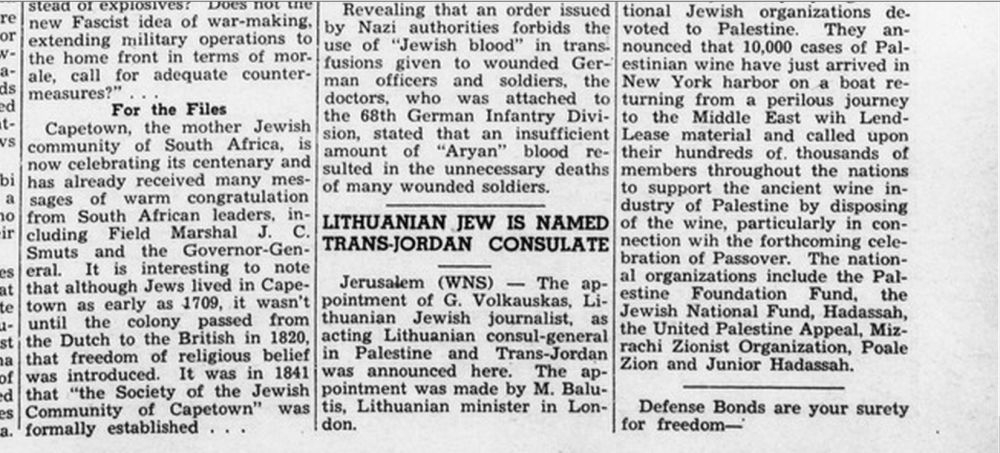
The Jewish Floridan reports G. Volkauskas’s appointment as Lithuanian general consul in Palestine.

Lithuanian-Israeli diplomatic relations are numbered in the years since the restoration of independence, but you are talking about a much larger time scale.

National Conference “The Stories of the Jews Who Lived in Lithuanian Cities and Towns” in Ariogala, Lithuania

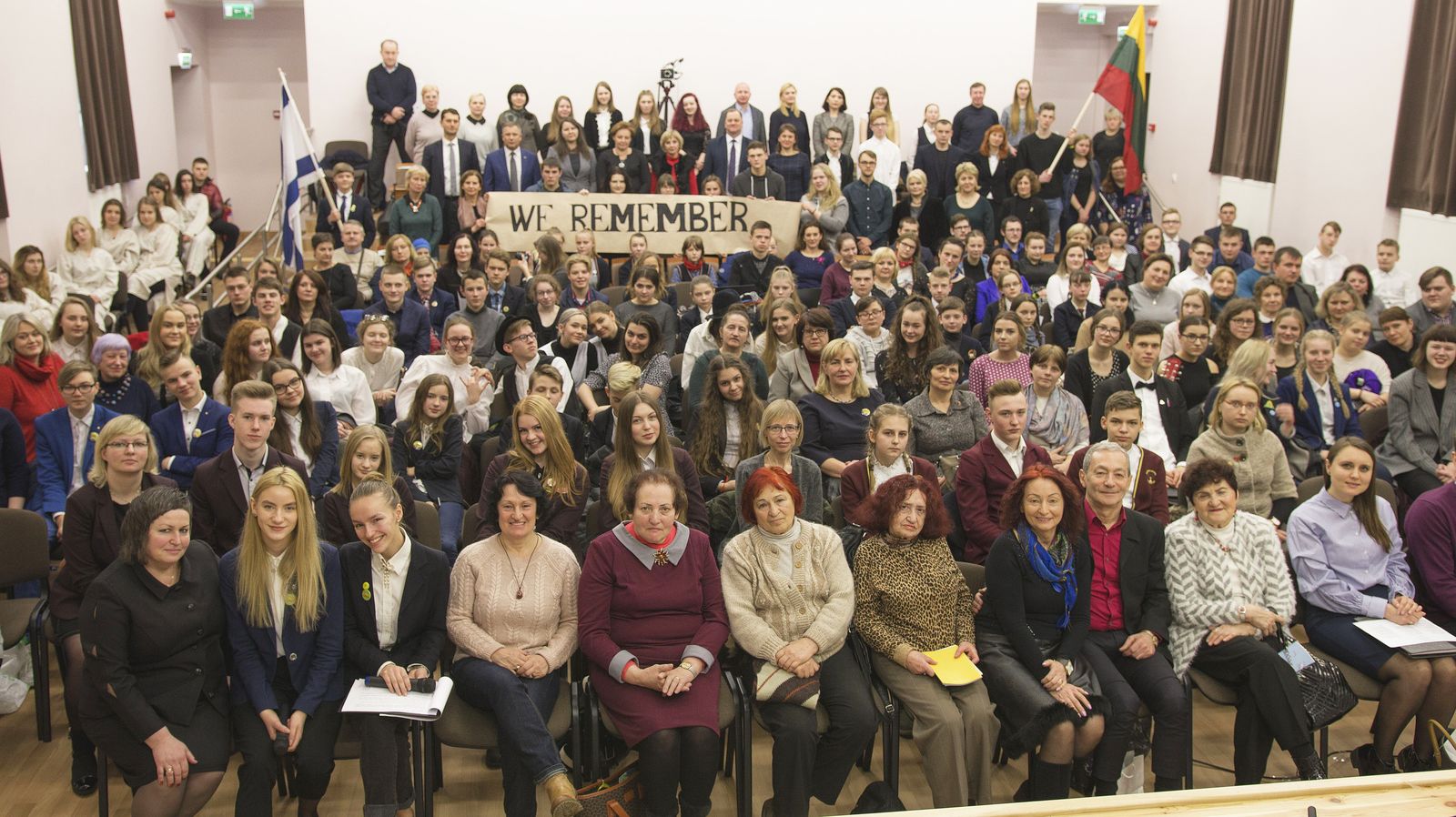
The date and topic of the event wasn’t accidental. Ariogala gymnasium principal Arvydas Stankus said this event was a kind of mobile memorial recalling history. Event guest Gercas Žakas, chairman of the Kaunas Jewish Community, expressed satisfaction at the large turn-out, over 200 people, and said he expected they were tolerant people, not militants, able to speak what exists and what has been lost. He said it was important to remember losses because otherwise we would again enter into historical oblivion. Until World War II everyone got along well and there were about 3,000 Jewish volunteers for the Lithuanian military. It was recalled Lithuanians gave Jews Easter eggs before the war and Jews gave Lithuanians matzo. Then the Soviets came, and all groups suffered, then the Nazis with their crazy policies culminating in genocide.

Ronaldas Račinskas, executive director of the International Commission to Assess the Crimes of the Soviet and Nazi Occupational Regimes in Lithuania, said the world opened the gates of Auschwitz 73 years ago and saw what had gone on there. He said the world did not see other things, and perhaps didn’t want to see or judge what happened up to that point. He said the conference was a sad occasion since it commemorates the murder of 6 million Jews. It would be easy, he said, to claim that this was down to circumstances, Nazi policy and power supporting the idea of the destruction of people, but that there were signs of values pointing to the future, people who took exceptional risk, and some had made accomplishments of global significance. Račinskas said we no longer live in times when aid to the weaker carries a death penalty. Now we can demonstrate our values without waiting for extreme situations to occur. This will result in a better, stronger and more educated Lithuania, he said, and 100 years from now there will be no need to mark June 14, August 23, September 23 or January 27, since it will not be able to happen again at that point. He pointed out there are people at each and every educational and cultural agency doing much more than is demanded by different programs, and said he looked forward to the appearance of leaders whom others would follow. Without the heart-felt and since work and the personal commitment of the teachers, he said, such events as this could not take place.

Book Review: The Book Smugglers


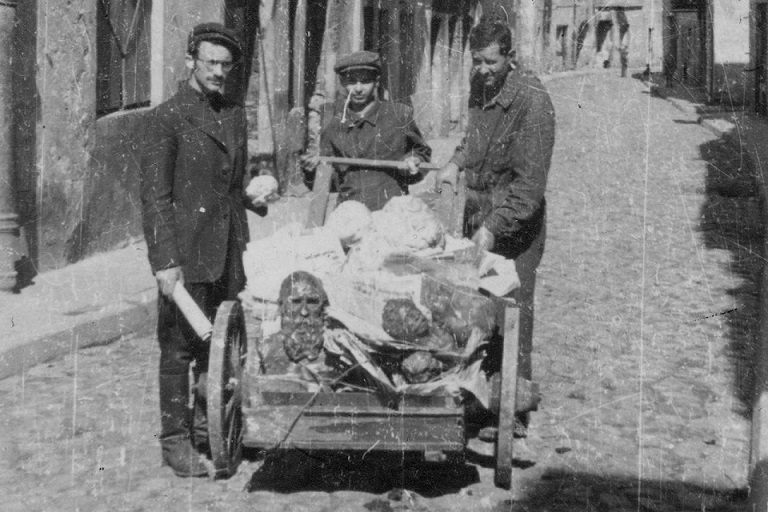
A wagon of newspapers and artwork, including a bust of Leo Tolstoy, recovered in Vilnius in July, 1944. Photo: YIVO Institute for Jewish Research

Lithuania has a long history of book smuggling, but the Lithuanian side of the story usually focuses on efforts by smugglers to import books in Lithuanian into the territory of the Baltic states incorporated into the Russian Empire by Catherine the Great and attempts to set up underground Lithuanian schools in barns across the country. The entire lore of book smuggling was popularized after World War II by the author Ray Bradbury in his novel “Fahrenheit 451.” Now the Wall Street Journal and author David Fishman remind Lithuanians and the world of another chapter in the same story: the “Paper Brigade” in the Vilnius ghetto answerable to Rosenberg charged with looting Judaica treasures from YIVO, the Great Synagogue and other sources in the Nazi-occupied Lithuanian capital.

§§§

The Book Smugglers: Partisans, Poets and the Race to Save Jewish Treasures from the Nazis. The True Story of the Paper Brigade of Vilna, by David E. Fishman. 312 pp. 28 photos, 2 maps. University Press of New England, 2017. Audiobook narrated by P. J. Ochlan.

Review by Gerald J. Steinacher

The Book Smugglers of Vilna

How a small band of Jews resisted Nazi efforts to destroy the cultural treasures of the Jerusalem of Lithuania.

The Nazis did not merely want to murder all the Jews; they were also determined to eradicate all Jewish art and literature. In “The Book Smugglers,” David E. Fishman, a professor at the Jewish Theological Seminary in New York, introduces us to a thriving Jewish culture in Eastern Europe and to the people who risked their lives to save this culture from the barbaric Nazi onslaught.

Vilna, better known today as Vilnius, was the cultural capital of Eastern European Jewry. Nicknamed the Jerusalem of Lithuania, on the eve of the Holocaust the town had an ethnically diverse population of 193,000, of whom about 28% were Jews. It was foremost a city of books for the people of the book. Yiddish literature flourished in a vibrant writers’ scene. The city’s Jewish cultural institutions, such as the Strashun Library and the Yiddish Scientific Institute, were famous for their rare literature and Jewish-history collections.


European Forum on Anti-Semitism to Convene in Berlin

The AJC and the Friedrich Ebert Foundation are holding the ninth European Forum on Anti-Semitism in Berlin at the beginning of February. Of special concern is the rise to power of right-wing groups and the challenges this poses to European Jewish communities. The personal representative responsible for battling anti-Semitism of the chair of the OSCE is to speak at the forum. Also to attend is LJC chairwoman Faina Kukliansky, with a meeting scheduled with Rabbi Andrew Baker, AJC international affairs director responsible for relations with all Diaspora Jewish communities. Kukliansky and Baker are the co-chairs of the Goodwill Foundation as well and are expected to discuss the upcoming meeting of that organization in Vilnius.

Lithuanian Limmud 2018 News

Lithuanian Limmud 2018 presents an evening with Yulia Rutberg, star of the Vakhtangov theater, and Sabbath celebration at 7:00 P.M., February 9, tickets 35 euros, and a concert by the Hop Stop Banda group at 10:00 P.M. on February 10, tickets 15 euros. Events to be held at the Vilnius Grand Resort Hotel. Contact Žana Skudovičienė at +37067881514 for more information.

AJC Praises Lithuanian Endorsement of IHRA Working Definition of Anti-Semitism

Lithuanian foreign minister Linas Linkevičius announced the decision today in a tweet, stating the “Lithuanian Government has endorsed the international definition of anti‑Semitism by the International Holocaust Remembrance Alliance (IHRA). Anti‑Semitism has absolutely no place–neither in Lithuania, nor in other parts of the world.”

AJC CEO David Harris said, “Lithuania, which occupies a central place in the history of Jews in Europe, has asserted laudable leadership in responding to the call by the IHRA to recognize clearly the cancer of anti-Semitism and mobilize to effectively combat it. Let’s hope other European countries follow suit.”

During a two-day visit to Vilnius last week, an AJC delegation led by Harris discussed with minister Linkevičius, among other issues, the possibility for Lithuania to accept in the near future the IHRA working definition of anti-Semitism, following its adoption by Austria, Bulgaria, Germany, Romania and the United Kingdom.

The IHRA definition, adopted in 2016 by the alliance’s 31 member states, is based on the 2005 European Monitoring Center (EUMC) Working Definition. It offers a clear and comprehensive description of anti-Semitism in its various forms, including hatred and discrimination against Jews, Holocaust denial, and, of particular note, anti-Semitism as it can at times relate to Israel.

AJC worked closely over a decade ago with the EUMC in developing this working definition as a tool for monitors and law-enforcement officials.

Tu b’Shvat

Today is the Jewish holiday of Tu b’Shvat, the 15th day of the month of Shvat, the New Year for trees also known as Israeli Arbor Day. It is traditional to eat of the shvat ha’minim (seven species endemic to the Land of Israel): wheat, barley, grapes, figs, pomegranates, olives and dates. Hag sameakh!

Pope Tells Anti-Semitism Group Memory Antidote to Indifference

Pope: Indifference a virus which is contagious in our time

Pope Francis stresses the importance of responsibility, remembrance and education in fight against anti-Semitism.

In his speech to participants attending the Rome International Conference on the Responsibility of States, Institutions and Individuals in the Fight against Anti-Semitism in the OSCE Area, the Pope got right to the heart of his address by emphasizing three words, responsibility, indifference and memory.

Regarding responsibility, Pope Francis said, “we are responsible when we are able to respond. It is not merely a question of analyzing the causes of violence and refuting their perverse reasoning, but of being actively prepared to respond to them.”

Indifference

He went on to say, “the enemy against which we fight is not only hatred in all of its forms, but even more fundamentally, indifference; for it is indifference that paralyzes and impedes us from doing what is right even when we know that it is right.”

I do not grow tired of repeating, he said “that indifference is a virus that is dangerously contagious in our time, a time when we are ever more connected with others, but are increasingly less attentive to others.”