Some Lithuanians didn’t spend New Year’s Day recovering from the previous evening’s festivities and took to the streets to vandalize a street sign and the National Museum in an attempt to rehabilitate Lithuania’s leading World War II-era Nazi ideologue and activist Kazys Škirpa.
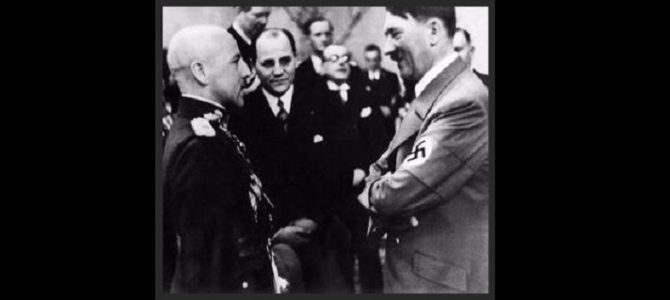
On January 1, 2020, vandals placed an adhesive sticker over the street sign for Vilnius’s small central Trispalvė (Tricolor) Alley proclaiming it K. Škirpa Alley, the name it had for a decade until the Vilnius city council changed it early last year in response to repeated requests over many years. The reason the street caused controversy was that Škirpa was the leading Lithuanian Nazi ideologue based in Berlin who created the Lithuanian Activist Front, notorious in the Holocaust in Lithuania, and its governing organ, the Lithuanian Provisional Government, with Škirpa appointing himself tin-pot dictator or “prime minister” of the pro-Nazi government in exile, the pro-Nazi underground in what was now Soviet Lithuania and the “prime minister” of a future semi-independent pro-Nazi Lithuania liberated by Nazi Germany and a belligerent fighting on the side of the Axis in World War II.
Škirpa’s proponents prefer to ignore all that messy stuff about World War II and the Holocaust and point instead to his one non-controversial action: on January 1, 1919, he and a group of Lithuanian volunteer soldiers hauled the newly-created Lithuanian flag, the tricolor, up Gediminas Hill, at the base of which the alley in question lies. It would be the moral equivalent of modern Germany erecting a sign proclaiming Alexanderplatz is now Adolf-Hitler-Platz to honor Adolf’s status as a German World War I veteran, never mind what came later. In fact the Vilnius city council in an act of very precedented obsequiousness did allow Škirpa’s apologists and would-be rehabilitators to post a plaque under the new street sign, Tricolor Alley, whitewashing Škirpa’s real biography in favor of his imaginary status as Lithuanian hero. A small group of picketers also held signs on January 1, 2020, reading: “Tauta savo didvyrius žino!” or, “The nation knows who its heroes are!”
Vilnius city administration director Povilas Poderskis told Baltic News Service the sticker was removed Thursday, January 2, and said the incident would be reported to police as an act of vandalism.