Chanė Varkulevičienė passed away June 18. She was born in 1934. Our deepest condolences to her son Rimantas.
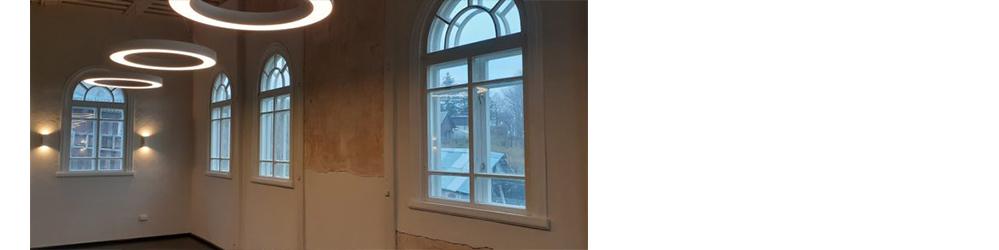
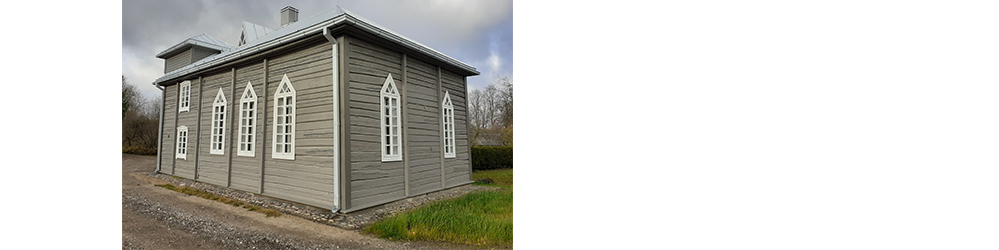
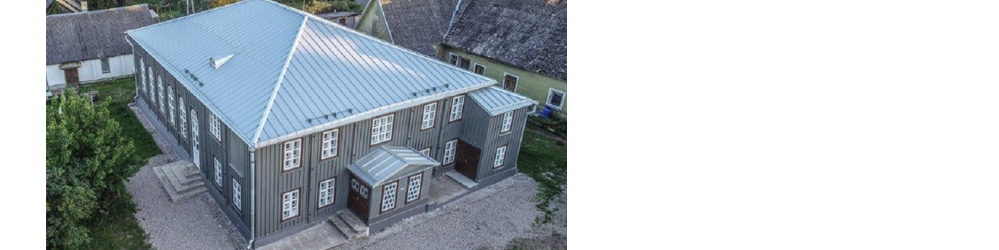
Wooden Synagogue in Alanta Renovated
Read more




Chanė Varkulevičienė passed away June 18. She was born in 1934. Our deepest condolences to her son Rimantas.
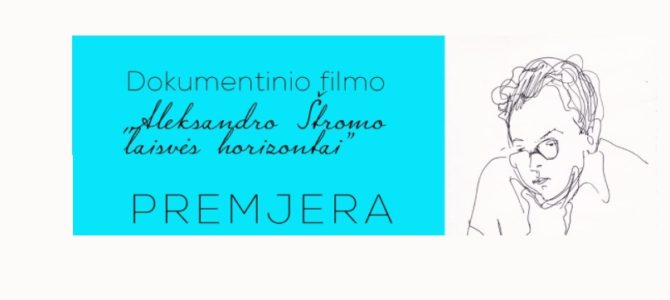
The Vilnius Jewish Public Library will premiere a film about Aleksandras Štromas called Laisvės Horizontai at 5:30 P.M. on Monday, June 21. The filmmakers Ona Bivenienė, Ilja Bereznickas and Saulius Sondeckis will be present. Seating is limited and prior registration is required. Send an email to info@vilnius-jewish-public-library.com or call (8-5) 219 77 48 before 5:00 P.M. to register. The library is located at Gedinimo prospect no. 24 in Vilnius, through the alley to the parking lot and find the first door on the right.

The Lithuanian Jewish Community wishes Aleksandras Asovskis a very happy birthday this milestone year. Mazl tov. Bis 120!

The Sabbath begins at 9:40 P.M. on Friday, June 18, and concludes at 11:32 on Saturday, June 19.
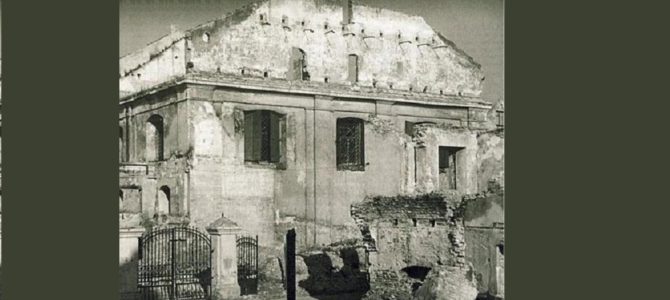
This article will first attempt to discuss what attitude towards Jewish property was held by the officials of the two main Lithuanian government institutions–the Lithuanian Provisional Government and the Vilnius City and District Citizens Committee–which existed in the first months of the German-Soviet war and by Catholic Church representatives. Second, using the example of one district, we will examine the fate of Jewish property in the Lithuanian countryside. Whether or not this model can be applied to other Lithuanian regions will be shown by further research.
Full article in Lithuanian here.
See also here.
On June 15 the Lithuanian parliament adopted a resolution entitled “On Commemorating the 80th Anniversary of Great Losses and Resistance to the Occupations by Totalitarian Regimes” which says that “after Nazi Germany occupied Lithuania, the Nazis began to carry out the genocide of the Jews of Lithuania, opening the way for mass murders and violence, leading to the loss of the larger part of the Jewish Community.”
Full editorial in Lithuanian here.


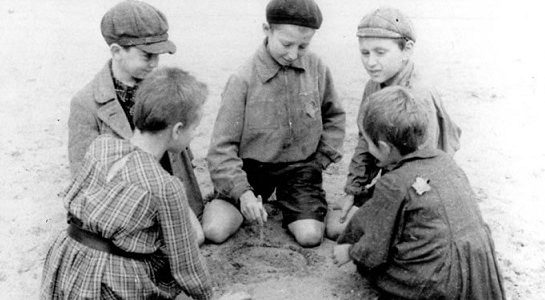
Photo: Children in Kaunas ghetto, courtesy Yad Vashem.
Today [June 15] the Lithuanian parliament adopted a resolution on commemorating the 80th anniversary of great losses and resistance to the occupations of Lithuanian by totalitarian regimes which says “After Nazi Germany occupied Lithuania, the Nazis began to carry out the genocide of the Jews of Lithuania, opening the way to mass murders and violence, leading to the loss of the larger part of the Jewish community.”
The language of the resolution is missing an essential element, a reminder that the mass murders were carried out with the aid of local collaborators. Would you like to put it more simply and clearly? There were people in the Lithuanian cities and towns who murdered their Jewish neighbors. Should we put it yet another way? There weren’t Nazi tanks and units standing by the side of the gravel pits on the forest margin, there were armed local men who fatally shot Jews lined up there, men, women and children [in Lithuania Jewish children were often murdered by smashing their heads against trees and rocks or with rifle butts in order to save ammunition–translator]. Another formulation which frightens us so much is also missing: there were Lithuanians among those who organized and physically carried out the genocide.
Does that sound horrible? But it’s the truth. The truth which is so hard to admit yet again. Perhaps the Lithuanian parliament is following the Lithuanian saying, “one teaspoon of tar ruins the barrel of honey?”
If so, it’s being misapplied, because the Lithuanian people aren’t a barrel of honey, and the Lithuanians who murdered Jews aren’t a teaspoon of tar. They are criminals who have committed crimes against humanity. A nation who can admit such people existed in its ranks is a brave and honorable nation. It’s not that their sins pass down to us, just that today’s generation is still afraid of the truth.
The Lithuanian Jewish Community had hoped the voice of the only Jewish member of the Lithuanian parliament, Emanuelis Zingeris, would be heard. He proposed amending the text of the resolution to read “the Nazis and their local collaborators.” He was not heard. Neither were the Lithuanian Jewish Community and the thousands of victims who stood before their armed neighbors, and millions of Jews and other people of goodwill around the world who are only asking for one thing, to face the truth.
Before writing this commentary, many people said: “It’s not worth raising the issue, it’s better to keep quiet, remain silent, not irritate, not sow discord.” But as Tomas Venclova said, “We should avoid descending into these scandals, but they will be inevitable as long as there are defenders of the Nazi collaborators.”
Faina Kukliansky, chairwoman
Lithuanian Jewish Community
Vladimir Savenkov passed away June 15. He was born in 1937. Our deepest condolences to his widow Olga.
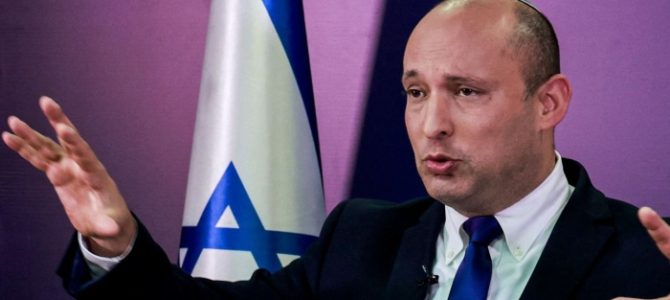
Naftali Bennett was proclaimed prime minister of Israel at the Knesset session last Sunday by a one vote majority. He now becomes Israel’s 13th prime minister.
Naftali Bennett is a former software entrepreneur and an Israeli politician. He is the current leader of the Yamina Party.
Bennett was born in Haifa on March 25, 1972, to an American Jewish couple who had immigrated to Israel from San Francisco just after the Six Day War in 1967. He is the youngest of three sons.

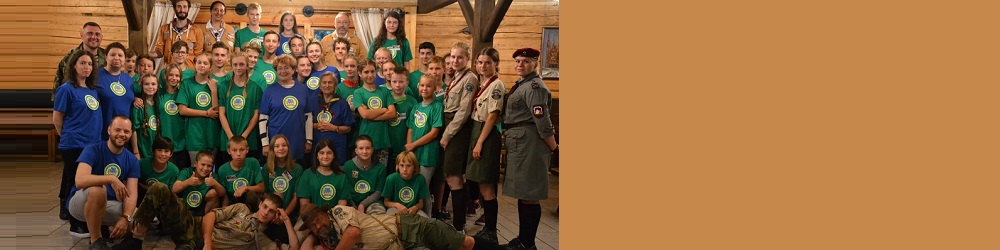
The Lithuanian Jewish Community is pleased to announce the our annual Amehaye summer camp for 2021:
June 28-July 2 Children aged 7-10 (day camp), register here;
July 5-July 9 Ages 10 to 13 (including overnight), register here;
August 2-August 6 Ages 14 to 17 (overnight), register here;
July 18-July 23 Jewish scouts (overnight).
.
For more information send an email to amehaye2021@lzb.lt or call +370 601 46656.
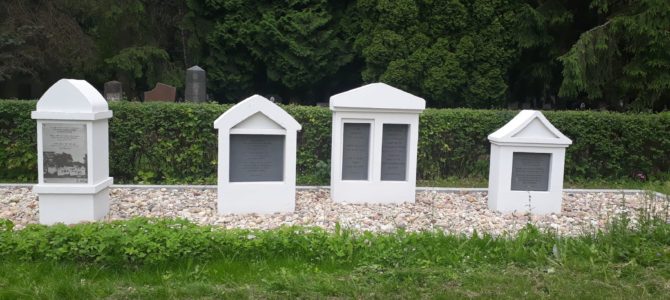
by Victoria Sideraitė-Alon
The old Jewish cemetery in the Šnipiškės (Shnipishok) neighborhood in Vilnius wasn’t destroyed in a single day. Back at the turn of the 19th to 20th century, the remains of 700 Vilnius Jews buried there were exhumed and reburied in a different part of the same cemetery during construction in the surrounding area.
Later during the Soviet era during the mid-20th century when work went on to extend what is now Šeimyniškių street, encroaching again on the old Jewish cemetery, these 700 burials were again exhumed and sent to a different grave. They were rediscovered in 2003 during construction of apartment houses next to Vilnius’s King Mindaugas Bridge. At the time, Lithuanian Jewish Community chairman Simonas Alperavičius resolved to have these 700 reinterred at the still-operational Jewish cemetery on Sudervės road in Vilnius. The reburial ceremony was attended by LJC officials and rabbis. The new grave there was marked with four posts.
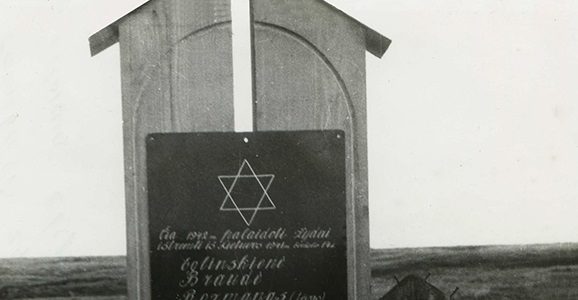
The deportations of Lithuanian residents touched every ethnic group in the country, the Jews included. On 14 June 1941, some 3 thousand Jews were exiled from Lithuania.
In the fall of 1941, a train carrying a cargo of exiles from Lithuania rolled in to the foreign and cold city of Syktyvkar. Ravaged by famine and disease, they had travelled thousands of kilometres in tightly sealed cattle cars. Entire families would die from starvation. Those deported on orders from Joseph Stalin, the ‘Father of Nations’, included the Abramovičius family of Jews from the town of Tauragė (Taurogi shtetl): mother Taube-Leja and her three kids, the oldest son Leibas aged 12, the middle son Abramas, 8, and the youngest Aronas, just five.
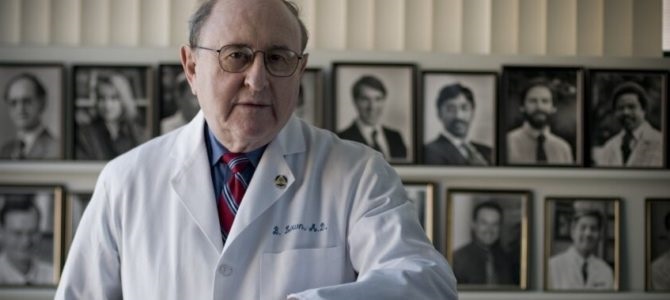
The city of Utena in northeast Lithuania has a new piece of public art, a bronze heart, to recall the birth there of Bernard Lown, Nobel prize winner and famous cardiologist who invented the defibrillator.
The statue comes as part of a project by cultural historian Sandra Dastikienė called “Old Neighbors” intended to bring public attention to the Jewish community’s legacy in the Utena region.
“To heal communication between the Lithuanian and Jewish peoples, we have to start at the grassroots level, from the culture of the small towns or shtetls, where both separate communities lived together in peace for centuries. It was that, namely neighborliness, that I want to emphasize with my project in Utena, Anykščiai, Molėtai and Dusetos,” Dastikienė said.
Lown was born in Utena on June 7, 1921, to a family of Jewish merchants. Fearing growing anti-Semitism and seeking a better life for their children, his parents took the family to the USA in 1935. Bernard Lown studied medicine there and was graduated in 1945. He passed away earlier this year in February at the age of 99.
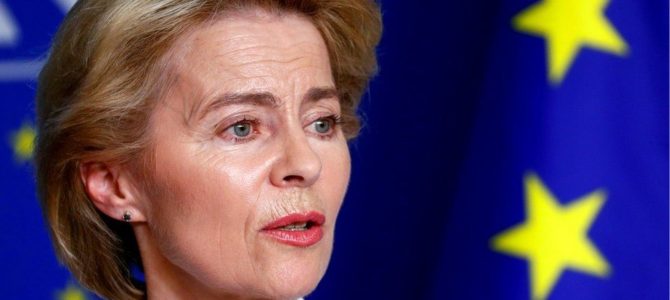
June 9, 2021–European Commission president Ursula von der Leyen addressed thousands participating in the 2021 American Jewish Committee (AJC) Virtual Global Forum. She reiterated the Commission’s commitment to fighting antisemitism, fostering Jewish life, Holocaust remembrance and strong EU-Israel partnership.
“After taking office as Commission president in 2019, I stepped up Europe’s fight against anti-Semitism. This is why, later this year, the Commission will adopt its first-ever ‘EU Strategy on Combating Anti-Semitism and Fostering Jewish Life’ … All European students should learn about the Holocaust, no matter their background, family history or country of origin. … We want to foster Jewish life in Europe in all its diversity. We want to make sure that Jews are free to follow their religious and cultural traditions. … The European Commission has significantly increased the budget for preventing and addressing anti-Semitism and fostering Jewish life, and we will also take action if European money is used to call into question Israel’s right to exist.”
Full speech here.
Aleksandr Šmidt died June 11. He was born in 1954. Our deepest condolences to his widow Vanda and brother Jurijus.

The Sabbath begins at 9:35 P.M. in Vilnius and the Vilnius district on Friday, June 10, 2021. The Sabbath concludes at 11:27 P.M. on Saturday, June 11, 2021.
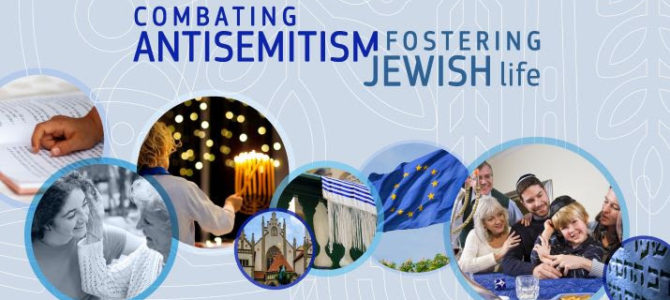
June 9, 2021–The Commission decided to send letters of formal notice to Greece, the Netherlands and Lithuania as their national laws do not fully or accurately transpose EU rules on combating racism and xenophobia by means of criminal law (Council Framework Decision 2008/913/JHA). The purpose of this Framework Decision is to ensure that serious manifestations of racism and xenophobia, such as public incitement to violence or hatred, are punishable by effective, proportionate and dissuasive criminal penalties.
Full story here.

Union of Former Concentration Camp Prisoners member Sulamita Lev celebrates her birthday June 7. She has been an employee of and volunteer at the Lithuanian Jewish Community and the LJC Social Center for many years.
We wish her a happy birthday, much happiness and good health, strength of spirit and joy. We wish you many meaningful years to come and that you would always remain as you are, young at heart.
Mazl tov!
The newspaper Šiaulių Kraštas published the incredible story of Sulamit’s life and rescue from the Šiauliai ghetto two years ago. The text is available in Lithuanian here.

This Sabbath on June 4, 2012, begins in Vilnius and Vilnius district with the lighting of the candles at 9:27 P.M. and concludes at 11:13 P.M. on June 5.