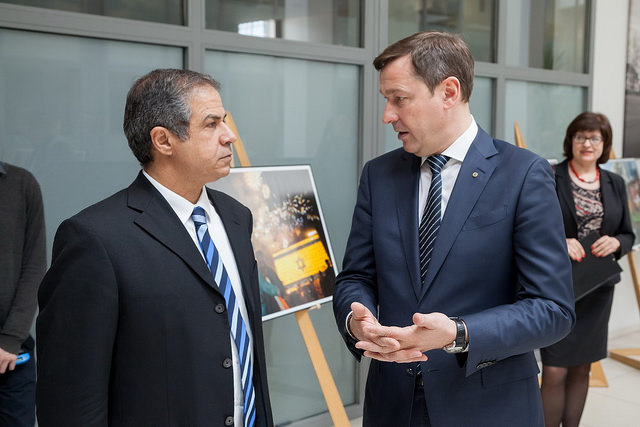











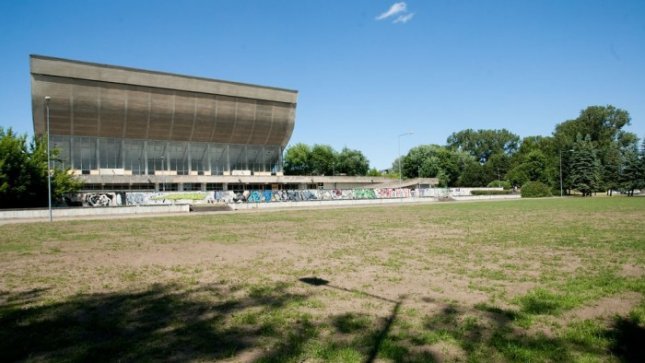
Baltic News Service reported April 14, 2015, that members of the delegation from a European Jewish cemeteries committee said they have no complaints over Lithuanian Government plans to refurbish the former Palace of Sports building complex located upon an old Jewish cemetery.
After the meeting Rabbi Hershel Gluck said: “This is an important day for the Lithuanian Jewish Community and for relations with Lithuanian state representatives and the Lithuanian people.”
He told reporters further that “this shows we can work together in a way beneficial to all sides. This is a new chapter in cooperation between the Jewish community and the Lithuanian Government. I want to express gratitude for these very positive steps.”