






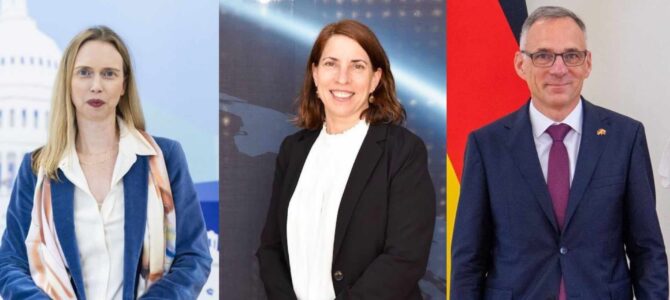
Two Rabbis Coming in February to Work in Vilnius

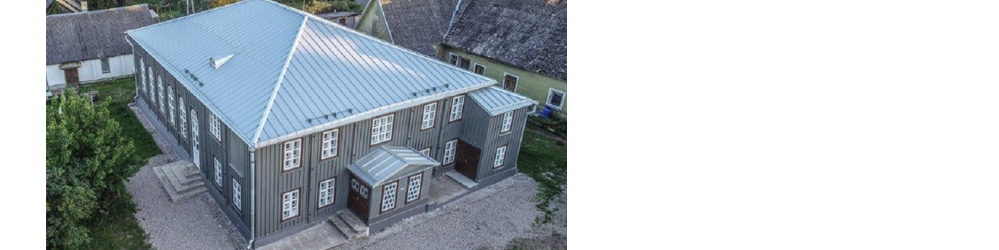
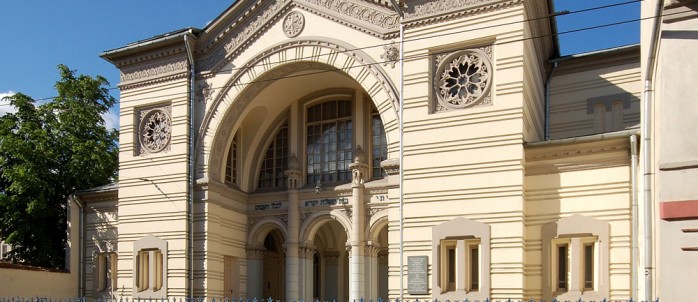
Vilniaus_sinagoga

For just over a half year now the Vilnius Jewish community hasn’t had an official rabbi.

The Lithuanian Jewish Community and the Lithuanian Jewish Religious Community announced a public tender to find a new rabbi and received responses from over thirty honored rabbis from the USA, Germany, Great Britain, Israel, Belarus, Latvia, Russia and elsewhere.

The Lithuanian Jewish Community and the Lithuanian Jewish Religious Community are grateful for the response by all the rabbis, and for the concern and respect shown Lithuanian Jewish believers and their venerable past.

Procedural Ruse Enables Palestinian Authority to Continue Funneling Foreign Funds to Terrorists

tz

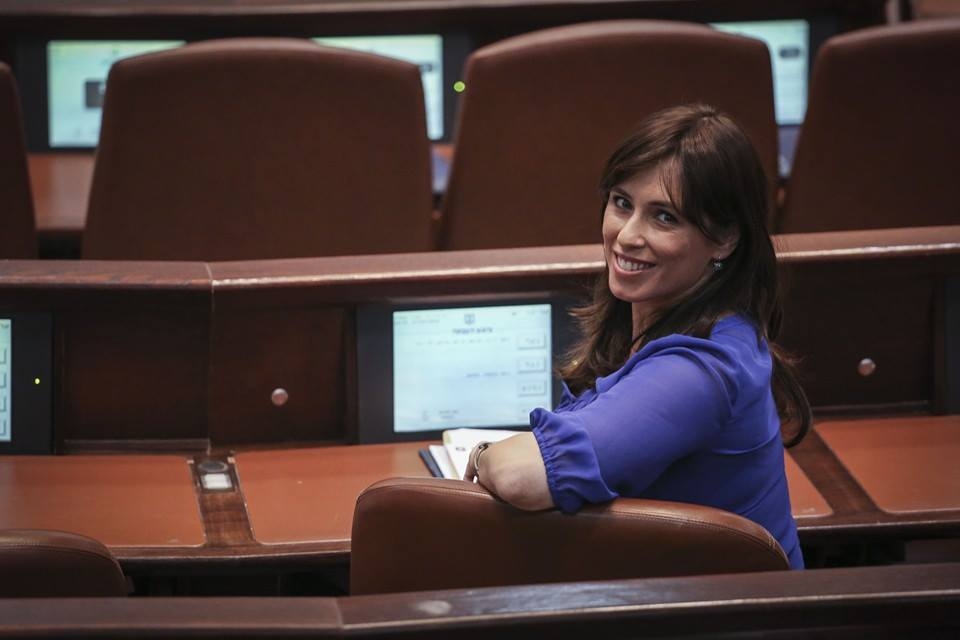
Foreign donors to the Palestinian Authority should not be misled by a “procedural ruse” enabling the continuation of massive funding to terrorists and their families, Israel’s deputy foreign minister said on Sunday.

In an op-ed in the Wall Street Journal, Tzipi Hotovely wrote that due to embarrassment caused by a budgetary report compiled by Israel’s Foreign Ministry in June, 2014, revealing that the PA’s annual payments to terrorists amounted to $75 million, which was 16% of the yearly sum received by foreign donors, the PA altered the way it was doling out the cash to the killers of Israelis.

That same year, according to Hotovely, “The Palestinian Authority passed the task of paying stipends to terrorists and their families to a fund managed by the Palestine Liberation Organization.”

Full story here.

WJC Seeking Interns

The World Jewish Congress are searching for two new interns to work with them at their Geneva office from February, 2016. Both internships last a minimum of 3 months.

– Internship in “Assisting the JDCorps Coordinator Europe, FSU Region, Israel and Africa”:
https://drive.google.com/file/d/0B42kDlSEIu6FZXZKVUJNcE5uczJiZnVyUlMyVW1xUDBaXzRj/view?usp=sharing

– Internship in “Assisting the UN Representative and JDCorps Policy Analyst”
https://drive.google.com/file/d/0B42kDlSEIu6Fdkp5UUEtbDF3YWpXbkN6ME9kd1RqQ1F3VWZj/view?usp=sharing

wjc

Lithuanian Jewish Community Chairwoman Faina Kukliansky on the Holocaust Discussions of Recent Days

C

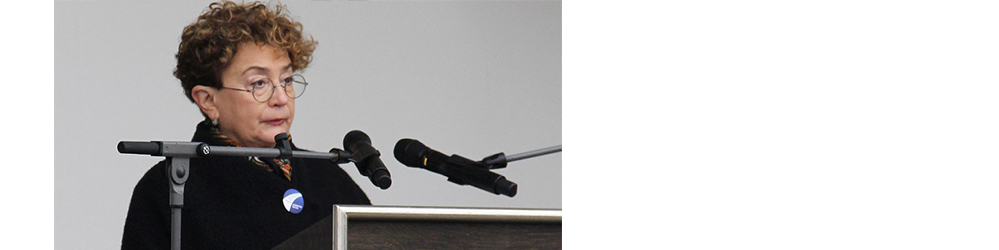
Several days after commemorating International Holocaust Remembrance Day, discussions on the topic of the Holocaust have again come up in Lithuania. In my childhood I heard everything in my family–during conversation memories of the ghetto often came to the fore, being locked in the ghetto, taken to concentration camps, about the hole where people hid. But the experience of the Holocaust was as it were one of many things which separated Jews from non-Jews. They murdered us, while others at the same time went on with their lives, went to movie theaters, went to school and studied. Over just a few months almost the entire Lithuanian Jewish community, more than 200,000 people, were exterminated. For all of my life, for the entire Soviet period, many people treated us differently. We always knew our opportunities were limited and that we were different.

Year after Charlie Hebdo and Hyper Cacher Attacks in Paris Jews Still on Frontline, WJC President Lauder Says

January 9, 2016

PARIS–On the first anniversary of the January 2015 terrorist attacks in Paris in which 17 people were murdered by jihadist terrorists including four Jews at a kosher supermarket, World Jewish Congress president Ronald S. Lauder declared: “Despite the commitment and efforts undertaken by the French and other European governments, the terrorist threat has not diminished.” Lauder said that although French Jewish sites were now better protected than ever by police and the army, the threat of radical Islamist fighters had yet to be defeated.

In a message which was to have been read Saturday night at a memorial for the four Jewish victims of the Hyper Cacher attack to Roger Cukierman, the president of the French Jewish community umbrella organization CRIF, Lauder wrote:

“On behalf of the World Jewish Congress, I salute the French Jewish community for the remarkable strength you have all demonstrated over the past year.

The Co-Authors of Rūta Vanagaitė’s Book

sk
by Sergejus Kanovičius

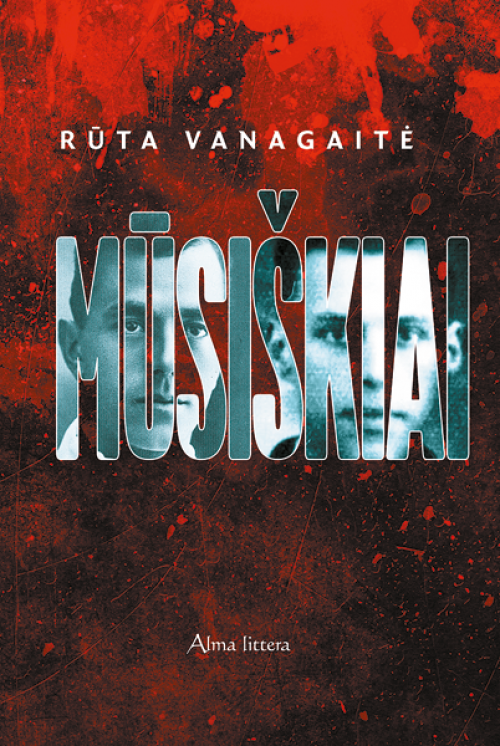
The noise generated as soon as an excerpt from Rūta Vanagaitė’s book “Mūsiškiai” was published was phenomenal in the true sense of the word. The passage released is almost certainly a transcription of an interview Saulius Beržinis conducted almost two and a half decades ago, one of many he did with Holocaust perpetrators. It says nothing about the book or its worth.

A bit later several interviews with the author and several responses to the facts recited in those interviews appeared. Writers, historians, publishers and known and unknown public figures began immediately discussing and judging the unread book, some even compared to a great work of literature and mused upon questions of metaphysical guilt and the effect of the Holocaust on society. For some of the non-readers it was enough that famous Holocaust historian and Nazi hunter Efraim Zuroff attended the presentation of the book and participated in its creation: right-wing non-readers immediately christened the unread book a provocation by the Kremlin intended to sow ethnic discord. One long-time Conservative Party member even fretted the book would ruin Lithuania and Israel’s wonderful relations, although she was unable to explain exactly the connection between Lithuania’s inability to come to terms with its past and foreign policy.

Jerusalem Post Reports on New Holocaust Book by Efraim Zuroff

cdb_Musiskiai_z1

In an addendum to a piece on International Holocaust Remembrance Day commemorations around the world, the Jerusalem Post reported the publication of a new book by Efraim Zuroff, “co-authored” by Lithuanian Rūta Vanagaitė:

“Also on Tuesday, Zuroff launched his new book ‘Our People: Journey with an Enemy’ in Lithuania. Co-authored with Ruta Vanagaite, the writers accuse the current Lithuanian government of trying to ‘hide or minimize the role of Lithuanian collaborators during the Holocaust.'”

Full text here.

Wooden Synagogue Discovered under Brick Walls in Kulautuva, Lithuania

Kulautuva sinagoga

BNS–A wooden synagogue built between the two world wars was discovered as the brick walls of a building were torn down in Kulautuva, Lithuania.

The Kaunas section of the Cultural Heritage Department halted work at the site as consideration is given to what to do with the discovery, the newspaper Kauno Diena reported. Department employees said they learned of the demolition of the building over the weekend after photos were posted to facebook. Cultural heritage protection experts are mulling over the idea of making the synagogue a candidate for entry on the list of protected cultural treasures and even of moving the entire structure to the Lithuanian Folk-Life Museum in Rumšiškės outside Kaunas.

The synagogue was built in 1935 and its windows were boarded up and it was turned into storage space for the town after World War II. Major reconstruction work was performed on the building in 1967 and 1968.

BNS_logotipas

Students and Teachers Converge on Ariogala to Remember the Holocaust

Renginio organizatoriai ir sveciai

Ingrida Vilkienė, education program coördinator of the International Commission to Assess the Crimes of the Nazi and Soviet Occupational Regimes in Lithuania reports on the commemoration of International Holocaust Remembrance Day at a conference held at the high school in Ariogala, Lithuania. Teachers and students from schools with tolerance education centers throughout Lithuania as well as many others came to the Lithuanian town January 27 to remember the dead and present student works about the Holocaust. Others at the conference included Israeli ambassador Amir Maimon, Lithuanian ambassador for special assignments Dainius Junevičius, Kaunas Jewish Community chairman Žakas Gercas with community members, Panevėžys Jewish Community chairman Gennady Kofman, Raseiniai district administrative head Algirdas Gricius and a large number of people from the education department and other institutions in the Raseiniai district administration.

International Holocaust Remembrance Day

Auku minejimas (40)

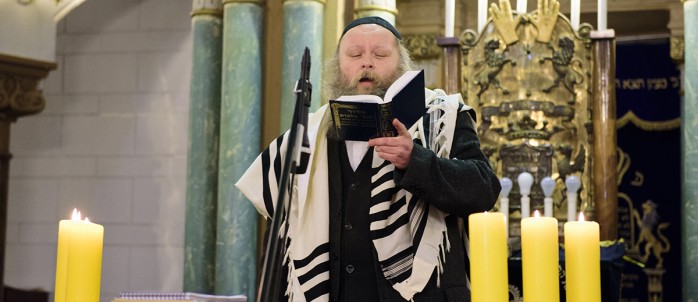
International Holocaust Remembrance Day was marked at the Choral Synagogue in Vilnius with a minute of silence and a reading of the names of Holocaust victims. Cantor Shmuel Yaatov offered song and prayer for those who perished. Students from the Vilnius ORT Sholem Aleichem Gymnasium, Israeli ambassador Amir Maimon, deputy Lithuanian foreign minister M. Bekešius and may others took turns reading the names. Lithuanian Jewish Community chairwoman Faina Kukliansky addressed the audience, calling on them to pray for the Jews of Lithuania brutally murdered, and said there was a noticeable lack of an official reaction or even a minute of silence to remember the circumstances of the brutal mass murder of Jewish Lithuanian citizens by the leaders of the country.

Eye-witness Edmundas Zeligmanas, whose father was murdered as he watched by white armbanders, recalled the horrific mass murders in Šilalė during the first days of war in 1941. After his father’s murder, they murdered many members of the Jewish community the next day. The mass murders were so bloody and so swift there wasn’t time for the earth to absorb all the blood, and it flowed into a small stream which turned red.

A Story of the Holocaust and the AIDS Epidemic: The Romance of an Indian Muslim Freedom Fighter and a Lithuanian Jewish Woman

headerphoto

by Kenneth X. Robbins and John Mcleod

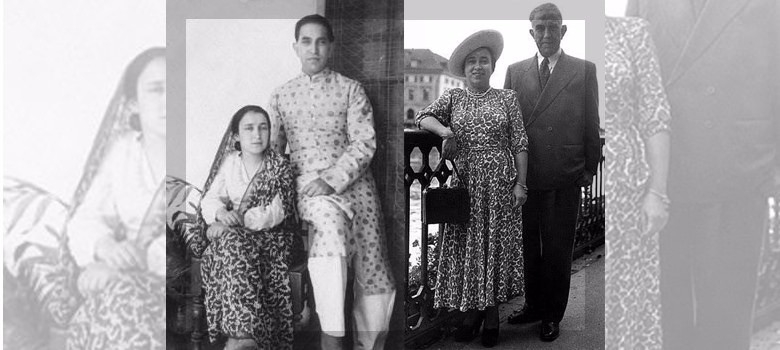
In 1992 the editor of the Times of India telephoned one of Mumbai’s most prominent businessmen, Dr. Yusuf K. Hamied. The editor asked Hamied “as a Muslim leader” his opinion on the communal riots then taking place in the city. Hamied replied: “Why aren’t you asking me as an Indian Jew? Because my name is Hamied? My mother was Jewish!” His maternal grandparents perished in the Holocaust.

They Survived the Holocaust

kent_roman_arch_rodz

The POLIN Museum of the History of Polish Jews, has posted a set of testimonies by Holocaust survivors:

They Survived the Holocaust. Survivors’ Accounts

It is truly difficult to find words to describe the ultimate atrocities of the Holocaust. Therefore, the words of those who managed to survive the Genocide are all the more important. For the International Holocaust Remembrance Day we present the survivors’ accounts from the oral history collection of POLIN Museum of the History of Polish Jews.

Webpage here.

Lithuanian Jewish Heritage Becoming Ever More Topical

Simno sinagoga

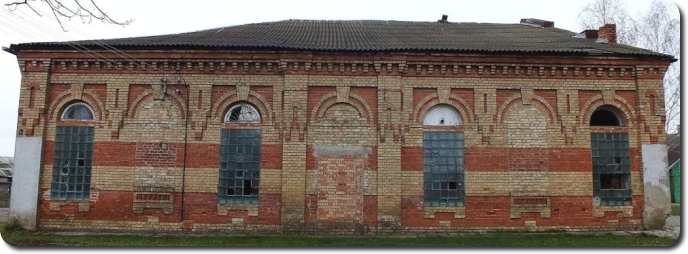
A new cultural heritage site has been added to the Lithuanian registry of cultural treasures: the Simnas brick synagogue at Laisvės street no. 4 in Simnas, in the Alytus region. The synagogue’s outer form has survived almost intact to the present day. “Jewish cultural heritage has become ever more topical recently. Municipalities and regional administrations are striving to make surviving Jewish cultural heritage in their jurisdictions known, its value is being understood, and it is being made public and resurrected to live again. The number of positive examples keeps growing. Frequently more remote small towns are known in the world only because of the surviving Jewish cultural heritage and thus draw tourists,” Diana Varnaitė, director of the Cultural Heritage Department under the Lithuanian Ministry of Culture, said.

Full story in Lithuanian here.

Panevėžys Jewish Community Marks International Holocaust Day

Pa1

The Jewish community, students and general public gathered on a rainy and overcast January 26 in Panevėžys at the Sad Jewish Mother statue to mark Holocaust Remembrance Day.

Panevėžys Jewish Community chairman Gennady Kofman spoke first, saying a lack of concern is the worst crime in the world and is responsible for innocent people dying. The genocide of the Jews of Lithuania is a global tragedy, as is the genocide of the Jews of Europe, which must never happen again, he said.

Moshe Kantor Re-Elected for 3rd Term as European Jewish Congress President

content_Kantor
Moshe Kantor re-elected as EJC president on January 26, 2016.

Russian businessman Moshe Kantor was re-elected Tuesday by the European Jewish Congress (EJC) General Assembly in Brussels to a third executive term as president of the leading European Jewish umbrella organization. Jonathan Arkush, president of the Board of Deputies of British Jews, was elected as chairman of the EJC Council.

World Jewish Congress President Ronald S. Lauder congratulated Kantor on his re-election and said he looked forward to “continuing the WJC’s cooperation with the EJC leadership on all levels.” The EJC is the regional affiliate of the WJC.

After his confirmation, Kantor declared: “I am delighted to have received a strong vote of confidence from the leadership of the European Jewish communities and it is a positive testament to the work we have done these last few years and the plan of action we have for the years ahead.

Holocaust Remembrance Day: A New Generation of Rescuers?

by Ellen Cassedy, author of We Are Here

plaque
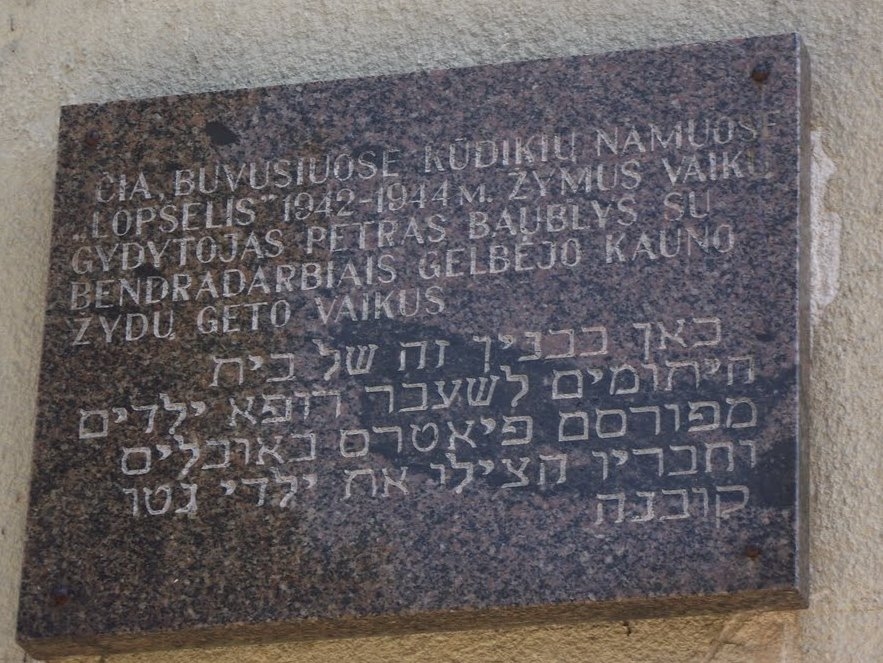
On International Holocaust Remembrance Day, January 27, teachers and students in Lithuania will launch a project called “The Rescue of Another is the Highest Human Virtue.”

Across the country, high school students and community elders will work together to seek out untold stories of rescue. The goal is to “encourage the younger generation to understand that everyone is responsible for his or her actions, that good deeds and noble actions reveal a person’s moral and spiritual value,” organizers say.

The vast majority of Lithuania’s Jews perished during the Holocaust. Some Jews were saved by neighbors who smuggled them out of ghettos, pulled them out of death marches, concealed them in barns and cubbyholes, and secretly passed them from home to home.

Lithuania Marks International Holocaust Remembrance Day

img1
VILNIUS, January 27, BNS–Lithuania paid tribute to victims of the Holocaust Wednesday, reading names and recalling the stories of rescues of Jews during International Holocaust Remembrance Day.

The Vilnius synagogue is hosting a reading of the first and last names of Holocaust victims, followed by prayers and memories shared by Holocaust survivors.

Meanwhile, a gymnasium in Ariogala in the Raseniai district organized a national conference of school students to present dramatic rescue stories and share memories shared by representatives of Jewish communities from across Lithuania.

Finally Telling It Like It Is

by Geoff Vasil

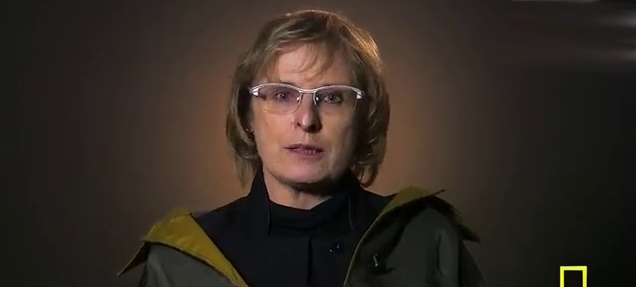
Rūta Vanagaitė presented her new book, Mūsiškiai [Our Own People], about Lithuanian Nazi collaborators, Holocaust complicity, Jewish victims and contemporary attempts to wriggle out of it to a packed room mainly filled with Lithuanian reporters Wednesday morning.

ruta strange truth
Rūta Vanagaitė (courtesy National Geographic Channel)

The venue was extremely strange: a small cafe called Submarine. Vanagaitė chose the location as the site where the murderous Ypatingasis būrys unit [Special Unit, often called simply Ypatingasis or Ypatingas in Holocaust literature in English] had their headquarters during the Holocaust. Vanagaitė said she would lead the audience up to the second floor after the book presentation to the main offices where Ypatingasis once planned the mass murder of the Jews of the region.

Estera Klabinaitė Grobman, 95, Survivor of the Kaunas Ghetto and Stutthof Concetration Camp, Remembers Everything

Arono mama
photo by Milda Rūkaitė

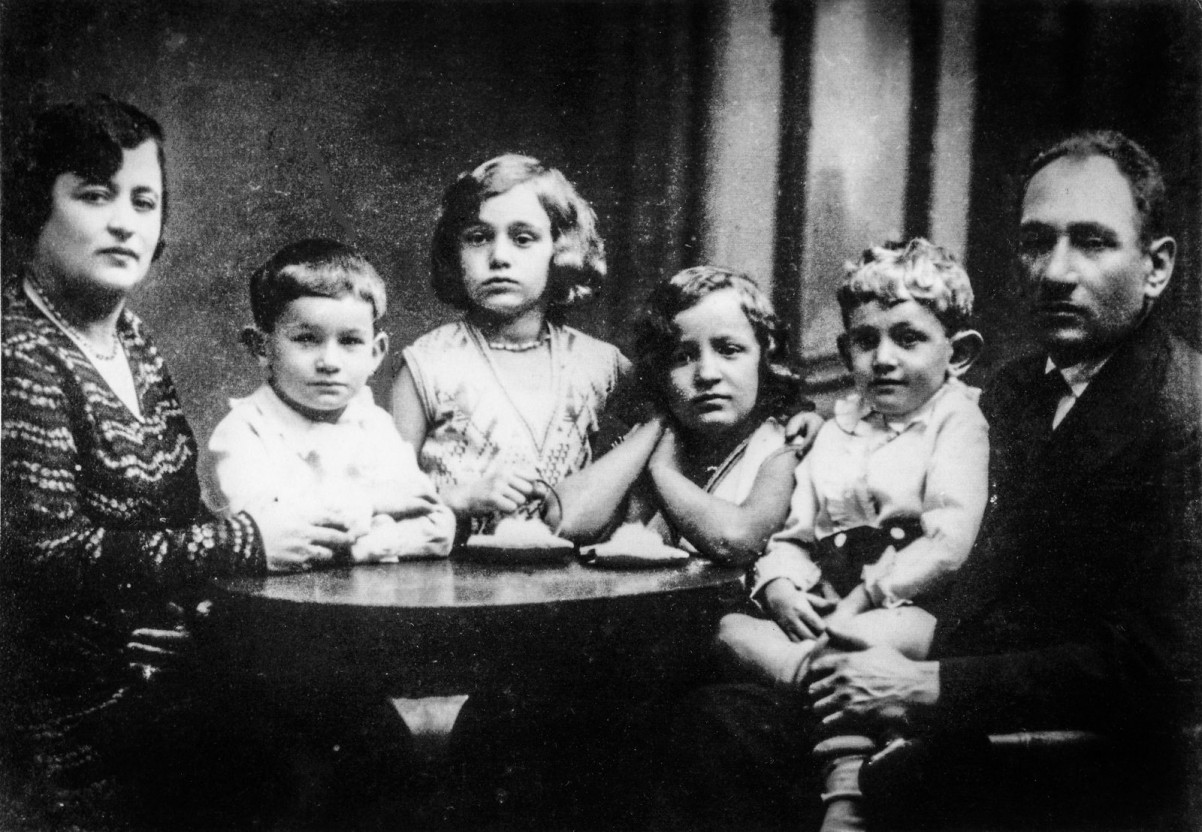
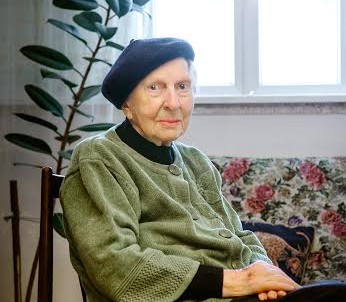
Estera Klabinaitė Grobman was born in November of 1920 in Kaunas to a well-to-do Jewish family who lived in their own home on Vaisių street. She had two brothers and there were three generations living under one roof: grandparents, parents and children. Her grandfather often said he was the Golden Miller because he had light hair and owned a mill. The place where the mill stood was called Klabiniai, so the family’s name was Klabinas. Estera says it was close to Širvintos, Lithuania. She calls herself a Kaunas native and her mother and father owned a small bakery in Kaunas. Fresh-baked bread was delivered by horse each morning in covered containers. They baked delicious bread and the business thrived. They delivered to several shops in the city. Estera remembers her grandmother, the daughter of a rabbi who wrote very neatly. She can’t forget that she was never able to equal her grandmother. According to family tradition her father should have been a rabbi as well and he studied for the rabbinate, but as a child he used to secretly read secular books, and he read much, educating himself. Estera inherited her love of books from her father and to the present reads in four languages: Yiddish, Lithuanian, Russian and German. She is interested in everything.

Europe Israel Public Affairs News

18a4c20a-51df-49c5-9e8f-f4eee0bff588

EIPA Update

John Kerry smoothed over last year’s diplomatic tensions between Israel and the US over the Iran deal this week by saying of prime minister Netanyahu: “I think he recognized that the fight’s over and we can move on.” His words on CNN were clear evidence that while the US and Israel might have disagreements from time to time, the hatchet can, must and always will be buried for the good of the relationship as a whole.