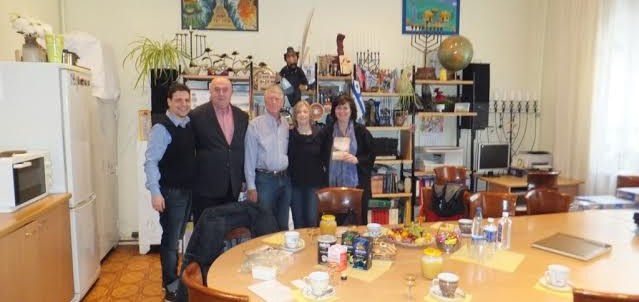
Lithuanian Jewish Community Requests Finding on Holocaust Crimes of Molėtai Priest

The Lithuanian Jewish Community
Pylimo street No. 4, Vilnius

February 29, 2016
No. 190

To: the honorable Birutė Burauskaitė
Center for the Study of the Genocide and Resistance of the Residents of Lithuania

the honorable Evaldas Pašilis
Office of the Prosecutor General of Lithuania

the honorable Stasys Žvinys
Molėtai regional administration

Re: Assessment of the Actions of Father Jonas Žvinys and Bronius Žvinys

The Lithuanian Jewish Community, possessing information about the direct and personal participation of Bronius Žvinys in the murder of Jews during World War II and his brother Father Jonas Žvinys’s collaboration in the murder of Jews, requests:

I. the Center for the Study of the Genocide and Resistance of the Residents of Lithuania (hereafter Center)

1. to perform a study, or if this has been done already, to perform a new study of the aforementioned people for their possible involvement in the stated criminal activity, and to make public, i.e., to acquaint the public with, the conclusion of this study and the material used in this study.

2. If the Center determines the information held about the criminal acts committed by the aforementioned people is true, to recommend to the Molėtai regional administration and/or other regional and municipal administrations to take no actions to commemorate Bronius Žvinys and/or Jonas Žvinys, i.e., not rename streets after them and not to make other commemorative markers intended to honor these people.

II. The Office of the Prosecutor General of Lithuania

1. In light of the conclusion and material from the Center regarding the aforementioned people, to investigate whether the Supreme Court of Lithuania legally and correctly rehabilitated Father Jonas Žvinys.

Sincerely,

Faina Kukliansky, attorney at law, chairwoman
Lithuania Jewish Community

Jerusalem Post on Plans to Rename Street in Molėtai after Alleged Holocaust Perp

In an article dated February 28, the Jerusalem Post reported on plans to rename a street in Molėtai, Lithuania after a man suspected of complicity in the mass murder of 1,200 Jews from the town during the Holocaust.

The man in question is the late priest Jonas Žvinys, long dead but honored with a state medal by Lithuanian president Valdas Adamkus in 1999.

The Jerusalem Post article quotes Lithuanian author and activist Rūta Vanagaitė complaining no one is will to take responsibility in investigating the supposed hero’s past. Vanagaite also said that after searching through KGB archives she discovered the priest in fact had set up the unit responsible for the mass murder operation in Molėtai, and that one of the unit’s commanders was his brother who later confessed to his role in the massacre.

Dr. Efraim Zuroff, Holocaust researcher, author and director of the Simon Wiesenthal Center, told the Jerusalem Post the Žvinys case reflects a “much wider problem.”

Five Incredible Jewish Stories behind This Year’s Oscars

It’s the biggest night of the year in Hollywood, so it’s not surprising that Jews are typically well-represented among the annual list of Oscar nominations. This year, in the absence of a major Jewish-themed film, the Jewishness of this year’s Oscars is of a quieter kind.

As it happens, several Oscar-nominated films have unusually triumphant, behind-the-scenes Jewish stories worth celebrating. Below, we give you five of the best “secret” Jewish stories behind the 88th Academy Awards.

Full story here.

jta

Roseanne Barr to Attend Anti-BDS Conference in Israel

American Jewish comedian Roseanne Barr will participate in a March 28 conference in Jerusalem about fighting the Boycott, Divestment and Sanctions, or BDS, movement. Barr was invited to the conference, which is sponsored by Israeli newspaper Yedioth Ahronoth, because of her involvement with the pro-Israel group Stand With Us, according to Ynet.

“I am proud to stand with Israel during the week of Purim,” Barr said Thursday, according to Ynet. “This is the holiday where Esther mobilized the Jewish community, and because of her strong and unifying stance, she succeeded in overturning the brutal decree to destroy us.”

Barr, who starred in the long-running sitcom “Roseanne,” will tour the country for two weeks prior to the conference and will be accompanied by her mother. The comedian, who frequently posts on Twitter, is an outspoken critic of the pro-Palestinian left and BDS. She has even called Jews who support BDS “anti-Semites” and recently retweeted a post from JTA’s partner website Jewniverse noting that the Bataclan, the Paris nightclub where at least 130 people were killed in a recent attack, was named for a 19th-century Jewish operetta.

Others expected at the conference include Israeli President Reuven Rivlin, several government ministers and Knesset members and Sodastream CEO Daniel Birnbaum.

Full story here.

Užupis Jewish Cemetery to Be Declared National Protected Site

Užupio kapinės

February 26, BNS–An old Jewish cemetery in Vilnius is being put forward to become a state-protected cultural heritage site. Cultural Heritage Department director Diana Varnaitė initiated the process.

“There are surviving headstones there and there should be a certain amount of state protection. The cemetery is already on the registry, it is already a cultural heritage treasure. The registry is so construed that significance determines whether the state or a local government is the party to make a decision and declare sites protected,” Cultural Heritage Department deputy director Algimantas Degutis told BNS. He said state-protected cultural treasures have stricter protection, financing and maintenance requirements.

The move to change the status of the Užupis Jewish cemetery is unconnected with plans by the adjacent funeral home to build a crematorium, Degutis said. The Vilnius municipality is against the crematorium plan.

Mass Murder of 1,200 Molėtai Jews in Hero Priest’s Past?

jonas-zvinys-70489814
by Mindaugas Jackevičus

An initiative is underway in Molėtai, Lithuania, to rename part of Darbo street after the priest Jonas Žvinys, but material from the Lithuanian Special Archives casts doubt on his reputation: could he have organized the mass shooting of 1,200 Jews from Molėtai? Proponents ask how the reputation of a man given a national award by the president can even be questioned.

Local residents also have questions, but no one has approached historians for a professional opinion.

Awarded but not Checked

The Molėtai regional administration is considering whether to rename the street. The plan is to name just part of the current Darbo street after the priest, spanning only a few houses.

Annual Vilnius Kaziukas Fair to Include Shtetl This Year

beigel6

Vilnius, February 25, BNS–This year the annual St. Casimir, or Kaziukas, street fair in Vilnius will include a Jewish Shtetl. The village will establish itself on the square in front of the Vilnius Old Town Hall at the fair running from March 4 to 6 and will feature traditional Jewish crafts and the opportunity to browse Jewish literature and try Jewish food.

“The Jewish prices will include VAT but are subject to haggling,” Algis Gurevičius, director of the Jewish Culture and Information Center in Vilnius, joked at a press conference Thursday. Students from the Russian-language Saulėtekis High School in Vilnius and the Jewish song and dance ensemble Fayerlakh are scheduled to perform at the Shtetl. The shtetl was chosen as the Kaziukas Fair’s showcase exhibit because many Jews were employed as merchants. “Jews taught Lithuania how to sell products, and it’s unlikely anyone would argue against that. Jews were employed in crafts and there were about 70 Jewish craft workshops registered in Vilnius in the 19th century.” The shtetl is to include more than ten Jewish crafts tents, booths offering Jewish souvenirs, a book shop, a fabric shop, a laundry and a gramophone shop. Besides all these products there will also be traditional Jewish foods and treats on offer.

The Kaziukas Fair began as a religious procession to honor St. Casimir in 1604.

BNS_logotipas

Jewish Mysticism

Throne or chariot of God - Kether

Dear friends,

We invite you to attend the lecture “Mysticism in Judaism” this Sunday, February 28, at 6:00 P.M. at the Choral Synagogue in Vilnius.

Shimson D. Izakson
Rabbi of Vilnius

Documentary Film about Osip Mandelshtam

The Vilnius Jewish Public Library is to host the premiere of a film about the life of the poet Osip Mandelshtam called Sokhani Moyu Rech Navsegda [Save My Speech Forever]. The film was completed in 2015 by director Roman Liberov of Moscow. Its running time is 84 minutes. It is in Russian but the premiere will make Lithuanian subtitles available. This year is the 125th anniversary of the birth famous poet and essayist who worked in the Russian language but who is often described as a Polish Jew. In fact his father, grandfather and great-grandfather allegedly all hailed from Žagarė, Lithuania. Director Liberov is to attend the premiere to be held at the Vilnius Jewish Public Library located at Gedimino prospect no. 24 in Vilnius at 5:30 P.M. on Monday, February 29.

Rabbinate Now Working in Lithuania

Dear Community member,

A rabbinate supported by the Conference of European Rabbis has begun work in Lithuania. It will provide solutions to urgent questions and problems ranging from birth to death:

-circumcision
-weddings (with the Ministry of Justice)
-certification of Jewish origins
-training for conversion
-registration of vital statistics and civil ceremonies (with the Ministry of Justice)
-others

Appointments and consultations will be conducted either at the LJC or the Choral Synagogue at a time agreed upon with Rabbis Kalev Krelin and Shimson Izakson. Telephone numbers, contacts and additional information will be provided at a later time.

Shuel (Simas) Levin, chairman
Vilnius Jewish Religious Community

“I’m a BBC Patriot”

Gorbaciovas

That’s how Sam Yossman described his love for the Beeb at an event to introduce his new autobiography, “Šaltojo Karo Samdinys” [Cold War Hired Hand], co-authored with Inga Liutkevičienė.

Trying to sum up his book, itself only a brief summary of a very rich life, Yossman spoke about his Litvak roots in Vilnius, the post-war period, Jews in the Soviet Union and the eventual success he and his friend Yefim Kybarskis, whose family includes a well-known Litvak doctor, and others had in exiting the USSR for Israel. Kybarskis traveled to Lithuania for several presentations of the new book of which the first was hosted by Lithuania’s Department of Minorities as part of a series called “Litvakai sugrįšta” or “Litvaks return.” Also accompanying Yossman was a team of children and grandchildren and assorted friends from Lithuania and elsewhere. The audience included Department personnel, reporters, interested parties from other Lithuanian institutions and a representative from the embassy of Azerbaijan in Vilnius. A representative expected from the Turkish embassy did not appear. Algis Gurevičius, director of the Jewish Cultural and Information Center in Vilnius, also attended.

Holding up the new book, a much younger Yossman gazed out from the cover, a corporal in the Israeli army in khaki fatigues, binoculars half raised, rifle at the ready. The dashing figure of the young corporal was almost immediately contradicted by Yossman’s own account of his time in Israel: he didn’t like it much. It wasn’t what and his friends had expected, it was too hot for a son of the north and he felt he might as well have gone to Uzbekistan or some Arab country. He stayed long enough to fight for Israel in the Yom Kippur war in 1973, but soon repatriated, to England.

Presentation of Book about the Maccabi Sports Club

You’re invited to attend a presentation of V. Žeimantas’s new book “Lietuvos sporto klubas Makabi 1916-2016” [Lithuanian Sports Club Maccabi 1916-2016] by Maccabi Sports Club president Semionas Finkelšteinas at 5:00 P.M. on Monday, February 29, at the Lithuanian Jewish Community in Vilnius.

Makabi knyga

Boris Borisov, Composer, Former Chairman of the Vilnius Jewish Community, Has Died

B.Borisovas

The Lithuanian Jewish Community and the Vilnius Jewish Community mourn the loss of former Vilnius Jewish Community chairman and composer Boris Borisov. Born in 1937, the maestro left us on February 14, 2016.

Although best known as a composer, Boris Borisov was also a pianist, conductor, teacher, author of many cultural publications and a public figure. As chairman of the Vilnius Jewish Community he set up the Jascha Heifetz Fund. He held over 300 concerts and held the Shalom Jewish Music Festival in Vilnius five times from 1994 to 1998.

Since 2000 he had been living in the United States.

Our deepest and heartfelt condolences to the family members, friends and colleagues of the maestro.

On Jewish Motifs, Historical Facts and Lithuanian Identity in Kristina Sabaliauskaitė’s Work

Kristina Sabaliauskaitė

The 24th meeting in the Destinies series of seminars and lectures took place at the Lithuanian Jewish Community on February 17, called “Jewish Motifs in the Works of Writer and Art Historian Dr. Kristina Sabaliauskaitė. Teacher and essayist Vytautas Toleikis moderated the meeting and LJC deputy chairwoman Maša Grodnikienė, the organizer, served as MC and introduced Sabaliauskaitė in person to the audience, noting she was very popular outside of Lithuania as well in Poland and Latvia.

Moderator Toleikis addressed the full hall saying “Kristina has returned Lithuania’s historical memory. She brought back 200 years of history which, due to [historian] Šapoka’s paradigm were lost to Lithuanian consciousness. ‘Silva Rerum’ [‘Forest of Things’ trilogy by Kristina Sabaliauskaitė, 2008, 2011 and 2014] is for us an unexpected historical good fortune, as if the nation had won the lottery. We are lucky Kristina has brought back centuries of history. The author’s memory is not selective, she writes about everything in the past, about Poles and Jews as if they were her own people. This is the attitude of a 21st-century person, it could not be otherwise.”

The conversation during the Destinies meeting revolved around Jewish characters and how the figure of the Jew came to be included in Kristina Sabaliauskaitė’s works in a way very different from the more common portrayal found in Lithuanian literature. Sabaliauskaitė chose the elite person of the doctor Aaron Gordon.

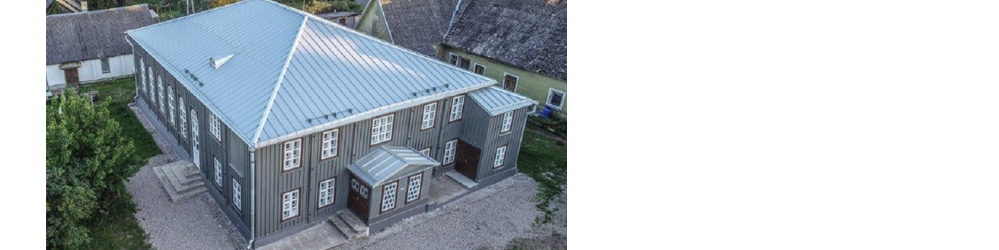
How Jews Were Exterminated in Molėtai: Locked in the Synagogue, Held without Food or Water

Moletų žydai, nužudyti 1941

Excerpts from the book “Molėtai 625 – žmonės, istorija, gamta: [Molėtai 625: People, History, Nature] by Vaidotas Žukas

According to the Lithuanian census of 1923, Molėtai had a population of 1,772, of whom 1,343 were Jews.

Even after Jewish autonomy was abolished in 1926, a very functional Jewish education system remained in place. The Lithuanian state had an interest in having Jews learn Lithuanian as well as Yiddish and Hebrew in order distance them from the influence of the Russian and German languages. The founding of the Lithuanian state allowed Jewish associations and welfare organizations to flourish.

There was a section of the Union of Jewish Soldiers in Molėtai as well where Jewish soldiers who fought for the reestablishment of Lithuanian independence operated. The union supported Jewish interests and was engaged in spreading Lithuanian patriotism among Jews. Also operating in Molėtai were the Palestine Foundation Fund [Keren ha’Yesod] and a local department of the Jewish National Fund [Keren Kayemet LeYisrael]. When the USSR occupied Lithuania in 1940, most Jewish associations, unions and organizations were shut down.

Rabbi Kalev Krelin Visits Klaipėda Jewish Community

Klaipeda

Rabbi Kalev Krelin, appointed the Gaon’s successor by the Lithuanian Jewish Community and himself a rabbi of the Litvak Mitnagdim persuasion, began his acquaintance with the regional Lithuanian Jewish communities with a trip to Klaipėda. Klaipėda Jewish Community chairman Feliks Puzemskij presented the rabbi to the audience and called for a continuation of work begun in Lithuania. The rabbi told them about himself and learned of the aspirations and problems in the small Jewish community. Rabbi Krelin shared his insights and later prayed with the congregation. The rabbi left a good impression upon the entire community with the clear explanations of his thinking he provided and his patent goodwill.
Vilnius Mayor Calls Crematorium in Jewish Cemetery Inappropriate

Šimašius

Vilnius, February 20, BNS–A plot of land next to the old Jewish cemetery on Olandų street is inappropriate for a crematorium and Vilnius residents will be asked their opinion on the need and location for such an operation, Vilnius mayor Remigijus Šimašius said.

“It has to be acknowledged that this is the territory of a Jewish cemetery and it’s obvious that in Vilnius, where 40,000 Jews lived before World War II, because of the association, a crematorium in the Jewish cemetery is simply inappropriate. For that reason alone there should be no crematorium at that location,” the mayor told BNS. He confirmed the council would be presented with the decision not to approve a crematorium on Olandų street in the Lithuanian capital. The mayor also said results of a poll of public opinion on the issue of the need for and location of a crematorium in Vilnius would be presented soon. “I think there is a need among some residents of Vilnius. We ordered a poll of residents of Vilnius to identify what sort of locations are most likely, where residents would like to see a crematorium,” mayor Šimašius said. He said a final decision would be made following the public opinion poll on “where to encourage investments” in the city.

Jewish Organization Proposal Increases Cost to Refurbish Palace of Sports

Sporto rumai

Vilnius, February 21, BNS–Proposals by a Jewish heritage organization for refurbishing the Palace of Sports located on top of an old Jewish cemetery in Vilnius without moving any soil would bring the cost of the project up by 2 million euros, Lithuanian Government vice chancellor Rimantas Vaitkus said.

“When there was analysis of whether it would be possible to set up an underground entrance, in their opinion that would enter into what is called the A section which can’t be touched, where earth cannot be moved. That would make the project 2 million euros more expensive. And we don’t know what’s going to happen now because Turto bankas, which is doing the construction, doesn’t have enough money to bring the project to completion. Either additional funding must be sought, or the whole project has to be reconsidered, but there no decision has been made yet,” the vice chancellor told BNS.
A Great Loss

Kaganas

The Lithuanian Jewish Community is sad to report the death of Isaak Kagan (b. March 13, 1929 in Kaunas), Lithuanian attorney and public figure.

From 1947 to 1952 Kagan studied at and graduated from the Law Faculty of Vilnius University. He worked as a teacher and as legal consultant for different organizations, serving as a consultant on the judicial commission as well. He was a consultant for the Justice Ministry from 1971 to 1973 and worked as a lawyer at the 2nd Office of Lawyers of the City of Vilnius from 1974 to January of 2009.

Kagan wrote and had published a number of monographs and about 50 articles on law, some appearing in the books called “Selected Speeches by Lawyers in Court” and “On the Status of the Defendant in Criminal Proceedings.” He also delivered a presentation called “Communist Regimes: Perpetrators of Ethnic Genocide” as a member of the Lithuanian independence movement Sąjūdis, which he joined in 1988. He was a member of the executive committee of the Lithuanian parliament from 1992 to 1994, a member of the Lithuanian Sąjūdis Commission for Drafting a Constitution for the Republic of Lithuania in 1992, a member of the Public Constitutional Protection Commission, the Lithuanian Council of Attorneys, the Lithuanian Citizens Charter, the Supreme Election Commission and the vice president of the Lithuanian UN Association, among other organizations.

The Lithuanian Jewish Community sends all of our deepest condolences to his wife and family.

Marijus Jacovskis: “Every New Creations Begins in Existential Terror”

M.Jacovskis
Bernardinai.lt Austėja Mikuckytė

Scenographer Marijus Jacovskis’s worktable is covered with designs and drawing implements. He says the fall is a very productive time for him. The atmosphere of creative ferment is palpable in the artist’s studio. Jacovskis talks about his taste for drama, memorable works, relationships with directors and about authorities in the field, and gives an assessment of his own artistic tendencies.

How did you decide to study scenography?

It’s connected with family, of course. My father and aunt graduated from the Art Academy. It was almost a given I would study there, too. There was a moment, though, when I was thinking I would study painting, but I changed my mind at the last moment.

On the one hand, I realized painting is not a profession, but something intangible, something impossible to learn formally. On the other hand, painting is a very complex and complicated activity. I realized painting was too serious for me. I thought, well, I can paint without a studio just as well, but I didn’t become a painter. I only work in the theater.

Full interview in Lithuanian here.
bbb