













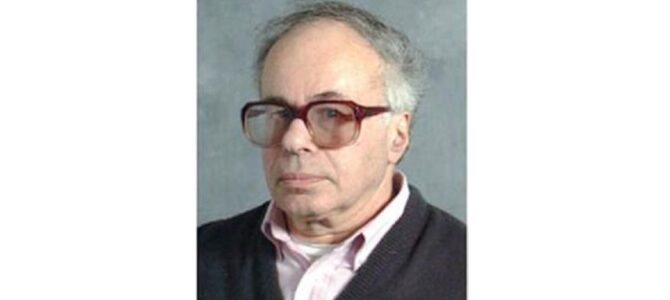

Katerina and Benediktas Bagdanavičius: Last Hope of the Jews of Darbėnai

Bagdonavciai
by Romualdas Beniušis

I recently discovered the case-file of the deportation of the Bagdanavičius family in the archives. It is a unique document from the Soviet period testifying to the will and sacrifice of the family during the Nazi occupation of 1941 to 1944 in rescuing completely innocent people of the small town of Darbėnai from genocide, and to the bitter lot of the deportees later.

Who were they, Katerina and Benediktas Bagdanavičius, the quiet heroes of the village of Būtingė who without regard to danger to them and their family reached out a helping hand to people condemned to death simply for having been born Jews?

Full story in Lithuanian here.

Pope Visit to Israel Photo Exhibit Goes to Kaunas


An exhibition of photographs documenting Pope Francis’s visit to Israel in 2014 will be placed on display for public viewing in Kaunas at the Old Town Hall there on Wednesday, April 20. The exhibit contains 20 photographs illustrating Pope Francis’s visit and meetings in Israel. An opening ceremony for the exhibit is planned for 4:00 P.M. on April 20 to be attended by Kaunas Jewish Community chairman Gercas Žakas, Israel’s ambassador to Lithuania Amir Maimon, Kaunas archbishop Lionginas Virbalas and Kaunas mayor Visvaldas Matijošaitis.

Francis’s visit in 2014 came 50 years after Pope Paul VI’s historic visit.

The mobile exhibit was the result of an initiative by the Israeli embassy in Lithuania and has been show around the country in large and small towns. The Kaunas showing is scheduled to end in mid-May.

Kaunas Jewish Community Celebrates 125th Anniversary of Birth of Daniel Dolski

dolskis-7

The Kaunas Jewish Community is celebrating the 125th anniversary of the birth of Daniel Dolski in Vilnius. Dolski was a pioneer of the Lithuanian stage. Highly educated and extremely charming, he debuted on the Russian stage, moved to Western Europe after the October Revolution and settled in Kaunas in late 1929, becoming a pioneer on the popular Lithuanian musical stage. He was one of the first to perform popular songs in the Lithuanian language, having learned it over the course of a half year upon his return.

Full story in Lithuanian here.

Israeli Ambassador Hails Lithuanian Makabi and Maccabiah Games Medal Winners

Israeli ambassador to Lithuania Amir Maimon and the Lithuanian Makabi Athletics Club held a reception April 14 to celebrate victories by Lithuanian Makabi athletes at the World Maccabiah Games held in Israel and the European Maccabi Games.

Lithuanian Jewish Community chairwoman Faina Kukliansky attended along with Lithuanian Olympic Committee leaders and Sholem Aleichem Gymnasium principal Miša Jakobas, members of the board of the Lithuanian Makabi Athletics Club, 25 Maccabiah medal winners, reporters and others.

The Israeli ambassador greeted the assembly and a film was shown about the first Maccabiada in Israel in 1932 and the last European Maccabi Games in 2015.

Chairwoman Kukliansky in her speech noted the major role the Lithuanian Makabi Athletics Club has played in Lithuanian Jewish life and the contributions made by long-time Lithuanian Makabi Athletics Club president Semionas Finkelšteinas.

Condolences

The Lithuanian Jewish Community notes with deepest sadness the death of Judelis Ronderis, an active member of the Kaunas Jewish Community, a World War II veteran, an enthusiastic supporter of Jewish culture and the man who began the search for Lithuanian citizens who rescued Jews from the Holocaust, who concerned himself with their welfare and with their commemoration. Our deepest condolences to his daughter Lėja, his family, his grandchildren, his long-time caregiver Stefanija Ancevičienė and to the many who knew and loved him.

Litvaks Didn’t Suffer Enough to Deserve Lithuanian Citizenship?

Grant profile pic

by Grant Gochin

Lithuanian officials state that Jews were not oppressed in Lithuania:

In an astonishing display regarding the ignorance of rampant anti-Semitism in inter-war Lithuania, Lithuanian Foreign Minister Linas Linkevicius stated that there was “no violence, repressions or anything like that at the time”, against Jews in Lithuania during the period 1918 – 1939. Based on this assumption, Lithuania intends to deny citizenship applications for descendants of Lithuanian Jews. The belief that Jews did not suffer enough, in Interwar Lithuania, to warrant citizenship is simply preposterous.

http://www.baltictimes.com/litvaks_continually_rejected_restoration_of_lithuanian_citizenship/

At the beginning of the 20th Century, Jews represented about 14% of Lithuania’s population. In May 1915, the Czarist regime deported and exiled approximately 100,000 Lithuanian Jews to the Russian interior. After the war ended, Lithuanian Jews, who had lived in Lithuania for centuries and often constituted half of the population of many towns, were promised that the new independent Lithuanian state would be tolerant to minorities. Jews provided considerable political support for Lithuania in international forums and enlisted into the Lithuanian army to defend their country’s independence. A great many war medals were awarded to these soldiers for their extraordinary bravery and many lost their lives fighting for Lithuanian independence. In return for their contributions, the government granted full autonomy to the Jewish community and created a Cabinet-level Ministry for Jewish Affairs. Unfortunately, these promises were not kept; in 1923 funding for this Ministry was withdrawn, and in 1924 the Ministry was abolished. Sadly, the Ministry had served little purpose, because in 1923 the Lithuanian Government reportedly rounded up and expelled Jews whom they considered to be “alien”.

US Report Faults Lithuania for Treatment of Children, Discrimination of Minorities

VILNIUS, April 16, BNS–Lithuania has so far been finding it difficult to ensure children’s rights and fight discrimination of minorities, the United States Department of State said in an annual report on the global human rights situation.

“The most serious human rights problems related to aspects of the justice system, children’s welfare, and intolerance toward minorities,” reads the document published earlier this week.

According to the report, conditions were substandard in a number of prison and detention facilities, and lengthy pretrial detention continued to be a problem.

“Children experienced abuse, both in families and in institutions, where they continued to be placed despite risks to their health and increased exposure to delinquency, trafficking, and prostitution,” the US Department of State said.

Intolerance was manifested in the form of xenophobia, anti-Semitism, prejudice against ethnic minorities and against lesbian, gay, bisexual, transgender and intersex persons (LGBTI), said the document.

According to the report, Roma in particular experienced poor living conditions often in areas of high crime, and faced social exclusion and discrimination.
BNS_logotipas

Lesson about Passover with Rabbi Samson Isaacson

The Student Union of the LJC invites you to attend a lecture by Rabbi Samson Isaacson about Passover this Sunday at 4:45 P.M. at the Choral Synagogue in Vilnius.

We will conduct our own kind of exodus from a room decorated with Egyptian motids immediately following (ExitRoom.lt).

A good time is guaranteed.

Registration required. Send your full name to LUJSINFO@gmail.com

or see:

https://www.facebook.com/events/1065169300210620/

The Student Union is also holding a “youth seder” at 8:45 P.M. on April 23 at the kosher Rishon restaurant. Entrance is 5 euros.

Event program:

Havdalah ceremony with Rabbi Samson Isaacson;
delicious dinner with the tradition four cups of wine;
hunt for/theft of the afikoman;
reading of the haggadah and much more!

Space is limited so please register by April 20.

http://apklausa.lt/f/pesach-sederis-xkebhyc/answers/new.fullpage

For more information contact:
lujsinfo@gmail.com
869227326

ISIS Destroy Ancient Gate to Biblical City of Nineveh

gog

The Gate of God, also known as the Mashqi Gate, was one of a number of grand gates which guarded the ancient Assyrian city of Nineveh. Referenced in the Bible (Genesis 10:10, 2 Kings 19:36, Isaiah 37:37-38, Nahum, Zephaniah 2:13-15, Book of Jonah, as well as in the Christian Book of Tobit and the Gospels of Matthew and Luke in the New Testament), the settlement of the site which eventually became Nineveh dates back to about 6000 BC and in the 6th century BC it was the largest city in the world. Nineveh was central to the first book of the prophets, namely, Jonah, who was sent by God to make the Ninevites repent. The Book of Jonah describes the city as an “exceedingly great city of three days journey in breadth” whose population at that time was “more than 120,000.” On July 24, 2014, ISIS destroyed the tomb of Jonah in Ninveeh as part of a campaign to destroy idolatry, although Jonah has an entire chapter named after him in the Koran.

A source at the British Institute for the Study of Iraq confirmed the gate had been attacked.

The Antiquities Department in Baghdad didn’t deny the attack had happened, according to a source who also said there were unconfirmed reports the group was dismantling part of the walls of Nineveh to sell the stone blocks to antiquities collectors. There were also unconfirmed reports the Gate of God was being dismantled for sale rather than being completely destroyed.

Undisputed Islands in the Stream

tirancur

Europe Israel Public Affairs reports on Egypt’s decision to cede two islands in the Red Sea to Saudi Arabia. Since Saudi Arabia doesn’t recognize Israel, Israel was earlier considering how to respond to the move in light of the peace treaty with Egypt which bans blocking the Red Sea to Israeli shipping:

“Islands in the stream, that is what we are, no one in between, how can we be wrong? Sail away with me, to another world. And we rely on each other, ah ha…”

We can’t imagine any of our readers ever thought they would see a Dolly Parton and Kenny Rogers lyric in a pro-Israel advocacy group newsletter, but stranger things have happened.

And this week, something related to islands and relying on each other took place amongst the most unlikely triumvirate of powers in the Middle-East: Saudi Arabia, Egypt and Israel.

Israel gave its blessing on Tuesday to Egypt’s return of two Red Sea islands to Saudi Arabia, and defense minister Moshe Yaalon said that Riyadh had undertaken to respect relevant positions in the Israeli-Egyptian peace deal.

The islands of Tiran and Sanafir, located at the southern entrance to the Gulf of Aqaba, will be formally demarcated as lying in Saudi waters under a treaty announced Saturday by Cairo, which has had de facto control over them since 1950.

In 1967 Egypt blocked the Strait of Tiran, a move that prompted Israel to launch a Middle East war. In its 1979 peace deal with Israel, Egypt pledged promised to respect freedom of shipping in Aqaba and Eilat, a commitment Saudi Arabia says it will uphold when it takes over the islands.

Eilat is Israel’s only port in the Gulf of Aqaba and the Red Sea, while Aqaba is Jordan’s sole outlet there.

Let’s be clear. This seemingly innocuous agreement is actually a gigantic leap forward in diplomatic relations between actors whose mutual enmity towards each other is well known and well documented. It’s a sign of a thawing of relationships and an acceptance that jaw jaw is in fact much more preferable. Also, it is a clear signal that Egypt and the Saudi Kingdom are happy to work with Israel in a strategic alliance against Iran. And that readers is something worth singing about.

For more, see:
https://www.yahoo.com/news/israel-signals-no-opposition-egypts-return-islands-saudi-102847812.html
http://www.tabletmag.com/scroll/199748/egypt-gifts-saudi-arabia-two-strategic-islands-in-the-red-sea-informs-israel
http://eipa.eu.com/publicaffairs/

Kaunas Jewish Community Working with City Maintenance Department

Kaunas laidoj.

Gercas Žakas, chairman of the Kaunas Jewish Community and deputy chairman of the Lithuanian Jewish Religious Community, has met with the directors of the Cemetery Maintenance agency of the Kaunas municipality and the heads of the city’s maintenance department, during which they discussed Jewish cemeteries in Kaunas and maintenance and burial issues. The Jewish cemetery on H. ir O. Minkovskių street is at capacity and they confirmed the location for a new cemetery site. Žakas said he was satisfied by the productive meeting and was glad there had been such timely solutions to Jewish heritage and Jewish cemetery issues recently.

Meet the American Virtuosi

AmerVirtuozai

The Destinies series of talks will host an evening with the American Virtuosi musical ensemble moderated by professor Leonidas Melnikas. The event will be moderated in Russian and entry is free to the public. The event will be held at 6:00 P.M. on Tuesday, April 19 at the Lithuanian Jewish Community in Vilnius.

Lithuanian Meat Could Find New Market in Israel

Izraelio valstyb?s ambasadorius Amiras Maimonas.

Israeli ambassador to Lithuania Amir Maimon visited Klaipėda and said Israel is seeking ways to work with Lithuania not just in the spheres of culture, education and health-care, but also through business contacts. Israelis are most interested in the Lithuanian meat market.

In an interview with the local newspaper Vakarų ekspresas, the ambassador said rumors which have been circulating for some time about the certification of Lithuanian meat for sale in Israel are now becoming real. The ambassador is putting Israeli and Lithuanian businesses in contact and there should soon be a new market for Lithuanian meat in Israel.

Green Light for Meat

Ambassador Maimon confirmed there is keen interest on both sides. Although strict kosher rules will be applied to imported meats, Lithuanian producers will pass the test.

Full story in Lithuanian here.
http://www.ve.lt/naujienos/ekonomika/ekonomikos-naujienos/lietuviska-mesa-izraelis-priimtu-1452794/

vakaru_ekspresas

About Taverns, the Vilna Gaon and the Shared History of Lithuanians and Jews

by Nijolė Bulotaitė

American academic Glenn Dynner is teaching a module at the History Faculty of Vilnius University called “Socio-cultural History of Ethnic Minorities in the Central and Eastern European Context.” The professor specializes in the history of Eastern European Jews and has written several books, including “Men of Silk: The Hasidic Conquest of Polish Jewish Society” (Oxford University Press, 2008) and “Yankel’s Tavern: Jews, Liquor and Life in the Kingdom of Poland” (Oxford University Press, 2014). What prompted the professor to take an interest in taverns and Lithuanian and Polish Jews, and what has he discovered? We asked him those questions in Vilnius recently.

Q. Why Poland and Lithuania exactly? Was Jewish life here somehow special?

A. When I was a naïve American student, as soon as I started professor Antony Polonsky’s class at Brandeis University I learned the majority of the world’s Jews lived in Poland and Lithuania before the Holocaust. The professor was my doctoral dissertation supervisor later. I learned three quarters of the world’s Jews in the 19th century lived in Eastern and Central Europe. My problem was I didn’t know any languages. At first I had to learn Hebrew, then Polish, Yiddish and several more. Only then did all the rich sources become available to me. Not many Americans are able to do research in this area because the languages are rather difficult, and it’s difficult for us Americans to learn languages.

Full interview in Lithuanian here.

Lithuanian Jewish Student Union Congratulates Viktorija Pajarskė ir Tautrimas Pajarskas on Their Recent Marriage

SutuoktuvesSutuoktuvės1

The Lithuanian Jewish Student Union would like to congratulate charismatic communications specialist Viktorija Pajarskė on her becoming the wife of Tautrimas Pajarskas. The young couple chose Israel as the location for their marriage. We wish you a beautiful and happy life together, filled with love and mutual respect, and we hope you achieve all your shared dreams. You were a great pair and we hope you will be an exemplary married couple!

Passover Seder

Seder

The Lithuanian Jewish Community will hold a Passover seder on April 22, 2016. It will be held at the Conti Hotel in Vilnius (Raugyklos street No. 7) and will start at 9:00 P.M. Rabbi Samson Isaacson will lead the event.

Tickets are now sold out.

For more information, contact:

telephone 867881514, email zanas@sc.lzb.lt

Bagel Shop Editor Published in Israeli Academic Journal

Radvilė
Radvilė Rimgailė-Voicik

Radvilė Rimgailė-Voicik, who writes and compiles the quarterly Bagel Shop newsletter, has had an academic article published by the Israel Journal of Plant Sciences. The article, called “Plant Community Associations and Complexes of Associations in the Lithuanian Seashore: Retrospective on the Studies and Tragic Fate of the Botanist Dr Abromas Kisinas (1899–1945),” pursues the topic Radvilė wrote about in a previous issue of the Bagel Shop newsletter.

Abstract:

The life and scientific activities and discoveries of Dr Abromas Kisinas (1899–1945, also appearing in the literature as Avraham, Abraham, Kisin or Kissin) are presented here for the first time. He was a botanist, a Lithuanian, a graduate of Vytautas Magnus University in Kaunas, a polyglot and a social figure. In 1936, Kisinas’ major phytosociological work “Plant Associations and Complexes of Associations in Lithuanian Seaside (without Klaipėda Region)” was published in the Works of Vytautas Magnus University Faculty of Mathematics and Natural Sciences. The publication was written in Lithuanian with a summary in German and summarized Kisinas’ PhD dissertation, which was defended in 1934 under the supervision of Prof. Constantin Regel. In his research, Kisinas applied ideas proposed by the Uppsala School of Phytosociology. For plant communities evaluation he used linear transects with 1 m², 4 m² and 16 m² sampling squares. In a 15 km seashore range Kisinas determined 63 plant community associations and 26 sub-associations. The fate of this gifted scientist was tragic. In 1941 he and his family were deported to the Kaunas Ghetto. In 1945 Kisinas died at the Dachau concentration camp in Germany.