Synagogue in Pušalotas Receives State Protection

Synagogue in Pušalotas Receives State Protection

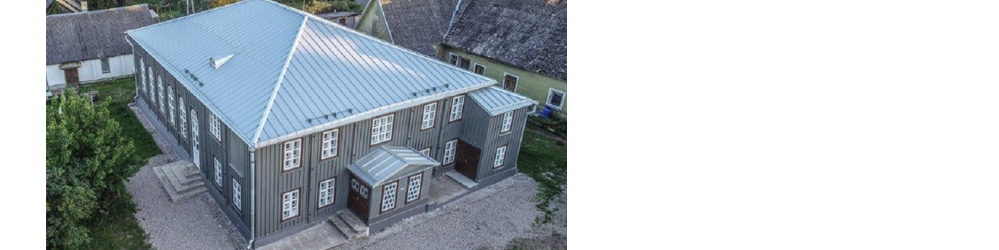
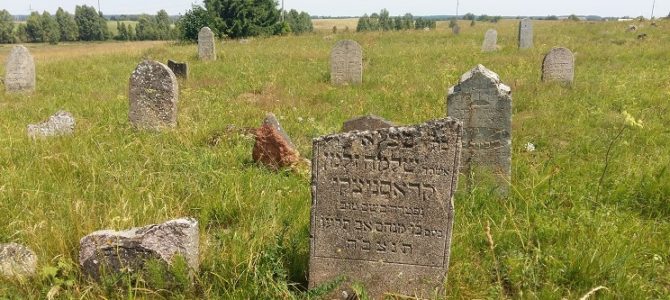
Lithuanian minister of culture Dr. Mindaugas Kvietkauskas has placed four cultural treasures under state protection: Petras Klimas’s villa in Kaunas, the synagogue in Pušalotas in the Pasvalys region, the former Lithuanian Foreign Ministry building in Kaunas and a building in Vilnius which formerly housed Jewish cultural institutions.

Full story in Lithuanian here.

International Conference Held in Vilnius for Holocaust Day, Fighting Discrimination

International Conference Held in Vilnius for Holocaust Day, Fighting Discrimination

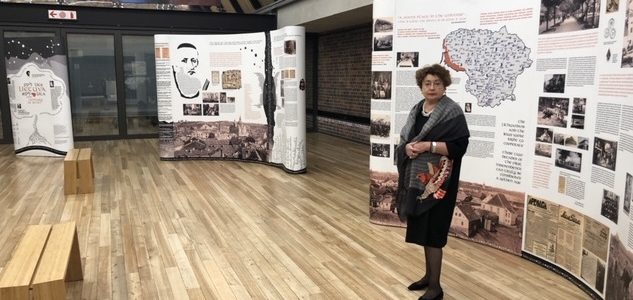
The Lithuanian Jewish Community and the Lithuanian Department of Ethnic Minorities held a conference in Vilnius January 25 both to commemorate International Holocaust Remembrance Day and to look at new ways of fighting discrimination and anti-Semitism in Lithuania. Speakers included Vytautas Magnus University professors, members of the Lithuanian Government, diplomats and academics from abroad. The conference concluded with a presentation of the exhibit “Lithuania, Lite, Lita: One Century of Seven.”

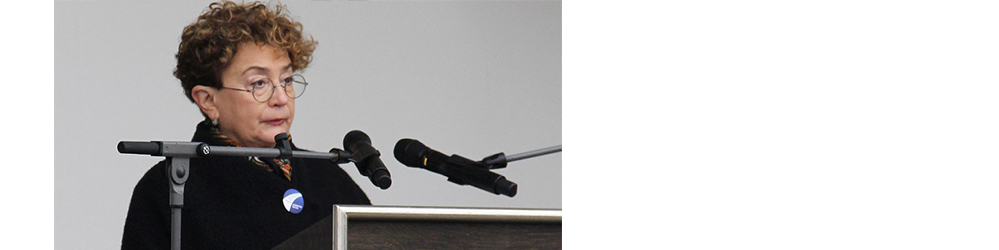
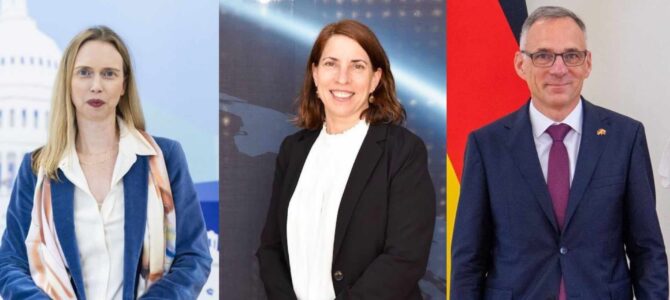
Lithuania’s foreign minister Linas Linkevičius, Ethnic Minorities director Vida Montvydaitė and LJC chairwoman Faina Kukliansky gave welcome speeches.

Foreign minister Linkevičius spoke to the significance of Holocaust Remembrance Day: “Anti-semitism, discrimination against Jews, is a scar on my country. Making apologies will no longer help make anything better. Discrimination led to the Holocaust. Currently in Lithuania there are many signs for Jewish mass murder sites which we can visit and say: never again. We have to remember the Righteous Gentiles, of whom there are about 900 [from Lithuania]. Each year as we honor the victims who were murdered, we cannot guarantee that similar mass murders will not be repeated in the world. In order to stop this, Jewish history and the Holocaust must be part of educational curricula,” he said.

Šiauliai Regional Jewish Community Commemorates Holocaust Day

Šiauliai Regional Jewish Community Commemorates Holocaust Day

Community members met with Aušra Museum employee Vilma Karinauskienė January 25 and listened to a lecture called “Fragments of the History of the Šiauliai Jewish Community” on the painful topic of the Šiauliai ghetto. On July 15 this year we will mark the 75th anniversary of the destruction of the Šiauliai ghetto.

Everyone attending supported the WJC campaign #WeRemember.

On January 27 community members gathered at the monument at the former gates of the ghetto and laid flowers, lit candles and observed a minute of silence for Holocaust victims. Among those in attendance wre community members and Šiauliai ghetto prisoners Ida Vileikienė and Romualda Každailienė. Later members attended a screening of a documentary film about the sonderkommando at Auschwitz followed by lunch and the sharing of memories, held at the Šiauliai Regional Jewish Community.

World Premiere of Night of the Holocaust on January 29

World Premiere of Night of the Holocaust on January 29

Four choirs, a symphony orchestra and a number of soloists will perform Jewish religious music composer Leib Glantz’s (1898-1964) Night of the Holocaust at 6:00 P.M. on Tuesday, January 29, at the Church of Sts. John at Šv. Jono street no. 12 in Vilnius.

American composer Joseph Ness arranged the work for the orchestra and choirs transforming 20 of Glantz’s compositions into a seamless monumental work. Extracts from Elie Wiesel’s Night will provide additional drama elements.

The project is the fruit of an international team, including conductor Arkady Feldman from Russia, cantor Daniel Mutlu from the US, soprano Helena Goldt from Germany, violinist Rita Schteinfer from Israel, celloist Girgoriy Yanovski from Israel, Ekaterina Bergstedt on oboe from Sweden, the Kaliningrad Symphony Orchestra and the Kalinigrad choir Cyrillica, the male a cappella group from the Moscow synagogue, the Vilnius choir and actress Elzė Gudavičiūtė.

Lecture Series

Roza Bielauskienė will speak on the topic “The Unified Kingdom: King Saul” at 1:00 P.M. on Sunday, February 3.

International Holocaust Remembrance Day

International Holocaust Remembrance Day

Holocaust survivors remember the painful loss of their families on this day and usually go to the local Jewish community center or synagogue to light a candle in memory of the victims, calling them by name. The ceremony is often bitter and moving. Mina Frišman talked about it with us.

Mina Frišman was a child during the Holocaust and always lights a large candle in memory of her murdered family, recalling the Kaunas ghetto and the Stutthof concentration camp. When the Holocaust began in Lithuania, Mina belonged to a large family with six children. Both her parents worked at the Inkaras factory in Kaunas. She and her family along with all Jews in Kaunas were forced into the ghetto in the Slobodka neighborhood there and made to wear a Star of David. She’s now 86 but still remembers the transport of Jews to Stutthof.

“This year I’ll light a candle remembering the Stutthof concentration camp where my family and I were sent from the Kaunas ghetto. I remember my twin sister whom I loved very much. My sister died in the concentration camp. They murdered my brother and father there. I light a candle in memory of all my family members who were so dear to me, for my father, for my mother, for my brother. In my family there were five sisters and one brother. I was 9 when I ended up in the Kaunas ghetto. Before the war my father supported the family. He worked at the Inkaras factory designing models of shoes. My mother sewed leather at the same factory. They separated the men and women at Stutthof, and they separated the children and murdered them in the gas chamber. My littlest sister died there. Mother was with us. We worked hard and we starved. They gave us a metal bowl and poured what they called soup into it with a small piece of bread. My mother, sisters and I lived to see liberation.

Holocaust Remembrance Day at the Choral Synagogue

The Vilnius Jewish Religious Community invite you to commemorate International Holocaust Remembrance Day at the Choral Synagogue in Vilnius at 3:30 P.M. on Monday, January 28. The following survivors will talk about their Holocaust experiences: Mejer Zelcer, Jakov Mendelevsky, Chaim Nimirovsky, Isaak Markus and Roman Švarc.

Even if you can’t attend, you can take a selfie with a sign reading #WeRemember or #MesPrisimename and post it to social media.

Maushe Segal, the Last Jew of Lithuanian Kalvarija

Maushe Segal, the Last Jew of Lithuanian Kalvarija

Since 2005 we have marked International Holocaust Remembrance Day (officially “International Day of Commemoration in Memory of the Victims of the Holocaust” as designated by the United Nations) and have remembered the once-large Lithuanian Jewish community 78 years ago. There have been no Jews left in the shtetlakh for a long time now, although the Jewish legacy endures in the form of the old towns and synagogues they built, and the cemeteries and mass grave sites. We spoke with Maushe Segal (Maušius Segalis), the last Jew of the town of Kalvarija in western Lithuania, about his life and what Holocaust Remembrance Day means to him.

Maushe with grandson at the Kalvarija synagogue. Photo: Milda Rūkaitė

Segal: It’s important to me to remember, because this is a day commemorating the once-large community now dead. For many years we Jews gathered at the cemetery on September 1, since that’s the day all of the Jews of Marijampolė [Staropol] were murdered. That was before, now there are no Jews left in Kalvarija or Marijampolė.

What do you remember seeing as a child, or did your mother tell you?

They took my father and me to be shot on September 1, 1941. They shot him, but my mother grabbed me, I was small, from the pit in Marijampolė after the shooting.

Testament

Testament

The Pasaka movie theater in Vilnius and the Israeli embassy to Lithuania invite the public to a free screening of the film Testament at the movie theater located at Šv. Ignoto street no. 4 at 2:00 P.M. on Sunday, January 27 Entrance free. The film is in Hebrew, English, German and Yiddish (Lithuanian subtitles will be provided).

The Testament is a film about Holocaust historian Yoel Halberstam, who becomes involved in a legal battle over the brutal mass murder of Jews in the fictional town of Lensdorf, Austria, at the end of World War II. An influential industrialist family on whose land the massacre took place are planning a large real estate development at the mass murder site. Yoel suspects the goal of the construction is bury all memory of the event forever, but he needs proof to stop it from going forward.

Event supporters: Lithuanian embassy to Israel, Israeli embassy to Lithuania

Multicultural Festival in Kalvarija, Lithuania

The public is invited to a Multicultural Festival in Kalvarija in western Lithuania on January 25. The festival kicks off with the launch of the Kalvarija Regional History Museum at 1:30 P.M. followed by a concert at 5:00 P.M. at the Titnagas theater, including songs in Lithuanian, Polish, German and Yiddish.

Remember Raoul Wallenberg

Swedish ambassador to Lithuania Maria Lundqvist and the Lithuanian National Martynas Mažvydas Library’s Judaica Center invite you to attend the opening of the Swedish Institute exhibit Raoul Wallenberg: I Don’t Have Another Choice, at the library in Vilnius at 5:00 P.M. on January 30. The exhibit will run till February 10.

LJC Board Members: #WeRemember #MesPrisimename

LJC Board Members: #WeRemember #MesPrisimename

The agony of the Holocaust is known all to well to some members of the board of directors of the Lithuanian Jewish Community, it having affected them and their families deeply.

Preserve the memory of the past, don’t be apathetic, photograph yourself with a sign reading #WeRemember or #MesPrisimename.

We will spread the knowledge of memory together.

Murdered Multicultural Mayor Had Roots in Vilnius

Paweł Adamowicz, the mayor of Gdańsk (Danzig), Poland, who died on January 14 following a stabbing the day before, stood for openness and bucked the tide of xenophobia sweeping that country, according to Britain’s Guardian newspaper. The American Jewish Committee called him “a longtime friend of the Jewish community” and Admowicz was a staunch critic of Poland’s new law limiting public statements of blame for Holocaust crimes to non-Polish actors and institutions. The late mayor called the law “idiotic and evil.”

Part of the explanation for the mayor’s renowned multiculturalism, according to the Guardian, was the fact his parents were Poles from Vilnius (Wilno) who repatriated to Poland proper following World War II:

“Those who knew and worked with him say his worldview was profoundly shaped by the experiences of his parents, who moved to Gdańsk in the 1940s from Vilnius, now the capital of Lithuania, as part of a wave of Polish people expelled from territory seized by the Soviet Union in the aftermath of the Second World War. As Adamowicz would later recount, they brought with them an outlook rooted in the multicultural traditions of Poland’s eastern borderlands, which fitted perfectly with Gdańsk’s own history as a coastal trading city.

Events to Mark International Holocaust Remembrance Day

Events to Mark International Holocaust Remembrance Day

January 25 FRIDAY 10:30 A.M.-2:30 P.M, Artis Hotel, Totorių street no. 23, Vilnius
Holocaust Day conference on fighting discrimination

Presentation of exhibit “Lithuania. Lite. Lita. One Century our of Seven”
Registration: www.lzb.lt, info@lzb.lt [in Lithuanian and English with translation]

Organizers: Lithuanian Jewish Community, Department of Ethnic Minorities under the Government of the Republic of Lithuania

January 27 SUNDAY 2:00 P.M., Pasaka Cinema, Šv. Ignoto street no. 4
Screening of the film Testament aka haEdut (2017). Entrance free. Film is in Hebrew, English, German and Yiddish (Lithuanian subtitles will be provided).

The Testament is a film about Holocaust historian Yoel Halberstam, who becomes involved in a legal battle over the brutal mass murder of Jews in the fictional town of Lensdorf, Austria, at the end of World War II. An influential industrialist family on whose land the massacre took place are planning a large real estate development at the mass murder site. Yoel suspects the goal of the construction is bury all memory of the event forever, but he needs proof to stop it from going forward.

Jewish Headstones Desecrated by Soviets to Return to Cemetery

Jewish Headstones Desecrated by Soviets to Return to Cemetery

By early Friday, January 18, the Protestant Evangelical Church in central Vilnius (during Soviet times the Kronika movie theater) had completed the removal of stone stairs leading up to the entrance which were in fact Jewish headstones placed there by Soviet authorities.

This represents a victory in the Lithuanian Jewish Community’s long-term efforts to insure respect for the dead and the Jewish legacy in Lithuania.

Since 2013 the LJC has been cooperating actively with the Lithuanian Cultural Heritage Department and the Vilnius Protestant Evangelical consistory (session, or governing council) to determine whether the stairs were in fact taken from Jewish cemeteries. It was determined Jewish headstones were used in the construction of the stairs, headstones taken from the old Jewish cemetery in the Užupis neighborhood of Vilnius. Since that determination, the LJC has been appealing constantly to the institutions involved for the stairs to be removed. A number of LJC members have been involved actively in making this happen, as have some Lithuanian public figures, including late professor and MEP Leonidas Donskis.

Tu BiSh’vat is Arbor Day

Tu BiSh’vat is Arbor Day

Tu BiShv’at is the 15th day of the Jewish month of Sh’vat. It usually falls in the month of January or February on the Julian calendar. It is “the New Year of trees” or the “birthday” of fruit-bearing trees, a Jewish Arbor Day which coincides with modern notions of ecological conservation. According to the Midrash, G_d lead Adam around the Garden of Eden and told him to look at His works and to see how wonderful they were. G_d told the first man He had created all of it for him. The Most High also warned Adam not to defile the Garden, saying if he did, no one would come after him to repair the damage.

Tu BiSh’vat was an agricultural holiday in olden times, helping Jewish farmers to plan the harvest more accurately. In the late 19th century Zionists began to return to the Land of Israel and Tu BiSh’vat became a celebration of tree-planting in an effort to make the ancient land bloom again.

Happy Birthday to Geršonas Taicas

Happy Birthday to Geršonas Taicas

The Lithuanian Jewish Community wishes you, one of our most active members, a great birthday on your milestone 70th.

Many members know and love Geršonas, a man of intellect who shares his conversation and smile with everyone. Always full of unexpected questions and suggestions, and always keeping his word. Geršonas is the organizer of the LJC’s lecture series and has a deep knowledge of Jewish history. We are so pleased by all the work and projects Geršonas performs for the Community completely voluntarily.

On this milestone birthday, we wish you happiness, success and may you live to 120. That your dreams would never fade and the years would not pass by too quickly. Thank you for sharing your knowledge and good counsel, and we wish you many more interesting activities, beautiful moments with your loved ones, warmth and endless love.

Mazl tov!

When You Save a Life, You Save a World

The exhibit When You Save a Life, You Save a World and the accompanying catalog will be presented at the Tolerance Center of the Vilna Gaon State Jewish Museum in Vilnius at 3:30 P.M. on January 24 to mark Holocaust Remembrance Day.