


LJC Celebrates 20th European Day of Jewish Culture in Vilnius Old Town

LJC Celebrates 20th European Day of Jewish Culture in Vilnius Old Town

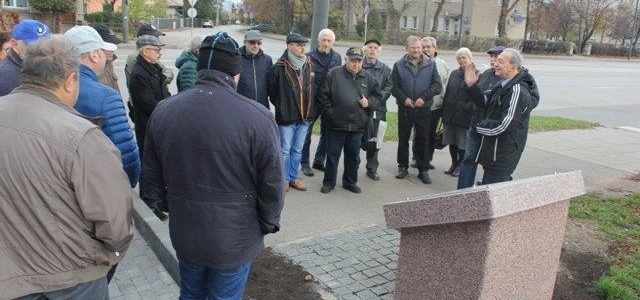
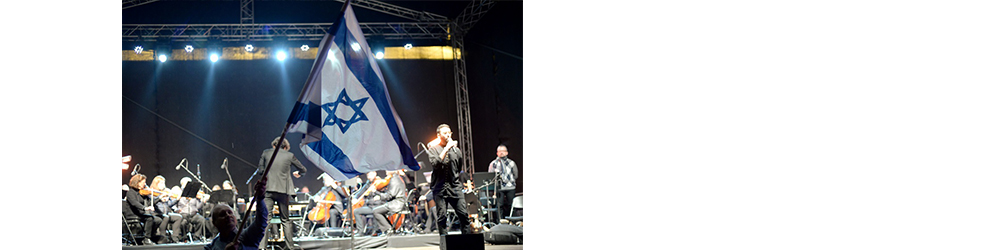
The Lithuanian Jewish Community celebrated the 20th European Day of Jewish Culture in the traditional Jewish Quarter of Vilnius September 1 with song, dance and food. The weather was beautiful. Restaurants in the Vilnius Old Town feature Jewish foods with traditional breakfast served at the Bagel Shop Café, restaurants and cafés on Žydų and Stiklių streets and other locations. DJs RafRaf, Akvilina and Marius Šmitas provided dance music with a 10-hour musical program at the Amadeus Bar.

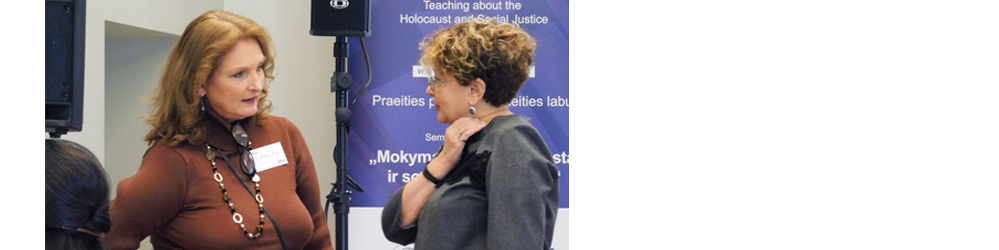
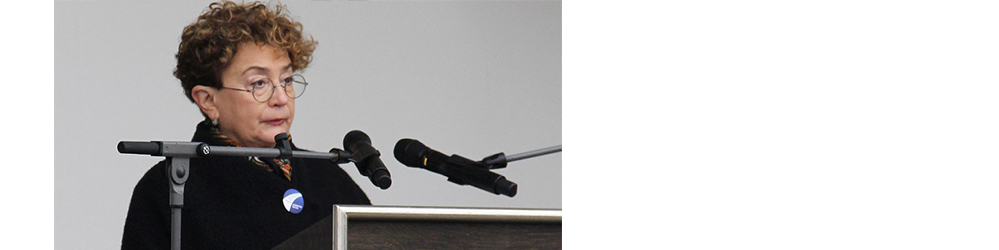
LJC chairwoman Faina Kukliansky greeted celebrants and Vidmantas Bezaras, director of the Cultural Heritage Deparment, and Vida Montvydaitė, director of the Department of Ethnic Minorities, also spoke, noting there is no town or village in Lithuania without some sign of a Jewish presence. Vida Montvydaitė said this isn’t just Jewish heritage, it’s Lithuania’s legacy, and protecting it is becoming ever more important.

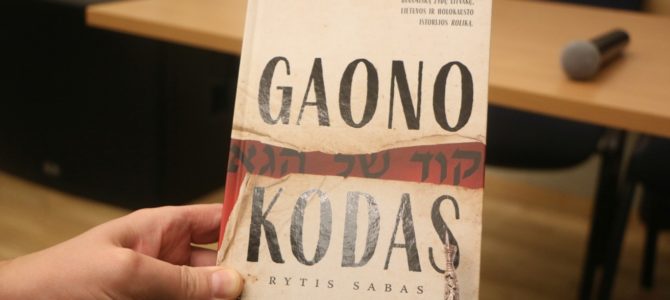
The writer Kristina Sabaliauskaitė spoke about her childhood memories of the Jews who still lived in central Vilnius then and with whom she made lasting friendships. She says interpersonal relationships are still one of the most important things in life to her.

Holocaust Survivor Dita Zupavičienė-Šperlingienė to Speak at Vilnius Jewish Public Library

Holocaust Survivor Dita Zupavičienė-Šperlingienė to Speak at Vilnius Jewish Public Library

The Vilnius, Jerusalem of Lithuania Jewish Community invites the public to attend a meeting with Dita Zupavičienė-Šperlingienė, a living legend, a survivor of the Kaunas ghetto, the Stutthof concentration camp and other concentration camps and of the final death march. The meeting will include a presentation of unique footage from Kaunas in 1929, filmed by Dita’s uncle Honon who came for a short visit before going on to Riga and Lvov, which also feature in the film. Members of Dita’s family look at us through time and Dita will tell their stories and how the film itself made it through the war and came to her.

The meeting will take place at 6:00 P.M. on September 4 at the Vilnius Jewish Public Library.

Sergejus Kanovičius: Revolutionary Pessimist, Writer, Successful but Still Looking for His Calling

Sergejus Kanovičius: Revolutionary Pessimist, Writer, Successful but Still Looking for His Calling

by Evaldas Labanauskas 15min.lt

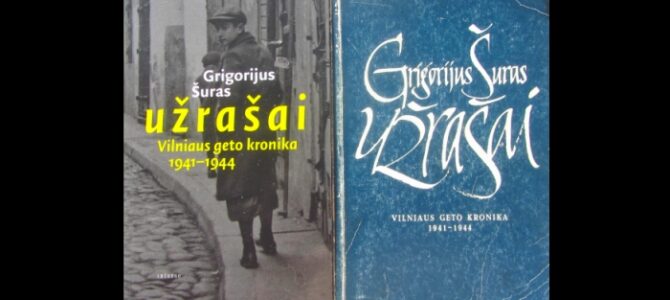
When you put “Sergejus Kanovičius” into a search engine, it comes back with “poet, essayist, translation…” There are also references to Grigoriy Kanovich, who recently celebrated his 90th birthday. The latter is a Writer with a capital W, and Sergejus also talks about his Father (also capitalized).

When I read one of your father’s works, “Žydų parkas” [Jewish Park], I got the impression that it was a monument to Litvak culture and civilization, spanning 700 years but now dead. What is the current situation of Litvaks in Lithuania? Do you think this culture/civilization is being reborn?

There are people who express the opinion there are certain parallels between the project which I lead and my father’s work. If one is a material monument to the culture of the Jews of Lithuania, then my father’s work is a literary monument to an extinct ethnos. I think the Jewish community in Lithuania is experiencing a period of transformation. The word “reborn” might be more appropriate if we were talking about what happened 30 years ago, when there were 20,000 Jews in Lithuania, but today there are barely 3,000 Jews in Lithuania. Any sort of activity is encouraging, but claiming there is some kind of very bright future–I, as a revolutionary pessimist, would refrain from that sort of evaluation. Honestly, I am very glad about what is happening, and as much as I’m able I contribute to the activities of the Jewish community, but… while there is a lot of action, there is the question: is there a future?

Famous Parents Accompany Children to Sholem Aleichem New School Year Ceremony

Famous Parents Accompany Children to Sholem Aleichem New School Year Ceremony

DELFI.lt

Today producer Rolandas Skaisgirys and wife Vaida accompanied their son Atas to school, where Atas is beginning first grade this year at the Sholem Aleichem ORT Gymnasium in Vilnius.

Performer Saulius Prūsaitis and his wife, designer Agnė Kuzmickaitė, brought their daughter Leonarda to the same school. The young pupil posed for photographs with her parents.

Full story in Lithuanian here.

Šiauliai Regional Jewish Community Tours Jewish Sites in Akmenė Region

Šiauliai Regional Jewish Community Tours Jewish Sites in Akmenė Region

Members of the Šiauliai Regional Jewish Community spent the day of August 20 touring the Akmenė visiting sites with once populous Jewish communities. The tour began in Šiauliai and continued on in Papilė, where wood carver, traveller, naturalist and geographer Steponas Adomavičius met the group and gave them a guided tour of Jewish residences from before the Holocaust. Members visited the old Jewish cemetery in Papilė, a cemetery which features a commemorative stone and which Adomavičius himself maintains without remuneration. He cuts the grass and hedges and plants small trees. A grateful Jewish man living in America installed a bench bearing Steponas Adomavičius’s name in the cemetery in order to thank him.

The group was unable to reach the Jewish mass murder site in the woods of the Papilė aldermanship because there was no path through the forest at all. Adomavičius spoke about new projects he’s doing in connection with preserving the memory of the Jewish people.

From Papilė the group went on towards Akmenė, where the teacher Rita Ringienė met them and imparted much important information. Some Jewish structures survive in Akmenė. The teacher and pupils from her higher classes have done a study called “Inscriptions on Headstones in the Akmenė Jewish Cemetery and Their Translation to Lithuanian.” The group visited the old Jewish cemetery in Akmenė.

Sabbath in the Jewish Quarter September 1

Sabbath in the Jewish Quarter September 1

The Lithuanian Jewish Community invites you to come celebrate the 20th annual European Day of Jewish Culture, “Sabbath in the Jewish Quarter,” in the Vilnius Old Town on September 1.

World-renowned writer Chaim Grade called the Vilnius Old Town the Jewish Quarter ca. 1930, and wrote: “Long Fridays of Summer. The housewives go to the bakery to shop for Saturday: they buy dry bagels, dark cookies and pastries with poppy seeds, small little cakes with powdered sugar…” (from his Der shtumer minyen, or Silent Minyan).

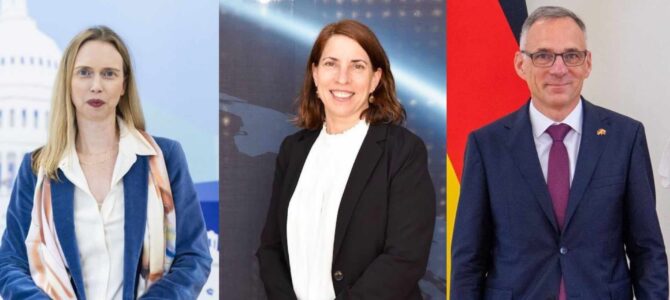
On Sunday, September 1, restaurants and cafés located in the Vilnius Jewish Quarter will present a menu of Jewish dishes, Jewish music will play and there will be lectures and tours. LJC chairman Faina Kukliansky will open ceremonies with a welcome speech at 12 noon. Saulius Pilinkus will MC and new Israeli ambassador to Lithuania Yossi Avni Levy, Lithuanian Cultural Heritage Department head Vidmantas Bezaras and Lithuanian Ethnic Minorities Department director Vida Montvydaitė will also welcome participants.

Lithuanian Prosecutor Issues Finding on Noreika Take-Down, Tricolor Alley

Lithuanian Prosecutor Issues Finding on Noreika Take-Down, Tricolor Alley

A letter from the prosecutor of the Defense of the Public Interest Section of the Vilnius district Prosecutor Office has been posted on the webpage of the Lithuanian Prosecutor’s Office regarding complaints over the take-down of a plaque commemorating Jonas Noreika and the renaming of a street honoring Kazys Škirpa in Vilnius. Both men were complicit in Holocaust crimes during World War II.

Investigation Performed for the Defense of the Public Interest on the Removal of the Commemorative Plaque and the Renaming of the Alley in Vilnius

August 28, 2019

After considering statements by members of parliament Audronis Ažubalis and Laurynas Kasčiūnas, the Union of Volunteer Founders of the Lithuanian Military, the Lithuanian Defense of Human Rights Association and other parties on the possibly illegitimate removal of the plaque commemorating Jonas Noreika/General Storm from the outer wall of the Vrublevskiai Library of the Lithuanian Academy of Sciences and the renaming of K. Škirpa Alley, the Vilnius district Prosecutor’s Office adopted a decision to decline to apply measures for the defense of the public interest. In adopting this decision, the Prosecutor’s Office looked at information from the Vilnius municipality, the Lithuanian Cultural Heritage Department, the Lithuanian Government representative for the Vilnius and Alytus districts and other information pertinent to the investigation. This decision only presents a legal and not an historical assessment.

Condolences

Gileras Babickis passed away August 19. He was born in 1934. Our deepest condolences to his friends and relatives.

Concert at the Kaunas State Philharmonic

A concert will be held at the Kaunas State Philharmonic at 7:00 P.M. on September 5 to celebrate the 125th birthday of doctor and rescuer of Jews Ona Jablonskytė-Landsbergienė.

Performers include Keiko Borjeson doing lyrics and playing piano, Arvydas Joffe on percussion, Tomas Botyrius on sax and Mykolas Bazaras on bass.

The concert is free and open to the public.

The Walls Remember, the People Tell

The Walls Remember, the People Tell

As part of the 20th annual European Day of Jewish Culture, the Lithuanian Jewish Community invites the public to visit the former Jewish Quarter of Vilnius. Recently several frescoes appeared on the walls there. The creators will lead a tour and talk about their surprising project The Walls Remember on September 1. Project author Lina Šlipavičiutė-Černiauskienė describes it this way:

“Vilnius had one of the largest and most active Jewish communities in our region. The horrors of World War II almost completely destroyed this community and this is without doubt one of the most painful losses for Lithuania and especially Vilnius. We don’t have the right to forget these people, and we do not forget them.

“But we forget too much the time when the people of Vilnius were simply happy. These bright memories should be visible: how these people worked, grew up, created families and grew old… How they shaped their lives in Vilnius whose streets we walk today, the same town we the current inhabitants of Vilnius love.

Happy Birthday to Moisiejus Šeras

Happy Birthday to Moisiejus Šeras

Our birthday greetings to Moisejus Šeras, long-time member of the LJC and the minyan at the Choral Synagogue. We wish you great health, love and happiness! May you live to 120! Mazl tov!

Happy Birthday to Maja Moskvina

Happy Birthday to Maja Moskvina

Birthday greetings to long-time volunteer doctor at the LJC’s Social Department Maja Moskovina. We love and respect our doctor with her positive and comforting manner, smile and professional explanations to clients on medicine and infirmities.

May you live to 120! Mazl tov!

Notes from the Šiauliai Regional Jewish Community

Notes from the Šiauliai Regional Jewish Community

On May 21, teacher Nijolė Teišerskienė taught students about the history of the Šiauliai ghetto. Šiauliai Regional Jewish Community member Ida Vileikienė survived that ghetto and told the children her story, including how she was rescued by the Staškas family, how she lived in hiding and what she did after the war. She invited the children to learn to respect one another as a general life lesson.

On May 23 Inga Kvedariene of the Šiauliai territorial medical system met with community members and talked about the payment system hospitals use and which services are free to those who have social insurance. She then fielded questions from the audience.

On June 14 members of the Šiauliai Regional Jewish Community visited the site of the former Lithuanian shtetl Zhagar (Žagarė) beginning with tours of the Žagarė Regional Park and the Naryškinas manor estate. Land management specialist Giedrė Rakštienė spoke authoritatively on the Jewish population of Zhagar and many community members learned new things about Jewish life there. Žagarė gymnasium geography teacher Alma Kančelskienė led the tour which included still-standing Jewish buildings which used to be synagogues, the house of the rabbi and a school, and members also visited the site of the former mikvah there. Members also visited the home of E. Vaičiulis. He is the owner now of the site of the former Jewish textile factory on the banks of the Švėtė river and of a wooden Jewish house where he now lives. Under several layers of wallpaper there are parts of old Jewish newspapers on his walls which the former owners glued there once upon a time. He has preserved the original exterior and the interior is decorated with period pots and dishes. Surrounded by a stone wall, Vaičiulis’s collection is a veritable museum of the former time when Jewish life was front and center in what is now a Lithuanian town. Pride of place is occupied by a Torah scroll discovered in Zhagar. Members also visited the Jewish cemetery and mass murder sites in and around the town.

Panorama Mall in Vilnius Offering Nazi Symbols for Sale

Panorama Mall in Vilnius Offering Nazi Symbols for Sale

Boy London clothing is being linked with Nazi symbols (photo: SCANPIX and Alfa.lt)

The store Aprangos galerija at the Panorama shopping mall in Vilnius is selling clothes from Boy London from Great Britain with a symbol which appears identical to the stylized eagle of the Third Reich.

Boy London clothing, long known and criticized around the world for using Nazi symbols, began sales in Lithuania a year ago.

Full story in Lithuanian here.

Genocide Center: Independent Holocaust Research Is Criminal and Unconstitutional in Lithuania

Culminating a series of letters back and forth between LA-based Litvak Grant Gochin and the Center for the Study of the Genocide and Resistance of Residents of Lithuania–Lithuania’s state-sponsored arbiter of all historical truth–the Genocide Center posted a notice on their website saying Gochin’s questions to them might be criminal and in violation of the Lithuanian constitution.

The Genocide Center neglected to post Gochin’s actual letters and independent historical research, content to post only answers to the questions they cherry-picked and deemed worthy of refutation.

Note that Gochin himself says he never brought up Telšiai archbishop Vincentas Borisevičius and that the Genocide Center inserted him into their notification out of the blue.

Here is a translation of their notification with a link at the end to the original text in Lithuanian:

The Doors Open: An Installation to Remember Jewish Merkinė

The Doors Open: An Installation to Remember Jewish Merkinė

The town of Merkinė, Lithuania, held a big celebration August 17 and 18, marking the 660th anniversary of the first mention of the town in the historical sources and the 450th anniversary of the town receiving autonomous Magdeburg charter rights. The Lithuanian Jewish Community and the Fayerlakh group were invited to the celebration.

The project “Doors Are Opening” was dedicated to commemorating life in Merkinė during the period between the two world wars, when the majority of the population was Jewish. Before the Holocaust Jews accounted for about 80% of inhabitants. The old Jewish doors were donated for the celebration.

“It’s normal not to want to talk about the painful past, but it’s abnormal if we try to live our lives as if none of those experiences ever even existed,” Mindaugas Černiauskas, the director of the Merkinė Regional History Museum, said.

European Day of Jewish Culture Events in Vilnius

European Day of Jewish Culture Events in Vilnius

Sabbath in the Jewish Quarter, a lost tradition where every Friday evening the Jewish family sat down at the dinner table together, lit the candles, prayed and broke bread, followed by a day of rest on Saturday, and the beginning of the new week on Sunday.

Let’s rediscover the ferment, history, tastes, smells and melodies of the Jewish Quarter on the European Day of Jewish Culture.

Program here.

Registration here.

Jews of Merkinė

Jews of Merkinė

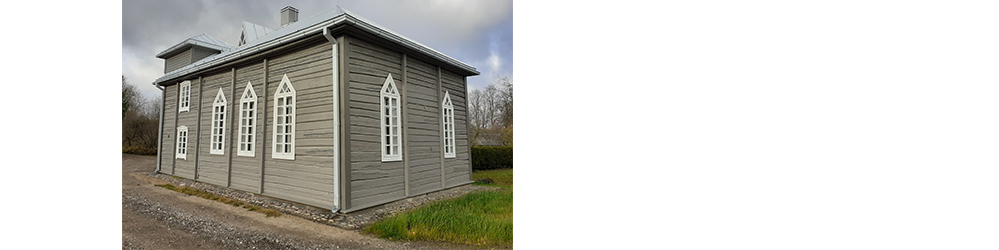
Merkinė Jewish school, ca. 1928-1930

by Mindaugas Černiauskas

“Decades have passed since I left you, Merkinė. You are always on my mind. Every day I walk your small crowded streets in my thoughts. I know it’s not real, but I haven’t learned to come to terms with the fact the terror of the Holocaust was also in my town.” –Dorit Blatshtein, refugee from Merkinė.

Exactly 78 years ago the Jews of Merkinė were marched to the sand pits in Kukumbalis forest and left there for the ages powerless and desecrated. The introduction of the book “Mano senelių ir prosenelių kaimynai žydai” [My Grandparents’ and Great-Granparents’ Jewish Neighbors] published in 2003 contains the line that “the destruction of the Jews of Lithuania was so blood-curdling and unexpected, so cynical and public, accomplished right here in view of all other residents, that it essentially touched in one way or another every member of society.”

It’s difficult not to agree with this, as it is difficult not to agree with the idea that traumatic experience is often pushed into the subconscious. It’s clear experience doesn’t disappear and can become a festering wound and neurosis, especially when we view history based on idealized versions of national history where we only want to see examples of goodness, beauty and harmony which make us proud.