The Sabbath begins at 4:05 P.M. on Friday, November 11, and concludes at 5:20 P.M. on Saturday in the Vilnius region.
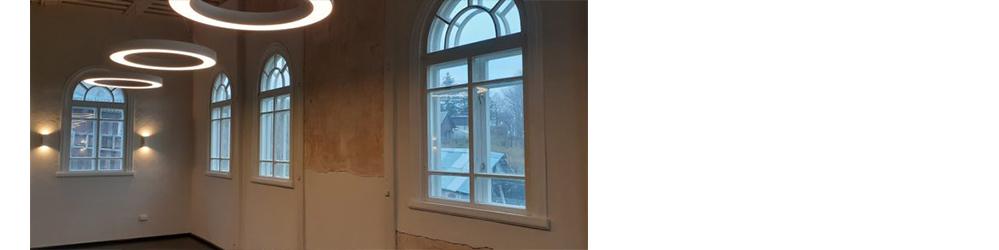
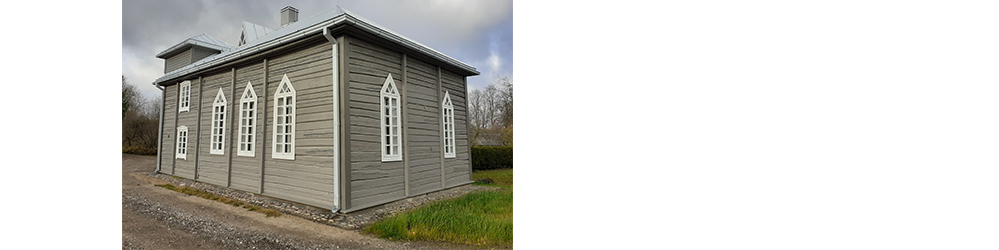
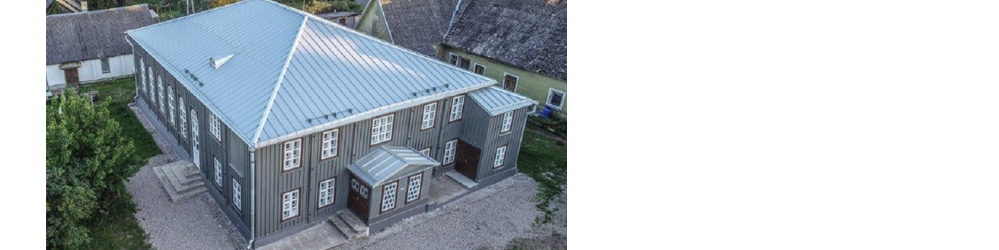
Wooden Synagogue in Alanta Renovated
Read more





The Sabbath begins at 4:05 P.M. on Friday, November 11, and concludes at 5:20 P.M. on Saturday in the Vilnius region.
The Association of Lithuanian Jews in Israel celebrated their 90th birthday November 9.
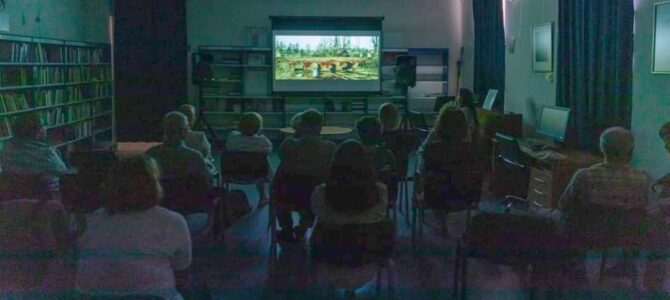
The Vilnius Jewish Public Library is screening two films in November and invites the public to attend free of charge.
November 10: Afterthought. Afterthought is a 2015 Israeli philosophical comedy film written and directed by Elad Keidan. It was screened in the Special Screenings section at the 2015 Cannes Film Festival. It has been nominated for Best Film at the 2015 Ophir Awards. The film has won 3 Ophir prizes: best script, best editing, and best sound design. The film was awarded best film at the Haifa film festival.
November 24: Testament. Testament is a 2017 drama film. Yoel, a meticulous historian leading a significant debate against Holocaust deniers, discovers his mother has a false identity. A mystery about a man who is willing to risk everything to discover the truth. Director: Amichai Greenberg.
The library is located at Gedimino prospect no. 24-9, Vilnius. For more information, call 219 7748.

The Lithuanian Jewish Community invites you and your family to come back challa and celebrate the Sabbath in the Shabbos Project’s Global Challa Bake-Off at the Bagel Shop Café in Vilnius from 2:00 to 4:00 P.M. on Friday, November 11.
Every fall millions of Jews around the world come together in an extraordinarily moving activity, baking challa, blessing the wine and bread, singing the Sabbath hymns, celebrating the Sabbath together with friends and family and lighting the havdalah candle.
Senior Bagel Shop Café chef Riva Portnaja and other Community members will share their families’ traditions celebrating the Sabbath. You are invited to come make challa together, to take the loaves home, to invite our more isolated members to come as well and to bless the loaves and the wine together with the entire world Jewish community as we enter into the blessed rest of the Sabbath. The event is free and open to the public.

The Lithuanian Jewish Community thanks Rabbi Nathan Alfred for three meaningful and fascinating days spent with our community.
We took some snapshots of the Kabalat Shabbat on Friday and the Shacharit prayer service last Saturday morning, below.
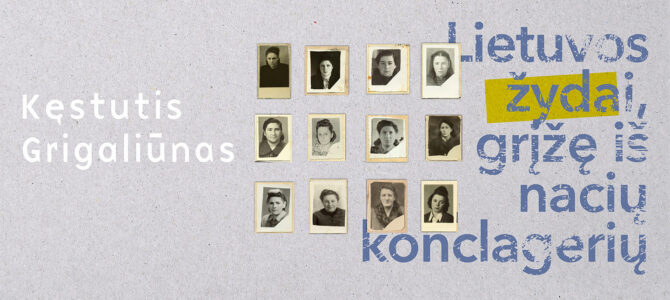
Kęstutis Grigaliūnas’s personal exhibit “Litvaks Who Came Back from the Nazi Concentration Camps” will open at the Museum of Photography in Šiauliai at 5:00 P.M. on November 10. Grigaliūnas is a recipient of Lithuania’s Culture and Art Prize.
Natalija Arlauskaitė is the curator of the exhibit. She’s a professor at the International Relations and Political Science Institute of Vilnius University.
The exhibit features photographs of 335 Lithuanian Jews who survived and returned from the concentration camps with brief bios. A book of the same name as the exhibit, actually the source of the exhibit, will be launched at the opening. The exhibit runs till December 18.

We congratulate our famous journalist, actor, write and all-around good person Arkadijus Vinokuras on the occasion of his milestone birthday. We wish you great happiness and personal fulfillment, excellent health and continued creative success! Mazl tov. Bis 120!
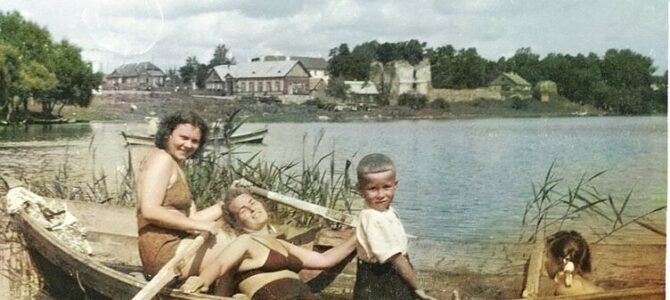
Photo: Trakai in 1952. From the personal collection of Algimantas Dočkus courtesy LRT.
by Rasa Kalinauskaitė
“Sir, I report that while inventorying the Jewish property taken to the synagogue I discovered seven fur coats suitable for police service. Three of them are of a yellow and unlined falling to below the knees, four are lined with cloth material, coming down to the knees. I request an order these fur coats be seized for police officers to wear as they perform their duties.”–from report by chief of Trakai police department to chief of district police, October 17, 1941.
I and a contingent of Trakai residents as well as two people who came from further off went on a tour of the Trakai Old Town, visiting sites recalling the Jews who lived here before World War II, stopping at former Jewish homes which are still standing. We became fellow travellers, in that those who toured Trakai in earlier times have shared their memories from many decades ago in the photographs they took, which show a town which has now completely changed. I wanted to share this with those who were not able to come, so I will attempt to describe this trip.
This is a journey through memory, because that same day, September 30, was the day in 1941 when the Jews of Trakai, Aukštadvaris, Lentvaris, Rūdiškės, Onuškis and Žydkaimis, 1,446 people of whom 597 were children, were murdered in Varnikai Forest.
Full article in Lithuanian here.
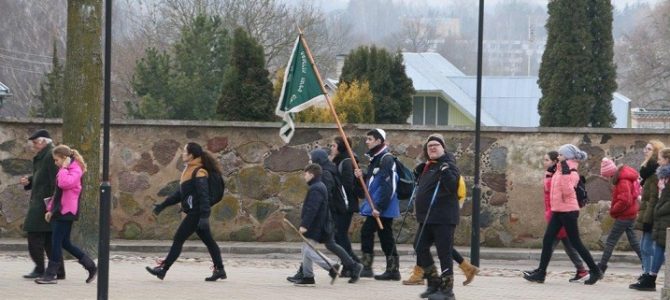
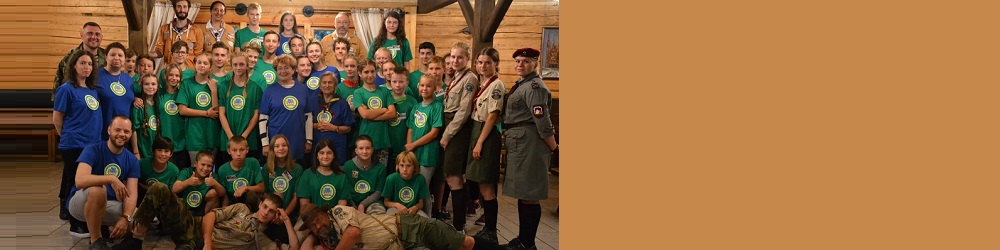
The Lithuanian Jewish Community will host a Litvak scouting meet at 3:30 P.M. on Thursday, November 10 at the Ilan Club room at the Community building at Pylimo street no. 4 in Vilnius under the direction of scout leader Adomas Kofman. We will continue to learn about the scouting movement and engage in edifying and fun activities. All young people aged 6 to 18 are invited. For more information, write skautai@lzb.lt.
We extend our deepest condolences to Lithuanian president Gitanas Nausėda on the death of his father, Antanas, and to all his many friends and family members.
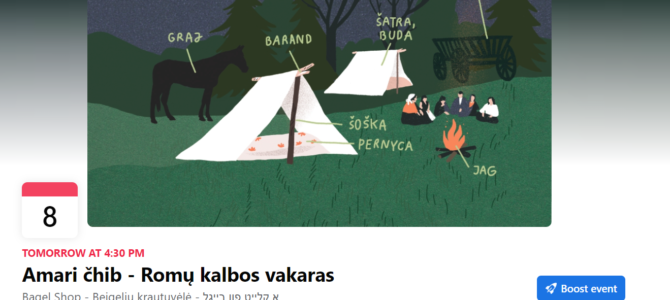
November 5 is celebrated as International Romani Language Day by UNESCO, Croatia and by Roma and friends around the world. One’s mother tongue is an important element of identity maintaining community cohesion and the sense of belonging. The Lithuanian Jewish Community and partner organizations including Padėk Pritapti will hold a celebration of the international day at 5:30 P.M. on November 8 this year at the Bagel Shop Café at Pylimo street no. 4 in Vilnius. There will be readings from the Lithuanian Roma oral history archive and traditional song and dance. Participants will also receive postcards created by children containing a short Romany-Lithuanian vocabulary. The event is free and open to the public.
More information available here.
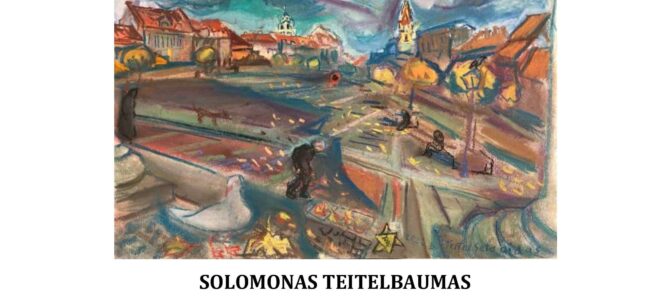
To Fall in Love with the World through Painting: Exhibition of Paintings by Solomon Teitelbaum
The Pylimo Gallery located at Pylimo street no. 30 in Vilnius will host an exhibit of paintings by Solomon Teitelbaum called “To Fall in Love with the World through Painting” beginning November 9. The exhibition will run till November 26.
“To go inside, to reincarnate into the portrayed object, to feel the tragedy and joy of the world portrayed, this is the essence of my work. That’s why I fall in love with the world through painting,” he said of his latest exhibition.
Full description in Lithuanian available at the gallery’s website here.
The Sabbath begins at 4:19 P.M. on Friday, November 4, and concludes at 5:34 P.M. on Saturday in the Vilnius region.
Our deepest condolences to Natalija Cheifec and to her family on the death of her beloved father.
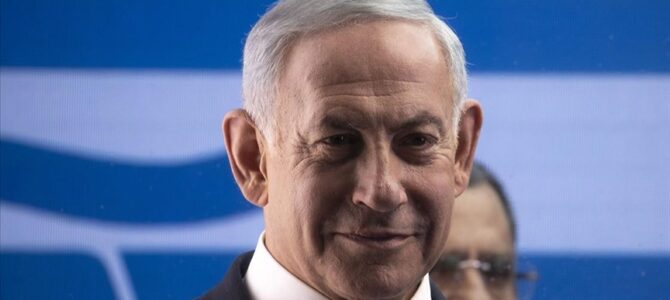
JERUSALEM, Nov. 2, 2022–Former Israeli prime minister Benjamin Netanyahu commenting on preliminary results from parliamentary elections said that the right block he headed is on the verge of a major victory. Netanyahu spoke to voters in West Jerusalem. “Voters want to restore national pride and choose a government that promises strength, not weakness,” Netanyahu said.
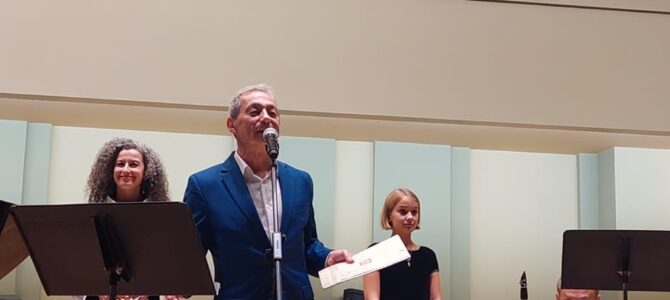
The first concert in the Kaunas Jewish Community’s Yiddish song project was called “The Jewish Nightingale from the Provisional Capital,” dedicated to the late Yiddish songstress Nehama Lifshitz’s 95th birthday, ended with the promise made by everyone to meet again five years from now to celebrate Nehama’s 100th birthday, perhaps with a two-part concert, perhaps even with an orchestra.
It’s not enough to say this was a wonderful concert, that would be an understatement. It was an extraordinary evening with so much love, inspiration, light, humanity and the victory of life, overcoming all the world’s misfortunes. The entire experience was good and those special emotions will remain with us for a long time. At least this morning the music heard yesterday evening is still echoing through mane hearts and minds.
We are so thankful for this concert, for this miracle created, to Svetlana Kundish for her thanksgiving and hymn to her teacher, and to the accomplished team of musicians including Patrick Farrell, Rasa Vaičiulytė, Dainis Buika and the young female soloist Ramunė Buikaitė.
The spirit of Nehama, fragile and gentle, firm and fearless singing of life, truly visited the Kaunas State Philharmonic concert hall last Monday evening.
The Lithuanian Jewish Community will host a Litvak scouting jamboree at 4:30 P.M. on Thursday, November 3 at the Ilan Club room at the Community building at Pylimo street no. 4 in Vilnius under the direction of scout leader Adomas Kofman. All young people aged 6 to 18 are invited.
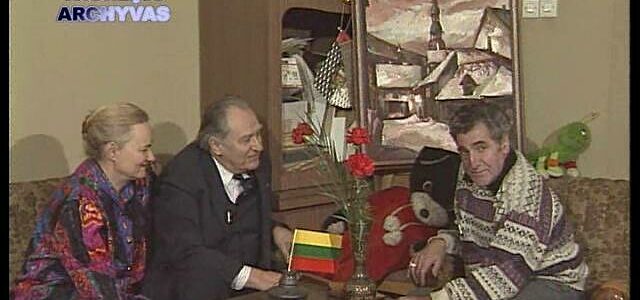
Hermanas Perelšteinas, the founder of the Ąžuoliukas boys choir, is the subject of a new biography which will be launched at an event at the Lithuanian Music and Theater Academy (formerly known more simply as the Music Conservatory) at Gedimino prospect no. 42 in Vilnius at 5:00 P.M. on Friday, November 4.
The author Darius Krasauskas, also a reporter, translator and long-time member of the Ąžuoliukas choir, will present his new biography. He will be interviewed informally by Simonas Keblas, the director of the Vilnius Little Theater and also a long-time member of Ąžuoliukas.
This is the first longer work–about 400 pages–on Perelšteinas, presenting history and archival documents as well as recollections by friends and colleagues to paint a picture of Lithuania’s most famous choir master and his life during the Holocaust and in Soviet exile.
The event is free and open to the public.

The Sabbath begins at 5:33 P.M. on Friday, October 28, and concludes at 6:45 P.M. on Saturday in the Vilnius region.
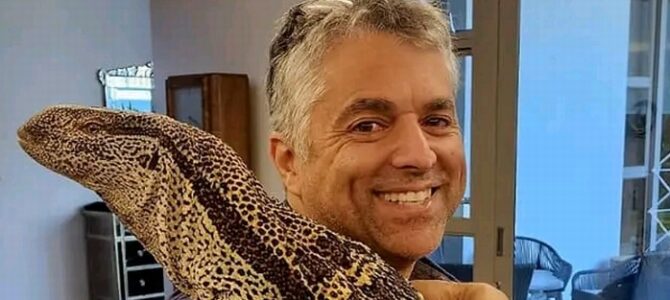
Grant Gochin delivered the following remarks to an audience of about 200 people at the Cape Town Holocaust and Genocide Centre of the Green and Sea Point Hebrew Congregation in Cape Town in the early evening of October 27.
Hello, chaverim, friends, I am honored and delighted to be on my home soil, speaking to my own people. My Mishpocha. Thank you for coming. My sincere thanks to the organizers and attendees, and those who have kept me going in this cause.
Every Jewish person in this room has ancestry from Lithuania. Most of us here now, are alive because our families got out before Lithuanians were able to murder us. We are all who are left, to remember and speak the truth. Our families’ voices cannot be stilled through apathy or forgetfulness. Our families’ voices must be heard.
I became eager to find out about the “Old Country” from the stories and lessons of my paternal grandfather. More and more, I knew I had to walk those streets and see those forests.
I was the very first Jew to apply to Lithuania for citizenship. Three times, they rejected me for reasons even the Lithuanian Supreme Court ruled to be “absurd.” There were two sets of rules, one for real “ethnic” Lithuanians, and a separate queue for Litvaks. This simplified their process–automatic denial for Jews. I fought back.