
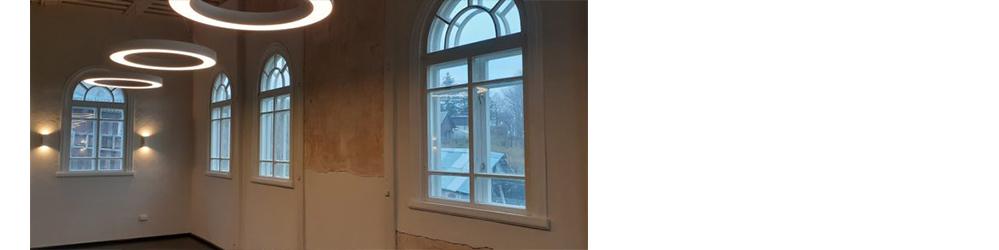
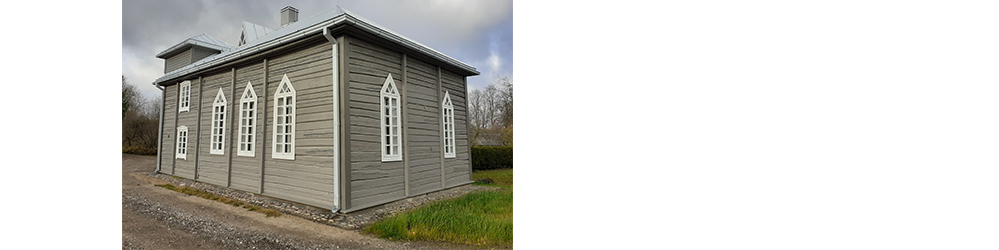
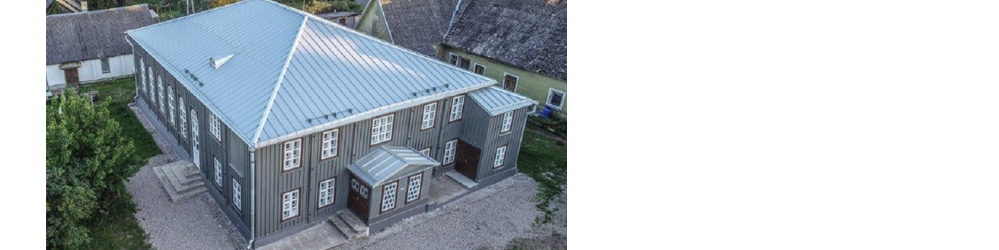
Wooden Synagogue in Alanta Renovated
Read more




Below, (1) the text of DH’s letter to the mayor of Kaunas, (2) the response received today from his office, and (3) our further response, in connection with the annual neo-Nazi march planned for 16 February 2015 in central Kaunas. See also section on previous marches, and our 3 February 2014 correspondence with the Kaunas police. Note that a banner featuring a major Kaunas Holocaust collaborator, the Nazi puppet prime minister Juozas Ambrazevicius Brazaitis (reburied with full honors as a hero in Kaunas, in 2012), is depicted in a 2014 photograph used by the march’s organizers to advertise the 2015 event.
1
From: Dovid Katz
To: “meras@kaunas.lt”
Sent: Tuesday, February 3, 2015 12:28 PM
Subject: For the Honourable Mayor of Kaunas Andrius Kupčinskas
Dear Mayor Kupčinskas
I had the honor and pleasure of meeting with you at various memorial events in Kaunas in recent years.
The grandchild of Lithuanian Jews hidden during the Holocaust goes back
Maia Ipp writes in Tablet magazine: “In Lithuania, I felt connection – to my grandparents, to Jewish life and heritage, and to many individuals, Jews and non-Jews, who call Lithuania home.”
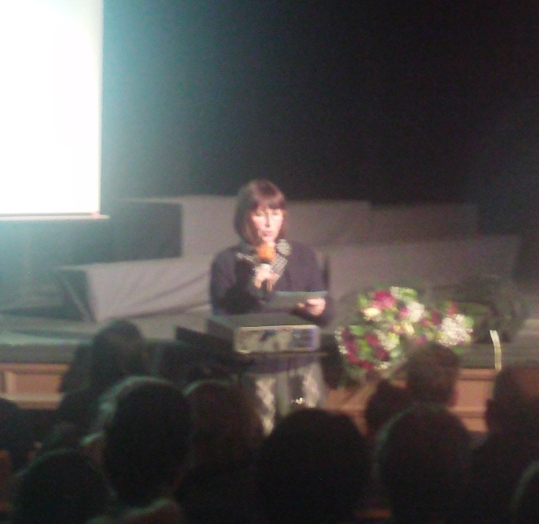
The Saulėtekis School in Vilnius devoted to education in the Russian language staged what school principal Reiza Zinkevičienė described as a “theatrical concert” at the Lelė Theater in the Vilnius Old Town on the evening of February 4.
The concert was also performed at the school two days earlier, and was conceived as part of on-going Holocaust education programs at the school. Principal Zinkevičienė, who is Jewish herself, said the event was organized together with Lithuania’s International Commission for the Evaluation of the Crimes of the Nazi and Soviet Occupation Regimes in Lithuania, which has been working in cooperation with Israel’s commemorative authority Yad Vashem to train teachers from Lithuania on how best to organize and teach the Holocaust. She said several of her teachers had been to Yad Vashem for the two-week courses, and that for them, for her and for their school, this was a spiritual mission more than merely an educational matter.
Israel’s first ambassador residing in Vilnius, Amir Maimon, says Lithuania should be more active in inviting tourists from his country and step up cooperation in the fields of defence and high technologies.
“Even it is very grey outside, you have a beautiful country. But I feel and sense that the average Israeli still didn’t discover Lithuania. And it will be for your side to take the necessary actions and promotion in order to attract more and more Israelis to come. Lithuania is not just Paneriai or the ghetto here in Vilnius. You have a lot to offer, but you need to ask yourself what can you do in order to be attractive to Israelis. The Israelis are well–known for their adventure characters. They like travelling, they like to discover new places,” the ambassador told BNS.
by Julius Norwilla
This year much of the world commemorates the seventieth anniversary of the liberation of Auschwitz in 1945. The day of its liberation, January 27th, is International Holocaust Remembrance Day. To mark the day this year, on the 26th of January, the Jewish Community of Lithuania organized three events, as reported in Defending History.
The final event of the day was the book launch for The Šiauliai Ghetto featuring as sole announced speaker its author, Dr. Arūnas Bubnys, director of the Genocide and Resistance Research Department of the Genocide and Resistance Research Center of Lithuania; for a critical view of the Genocide Center, as it is known for short, see Defending History’s page and news section on the institution.
There were about eighty people in the community’s elegant Yasha Heifetz Hall, mostly people from today’s Vilnius Jewish community. Among them were a number who have a very personal relationship towards the Šiauliai Ghetto: their family roots are in this city and its region, known in Yiddish and Jewish culture as Shavl. Many have lost most of their families in the Holocaust.
Commentary by Faina Kukliansky, chair of the Lithuanian Jewish Community
Auschwitz in the winter, during International Holocaust Day, was as moving as the Holocaust survivors who met here. My thoughts swirled around the people who are still alive. In Lithuania the only still living survivor is Meyshe Preis, who through some sort of miracle survived the Auschwitz, Stutthoff and Dachau concentration camps. His poor health didn’t allow him to attend the commemoration of Auschwitz victims on January 27. Kings, queens and heads of state did attend. I want the people of Lithuania, her politicians and high-ranking civil servants, and especially her decision makers, to understood that a trip to Auschwitz is not the same thing as travelling to Brussels for the usual meeting.
Seventy years ago the Jew were liberated, but they were persecuted en masse from 1939. Lithuanian president Dalia Grybauskaitė, foreign minister Linas Linkevičius and the chair of the Lithuanian Jewish Community travelled to the ceremony and were deeply affected by it. I believe their attitude is that of the state regarding Holocaust survivors, whose children and grandchildren now form the basis of our community. I will interject here that representing the community doesn’t mean that some high institutions choose a certain Jew for the post according to merit. That’s how it was for many years. If there’s a Jewish community which elects its chairperson democratically, then the chairperson must represent the community and Lithuania as well, if the community is loyal to the state and sees itself as a part of the country.
A unique Vilnius Jewish archive, which was scattered during the Holocaust, will be revived in a virtual library in a few years.
In January, the Lithuanian Central State Archive started preserving the documents collected by the Jewish scientific YIVO institute that operated in Vilnius between the two world wars to be able to later digitize them and upload on a special database on the Jewish life in Eastern Europe.
It is not surprising that experienced journalists and politicians as well as leaders of well-known Jewish institutions, who are following Ms. Kukliansky‘s activities devoted to expose Nazi criminals as well as to fight Neo-Nazism, were left in a complete state of confusion after reading Mr. Zuroff ‘s so called protest .
Perhaps it is much easier to simply demonize some small country‘s even smaller institution, unjustly accuse chair of local Jewish community and exalt her deceased predecessor than to engage in any kind scientific research or a civilized discussion.
Mr. Zuroff, as it shows in his letters (here and here) of January 28 addressed to Ms. Kukliansky, was extremely quick to judge the cooperation between Jewish Community and Genocide Center. While the Jewish Community and Genocide Center certainly do not agree on some issues, the recent cooperation between the two institutions has brought some positive results:

Dear Friends,
I have just arrived in Israel from Krakow where we commemorated the 70th Anniversary of the Liberation of Auschwitz.
As I am sure many of you will have seen this historic event was extremely symbolic and significant and it received unprecedented media coverage worldwide. The eyes of the world, this week, were on Auschwitz.
WJC, in partnership with the USC Shoah Foundation, brought 101 survivors of Auschwitz, from 21 countries, together with members of their families, to participate in this auspicious event. Their presence — surely the last time such a large number will be able to gather there — made this commemoration particularly meaningful.
Editor’s note: These nine Lithuanian poems by Aleksandras Bosas (1951—2014) were chosen by Milan Chersonski, translated by Ieva Pukelytė-Mikutienė and edited by Stanley H. Barkan, director of Cross-Cultural Communications Press. Sincerest thanks to them all.
During his last days, Aleksandras Bosas, in addition to writing poems protesting the falsification of the Holocaust in his native land, participated in one demonstration in Ukmergė against a city-square monument that honors a local Holocaust perpetrator as “national hero” and another in Kaunas protesting the glorification of the 1941 “Lithuanian Activist Front” murderers of Jewish civilians across the land.
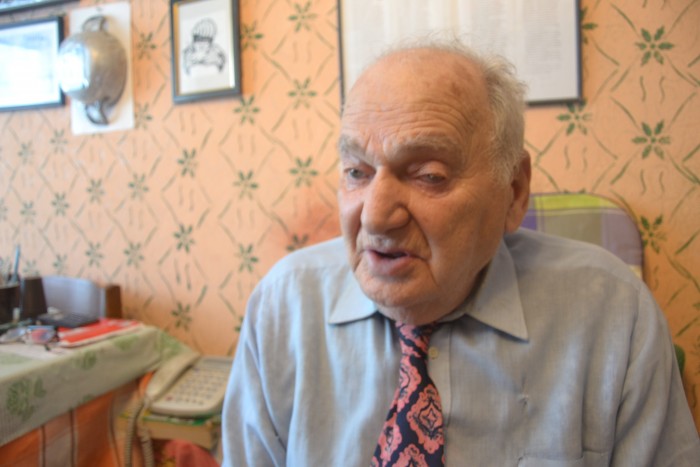
Meyshe Preis, prisoner of three concentration camps
Lithuanian Jewish Community member Meyshe Preis (or Moisiejus Preisas, as his Lithuanian passport calls him) was imprisoned at three concentration camps: sent from the Kovna ghetto to Stuffhof, then to Auschwitz, then to Dachau. He’s alive and living in Sventsyan (Švenčionys), Lithuania, and still speaks about the horrors he survived in the ghetto and at the concentration and death camps. His apartment, where he now lives alone since the death of his beloved wife, has a wall dedicated to memorabilia from hell, including photographs and a small bowl he took with him to all the camps until his liberation by American troops from a forced march of prisoners from Dachau into the neighboring mountains in May of 1945. His wall museum, collected over many years, includes newspaper articles and written memoirs as well as photos. Currently the LJC Social Center is helping Meyshe Preis out around the house and with the simple chores of life.
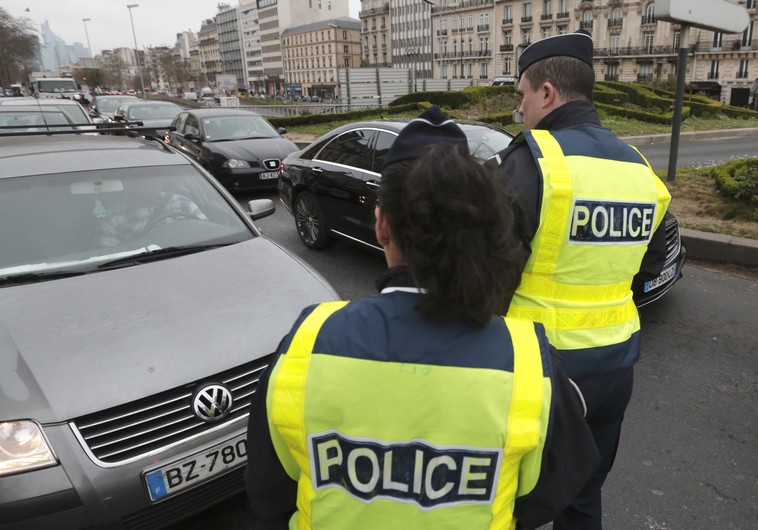
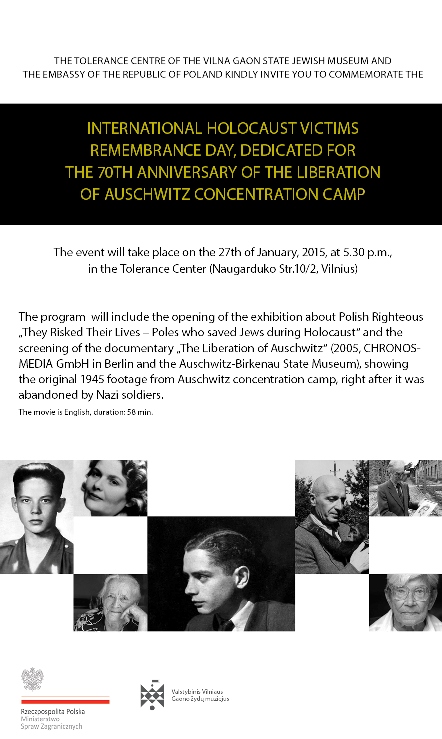
On January 27th the world will come together to observe International Holocaust Remembrance Day, marking 70 years since the liberation of Auschwitz-Birkenau.
Yet 70 years since end of the most horrific chapter in Europe’s history, anti-Semitism has once again surged to levels unprecedented since the end of the Holocaust, with virtually no part of Europe free from this oldest and most enduring form of hatred.
Whether it is the kosher supermarket attack in Paris this January, the shooting in the Brussels Jewish Museum last year, or frequent assaults against Jews and vandalism of synagogues and Jewish stores, there is an increasingly palpable sense of fear and insecurity among many Jewish communities in Europe.
Vladimir Putin’s absence from events marking the 70th anniversary of the liberation of the Nazi death camp shows how Europe is still bitterly divided over the legacy of the Holocaust.
The Kremlin has confirmed Mr Putin will not attend Tuesday’s ceremony at the camp in Poland on Tuesday, unlike many world leaders, including the presidents of France, Germany and Poland.
The official reason is that the Russian president did not receive a formal invitation.
The organisers of the ceremonies said no personal invitations were sent to any leader, but the Kremlin evidently feels snubbed, with Russian Foreign Minister Sergei Lavrov saying the letter was “not something that should be responded to”.
January 26, 2015 Program:
11:00 A.M. – 1:00 P.M. Reading of the names of Holocaust victims at the synagogue, Pylimo no. 39, Vilnius
4:00 P.M. Ceremony to honor Holocaust victims at the Lithuanian Jewish Community. Jascha Heifetz Hall, 3rd floor, Lithuanian Jewish Community, Pylimo no. 4, Vilnius
To include:
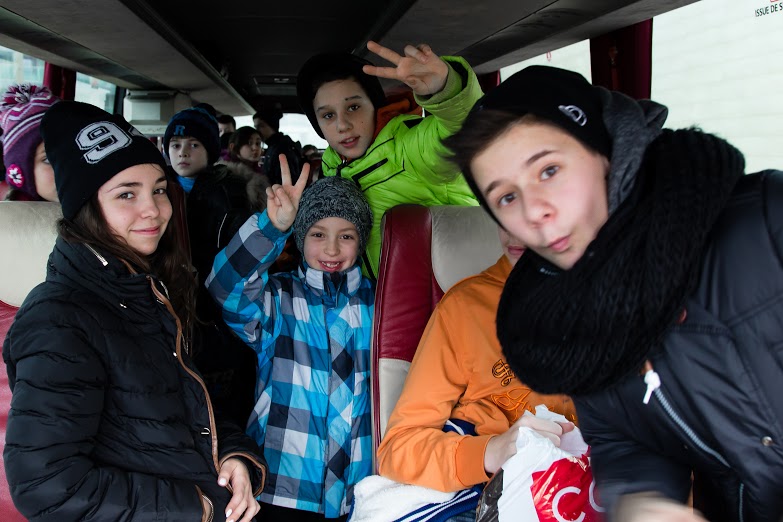
Eighty children aged from 7 to 18 from Vilnius, Kaunas, Klaipėda and Šiauliai came together for the LJC winter camp at the end of December. The camp held at the Šventoji, Lithuania recreational and health resort Energetikas lasted six days. The children were treated to an intensive program of activities prepared by the camp leaders as well as having an opportunity to enjoy the seaside and one another.
Dorin Rosenkova, the camp leader, was a participant at such camps not so long ago but is now the director responsible for all children. She said everyone was satisfied with this camp.
The 70th anniversary of the liberation of Auschwitz approaches amid a disturbing new cover-up of Holocaust history. Across Eastern Europe, the notion of a “Double Genocide” – the idea that there were two equal holocausts, Soviet and Nazi – has been pushed by governments and nationalist elites in the media and arts.
The concept suggests that Jews were communists, and participated in the communist crimes against their countries – which must equally count as “genocide”.
Therefore, the Holocaust should be reconceived as one of two equal catastrophes, one of them allegedly involving major Jewish culpability.
These past week has been a difficult one for the Jewish community of France and around the world, where we came to mourn the murder of 4 French Jews in the horrific terror attack on a Paris kosher supermarket.
As The Israeli-Jewish Congress, one of our primary goals is to act as a bridge, to strengthen relations between the State of Israel and the Diaspora, especially the Jewish communities of Europe. This has never been more urgent than today, with increasing terror attacks and rising anti-Semitism across Europe.
Thursday, January 22nd, at 09:00 am (NY time) IJC will participate in the historic Special Session of the UN General Assembly that will address Global Anti-Semitism. The session, to be held under the auspices of the UN General Assembly, has been called for by 37 countries, including Israel, United States, Canada, Australia and all members of the EU. IJC will press for immediate action in Europe, not merely words, to address the ever-growing scourge of anti-Semitism in Europe. At the top of our agenda, we will request that Europe appoint a Special Commissioner to Monitor and Combat Anti-Semitism (as per the initiative of the Belgian Jewish Community) and for a European-wide definition of anti-Semitism, as well as a range of other initiatives, including legislation against hate speech and Holocaust denial (attached updated IJC Blueprint to be presented during the session).
Please see link to all the info about this special session: http://www.un.org/pga/220115_informal-meeting-anti-semitism
The entire program will be webcast live: http://webtv.un.org/live-now/watch/general-assembly-informal-meeting-of-the-general-assembly-to-address-concerns-of-a-rise-in-anti-semitic-violence-worldwide/1705520925001.
The above link also includes timetable of events and some of the official speaker info. Countries participating will include Israel, U.S., Canada, Australia and all EU Member States, plus some others. In total 37 states are expected to participate.