




Litvak Victim Marks 70 Year Anniversary of Liberation of Auschwitz by Red Army and of Dachau by American Army

Picture 012

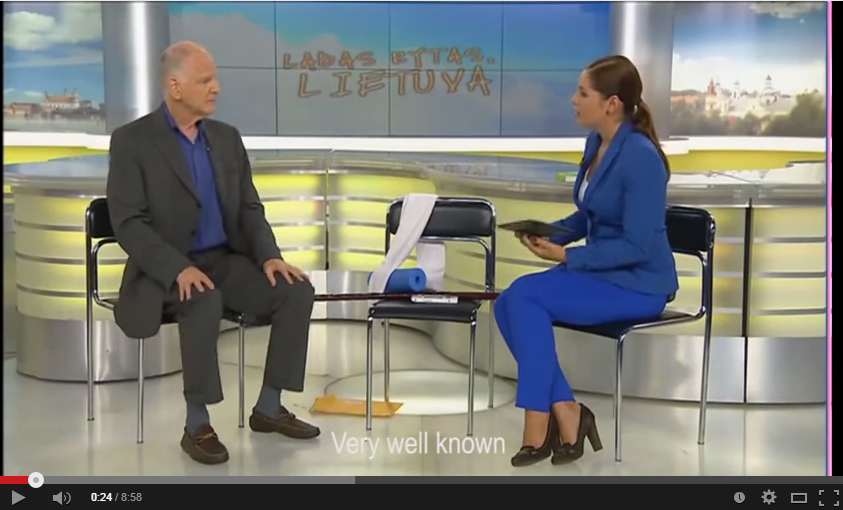
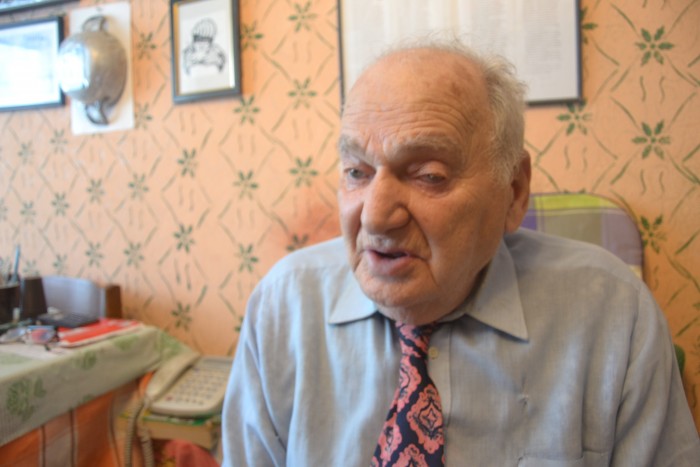
Meyshe Preis, prisoner of three concentration camps

Lithuanian Jewish Community member Meyshe Preis (or Moisiejus Preisas, as his Lithuanian passport calls him) was imprisoned at three concentration camps: sent from the Kovna ghetto to Stuffhof, then to Auschwitz, then to Dachau. He’s alive and living in Sventsyan (Švenčionys), Lithuania, and still speaks about the horrors he survived in the ghetto and at the concentration and death camps. His apartment, where he now lives alone since the death of his beloved wife, has a wall dedicated to memorabilia from hell, including photographs and a small bowl he took with him to all the camps until his liberation by American troops from a forced march of prisoners from Dachau into the neighboring mountains in May of 1945. His wall museum, collected over many years, includes newspaper articles and written memoirs as well as photos. Currently the LJC Social Center is helping Meyshe Preis out around the house and with the simple chores of life.
A blueprint to combat anti-Semitism in Europe

A blueprint to combat anti-Semitism in Europe

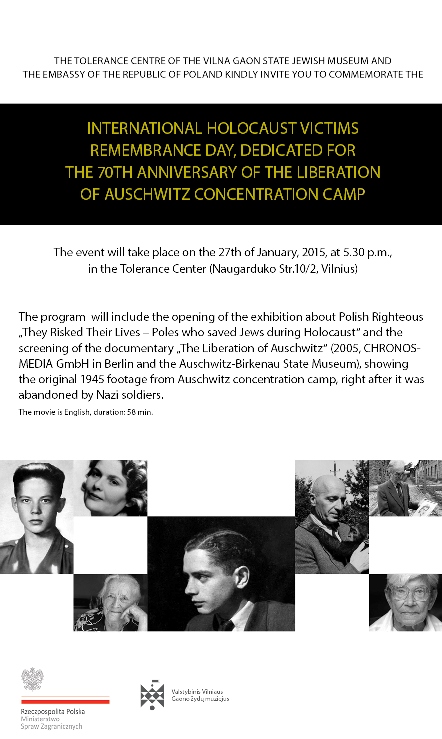
On January 27th the world will come together to observe International Holocaust Remembrance Day, marking 70 years since the liberation of Auschwitz-Birkenau.

Yet 70 years since end of the most horrific chapter in Europe’s history, anti-Semitism has once again surged to levels unprecedented since the end of the Holocaust, with virtually no part of Europe free from this oldest and most enduring form of hatred.

Whether it is the kosher supermarket attack in Paris this January, the shooting in the Brussels Jewish Museum last year, or frequent assaults against Jews and vandalism of synagogues and Jewish stores, there is an increasingly palpable sense of fear and insecurity among many Jewish communities in Europe.

Read more

Still fighting over Auschwitz, 70 years on

Vladimir Putin’s absence from events marking the 70th anniversary of the liberation of the Nazi death camp shows how Europe is still bitterly divided over the legacy of the Holocaust.

The Kremlin has confirmed Mr Putin will not attend Tuesday’s ceremony at the camp in Poland on Tuesday, unlike many world leaders, including the presidents of France, Germany and Poland.

The official reason is that the Russian president did not receive a formal invitation.

The organisers of the ceremonies said no personal invitations were sent to any leader, but the Kremlin evidently feels snubbed, with Russian Foreign Minister Sergei Lavrov saying the letter was “not something that should be responded to”.

Read more

Lithuanian Jewish Community Winter Children’s Camp at Šventoji, Lithuania

Lithuanian Jewish Community Winter Children’s Camp at Šventoji, Lithuania

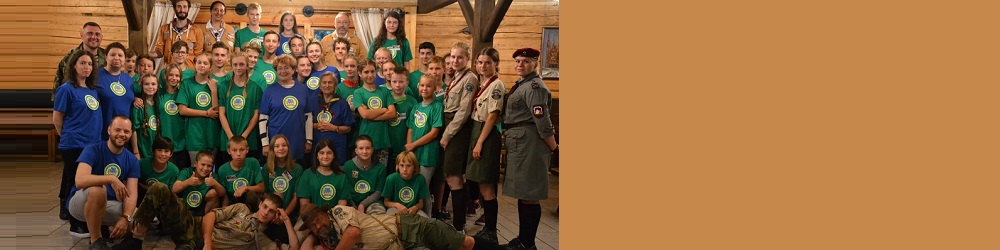
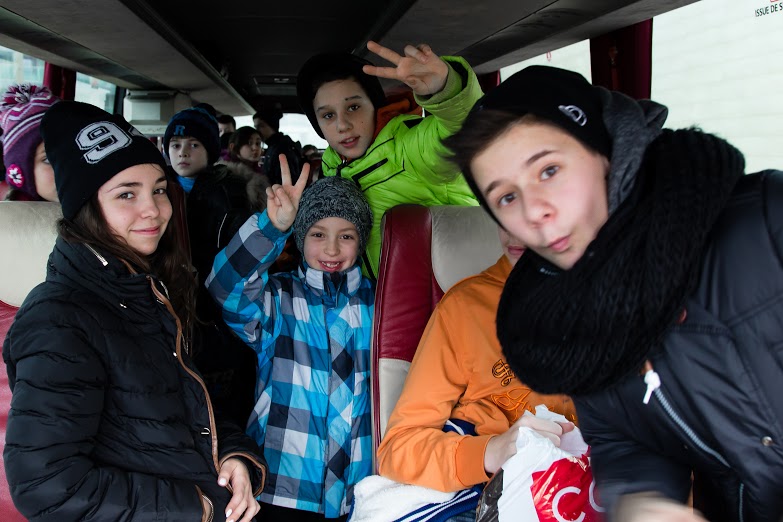
Eighty children aged from 7 to 18 from Vilnius, Kaunas, Klaipėda and Šiauliai came together for the LJC winter camp at the end of December. The camp held at the Šventoji, Lithuania recreational and health resort Energetikas lasted six days. The children were treated to an intensive program of activities prepared by the camp leaders as well as having an opportunity to enjoy the seaside and one another.

 Dorin Rosenkova, the camp leader, was a participant at such camps not so long ago but is now the director responsible for all children. She said everyone was satisfied with this camp.

‘Double Genocide’ has become the deadliest form of denial

The 70th anniversary of the liberation of Auschwitz approaches amid a disturbing new cover-up of Holocaust history. Across Eastern Europe, the notion of a “Double Genocide” – the idea that there were two equal holocausts, Soviet and Nazi – has been pushed by governments and nationalist elites in the media and arts.

The concept suggests that Jews were communists, and participated in the communist crimes against their countries – which must equally count as “genocide”.

Therefore, the Holocaust should be reconceived as one of two equal catastrophes, one of them allegedly involving major Jewish culpability.

Read more

UN General Assembly Special Gathering on Anti-Semitism

UN General Assembly Special Gathering on Anti-Semitism

These past week has been a difficult one for the Jewish community of France and around the world, where we came to mourn the murder of 4 French Jews in the horrific terror attack on a Paris kosher supermarket.

 As The Israeli-Jewish Congress, one of our primary goals is to act as a bridge, to strengthen relations between the State of Israel and the Diaspora, especially the Jewish communities of Europe. This has never been more urgent than today, with increasing terror attacks and rising anti-Semitism across Europe.

Thursday, January 22nd, at 09:00 am (NY time) IJC will participate in the historic Special Session of the UN General Assembly that will address Global Anti-Semitism. The session, to be held under the auspices of the UN General Assembly, has been called for by 37 countries, including Israel, United States, Canada, Australia and all members of the EU. IJC will press for immediate action in Europe, not merely words, to address the ever-growing scourge of anti-Semitism in Europe. At the top of our agenda, we will request that Europe appoint a Special Commissioner to Monitor and Combat Anti-Semitism (as per the initiative of the Belgian Jewish Community) and for a European-wide definition of anti-Semitism, as well as a range of other initiatives, including legislation against hate speech and Holocaust denial (attached updated IJC Blueprint to be presented during the session).

Please see link to all the info about this special session: http://www.un.org/pga/220115_informal-meeting-anti-semitism

The entire program will be webcast live: http://webtv.un.org/live-now/watch/general-assembly-informal-meeting-of-the-general-assembly-to-address-concerns-of-a-rise-in-anti-semitic-violence-worldwide/1705520925001.

The above link also includes timetable of events and some of the official speaker info. Countries participating will include Israel, U.S., Canada, Australia and all EU Member States, plus some others. In total 37 states are expected to participate.

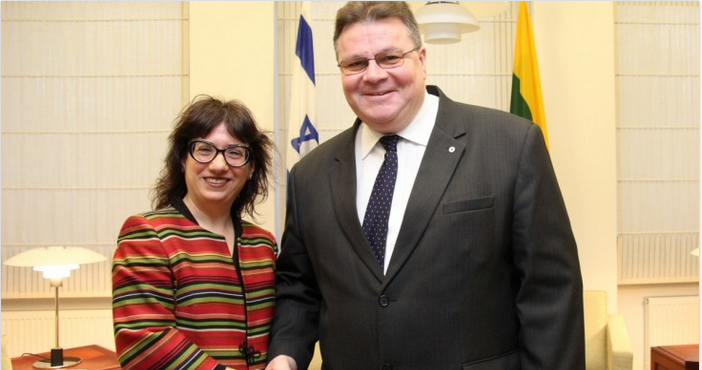
L.Linkevičius thanks Israel’s outgoing Ambassador for her contribution towards strengthening bilateral relations

L.Linkevičius thanks Israel’s outgoing Ambassador for her contribution towards strengthening bilateral relations

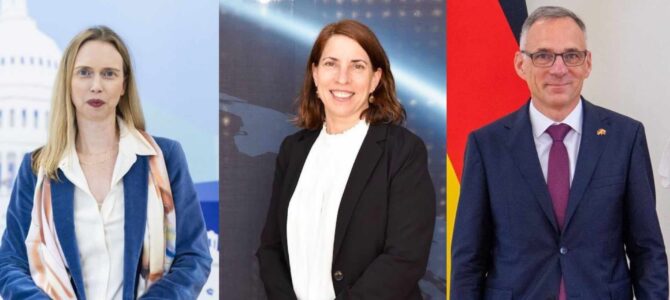
On 15 January, Lithuania’s Minister of Foreign Affairs Linas Linkevičius met with Israel’s outgoing Ambassador to Lithuania Hagit Ben-Yaakov. The meeting discussed close bilateral relations and cooperation within international organizations.

Lithuania’s Foreign Minister thanked the Israeli diplomatic representative, who resides in Riga, for a very active and constructive cooperation in developing bilateral relations with Lithuania, and for maintaining constant focus on the Jewish Community of Lithuania.

During the conversation, Lithuania’s Foreign Minister thanked the Ambassador for her personal contribution towards strengthening Lithuania-Israel relations and adopting the decision by the Government of Israel to establish its Embassy in Vilnius.

Lithuania’s Foreign Minister highlighted excellent bilateral and political cooperation, especially in the field of culture, and for successful development of relations in the fields of research and life sciences. According to the head of Lithuania’s diplomacy, it is meaningful to continue to boost economic partnership, including through promoting bilateral trade and attracting more Israeli investments.

The Embassy of Israel will be opened at the end of this January in Vilnius. Amir Maimon was appointed as the Ambassador of Israel in Vilnius. Prior to this appointment, A.Maimon served as the Director of the East European Division of the Israeli Ministry of Foreign Affairs.

More at urm.lt

Paris Terror Attack Victim’s Grieving Widow: ‘They Have Taken My Other Half’ (VIDEO)

Paris Terror Attack Victim’s Grieving Widow: ‘They Have Taken My Other Half’ (VIDEO)

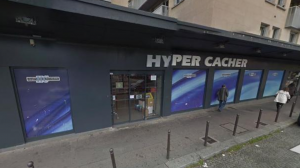
Valerie Braham, who lost her husband, Philippe, in Friday’s terror siege at a Paris kosher market, told Israel’s Ch. 2 News on Sunday that her first inkling of the carnage taking place was when her cellphone text message to him went unanswered, moments after she learned of the attack.

“I started to worry, I sent him a message and I felt that something was wrong,” she recounted.

After taking the couple’s children to school, Philippe Braham, 40, headed over to the HyperCacher, arriving around the same time as Amedy Coulibaly, the Islamist terrorist who seized the market in a bid to assist the escape of Cherif and Said Kouachi, the brothers who were cornered by police in a simultaneous siege northeast of Paris, after they fled the scene of the massacre they carried out at the headquarters of Charlie Hebdo on Wednesday.

Valerie Braham explained that her husband had gone to the market to collect a few items for their Friday night meal.

“’Lehitraot’ – see you this evening,” were her last words to him.

A short time later, word quickly spread through the Jewish community of a hostage incident at the HyperCacher. As the minutes passed, her stomach knotted.

“At about 1:20, I was at the school to pick up my kids, and I heard about it, and I said, ‘Oh, I know that Philip had to do some shopping for me,’” she recounted.

Read more

Lithuanian Jewish community send condolences to Paris

Lithuanian Jewish community send condolences to Paris

Lithuanian Jewish community strongly condemned the ruthless terrorist attack on the office of a French magazine in Paris and the killing and injuring of a number of its staff and reporters. We send our condolences to the bereaved families of the victims of this tragedy.

Lithuanian Jews send their condolences to the Jewish community in France and to the French people who suffered a murderous terror attack in the last few days.

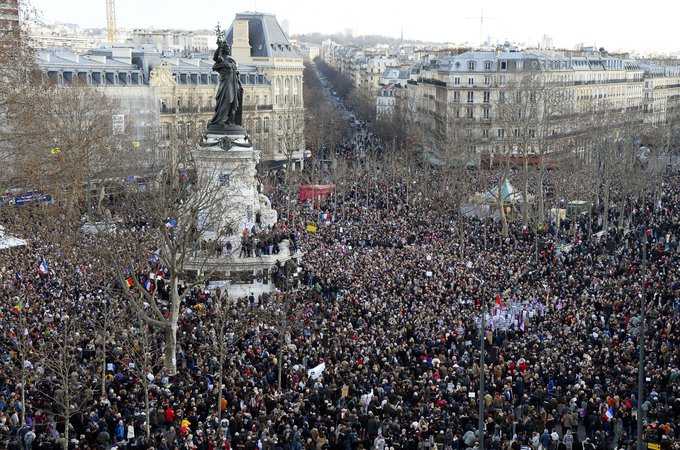
Hundreds of thousands gather in Paris to denounce terror, honor victims

Hundreds of thousands gather in Paris to denounce terror, honor victims

A million anticipated to gather at 4 p.m. event in Republic Square; Jews killed in supermarket siege to be buried in Israel; Hollande calls Paris ‘capital of the world’

Over a million are expected to gather in Paris this afternoon for a rally in support of the victims of recent terrorist attacks in the French capital, who include four Jews murdered by an Islamist gunman in a kosher market Friday. Stay tuned to The Times of Israel liveblog for breaking developments

Read more

Why Judaism Needs Journalism

There’s a tendency in the Jewish world to look for big solutions to big problems. One of those problems is the disheartening fact that most Jews today are simply not that interested in Judaism.

This problem isn’t made up — it’s real. We live in a world where the options are so abundant that Judaism is seen as a choice, not an obligation. This is radically different from the world I grew up in, where every Jew in the Jewish neighborhoods of Casablanca would go to synagogue on Shabbat and follow the major rituals. Judaism wasn’t a choice — it was a way of life.

Here in America, in the land where we overdose on choices, Judaism has to compete for people’s time, and, more often than not, it loses. Why would someone go to a prayer house on Saturday mornings when they can take a beautiful hike in the canyon or have coffee with an old friend or go to a gym or yoga class? If the great American question is, “What will make me happiest?” is it that surprising that Judaism so often loses?

Read more

Top 10 Non-Jews Positively Influencing the Jewish Future, 2014

Five years have now passed since I first published my annual list of non-Jews who are worthy of recognition for their positive impact on Jewish lives and the Jewish state.

Looking back, it is fascinating to see how the list has evolved, with some personalities fading from prominence and others emerging to take their place. Some have remained constant throughout the years.

As I have pointed out in the past, my choices are by no means scientific and are primarily intended to prompt interest in this unique group of individuals. Hailing from various countries, ethnic backgrounds and religious groups, the list includes heads of state, business tycoons and spiritual and political leaders. While some of their contributions came through effort and sacrifice, for others they seemed like second nature, but all are surely worthy of our recognition. As such, I present my fifth annual list of the “Top 10 Non-Jews Positively Influencing the Jewish Future.”

Gunmen methodically kill 12 in attack at French newspaper that caricatured Mohammed Read more: Gunmen methodically kill 12 in attack at French newspaper that caricatured Mohammed

Masked killers shout ‘Allahu Akbar’ as they storm offices of satirical weekly Charlie Hebdo, gun down top cartoonists, in France’s worst terror attack.

PARIS — Masked gunmen stormed the Paris offices of a weekly newspaper that caricatured the Prophet Muhammad, methodically killing 12 people Wednesday, including the editor, before escaping in a car. It was France’s deadliest postwar terrorist attack

Read more

Polina Pailis

Polina Pailis

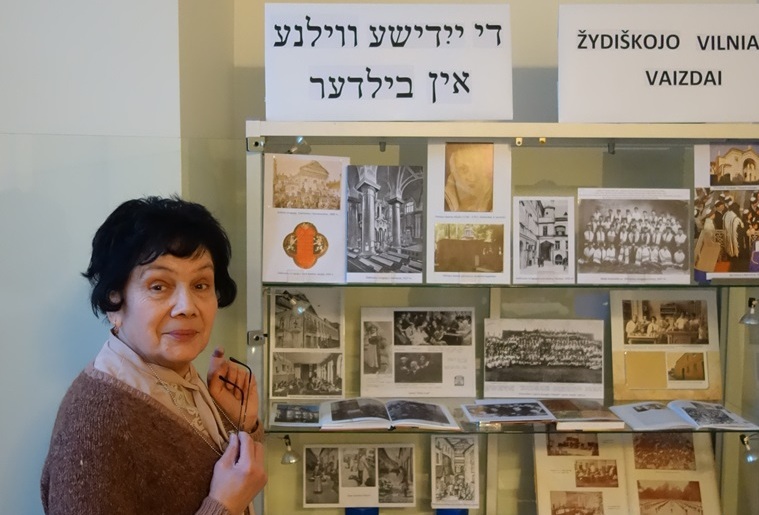
Polina Pailis, an incredible guardian of bona fide Litvak culture here in Vilnius, with her 96th (!) consecutive monthly exhibition at the premises of the Jewish Community of Lithuania at Pylimo 4. On a completely voluntary basis (her day job is at the National Library), Polina, on the last working day each month, sets up the new month’s exhibition.

The mini-exhibits are bilingual (Yiddish and Lithuanian) and each month focused on a different aspect of Litvak and Yiddish culture. The modest, straightforward, low-tech presentation on simple shelves, with high caliber culturally authentic content, is the classic synthesis of a Litvak who doesn’t let a day, or a month go by without studying something new, with little time for low-content high-tech razzmatazz. We must think of how to celebrate the project’s 100th exhibition coming up this spring. . .

What did I inherit from my family who survived the Lithuanian Holocaust?

What did I inherit from my family who survived the Lithuanian Holocaust?

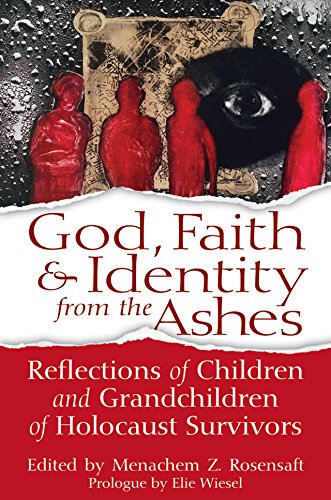
God, Faith & Identity from the Ashes: Reflections of Children and Grandchildren of Holocaust Survivors

Menachem Z Rosensaft, Editor, Elie Wiesel, Prologue by

In this important and poignant collection of thoughts and memories from descendants of Holocaust survivors, 88 men and women from around the world share personal, often heartrending reflections. As their parents and grandparents age and pass away, these adults remember the palpable darkness and shadows of fear that haunted them. Contributors were asked “how their parents’ or grandparents’ experiences and examples helped shape their own identities and their attitudes toward God, faith, Judaism, the Jewish people, and society as a whole.” The answers, some short, others longer, are all brutally honest. Whereas some found faith and a spark of hope amid the carnage, others lost religion entirely, and still others lament how similar tragedies could unfold in the aftermath of “never again.” Readers may shed tears of sorrow, but will be inspired by the strength and courage of this worthy volume. Elie Wiesel contributes a prologue.

What did I inherit from my family who survived the Lithuanian Holocaust?

by Faina Kukliansky

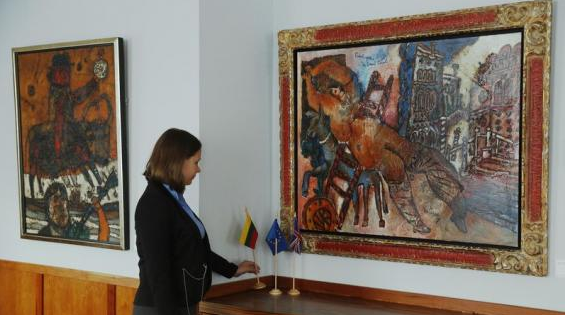
Litvak Jewish art gets first global show after almost a century

Litvak Jewish art gets first global show after almost a century

(Reuters) – Scenes from Jerusalem and 1920s Paris are among the rare works showcasing Lithuania's Jewish artists from the last century that are going on show as a collection abroad for the first time.

Lithuania, whose borders before World War 1 included parts of modern Ukraine, Belarus, Poland, Russia and Latvia, was a major heartland of European Jewry, famed for its talmudical academies and bookish Jews known as Litvaks.

Looking to leave their traditional surroundings and soak up the creative atmosphere, many Litvak artists, including world-renowned painter Marc Chagall, converged on Paris at that time.

The result was a unique series of works, which became known as the Ecole de Paris, embracing multiple styles including post-impressionism, cubism and futurism. The Litvak artists also fused romantic and melancholic visions of their former Jewish small towns, known as Shtetls, into their work.

226 Ukrainian Jews Arrive in Israel on IFCJ Historic Evacuation Mission; More Flights Scheduled to Arrive in Weeks

Hebrew music pulsated in the air and IDF soldiers joyfully waved Israeli flags on Monday, December 22nd at Tel Aviv’s Ben Gurion airport as 226 new olim (immigrants) from Ukraine alighted from the plane. The festive atmosphere upon their arrival marked the beginning of a new campaign to rescue Jews from the anarchy that marks the war torn country.

Working feverishly behind the scenes to get this project off the ground is Rabbi Yechiel Eckstein of the International Fellowship of Christians and Jews (IFCJ).   “This will be the first flight of many flights from Ukraine; bringing our brothers and sisters back to Israel,” said Rabbi Eckstein with great resolve. With the help of those on the ground in Ukraine such as the American Joint Distribution Committee and the Chabad Lubavitch movement, the IFCJ has begun the imperative work of “ensuring that any Je who is in danger or who faces hardship from the violence and unrest in Ukraine will receive shelter and a home in Israel,” said Rabbi Eckstein.

More at jewishvoiceny.com