






For Ukraine’s Jews, $50 can stave off starvation

For Ukraine’s Jews, $50 can stave off starvation

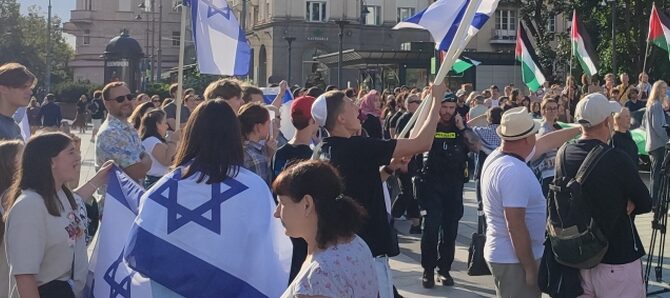
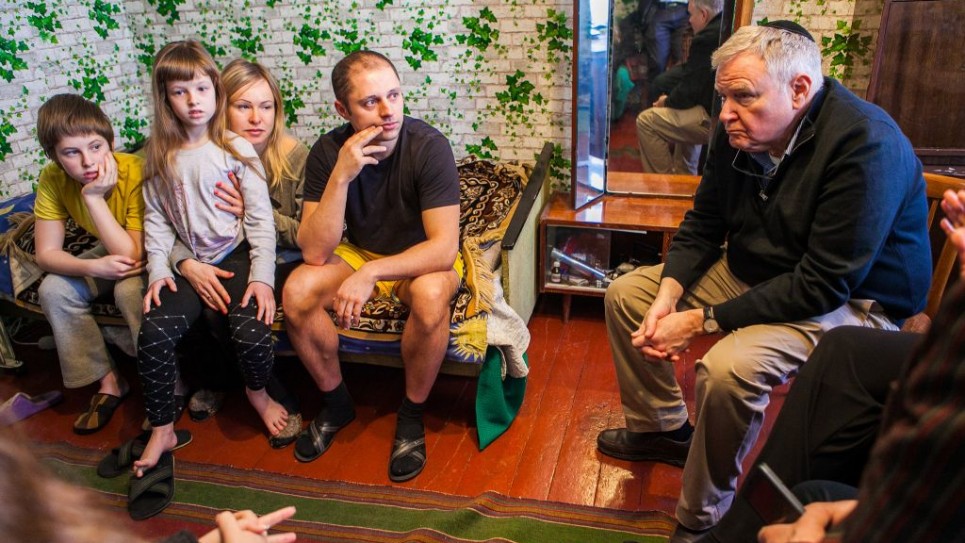
Fifty dollars. While in many parts of the world consumers regularly plunk down the sum on a nice pair of jeans, in Ukraine it can mean a month’s worth of food staples, said Jerusalem-based head of the American Jewish Joint Distribution Committee’s Ukraine desk Oksana Galkevich.

This reality is a far cry from the headily optimistic days of February 2014 when Ukraine’s progressive Euromaidan Revolution forced a changeover in government from a corrupt pro-Russian head of state to a Ukrainian nationalist. But war came quickly: The Crimean peninsula was annexed by Russia in March 2014 and by April, 40,000 pro-Russian separatist forces entered the self-declared Donetsk and Lugansk People’s Republics, areas of Ukraine bordering Russia.

Though there are tenuous cease fire agreements — most recently in February — civil unrest continues on the eastern border where 6,000 have been killed and, as of March 2015, some 1,168,600 are displaced in this year of rebel fighting.
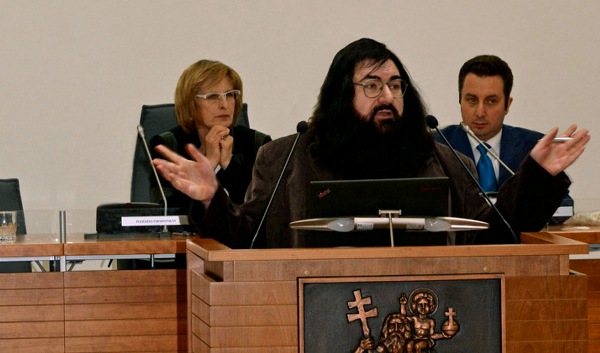
Dovid Katz’s Lecture at Vilnius Conference on 17 April 2015

Dovid Katz’s Lecture at Vilnius Conference on 17 April 2015

by Dovid Katz

The following is the written version of Dovid Katz’s presentation at the International Conference on Holocaust Education organized by Rūta Vanagaitė as part of a Europe for Citizens project, held at Vilnius City Hall on 17 April 2015. Conference program. Conference’s final press release. Projectwebsite.


Politics, Policy, and Lithuanian Holocaust Discourse

Good afternoon. Sincerest thanks to everyone who made today possible, above all to dear Rūta Vanagaitė for successfully bringing together folks from many sides of today’s issues here in Vilnius for the first time in the twenty-first century, in the fine spirit of openness and tolerance that is particularly important, now, when politics and current events can easily deflate freedom of opinion on history, the progress of civil discourse, and the dignity of education.

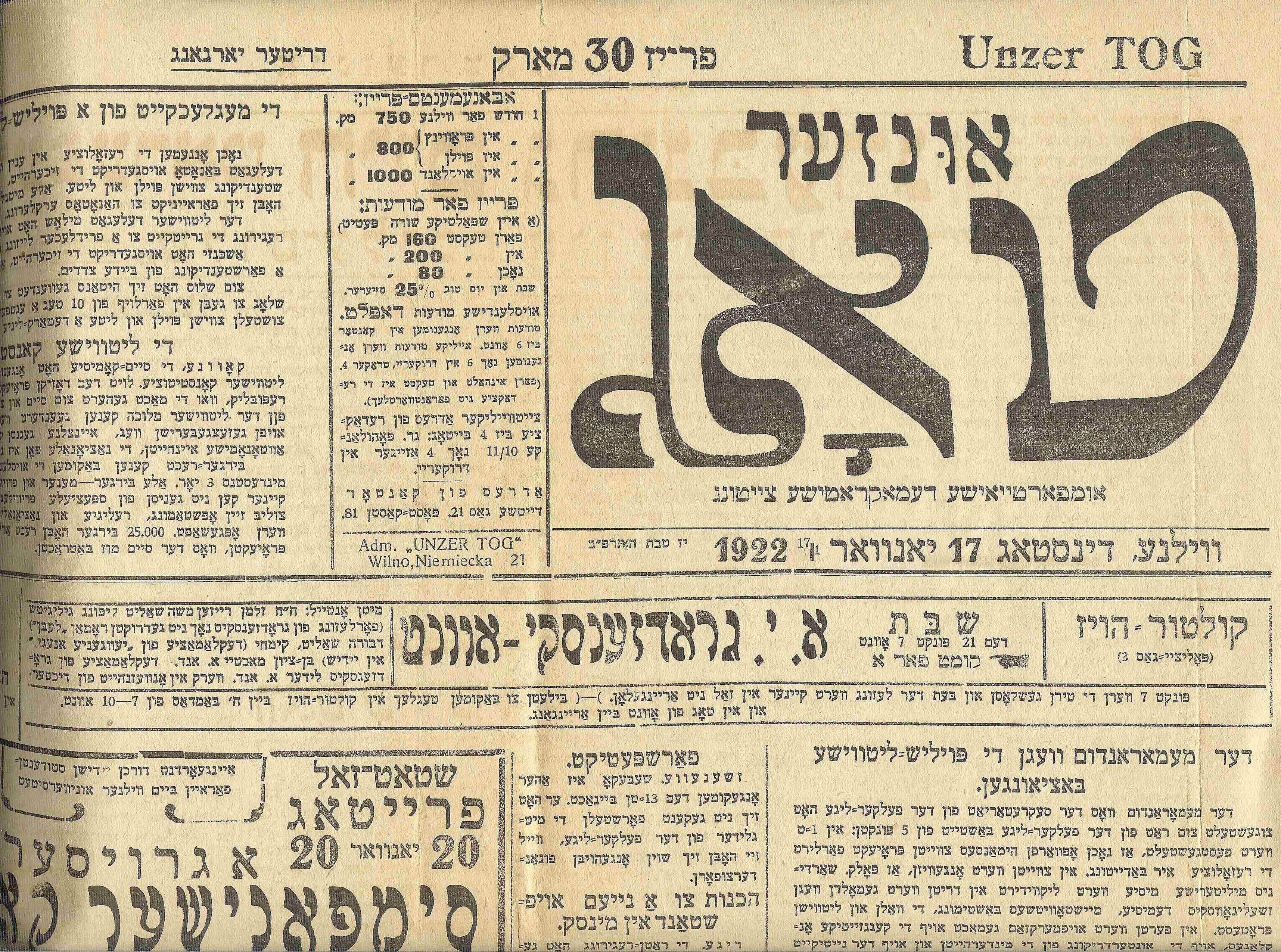
When Zalmen Reyzen’s Vilna Yiddish Newspaper Headlined an Evening for the Yiddish Writer A.I. Grodzenski

When Zalmen Reyzen’s Vilna Yiddish Newspaper Headlined an Evening for the Yiddish Writer A.I. Grodzenski

by Dovid Katz
 

A 1922 headline in Zalmen Reyzen’s daily newspaper, the Vilna “Tog” (“Day” —  issue of 17 Jan. 1922) announced a Saturday night event dedicated to the remarkable Vilna Yiddish writer Aaron Isaac (Arn-Yitskhok) Grodzenski (1891-1941), a secular Yiddish writer who was the nephew of the world famous rabbi Chaim-Oyzer Grodzenski (whose onetime home on Pylimo [Yiddish: Zaválne gas] still attracts visitors from around the world). Zalmen Reyzen, a famous Yiddish philologist, literary historian and editor, a co-founder of the Vilna Yivo in 1925, himself lived on Greys Pohulánke (now Basanavičiaus, where a bilingual Yiddish-Lithuanian plaque marks the site at no. 17).

Victims of Armenian Genocide Commemorated in Vilnius

On April 24 Armenia and the world mark the tragic anniversary, this year the 100th, of the genocide of the Armenians perpetrated by forces of the Ottoman Empire. The victims are honored on this day. The 100th anniversary was commemorated with the slogan “I remember and demand” and with forget-me-not flowers as its symbol. The meaning of forget-me-nots is clear from the name: not to forget, to remember and to recall. A solemn commemoration took place along with celebrations around the world at the Cathedral in Vilnius, with a Mass conducted by archbishop Gintaras Grušas and Apostolic nuncio to Lithuania Pedro Lopez Quintana. Foreign diplomats and high-ranking officials were in attendance including Israel’s new ambassador to Lithuania Amir Maimon, as were members of the Lithuanian parliament, Lithuanian Jewish Community chair Faina Kukliansky and director of Vilnius’s Jewish school the Sholem Aleichem Gymnasium Misha Jakobas. Many countries recognize the Armenian genocide of 1915 in the Ottoman Empire, but the modern state of Turkey denies it was a genocide. From 1915 till 1923 1.5 million Armenians died.

On Independence Day, Former Defense Minister Says Israel Becoming More Independent Each Year

Moshe Arens, Israel’s former Defense Minister, said that with every year that passes, the State of Israel becomes more independent than the previous years. His comments were made in an interview with Israel’s Walla news on Wednesday.

Though he admitted that Israel – just like all other countries in the world – is not entirely independent, because of the increased interconnectedness of the world’s nations as a result of globalization, he said that, “When I look at Israel in 2015 and compare it to the State of Israel when I served in senior positions in public service, I have no doubt that we have become more independent.” Arens added that Israel is “stronger militarily” than it was in the past, and therefore “less dependent on external security assistance.

Criticism leveled at Lithuanian government and society at Vilnius Holocaust conference

Criticism leveled at Lithuanian government and society at Vilnius Holocaust conference

A conference on Holocaust education was held at Vilnius city hall on 17 April. The conference was the final event in the “Being a Jew” project’s series of events this year marking Holocaust Remembrance Day.

The conference included participants from the United States, Poland, Romania and Israel, including recognized and esteemed Holocaust historians and Holocaust education specialists, among them Tomas Venclova, Saulius Sužiedėlis, Dovid Katz, Šarūnas Liekis and a prerecorded address given by Efraim Zuroff. Representative of the European Commission’s European Remembrance program Pavel Tychtl, Lithuanian Jewish Community chair Faina Kukliansky, Vilnius mayor Artūras Zuokas and Holocaust education experts from Poland and Lithuania spoke as well. No official representatives of the Lithuanian Parliament or Government attended.

Jewish Vilna’s Best Kept Secret: 100th Exhibit Features Gaon, and Still Counting

Jewish Vilna’s Best Kept Secret: 100th Exhibit Features Gaon, and Still Counting

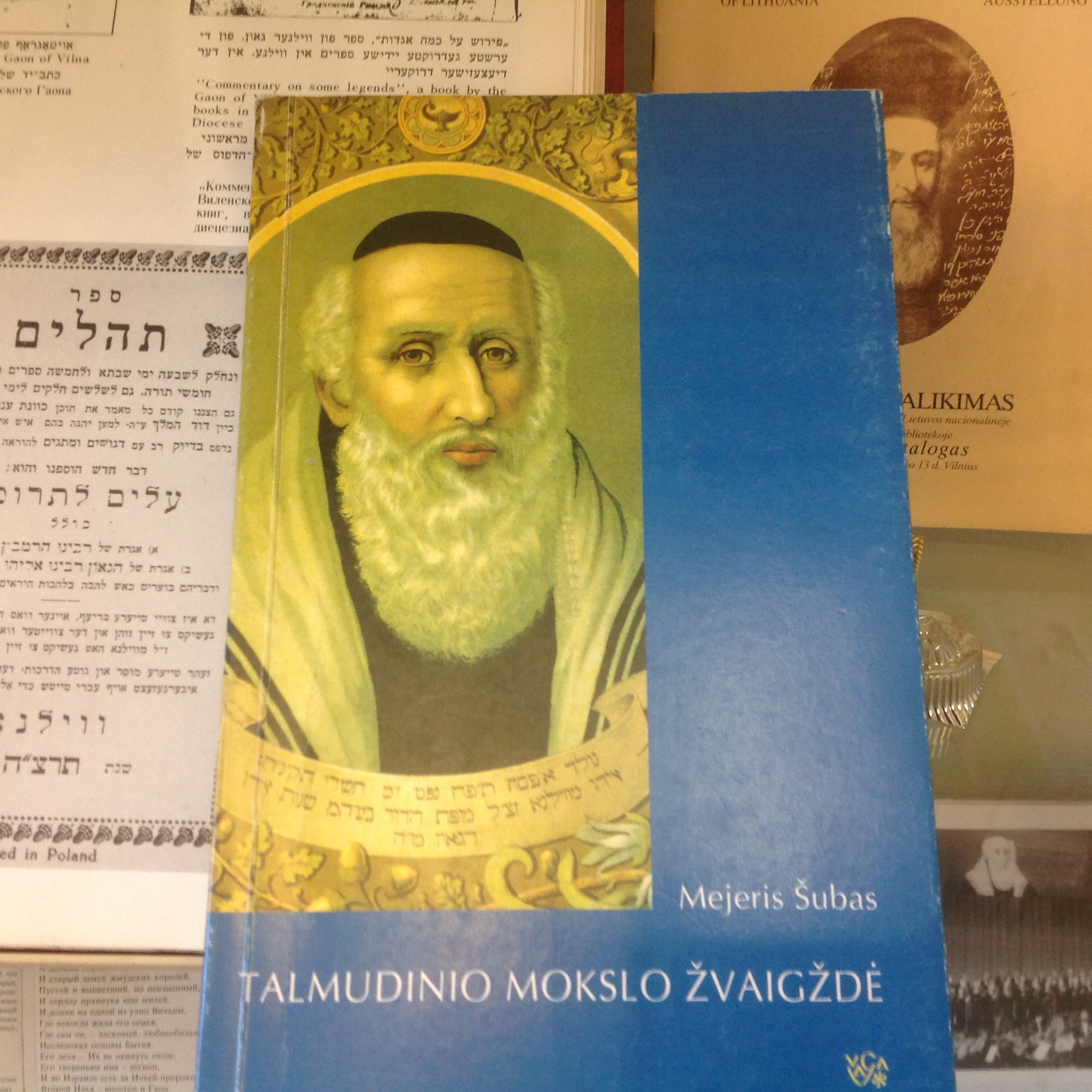
The Lithuanian Jewish community has always been different from the Jewish communities in other countries. Back in the Lithuanian Grand Duchy (roughly from AD 1200 to just before 1800) the Jewish communities enjoyed the special favor of the grand dukes and the Vilna Jewish community especially but Litvaks in general as well gained world renown for scholarship and religious knowledge, and many celebrated rabbis, cantors and Talmudic scholars issued forth from Lithuania. Litvaks have long had a reputation for being more conservative and for being more immune to innovation than other communities. The special worldview of the Litvaks, distinct for its synthesis of rational thought, logic, reason and religious imperatives, evolved under the influence of great local religious authorities and social conditions within the cultural zone of the Grand Duchy. The Litvak attitude, point of view and worldview is a distinct form of Jewish mentality for which the Litvaks became known as a distinct group within Judaism and Jewish culture over the centuries. The greatest religious authority, largely responsible for the religio-cultural identity of the Lithuanian Jewish community, was the wise Vilna Gaon of the 18th century.

Imagining an Alternate History in Lithuania: A Jew in the Motherland

Imagining an Alternate History in Lithuania: A Jew in the Motherland

I, your faithful correspondent from the Colonial Motherland, just spent six days in the other motherland – Lithuania, the place from which most of my ancestors came. Other than a return in the 1990’s by my Holocaust-survivor maternal grandmother, and a similarly timed visit by my paternal grandparents, none of my “nearby” extended family had been to Lithuania in about seventy years.

What drew me back? In part there is a certain enjoyment I have – despite my complaints about Ashkenormativity – in being a Litvak. Lita brings to my mind a certain sort of rootedness, as well as the rye bread, pickled herring, and peppery gefilte fish (certainly not sweet) my grandparents fed me as a child. There was also a sense of “this is where things started”: before one brave great-grandparent set out 120 years ago to South Africa, my ancestors had been in Lithuania for centuries. Part of me wanted to honor the relatives – including my mother’s half-sister – who had been decimated by the Shoah. Finally, I’ve been entangled in an increasingly drawn-out attempt to gain Lithuanian citizenship by descent, given a new law granting the descendants of Holocaust survivors citizenship of the country. (Obviously, I would keep my other passports.)

Memories of America: Three Students Tell of Their Experiences

The Joint Distribution Committee, or JDC, more commonly known simply as the Joint, is a participant in Lithuanian Jewish Community activities and youth programs, and selected three students for a trip to the United States.

Edvinas Puslys is a member of the LJC’s Ilan Club and native of Vilnius whose mother is Jewish. He is 16 and is in the 10th grade at the Sholem Aleichem Jewish Gymnasium. He was grateful for the opportunity the Joint provided him to travel in Poland last summer and visit Jewish locations in Warsaw and Cracow, and Auschwitz. In January he travelled to America to take part in the second part of the program, and saw firsthand there how Jewish families and others live in America. He said Jewish life and making friends were much easier there, and that American Jews are much more open, communicative and friendly.

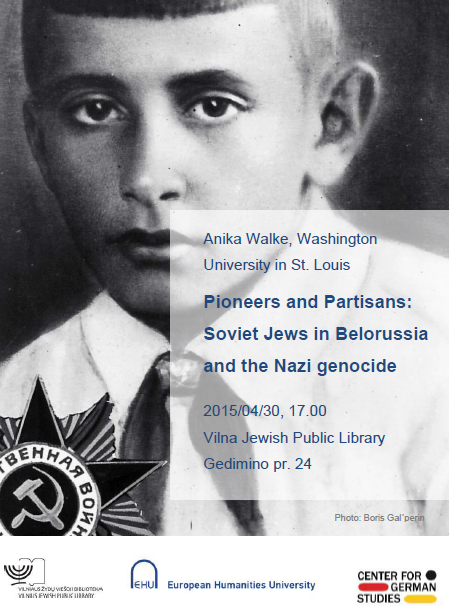
Invitation to the lecture “The history of Jewish resistance against the Nazi genocide in the occupied USSR

muz

Dear friends,

You are kindly invited to a lecture on a very involving and still awaiting for further research topic – The history of Jewish resistance against the Nazi genocide in the occupied USSR.

The lecturer Anika Walke, Ph.D., is assistant professor of history at Washington University in St. Louis and her book is to be published at Oxford University Press.

Place and time: Vilnius Jewish Public Library, Gedimino 24, Vilnius, April 30, 2015, 5 pm

RSVP: info@vilnius-jewish-public-library.com or (8-5) 219 77 48

Press release

Press release

Criticism Leveled at Lithuanian Government and Society at Vilnius Holocaust Conference VILNIUS, April 20, 2015 A conference on Holocaust education was held at the Vilnius city hall on April 17, 2015. This conference was the final event in the “Being a Jew” project’s series of events this year marking Holocaust Remembrance Day.

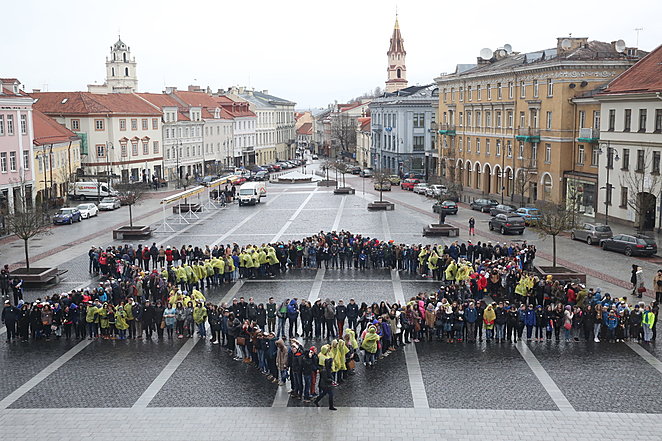
The day before the “Star of Remembrance” event to commemorate Holocaust victims with 700 students participating from 15 Vilnius schools took place outside the Town Hall in Vilnius and at Ponar mass massacre site outside Vilnius. The conference included participants from the United States, Poland, Romania and Israel, including recognized and esteemed Holocaust historians and Holocaust education specialists, among them Tomas Venclova, Saulius Sužiedėlis, Dovid Katz, Šarūnas Liekis and a prerecorded address given by Efraim Zuroff. Director of the European Commission’s European Remembrance program Pavel Tychtl, Lithuanian Jewish Community chair Faina Kukliansky, Vilnius mayor Artūras Zuokas and Holocaust education experts from Poland and Lithuania spoke as well.

Jerusalem of the North is Already Lithuania’s “Brand,” Tomas Venclova Says

A day-long conference April 17 capped efforts in Lithuania’s capital city this year to mark Yom haShoah, Holocaust Day, appropriately, and featured speakers as diverse as Vilnius’s mayor, esteemed writer and thinker Tomas Venclova and Efraim Zuroff, director of the Simon Wiesenthal Center in Jerusalem and now director for Eastern Europe as well, who is often referred to as “the last Nazi hunter.”

The Lithuanian Jewish Community was also amply represented there, with a keynote speech by LJC chair Faina Kukliansky and outgoing LJC executive director Simonas Gurevičius acting as moderator.

Other speakers included Pavel Tychtl from the European Commission, Dovid Katz of DefendingHistory.com, Piotr Kowalik of the Polish Jewish Museum in Warsaw, the historian and writer Saulius Sužiedelis and others. 

Hundreds of Youth Form Human Star of David outside Vilnius’s Old Town Hall

Hundreds of Youth Form Human Star of David outside Vilnius’s Old Town Hall

Hundreds of students marked Holocaust Day last Thursday by forming a giant Star of David on the square outside the Lithuanian capital’s historic Old Town Hall building Thursday before boarding trains for Ponar, where over 70,000 Jews were murdered during World War II. The same day the Lithuanian
Government and Prime Minister’s Office honored Lithuanian families who rescued Jews during the war.

More pictures

LJC Chair Faina Kukliansky addresses March of the Living at Ponar

The annual March of the Living procession assembled in Ponar (Paneriai) outside Vilnius last Thursday to walk the final mile many Jews walked from the railroad station to the killing pits from 1941 to 1944. Lithuanian Jewish Community chair Faina Kukliansky spoke to those who gathered at the main memorial there. Her speech is available here, in Lithuanian with synchronous translation to English:

fk