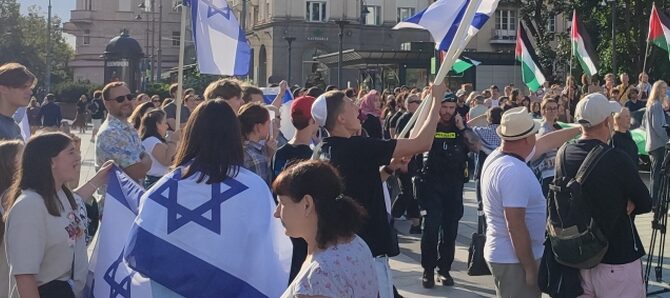
Lithuanian Jewish community invites you: Come Honor the Victims of WWII at Cathedral Square Tonight at 9:00 P.M.
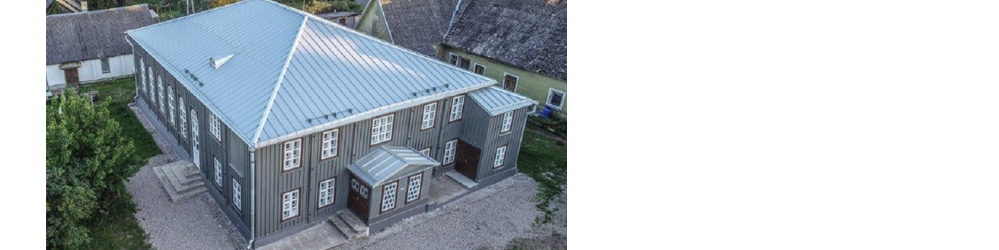
Wooden Synagogue in Alanta Renovated
Read more





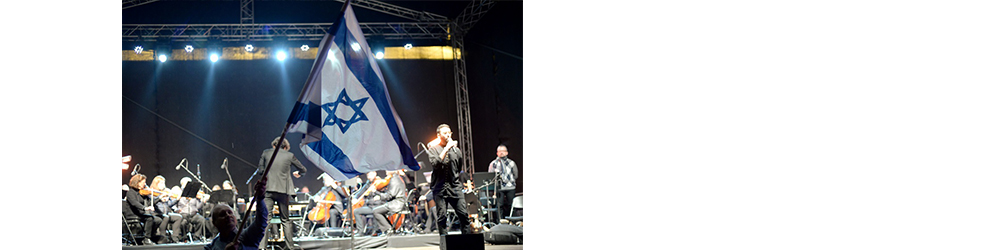


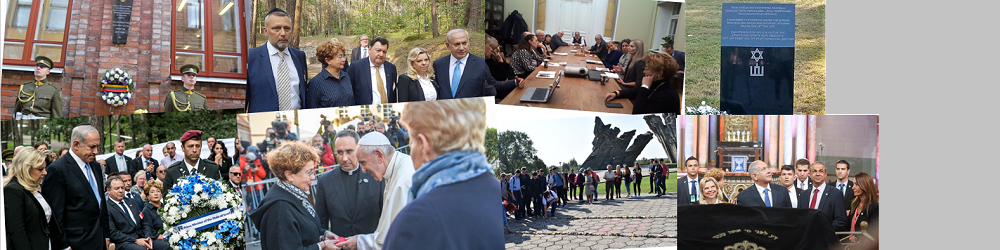

Lithuanian Jewish community invites you: Come Honor the Victims of WWII at Cathedral Square Tonight at 9:00 P.M.
The MJC 2015 will take place in Berlin, Germany, from August 16 to August 23. The application process requires each participant to fill out the online form found via the link below.
Acceptances will take place on a rolling basis: the final date for submission is May 31, 2015. As an official policy, the MJC does not require payment of any participation fee and will provide accommodation for the duration of the conference. However, the MJC does not provide any financial support for travel to/from the conference or visa applications.
Please find all further information inside the application form
BNS and Lietuvos rytras
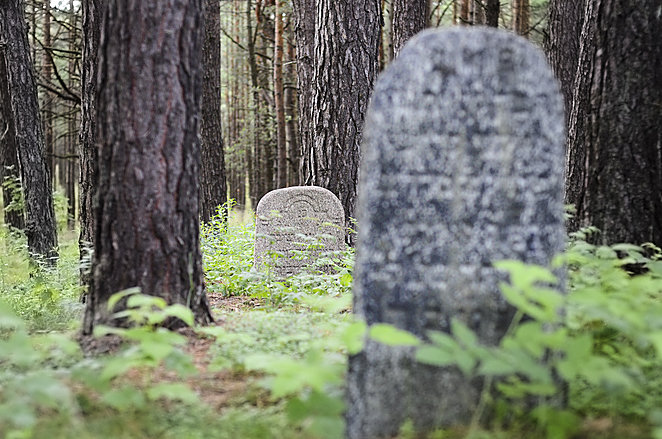
Lithuanian Government representatives agreed with Lithuanian and international Jewish organizations Thursday to work to conserve Jewish architectural heritage and Jewish cemeteries in Lithuania, and to provide more information to the public on Jewish history.
The Lithuanian Jewish Community reports the meeting focused on plans to restore synagogues and other Jewish heritage sites.
The first meeting of a commission set up to address Jewish culture and history issues agreed to draft an action plan on registering and conserving Jewish cemeteries and maintaining Jewish cultural heritage sites and adapting them for use by the public, Lina Saulėnaitė, an advisor from the Government Chancellery’s Department of Foreign and European Union Affairs, told BNS.
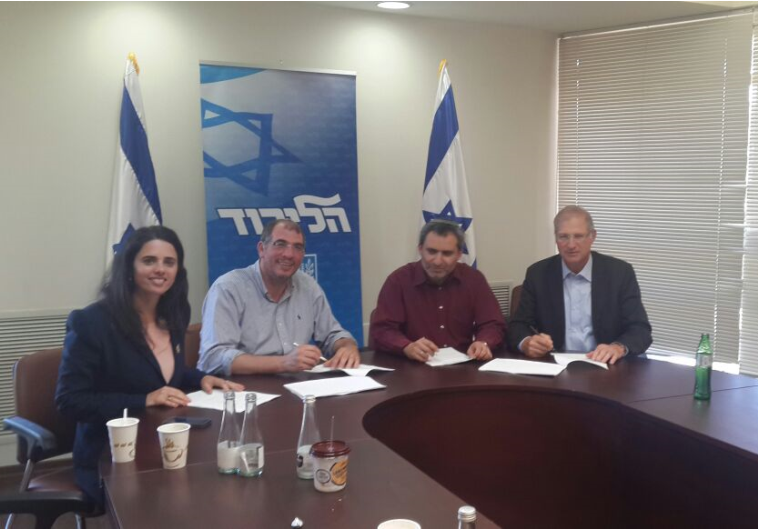
Following marathon negotiations all night, the Likud and Bayit Yehudi struck up a deal Wednesday, completing the formation of Prime Minister Benjamin Netanyahu’s coalition government a mere hour and a half before deadline.
In a statement released Thursday morning, Bayit Yehudi confirmed that the agreement had been signed.
“Bayit Yehudi received the education and diaspora affairs portfolios for its leader Naftali Bennett, justice minister for MK Ayelet Shaked, agriculture minister for MK Uri Ariel, and the position of deputy defense minister,” the statement read.
The first meeting took place today of a special commission appointed by the Lithuanian Government for considering issues connected with the culture and history of the Jews of Lithuania, with participants from state institutions, the Lithuanian Jewish Community and representatives of international Jewish organizations.
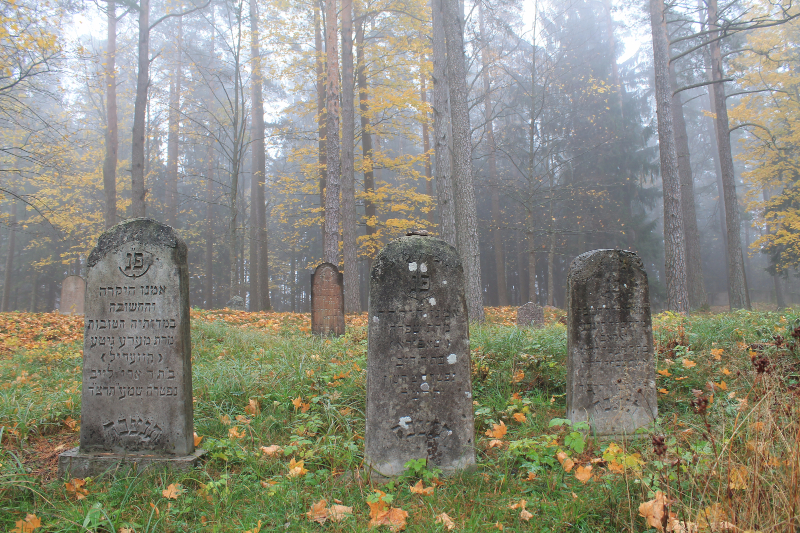
The first item was discussion of long-term protection and conservation of Jewish cemeteries and mass graves of Holocaust victims. Some mass murder sites haven’t been located yet and these and others lack appropriate commemoration. Likewise many Jewish cemeteries are left untended and unprotected. State institutions proposed an action plan to provide for the legal registration and necessary documentation of the cemeteries and mass grave sites. It was reiterated that under legal requirements now in force the municipalities must conclude this legal registration by the end of 2016.
Historical buildings, first and foremost synagogues, and books, newspapers, archive documents, TOrah scrolls and other ritual items are Jewish heritage objects in Lithuania. These represent the shared Lithuanian and global Jewish cultural heritage. Today’s discussions focused on restoration of synagogues and other Jewish heritage sites with an emphasis on the need to include information about Jewish life and culture in Lithuania. Ongoing cooperation between the YIVO Jewish research institute, Lithuania’s Martynas Mavydas National Library and Lithuania’s Central State Archive was also underlined at the meeting.
Commission members agreed on the need to make greater efforts to teach Lithuania’s children about the history of Lithuanian Jews, including Jewish contributions made in Lithuania and the world and the Holocaust in Lithuania. This entails a thorough examination of current curricula and textbooks as well as consideration of other sorts of activities including student tours at museums and historical sites.
Jewish representatives pointed out many failures in current Lithuanian legislation on restoration of private property arising because of residence or citizenship requirements which prevent some Holocaust survivors and their heirs from making application for restoration of property or from receiving a succssful outcome in such petitions. The meeting resolved to examine this situation in more detail in order to find the most appropriate solutions to this problem.
Participants included representatives from the American Jewish Committee, the Committee of Preservation of Jewish Cemeteries in Europe, the Lithuanian Jewish Community, the YIVO Institute for Jewish Research and the World Jewish Restitution Organization.
Lithuanian institutions are represented at the commission by the Interior, Justice, Foreign Affairs and Culture and Education Ministries and the Association of Lithuanian Municipalities.
—————————————————————————-
Contact: Lithuanian Jewish Community
Address: Pylimo g. 4, Vilnius 01117, Lithuania
Tel.: (8 5) 2613 003, email: info@lzb.lt
The respected haredi leader Rabbi Haim Greinman died on Friday aged 89 and was buried in Bnei Brak on Sunday morning with tens of thousands of people present at his funeral procession despite heavy rain.
Greinman was born in Vilna and came with his family to Mandate Palestine in 1935, where he became a student of Rabbi Avraham Yeshaya Karelitz, known as the Hazon Ish, one of the leaders of the haredi community in the early state period.
Large numbers of police and emergency services personnel were present at the mass funeral procession which was coordinated with officers from the Gush Dan region in order to avoid the tragic consequences of the funeral for Rabbi Shmuel Wosner last week in which two people were killed and others badly injured.
Eli E. Hertz
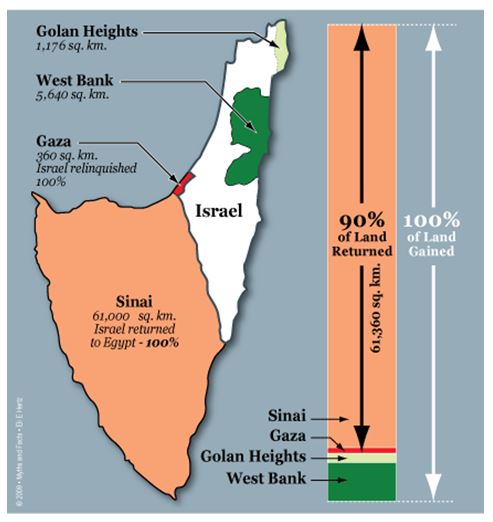
UN Security Council Resolution 242 adopted on November 22, 1967, is the cornerstone for what it calls “a just and lasting peace” that recognizes Israel’s need for “secure and recognized boundaries.” The resolution became the foundation for future peace negotiations.
No other nation in the world, acting rationally, has relinquished territories acquired from an aggressor in an act of self-defense.
“Hush, hush, let’s be silent, graves are growing here,” the Yiddish poet Shmerke Kaczerginski wrote in the Vilna Ghetto about the killing fields at nearby Ponary where more than 75,000 human beings – mostly Jews but also Soviet prisoners of war and others – were murdered by the SS and their accomplices between 1941 and 1944.
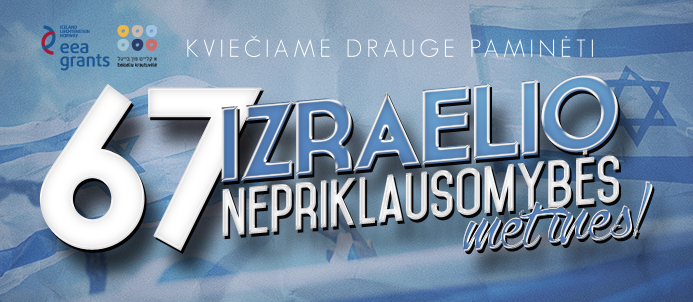
On Friday, April 24, 2015 members of the Lithuanian Jewish community and an assortment of Lithuanian and foreign friends of Israel gathered on the first floor of the Lithuanian Jewish Community in Vilnius in the newly renovated restaurant section to pay their respects to Israel on Israeli Independence Day.
Independence Day, or Yom haAtzma’ut, falls on or around the 5th day of Iyar on the Hebrew calendar, the day in 1948 when David Ben-Gurion declared the independence of the State of Israel and on the last day the British Mandate for Palestine was legally in force. The declaration of independence and the end of the mandate presaged the opening of hostilities within the disputed territory over the next few days, with the armies of Egypt, Trans-Jordan, Iraq, and Syria firing on Israeli troops.
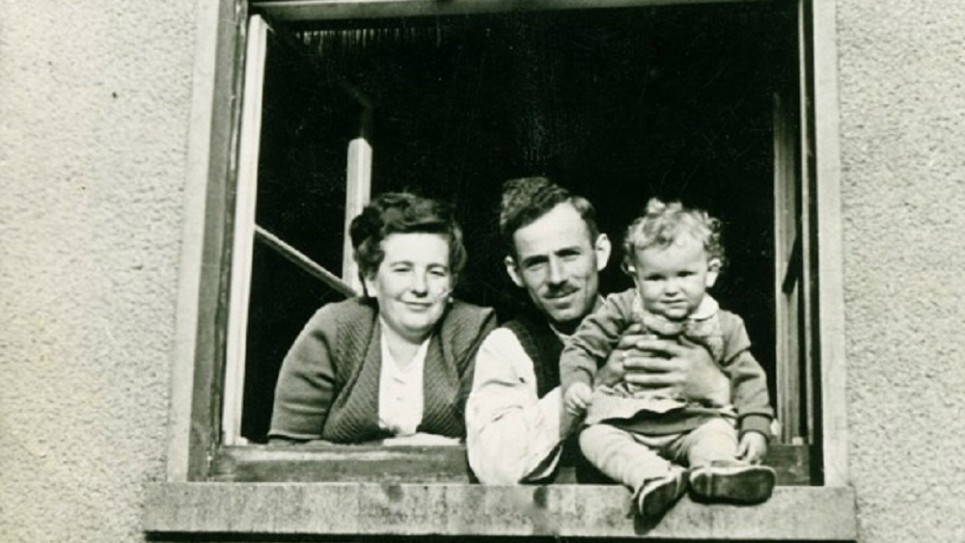
Gathered for 70th anniversary of concentration camp’s liberation, second-generation survivors born in DP camp discuss their unique shared identity.
BERGEN-BELSEN, GERMANY — “It’s called rote grütze. I remember eating it all the time here as a young child,” said Aviva Tal as she tucked into the German fruit pudding as brightly red-colored as her stylishly cropped hair. When she finished her first portion she got up to get more from the buffet table, bringing several little glasses of the pudding, topped with vanilla cream, for the others at her table to enjoy, as well.
Tal, a Bar-Ilan University Yiddish professor in her late 60s, was eating lunch with some close friends of similar age under a large tent next to the museum at the Gedenkstätte Bergen-Belsen (Bergen-Belsen Memorial Site) late last week.
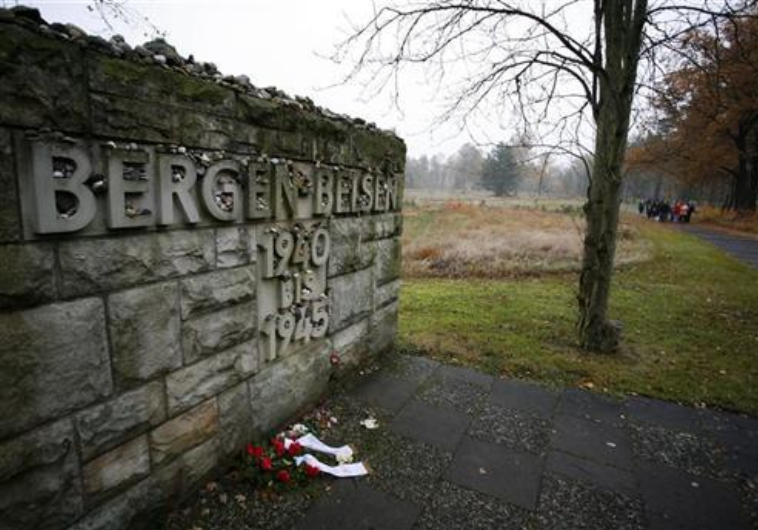
They had all come to commemorate the 70th anniversary of the liberation of Bergen-Belsen. The lunch was a break during a full day of touring the concentration camp site, as well as the neighboring displaced persons camp (now a British NATO base) ahead of the official commemoration ceremonies that took place on April 26.

By Simon Rocker
World news Art cemeteries Lithuania Music Sport Talmud War Lithuania is to erect a monument to mark the site of a historic Jewish cemetery that was once the resting place of the Vilna Gaon.
Representatives of the London-based Committee of the Preservation of Jewish Cemeteries recently met Lithuanian Prime Minister Algirdas Butkevicius to discuss the future of the old Shnipishok cemetery.
The Gaon, Elijah ben Solomon Zalman, acknowledged as one of the greatest talmudists, was buried there after his death in 1979.
30 April 2015
by Andrius Kulikauskas
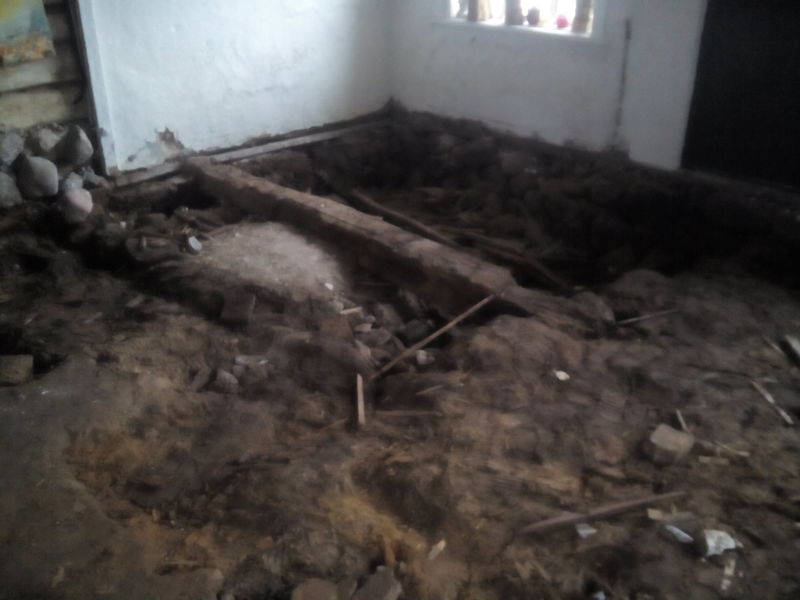
Renovation of the ground floor of an art gallery in the town of Butrimonys, Lithuania has revealed the existence of an unusual cellar that was apparently a Jewish hideout during the Holocaust. Daina Nemeikštienė, the owner of the gallery, “Dainos galerija”, is moving forward with the renovation, which means that what remains of the cellar will be cemented over, at least for now. Could some day this hideout offer an opportunity for respecting, valuing, studying, preserving and highlighting Litvak and Lithuanian heritage? For now, it illustrates the challenges in honoring even the most heroic aspects of the Holocaust.
To the Editor:
Your Feb. 7 front-page dispatch from Donetsk, Ukraine, rightly points to critically increasing need in eastern Ukraine, a humanitarian crisis expanding every day (“Shivering, Hungry and Tearful in Rebel-Held Eastern Ukraine”).
In addition to the thousands of elderly and desperately poor Jews we care for in the conflict zone, we also see an increasing trend in the need for our services among working families suffering from unemployment and economic ruin as a result of violence and chaotic conditions in the region, with nearly 1,000 people added to our aid rolls in the last month.
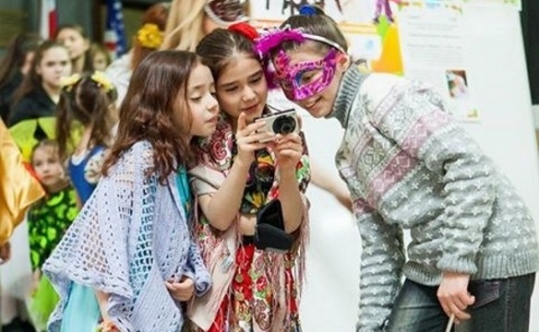
Jewish perseverance, and more than a bit of chutzpah, lies at the heart of the Purim holiday we celebrate this week. It is one of the reasons we are instructed to mark this raucous holiday with boundless joy and why thousands of Ukrainian Jews, despite the odds they face, will join together across their country for Purim spiels and hamantaschen and to enjoy a much-needed respite from a conflict now simmering under a tenuous cease-fire.
These celebrations are but a momentary break from conditions facing thousands of Jews who remain in separatist controlled regions of Ukraine or who are internally displaced.
By Penny Blumenstein
For millions of Christians and Jews celebrating Easter and Passover this weekend, the name Masha Shumatskaya doesn’t mean much.
But it should.
Penny Blumenstein, the president of the American Jewish Joint Distribution Committee (JDC), is a Palm Beach resident.
Because this gentle, 23-year old Jewish woman is the face of the humanitarian crisis in Ukraine, and her journey of trial and deliverance are symbolic of the virtues we celebrate during this season.
When armed men wearing military fatigues and balaclavas over their faces started patrolling the streets of her hometown of Donetsk last year, Shumatskaya knew trouble was on the horizon.
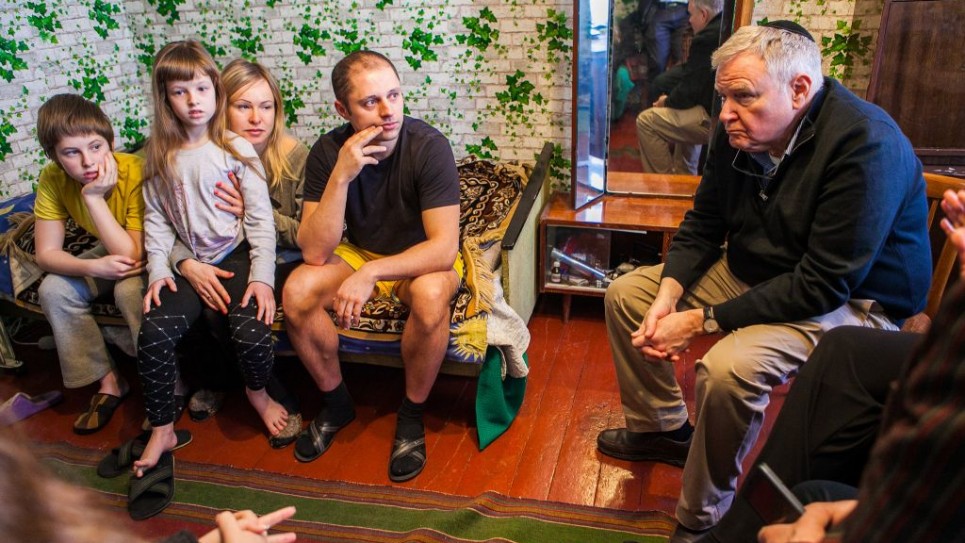
Fifty dollars. While in many parts of the world consumers regularly plunk down the sum on a nice pair of jeans, in Ukraine it can mean a month’s worth of food staples, said Jerusalem-based head of the American Jewish Joint Distribution Committee’s Ukraine desk Oksana Galkevich.
This reality is a far cry from the headily optimistic days of February 2014 when Ukraine’s progressive Euromaidan Revolution forced a changeover in government from a corrupt pro-Russian head of state to a Ukrainian nationalist. But war came quickly: The Crimean peninsula was annexed by Russia in March 2014 and by April, 40,000 pro-Russian separatist forces entered the self-declared Donetsk and Lugansk People’s Republics, areas of Ukraine bordering Russia.
Though there are tenuous cease fire agreements — most recently in February — civil unrest continues on the eastern border where 6,000 have been killed and, as of March 2015, some 1,168,600 are displaced in this year of rebel fighting.
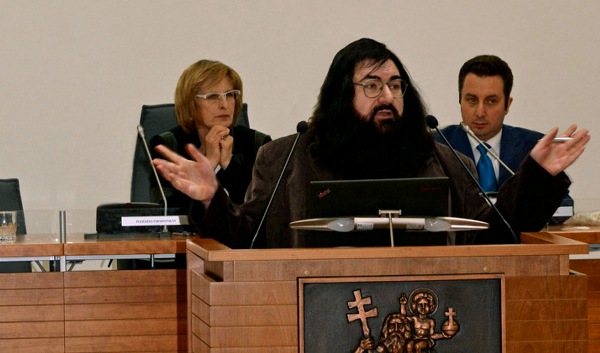
The following is the written version of Dovid Katz’s presentation at the International Conference on Holocaust Education organized by Rūta Vanagaitė as part of a Europe for Citizens project, held at Vilnius City Hall on 17 April 2015. Conference program. Conference’s final press release. Projectwebsite.
Politics, Policy, and Lithuanian Holocaust Discourse
Good afternoon. Sincerest thanks to everyone who made today possible, above all to dear Rūta Vanagaitė for successfully bringing together folks from many sides of today’s issues here in Vilnius for the first time in the twenty-first century, in the fine spirit of openness and tolerance that is particularly important, now, when politics and current events can easily deflate freedom of opinion on history, the progress of civil discourse, and the dignity of education.
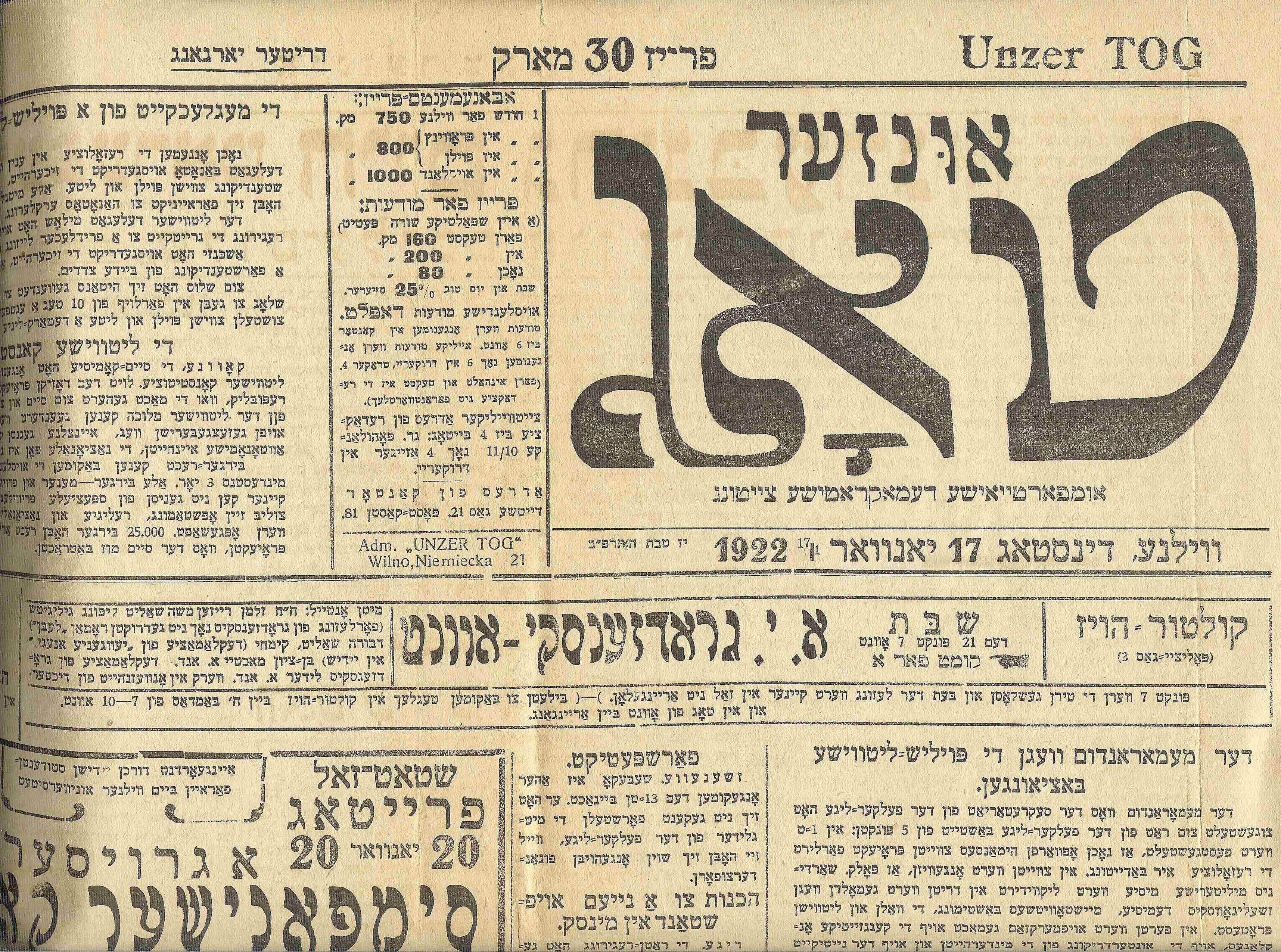
A 1922 headline in Zalmen Reyzen’s daily newspaper, the Vilna “Tog” (“Day” — issue of 17 Jan. 1922) announced a Saturday night event dedicated to the remarkable Vilna Yiddish writer Aaron Isaac (Arn-Yitskhok) Grodzenski (1891-1941), a secular Yiddish writer who was the nephew of the world famous rabbi Chaim-Oyzer Grodzenski (whose onetime home on Pylimo [Yiddish: Zaválne gas] still attracts visitors from around the world). Zalmen Reyzen, a famous Yiddish philologist, literary historian and editor, a co-founder of the Vilna Yivo in 1925, himself lived on Greys Pohulánke (now Basanavičiaus, where a bilingual Yiddish-Lithuanian plaque marks the site at no. 17).
The Jewish (Litvak) Community of Lithuania kindly invites
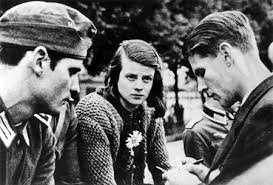
to the opening of the exhibition “The White Rose: Student Resistance against Hitler 1942/1943” and reception
to be held on April 28, 2015, 17:00
in the Jewish (Litvak) Community of Lithuania, Pylimo Street 4, Jascha Heifetz Hall (3rd floor).