



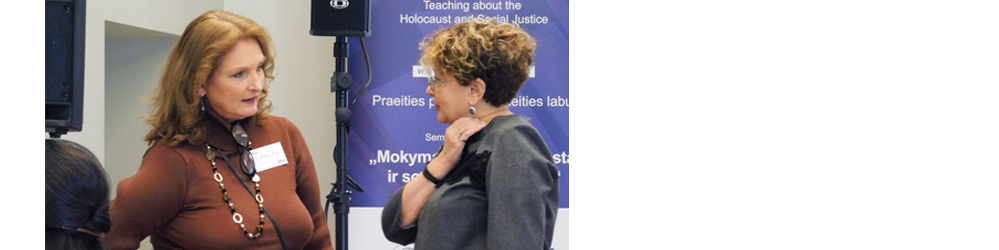


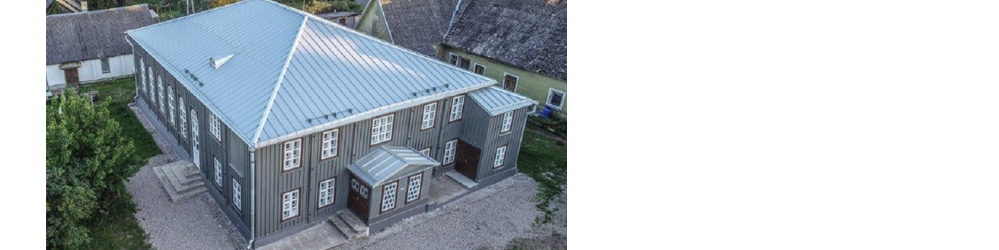




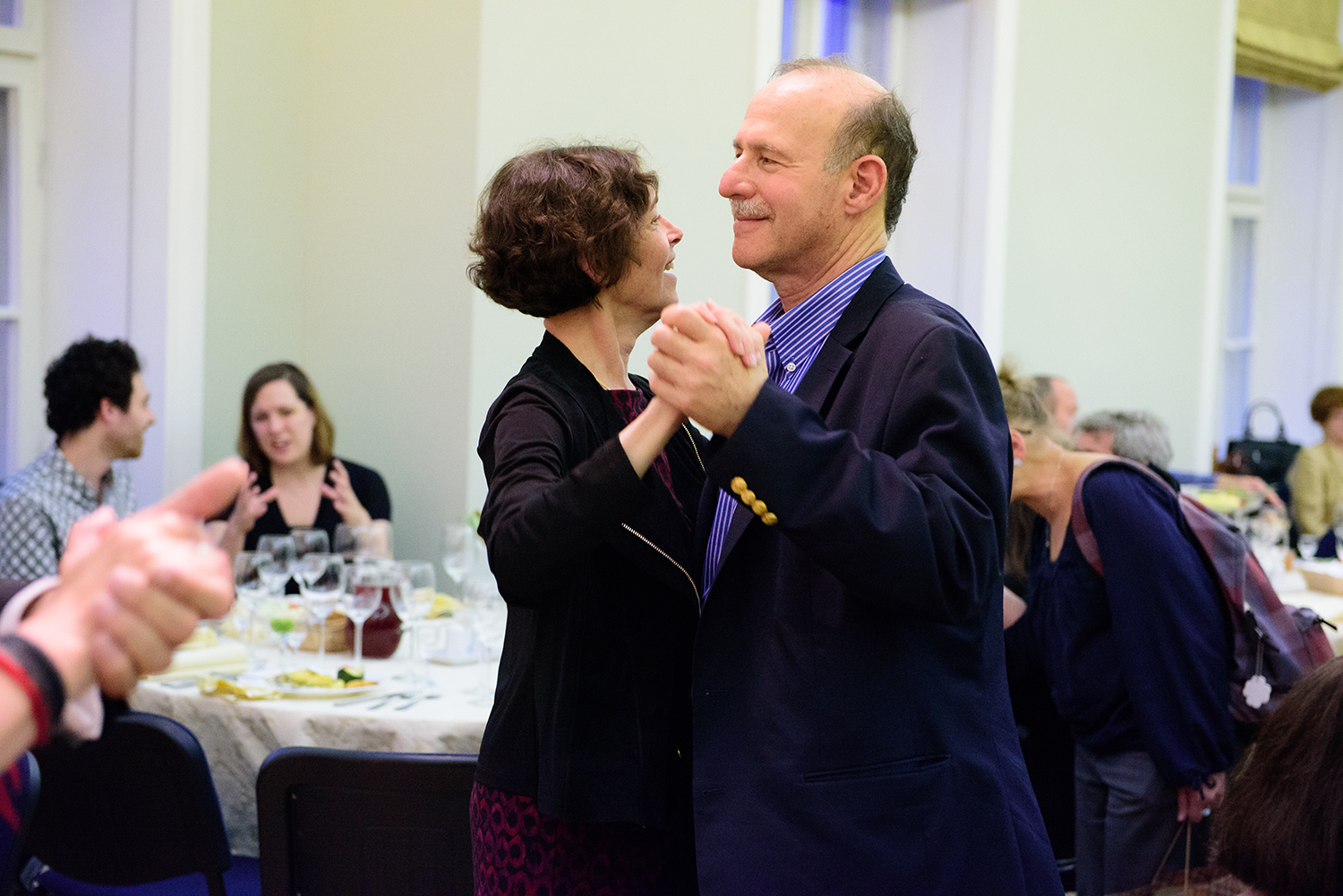
After the day-long conference at the Lithuanian parliament on Sunday, September 20, 2015, to mark the 90th anniversary of the founding of YIVO in Vilnius, Lithuanian Jewish Community chairwoman Faina Kukliansky invited speakers and organizers to attend a special dinner at the Community building in Vilnius.Deputy chairwoman Maša Grodnikienė greeted guests in a short speech in both Yiddish and Lithuanian, and called YIVO and LJC staff up to the podium to receive gifts.
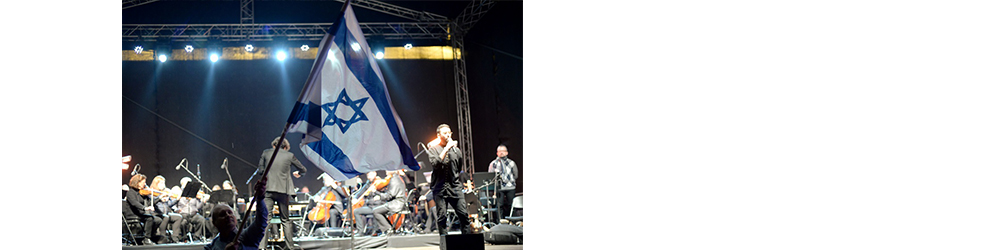
Guests were treated to a variety of hot dishes served at a buffet, red and white wines and vodka.The Lithuanian Jewish ensemble Fayerlakh played a variety of instrumental and lyrical favorites in their repertoire and the audience danced a circle dance around the room. Some couples also appeared on the small dance floor by the stage later.
Besides YIVO and LJC staff, Israeli ambassador to Lithuania Amir Maimon also attended and spoke briefly, and MP Emanuelis Zingeris came by to wish YIVO a warm birthday.
Kapporois (atonement ritual) and writing of names for Yizkor follow
evening prayer at 7:30 P.M.
Tuesday, September 22
7:15 P.M. Yom Kippur Eve
7:15 P.M. Mincha (evening prayer)
8:10 Kol Nidrei and Ma’ariv
Wednesday, September 23
8:30 A.M. Shacharis (morning prayer)
~11:30 A.M.-12 noon Torah readings and Yizkor
5:30 P.M. Mincha
7:15 P.M. Ne’ila (ending prayer and blowing of Shofar)
Prayer schedule from September 24 to October 7
Morning prayer on weekdays at 8:30 A.M. (9:00 A.M. on Saturday and
Sunday), Mincha and Ma’ariv at 6:30 P.M.
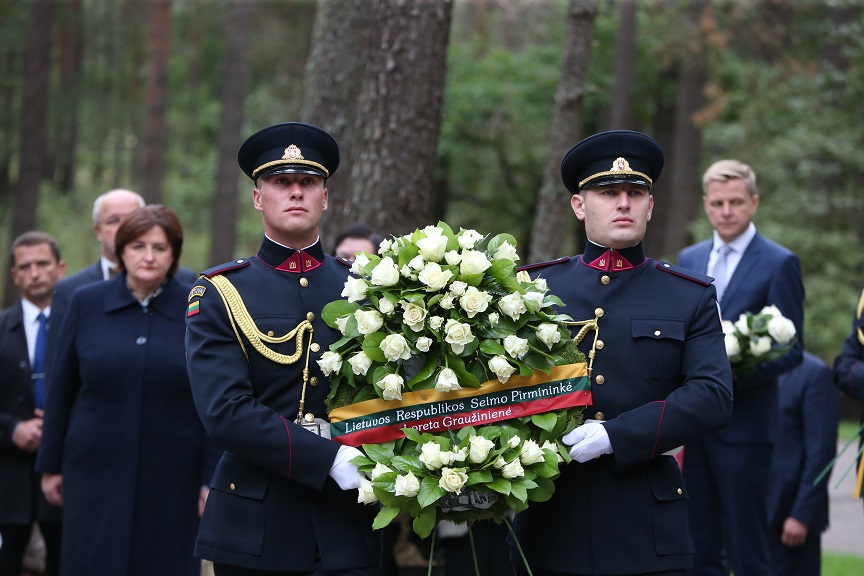
VILNIUS, Sep 22, BNS – Lithuania’s Parliamentary Speaker Loreta Grauziniene and Government Chancellor Alminas Maciulis on Tuesday paid tribute to victims of the Jewish genocide at the Paneriai Memorial in Vilnius.
The government chancellor, Maciulis, said genocide was one of the most horrific episodes in the history of Lithuania: “No wars, fires or plague epidemics will be as terrible as the (developments in) Paneriai. People were annihilated here under a murderous plan. At all times of the year, day and night. Nearly all of the Lithuanian Jerusalem was annihilated here.”
On Sept. 23, Lithuania will observe the Holocaust Memorial Day, witnessing the history of the Vilnius Ghetto that was destroyed on that day in 1943.Nearly 90 percent of Lithuania’s pre-war Jewish population of about 208,000 was annihilated by the Nazis during World War II, often with the help of local collaborators.Over 800 Lithuanians have been listed as Righteous Among Nations for rescuing Jews.
BNS, Delfi.lt
Lithuanian president Dalia Grybauskaitė rescinded a presidential decree signed in the year 2000 to award Lithuanian partisan Pranas Končius-Adomas the Order of the Cross of Vytis, fourth degree. She took the action following the discovery Končius-Adomas was a Holocaust perpetrator.
full story in Lithuanian here:
http://www.delfi.lt/news/daily/lithuania/partizanas-pkoncius-adomas-neteko-valstybinio-apdovanojimo.d?id=69065726
Famous Israeli-based writer Grigorijus Kanovičius read out the beginning of a list of names of the Jews murdered in Jonava, Lithuania on Lithuanian State Radio’s most popular program Ryto garsai [Morning Sounds].
The Names project is being held in Vilnius for the fifth time in as many years and will be read out this year at two locations in the Lithuanian capital: in the courtyard of Herman Kruk’s ghetto library and at the Skalvija movie theater. Residents of Jonava, Molėtai, Švėkšna and Jurbarkas will also read the names of Jews killed in their towns.
More than 95 percent of approximately 220,000 Jews living in Lithuania were killed during the Holcoaust, but the organizers of the Names project are asking the public not to think of them as a statistic. “This is our history, our memory, which they tried to destroy along with people. When you say the names and professions of these people who lived here out loud, you can longer pretend they didn’t exist,” organizers of the civic initiative said in a press release before the events.
Grigorijus Kanovičius, an author whose works have helped many readers understand Jewish daily life in Lithuania and the Holocaust, and the winner of the Lithuanian National Prize, responded to the news that the names would be read out for the first time in his hometown of Jonava: “I hope these readings will bring us even closer to that historical truth which is impossible to hide or distort.”
Wednesday, September 23
7:00 P.M. International concert “Breaking the Silence” (Vilnius Church of St. Francis of Assisi (Church of the Bernardines), Maironio street No. 10-22, Vilnius).
To honor the memory of Jewish artists who suffered, there will be a concert program of 3 premieres in Vilnius: Karl Amadeus Hartmann (1905-1963), Concerto funebre altui and string orchestra; Erwin Schulhoff (1894-1942), five works for strings; and Arvo Pärt (born 1935), Stabat Mater for choir and stringed instruments. Performers: Vilnius City Municipality Choir Jauna muzika, artistic director and conductor Vaclovas Augustinas, Austrian-Bulgarian string orchestra, Camerata Orphica Les Orphéïstes, Razvan Hamza (alto), conductor Amaury du Closel. Donatas Puslys will be master of ceremonies. Entry is free.
Lrytas.lt
The city of Vilnius in 1925 was an ideal place to establish the YIVO Jewish research institute, Joanathan Brent, director of YIVO which is now located in New York City, said. Later the institute encountered difficulties: the Nazis initially wanted to destroy the collections, so they had to be hidden, and later the material was saved by a Lithuanian librarian from Soviet aggression.
Brent told Lithuanian Radio that all the material saved from the Nazis was to have been destroyed by the Soviets, but that librarian Antanas Ulpis decided to save it instead. He called it an act of bravery. Ulpis and colleagues took the material to the basement of the Palace of Books in Vilnius where it lay from 1948 till 1988. Ulpis died in 1987 never knowing what was to become of the books, Brent said in an interview on Lithuanian state radio.Professor Cecile Kuznitz from Bard College in the US said it was down to actions by average people that the material was collected in the first place, although the history of the institute is graced by famous people such as Albert Einstein and Sigmund Freud. …
full article in Lithuanian here:http://kultura.lrytas.lt/istorija/zydu-istorijos-medziaga-nuo-sovietu-isgelbejo-lietuvis.htm
As part of a program of events to mark the 90th anniversary of the founding of the YIVO Jewish research institute in Vilnius, readings from Yitzhok Rudashevski’s diary in Lithuanian and Yiddish were held at the Piano.Lt concert venue. YIVO director Jonathan Brent, Lithuanian Jewish Community chairwoman Faina Kukliansky and Jewish partisan and Vilnius Yiddish Institute librarian Fania Brancovskaja participated, and Klezmatics soloist Lorin Sklamberg sang songs composed as songs and poems in the Vilnius ghetto by Kaczerginski, Sutzkever and Wolkowski. A unique recording of Sutzkever reading his own poetry in Yiddish was played.

VILNIUS, Sep 22, BNS – Lithuanian President Dalia Grybauskaite on Tuesday awarded 47 people with Life Saving Crosses for saving Jews from the Nazis during WWII, with the majority of them awarded posthumously.
“Many of those decorated today are no longer among us. But their heroism lives on in our hearts and in our minds. I wish that it should inspire and give strength to each and every at all times and in every place to defend our freedom, protect the human being and promote democracy,” the president said during the ceremony.
The Jewish Community of Lithuania’s leader Faina Kukliansky said Jews will never forget those good people who saved Jews, calling them heroes.
On Monday, September 21, the Lithuanian Jewish Community screened a film by Marek Tomasz Pawlowski called “Dotkniecie aniola,” or “The Touch of an Angel,” in the Jascha Heifetz hall on the third floor of the community building in Vilnius.
Scheduled to begin at 5 P.M., the large hall was filled to overflowing and staff scrambled to find extra chairs to seat everyone. By 5:15 a variety of local people—a large contingent of students speaking Lithuanian and Polish, staff from the Vilna Gaon State Jewish Museum, teachers, local residents of different ethnicities—and a significant number of foreign visitors from Poland and Israel had been seated, and LJC chairwoman Faina Kukliansky addressed the audience, introducing Sebastian Rejak, special envoy of Poland’s minister of foreign affairs for relations with the Jewish Diaspora; Mickey Kantor, chairwoman of the Beit Vilna Association of Jews from Vilnius and Region; Ya’arit Glezer, deputy director of the Association of Lithuanian Jews in Israel and others.Head of the Political and Economics Department of the Polish embassy in Vilnius Maria Slebioda thanked the Lithuanian Jewish Community and chairwoman Faina Kukliansky for showing the film, and introduced it to the audience, calling it an unusual film in terms of content and cinematography, which was soon to become apparent to the audience as well. She spoke as well about the recent opening of a new museum of Jewish history in Poland, which she presented as evidence of Poland’s concern for Jews, along with a whole slew of other projects in Poland and at Polish embassies around the world. She gave several examples of projects supported by the Polish embassy to Lithuania, including an exhibit at the Vilna Gaon State Jewish Museum on Polish righteous gentiles and the screenign of a film about the liberation of a concentration camp. Last year there was an exhibit on Jan Karski, a Polish envoy who intentionally entered a transit camp (thinking it was a concentration camp) and told the world about the atrocities being perpetrated against the Jewish people of Europe. There were also two exhibitions in Vilnius about the hero Janusz Korczak, she said, and that this was only a portion of a long list of events organized and supported by the Polish embassy and Polish Institute. Slebioda said there was actually little choice but to keep up with the resolute execution of the policy by Warsaw to support Jewish heritage and to keep up with the Vilnius Jewish Community, which, while small, is also very active.
Sebastian Rejak spoke at length in Polish about the film, the Holocaust, visiting the Holocaust museum in Warsaw, Poland’s support for preserving Jewish heritage, expanding relations with Jewish communities in the Diaspora and other matters, with a simultaneous translation into Lithuanian.
By 5:25 the film was rolling and a hush went over the overflow audience. The film itself was bizarre. A man narrated in Polish, but even non-speakers heard there was something wrong with his voice, it was both pained and somehow off. He briefly recounted some moments from his childhood as the scenery switched back and forth between reconstructed scenes from the 1930s and 1940s and ruined buildings and landscapes in present-day Poland. It quickly becomes evident the man was a Jewish boy from Auschwitz, not the concentration camp, the actual town. A boy he used to play with sometimes who was struck dumb after a head injury and only occasionally commanded the power of speech suddenly told him one day, “All the sons of Abraham will be murdered. But you will survive. I know. The birds told me.” The boy, Henryk Schoenker, wasn’t sure what it meant, but it jolted him. There follow a series of flights by the family from one Polish location to another as the Nazis begin implementing the Holocaust. His father signs the family up for immigration to Palestine under one Nazi ruse which ends up saving the family’s life later. There is a prophetic meeting with a famous rabbi and supposedly a prophecy he made is fulfilled. Near the end Henryk Schoenker reveals he is deaf. A series of narrow escapes culminates in a meeting with what Henryk Schoenker says must have been an angel as the family hides in some grass near a lake. The strange man instructs them to stay hidden, and promises to bring them food. As Schoenker hikes over ruins of Nazi buildings and scenes from his childhood, he becomes increasingly bitter. There is a mixed message near the end: Schoenker says every Jew who survived the Holocaust in Poland was helped by at least one Pole, followed by his blanket condemnation of all non-Jews for not stopping it. “They knew, they all knew,” he says. “They did nothing. Nobody did anything.” Up until the end of the film Schoenker speaks as if the Nazi ruse of deporting Jews to Palestine had been real, a real offer on the table, but that the countries of the world had prevented the Nazis from implementing the relocation project. Knowledge about the Holocaust among the Allies is not discussed, only “they knew” is offered, and Allied victory against the Nazis at the cost of so many lives is not acknowledged. Instead Schoenker revels in a simple and almost child-like conception of what happened based on his personal memories. The most moving parts of the film involve childhood reasoning about the lives of dolls.As a personal memoir and testimony, the film is excellent. As a tool for telling children about the Holocaust, it is good yet terrifying and might not be appropriate for very young children. As history, it is a work of fiction. As cinematography, it suffers from an overbearing soundtrack, too many “soupy strings,” too much sad violin music which lasts for too long, and some of the quick transitions between scenes seems more a matter of haste and sloppiness than artistic intent. Despite that, the film is moving. The prophecy gleaned by the damaged child from the language of the birds, the “angel” in the guise of a man in robes with a long beard and staff and the family’s “flight” could all be considered religious symbols centering around the concept of spirits trapped in a material world, but just as “a little bird” informed Henryk’s friend of the coming Holocaust, so Henryk Schoenker demands the entire world employ that sort of epistemology, or claims they actually did, and also knew what was coming, what was happening and what had happened, and yet did nothing. He makes the claim despite the millions of non-Jewish lives lost defeating the Nazis in order to end their reign of barbarity.
The audience seemed to really appreciate the film and erupted into applause at the end.
Ironically, although the screening was included on the program of events to commemorate the 90th anniversary of the founding of YIVO in Vilnius, there were actually more audience members who came to watch the film than the number of people who turned out for the main YIVO birthday event the day before at the spacious Lithuanian parliament, a day-long conference.
The film ran for 60 minutes. It was almost entirely in Polish, with Lithuanian subtitles. Full credits and a description are available here:
http://www.imdb.com/title/tt4500584/

This week we mark the anniversary of the liquidation of the Vilna Ghetto (September 23, 1943). Irena Veisaite survived the Holocaust in Lithuania and is now an influential human rights activist. These words come from a speech she delivered at a Holocaust memorial ceremony in Vilnius.
“Straight after the end of the war I instinctively shrank from reminiscing. It would have been unbearable. I lost my mother who was only 35 years old; I lost my grandparents and the whole of my parents’ generation, an infinite number of friends and acquaintances. Their death is impossible to explain and even harder to justify. Where did so much cruelty suddenly come from? I could not comprehend why I, as a Jew, became a marked person, humiliated and hunted. I also could not comprehend why this horrific crime – not only against the Jews but a crime against all humanity – was being hushed up or distorted in the years following the end of the war.”
Lithuanian foreign minister Linas Linkevičius attended an informal discussion of educational projects to familiarize the public and especially the youth with the accomplishments of Japanese diplomat Chiune Sugihara and opportunities for cooperation with the Lithuanian Foreign Minsiter at the Sugihara House museum in Kaunas on September 11.
“The empathy and courage displayed by Chiune Sugihara is more topical than ever in today’s context. It is an invaluable example of humanity connecting the past with the present,” Linkevičius said.Diplomats from the Japanese embassy to Lithuania, board members from the Sugihara Foundation: Diplomats for Life organization, Sugihara House staff, Kaunas mucipality representatives, scholars from the Asian Studies Center of Vytautas Magnus University and members of the Kaunas Jewish Community all took part in the informal discussion.
Foreign minister Linkevičius toured the museum enshrining the historic and heroic acts of Japanese consul in Kaunas Sugihara, who issued transit visas to allow Jews to flee the coming Holocaust in Lithuania. The museum is the actual consulate building where Sugihara worked. From July to September of 1940 he issued transit visas allowing approximately 6,000 Jews to enter the Soviet Union and thus flee the encroaching Nazi terror. After Tokyo issued orders for him to stop and assigned him a post in a different country, witnesses say he was still writing visas on the way from his hotel and even after boarding the train at the Kaunas station, throwing visas out the window into a crowd of desperate Jewish refugees as the train began to leave.
On Monday, September 21, the Ninth Fort Museum in Kaunas marked Lithuanian Holocaust Remembrance Day. Lithuanian deputy foreign minister Mantvydas Bekešius, deputy Kaunas mayor Vasilijus Popovas, relatives of victims and others attended.Deputy mayor Popovas said: “Every year these tragic events recede from us. These locations do not allow us to forget this especially painful page of history, here where people of Jewish ethnicity were murdered en masse. Today is not a day for long speeches, it is better to be silent to remember and consider what these people experienced.”Kaunas Jewish Community chairman akas Gercas said: “We may not forget what happened. It is important to remember one’s past, especially for young people of whom there are many among us today, and that goes to show they will not be antagonistic to any other ethnicities and their beliefs.”
Lithuanian Holocaust Remembrance Day has been marked in Lithuania since 1994. The date of was chosen to mark the date of the liquidation of the Vilnius ghetto on September 23, 1944. This year the day coincided with Yom Kippur, so many chose to mark it early.
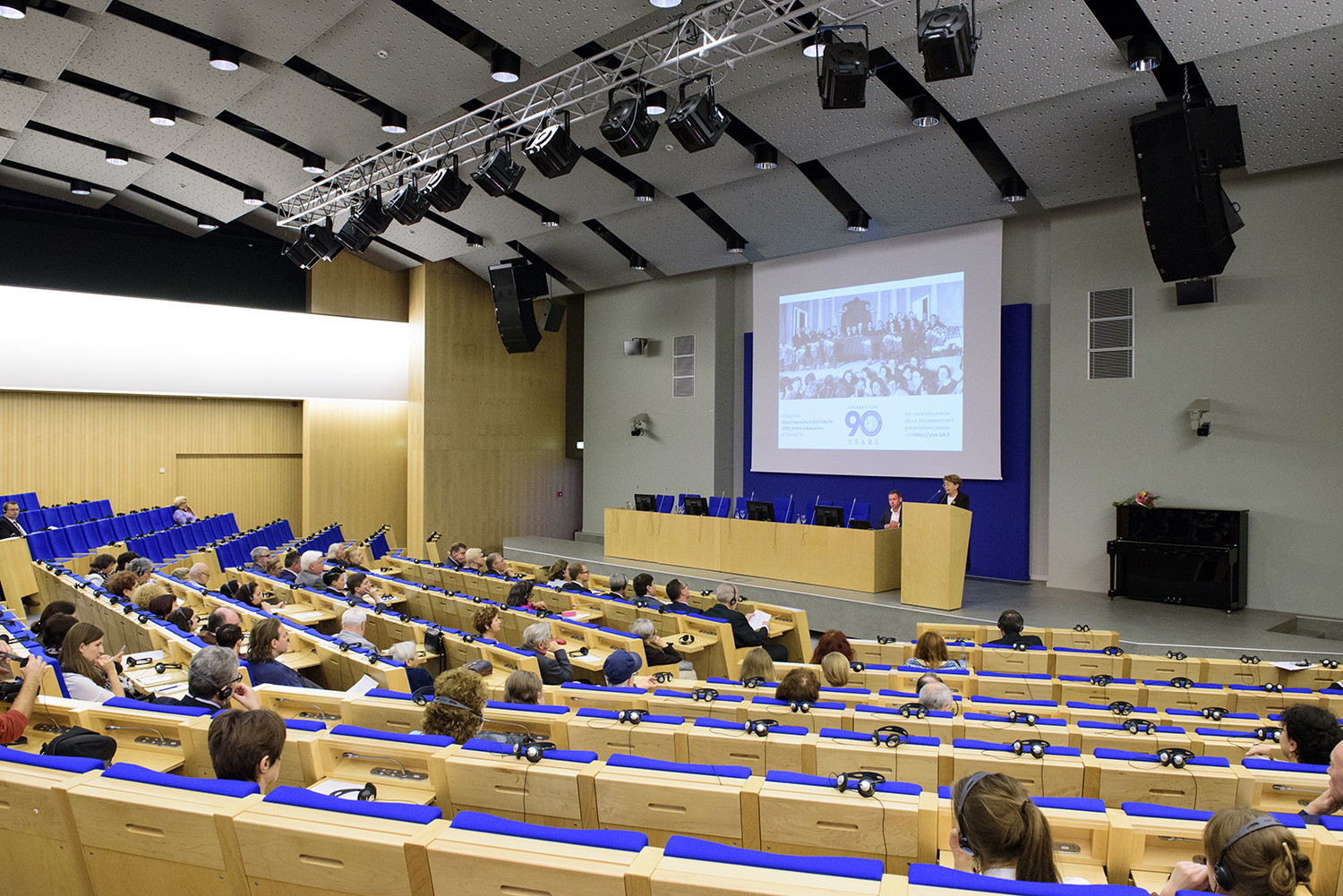
On Sunday, September 20, 2015, the Lithuanian Jewish Community and YIVO Jewish research institute held a conference at the Lithuanian parliament to mark the 90th anniversary of the founding of the organization in Vilnius.
The conference was the main component in the YIVO birthday celebrations in Vilnius lasting most of the week.
Starting almost an hour late, LJC chairwoman Faina Kukliansky welcomed speakers and audience members, followed by former Lithuanian prime minister and current deputy speaker of parliament Gediminas Kirkilas and former parliamentary speaker and current deputy speaker Irena Degutienė, both of whom made significant statements of Lithuanian support for YIVO and Jewish culture in Lithuania.
Dr. Cecile Kuznitz, associate professor of history and director of Jewish studies at Bard College, one of the few if not the only academic whose research centers around the history of YIVO, gave a comprehensive presentation of the founding of YIVO in Vilnius, its early years of existence and briefly touched upon its post-war history, but was cut short because of time constraints. Her presentation included photographs from the YIVO Institute at Vivulskio street No. 18, which became, as she explained, world headquarters before the war. The building was destroyed during World War II and the street numbering changed after the war.
The Lithuanian Jewish Community and YIVO held a press conference at the Community building in Vilnius Friday to talk about upcoming events to celebrate the 90th anniversary of the Jewish research institute, originally based in Vilnius, and the joint project between YIVO, the LJC and the Lithuanian National Martynas Mažvydas Library to digitize the YIVO collections in Vilnius and New York.
LJC chairwoman Faina Kukliansky briefly outlined the program of events and turned the floor over to Suzanne Leon, the director of development for YIVO, who spoke about the appropriateness of celebrating YIVO’s 90th birthday in the organization’s hometown.
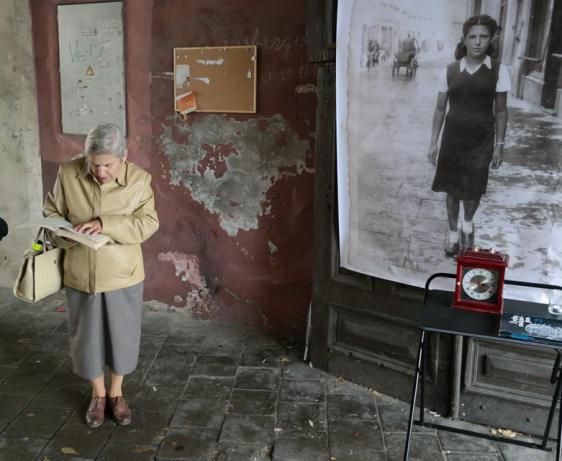
Names of Holocaust Victims to be Read for Fifth Time in Lithuania
The names of Holocaust victims will be read publicly in several Lithuanian cities and towns on Tuesday, September 22, on the eve of the Lithuanian Holocaust Remembrance Day. The Names initiative is being held in Vilnius for the fifth time now and this will be the first time when lists of Vilnius ghetto prisoners will be read at two locations: in the courtyard of the ghetto library and at the Skalvija movie theater. Residents of Jonava, Molėtai, Švėkšna and Jurbarkas will take turns reading the names of Jews murdered in their towns.
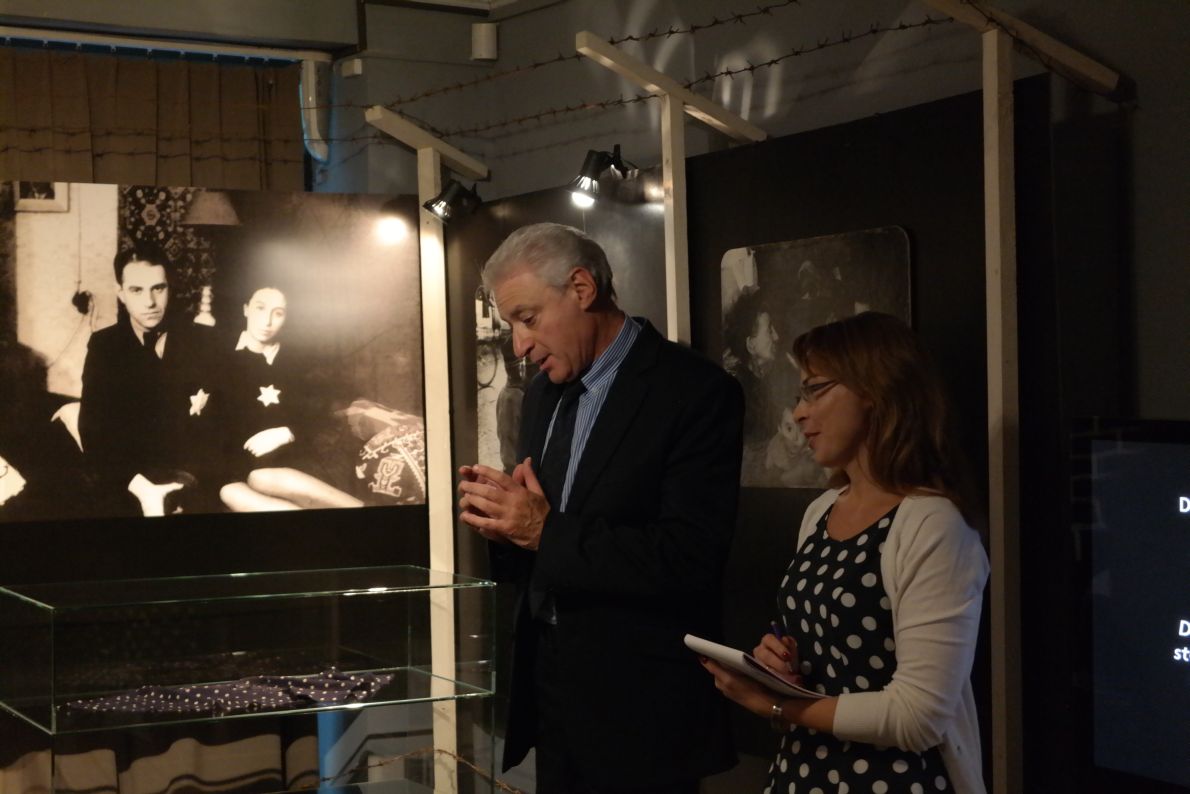
The Holocaust Exhibition of the Vilna Gaon State Jewish Museum has a new exhibit. It’s a scarf. But it’s no ordinary headgear. It belonged to Dita Šperlingienė-Zupavičienė of Kaunas when she was a concentration camp victim at Stutthof and other locations.
On Thursday, September 17, 2015, the new exhibit was unveiled with much fanfare at a public event in room 7 of the museum located at Pamenkalnio street No. 12 in Vilnius. Dainius Junevičius represented the Lithuanian Foreign Ministry and director of the French Institute in Lithuania Frédéric Bellido also attended the event, which began with an introduction by Vilna Gaon State Jewish Museum deputy director Kamilė Rupekaitė and two speeches delivered in Lithuanian and translated to English.

September 17-24
Vilnius, Lietuva
PROGRAM
YIVO: From Yiddish Academy in Vilna to Global Institution
Vilnius, Lithuania — 20 September 2015
PROGRAM