




Information from the Kaunas Jewish Community

Information from the Kaunas Jewish Community

As Jewish New year approaches, to take place September 14 and 15 this year, it’s traditional to visit the graves of relatives. The tragic events of World War II, the Holocaust, means that there is usually more than one mass Jewish grave in every Lithuanian city and town. On September 3 members of the Kaunas Jewish Community visited mass murder sites in Petrašiūnai and at teh Seventh Fort, where Jews were murdered in August of 1941.

On August 30, 1941, 23 children, 72 women and 30 men were murdered at Petrašiūnai because they were Jews. More than 4,000 Jews were murdered at the Seventh Fort and on August 18, 1941, alone more than 500 Jewish intellectuals imprisoned in the Kaunas ghetto were murdered in an attempt to kill the elite and most educated first.

When You Save One Person, You Save a World

When You Save One Person, You Save a World

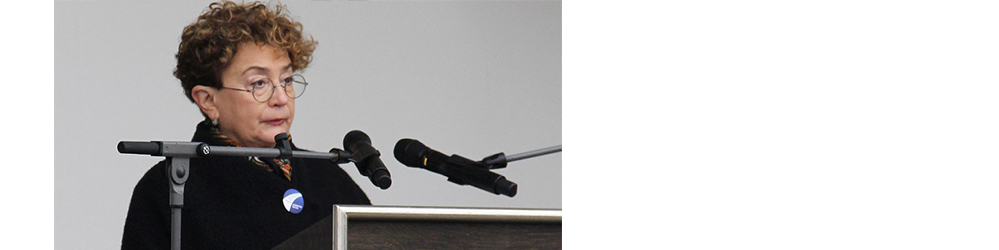
A conference organized by the Congregation of the Sisters of the Apparition of God was held August 30, 2015, in Panevėžys, Lithuania. Lithuanian Jewish Community chairwoman Faina Kukliansky gave the welcome speech and presented the organizers with a certificate of gratitude and flowers. The chairwoman spoke warmly of those who rescued Jews during the Holocaust and underlined the role played by Marija Rusteikaitė, who officially rescued 15 Jews during the war and also saved several others by sending to other people. For her heroism, the state of Israel awarded Marija Rusteikaitė the medal and certificate of Righteous Gentile posthumously.

Danutė Selčinskaja, the director of the department of Rescue and Commemoration of Jews at the Vilna Gaon State Jewish Museum in Vilnius, delivered a paper devoted to Marija Rusteikaitė. One of those Marija Rusteikaitė rescued was in the audience, Sulamita Lev, who in turn spoke about the hardships and history of her family. Danutė Selčinskaja also presented a museum exhibit panel with photographs and material on the history of Sulamita Lev’s rescue, and commented on details contained in the exhibit.

On August 7, 2015, members of the Panevėžys City Jewish Community visited the Riga ghetto. The Riga ghetto was established in October of 1941 by order of Nazi politician Hugo Wittrock. They placed the ghetto in the most Jewish neighborhood of Riga called the Moscow Suburb by locals. All Riga Jews living outside the territory were ordered to leave their homes immediately and move into the ghetto, 9,000 square meters surrounded by fences.

About 30,000 Jews in total were forced to live under atrocious conditions in the Riga ghetto. Approximately 12 people had to share a room with five beds.

A ghetto prisoner gave the group from Panevėžys a short tour of the ghetto during which he recounted how they murdered Riga ghetto Jews continuously from November of 1941 till June of 1944. On November 28, 1941, the Nazis ordered the men separated from the women, including children.

Israeli Ambassador to Lithuania Visits Panevėžys

Israeli Ambassador to Lithuania Visits Panevėžys

Israeli ambassador to Lithuania Amir Maimon visited Panevėžys on August 6. The purpose of his visit was to expand cooperation and encourage the growth of trade between Israel and Lithuania, to meet with Panevėžys businesspeople and to meet with the Jewish community. The ambassador visited city hall where he met with the mayor Rytis Račkauskas.

“We live in the middle of Lithuania, in a favorable geographic location, halfway between the capitals of Lithuania and Latvia. We are a compact city favorable for business growth. We have large enterprises such as AB Amilna, the Panevėžys Construction Conglomerate and Panevėžio keliai, we have received foreign investment and we are pleased by the Norwegian companies which have been established here.

“We can be proud of the free economic zone operating here, this year the enterprise Devold should be established here, and two other potential investors are considering doing business here. We strive to make Panevėžys attractive for investors, so we have invited representatives of Israel. I would like to note that ten years ago a protocol was signed with the city of Ramla [in Israel], but sadly this process has come to a halt. One wishes one of the Israeli cities was among the ranks of our partners,” mayor Račkauskas said.

A Death

The Goodwill Fund and the Lithuanian Jewish Community in great sadness report that member of the executive board of the fund Uri Chanoch has died. He died September 1 at his home in Israel. The sympathies of all members of the fund go to the family of Uri Chanoch in their and our time of loss. Our dear friend and irreplaceable colleague has left us.

Uri Chanoch was born in Kaunas in 1928. He survived the Kaunas ghetto and then Dachau, but lost his grandparents, parents and sister during the Holocaust. Having been through the war, persecution and terror of extermination, Chanoch devoted his life to fight for the welfare of other Holocaust survivors and was deeply involved in the restitution process in Lithuania and abroad.

Legendary Rescuer of Jews Commemorated in Kaunas

The Japanese vice-consul in Kaunas in 1940 issued a plethora of transit visas for transiting Japan which enabled Jews to escape the horrors of war abroad.

It’s notable that Sugihara, even after the consulate was closed, continued to issue “visas for life” from the Hotel Metropol and even up to the last moment as his train left the station in Kaunas. the final visas he issued were passed through the windows of that train.

The exact number of Jews saved is not known. According to Holocaust researchers, the transit visas issued by the Japanese vice-consul saved the lives of about 6,000 Jews.

The Sugihara Fund: Diplomats for Life organization housed in the former Japanese consulate in Kaunas which is now also a museum and the home of the Asian Studies Center of Vytautas Magnus University, is inviting members of the public to attend events organized by the Japanese embassy to Lithuania to mark the 75th anniversary of Chiune Sugihara’s brave act.

For full text in Lithuanian, please see lrytas.lt

European Jewish Culture Day in Rokiškis, Lithuania

European Jewish Culture Day in Rokiškis, Lithuania

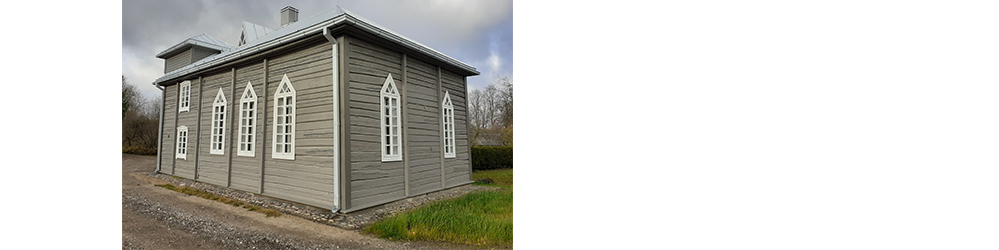
On September 6 an information sign was unveiled on Sinagogų street in Rokiškis, Lithuania to mark European Jewish Culture Day. The sign provides information on the Rokiškis Litvak community and the 3 synagogues which once stood here.

A significant gathering of locals interested in the history of their hometown attended the event.

Rokiškis regional administration mayor Antanas Vagonis and Rokiškis Local History Museum director Nijolė Šniokienė unveiled the sign.

The informational sign was prepared as part of the project “Commemoration of the Site of the Rokiškis Synagogues” financed by the Cultural Heritage Protection Department under the Lithuanian Ministry of Culture.

More pictures on Facebook

News from South African Jewry

Dear Community Member

A report in yesterday’s Sunday Times (6 September)  concerning statements made by Obed Bapela, a senior member of the ANC’s national executive committee, is generating much concern and outrage in our community. According to the report the ruling party is considering implementing far-reaching changes to its current policy, as well as existing South African law, affecting the relationship between South Africa and Israel, which will impact negatively on South African Jewry.

The world is reeling from the current tragic events surrounding the desperate attempts by Syrians searching for safety and yet Bapela ignores this in his obsession to demonise Israel and South African Jewry. Certainly, the proposed changes to our law and foreign policy, as outlined by Obed Bapela, are outrageous and unacceptable. It is of concern that policies so overtly targeted against Israel and discriminatory against our Jewish community are allegedly being considered by the ruling party at all. That being said, it needs to be borne in mind that within the ANC, there exists a wide range of views on the Israel-Palestine issue and what South Africa’s approach to it should be. Mr Bapela is well known for being an especially radical anti-Israel voice within the party, and the sentiments expressed by him are nothing new. The real issue is whether his views are now set to become mainstream ANC policy.

Lithuanian Post Office Honors Sugihara and Zwartendijk on 75th Anniversary of “Visas for Life”

KAUNAS—The Postal Service of Lithuania today launched two handsomecommemorative envelopes in memory of two celebrated European consuls in Kaunas who helped thousands of Jews obtain visas that enabled them to leave Lithuania during the final year before the Nazi invasion and the Holocaust came to the country. The two, Chiune Sugihara (1900−1986) of Japan and Jan Zwartendijk (1896−1976) of the Netherlands risked their careers, and more,  to disobey instructions and the letter of the law to save those who came to them for help. These were primarily citizens of prewar Poland who found themselves in Lithuania in the summer of 1940, when the country was being absorbed into the USSR, and the consulates and embassies in Kaunas were under pressure to close down altogether.

Read more

Of Ghouls and Cemeteries

Geoff Vasil

Fresh from his attempt to turn a routine immigration check at an international point of entry into an international conspiracy against his person, former Lithuanian Chief Rabbi made good on his promise to whip up scandal against his former boss, Lithuanian Jewish Community chairwoman Faina Kukliansky, by manipulating the Israeli media over mere plans to renovate the Palace of Sports complex in Vilnius last month.

Naive or facile reporting in Times of Israel and the Jerusalem Report relied either upon wikileaks leaked US embassy cables from years ago, or intentional misrepresentations of the scenario by the Yiddishist Dovid Katz writing on his website defendinghistory.com and apparently in personal contact with the reporters.

Exhibition “Missing Identity” in Latvia

Exhibition “Missing Identity” in Latvia

Association “Shamir” and Riga Ghetto and Latvian Holocaust museum invites you to visit the exhibition “Missing Identity” of the artist Silvia Levenson. The exhibition will open on September 9 and will last until September 27. The exhibition is devoted to the problem of militarization. Silvia Levenson wrote:
“I was part of a generation that fought to change an unjust society in which military dictatorships and short civil governments alternated. In March 1976 the military made their last and bloody military coup. I was 19 years old and in August that year my daughter Natalia was born. She is the same age that other young people whose identity the military stole. With unprecedented cruelty pregnant prisoners were killed after giving birth to their children and newborns were illegally given up for adoption.
In Missing Identity I investigate the space these children, today adults, have left in their original families and the society.

Condolences

It is with great sadness that we inform you of the passing of our dear friend and committed Council Representative, Uri Chanoch, z”l.
 
The funeral will be held today, Thursday, September 3rd, at the cemetery in Kfar Shmaryahu at 6PM
Uri served as a Council Representative of WJRO, and as a Board member of the Good Will Foundation in Lithuania.
 
Uri, a survivor of the Kovno Ghetto, and of Dachau, worked tirelessly as an advocate for survivors.  He dedicated his time to a long list of organizations, and fought for the restitution of private-property for Lithuanian survivors through his work with WJRO and the Good Will Foundation.
 Below is a letter written by Julius Berman, President of the Claims Conference, illustrating Uir’s story and dedication. 
May his memory be a blessing. We extend our deepest condolences to his family.
 
Abraham Biderman, Co-Chair
Gideon Taylor, Chair of Operations
Nachliel Dison, Acting Director General
mp

In memoriam Shevka (Sheftl) Melamed (April 10, 1926-August 31, 2015)

The last Jew living in Biržai (Birzh), Lithuania, Shevka (Sheftl) Leiba Melamed died Monday, August 31, 2015. He was 89. His death brings to an end over 400 years of Jewish life in the Biržai region. The community there was annihilated during the Holocaust, but by some miracle Leiba Melamed, then still an adolescent, managed to flee to the Soviet Union with his brother Shalom, conscripted into the army, and survived. A little over a month later his family–his father Peisakh, mother Paye and his little brother Hirsh, just turned 7–had been murdered at Pakamponys forest next to Astravas, part of the city of Biržai on its northern outskirts.

The Melamed brothers were sent deep into Russia. Leiba worked on a collective farm. He later attended a Lithuanian arts and crafts school in Kuybyshev, Russia, and later worked at an airplane factory. In 1945 he returned to Biržai but found neither his home nor his friends. He did meet his brother Shalom in Biržai and they both went to live with his brother’s best friend Leonas Jukonis. Later Leiba moved to Klaipėda where he was employed in rebuilding the city. After some time he returned to Biržai and worked in a bakery. Here he met the love of his life, Genovaitė, started a family and had two daughters, Leta and Nelė. He had four grandchildren: Daina, Asta, Petras, Kristina and Dalia.

Have fun, ride safe

Have fun, ride safe

The Embassy of Israel to Lithuania organized a fun event, inviting everyone who wanted to ride bicycles together through the beautiful city of Vilnius.

Riding under the motto “Have fun, ride safe,” around 200 participants rode through the streets of  Vilnius wearing t-shirts made especially for the event. At the end riders were treated to apples with honey, in anticipation of the upcoming Jewish New Year.

Pictures

Bilateral Consultations Between Lithuanian and Israeli Experts

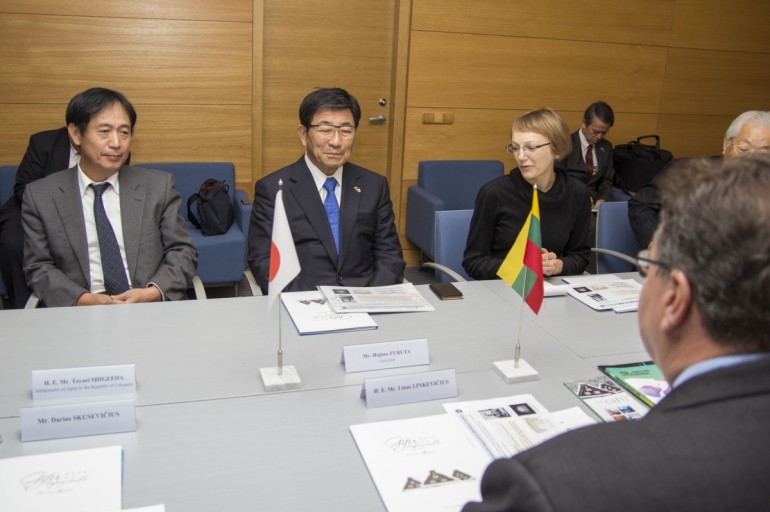
Bilateral consultations between Lithuanian and Israeli experts on issues of cooperation in Eastern Europe began today, September 1, 2015 in Vilnius. Two Israeli officials–director of the Eurasian Department of the Israeli Ministry of Foreign Affairs Yaakov Livne and senior analyst of the Politicial Planning Department of the Israeli Ministry of Foreign Affairs Alona Simon–are in Vilnius on a two-day visit.

Jewish School Principal: “The Children Don’t Cry and There’s No Blood Here”

Jewish School Principal: “The Children Don’t Cry and There’s No Blood Here”

August 30, 2015  lrytas.lt

Until only recently, Kraševskio street in the Lithuanian capital was a dilapidated and abandoned section of the Žvėrynas neighborhood. Today this location has received new life. Although surrounding buildings appear just as dilapidated as before, the sidewalks are still uneven and tree branches still litter the ground, there is a shiny newly-renovated building standing right in the middle.

So this year the traditional start of the school year, September 1, will also feature the opening of the impressive new school building, the Sholem Aleichem Gymnasium. The Lithuanian and Israeli flags fly atop tall flagpoles in the yard. This is a secular school in whose cafeteria pork products are not to be found, and the cafeteria workers ask whether it’s alright to add sour cream to the beet and meat soup. The majority of children attending the school are Jewish.

School principal Miša Jakobas, 66, is bright, polite and calm, but also speaks emotionally. A true teacher by calling. He describes himself as a Lithuanian patriot and is happy that almost all of his graduates pursue successful careers in their own country, and almost none seek their fortunes abroad.

For full interview in Lithuanian, see Lrytas.lt

Photo Exhibit of Pope’s Visit to Israel Opens on Central Cathedral Square in Vilnius

Photo Exhibit of Pope’s Visit to Israel Opens on Central Cathedral Square in Vilnius

An exhibition of photographs called “Pope Francis’s Visit to Israel in 2014” opened on Cathedral Square, the center of the city of Vilnius, on August 28. The photographs presented in the exhibit were selected to best show the historical nature of the visit and the most important meetings during the Pope’s trip. Israeli ambassador Amir Maimon and Vilnius archbishop metropolitan Gintaras Linas Grušas opened the open-air public exhibition.

In May, 2014, Pope Francis made his first visit to the Holy Land. It was the fourth pilgrimage by a Pope to Israel, and came on the 50th anniversary of the visit Pope Paul VI made to Israel.

Shimon Peres, president of Israel then, met Pope Francis at Ben-Gurion Airport. The Pope then travelled to Jerusalem where he met the patriarch of Constantinople Bartholomew outside the Church of the Holy Sepulcher. They prayed together inside the church. The Pope participated at a synod of bishops later that day.

Hesed Club News from Kaunas

Hesed Club News from Kaunas

On the sunny afternoon of August 26 a contingent of the ever-cheerful and bright Hesed Club activists gathered at the Kaunas Jewish Community to celebrate the 95th birthday of fellow Hesed Club and Kaunas Jewish Community member Ana Orlova. Ana Orlova was born in Byelorussia. When the war began she was evacuated to Kazan. After the war she contineud her medical studies in Minsk and came to Lithuania in 1948 along with her husband, a military doctor. Initially the young family with two small daughters lived in Marijampolė, then moved to Kaunas in 1956, where the young female doctor was appointed director of the internal diseases section at a Kaunas hospital, where she worked for many years. She retired after Lithuanian independence. Ana Orlova has raised three beautiful daughters and has five grandchildren and five great-grandchildren.

Ana Orlova has always been the life of the party and is happy, inventive and creative. She recently has been reading some of her written work at Kaunas Jewish Community events. Community chairman Gercas Žakas greeted her on the occasion of her birthday and called upon everyone to try to follow her example of sharp wit, inexhaustible energy and great sense of humor. He said she would live to be at least 120!

Photo: Ana Orlova with daughters: Olia visiting from Israel and Nataša who lives in Kaunas.