






The Touch of a Holocaust Film Director

On Monday, September 21, the Lithuanian Jewish Community screened a film by Marek Tomasz Pawlowski called “Dotkniecie aniola,” or “The Touch of an Angel,” in the Jascha Heifetz hall on the third floor of the community building in Vilnius.

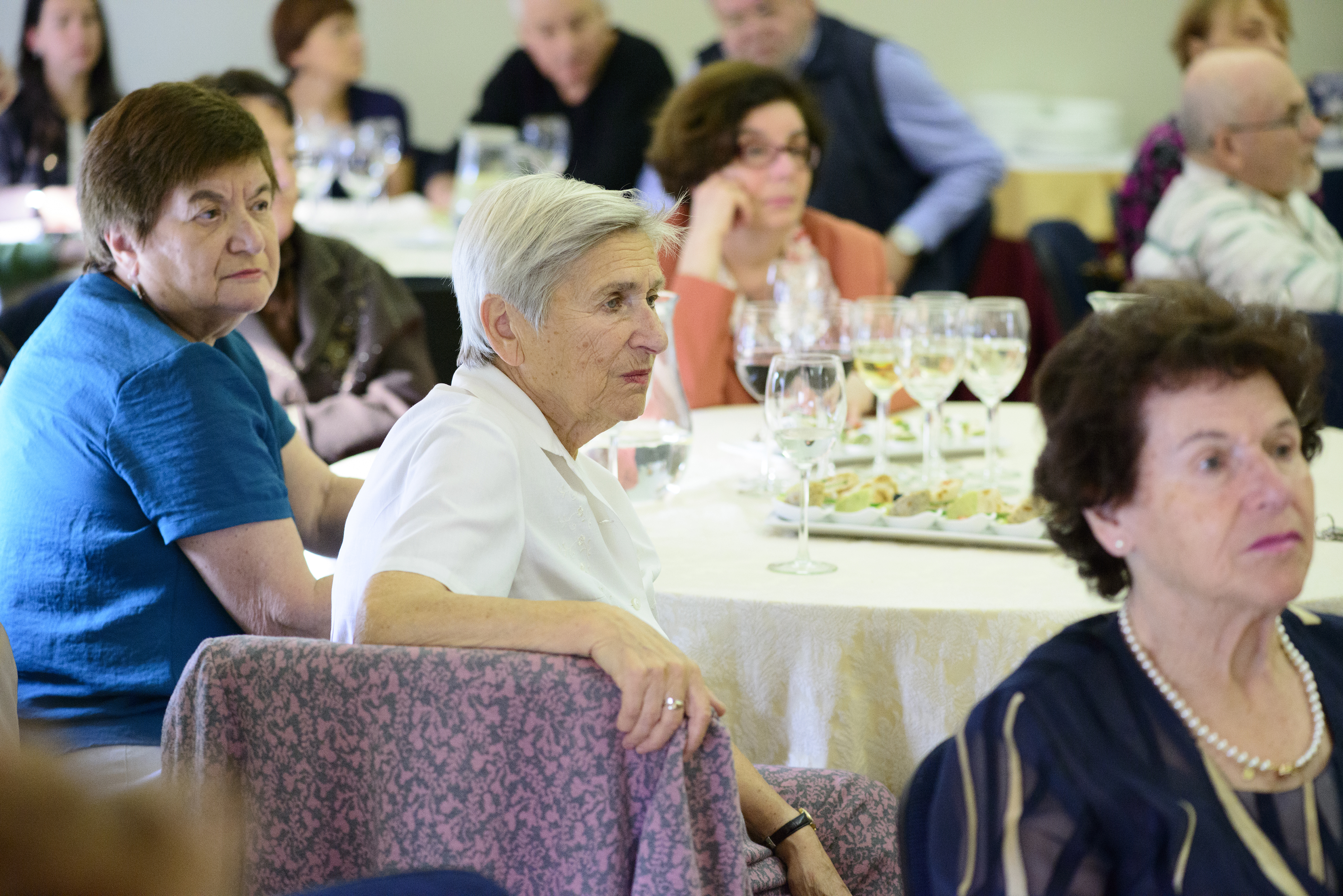
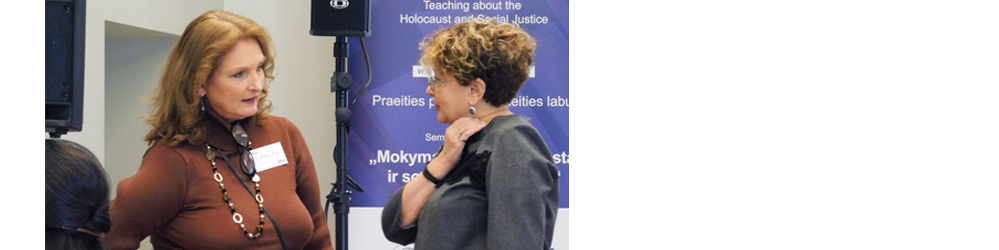
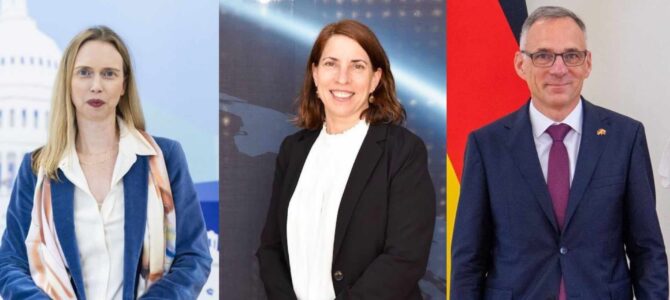
Scheduled to begin at 5 P.M., the large hall was filled to overflowing and staff scrambled to find extra chairs to seat everyone. By 5:15 a variety of local people—a large contingent of students speaking Lithuanian and Polish, staff from the Vilna Gaon State Jewish Museum, teachers, local residents of different ethnicities—and a significant number of foreign visitors from Poland and Israel had been seated, and LJC chairwoman Faina Kukliansky addressed the audience, introducing Sebastian Rejak, special envoy of Poland’s minister of foreign affairs for relations with the Jewish Diaspora; Mickey Kantor, chairwoman of the Beit Vilna Association of Jews from Vilnius and Region; Ya’arit Glezer, deputy director of the Association of Lithuanian Jews in Israel and others.Head of the Political and Economics Department of the Polish embassy in Vilnius Maria Slebioda thanked the Lithuanian Jewish Community and chairwoman Faina Kukliansky for showing the film, and introduced it to the audience, calling it an unusual film in terms of content and cinematography, which was soon to become apparent to the audience as well. She spoke as well about the recent opening of a new museum of Jewish history in Poland, which she presented as evidence of Poland’s concern for Jews, along with a whole slew of other projects in Poland and at Polish embassies around the world. She gave several examples of projects supported by the Polish embassy to Lithuania, including an exhibit at the Vilna Gaon State Jewish Museum on Polish righteous gentiles and the screenign of a film about the liberation of a concentration camp. Last year there was an exhibit on Jan Karski, a Polish envoy who intentionally entered a transit camp (thinking it was a concentration camp) and told the world about the atrocities being perpetrated against the Jewish people of Europe. There were also two exhibitions in Vilnius about the hero Janusz Korczak, she said, and that this was only a portion of a long list of events organized and supported by the Polish embassy and Polish Institute. Slebioda said there was actually little choice but to keep up with the resolute execution of the policy by Warsaw to support Jewish heritage and to keep up with the Vilnius Jewish Community, which, while small, is also very active.

Sebastian Rejak spoke at length in Polish about the film, the Holocaust, visiting the Holocaust museum in Warsaw, Poland’s support for preserving Jewish heritage, expanding relations with Jewish communities in the Diaspora and other matters, with a simultaneous translation into Lithuanian.

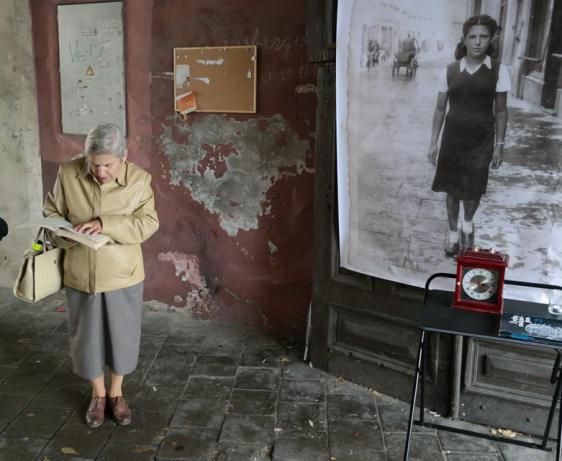
By 5:25 the film was rolling and a hush went over the overflow audience. The film itself was bizarre. A man narrated in Polish, but even non-speakers heard there was something wrong with his voice, it was both pained and somehow off. He briefly recounted some moments from his childhood as the scenery switched back and forth between reconstructed scenes from the 1930s and 1940s and ruined buildings and landscapes in present-day Poland. It quickly becomes evident the man was a Jewish boy from Auschwitz, not the concentration camp, the actual town. A boy he used to play with sometimes who was struck dumb after a head injury and only occasionally commanded the power of speech suddenly told him one day, “All the sons of Abraham will be murdered. But you will survive. I know. The birds told me.” The boy, Henryk Schoenker, wasn’t sure what it meant, but it jolted him. There follow a series of flights by the family from one Polish location to another as the Nazis begin implementing the Holocaust. His father signs the family up for immigration to Palestine under one Nazi ruse which ends up saving the family’s life later. There is a prophetic meeting with a famous rabbi and supposedly a prophecy he made is fulfilled. Near the end Henryk Schoenker reveals he is deaf. A series of narrow escapes culminates in a meeting with what Henryk Schoenker says must have been an angel as the family hides in some grass near a lake. The strange man instructs them to stay hidden, and promises to bring them food. As Schoenker hikes over ruins of Nazi buildings and scenes from his childhood, he becomes increasingly bitter. There is a mixed message near the end: Schoenker says every Jew who survived the Holocaust in Poland was helped by at least one Pole, followed by his blanket condemnation of all non-Jews for not stopping it. “They knew, they all knew,” he says. “They did nothing. Nobody did anything.” Up until the end of the film Schoenker speaks as if the Nazi ruse of deporting Jews to Palestine had been real, a real offer on the table, but that the countries of the world had prevented the Nazis from implementing the relocation project. Knowledge about the Holocaust among the Allies is not discussed, only “they knew” is offered, and Allied victory against the Nazis at the cost of so many lives is not acknowledged. Instead Schoenker revels in a simple and almost child-like conception of what happened based on his personal memories. The most moving parts of the film involve childhood reasoning about the lives of dolls.As a personal memoir and testimony, the film is excellent. As a tool for telling children about the Holocaust, it is good yet terrifying and might not be appropriate for very young children. As history, it is a work of fiction. As cinematography, it suffers from an overbearing soundtrack, too many “soupy strings,” too much sad violin music which lasts for too long, and some of the quick transitions between scenes seems more a matter of haste and sloppiness than artistic intent. Despite that, the film is moving. The prophecy gleaned by the damaged child from the language of the birds, the “angel” in the guise of a man in robes with a long beard and staff and the family’s “flight” could all be considered religious symbols centering around the concept of spirits trapped in a material world, but just as “a little bird” informed Henryk’s friend of the coming Holocaust, so Henryk Schoenker demands the entire world employ that sort of epistemology, or claims they actually did, and also knew what was coming, what was happening and what had happened, and yet did nothing. He makes the claim despite the millions of non-Jewish lives lost defeating the Nazis in order to end their reign of barbarity.

The audience seemed to really appreciate the film and erupted into applause at the end.

Ironically, although the screening was included on the program of events to commemorate the 90th anniversary of the founding of YIVO in Vilnius, there were actually more audience members who came to watch the film than the number of people who turned out for the main YIVO birthday event the day before at the spacious Lithuanian parliament, a day-long conference.

The film ran for 60 minutes. It was almost entirely in Polish, with Lithuanian subtitles. Full credits and a description are available here:

http://www.imdb.com/title/tt4500584/


Remembering the Vilna Ghetto

Remembering the Vilna Ghetto

This week we mark the anniversary of the liquidation of the Vilna Ghetto (September 23, 1943). Irena Veisaite survived the Holocaust in Lithuania and is now an influential human rights activist. These words come from a speech she delivered at a Holocaust memorial ceremony in Vilnius.

“Straight after the end of the war I instinctively shrank from reminiscing. It would have been unbearable. I lost my mother who was only 35 years old; I lost my grandparents and the whole of my parents’ generation, an infinite number of friends and acquaintances. Their death is impossible to explain and even harder to justify. Where did so much cruelty suddenly come from? I could not comprehend why I, as a Jew, became a marked person, humiliated and hunted. I also could not comprehend why this horrific crime – not only against the Jews but a crime against all humanity – was being hushed up or distorted in the years following the end of the war.”

News from the Kaunas Community

Lithuanian foreign minister Linas Linkevičius attended an informal discussion of educational projects to familiarize the public and especially the youth with the accomplishments of Japanese diplomat Chiune Sugihara and opportunities for cooperation with the Lithuanian Foreign Minsiter at the Sugihara House museum in Kaunas on September 11.

“The empathy and courage displayed by Chiune Sugihara is more topical than ever in today’s context. It is an invaluable example of humanity connecting the past with the present,” Linkevičius said.Diplomats from the Japanese embassy to Lithuania, board members from the Sugihara Foundation: Diplomats for Life organization, Sugihara House staff, Kaunas mucipality representatives, scholars from the Asian Studies Center of Vytautas Magnus University and members of the Kaunas Jewish Community all took part in the informal discussion.

Foreign minister Linkevičius toured the museum enshrining the historic and heroic acts of Japanese consul in Kaunas Sugihara, who issued transit visas to allow Jews to flee the coming Holocaust in Lithuania. The museum is the actual consulate building where Sugihara worked. From July to September of 1940 he issued transit visas allowing approximately 6,000 Jews to enter the Soviet Union and thus flee the encroaching Nazi terror. After Tokyo issued orders for him to stop and assigned him a post in a different country, witnesses say he was still writing visas on the way from his hotel and even after boarding the train at the Kaunas station, throwing visas out the window into a crowd of desperate Jewish refugees as the train began to leave.

Jewish Victims Honored at Kaunas Ninth Fort

On Monday, September 21, the Ninth Fort Museum in Kaunas marked Lithuanian Holocaust Remembrance Day. Lithuanian deputy foreign minister Mantvydas Bekešius, deputy Kaunas mayor Vasilijus Popovas, relatives of victims and others attended.Deputy mayor Popovas said: “Every year these tragic events recede from us. These locations do not allow us to forget this especially painful page of history, here where people of Jewish ethnicity were murdered en masse. Today is not a day for long speeches, it is better to be silent to remember and consider what these people experienced.”Kaunas Jewish Community chairman Žakas Gercas said: “We may not forget what happened. It is important to remember one’s past, especially for young people of whom there are many among us today, and that goes to show they will not be antagonistic to any other ethnicities and their beliefs.”

Lithuanian Holocaust Remembrance Day has been marked in Lithuania since 1994. The date of was chosen to mark the date of the liquidation of the Vilnius ghetto on September 23, 1944. This year the day coincided with Yom Kippur, so many chose to mark it early.

YIVO Celebrates Birthday at Lithuanian Parliament

YIVO Celebrates Birthday at Lithuanian Parliament

Pictures galery

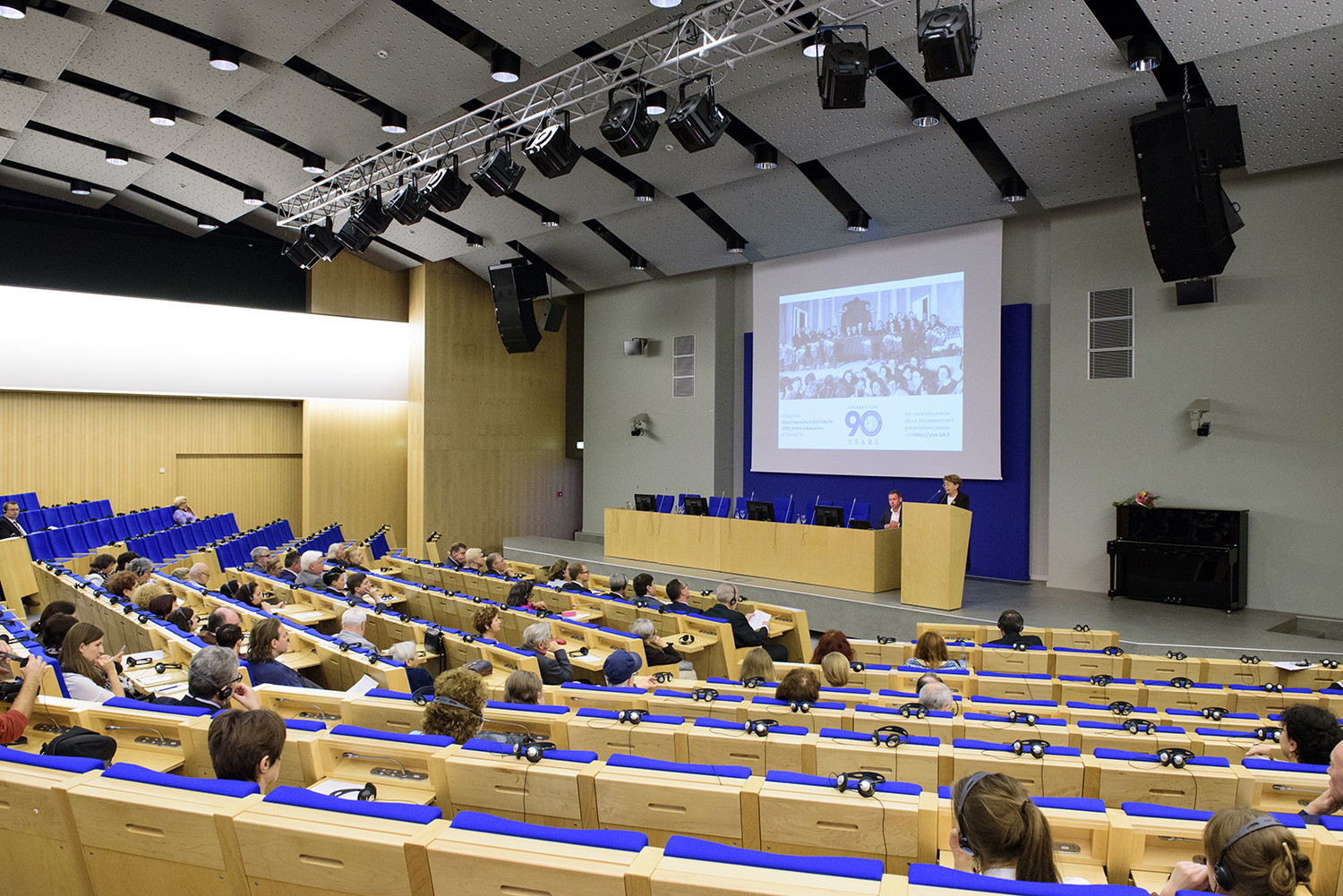
On Sunday, September 20, 2015, the Lithuanian Jewish Community and YIVO Jewish research institute held a conference at the Lithuanian parliament to mark the 90th anniversary of the founding of the organization in Vilnius.

The conference was the main component in the YIVO birthday celebrations in Vilnius lasting most of the week.

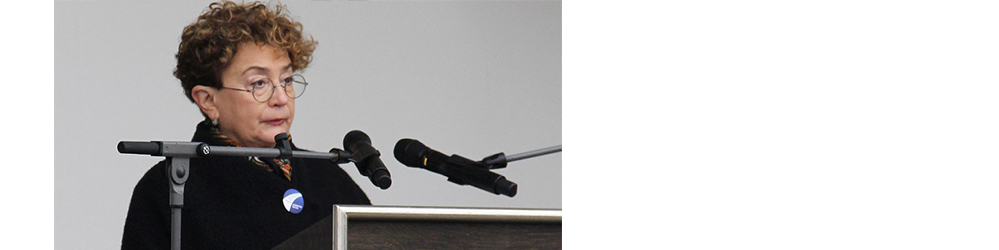
Starting almost an hour late, LJC chairwoman Faina Kukliansky welcomed speakers and audience members, followed by former Lithuanian prime minister and current deputy speaker of parliament Gediminas Kirkilas and former parliamentary speaker and current deputy speaker Irena Degutienė, both of whom made significant statements of Lithuanian support for YIVO and Jewish culture in Lithuania.

Dr. Cecile Kuznitz, associate professor of history and director of Jewish studies at Bard College, one of the few if not the only academic whose research centers around the history of YIVO, gave a comprehensive presentation of the founding of YIVO in Vilnius, its early years of existence and briefly touched upon its post-war history, but was cut short because of time constraints. Her presentation included photographs from the YIVO Institute at Vivulskio street No. 18, which became, as she explained, world headquarters before the war. The building was destroyed during World War II and the street numbering changed after the war.

YIVO Not Just Collecting But Making History

The Lithuanian Jewish Community and YIVO held a press conference at the Community building in Vilnius Friday to talk about upcoming events to celebrate the 90th anniversary of the Jewish research institute, originally based in Vilnius, and the joint project between YIVO, the LJC and the Lithuanian National Martynas Mažvydas Library to digitize the YIVO collections in Vilnius and New York.

LJC chairwoman Faina Kukliansky briefly outlined the program of events and turned the floor over to Suzanne Leon, the director of development for YIVO, who spoke about the appropriateness of celebrating YIVO’s 90th birthday in the organization’s hometown.

THE NAMES. A person is not a number.

THE NAMES. A person is not a number.

Names of Holocaust Victims to be Read for Fifth Time in Lithuania

The names of Holocaust victims will be read publicly in several Lithuanian cities and towns on Tuesday, September 22, on the eve of the Lithuanian Holocaust Remembrance Day. The Names initiative is being held in Vilnius for the fifth time now and this will be the first time when lists of Vilnius ghetto prisoners will be read at two locations: in the courtyard of the ghetto library and at the Skalvija movie theater. Residents of Jonava, Molėtai, Švėkšna and Jurbarkas will take turns reading the names of Jews murdered in their towns.

On Account of a Scarf

On Account of a Scarf

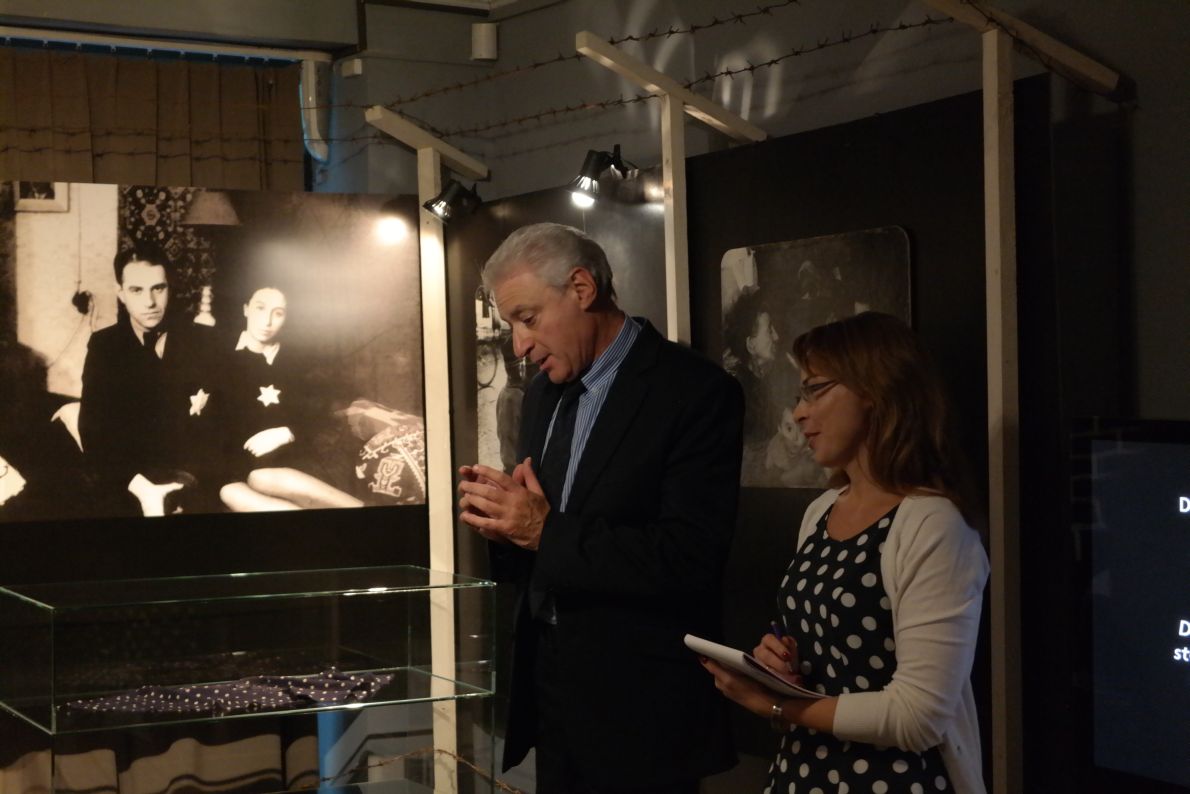
The Holocaust Exhibition of the Vilna Gaon State Jewish Museum has a new exhibit. It’s a scarf. But it’s no ordinary headgear. It belonged to Dita Šperlingienė-Zupavičienė of Kaunas when she was a concentration camp victim at Stutthof and other locations.

On Thursday, September 17, 2015, the new exhibit was unveiled with much fanfare at a public event in room 7 of the museum located at Pamenkalnio street No. 12 in Vilnius. Dainius Junevičius represented the Lithuanian Foreign Ministry and director of the French Institute in Lithuania Frédéric Bellido also attended the event, which began with an introduction by Vilna Gaon State Jewish Museum deputy director Kamilė Rupekaitė and two speeches delivered in Lithuanian and translated to English.

Those Interested in Jewish Heritage Fill Bus to Overflowing

Those Interested in Jewish Heritage Fill Bus to Overflowing

Jews have lived in this country from ancient times, but as a closed community, many Lithuanians have little actual contract with Jews and harbor old stereotypes and unfounded myths.

There has been a desire to learn about people from other cultures, to experience their legacy which has survived to this day and to learn what we have in common.

Tour of Towns Preserving Jewish Heritage

Last Sunday, marking European Jewish Culture Day, residents of Kėdainiai and other cities and towns in Lithuania as well as from other countries had the unique opportunity to visit towns in the Kėdainiai region where Jews lived: Josvainiai, Krakės, Dotnuva, Šėta and the city of Kėdainiai. Multicultural Center director Audronė Pečiulytė led the tour and told visitors about the history of the Jews of the area.

Jewish Family Service party

Jewish Family Service party

On Sunday, September 13, just before Rosh Hashanah, the Jewish Family Service of the Social Center at the Lithuanian Jewish Community hosted a holiday activities event for children. Children with their parents’ help painted Rosh Hashanah symbols and New Year’s greetings on silk. There were also traditional holiday treats. About 30 people attended, including parents and children of different ages.

Book PRICE of CONCORD

Book PRICE of CONCORD

MEMOIRS

PORTRAITS OF ARTISTS

INTERACTIONS OF CULTURES

Author: habil.dr. prof. Markas Petuchauskas

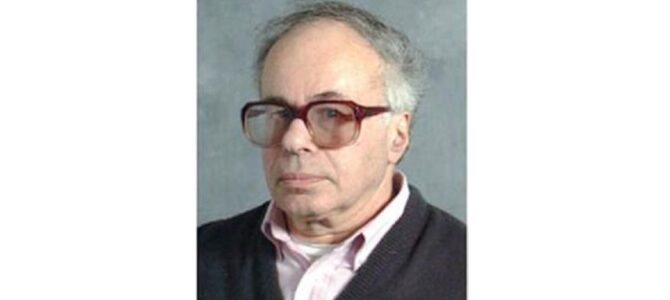
The life of Markas Petuchauskas, a former Vilnius Ghetto prisoner, famous theatre historian and critic, is marked by twists of fate rarely seen other than in dramatic theatrical portrayals. His survival could well be seen as a miracle as he joined the rare few who managed to escape the death that accompanied the Nazi ghettos.

Markas Petuchauskas

 ABOUT THE AUTHOR

Markas Petuchauskas was born in 1931 in Šiauliai, Lithuania. His distinguished father, Samuelis Petuchauskas, was a holder of the Order of the Lithuanian Grand Duke Gediminas, and for two decades of the inter-war period was Vice-Burgomaster of Šiauliai. In 1940, the family moved to Vilnius. At the beginning of the Nazi occupation, the author’s father was executed by shooting in Paneriai.

Rosh Ha Shanah greetings from the chairwoman of the Lithuanian Jewish community Faina Kukliansky

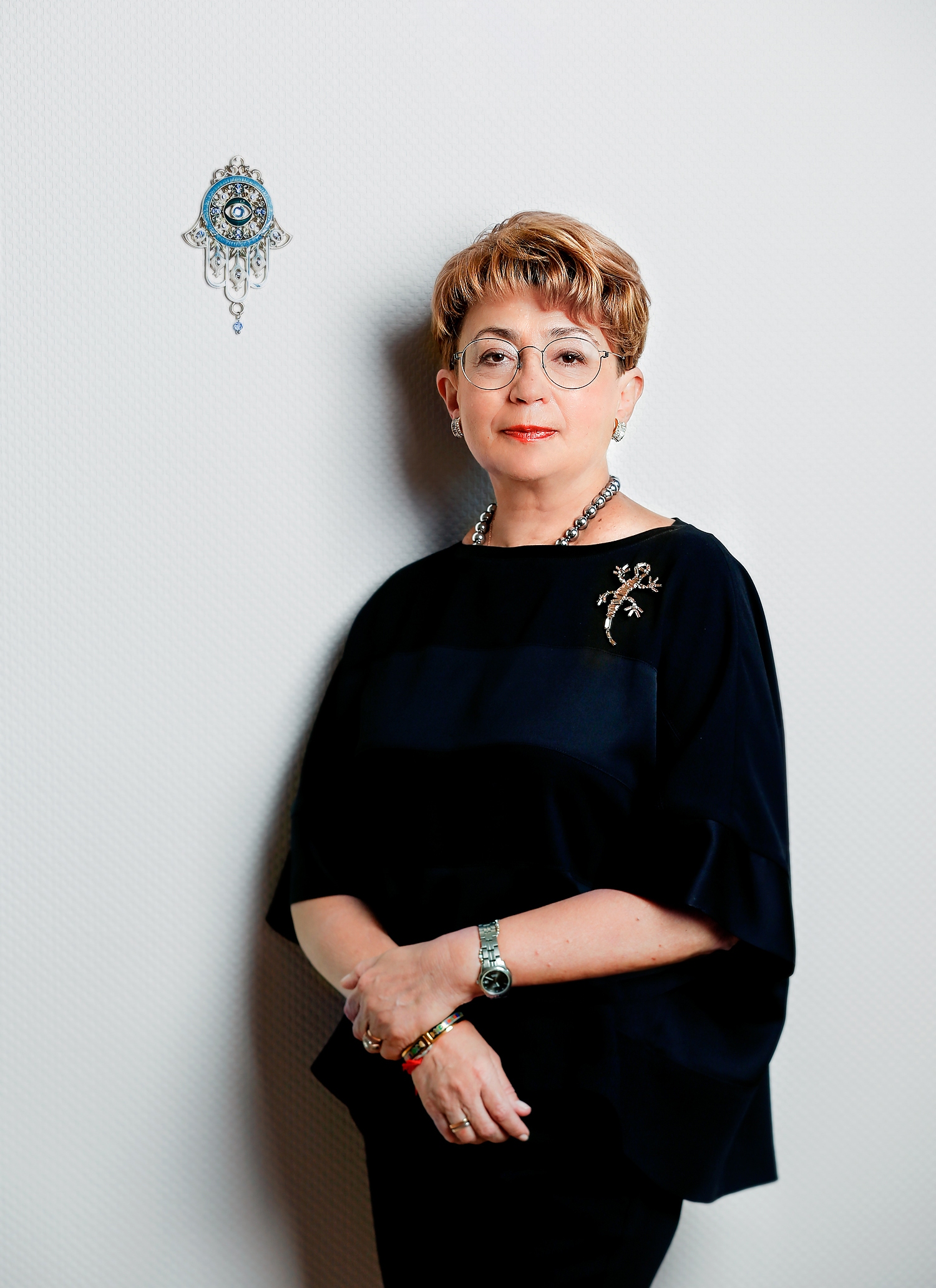
fkDear community members,

Greetings to you on Rosh Hashanah, the Jewish New Year. I wish all of you health and happiness in your families! I sincerely wish you human warmth, that you would always be happy in your families and that you would come visit the community more often, and feel a deeper connection with the community.

This year now ending, 5775, was very complicated for our community and for me, but I think the unpleasant experience as we now have no rabbi will make our community stronger and will bear us good fruit in the future. As the major events over the last year, I would point to Lithuanian prime minister Algirdas Butkevičius’s visit to Israel where at the highest level, the president, prime minister and members of the Knesset of Israel said very clearly they have no complaints regarding our community, and on the contrary, the cooperation of the Lithuanian Government with Israel and with the Lithuanian Jewish Community was presented very positively.

Many times over at all levels the contributions made by the Lithuanian Jewish Community in Lithuania and in improving the country’s relations with Israel were underlined. In wishing you happy holiday spirits, I would like to say the Jews of the community are very active and work hard in all fields, from the preservation of the cultural and religious heritage, to organizing activities for children and youth, in the field of human rights and in everyday but nonetheless vital work with the elderly at the Social Center.

The regional communities are also working very intensively. I can say Litvak life has revived, and our events we have prepared for this fall show that only a well-organized team of people can achieve so much. We are publishing newsletters in Russian and Lithuanian. We have our own webpage which in three languages provide timely insight to matters of concern for the entire community as well as global Jewish issues, and everyone who wants to find out how the Lithuanian Jewish Community is doing has access to that information.

Let’s be happy that the community is harmonious, growing, stable, and that we have so many young people. The entire year I have worked with the community I have felt your great support, my friends, and your desire for me to continue, and now I hope the community will be able to select the best rabbi of those who have presented themselves as candidates for working with us, one who not only provides religious knowledge, but who will love his people and try to help them in trouble and in happiness.

Jews Seek Their Roots in Žagarė

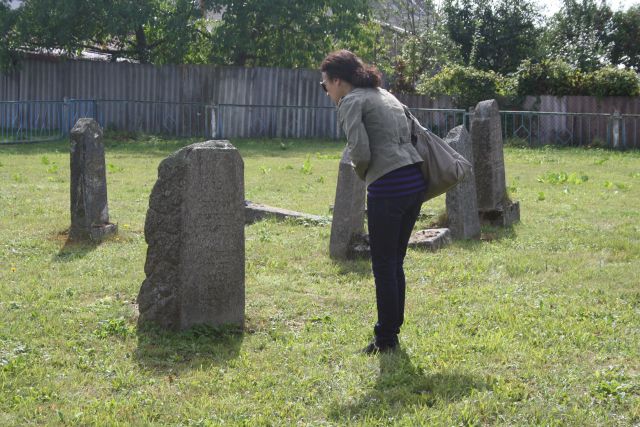
Jewish Culture Days are taking place in Žagarė, Lithuania, which was selected the Lithuanian capital of culture this year. Jews with roots in Žagarė have arrived from all over the world and are visiting Jewish architectural heritage sites, attending concerts and watching films.

The first Jewish community was established in Žagarė in the early 18th century and mainly Jewish craftsmen and merchants lived in the town. Many Jews were shot during World War II at the Žagarė park. The last Jewish resident of Žagarė died several years ago.

Leonora Vasiliauskienė, a former Žagarė resident, said: “Žagarė is my childhood, my youth, and there were sad chapters, such as when I learned my grandmother, two aunts and uncle were murdered here. They were transported from Tryškiai and shot.”

A Moving Encounter at the Lithuanian Jewish Community Dedicated to Sugihara’s “Visas for Life”

A Moving Encounter at the Lithuanian Jewish Community Dedicated to Sugihara’s “Visas for Life”

The Lithuanian Jewish Community celebrated the 75th anniversary of Japanese diplomat Chiune Sugihara’s mass rescue of Jews through the issuance of “visas for life” recently. It’s been 75 years since the Japanese diplomat saw the atrocities of the Holocaust in Lithuania with his own eyes and decided to help the Jews by giving them visas providing them the opportunity to flee Lithuania and live. People whose lives were saved by Sugihara were on hand for the event, including Nina Admoni (Israel) and Marsel Weiland (Australia), as were diplomats from the foreign embassies in Vilnius, Lithuanian Jewish Community chairwoman Faina Kukliansky, deputy chairwoman Maša Grodnikienė, Vilnius ORT Sholem Aleichem Gymnasium principal Miša Jakobas, members of the community and Lithuanian rescuers of Jews as well as their family members.

Žana Skudovičienė, one of the organizers of the evening, spoke emotionally and thanked those who risked not just their own lives but those of their loved ones as well to save Jews from extermination. She named some of the names of the rescuers: Irina Ostenko, Gražina Blažienė, Antanas Gasparas, Milda Putnienė, Ričardas Plokšto, Antanas Poniškaitis and Jurgis Beriatskas.