
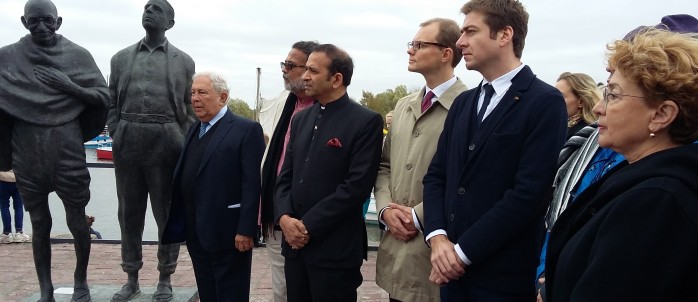
On Friday, October 2, 2015, a statue commemorating the friendship between Mohandas Gandhi and Rusnė resident Hermann Kallenbach was unveiled in Rusnė.







On Friday, October 2, 2015, a statue commemorating the friendship between Mohandas Gandhi and Rusnė resident Hermann Kallenbach was unveiled in Rusnė.
VILNIUS, October 2, BNS–A statue portraying Indian independence hero Mohandas Gandhi and his friend Jewish architect Hermann Kallenbach was unveiled Friday in Kallenbach’s hometown, Rusnė, located in the Šilutė region of Lithuania.
Lithuanian prime minister Algirdas Butkevičius was at the ceremony and called the bronze statue a monument to Lithuanian-Indian friendship and a testimony to the achievements of Litvaks. “Today is unveiled a monument to friendship, between two people and two peoples,” he said, standing next to the almost two-meter-tall statue of the two men on the banks of the Atmata River on the border with Russia’s Kaliningrad Oblast. Gandhi and Kallenbach, who left Rusnė in his youth, became friends in South Africa at the beginning of the 20th century.
Gandhi’s great-grandson Tushar Gandhi attended the ceremony and said non-violent resistance unite India and Lithuania. He said Kallenbach was an important spiritual influence on his ancestor.
“Lithuania is still a little-known country in India,” Lithuanian ambassador to India Laimonas Talat-Kelpša told BNS. “This is a good opportunity to bring the attention of Indian society to Kallenbach and Lithuania.”
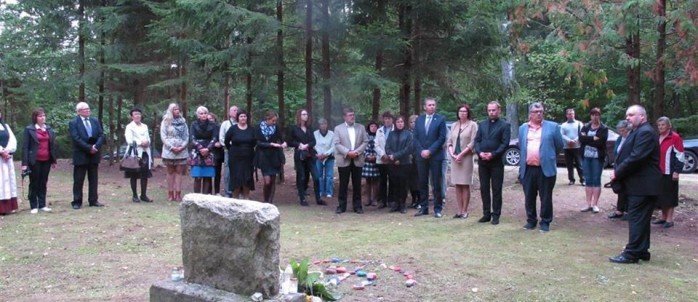
Lithuanian Holocaust Remembrance Day was observed in the village of Batakiai, Lithuania, on September 23, 2015. A new monument to Holocaust victims was unveiled there.
The event at the Batakiai House of Culture began with a literary musical composition dedicated to the memory of Jewish victims of the Holocaust. Batakiai High School students and teachers performed the composition which was a sensitive treatment of the Holocaust. Tauragė Regional Administration director Sigitas Mičiulis, deputy director Aušrinė Norkienė and Klaipėda Jewish Community chairman Feliksas Puzemskis spoke at the event.
Members of the audience at the event went to the mass murder site in Gryblaukis Forest. Regional administrator Sigitas Mičiulis and Klaipėda Jewish Community chairman Feliksas Puzemskis unveiled the monument to seven Jews of Batakiai murdered in 1941. A moment of silence was held, flowers were laid at the monument and candles lit. Another nearby mass murder site was visited after the ceremony where about 1,800 Jewish women and children were murdered. A moment of silence was held there, too, and flowers and candles were placed by the second monument.
On September 25 the Klaipėda Jewish Community visited Švėkšna for the “Let’s Save the Švėkšna Synagogue” event. A guide provided an excellent tour and told of Švėkšna, its history and important sites. Volunteers took members to the old Jewish cemetery and mass murder sites. The Klaipėda delegation met with the group from Kaunas and were treated to the songs of Vitalijus Neugasimovas.
Members of the Klaipėda Jewish Community along with the rest of the audience were much impressed with the visual presentation on the history of the Švėkšna Synagogue.
Even so, members on the return trip wondered if the money hadn’t been better spent repairing the synagogue roof.
Snapshots here:
https://www.facebook.com/klaipedajewish
The Pavilniai Regional Park administration directed by Vida Petiukonienė is currently clearing growth, brush and trees at the Old Jewish Cemetery in Užupis on Olandų street in Vilnius. Those who drive by can already see how the appearance of the cemetery has changed, it looks like a real cemetery again with clear borders and headstones and fragments of headstones visible. This is only the beginning
We are calling for volunteers to help in this important work.
The regional park director has informed us volunteers are needed to help bring the cut trees and brush to the road. There’s still a lot of work to do, so we’re suggesting not a single day of volunteer clean-up, but a whole season’s worth! Please tell your friends and family and figure out when your group might be able to come and help out. School groups are more than welcome. The director says they are ready to take on volunteers every day.
Everyone is invited. It would be best to have groups of volunteers organized and ready to lend a hand by October 10.
Pavilniai Regional Park director may be contacted directly by email at vida.petiukoniene@gmail.com
or you may contact the Lithuanian Jewish Community’s representative for heritage protection Martynas Užpelkis at paveldas@lzb.lt or by telephone at 8-615 13257
Thank you for your help.
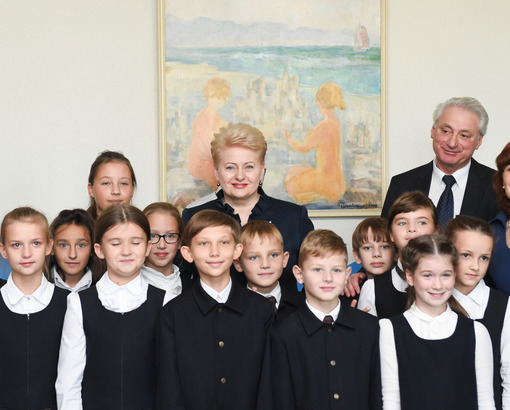
VILNIUS, Oct 05, BNS – Lithuanian President Dalia Grybauskaite on Monday praised Sholom Aleichem ORT Gymnasium, a Vilnius-based Jewish school, for promoting Lithuanian patriotism.
“This school is also important because children of various ethnicities attend it, there’s huge competition to get enrolled and it’s a school of high quality. As we saw and heard during this visit, children are being educated in a very patriotic manner as citizens of Lithuania, and I’m very glad about it,” Grybauskaite told journalists during her visit to the school.
The Lithuanian president said she had decided to visit this school on the World Teachers’ Day because of its multinationalism and also because it coincides with the Jewish holiday of Simchat Torah that marks the conclusion of the annual cycle of public Torah readings, and the beginning of a new cycle. The president praised Sholom Aleichem ORT Gymnasium for not only being a modern school but also for promoting the ethnic community’s traditions, culture and language. “This day is really a joyful day. I am glad that this day also coincides with Simchat Torah. It’s a dual holiday for us all,” Grybauskaite said in her congratulatory speech, addressing teachers and schoolchildren.
532 children from Jewish, Russian and Polish families attend Sholom Aleichem ORT Gymnasium. Classes here take place in Lithuanian but children are also taught Hebrew. A lot of attention is also paid to Lithuania, its culture and history.
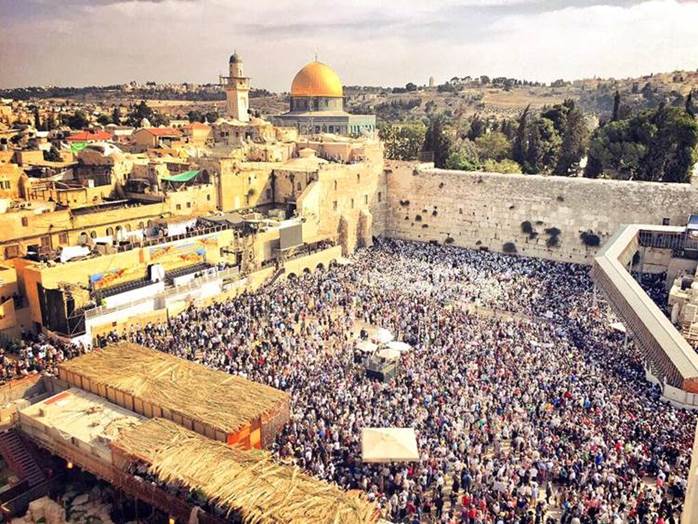
Sept. 30th, 2015
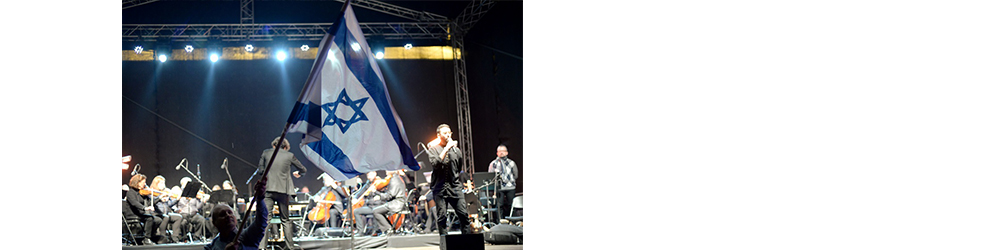
The Israeli Jewish Congress (IJC) sends its heartfelt appreciation to the Jewish Leaders from over 18 countries in Europe & North America, who joined a hundred thousand people across Israel in celebrating the Birkat Kohanim (Priestly Blessing) and the ‘HAKHEL’, a historic gathering for Jewish Unity & Solidarity in Jerusalem on Sept. 30th, which repeats every 7 years.
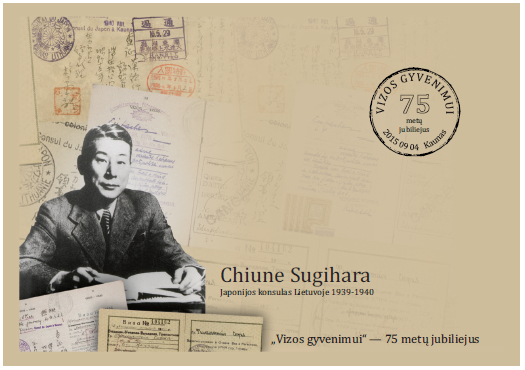
VILNIUS, Oct 05, BNS – As Japan readies to propose the United Nations Educational, Scientific and Cultural Organization (UNESCO) to include the work of World War II-era Japanese diplomat Chiune Sugihara who rescued Jews from the Holocaust in Lithuania into its Memory of the World Register, Lithuania’s Ambassador to UNESCO Arunas Gelunas believes in success of the initiative.
“I believe the chances are high, I think over 80 percent that Sugihara will be included in the Memory of the World Register, as his work is in line with all the humanist ideas defended by UNESCO,” Gelunas told BNS.The Lithuanian ambassador said he had suggested that Lithuania and Japan submit the application together.”Speaking specifically about the support, I have proposed the Japanese mission at UNESCO to submit the application together, an inquiry has been made. The ambassador is currently talking to her ministry and authors of the applications about whether this is possible or whether they want to submit it alone with our support,” said Gelunas.In his words, Sugihara’s inclusion into the register would bring more tourists to Kaunas, the Lithuanian city the diplomat worked in.
While residing in Kaunas during World War II, Sugihara managed to save nearly 6,000 Litvaks, i.e., Jews originating in Lithuania. Putting his career and lives of his family at stake, the Japanese diplomat issued visas that made it possible for persecuted Litvaks to safely travel to Japan. In 1985, the diplomat was awarded the medal of Righteous Among Nations, which the Israeli government confers upon prominent personalities who helped victims of the Holocaust
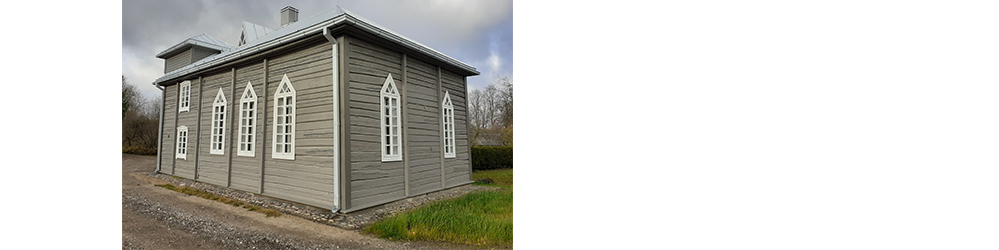
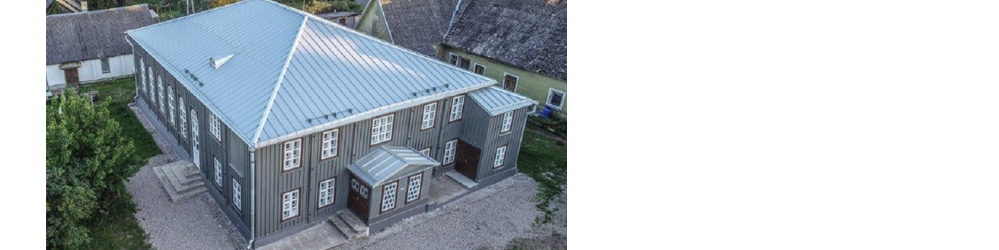
VILNIUS, Oct 05, BNS – Six synagogues across Lithuania have been listed as cultural objects protected by the state.
Under a decree signed by the minister of culture, state protection was granted to synagogue complexes in Lygumos (the Pakruojis district), Alytus, Cekiske (the Kaunas district), Kaunas, Alanta (the Ukmerge district) and Kurkliai (the Anyksciai district). The synagogues are protected due to architectural and sacral features.
VILNIUS, Oct 2, BNS–The people of Lithuania keep discovering more of the rich legacy of the Lithuanian Jews, Lithuanian foreign minister Linas Linkevičius said in New York Friday at a meeting with representatives of American Jewish organizations.
“The people of Lithuania keep discovering more of the rich Lithuanian Jewish heritage, understand the need to preserve it and take pride in the remarkable contributions Lithuanian Jews have made to world culture,” the foreign minister said in a press release Friday evening.
The Lithuanian Foreign Ministry reported the meeting at the Lithuanian consulate in New York discussed anti-Semitism, Iran policy, the Middle East peace process and news about preserving Litvak culture.
http://www.en.ijc.org.il/?p=3880
2 October, 2015
“The Israeli-Jewish Congress (IJC) applauds the decision of European Commission Vice President Frans Timmermans to appoint a Special Coordinator for combating Antisemitism in Europe.
This is a long overdue step, which the IJC, together with our partners in the European Jewish community have called for repeatedly since 2014.
With last year being a record for most number of Antisemitic attacks in Europe since the Holocaust, and this alarming trend continuing through 2015, it is imperative that this appointee be empowered with all the necessary political support and tools to take meaningful steps in fighting Antisemitism and work in close cooperation with the Jewish communities of Europe.
We hope that one of the first priorities of the new European Commission Coordinator will be the establishment of a comprehensive and binding definition of Antisemitism in Europe, which is a pre-requisite if this fight is to succeed.
We look forward to continuing working closely with the Commission and our partners in the European Jewish community in this all important mission of combating Antisemitism.”
Israeli researcher Shimon Lev smiles as he recalls receiving an invitation to the unveiling of what has been called “a monument of friendship” between Mahatma Gandhi and his Jewish friend Hermann Kallenbach, in Lithuania on October 2.
Lev, who is completing his doctorate at the Hebrew University of Jerusalem on perceptions of India in the Jewish world, is the author of a book about the special relationship between the two men, called Soulmates: The Story of Mahatma Gandhi and Hermann Kallenbach.
VILNIUS, Oct 02, BNS – A monument to India’s liberation leader Mahatma Gandhi and his friend Hermann Kallenbach, an architect born in Lithuania Minor, has been unveiled in the town of Rusne, western Lithuania, on Friday.Attending the opening ceremony, Lithuanian Prime Minister Algirdas Butkevicius called the bronze sculpture a monument to the Lithuanian-Indian friendship and a testament to the achievements of Litvaks (Lithuanian Jews).
“Today, a monument to the friendship between the two people and two nations has been unveiled,” Butkevicius said, standing in front of the bronze monument almost two meters high on the bank of the River Atmata on the border with the Russian region of Kaliningrad.Gandhi and Kallenbach met when they both lived in the Republic of South Africa. Kallenbach, a Jew raised in Rusne, did not only become Gandhi’s close friend but also provided financial support to his ideas of peaceful struggle against the British rule of India.
Also attending the ceremony, Gandhi’s great grandson Tushar Gandhi called the peaceful resistance for independence an important link between Lithuania and India. “It’s that philosophy that binds us together. It doesn’t matter whether Lithuania learned that from Gandhi or not. The fact is that they also adopted the same ideology and achieved access,” Gandhi told BNS in Vilnius. In his words, the sculpture, made by Romualdas Kvintas and funded by private donations, is unique because it “celebrates friendship between the two people.”
Having declared independence in 1947, India has the second largest population in the world. Diplomats hope the unveiling of the sculpture will step up India’s interest in Lithuania. “Lithuania is a fairly unknown country in India. So it’s a good opportunity to attract the Indian society’s attention to Kallenbach’s personality and Lithuania,” Lithuanian Ambassador to India Laimonas Talat-Kelpsa told BNS on Friday.

Lithuanian –Jewish Special Interest Group congradulates the Jewish Community of Lithuania on all of its activities and for continued cooperation.
Carol Hoffman
President
The Association of Lithuanian Jews in Israel extends its best wishes to the Jewish Community of Lithuania
Arie Grodzensky
Chairman

Autumn events in Europe:
Fight against Antisemitism
Colloquium on “Tolerance and Respect: preventing and combating anti-Semitic and anti-Muslim hatred in Europe”, Brussels, 1-2 October 2015
Fundamental Rights
Human Dimension Implementation Meeting (HDIM) at the OSCE Office for Democratic Institutions and Human Rights, Warsaw, 21 September – 2 October 2015
New book entitled Price of Concord/Memoirs;Portraits of Artists; Interactions of Cultures by prof. Markas Petuchauskas („Versus aureus“ Publishers, 2015; www.versus.lt; info@versus.lt) is available to the readers.
Please find the extracts about prominent Litvak artists from the book.
THE TRAGIC FATE OF A SINGER
When we speak about the main creators of the Ghetto theatre, such as writers, playwrights, and artistic directors, the name of famous singer Liuba Lewicka unwittingly springs to mind. Without her presence, it would be impossible to imagine the artistic Vilnius which had belonged both to the pre-war epoch as well as to the Vilnius ghetto time.
When I started preparing an evening dedicated to the singer, the most difficult task was the making clear of her repertoire. The restoring of her portrait was not an easy exercise either. Without the unfolding of the above-mentioned aspects, I could not even start the conversation about the wonderful coloratura soprano of Vilnius of those days. What followed were long searches in archives, the pages of the old press, the playbills of the Ghetto theatre as well as the memories of its participants. All of the above served the reconstruction of the creative portrait of the singer.
New book entitled Price of Concord/Memoirs;Portraits of Artists; Interactions of Cultures by prof. Markas Petuchauskas („Versus aureus“ Publishers, 2015; www.versus.lt; info@versus.lt) is available to the readers.
Please find the extracts about prominent Litvak artists from the book.
BETWEEN THE HAMMER AND THE SICKLE
Understandably, there had to emerge on the stage a programme dedicated to the closest friend of Sutzkever. In his early young days, Sutzkever became friends with Szmerl Kaczerginski. The young men took an oath never to betray each other and to remain friends till death. Both knights of conscience had remained true to that oath all through their lives, marked by dramatic fights and by the bitterness of losses. “That union,” Sutzkever remembered later on, “was based on their friendship which had lasted for 15 years and which had been strengthened by blood in the Ghetto.”
Szmerl Kaczerginski is a very peculiar figure representing the Jerusalem of Lithuania.
The Festival of Sukkot (Sukkos in Ashkenazic Hebrew) begins on Tishri 15, the fifth day after Yom Kippur, or starting on the evening of September 27 this year. It is a drastic transition from one of the most solemn holidays in the Jewish year to one of the most joyous. Sukkot is such a happy holiday that it is commonly referred to in Jewish prayer and literature as Z’man Simchateinu, the Season of our Rejoicing.
Sukkot is the last of the Shalosh R’galim (three pilgrimage festivals). Like Passover and Shavu’ot, Sukkot has a dual significance as both historical and agricultural. Historically, Sukkot commemorates the forty-year period during which the children of Israel were wandering in the desert, living in temporary shelters. Agriculturally, Sukkot is a harvest festival and is sometimes referred to as Chag Ha-Asif, the Festival of Ingathering.
The word “Sukkot” means “booths,” and refers to the temporary dwellings in which Jews are commanded to dwell during this holiday, in memory of the period of wandering. The name of the holiday is frequently translated “Feast of Tabernacles,” which, like many translations of Jewish terms, isn’t very useful. This translation is particularly misleading, because the word “tabernacle” in the Bible refers to the portable Sanctuary in the desert, a precursor to the Temple, called in Hebrew “mishkan.” The Hebrew word “sukkah” (plural: “sukkot”) refers to the temporary booths that people lived in, not to the Tabernacle.
Sukkot lasts for seven days. The two days following the festival, Shemini Atzeret and Simchat Torah, are separate holidays but are related to Sukkot and are commonly thought of as part of Sukkot.
The festival of Sukkot is instituted in Leviticus 23:33 et seq. No work is permitted on the first and second days of the holiday. (See Extra Day of Holidays for an explanation of why the Bible says one day but we observe two). Work is permitted on the remaining days. These intermediate days on which work is permitted are referred to as Chol haMo’ed, as are the intermediate days of Passover.
You will dwell in booths for seven days; all natives of Israel shall dwell in booths. -Leviticus 23:42
In honor of the holiday’s historical significance, Jews are commanded to dwell in temporary shelters as their ancestors did in the wilderness. The temporary shelter is referred to as a sukkah (which is the singular form of the plural word “sukkot”).
The sukkah is great fun for the children. Building the sukkah each year satisfies the common childhood fantasy of building a fort, and dwelling in the sukkah satisfies a child’s desire to camp out in the backyard. The commandment to “dwell” in a sukkah can be fulfilled by simply eating all of one’s meals there; however, if the weather, climate, and one’s health permit, one should spend as much time in the sukkah as possible, including sleeping in it.
On Saturday, September 26, the Jewish Family Service of the Lithuanian Jewish Community’s Social Center took children and their parents to the Lėlė Theater, originally established as a theater in the Vilnius ghetto by Jewish intellectuals, to watch a play called “The Tale of a Turtle,” which was surprisingly funny for both the kids and their parents. The event was intended to mark the holiday of Sukkot. Twenty-five people attended the event which was free of charge and funded by the Goodwill Fund. The theater also chipped in and provided us several tickets free of charge, for which we are very grateful. The parents and children had a wonderful time and were quite thankful as well. Coordinator Rašelė Šeraitė is planning many more such events for the families to allow them to spend quality time together and share fond memories later.
Vidmantė Jasukaitytė, an award-winning Lithuanian poet, prose and theatrical writer, as well as a signatory to the Lithuanian Act of the Restoration of Lithuanian Independence in 1990 when she was a member of the first free Lithuanian parliament, was the initiator of a multimedia artistic performance at the site of the Holocaust-era HKP slave labor camp on Subačiaus street in Vilnius. The performance took place on the evening of September 24, 2015, and was called simply “Subačiaus street. Ghetto,” also the name of one of Jasukaitytė’s collections of poetry published in 2003 which earned her the Lithuanian Television Literary Prize loosely based on her own experiences and impressions living in the former Nazi camp, two brick apartment blocks which still serve as housing for an entire Vilnius neighborhood just outside the Old Town.
The construction of the buildings as cheap housing for Jews was funded in 1900 by Baron Maurice de Hirsch (aka Moritz Hirsch, freeman from Gereuth), who established in 1891 the Jewish Colonization Association to help Russian and Eastern European Jews emigrate to Argentina:
“Large tracts of land were purchased in Buenos Ayres, Sante Fé, and Entre-Rios. The Russian government, which had rejected the baron’s offer for the amelioration of the condition of the Jews in the empire, cooperated with him in the organization of a system of emigration. A central committee, selected by the baron, was formed in St. Petersburg, at the head of which were Barons Horace and David Günzburg, together with S. Poliakoff, M. Sack, Passower, and Raffalovich, the latter three being distinguished members of the St. Petersburg bar. The baron also formed a governing body in Argentina; and the personal direction of the colonies was entrusted to Col. Albert Goldsmid, who obtained temporary leave of absence from the English War Office for the purpose.”
from http://www.jewishencyclopedia.com/articles/7739-hirsch-baron-maurice-de-moritz-hirsch-freiherr-auf-gereuth
One of the baron’s main concerns was overcrowding among Jews, whether in their new colonies in South America or Palestine, or in their European home lands, and his philanthropical activities included supporting Jewish communities where the lived in the Diaspora, with special emphasis on providing Russian Jews with trades and an industrious attitude. In 1898 the Jewish Colonization Association allocated funds for “the construction of cheap housing for the impoverished Jews of the city of Vilna.” A Healthy Homes Association was established in Vilnius and had the two buildings with 216 apartments built in the year 1900. The architect was Eduard Goldberg. Poor Jews, students, and young Halutzim who were planning to go to Palestine to practice agriculture there. The land around the “cheap housing” was turned into gardens.
Later the Healthy Homes Association transferred the buildings to the Vilnius Jewish Community. In 1940 the Soviet government nationalized the buildings and the plot of land there.
In the fall of 1941 the residents of the buildings were murdered at Ponar along with many other Vilnius Jews during the initial extermination operations. The Germans used these emptied buildings to house the wives and children of Soviet officers, so creating a “Russian ghetto.” Later some of these women were shot at Ponar and the children placed in orphanages. Some of the women were sent to forced labor camps in Germany. Thus by 1943 the buildings had been emptied of people a second time.
As August turned to September in 1943, just before the liquidation of the Vilnius ghetto, several Jewish labor camps were established in Vilnius. One of them was at the two buildings on Subačiaus street, whose address at that time was No. 37, but is now Nos. 47 and 49. Several hundred qualified workers with their families were taken from the ghetto and housed here. The majority were mechanics, metal workers, glass workers and so on, i.e., those who had worked before the establishment of the new camp at the German military equipment repair workshops called HKP (an abbreviation of the German “Heereskraftfahrpark Ost 562”) while living in the ghetto.
These auto repair workshops where ghetto prisoners worked were scattered all over the city, at the barracks and garages in the Verkių street neighborhood (some of the workers, mainly single men, lived there, and were taken back to the camp on Subačiaus street by truck on their days off), and at the bus park garage at Savanorių street No. 2 where, as at the barracks, automobile engines were outfitted and hardened for military duty. The main headquarters and workshop for HKP Ost 562 was the technical school building at Olandų street No. 12 (now No. 16) and across the street from it.
Workshops were also housed on the first floors of both buildings on Subačiaus street and in surrounding buildings, including the one-floor building to the left of Block I (there’s a sauna there now). Vehicles brought to the camp were also repaired or disassembled into parts at the repair pit to the left of Block II (in the 1960s a five-storey building was erected there). The perimeter of the camp was surrounded by barbed wire and guarded. SS officer Richter was in charge of this camp as well as the Kailis labor camp in Vilnius. Entry to the camp was from Subačiaus street between the two apartment blocks. After the war this entrance was blocked by a new four-storey building. Entering from Subačiaus street, Block I was on the left and Block II on the right. There was also a sauna in Block II.
There is information indicating Wehrmacht officer Karl Plagge came up with the idea of creating a separate Jewish camp for the HKP. He was in charge of the camp and was responsible for the automobile repair workshops in general. Was he trying to save “his” Jews from certain death as preparations were being made to liquidate the Vilnius ghetto? Was it because he was responsible for automobile repairs, and more qualified workers were needed? Whatever the case, many of those who survived say major Plagge saved them.
In September of 1943 workers were sought directly on the streets of the ghetto. Plagge compiled the first lists of those to be moved to the new camp in August. During August’s deportations of ghetto inmates to Estonia, however, many mechanics experts were lost. So additional lists of those to be sent to the HKP camp were drawn up, and many people, not just specialists, tried to get on those lists. People listed their fathers, relatives and spouses and others offered bribes to the people making the lists. It was a hope to survive and everyone sought that at any cost.
These lists have not come down to us (or at least haven’t been found yet but exist in some archives somewhere). We don’t know the exact number of camp inmates when it began. Documents published earlier show the number of camp inmates a the beginning November, 1943. According to those documents, the total number of inmates on November 6, 1943, was 1,218 people. This number grew somewhat to stand at 1,257 on March 26, 1944. It seems this was due to some people legalizing themselves after entering the camp without being specialists, or as family members of non-specialists. Others sought shelter and work there and Vilnius ghetto prisoners who survived the liquidation by hiding in malinas there found a way to get into the two apartment blocks on Subačiaus street. Some of these found haven outside the camps and there were escapes. Perhaps some remained as “illegals” there as much as conditions at the HKP camp allowed for that; there were constant roll calls and scrupulous counts of workers.
There were many women and children at the camp besides men. Initially only a few women worked in the vehicle repair shops. One supposed Plagge knew that the train carrying Vilnius ghetto prisoners supposedly to Kaunas, where “there was a lack of labor,” at the beginning of April, 1943, actually stopped at Ponar where all 4,000 or so prisoners were shot. Perhaps this explains Plagge’s strenuous justifications that the presence of women and children in the camp ensured high-quality work by the men, and that sending unemployed women to Kaunas was not a good idea. Plagge initiated workplaces for almost all women at the camp in the winter of 1944, sewing and repairing military uniforms to order for the E. Reitz Uniformwerke and Meier Herbert companies. The sewing sections located on the top floor of Block I and in a specially constructed barracks to the left of the entrance to the camp were outfitted by the local construction team and the Reitz and Meier companies later supplied sewing and weaving machines.
On March 27, 1944, “Children’s Operations” were carried out at both HKP and the Kailis camp. Only a few children found suitable hiding places and became illegals whom no one should ever see in public again. These mass murder operations also targeted non-working and mainly elderly women. All of them were shot at Ponar. The camp population lost 246 women and children (1,257 people on March 25 dropped to 1,011 on April 13). There were work disruptions, and some people made use of the fact that no one was sure of the exact number of prisoners at that point to make their escape.
In mid-May the number of prisoners dropped again, this time because of the loss of 67 people, mostly men. Some accounts say some of them were sent to mine peat in Kazlų Rūda and others were sent to exhume and burn corpses at Ponar.
The camp existed until the summer of 1944.
As the front drew closer on July 1, 1944, Plegge warned the workers the camp was to be evacuated and would come under the jurisdiction of the SS. Other accounts have it that Josef “Sep” Gramer mentioned the coming liquidation to several of the workers under him. Understanding the true meaning of “liquidation” in the Nazi lexicon, some prisoners escaped with their families that very day as soon as it was slightly dark. Others went to their malinas, hiding places whose existence they kept even from fellow slave laborers.
During the last roll-call on July 2, many were missing. The next day everyone was brought to trucks which were to carry them away. These people were shot at Ponar along with the surviving Jews from other slave labor camps in the city. Those found hiding were shot the same day right beside the two residential blocks. Some managed to flee.
The Germans quit the camp on July 4, 1944.
Some of the malinas in the eaves, basements and behind brick walls went undiscovered and nearly 100 Jews half-dying of thirst lived to see liberation. The Soviet Red Army was already on the outskirts of Vilnius and on July 7 broke through the German defensive lines. By July 9 Nazi forces were surrounded and on July 13 soldiers of the 3rd Byelorussian Front entered the city proper.
for more information on the history of the HKP camp, see:
http://www.jmuseum.lt/index.aspx?TopicID=405
