Condolences

On November 27, 2015, Lithuanian Jewish Community Social Center member Kęstutis Bytautas passed away. He was born on July 11, 1958.

Our deepest condolences to his loved ones for his loss.

Condolences

On December 6, 2015, Adolfas Poškus, a member of the Klaipėda Jewish Community and the Lithuanian Jewish Community Social Center, passed away. He was born May 14, 1939. The Community send our deepest condolences to his survivors.

Vyacheslav Ganelin’s Prophecy Fulfilled, Fans’ Love for Him Unchanged

Ganelinas

Even in these modern times friendship between nations is just a dream. Three decades ago Lithuanian and Israeli jazz musician and composer Vyacheslav Ganelin, 70, prophetically perceived this, and so moved to Tel Aviv. But infatuation with the wild soundtrack for the film “Velnio nuotaka” [Devil’s Bride, 1973] and the palpitations as they wait for him to appear in the hearts of his fans remain. The best in Eastern Europe—this is how even young jazz enthusiasts still describe Ganelin, although his work garnered renown in the previous century. For a decade now there has been nothing equal to the progressive jazz Ganelin has come up with jamming with fellow musicians.

And now when he occasionally visits Lithuania with his musical notions, the tension during his performance is palpable: the star’s aura and the thought this might be his last concert—as time passes it becomes harder and harder to travel overseas—affect the audience.

Full story in Lithuanian here.
Kaunas Jewish Community Hanukkah Celebration

Kaunas du
Members of the Kaunas Jewish Community gathered on the afternoon of the first Sunday of December, 2015, at the cafe and music club Punto Jazz to light the first Hanukkah candle and celebrate the start of this eight-day holiday of light and miracles. One of the most senior and most active members of the Community, Šmuelis Šragė, was supposed to light the first candle, but he unexpectedly left us just a week before Hanukkah. His widow Basia Šragienė was called upon by her sons to light the first candle in his place. Despite the somber circumstances, participants managed to have fun at the event, aided by guests from Vilnius Michail Jablonskij and Leonard Zenkevič, musicians from the Fayerlakh musical ensemble. There was a latke-eating contests for the men and a doughnut-eating contest for the women, and a general quiz to test the participants’ knowledge of Hanukkah. Rabbi Efraim Piryampolski and his family who currently live in Kaunas attended and the rabbi addressed the participants. Their visit pleasantly surprised the audience and added spiritually to the Community’s holiday gathering.

Snapshots here:
http://www.lzb.lt/kauno-zydu-bendruomene-uzdega-pirmaja-chanukos-zvake/

Hanukkah-Themed “Great Debate” Tries to Shed Light on Israel’s Future


Rabbi Shmuley Boteach (photo: Reuters/Mario Anzuoni)

It was the first night of Hanukkah and the “Great Debate” in Tel Aviv on Sunday between Rabbi Shmuley Boteach and Peter Beinart posed a basic question: what will ensure Israel’s commonwealth today as it was ensured over 2,000 years ago when the Maccabees defeated the Greeks?

Up first, American Jewish author, political writer, and CUNY professor Peter Beinart said for Israel to survive, it must eschew the extreme religious nationalism which to some degree motivated the Maccabees.

“The Hanukkah story is a very inspiring idea in our time because it’s a Zionist story,” the author of “The Crisis of Zionism” told a packed hall at the David Intercontinental Hotel where the Globes Israel Business Conference hosted the event in conjunction with Tel Aviv International Salon and StandWithUs. “The Maccabees were fighting for national liberation, no question about that, and it was an inspiring fight, but they were not fighting for religious freedom for all people.”

Hanukkah Greetings from Reuven Rivlin, President of Israel

My dear brothers and sisters, in Israel and around the world: at Hanukkah we stand around the lights, watch as they glow and sing together “Ma’oz Tzur Yeshu’ati,” a song that tells about the many challenges that have risen against the Jewish people in the past. We celebrate the survival of our people and our faith against all odds. We celebrate the freedom that was won in these days and that we enjoy today with Israel as national home for the Jewish people. It is no coincidence that the symbol of the government of Israel is the menorah, the symbol of Jewish independence that lights our path. In each generation we must find that path; to reinforce the bonds between Jews across the world; to share together, to hold high the torch of freedom; to bring lights where there is darkness, just as it was for the heroic Macabbee, the light of the menorah inspired us all.

Today, hatred, incitement and terrorism threaten the whole world. In the face of these threats, we need to be firm. We need to be firm and strong, like a rock, like ma’oz tzur [the rock of ages] in our beliefs in freedom, in justice, in the values of our tradition and of democracy. So this year, as we gather with our families and our communities and look at the wonderful lights, it is my prayer that we will be reminded of the bonds that we all share and the important role we have– we all have–of bringing a light unto the nations. Our thoughts at this time are of course with those who will be celebrating with heavy heart, those injured and the families who have lost loved ones in the wave of terror that has struck in Israel and around the world. To them especially and to all the Jewish people, I wish a very, very happy Hanukkah! Shalom from Jerusalem. God bless all of you. Happy, happy Hanukkah.

Watch the greeting here.

First Hanukkah Candles Lit at Vilnius Synagogue

MILDAR-9748

On December 6 the Lithuanian Jewish Community gathered at the Choral Synagogue in Vilnius to light the first Hanukkah candle and enjoy some treats. Israel’s ambassador to Lithuania Amir Maimon and all embassy staff were there, as well as Israel’s honorary consul V. Bumelis and many other honored guests. Rabbi Izakson greeted the assembly. Lithuanian Jewish Community chairwoman Faina Kukliansky lit the first candle and ambassador Maimon lit the second. Traditional Jewish music was played.

Photographs by Milda Rūkaitė
Facebook photo album here.
Review of Holocaust Fiction by Former Lithuanian Cultural Minister

The Lithuanian news, culture and religion website bernardinai.lt has published a review of a work of fiction by the former Lithuanian minister of culture about a Jewish child surviving the Holocaust in Lithuania.

Rimgailė Kasparaitė reviewed Saulius Šaltenis’s book “Žydų karalaitės dienoraštis,” or “Diary of a Jewish Princess,” published by Tyto alba publishers in Vilnius in 2015. The newspaper and website Lietuvos rytas provided a short synopsis of the book on their page kultura.lrytas.lt, describing it thus:

“‘Žydų karalaitės dienoraštis’ is a novel about young Jewish girl Estera Levinsonaitė’s life in Lithuania during and after the war in the family of a young couple in love. Naked and covered with blood, she crawls to the home of Vladas and Milda on their wedding night…

Lithuanian Jewish Community in Japan Times

Faina -Japonija
from left, vice-mayor Kazunori Nakayama, Tsuruga, Fukui Prefecture; Kazuko Shiraishi, ambassador for women, human rights and humanitarian affairs and ambassador in charge of Arctic affairs, Japanese Ministry of Foreign Affairs; Lithuanian ambassador Egidijus Meilūnas; chairwoman of the Lithuanian Jewish Community Faina Kukliansky; Michi Sugihara, executive director, Chiune Sugihara Visas for Life Foundation; Madoka Sugihara, vice-chairwoman, Chiune Sugihara Visas For Life Foundation and Shingo Akatsuka, mayor of Yaotsu, Gifu Prefecture, pose during the Chiune Sugihara event at the Lithuanian embassy in Tokyo on November 18. Photo: Yoshiaki Miura

LJC chairwoman Faina Kukliansky visited Tokyo, Japan in mid-November where she attended an event to honor the diplomat Chiune Sugihara at the Lithuanian embassy.

The large audience of Japanese were presented possibilities for cooperation in commemorating the Japanese diplomat who saved Jews during the Holocaust in Lithuania. They also learned about the cultural and intellectual legacy of the Litvaks, the Holocaust in Lithuania and the Lithuanian Jewish Community. The event created a stir and Jews who live and work in Japan participated. Chairwoman Kukliansky granted an interview to the Asahi Shimbun newspaper and their reporter showed great interest in the history of her family, their experiences during the Holocaust and impressions of Japan.

Lithuanian Jewish Community Chairwoman Faina Kukliansky Sends Hanukkah Greetings

MILDAR-0887web

I hope the miracle of Hanukkah will guide you and your loved ones always. On this Hanukkah I address the members of the community and invite all, old and young, to come together and for every member, health permitting, to participate in community activities, to make their positive contribution to the life of the community, for the Lithuanian Jewish Community to grow stronger, for the people to stand in solidarity, and for there to be less petty accusations and rumors.

Happy holiday of light, of the victory of the Maccabees! I wish you happiness, peace and good health!

A Death in the Community

On December 1, 2015, Rima Vaisman, a member of our community and a member of the Social Center, passed away. She was born on February 9, 1925. Our deepest condolences to her friends and family.

Tirkšliai Wooden Synagogue Gets Legal Protection

lz

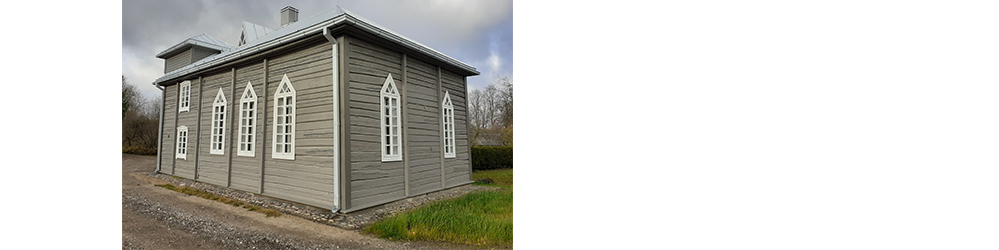
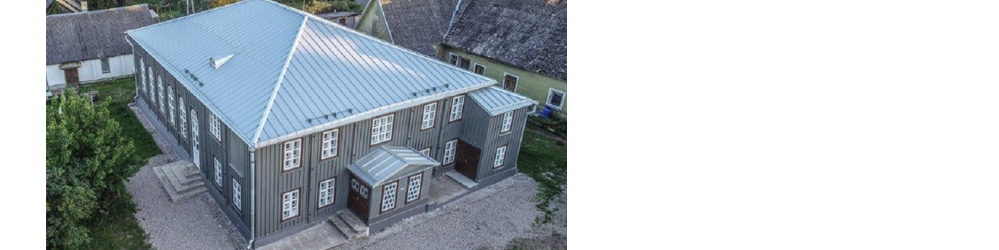
A new cultural heritage site has been placed on the list of Lithuanian cultural treasures: the wooden synagogue of Tirkšliai in the Mažeikiai region of Lithuania. The synagogue is believed to be the earliest synagogue in the region built in the late classical style. Cultural Heritage Department director Diana Varnaitė said: “Wooden synagogues are now a rarity in Europe. Bearing in mind how the world values heritage made of wood from the past, we must understand that wooden synagogues are priceless.” She said she was glad another wooden synagogue had been added to the list of cultural treasures and that it will facilitate preserving the site. Antanas Eičas, head of the Telšiai section of the Cultural Heritage Department, said the Žemaitija region is exceptional for its wooden architecture and especially its wooden churches and synagogues. “The Tirkšliai synagogue built in the first half of the 19th century has been listed on the cultural treasures registry. It is now the only remaining wooden synagogue in the Mažeikiai region. It and the former Seda synagogue are from a similar late classical period. Up until World War II there was also wooden Jewish houses of prayer in Viekšniai, Židikai, Leckava, Laižuva and Pikeliai. Let’s preserve this rare and unique cultural heritage treasure,” Eičas commented.

Full story in Lithuanian here.

New Litvak Cultural Museum Concept Presented

Tarbut students on a field trip ca. 1939. Courtesy vilnaghetto.com

Tarbut students on a field trip ca. 1939. Courtesy vilnaghetto.com

The Tolerance Center of the Vilna Gaon Jewish State Museum hosted a presentation by director Markas Zingeris of plans to restore the museum’s building at Pylimo street No. 4 in Vilnius for use as a new museum of Litvak culture and achievements December 3.

Currently the building is mostly empty but formerly housed the museum’s History Department and Gallery of the Righteous. It is actually part of the same building now as the Lithuanian Jewish Community and is connected by corridors with the LJC. Formerly it was the Tarbut Gymnasium or high school established after World War I. The name of the proposed new center is the Center of Litvak Culture and Art.

Zingeris’s plan includes showcasing famous Litvaks who have contributed to culture and science and he presented a number of figures including Nobel Prize winners for inclusion. He emphasized the need to teach the Lithuanian public about Litvak achievements as part of their own history. He also had a map projected onto the overhead screen showing other Jewish cultural museums in Europe and spoke specifically about Vilnius’s place on “the Northern European Jewish route.” Whether this “route” is an official EU program or not wasn’t made clear.

Ilan Club Visits Toy Museum

zaislai3

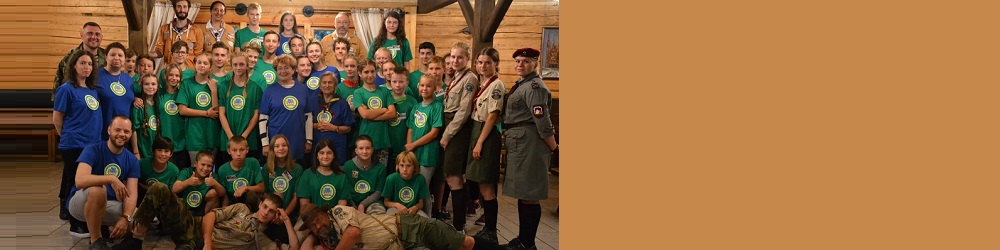
Last Sunday the Ilan Club visited the Toy Museum. The children had fun with their supervisors and had an interesting and instructive time. Museum guides provided a tour and showed the children old-fashioned toys, and spoke about their effect on development and use. There was a total of 17 participants and all of them said they had a good time.

Snapshots:

Celebrate Hanukkah in Panevėžys

The Panevėžys and Ukmergė Jewish Communities invite you to attend a Hanukkah celebration from 1:00 P.M. to 3:00 P.M. on December 13 at the Vakarinė Žara restaurant at S. Dariaus ir S. Girėno street No. 4 in Panevėžys.

There will be games and gifts for the children.

Please announce your intention to attend via email to genakofman@yahoo.com

See you there!

Haifa and Community: Lessons in Tolerance from Israel

by Živilė Juonytė

Mt Carmel

Israelis sometimes joke that while Tel Aviv is partying, and Jerusalem is praying, Israel’s third-largest city and largest port Haifa is busy at work. Maybe that’s why the people of Haifa don’t have time for squabbles and why the different ethnic groups—Jews, Druzes, Arab Christians and Muslims, Ahmadiyya Muslims and Baha’i—get along so well, despite their many differences.

Newest World Religion Recognizes All Others

The unique Baha’i, Druze and Ahmadiyya communities in the kaleidoscope of cultures and religions of Haifa are probably the least known to outsiders. Baha’i is one of the newest religions of the world whose origins are found in 19th century Persia, now Iran. It was immediately banned there, and continues to be. Baha’i believe all religions are valid and study them and their sacred texts. Their emphasis on the shared features of all religions means they are tolerant of mixed marriages. Children born to Baha’i parents don’t become Baha’i automatically. It is the parents’ duty to teach them about all religions, and the young adult chooses the one which most resonates with him or her at the age of 15.

Marc Chagall Lithographs Exhibited at Raudondvaris Castle

Sagalas

Fifty of the famous modernist’s works are on display at the Kaunas regional museum until New Year’s. The artist became interested in lithography in Berlin in 1920, learning the art under the tutelage of the German artist Hermann Struck. Chagall, who worked under a whole series of names, was born into a Jewish family in Vitebsk, now in Belarus. In 1922 the family fled Bolshevik rule, first resettling in Lithuania, and then Germany and France. During World War II Marc Chagall escaped the Holocaust in America, but returned to France after the war. He died on March 28, 2005 as he was ascending to his studio in an elevator. The motif of flight is integral to Chagall’s work. Members of the Kaunas Jewish Community attended the exhibition.

Alanta Wooden Synagogue Saved from Collapse

11986432_1069484359750323_4948549773931102190_n

Building technical supervisor and engineer Giedris Butanavičius of the SDG company reported in July this year the synagogue in Alanta was in a state of imminent collapse. A main support beam had rotten through allowing the ceiling beams to sag, deforming the roof. The possible continued deterioration of ceiling beams threatened to bring the whole building down. The Lithuanian Jewish Community took immediate action, calling on experts to draw up a list of tasks and a work-plan for dealing quickly with the collapsing synagogue. Under the plan drafted by the company Senamiesčio Projektai led by Jakobas Mendelevičius, the construction and restoration firm Ateities Projektai of Molėtai, Lithuania, began to implement the urgent plan in November under the direction of Bronius Gaižutis. They propped up sagging support beams, internal walls and the entire skeleton of the building, and sealed up broken windows. The Goodwill Fund financed the drafting and implementation of the plan to save the synagogue. The Community would like to thank all the planners, restorers and everyone who contributed to a rapid solution to the problem.

The Alanta synagogue is one of perhaps only 20 wooden synagogues still standing in Europe. Judging from its architecture it was built in the latter part of the 19th century. It was used as grain storage after World War II. It was returned in a very poor state to the Lithuanian Jewish Community following Lithuanian independence. In September the synagogue in Alanta was declared under state protection.