Israeli President Isaac Herzog Visits Lithuania

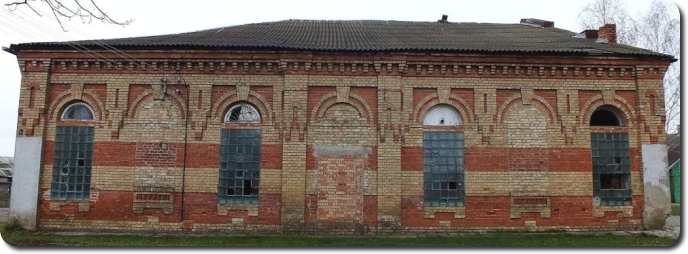
Darbėnai, getting more beautiful by the day, has finished erasing its blemishes. Maintaining respect for its past, the town has reconstructed its main square and the areas around it, and has finally torn down the Soviet Palace of Culture which had become an abandoned eye-sore long ago. There’s only one thing left for the residents of Darbėnai to do: to come to terms with historical memory and let the Jewish past back into town, and learn how to live with it.
by Jūratė Kiliulienė, veidas.lt
While the ever-more-frequent chill winter winds still haven’t brought snow, the beauty of the small town is plain to see. Most likely the residents themselves still haven’t got used to it, and the changes so pleasant to the eye are a topic of conversation among the townspeople, who can now show the place off to outsiders. After archaeological digs, the sidewalks and pavement have been put back in order, there are new street lights and modern benches. Several years back the changes began in Darbėnai from the center, the old Market Square. In line with the preferences of residents, here, in front of the pre-war Jewish houses, paving stones were laid.
Full story in Lithuanian here.
An SS guard who was on duty when Anne Frank was brought to Auschwitz in 1944 has been found sufficiently healthy to stand trial for mass murder, the Daily Mail reports.
Hubert Zafke, 95, was examined by psychiatric doctors this week appointed by a court in Rostock and judged mentally sound to go on trial for his part in the murders of 3,681 people.
Full story here.
The ORT Media Center and the Lithuanian Jewish Community are offering the public the chance to improve their IT skills. Two different courses are planned: a series of Cisco network administration courses with exams and qualifications, and a general computer literacy course including Google products and electronic banking. For more information on the two Cisco network courses, contact lauras@lzb.lt . For more information on the general computer literacy class, contact valentin.baltija@gmail.com
The Mini Limmud 2015 Judaism conference will take place on December 11 to 13, 2015, at the Vilnius Grand Resort Hotel.
Mini Limmud is three days of meaningful meetings with friends and the like-minded with the very best speakers from the Baltic states, Israel, Russia and other countries. It includes a special program for children. There will also be an evening Hanukkah celebration with special performers!
Registration and Ticket Sales
Registration took place in November. Please contact project coordinator Žana Skudovičienė, telephone +37067881514 and email zanas@sc.lzb.lt, to find out if there are still spaces available. Tickets cost 85 euros for adults, children aged 0 to 5 get in free, tickets for children aged 5-13 cost 25 euros and adults who don’t need the hotel stay can buy tickets for 60 euros, provided there are still places available.
Limmud program in Russian here.
The Lithuanian magazine Reitingai [Ratings] published Tuesday a list of the top schools and universities in the country. As in earlier years, gymnasia in the capital city scored highest. The list was compiled using National Test results for 2015. The ratings included number of students: not just how many students were graduated from the high schools, but also how many took each test.
The top scorers in the physics test: 1. Vilnius Sholem Aleichem ORT Gymnasium, 2. Vilnius Lyceum, 3. Marijampolė’s Marionites Gymnasium, 4. Kaunas Technical University Gymnasium, 5. Vilnius Jesuit Gymnasium.
Best results for the English language exam: 1. Vilnius Lyceum, 2. Kaunas Technical University Gymnasium, 3. Vilnius Jesuit Gymnasium, 4. Klaipėda Lyceum and 5. Vilnius Sholem Aleichem ORT Gymnasium.
Full story in Lithuanian here.
Hanukkah, 1939.
Kaunas.
I told him the story of how Judah Maccabee led his men into war against the powerful Greeks, who had defiled the temple, and how their tiny force defeated the much greater armies of Antiochus. Judah and his followers liberated Jerusalem, and set about rededicating the temple, but when they went to light the lamps they could find only enough oil to burn for one day. Keeping the faith, they used the one small cruse they had, and God made the oil burn for eight full days. This is how Chanukah became the festival of lights. Each evening the shammers, the one candle used to light all the others, was used to light one more candle, until on the eighth day all eight candles were burning.
The tables were laden with the best of food and drinks, including some Japanese food which [aunt] Anushka supplied from her shop. We also had veal with small roasted potatoes, roast duck in orange sauce, and many other wonderful things.
Mr. Sugihara also asked me about our family life and my hobbies. When I told him that I collected stamps, he invited me to come and visit him at the consulate. He said he would give me some stamps from Japan.

photo © 2015 Egidijus Jankauskas
The Klaipėda newspaper Vakarų Ekspresas reports the city mayor and representatives of the Chabad Lubavitch movement in the Lithuanian port city held a ceremony on central Lietuvninkų square to light the first Hanukkah lamp on the menorah erected there.
Full story and photo gallery here.

story and photo: Elijus Kniežauskas
Last Sunday evening just as the sun set two Israeli students lit the first two lights of the Menorah set up at the city gardens, symbolizing the beginning of Hanukkah. Lighting the menorah symbolizes for Jews liberation from oppression and the victory of good over evil. For another seven days in a row the Israelis will climb up and light another lamp daily.
“The menorah symbolizes a miracle. When the Jews were at war with the Greeks all the oil reserves at the Temple were destroyed. There was only one vessel left, but a miracle happened and the lamps burned for eight days,” one of the students explained.
Meir and Eyal came to Kaunas from Israel. One is studying medicine and the other odontology.
On November 27, 2015, Lithuanian Jewish Community Social Center member Kęstutis Bytautas passed away. He was born on July 11, 1958.
Our deepest condolences to his loved ones for his loss.
On December 6, 2015, Adolfas Poškus, a member of the Klaipėda Jewish Community and the Lithuanian Jewish Community Social Center, passed away. He was born May 14, 1939. The Community send our deepest condolences to his survivors.
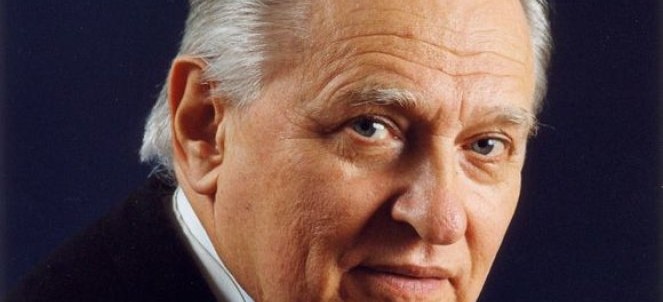
Even in these modern times friendship between nations is just a dream. Three decades ago Lithuanian and Israeli jazz musician and composer Vyacheslav Ganelin, 70, prophetically perceived this, and so moved to Tel Aviv. But infatuation with the wild soundtrack for the film “Velnio nuotaka” [Devil’s Bride, 1973] and the palpitations as they wait for him to appear in the hearts of his fans remain. The best in Eastern Europe—this is how even young jazz enthusiasts still describe Ganelin, although his work garnered renown in the previous century. For a decade now there has been nothing equal to the progressive jazz Ganelin has come up with jamming with fellow musicians.
And now when he occasionally visits Lithuania with his musical notions, the tension during his performance is palpable: the star’s aura and the thought this might be his last concert—as time passes it becomes harder and harder to travel overseas—affect the audience.
Full story in Lithuanian here.

Members of the Kaunas Jewish Community gathered on the afternoon of the first Sunday of December, 2015, at the cafe and music club Punto Jazz to light the first Hanukkah candle and celebrate the start of this eight-day holiday of light and miracles. One of the most senior and most active members of the Community, Šmuelis Šragė, was supposed to light the first candle, but he unexpectedly left us just a week before Hanukkah. His widow Basia Šragienė was called upon by her sons to light the first candle in his place. Despite the somber circumstances, participants managed to have fun at the event, aided by guests from Vilnius Michail Jablonskij and Leonard Zenkevič, musicians from the Fayerlakh musical ensemble. There was a latke-eating contests for the men and a doughnut-eating contest for the women, and a general quiz to test the participants’ knowledge of Hanukkah. Rabbi Efraim Piryampolski and his family who currently live in Kaunas attended and the rabbi addressed the participants. Their visit pleasantly surprised the audience and added spiritually to the Community’s holiday gathering.
Snapshots here:
http://www.lzb.lt/kauno-zydu-bendruomene-uzdega-pirmaja-chanukos-zvake/
Members of the Klaipėda Jewish Community came together to light the first Hanukkah candle on the first night of Hanukkah. More than a hundred people gathered for the event which included a klezmer concert by the band Anavim and the dance group AishhAim from Minsk. Hanukkah gelt was passed out to the children.
More snapshots here: http://www.lzb.lt/klaipedos-zydu-bendruomene-svencia-chanuka/

Rabbi Shmuley Boteach (photo: Reuters/Mario Anzuoni)
It was the first night of Hanukkah and the “Great Debate” in Tel Aviv on Sunday between Rabbi Shmuley Boteach and Peter Beinart posed a basic question: what will ensure Israel’s commonwealth today as it was ensured over 2,000 years ago when the Maccabees defeated the Greeks?
Up first, American Jewish author, political writer, and CUNY professor Peter Beinart said for Israel to survive, it must eschew the extreme religious nationalism which to some degree motivated the Maccabees.
“The Hanukkah story is a very inspiring idea in our time because it’s a Zionist story,” the author of “The Crisis of Zionism” told a packed hall at the David Intercontinental Hotel where the Globes Israel Business Conference hosted the event in conjunction with Tel Aviv International Salon and StandWithUs. “The Maccabees were fighting for national liberation, no question about that, and it was an inspiring fight, but they were not fighting for religious freedom for all people.”
My dear brothers and sisters, in Israel and around the world: at Hanukkah we stand around the lights, watch as they glow and sing together “Ma’oz Tzur Yeshu’ati,” a song that tells about the many challenges that have risen against the Jewish people in the past. We celebrate the survival of our people and our faith against all odds. We celebrate the freedom that was won in these days and that we enjoy today with Israel as national home for the Jewish people. It is no coincidence that the symbol of the government of Israel is the menorah, the symbol of Jewish independence that lights our path. In each generation we must find that path; to reinforce the bonds between Jews across the world; to share together, to hold high the torch of freedom; to bring lights where there is darkness, just as it was for the heroic Macabbee, the light of the menorah inspired us all.
Today, hatred, incitement and terrorism threaten the whole world. In the face of these threats, we need to be firm. We need to be firm and strong, like a rock, like ma’oz tzur [the rock of ages] in our beliefs in freedom, in justice, in the values of our tradition and of democracy. So this year, as we gather with our families and our communities and look at the wonderful lights, it is my prayer that we will be reminded of the bonds that we all share and the important role we have– we all have–of bringing a light unto the nations. Our thoughts at this time are of course with those who will be celebrating with heavy heart, those injured and the families who have lost loved ones in the wave of terror that has struck in Israel and around the world. To them especially and to all the Jewish people, I wish a very, very happy Hanukkah! Shalom from Jerusalem. God bless all of you. Happy, happy Hanukkah.
Watch the greeting here.

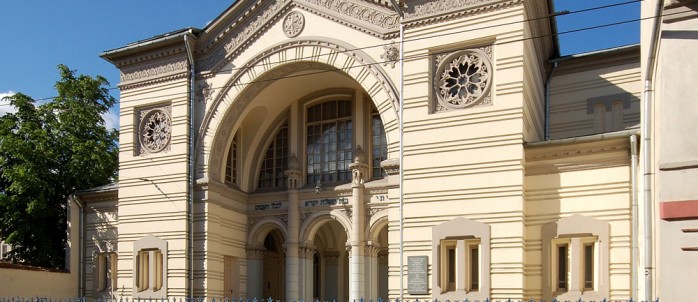
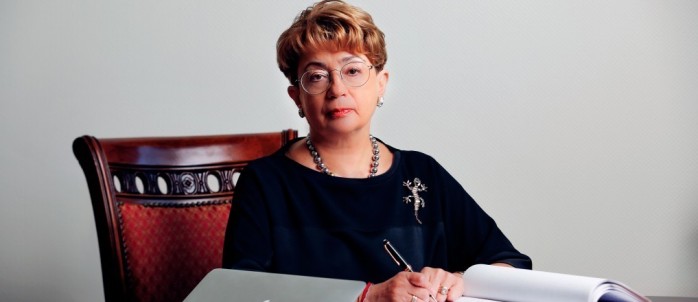
On December 6 the Lithuanian Jewish Community gathered at the Choral Synagogue in Vilnius to light the first Hanukkah candle and enjoy some treats. Israel’s ambassador to Lithuania Amir Maimon and all embassy staff were there, as well as Israel’s honorary consul V. Bumelis and many other honored guests. Rabbi Izakson greeted the assembly. Lithuanian Jewish Community chairwoman Faina Kukliansky lit the first candle and ambassador Maimon lit the second. Traditional Jewish music was played.
Photographs by Milda Rūkaitė
Facebook photo album here.
The Lithuanian news, culture and religion website bernardinai.lt has published a review of a work of fiction by the former Lithuanian minister of culture about a Jewish child surviving the Holocaust in Lithuania.
Rimgailė Kasparaitė reviewed Saulius Šaltenis’s book “Žydų karalaitės dienoraštis,” or “Diary of a Jewish Princess,” published by Tyto alba publishers in Vilnius in 2015. The newspaper and website Lietuvos rytas provided a short synopsis of the book on their page kultura.lrytas.lt, describing it thus:
“‘Žydų karalaitės dienoraštis’ is a novel about young Jewish girl Estera Levinsonaitė’s life in Lithuania during and after the war in the family of a young couple in love. Naked and covered with blood, she crawls to the home of Vladas and Milda on their wedding night…

from left, vice-mayor Kazunori Nakayama, Tsuruga, Fukui Prefecture; Kazuko Shiraishi, ambassador for women, human rights and humanitarian affairs and ambassador in charge of Arctic affairs, Japanese Ministry of Foreign Affairs; Lithuanian ambassador Egidijus Meilūnas; chairwoman of the Lithuanian Jewish Community Faina Kukliansky; Michi Sugihara, executive director, Chiune Sugihara Visas for Life Foundation; Madoka Sugihara, vice-chairwoman, Chiune Sugihara Visas For Life Foundation and Shingo Akatsuka, mayor of Yaotsu, Gifu Prefecture, pose during the Chiune Sugihara event at the Lithuanian embassy in Tokyo on November 18. Photo: Yoshiaki Miura
LJC chairwoman Faina Kukliansky visited Tokyo, Japan in mid-November where she attended an event to honor the diplomat Chiune Sugihara at the Lithuanian embassy.
The large audience of Japanese were presented possibilities for cooperation in commemorating the Japanese diplomat who saved Jews during the Holocaust in Lithuania. They also learned about the cultural and intellectual legacy of the Litvaks, the Holocaust in Lithuania and the Lithuanian Jewish Community. The event created a stir and Jews who live and work in Japan participated. Chairwoman Kukliansky granted an interview to the Asahi Shimbun newspaper and their reporter showed great interest in the history of her family, their experiences during the Holocaust and impressions of Japan.