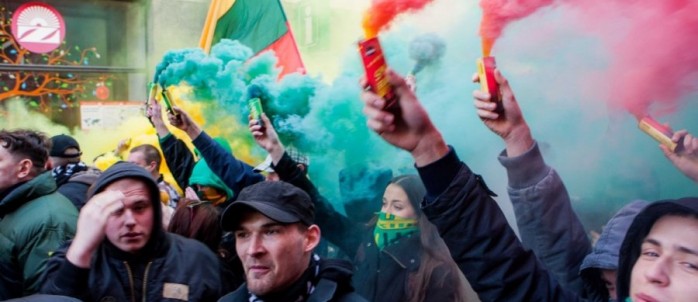






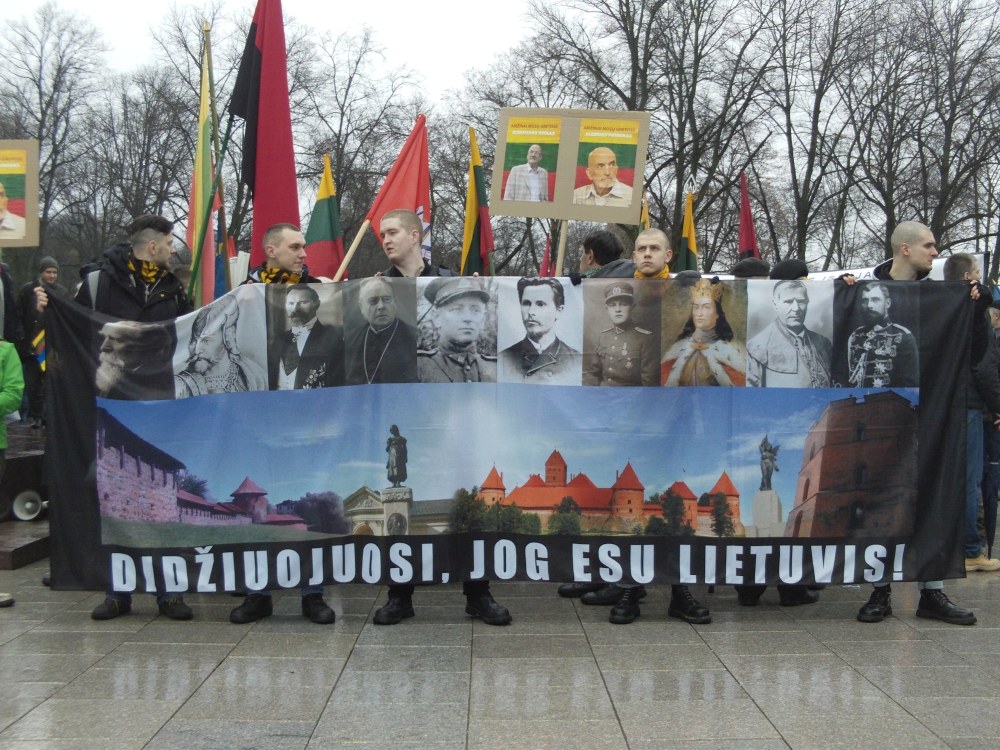
The parade of nationalists and neo-Nazis which has marred Lithuanian independence day celebrations for 7 years in a row went forward this March 11 as well.
Despite attempts by organizers to make the event acceptable and mainstream by calling it “traditional” and “patriotic” and to play down the swastikas and calls for the death of ethnic minorities prominent in earlier years, this year’s march was smaller than last year’s.
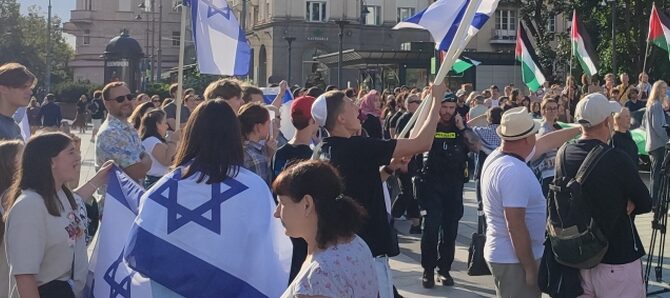
From 200 to 300 people, according to estimates by outsiders, gathered at the statue on Cathedral Square at around 4:00 P.M. on March 11, the more important of Lithuania’s two independence days which marks the date in 1990 when the Lithuanian Supreme Soviet parliament declared independence from the Soviet Union. The square was the final point by another march earlier in the day dedicated to celebrating Lithuanian independence and tolerance, which travelled the same route but in the opposite direction, from Independence Square outside the Lithuanian parliament to Cathedral Square. A large trailer painted military colors behind the gathering at the statue for the 4 o’clock march was outfitted with an oven and volunteers dressed as Lithuanian soldiers were still passing out free hot food to children as a variety of Lithuanian ultranationalists, neo-Nazis, biker gang members and various followers milled about waiting for the march.