The Lithuanian Jewish Community is publishing a series of articles by the historian Algimantas Kasparavičius, a senior researcher at the Lithuanian History Institute.
Part 3
As shown by rather abundant surviving archival sources, memoirs and historiography, the pro-German (more accurately pro-Nazi, since in principle there existed no other Germany at that time operating in the international arena as real geopolitical power) concept and strategy of liberation from Soviet occupation and annexation and restoration of the Lithuanian state [1] began to form during the first days of the Soviet occupation, i.e., the end of June, 1940, mainly at the initiative of Lithuanian diplomat in Berlin colonel Kazys Škirpa, who, for several years, had maintained good and even friendly relations with high Nazi Party figures [2]. The process accelerated immediately upon the annexation of Lithuania. As Stalinist repression growing into state terror and radical socio-political reforms took hold in Lithuania [sic]. An organized anti-Soviet resistance quickly began to coalesce by early October of 1940 in Kaunas. The main author of this strategy and its main ideologue, however, was none other than Lithuania’s long-time military attaché in Berlin, colonel Kazys Škirpa. [3] It was at his initiative and due to his efforts that the Lithuanian Activist Front was established in Berlin on November 17, 1940. The LAF established headquarters in Lithuania in Kaunas and Vilnius. Besides Škirpa, the main LAF figures in Berlin and Lithuania were E. Galvanauskas, Klemensas Brunius, Antanas Maceina and Karolis Žalkauskas, Leonas Prapuolenis, Vytautas Bulvičius, Juozas Kilius, Adolfas Damušis, Jonas Pajaujis, K. Antanavičius, J. Vėbra and others. [4]
In cooperation and consultation with German/Nazi political, military and diplomatic figures–field marshals Wilhelm Keitel and Walter von Brauchitsh, chief of the Abwehr admiral Wilhelm Canaris and Abwehr agent in charge of contact with Baltic anti-Soviet resistance organizations lieutenant colonel Herman Gräbe–a program began to be drafted for liberation from Soviet occupation and annexation. Methods, tactics and political strategy for Lithuanian partisan warfare and insurgency against the Soviets were developed. [5]



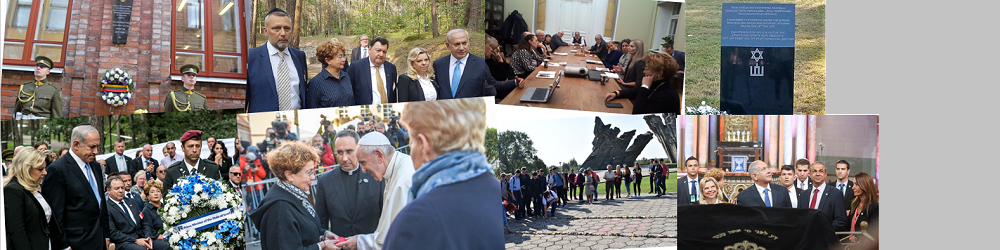


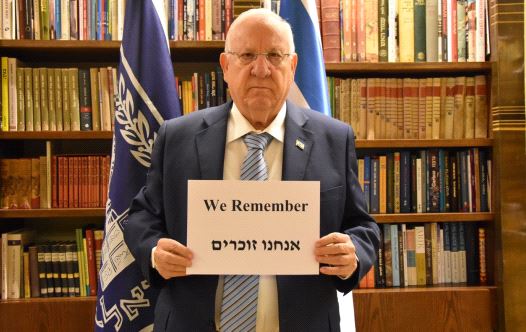 Reuven Rivlin, president of Israel