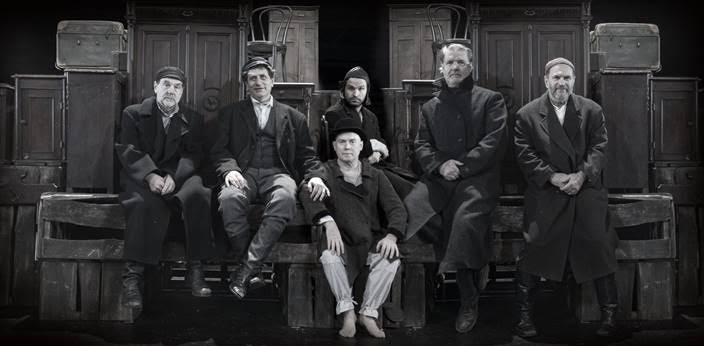
Litvak Al Jaffee Gives Interview to Lithuanian National Radio

Lietuviškų šaknų turintis karikatūristas Alas Jaffee: „Nekuriu nieko nešvankaus“

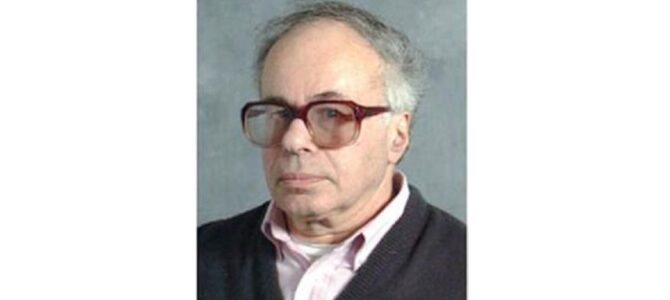
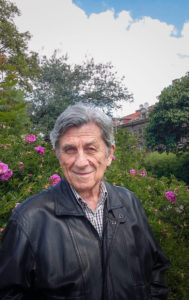
Litvak cartoonist Al Jaffee of MAD magazine fame told Lithuanian state radio’s Week of Culture program so many crazy things happen in the world that one must choose from the world of politics and celebrity at what to laugh now.
Al Jaffe4

He explained he doesn’t like doing anything offensive, cheap, crude or sexual in his art. He simply likes to portray funny situations. When a politician says something outrageous, all he has to do is spin it a little in a certain direction to create one of his trademark caricatures, the 95-year-old cartoonist who holds the Guinness Book of World Records record for longest career in cartooning.
jaf

Full story in Lithuanian here.

Can Auschwitz Be a Graveyard and a Tourist Destination?

krematorium-1-has-been-rebuilt-1484847651
Unless specifically asked tour guides don’t mention gas chamber/crematorium (Krema I) is a reproduction. Photo courtesy Tom Tillett

by Tom Tillett

Menachem Rosensaft once wrote: “As much as any other event, if not more so, the Holocaust requires the chronicler to be scrupulously accurate.” He further notes: “The greater the popularity of this subject, the greater the need for vigilance regarding the treatment it is accorded.” As we approach International Holocaust Remembrance Day, we need to be vigilant.

Since my most recent visit to Auschwitz in 2015 I have been particularly concerned that while its museum often uses the term “authentic experience,” visitors are exposed to a variety of nonauthentic experiences. To provide just a few examples, the infamous Arbeit Macht Frei sign at the main gate is a reproduction; the Auschwitz I footprint actually extended into the current main parking lot and beyond; the gas chamber/crematorium (Krema I) usually shown at the end of the tour is a reproduction, and in Auschwitz II–Birkenau, the line of barracks (Section BIIA) upon entering to your right have been entirely rebuilt. To be fair, the guides will acknowledge this if asked, but the pressure of mass tourism means that they are rarely asked.

I have the utmost respect for the staff at the Auschwitz-Birkenau Memorial and Museum. They have an extraordinarily difficult job where literally every decision or official comment can quickly become controversial, yet they accept the challenge with grace, commitment and passion. The staff must navigate Polish politics, a huge increase in visitors severely straining the infrastructure and financial issues, and they must reconcile various stake-holder groups, each of whom have legitimate, though often conflicting, agendas.

Full story here.

How Auschwitz Can Be Both a Memorial and a Center for Education

by Pawel Sawicki, Auschwitz-Birkenau State Museum

How should we define the authentic remains of the German Nazi concentration and extermination camp Auschwitz-Birkenau, which today are protected and preserved by the Auschwitz Memorial?

Should we define it as:

• 150 buildings, about 300 ruins, including those of five gas chambers and four crematoria in Birkenau that are especially important to the history of the camp.

• Over 13 kilometres of fences, and more than three thousand concrete fence posts.

• About 110,000 shoes and 3,800 suitcases of victims, 2,100 of which bear the names of their owners.

• About 39,000 negatives of registration photographs of prisoners, 48 volumes with about 70,000 of their death certificates, 248 volumes of Zentralbauleitung documents, and 13,000 letters and cards mailed from the camp by prisoners.

This is just the beginning of the list which summarizes the extent and the challenge of our Museum.

There is also another priceless part of our authentic collection: the archives, with over 30,000 pages of testimonies of survivors and eyewitnesses as well as over 45,000 pages of their memoirs. These are individual stories of people who survived, stories which can help us today to comprehend the existing architecture of the former camp through personal experiences, emotions and dilemmas.

Full story here.

Justice Magazine

ea60f96b-9d8f-488d-ada8-7e310c35d01d

Dear friends,

We are pleased to share with you this issue of our Justice Magazine (Number 58).

The timing of this issue is significant, since on January 27th we commemorate International Holocaust Remembrance Day. The articles from our Paris Conference are therefore particularly relevant .

You are also welcome to view some of the presentations from the Paris
Conference on our web: www.intjewishlawyers.org .

IAJLJ Staff

Kaunas Jewish Community Celebrates 120th Birthday of Yudl Mark

Kaune paminėtos Judelio Marko 120-osios gimimo metinės
Yudel_mark_001

The Yiddish Club of the Kaunas Jewish Community is celebrating the 120th birthday of Litvak-American Yiddish philologist, educator and author Yudl Mark (1897-1975). Mark taught at the Vilkomir Jewish Gymnasium and was one of the founders of YIVO. He moved to the United States in 1936, and to Israel in 1970. Among his many great works stands the 12-volume Groyser verterbukh fun der yidisher shprakh (Great Dictionary of the Yiddish Language), which caused dispute with YIVO over the use of non-YIVO orthography.

Judel3

Reminder: International Holocaust Remembrance Day Events Begin Today

You’re invited today at 4:30 P.M. to attend a ceremony at the Choral Synagogue in Vilnius where candles will be lit in memory of the victims of the Holocaust and the El malei Rakhamim prayer will be sung. Afterwards all are invited to the Lithuanian Jewish Community at Pylimo street no. 4 in Vilnius to a discussion of Jewish history with professor Antony Polonsky, moderated by professor Šarūnas Liekis, at 6:00 P.M.

Scratch an Historical Lithuanian Town, You Might Get a Shtetl

The Lithuanian Cultural Heritage Department announced they are already planning for this year’s European Day of Jewish Culture and have selected a theme, “The Diaspora and Heritage: The Shtetl.” They characterized the choice as an intentional, mature and topical one for a country where the formerly large Jewish ethnic and religious minority thrived until the 1940s in shtetls.

They explained the word “shtetl” means small town in Yiddish. “When the Jerusalem Temple was destroyed in 70 C.E., Jews spread throughout the world, starting a new stage in the existence of the people, life in the Diaspora. Jews who settled in the Grand Duchy of Lithuania from the latter half of the 14th century and their descendants are called Litvaks. They are a branch of the Ashkenazi, Jews fleeing persecution in the German lands in the Middle Ages,” the department noted in a press release.

They continue: “It’s possible the origins of the shtetls reach back to the 18th century, but one shouldn’t get the mistaken impression that every historical Lithuanian Grand Duchy or Lithuanian town may be called a shtetl. Not so! Only a town where Litvaks comprised up to half, and often more, of the population and where the spirit of Litvak enterprise and intellectual ferment was felt can be called a shtetl without reservations.”

Vilna Gaon Museum Offers Free Tours, 2 Films and Discussion for Holocaust Day

du draugai

To mark International Holocaust Remembrance Day, the Vilna Gaon State Jewish Museum in Vilnius is screening two biographical films and opening a new exhibit about a remarkable friendship between a Pole and Hungarian which ended up saving thousands of lives. The events are open to the public at the museum’s Tolerance Center located at Naugarduko street no. 10/2, Vilnius.

On January 26 the museum debuts its exhibition called Sławik and Antall: The Great Rescuers. Heroes of Three Nations: Poles, Hungarians and Jews and screens the film Life on the Edge. Henryk Sławik, József Antall’s Senior (2014) with the film’s director Grzegorz Łubczyk participating. The film is being shown in cooperation with the embassies of Poland and Hungary and the Polish Institute in Vilnius.

The museum will offer a different take on the Holocaust on January 31, with the discussion at the Tolerance Center at 5:30 P.M. called “The Banality of Evil” with museum director and writer Markas Zingeris and historian Nerijus Šepetys. The discussion is to be followed by a screening of the biographical film Hannah Arendt, to be shown in cooperation with the German embassy to Lithuania. The film is about Arendt who wrote about the Eichmann trial in Jerusalem for the New Yorker magazine and in her own book. Arendt’s ideas about what she called the banality of the evil at work among up-and-coming young Nazi professionals has been met with both criticism and acclaim since she wrote her groundbreaking work.

On January 27, the 72nd anniversary of the liberation of Auschwitz-Birkenau, the Holocaust Exhibit of the Vilna Gaon Jewish State Museum at Pamėnkalnio street no. 12, Vilnius, will offer to the public free guided tours in English or Lithuanian.

Kvietimas_EN

Lithuanians Rediscover Their Own Anne Frank


Estera Kverelytė second from left

Romualdas Beniušis writing in the newspaper Lietuvos žinios tells the story of Estera Kverelytė, a Jewish girl from Darbėnai (Drobyan or Dorbyan in Yiddish), Lithuania, who kept a diary in the months leading up to her murder at the hands of postman and policeman Vladas Jašinskas presumably in early July of 1941. Kverelytė’s diary has been lost but is known to have existed and was used in a documentary called “Nebaigtas dienoraščio puslapis” [Unfinished Page of a Diary] released by the Lithuanian Film Studio in 1964 and still available for viewing on the internet archive of Lithuanian National Radio and Television, according to the author. Beniušis is trying to locate the diary and is asking the public for help.

Full story in Lithuanian here.

Condolences

Long-time member of the Vilnius Jewish Community Galina Krivonosova passed away January 23. She was born October 4, 1937. We send our deepest condolences to her family and loved ones.

We Remember

weremember_website_banner3

Bendruomene We remember

Jewish Community members including a number of Holocaust survivors

16113910_1393314054034017_8722848022136507426_n (1)

As International Holocaust Remembrance Day on January 27 draws near, the World Jewish Congress is inviting everyone to join the global campaign We Remember. Please try to make sure your Community and its leaders visit schools, churches, synagogues, youth organizations and other institutions to deliver the message. Ask your friends, students and teachers who consent to be photographed to hold homemade We Remember signs as their portraits are taken and sent directly to facebook, twitter and/or instagram, and send a link to weremember@wjc.org

Why now?

In 2017 we have to remember the Holocaust.

Because so many more of the survivors are leaving us…

Because Holocaust denial is not getting weaker,

Because genocide is still happening…

And because it is so important to educate the coming generations.

Together, we want to remind the world about all that happened.

R.Rivlin We rememberReuven Rivlin, president of Israel

US President Asks Netanyahu to Visit to Discuss Urgent Issues in February

US president Donald Trump invited Israeli prime minister Binyamin Netanyahu to the US capital next month in a telephone call Sunday. The exact date for the meeting will be worked out in the next few days. Just hours between the telephone call between the two leaders, which was characterized as “very warm” in a press release following, Israel issued permits for construction of several hundred new homes in East Jerusalem. Netanyahu’s office issued a statement following the phone call saying both leaders agreed on a treaty with Iran over nuclear power development, on the peace process in Israel and other issues. The PM expressed the desire to work closely with the president to develop a vision for regional peace and security. There was no immediate discussion of moving the US embassy from Tel Aviv to Jerusalem. The acting White House press secretary told AFP talks on that, which would recognize Israel’s claims to Jerusalem as its capital, were still in the early stages. President Trump has had or will have meetings with the leaders of Great Britain and Canada in the coming weeks.

Accusations against Israeli Prime Minister Binyamin Netanyahu Explained

lrtradijas

Many Israelis believe any accusations made against Binyamin Netanyahu are a political attempt to compromise him, his party and the ruling coalition, others believe he is corrupt in any event and the actual charges aren’t important. That’s what left-leaning anti-Netanyahu newspaper Ha’aretz journalist Anshel Pfeffer conveyed in an interview with Lithuanian National Radio.

Asked what exactly is going on with two separate accusations against Netanyahu–one alleging he accepted bribes and the other that he attempted to influence newspapers–Pfeffer said an on-going investigation has only recently come to the public’s attention. He said police have been investigating the prime minister for months on allegations concerning his financial affairs and agreements. Pfeffer said the prime minister is a suspect in both cases.

Kaunas Jewish Community Member Delights Modern Dance Enthusiasts

Kaunas Jewish Community member Liza Baliansnaja is presented her conceptual dance performance Residual at the AURA+ performance space on January 18. She was a member of the Kaunas dance troupe Aura from 2009 to 2011, then moved to the Netherlands and last year was graduated from the prestigious PARTS school of theatrical art and choreography in Belgium last year.

Her solo work could be called a sketch, she said. But that doesn’t mean Residual is incomplete, she cautions. In a way the piece reflects the dancer’s desire to shake off stress from striving for a perfect dance performance. She said she sought to reactivate the connection between the viewer and the actions on stage, creating a space for new ideas. Based on the connection of the libretto of the ballet the Sylph (Sílfide, Sylphide, “air elemental” in alchemy) with exophilosophy, Baliansnaja presents a diversity of expression exploring this relationship from different perspectives. How are we understood from the perspective of non-human life-forms? What is characteristically human as viewed from the outside, in the eyes of other beings?
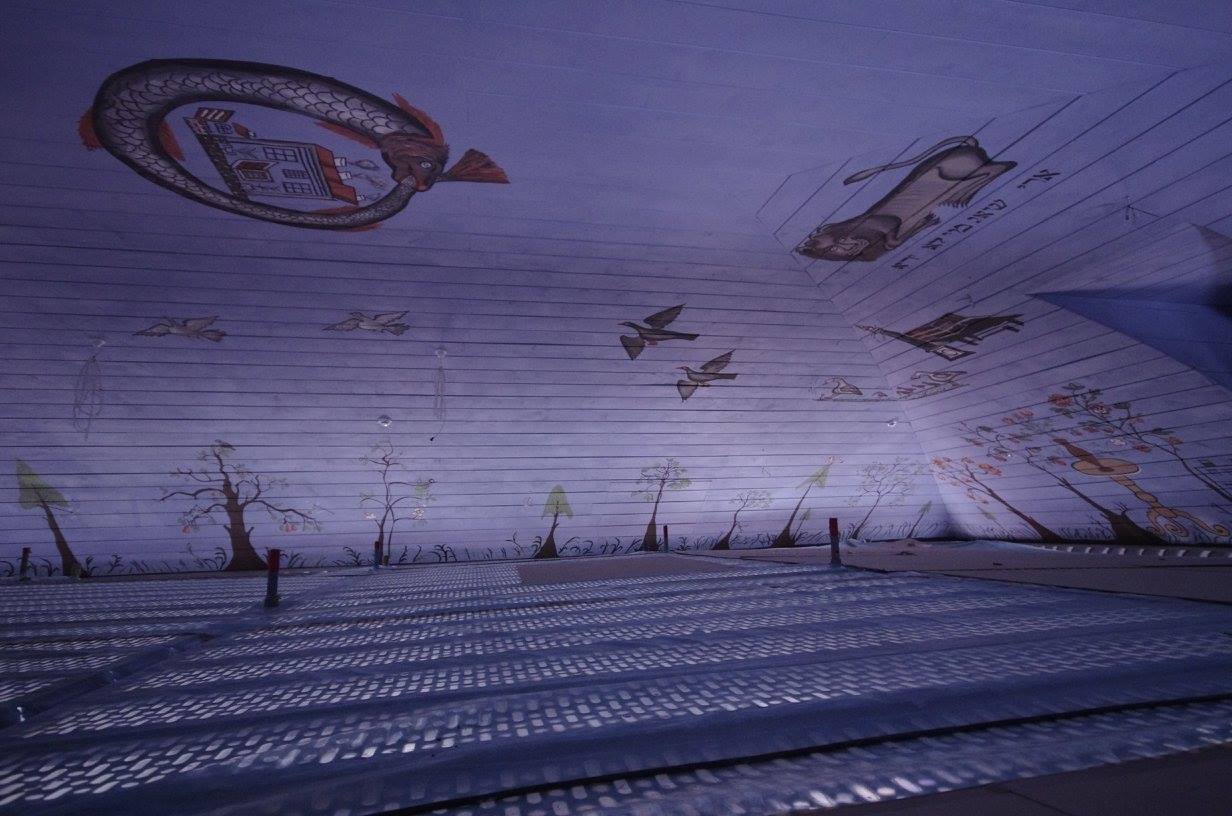
Radio Documentary: Lost Traces of Vilkaviškis

„Radijo dokumentika”: dingusio Vilkaviškio pėdsakais
Vilkaviškis synagogue

lrtradijas

The Lithuanian National Radio program Radijo Dokumentika aired the episode on at 11:05 A.M. on January 22. It is to be rebroadcast at 9:00 A.M. on January 24 just after the morning news program Ryto Garsai.

Feiga Koganskienė, who lived in the town in the Suvalkija region right up till World War II, says: “Vilkaviškis is only the name Vilkaviškis, it has nothing in common with the former Vilkaviškis.” When she returned to her home town after the war, the woman did not recognize it, and found none of her Jewish family or friends.

Vilkavišio ž buvusi gimnazija

The modern Vilkaviškis Jewish Gymnasium between
the wars, now the city municipal building.

Before the war Vilkaviškis was one of the most ethnically and culturally diverse towns in the region, but now it’s perhaps the most Lithuanian town in the entire country. Today only a handful of people remember Vilkaviškis in the interwar period, and even fewer are prepared to look into the town’s Jewish history. In the Lost Traces of Vilkaviškis episode, Radijo Dokumentika reporters walk with residents for whom the Vilkaviškis of that time is not just a collection of faded facts from history.

Lithuanian Jews behind the Iron Curtain: An Exhibit in Tblisi

Gruzija5vell

The David Baazov Museum of the History of the Jews of Georgia opened an exhibition January 18 called “Lithuanian Jews behind the Iron Curtain” about the Lithuanian Jewish community during the initial Soviet occupation of Lithuania in 1940. Members of the local Jewish community, diplomatic personnel and lovers of history were invited to attend the opening of the moving and historically informative exhibition of photographs and historical documents. Lithuanian ambassador to Georgia Giedrius Puodžiūnas and Tblisi Jewish Community chairman Jamlet Khukhashvili opened the exhibit and the Georgian minister of culture, the minister of reconciliation and civil equality and the Israeli ambassador spoke. The main focus of the exhibit was on individual efforts to resist restrictions on freedom, identity and historical memory. The exhibit is based on primary sources and items from the Vilna Gaon State Jewish Museum, documents from the Lithuanian Central Archives, the Lithuanian Special Archives and personal collections. The exhibit was prepared by the Vilna Gaon museum in Vilnius, Lithuania.
Lithuanian Political Illusions: The “Policy” of the Lithuanian Provisional Government and the Beginning of the Holocaust in Lithuania in 1941

The Lithuanian Jewish Community is publishing a series of articles by the historian Algimantas Kasparavičius, a senior researcher at the Lithuanian History Institute.

kasparavicius

Part 3

As shown by rather abundant surviving archival sources, memoirs and historiography, the pro-German (more accurately pro-Nazi, since in principle there existed no other Germany at that time operating in the international arena as real geopolitical power) concept and strategy of liberation from Soviet occupation and annexation and restoration of the Lithuanian state [1] began to form during the first days of the Soviet occupation, i.e., the end of June, 1940, mainly at the initiative of Lithuanian diplomat in Berlin colonel Kazys Škirpa, who, for several years, had maintained good and even friendly relations with high Nazi Party figures [2]. The process accelerated immediately upon the annexation of Lithuania. As Stalinist repression growing into state terror and radical socio-political reforms took hold in Lithuania [sic]. An organized anti-Soviet resistance quickly began to coalesce by early October of 1940 in Kaunas. The main author of this strategy and its main ideologue, however, was none other than Lithuania’s long-time military attaché in Berlin, colonel Kazys Škirpa. [3] It was at his initiative and due to his efforts that the Lithuanian Activist Front was established in Berlin on November 17, 1940. The LAF established headquarters in Lithuania in Kaunas and Vilnius. Besides Škirpa, the main LAF figures in Berlin and Lithuania were E. Galvanauskas, Klemensas Brunius, Antanas Maceina and Karolis Žalkauskas, Leonas Prapuolenis, Vytautas Bulvičius, Juozas Kilius, Adolfas Damušis, Jonas Pajaujis, K. Antanavičius, J. Vėbra and others. [4]

In cooperation and consultation with German/Nazi political, military and diplomatic figures–field marshals Wilhelm Keitel and Walter von Brauchitsh, chief of the Abwehr admiral Wilhelm Canaris and Abwehr agent in charge of contact with Baltic anti-Soviet resistance organizations lieutenant colonel Herman Gräbe–a program began to be drafted for liberation from Soviet occupation and annexation. Methods, tactics and political strategy for Lithuanian partisan warfare and insurgency against the Soviets were developed. [5]

Holocaust Remembrance Day with Dr. Antony Polonsky

You’re invited to a public meeting and discussion with Dr. Antony Polonsky (the Albert Abramson professor of Holocaust Studies at Brandeis and the chief historian of the Museum of the History of Polish Jews in Warsaw) called The History of the Jews in Lithuania, Poland and Russia at 6:00 P.M. on Thursday, January 26, in the Jascha Heifetz Hall on the third floor of the Lithuanian Jewish Community (Pylimo street no. 4, Vilnius).

Moderator: professor Šarūnas Liekis.

Polonsky-2017-Web-EN-001