

For the fifth year in a row the Klaipėda Jewish Community has carried out a charity campaign to help the patients at the Klaipėda Children’s Hospital. According to Jewish custom, children receive a bit of money and gifts during Hanukkah which they must share. Children donated gifts to children being treated at the trauma unit of the hospital. Children’s Hospital chief physician Klaudija Bobianskienė told children and parents about the Children’s Hospital and showed them the latest diagnostic equipment. Diapers were donated to the newborns’ unit during the charity event as well.
Let’s Honor Our Hanukkah Traditions
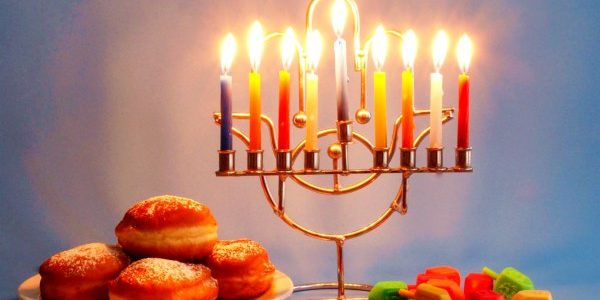
Lithuania is a country with roots in the Litvak (mitnagdic, Jewish Orthodox) tradition. Our community is the direct inheritor of more than 600 years of Jewish history and the successor to the traditions of the Vilna Gaon, and we keep our traditions.
When the Jewish museum chose the Gaon’s name for their title, we understood it as a sign of respect for mitnagdic tradition. Has someone proposed changing that name? Let’s honor our traditions during Hanukkah as well. Lighting a menorah in a city square is a Chabad tradition, and Litvaks do not encourage that sort of celebration of Hanukkah, instead, everyone is invited to Vilnius’s only working synagogue.
Electric lights are most often used in huge Hanukkah candelabra displays in central squares or other prominent areas of cities. Chabad reports this “tradition” began with the seventh Chabad rebbe, Rabbi Menachem Shneerson, who ordered these types of Hanukkah menorah displays in public spaces, the first having been set up in Philadelphia in 1974. Chabad Hassidim then began to carry out these sorts of campaigns around the world. These campaigns have not always and not everywhere met with support and approval. Besides different anti-Semitic attacks, there are on-going discussions even now, at least in the USA and other countries which adhere to the principle of the separation of church and state, which precludes displays of religious symbols in public spaces, a ban which is now and again in places applied to Christian symbols, and therefore should be applied to other religious symbols as well. Different municipalities, however, find a way around this ban, adopting decisions which, for example, state that neither Christmas trees nor gigantic menorahs erected in public spaces are religious. We could probably agree with that belief, having in mind these huge menorahs are not traditional in public spaces. All the more so since they employ electric lights rather than wax candles or oil. But the diverse politicians who participate in these lighting ceremonies likely participate viewing them as a cultural rather than religious holiday, seeking to demonstrate their tolerance towards ethnic minorities living in their countries.
For a number of years there has been a giant menorah set up in Vilnius at the initiative of Chabad, and politicians and diplomats like to attend the lighting ceremonies, thinking they have found an opportunity to express solidarity with the Jews of Lithuania, while the more ancient tradition of lighting the Hanukkah candles in private homes and at their entrances goes largely unnoticed. It is these lights which are supported to perform the role of testimony, the most important religious meaning: the lights should be lit at the entrance to the home or on window sills, so they can be seen from outside, as a testimony, according to the Talmudic sages. Although Chabad Hassidim are historically inseparable from the Jews of Lithuania (their communities in Vilnius date back to the time of the Russian Empire), they do not represent all Jews of Lithuania, and especially not those who consider themselves misnagdim, often referred to simply as Litvaks. Perhaps the city of Vilnius this year could look for some sort of Solomonic solution which wouldn’t preclude the Litvak community and would respect their traditions. Or simply point out that the erection of gigantic menorahs is not automatically perceived as a universal Jewish tradition.
Come Celebrate Hanukkah at the Choral Synagogue of Vilnius
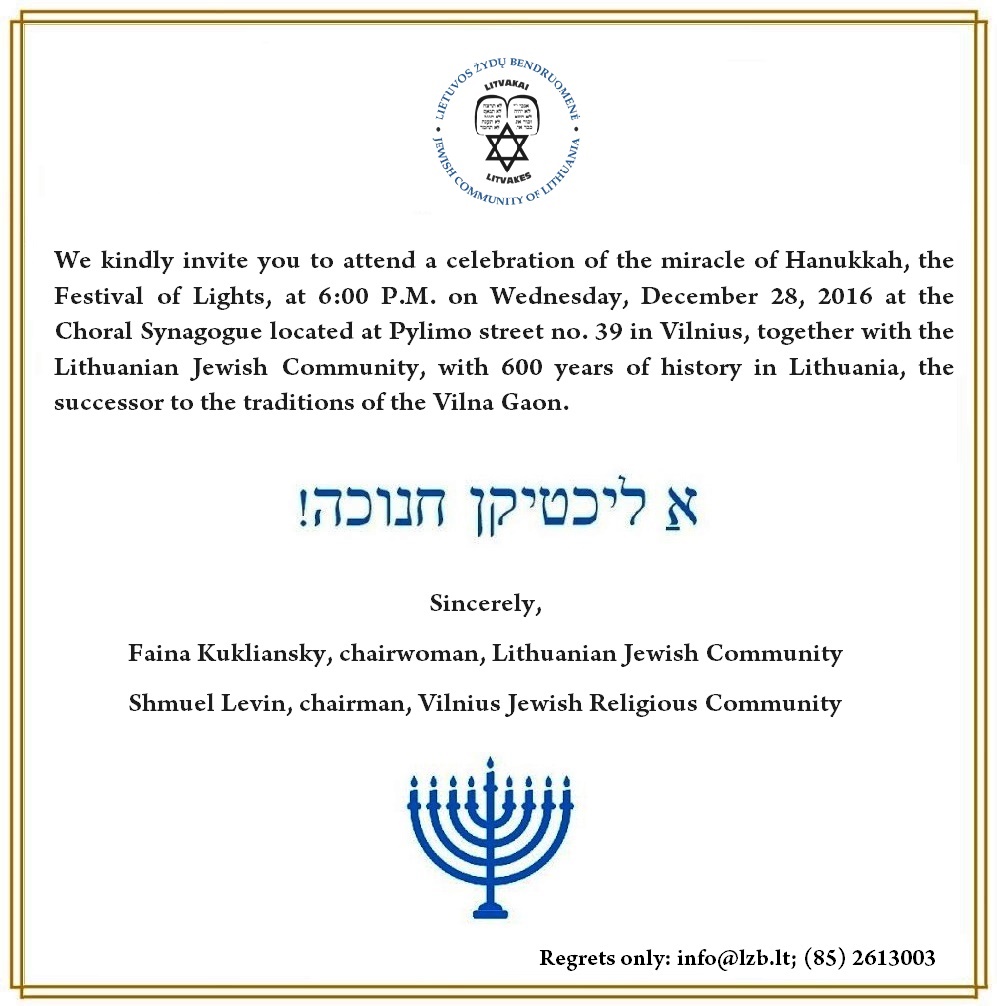 Program:
Klezmer music
Story of Hanukkah by Rabbi Kalev Krelin
Candle-lighting ceremony
Holiday statements and wishes
Traditional Hanukkah treats
Hanukkah Chess Championship
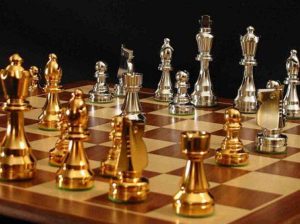
As we near the eight days of Hanukkah, the Lithuanian Jewish Community and the Rositsan and Maccabi Elite Chess and Checkers Club invite you to a chess tournament to be held at the LJC, Pylimo street no. 4, Vilnius, at 5:00 P.M. on Sunday, December 18.
Tournament director: FIDE master Boris Rositsan
For more information, please contact:
info@metbor.lt
+3706 5543556
The Religious and Secular Meaning of Hanukkah and Litvak Traditions
for lzb.lt by Dr. Aušra Pažėraitė, associate professor and lecturer, Religious Studies and Research Center, Vilnius University
“…While the Chabad Hassidim cannot be excluded from the ranks of Lithuanian Jews (their communities in Vilnius go back to the time of the Russian Empire), they do not represent all Lithuanian Jews, and especially not those who consider themselves misnagdim, largely known simply as Litvaks. Perhaps the Vilnius municipality this year could seek for some sort of Solomonic solution which wouldn’t step on the toes of the Litvak community and would take their traditions into account. Or simply point out that the erection of a giant menorah is not tacitly understood as a universal Jewish tradition…”
The holiday of Hanukkah, celebrated for 8 days beginning on Kislev 25, is one of those holidays which the Torah does not demand be celebrated. That’s understandable, since the holiday comes from a time after the Torah was given. The name of the holiday is explained by examining the root, which indicates inauguration, celebration, dedication, establishment, and these actions are connected with the reconsecration of the Temple in Jerusalem. The holiday is begun by lighting a candle or an oil lamp, over the eight days lighting one more flame each day. The Talmud (Shabbat 21b-22a) relates that one school of thought in the first century, Beit Shammai, was of the opinion all eight flames should be lit initially and successively extinguished one by one daily, while Beit Hillel followers believed one flame should be lit the first day, two the second day until all eight were lit, which is the belief which took hold and is followed till today. As Rabba bar bar Hana explains, relying upon what Rabba Johanan said on the issue: “The thinking of Beit Hillel is that we should grow in the light, not shrink” (Shabbat 22a). Light should increase daily. It is the opinion of many authors that something which burns up by itself in a limited time should be burned, and that there be just enough “fuel reserves” that it extinguish itself within 30 minutes after “the onset of night.” Therefore electric light bulbs are inappropriate. Although some allow their use, if there is nothing else available, no special blessing is said upon their lighting.
Hanukkah Envy
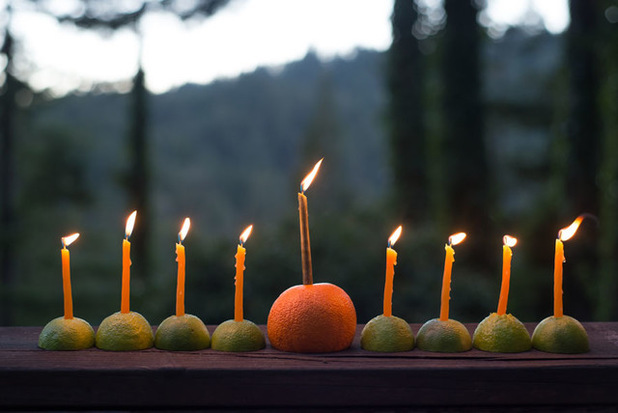
by Geoff Vasil
There’s a bit of mystery as to what Hanukkah is among non-Jews. I grew up in America and went to an “alternative” grade school in the 1970s, where they attempted to teach us about different cultures. One winter, when I was in the first grade, some nice ladies came and told us the Hanukkah story. I think even then they stressed it was NOT the Jewish Christmas, and they told us the traditional gift for children was a simple orange, which were scarce in Northern Europe and reminded Jews of their true homeland.
That’s the good news about Hanukkah, if you’re worried about what gifts to buy. Hanukkah isn’t a big gift-giving holiday. Children may expect an orange or Hanukkah gelt, foil-wrapped chocolate coins. It’s traditional for children to spin the dreidl on Hanukkah, and foods fried in oil—doughnuts and potato pancakes or latkes—are traditional, for reasons to be explained below.
Of course in Western society, in majority-Christian cultures, Hanukkah must compete in the mind of the child with that grand finale of all holidays, Christmas. Christmas is so pervasive it has been adopted even by the non-Christian Japanese. In the Soviet Union they could never quite get rid of it, despite determined efforts to create a universal Winter Holiday with all sorts of fairytale and cartoon characters (including Disney characters towards the end-times for the USSR). Romanian dictator Nicolae Ceaușescu only really met his fate after he outlawed Christmas. Santa Claus seems to have some very powerful friends, and as the saying goes, you can’t fight city hall, in this case, you can’t fight the pull of the North Pole and Santa’s workshop. Of course Jews aren’t fighting, or joining, just maintaining what is called the minor holiday of Hanukkah in parallel with the Christian festival.
The Secret’s Out: Bagel Shop Featured on Russian Travel Site
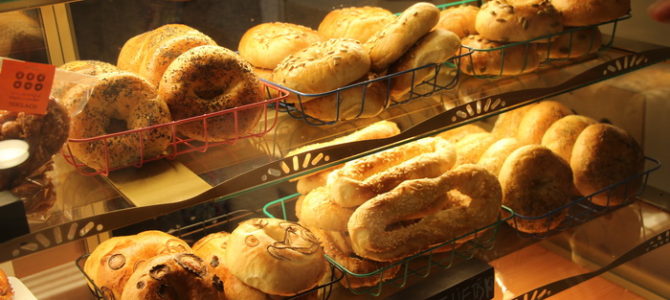
Travel journalist and photographer Evgenii Golomolzin from St. Petersburg, Russia, has written a long piece about the culinary experiences available in Vilnius, with the Bagel Shop featured prominently.
Vilnius is a cosmopolitan city where all sorts of ethnic dishes are on offer, he writes. As a heavily Jewish city of many centuries, it has preserved Jewish traditions even after the Holocaust. There is an old Jewish quarter. A year ago the Bagel Shop Café appeared as well. The kosher café the Bagel Shop is an exotic attraction. The Bagel Shop is located at Pylimo street no. 4. The café is not large and is very simple, but original. It feels like a small apartment with the books and knickknacks on the shelves. You can read the books as you sip coffee, you can buy a Hebrew dictionary or a Jewish calendar. But people come here not for the books, but for the real Jewish treats and the bagels (€0.85 apiece). Five kinds are sold at the café.
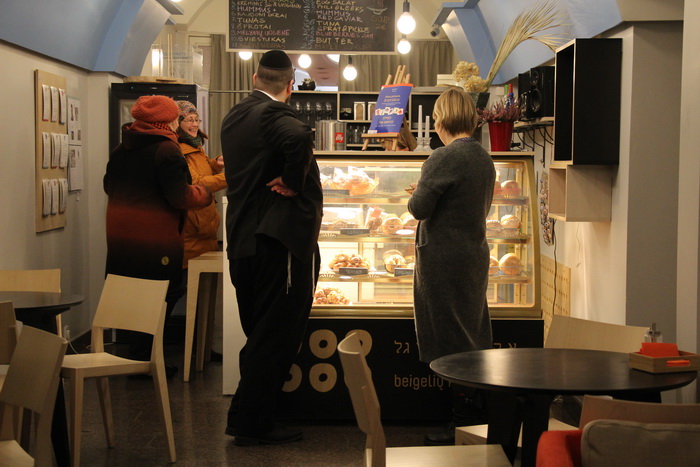
The display case also has lekakh, a Jewish sweet-cake; imberlakh, a pastry made of carrots, ginger and orange; and teiglakh, small cakes cooked in honey. You can order something more filling, for example, soup with dumplings (€2.00), an egg-salad sandwich (€3.60), tuna sandwich (€3.60) or hummus sandwich (€3.60). It’s all delicious. The café opened just recently—in 2016—but has already become a tourist attraction, the St. Petersburg-based travel publication writes.
Full story in Russian with very nice photographs here.
LJC Social Department Jewish Family Services Pre-Hanukkah Event for Children
December 10–In the run-up to Hanukkah children’s activities were held at the LJC. Twenty-two people, parents and children in the LJC Social Department’s Jewish Family Services program, took part.
During the activities parents helped their children and everyone learned how to make candles, an essential tribute of the Festival of Lights. The children seemed to enjoy handling the pliable wax which will light up the holiday this year at their homes. They were also told the Hanukkah story. After the candle-making and story the children were treated to traditional Hanukkah doughnuts. It was an enjoyable event in the run-up to the Hanukkah holidays.
New Book by Lithuanian Writer about State of Israel
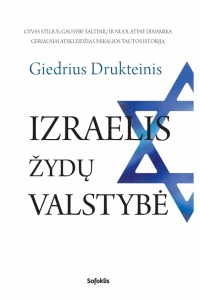
Accomplished author, lecturer and media personality Giedrius Drukteinis has a new book out called “Izraelis – žydų valstybė” [Israel: The Jewish State] and as with his comprehensive treatment of the United States-Viet Nam war, it’s a long one, 832 pages. It was published by Sofoklis publishing house in Vilnius in 2016.
Drukteinis goes through the main events in Jewish history in chronological order, from exile to Babylon, the Middle Ages, modern emancipation, roots of anti-Semitism, aliyah, Zionism, relations with Arabs, the Jewish experience during both world wars, the foundation of the state and modern development in the current period. The chronological layout is intended to help Lithuanian readers orient themselves to the creation and history of the Jewish state, according to the publisher.
The book devotes much space to the concept of aliyah leading up to the founding of the unique State of Israel. One reviewer said most of the book is about warfare.
Lesson by Rabbi Kalev Krelin at Choral Synagogue
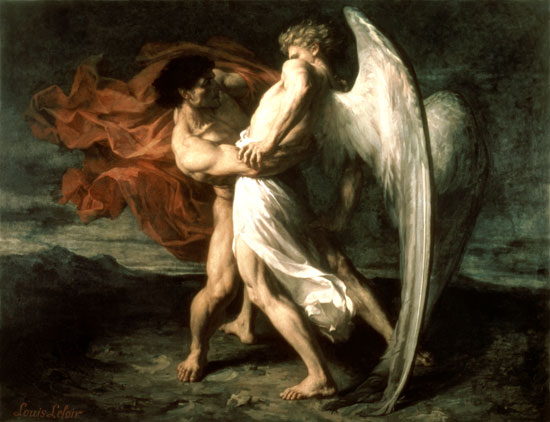
Dear Community members,
This is to inform you that the series of teachings about Jacob, the patriarch of Israel, is continuing. You are invited to Rabbi Kalev Krelin’s lesson called “The Metamorphosis of Jacob” where you will learn what changed after Jacob wrestled the angel, to be held at 6:30 P.M. on Thursday, December 15, 2016, at the Choral Synagogue in Vilnius located at Pylimo street no. 39.
Death of Daniel Dolski Marked in Kaunas
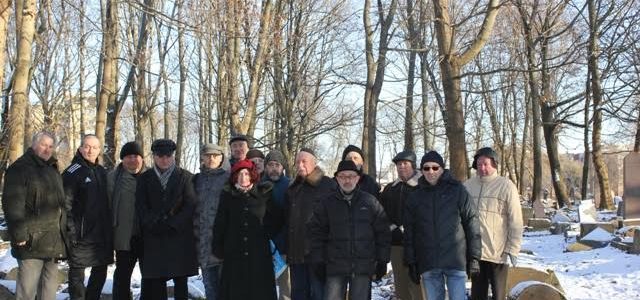
The Kaunas Jewish Community marked the 85th anniversary of the death of Daniel Dolski (stage name of Daniel or Donil Broides), one of the founders of the genre known as “estrada music” in Eastern Europe, popular and sometimes humorous schlager-style songs performed on stage. Iser Shreiberg, the chairman of the Kaunas Hassidic Synagogue Religious Community and a member of the Kaunas Jewish Community, said a prayer for the dead at Dolski’s grave in the Jewish cemetery in the Žaliakalnis neighborhood of Kaunas. Those who turned out for the commemoration recalled the Kaunas Jewish Community had tended the grave of the performer.
If Jews Celebrated Christmas

What if Jews celebrated the ritual of the Christmas tree? Would the halakhic demands be any more restrictive than the standard American Christmas rituals, including purchase, selection and decoration requirements? See this video to find out.
South Africa: Union of Jewish Women Performs Mitzvot in 6 Cities
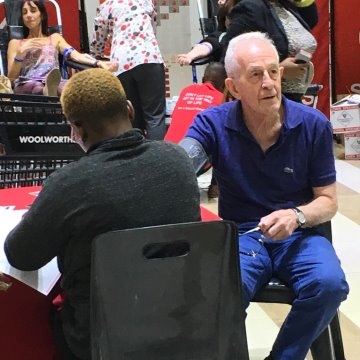
November 30, 2016–The Union of Jewish Women gave tangible substance to Mitzvah Day this year by performing mitzvot [good deeds] in six cities in South Africa.
Johannesburg held a blood drive at the Norwood Mall, where 82 pints of blood were collected, a record for such an event, according to the South African National Blood Services. This amount of blood is expected to save 246 lives.
Cape Town’s UJW joined forces with Temple Israel and the Rotary Club and not only provided lunch for the residents of Includid, a state-run institution for adults with mental and physical disabilities, but some of the volunteers also assisted with gardening at the facility, while others painted the interior of one of the houses. All the residents were provided with gifts sponsored by UJW.

Durban’s Mitzvah Day project was a combined party for the residents of Beth Shalom Retirement Home and the residents of Issy Geshen Home.
East London donated food parcels to indigent families and in addition distributed beautiful knitted beanies and teddies to children in the oncology ward at Frere Hospital. A joint mitzvah between two branches was performed when the Port Elizabeth branch advised East London that a man, going only going by the name of Velapi and whom they had previously assisted with medical help, had moved to East London and was in desperate need of a wheelchair. And so a wheelchair was promptly handed over to the delighted Velapi.
Port Elizabeth held a “Sunshine for Seniors” Mitzvah Day party for the residents of Glenvandale Frail Care Centre, an extremely under-resourced home in an impoverished area. Each resident received lunch as well as a gift.
Pretoria enlisted help from the residents of Jaffa Retirement Home to assist in making sandwiches for the outpatients at the Steve Biko Hospital.
Full story here.
Israeli Booth at Annual Charity Fair in Vilnius
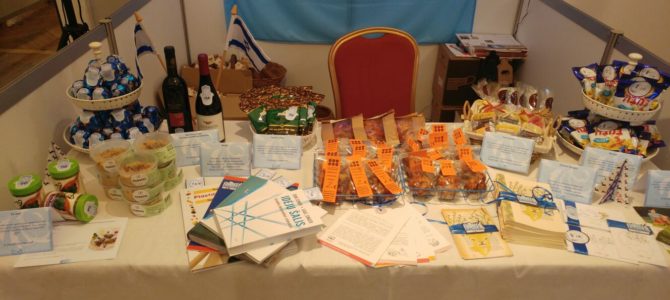
The Israeli booth at the annual International Christmas Fair on December 4 at Old Town Hall Square in Vilnius, set up jointly with the Bagel Shop of the Lithuanian Jewish Community, offered passer-by kosher snacks and kosher wine and all types of souvenirs. Young female volunteers from the Bagel Shop Café “manned” the booth and cheerfully explained every item on offer to visitors. The embassy of the State of Israel and the Lithuanian Jewish Community were both very happy with the success of the joint venture and with having the opportunity to contribute to the noble goal of the fair. The Israeli embassy booth took in 1,310.80 euros during the event.
Our deepest gratitude goes out to the volunteers:
Eglė Rimkevičiūtė, Unė Kormilcevaitė, Agota Laurinavičiūtė and Naomi Alon
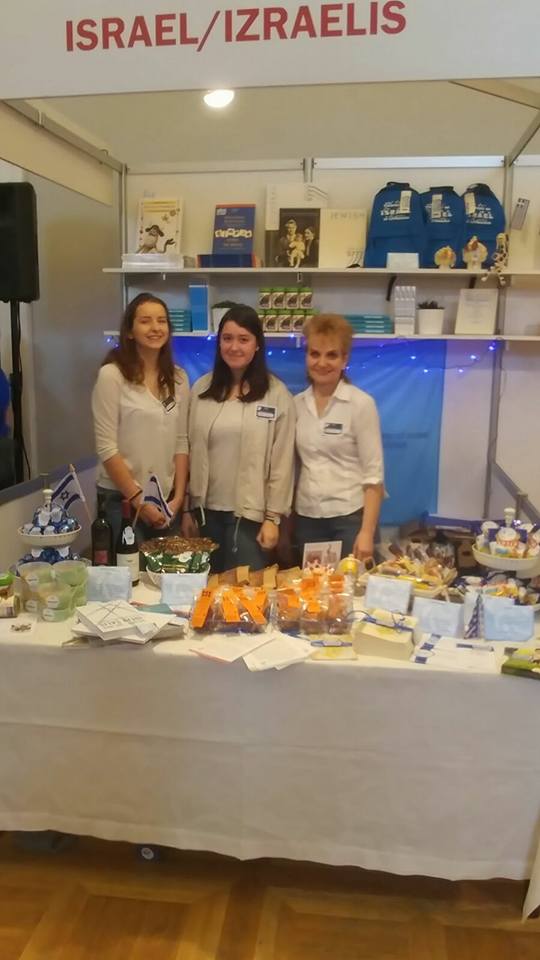
This fair brings together for charity work annually representatives of the different embassies in Vilnius who present hand-made items for sale to city residents and guests. Thirty-four different countries and a number of communities as well as five international schools in Vilnius are represented traditionally at the winter holiday fair. Income from the Christmas charity fair goes to the coffers of a charity fund which currently supports 10 organizations: The Raseiniai Special-Needs School, the Way of Hope Raseiniai day center, the Vilijampolė social welfare home, the Visaginas social services center, the Overcoming Crises Center, a home for the elderly in Alanta in the Molėtai region, the hospital of the Lithuanian Health Sciences University, the Tautmilės Globa animal shelter, the Family Home of Mother Teresa and the Vilties Namai charity and welfare fund. The International Women’s Association of Vilnius of women from Lithuania and foreign countries who are temporarily living and working in Vilnius stages the International Christmas Charity Fair annually.
Thank You for the Wonderful Organization of Events

Recently events held by the Lithuanian Jewish Community have surpassed one another in the quality of organization and the positive emotional interest and participation by Community members have been a source of joy. LJC chairwoman Faina Kukliansky would like to thank organizers and participants:
“All of your contributions have made the life of Community members more interesting and diverse. We will remember the warm and moving moments we spent together when we all kneaded dough together with our daughters and grand-daughters, with our friends and guests during Sabbath challa-making events at all the communities in Vilnius, Kaunas, Klaipėda, Panevėžys, Ukmergė and Šiauliai, all of us joining together for the first time in the global Jewish Shabbos Project. I thank project coordinator Dovilė Rūkaitė, all the heads of the regional Lithuanian Jewish communities and the Bagel Shop cooks who participated together. I also thank the Lithuanian Cultural Council who supported the project.
I would also like to thank the organizers of the Mini-Limmud conference and its main supporters, the European Jewish Fund and the Goodwill Foundation, who supported the preparation of the program and the organization of interesting meetings. The traditional Limmud conference never fails to attract a group of concerned and engaged members of the LJC and their families to its ceremonial Sabbath dinner. It is important for us to come together and talk, to spend time in a pleasant environment, so we always strive to gather on weekends, in a beautiful natural setting at a good hotel, and to invite interesting guests to take part in a meaningful program, see famliar faces and discuss current events. Mini-Limud coordinator Žana Skudovičienė, who fields all preferences and ideas for the conference and balances different interests, insured that this year’s Limmud was memorable and event which provided good emotions and rest and recreation.
Thank you, all of you!
Faina Kukliansky, chairwoman
Lithuanian Jewish Community
Barbed Wire at Synagogue
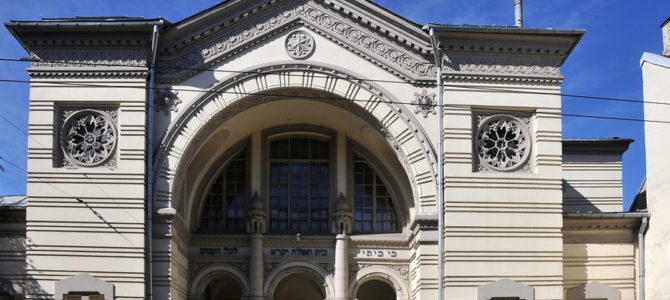
We’ve received some angry emails about the barbed wire which has appeared on the synagogue fence. The main point seems to be that it’s not aesthetic. Of course it’s not. And it doesn’t fit in with our unique synagogue built in 1903 with its architectural authenticity.
Many students and teachers from Vilnius and Lithuania visit our synagogue. Tourists also visit. This year more than 5,000 guests visited the synagogue.
The Lithuanian Jewish Community celebrates all the traditional Jewish holidays at the synagogue. Our guests also celebrate with us, including foreign ambassadors and members of the Lithuanian Government and members of parliament. We are working actively with public organizations in the European Union which are involved in insuring the security of Jewish communities around the world. The security system at the Vilnius Choral Synagogue was set up based on their recommendations and continues to be improved. In Europe armed professional security service personnel guard synagogues.
Because of security concerns, we are asking everyone to adhere to rules for visitors at the Choral Synagogue, which are posted in three languages on the LJC website, lzb.lt, and will be posted at the synagogue in a visible location.
Concerning the barbed wire, we thought about it deeply, and of course we don’t like it, but we decided the most important consideration is safety. For that reason this quick and inexpensive temporary solution was adopted. At the same time, plans for a new fence are being drafted, one that doesn’t clash with integrity of the architectural style but does meet security requirements. The project will be a prolonged process, because we must ask permission from and harmonize the project with the Cultural Heritage Department to remove the old fence and build a new one. We hope to complete it next summer. We are in charge of the synagogue and we are concerned for the safety of worshipers and guests, and we don’t want events to repeat here in Vilnius which have occurred elsewhere. Here are some examples.
In Copenhagen a killer attempted to gain access to a Jewish event with about 80 participants, mainly children. No one knows what would have happened if not for the man who sacrificed his own life to stop the killer.
Over one week last July there were eight attacks on synagogues in Paris. In the Paris suburb of Sarcelles, a crowd of 400 watched as one synagogue was fire-bombed.
During the attacks in Paris a kosher food market was heavily damaged and looted, as was a pharmacy. There were signs with the inscriptions “Death to Jews” and “Cut the throats of the Jews.”
A synagogue in Wuppertal, Germany, which had been rebuilt after being destroyed in Nazi Germany’s Kristallnacht in 1938, was attacked with Molotov cocktails.
In Mumbai (Bombay) in 2008 a group of terrorists walked through the city shooting people in cafés and hotels as they made their way to the Chabad Lubavich Center, where they killed the young rabbi and his pregnant wife.
Once I was flying back from Israel to Vilnius, and my fellow passenger complained the entire trip about how security checks at Ben-Gurion International Airport were an affront to his human dignity. No argument could convince him that it was for his own safety. So we apologize to those who are offended by the barbed-wire fence. I know no arguments will convince them that this is for your own security, just as my fellow passenger on the airplane could not be convinced.
Simas Levinas, chairman
Vilnius Jewish Religious Community
Lithuanian Youth Days Patroness St. Edith Stein: Witness to God in World Where He Is Not
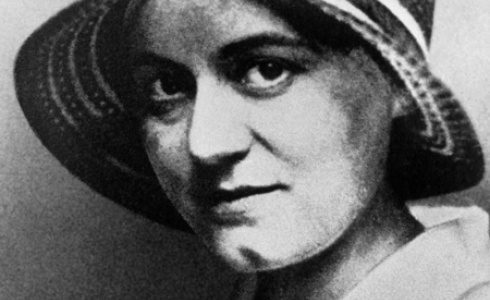
The patroness of the Lithuanian Youth Days taking place next year on June 23 to 25 will be St. Edith Stein. Who was she? What can we learn from her?
On October 11, 1988, Pope John Paul II canonized her. Edith was born October 12, 1891, in Breslau (now Wrocław), the eleventh child (seventh of surviving children) born to the affluent Jewish family of Zygird and Augusta. Jews celebrated Yom Kippur, the Day of Atonement, that day. Many say this foreshadowed the rest of her life. When she was 2 her father passed away. Her mother was forced to take over the family business and take care of her many children herself. Augusta was very religious, a hard worker and strong-willed, and Edith followed her example her entire life. Truth be told, her mother wasn’t able to impart faith to her children; when Edith was fourteen she stopped believing.
Full story in Lithuanian here.
An Unusual Story of Jewish Rescue
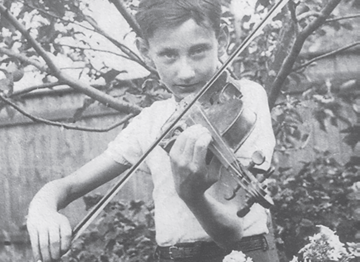
The Vilnius-based publishing house Kitos Knygos has published in Lithuanian a book by Yochanan Fein called Berniukas su smuiku [Boy with a Violin].
Yochanan Fein: Boy with a Violin
History, memoirs; 2017; ISBN 978-609-427-253-0 (printed edition), ISBN 978-609-427-296-7 (e-book); 304 pages; hardcover
translated by Ina Preiskel (Finkelšteinaitė) and Arvydas Sabonis, edited by Asta Bučienė
In the distant Kaunas neighborhood of Panemunė on the high banks of the Nemunas there once there stood a large wooden house with a stairwell inside. It was built by Lithuanian military volunteer and Šančiai railroad carpenter Jonas Paulavičius, who was called behind his back “father of the Jews” during World War II, having rescued 16 people from the clutches of death. He and his wife Antanina were recognized as Righteous Gentiles because of their heroic acts.
Among the fortunate was 14-year-old Yochanan Fein, who knew how to play violin, hiding in a pit dug in the garden together with a Russian POW and an Orthodox Jew. In his dotage he wrote a book of memoirs called “Boy with Violin” in which he explained the tragic stories of the lives of those rescued and presented an authentic painting of wartime and post-war Kaunas in many colorful details. The book was first published in Amsterdam in 2006 and two years later in Tel Aviv.
Professor Sofya Gulyak Discovers Documents about Her Family in Lithuanian Central Archive
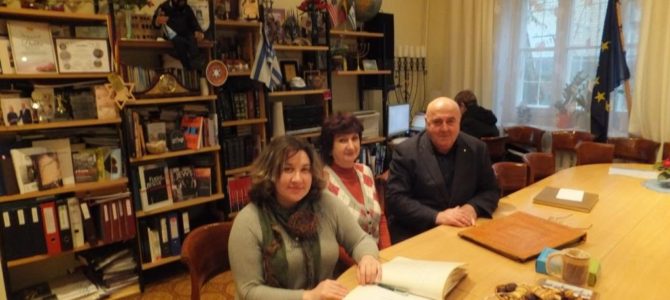
Professor Sofya Gulyak of London visited the Panevėžys Jewish Community during her trip to Lithuania to find out more about her family’s roots. Many Jews from around the world are currently looking for their roots in the Lithuanian archives. The documents they are finding reveal interesting family histories.
Sofya learned from the Central Archive her ancestors lived in Panevėžys. She received copies of the passports of her great-grandfather Meier Gelvan, great-grandmother Keila Ringaitė-Gelvan and grandmother Rocha Gelvan from the archives in 2013.
Leonard Cohen, Litvak, Dead at 82
Canadians, Israelis and fans around the world continue to mourn the loss of one of the world’s great songwriters and singers, novelist and poet Leonard Cohen, born in Montreal in 1934 to Litvak mother Masha Klonitsky, daughter of Talmudic writer Rabbi Solomon Klonitsky-Kline, and father Nathan Cohen, whose father came from Lithuania.
Cohen passed away at his home in Los Angeles on the night of November 7, 2016. He was buried in the family plot before his death was announced publicly.
Cohen’s fourteenth and final album, You Want It Darker, was released just two weeks before his death, on October 21, 2016.
The Lithuanian Jewish Community extends our deepest condolences to his family during this time of grief.