Religion

European Day of Jewish Culture 2016

European Day of Jewish Culture 2016
Vilnius speaks Yiddish again!

Sunday, September 4, 2016
Lithuanian Jewish Community, Pylimo street No. 4, Vilnius, September 4

Program:

10:00 Bagel breakfast Boker Tov-בוקר טוב – A guten morgn – Labas rytas!
Location: Bagel Shop Café, Pylimo street No. 4, Vilnius

11:00-11:45 Hebrew lessons for kids and parents with Ruth Reches, author of the Illustrated Dictionary of Hebrew and Lithuanian for Beginners, registration required
Meet at the Bagel Shop Café, Pylimo street No. 4, Vilnius

12:00-12:45 Rakija Klezmer Orkestar performance
Location: White Hall, LJC

Learning about Jewish Heritage through Languages

Pažintis su žydų kultūros paveldu šiemet vyks pasitelkiant kalbas

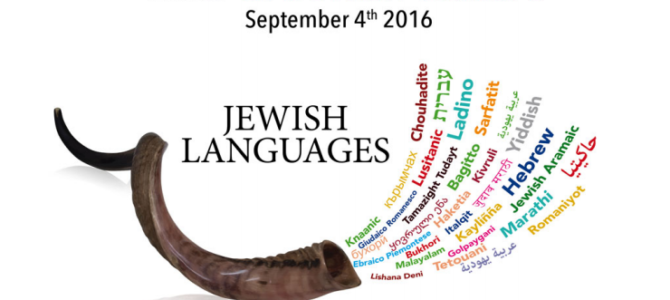
We invite you to participate in events scheduled throughout Lithuania for September 2 to 5 to celebrate the European Day of Jewish Culture. This year the theme is Jewish languages. Events will include the now almost traditional excursions and tours of Jewish heritage buildings with a focus this time on Hebrew language and calligraphy lessons, discussions, exhibits, concerts, educational games and even bagel breakfasts!

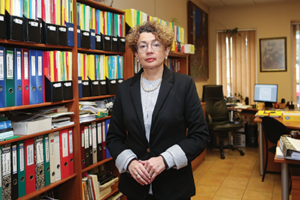
Diana Varnaitė, director of the Cultural Heritage Department under the Lithuanian Ministry of Culture, said: “We still have a significant amount of architectural heritage in Lithuania despite the intense destruction of Jewish material and intangible culture carried out during the Soviet era. Most of it, especially in Vilnius and the other larger cities of Lithuania, as a consequence of Sovietization, is still undiscovered, unrecognized and ‘unread.’ We invite you to take a look at our Jewish cultural heritage, to take it in and to understand that it is not just our past, but also an opportunity for the future. By educating the public and developing cultural tourism, we can slowly impart new vitality to our cities and towns.”

Full story in Lithuanian here.

Jewish Languages in Lithuania

by Akvilė Grigoravičiūtė, Germanic studies doctoral candidate, Sorbonne

We invite those interested in Lithuanian Jewish culture and heritage to participate in walking tours, attend exhibitions, meetings and concerts and take part in other cultural activities scheduled for Sunday, September 4. The point is to regain a portion of our own historical memory, to disrobe it from a mantle of suppression and to add color beyond black and white to a rather amicable and good-willed former life together.

Full story in Lithuanian here.

Thank You

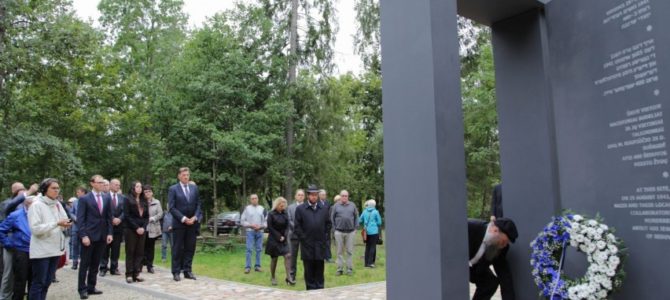
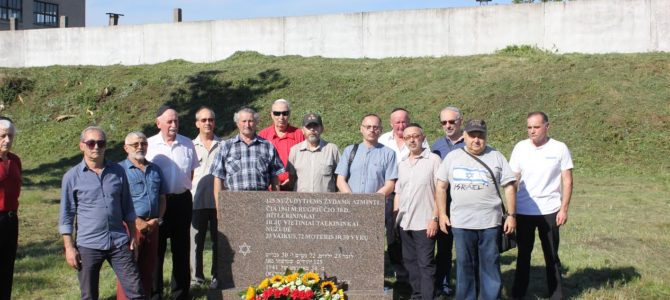
Speaking on behalf of the Committee of Jews from Zarasai Living in Israel, Grisha Deitz deeply thanks Lithuanian Jewish Community chairwoman Faina Kukliansky for her concern and help in organizing a commemoration of the 75th anniversary of the destruction of the Jewish community of Zarasai, Lithuania, and for the presence of the rabbi at the ceremony in Krakynė Forest, where 8,000 Jews from the Zarasai region were murdered in 1941.

Discover Jewish Lithuania Mobile App

Artūras Taicas, chairman of the Ukmergė Jewish Community, reports there will be a public launch of a new mobile telephone application called Discover Jewish Lithuania on September 4 during a commemoration of Holocaust victims in Ukmergė. The app uses what’s called augmented reality to overlay graphics, text and information on mobile phone and tablet screens displaying live camera views. The app will aid in finding sites and then offers additional information about the location in one of five languages, Lithuanian, English, Hebrew, Polish and Russian. So far it works in Ukmergė, Vilnius, Kėdainiai, Joniškis, Žagarė, Valkininkai and the village of Degsniai.

Lithuanian Prime Minister Commemorates Holocaust Victims in Šeduva

Premjeras pagerbė Holokausto aukas Šeduvoje

Vilnius, August 30, BNS–Lithuanian prime minister Algirdas Butkevičius Tuesday commemorated Lithuanian Holocaust victims at the Pakuteniai and Liaudiškiai mass murder sites and at the old Jewish cemetery in Šeduva, where kaddish was said for the dead.

“The Holocaust is our shared agony, our tragedy. It is our obligation that in the future never again would our human nature face such danger,” the prime minister was quoted in a Government press release. The PM said unfading memory is a duty to the dead and those who suffered.

The prime minister thanked the organizer, the Šeduva Jewish Memorial Foundation, and its representatives, who are conducting the Lost Shtetl project to commemorate Jewish life in Šeduva and the mass murder of that community in the forests near the town.

The Government’s internet site features photographs from the commemoration:
http://ministraspirmininkas.lrv.lt/lt/naujienos/premjeras-seduvoje-pagerbe-holokausto-auku-atminima

Kaunas Jewish Community Marks 75th Anniversary of Petrašiūnai Mass Murder and Intellectuals Aktion

Kauno žydų bendruomenė minėjo Petrašiūnų žydų žudynių ir Inteligentų akcijos IV forte 75-ąsias metines

The Kaunas Jewish Community marked the 75th anniversary of the mass murder of the Jews of Petrašiūnai and the Intellectuals Aktion at the Fourth Fort in Kaunas. Lithuanian ambassador for special assignments Dainius Junevičius, his wife, representatives from the Kaunas municipality, residents of Petrašiūnai who witnessed the mass murder and members of the Kaunas Jewish Community honored the Holocaust victims. Community chairman Gercas Žakas and Junevičius both spoke of the Holocaust as a shared tragedy for all citizens of Lithuania. Iseris Šreibergas, the chairman of the Kaunas Hassidic Religious Community and a member of the Kaunas Jewish Community board of directors, honored the memory of the dead with a prayer.

Secrets of Kosher Food at the Frenkel Villa in Šiauliai

Frenkelio vila

A large stuffed dumpling floats in chicken broth. But what’s inside? Pork? No way. Jews don’t eat it. Chicken? It’s taste is impossible to identify. It will remain a mystery for a long time. At least, until the guide at the Chaim Frenkel villa in Šiauliai helps me solve the riddle. “The Secrets of Kosher Food” is one of those educational programs which attracts tourists to the villa like flies to butter. The price is 10 euros for adults and 9 for primary and high school students. The price includes not just a feast at the villa, but an explanation of what appears to our eyes as the strange foods Jews have eaten for millennia, and continue to eat. “I have worked here for a long time, but over the course of my job I have never seen Jews attend this sort of educational program. And that’s understandable. After all, it’s impossible to surprise Jews by foods they eat often. But this does surprise Lithuanians,” the guide said. Kosher food. What is it?

Full article here.

LJC Chairwoman Faina Kukliansky on the Annihilation of Jewish Communities in the Lithuanian Shtetls

In the final days of August we mark the 75th anniversary of the extermination of the large Jewish communities who once lived in the Lithuanian shtetls (small towns). Neither the shtetls nor the Jews survived the brutal mass murder. For 75 years no one has spoken Yiddish any longer in those small towns. No one celebrates Sabbath, the synagogues are boarded up or are now storehouses or workshops. What does this anniversary mean to the Jews and the shtetls of Lithuania?
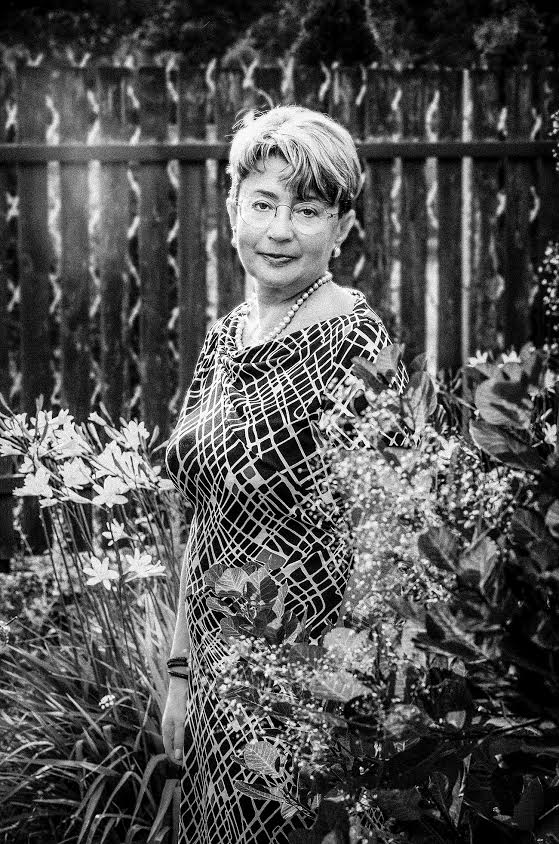
Fainos portretaa

We mark the anniversaries because the people are no longer with us. Those who still remember the Holocaust must mark the anniversaries of the mass murders, otherwise the small towns will forget entirely the murder of their Jewish neighbors, including men, women and children. Lithuanian society as a whole–and not without a lot of effort by the Jewish community–twenty-five years after Lithuanian independence has all of a sudden remembered that there were Jews here, and their contribution to everything we have in Lithuania today is huge. Jews created and built the centers of these small towns. They are no longer, or they are very few, and what will the old-timers in these towns tell their children and grandchildren?

After World War II Jews maintained the keyver oves tradition (from Yiddish keyver, “grave,” + oves “parents, ancestors”) where Jews would visit the mass murder sites where their relatives were buried, to remember them. They used to do it on exactly the anniversary of the day when the Jews of that shtetl were exterminated. I remember from my childhood how we used to go visit our murdered grandparents, and how others went to visit their murdered sisters, brothers and parents. No one marched in a procession, there were no marching bands playing. Keyver oves was a sad occasion. People were repentant, they cried and they prayed, hoping it such atrocities would never happen again. They went to the mass murder sites, of which there are 240 in Lithuania, not to give speeches. What else can be said after all these years? They gathered not to talk, but so that the town community would think about where they lived and with whom they lived, and so that they wouldn’t be ashamed to look their children and grandchildren in the eye. You cannot hide the truth, after all. You don’t need popular novels, and large print-runs cannot replace open communication about what happened. Everything was known long ago. It’s not the Jews who need public commemorations, we already know it all, for us it is sufficient to stand and to pray. Telling the truth and talking sincerely and openly is needed in every small town where Jews lived before the war.


The Road to Death (75th Anniversary of the Murder of the Jews of Molėtai)

Attorney Kazys Rakauskas sent the following to the Lithuanian Jewish Community webpage.

On central Vilniaus street in Molėtai the flowers bloom and the brightly-painted kindergarten greets the eye of passers-by. The bridge next to the statue of St. Nepomuk is also festooned with garlands of flowers. Small fish flash in the sun in the pure lake water flowing into the river. Cars quietly pass and young people flex their muscles on bicycles. The people of Molėtai hurry to work on foot.

They are a different generation of people. Even their parents only heard vaguely of the terror, tears and suffering which once overtook this street. Seventy-five years ago hundreds of Jews of Molėtai realized where they were being taken at this bridge. They threw their things they had taken with them when they were removed from the synagogues under armed guard into the Siesartis river. This street leading from the three synagogues on Kauno street became the road to death for two thousand people. They had been held prisoner there [in the synagogues] for days without food or water.

Headstone Fragments Returned to Jewish Cemetery

Paminkliniai akmenys pagarbiai sugrįžta į senąsias Žydų kapines Olandų gatvėje

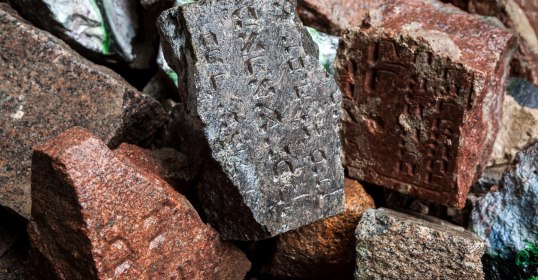
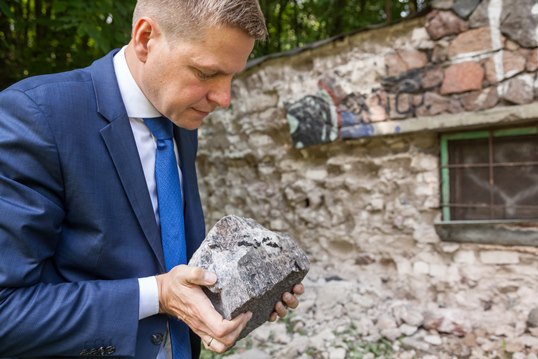
Fragments of Jewish headstones, removed from a transformer substation and other locations in Vilnius where they were used as construction material by the Soviets, have been returned to a Jewish cemetery in the Lithuanian capital. The city municipality this week ordered all fragments, both with legible fragments of inscriptions and without, to be removed to a clearing at the former Jewish cemetery on Olandų street. The move begun today was supervised by architects and representatives of the municipality, the Cultural Heritage Department, the Lithuanian Jewish Community and the Verkiai and Pavilniai Regional Park administration.

Photos by Martynas Užpelkis, heritage protection expert, Lithuanian Jewish Community

“It’s clear that it was time long ago to make sure Jewish gravestones be returned with dignity to the old Jewish cemetery and that such examples of the barbarism of the Soviet regime no longer remain in the city. Today I am glad that these thoughts have turned into concrete deeds: the city has renovated a vast territory of the old cemetery, and slowly alleys and paths have emerged there, and now the commemorative stones are being returned with dignity to the renovated territory. There has been exemplary and very constructive cooperation with the Jewish community and different institutions, and even though we haven’t had great resources, we’ve managed to find solutions which allow us to show due respect to the memory of the dead and testify to our values and culture,” Vilnius mayor Remigijus Šimašius said.

Šimašius Akmenys


Full story in Lithuanian here.

Rabbi Ben Tzion Zilber Visits Latvia and Lithuania

Rugpjūčio 15-16 Latvijoje ir Lietuvoje lankėsi rabinas Bentsiyonas Zilberis

Rabbi Ben Tzion Zilber, son of legendary Rabbi Yitzchok Zilber, visited Latvia and Lithuania August 15 and 16.

Rabbi Kalev Krelin of the Vilnius Jewish Community escorted Rabbi Zilber to locations where the latter’s ancestors lived. His father Rabbi Yitzchok Zilber belonged to a long line of scholars and suffered under Stalin, both at labor camps and under the atheist policies of the Soviet Union. Despite extremely difficult circumstances, Rabbi Yitzchok Zilber not only managed to hold steadfastly to his faith in the Creator and to keep His laws, but also to deepen his Torah study and teach others. After making aliyah to Israel Rabbi Yitzchok Zilber had hundreds of followers in whom he inspired faith in the Creator and adherence to the Torah.

Keeping the Faith in Vilnius

VilnaFaina
photo © Delfi/K. Cachovskis

Ellen Cassedy, author of We Are Here: Memories of the Lithuanian Holocaust (ellencassedy.com), has written about the Lithuanian Jewish Community and the Bagel Shop initiative.

Amit Belaite adores the long ode to the city of Vilna that was penned by writer and poet Moyshe Kulbak 90 years ago. Lines from the poem about Vilna’s stones and streets were running through her head on a warm summer afternoon as she led a walking tour through the narrow, winding streets of the city now known as Vilnius, the capital of the small Baltic nation of Lithuania.

Belaite, 23, heads the Lithuanian Union of Jewish Students. When she posted the announcement for the group’s tour of Jewish Vilnius, she expected a couple of dozen people to be interested. To her amazement, 400 signed up, many of them non-Jews.

“People know the city is rich in Jewish history,” she said. “They feel a big need to learn about it.”

Plaque to Honor Union of Jewish Soldiers in Kaunas

Kaune atsiras atminimo lenta, skirta Žydų karių sąjungai

Work has begun to produce a memorial plaque to commemorate the pre-WWII Union of Jewish Soldiers Who Fought for Lithuanian Independence. The project was initiated by the Kaunas Jewish Community with support from Lithuanian Jewish Community chairwoman Faina Kukliansky, LJC cultural heritage expert Martynas Užpelkis and sculptor Gediminas Pašvenskas, who designed the plaque. The plaque is to be placed on the building formerly housing the Union at A. Mapu street no. 10 in Lithuania’s interwar capital.

Established in 1933, the Union of Jewish Soldiers Who Fought for Lithuanian Independence was originally based in Joniškis and moved to Kaunas in 1934. Besides fostering patriotism and loyalty to the state, the union also encouraged cultural cooperation between Lithuanians and Jews and operated throughout the country, with about 3,000 members in total. Twenty Jewish soldiers were decorated with the Order of the Cross of Vytis for bravery in battle and other orders and decorations were also bestowed on the veterans of the early Lithuanian struggle for independence following World War I. The union participated with its regalia at official events and ceremonies and publicly displayed their devotion and loyalty to Lithuania.

Clarification

To whom it may concern,

In light of Mr. Gary Eisenberg’s recent article about Lithuanian citizenship for Litvaks published in Israel and South Africa, the Lithuanian Jewish Community states for the record:

1. There is no special legislation or program for recruiting Litvaks for Lithuanian citizenship. This is disinformation. The existing legislation on applications for Lithuanian citizenship by prewar citizens of Lithuania and their offspring was only reworded slightly to prevent misinterpretations of the intent of legislators by public servants to the detriment of Jewish applicants and applicants of other ethnicities. As far as we are aware, there is no “Lithuanian Citizenship Programme” for Litvaks in Lithuania or anywhere else, despite what was written in Mr. Eisenberg’s article.

2. The Lithuanian Jewish Community and the Choral Synagogue in Vilnius with the Vilnius Religious Jewish Community are firm followers of the traditions of the Vilna Gaon and have nothing to do with Chabad Lubavitch or their rabbi. We have a rabbinate of two rabbis who are firmly within the mitnagedic tradition. Mr. Eisenberg’s statements he celebrated Sabbath with Chabad Lubavitch Rabbi Krinsky, followed by the statement he visited the Choral Synagogue, could mislead some readers into thinking the Choral Synagogue in Vilnius is a Chabad Lubavitch center, which it is not.

Sincerely,

Faina Kuklianskay, attorney,
chairwoman,
Lithuanian Jewish Community

New Torah Study Library at Choral Synagogue

We invite all our friends to the inauguration of our new Torah library at the Choral Synagogue in Vilnius.

Every synagogue is more than just a house of prayer–it’s also a house of learning. Even more so in Lithuania, where Torah study has always been of the highest priority. Now our synagogue will provide the opportunity to teach Torah in the classic way.

Thanks to the Šeduva Jewish Memorial Fund and their understanding of the importance of this library in Vilnius, the synagogue will now contain a classic Jewish library of more than a hundred books needed by everyone who wants to engage in serious learning.

The Torah (Pentateuch) and the Books of Prophets with all the classical commentaries, Mishnah, Talmud, Rambam, Tur and Shulchan Aruch–if the latter are missing it is impossible to study Torah, to prepare for lessons and to teach those who are resolved to make progress in their knowledge and Torah study.

The Šeduva Jewish Memorial Fund and the Lithuanian Jewish Religious Community invite you to share in our joy and to make a small l’chaim at 7:00 P.M. on August 24 at the Choral Synagogue.

Important Delegation of Rabbis

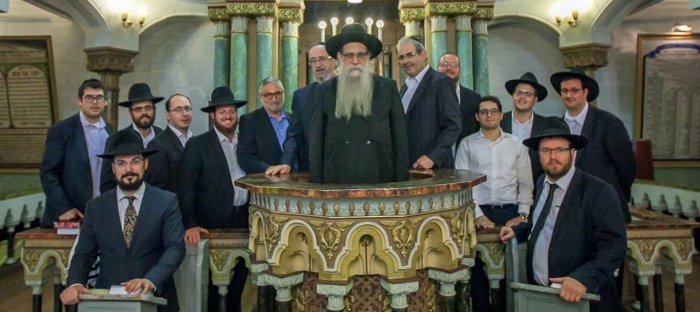
smaller synagogue group

Rabbi Kalev Krelin reports on an important delegation who visited Lithuania last week.

“I had the honor to host a group of rabbis and philanthropists from the US. At the head of the group were R. Yeruham Olshin, head of biggest yeshivah in the world in Lakewood, New Jersey, and R. Reuven Desler, businessman and philanthropist, grandson of famous Rabbi Eliyahu Desler.

“The group visited the tomb of the Gaon and R. Chaim Ozer in Vilnius, and also the gravestone of Rabbi Boruch Beer Leibovitz at the Užupis cemetery. They visited the grave of Elchonon Spektor in Kaunas, prayed at the 7th Fort on the date when R. Elchonon Wasserman from Baranovichi Yeshiva was killed there, and also visited another cemetery.

“After that the group returned to Vilnius and prayed an evening prayer at the Choral Synagogue in Vilnius.

LJC Statement about the Seventh Fort in Kaunas

Statement by the Lithuanian Jewish Community concerning Cnaan Liphshiz’s article “This Lithuanian Concentration Camp Is Now a Wedding Venue” published at http://www.jta.org/2016/07/24/news-opinion/world/lithuanian-concentration-camp-is-now-a-wedding-venue

The Lithuanian Jewish Community thanks the author of the article and the news agency who have again brought attention to the problematic situation at the Seventh Fort in Kaunas. We also feel it is our duty to explain and add to some of the facts and circumstances brought up in the article.

In June and July of 1941 a concentration camp was set up at the Seventh Fort where up to 5,000 people were murdered, mainly Jews resident in Kaunas. During the Soviet era the fort was used for military purposes and the exact location of the mass grave was unknown and inaccessible to the wider public. In 2009 the Lithuanian State Property Fund, which had ownership of the complex, allowed it to be privatized. The Lithuanian Jewish Community never approved of this decision and numerous times wee expressed our position that this was a huge mistake which couldn’t be allowed to happen at similar sites. In any event, after the fort buildings were privatized, the new owner, Karo paveldo centras [Military Heritage Center], received the right to lease the land around the buildings, which belongs to the state. The mass grave site, whose exact location was not known then, thus fell within territory controlled by a private corporate entity.

Work Continues to Remove Jewish Headstones from Power Station

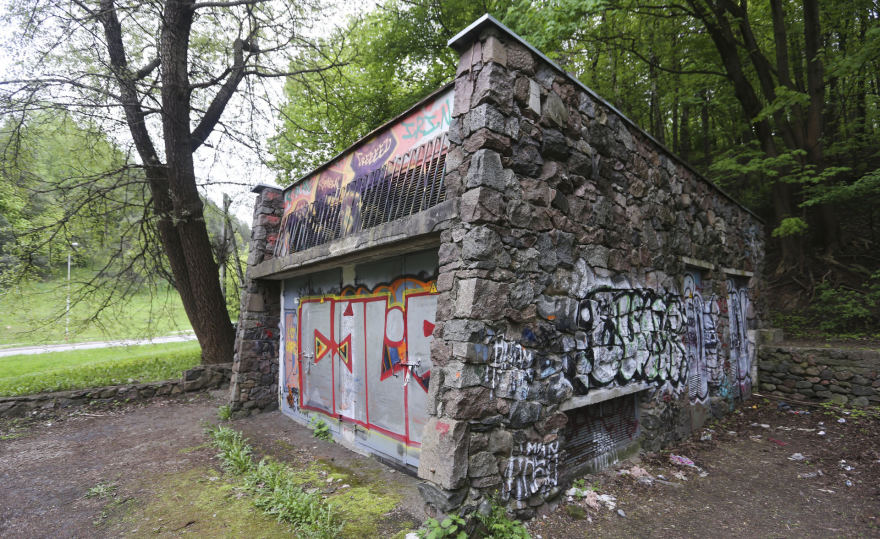
transformatorine-olandu-gatveje-5550721510382
The transformer substation before removal work began. Photo by Lukas Balandis, courtesy 15min.lt

More than a year after a Vilnius resident reported his discovery an electric substation on Olandų street was constructed using Jewish gravestones, and following the announcement this June removal work had begun, the site is now littered with bits of headstones partially surrounded by a simple wire fence and some plastic tape. Most of the fragments are marked with graffiti on at least one surface, and several piles of larger pieces contain partial inscriptions in Hebrew characters, see pictures below.