
Heritage

New Archaeological Discoveries at Pakruojis Synagogue Complex

New Archaeological Discoveries at Pakruojis Synagogue Complex

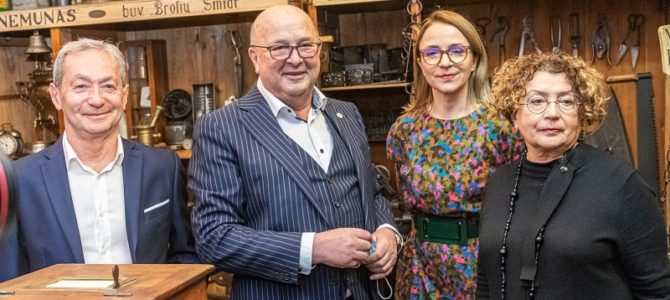
Lithuanian Jewish Community chairwoman Faina Kukliansky, Pakruojis regional administration mayor Saulius Margis, administration director Ilona Gelažnikienė, deputy mayor Virginijus Kacilevičius and others attended a lecture by Dr. Ernestas Vasiliauskas presenting new archaeological discoveries at the Pakruojis synagogue complex.

The Pakruojis regional administration reports:

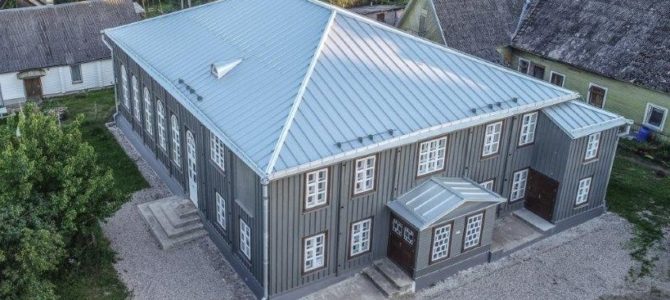
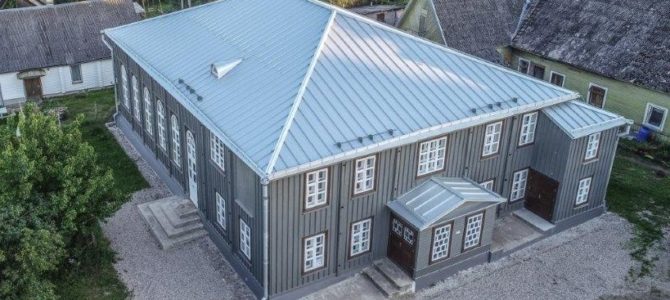
Dr. Ernestas Vasiliauskas gave a presentation October 14 detailing the newest archaeological discoveries in the winter synagogue and shtibl at the Pakruojis synagogue complex. The project “Maintenance of the City Park and the Banks of the Kruoja River in the City of Pakruojis” decided to perform the archaeology in concert with the Cultural Heritage Department of the Lithuanian Ministry of Culture.

There is a lot of surviving information about the summer synagogue in Pakruojis, but very little about the winter synagogue and the shtibl. Senior archaeologist Dr. Vasiliauskas said the wooden synagogue complex built in the 19th century in Pakruojis is unique in Lithuania and blends different architectural styles, including late baroque (summer synagogue), classicism (winter synagogue) and traditional architecture (the shtibl), and was an important part of the cityscape, one of the dominant buildings on the Pakruojis skyline.

Chiune Sugihara Statue Unveiled in Kaunas

Chiune Sugihara Statue Unveiled in Kaunas

A statue was unveiled Saturday to World War II-era Japanese diplomat Chiune Sugihara. He issued so-called visas for life, saving thousands of Jews from Lithuania and Poland as Nazi Germany advanced on the small Baltic country of Lithuania.

The bronze statue is almost 12 feet high and is located on Kaunas’s famous promenade, Laisvės aleja or Freedom Alley, next to the Metropol hotel where Sugihara continued to issue visas even after being ordered to stop, close down the Japanese consulate and to travel to a new assignment in Berlin. There are numerous stories Sugihara even issued visas from the train as it was pulling away from the station, and that he left blank visas and stamps with Jews in the city so they could make their own visas for life.

The sculpture designed by Martynas Gaubas depicts origami cranes which he says symbolize freedom. An inscription in Lithuanian, Japanese, English and Yiddish, reads: “Whoever saves a life, saves the world.”

Kaunas Commemorates Lea Goldberg

Kaunas Commemorates Lea Goldberg

There’s a larger-than-life fresco painted on the wall of a building on Kęstutis street in Kaunas featuring a portrait of celebrated Israeli poetess Lea Goldberg, with a poem by her in Hebrew and Lithuanian. Her family fled their home in this building 85 years ago, with Leah making aliyah and settling in Tel Aviv in 1935, after receiving PhDs from universities in Bonn and Berlin in Semitic and Germanic languages.

Now the Lithuanian city is scheduled to become the European Union’s honorary European Capital of Culture for the year 2022. Now, in the run-up to that auspicious year, local and visiting Jews in Kaunas held a celebration of, perhaps, the town’s most famous poet, as well as its lost Jewish heritage.

Bella Shirin, who has been appointed “ambassador” of Kaunas, Capital of European Culture 2022, recited in selections from Goldberg’s corpus in Hebrew to musical accompaniment. Israeli exchange student Shahar Berkowitz sang Goldberg’s work.

Year of Eliyahu Exhibition

Year of Eliyahu Exhibition

The Torah itself witnesses: I am Wisdom, who found a haven in Eliyahu’s soul, and through him was revealed to the world.

This fragment of the epithet inscribed on the headstone commemorating Eliyahu ben Solomon Zalman reflects well the significance of the Vilna Gaon for Litvak and global Jewish culture. As Lithuanian marks 2020 as the Year of the Vilna Gaon and Litvak Culture, the Martynas Mažvydas National Library is contributing with an exhibit of publications and documents called “The Year of Eliyahu: The Vilna Gaon’s Influence on Litvak Culture.”

The exhibit showcases the Gaon’s biography, personality and intellectual and pedagogical activity as well as his influence over Vilnius Jews, on their mentality and culture. Documents illustrating the sage’s life and works by the Gaon and his followers will be displayed. One of the major items is the pinkos of the synagogue of the Vilna Gaon conserved by the YIVO institute in New York City. This document, a compendium of vital statistics of the Jewish community, will be exhibited using a holographic projection system. The exhibit will also showcase the abundant and diverse Judaica collection conserved at Lithuania’s National Library.

The opening ceremony will be held in the atrium on the third floor at 5:30 P.M. on Tuesday, October 20, and will include a musical performance and installation employing modern audio-visual technology to transform an ancient text into a tale, providing a hint into the Gaon’s thought-processes.

The exhibit will also feature the issue of the Bank of Lithuania’s 10-euro silver coin commemorating the 300th anniversary of the birth of the Vilna Gaon, designed by our own Victoria Sideraitė-Alon, Jūratė Juozėnienė and Albinas Šimanauskas.

Monument to Commemorate Makabi Stadium in Kaunas

Monument to Commemorate Makabi Stadium in Kaunas

Photo: A sculpture commemorating the Makabi Stadium in Kaunas. Photographs by Laimutis Brundza

A sculpture by Gediminas Pašvenskas will mark the spot where the Makabi Stadium was opened 100 years on Jonavos street in Kaunas. When you drive along the street today, you’d likely never think there was a soccer stadium here. Opened on October 19, 1920, by the Makabi Jewish athletics and gymnastics association, exactly one year later it was outfitted as a soccer stadium.

“The first stadium was in Ąžuolynas. The second was here, actually, a little bit away from this location where we’re standing now. There was a third in Panemunė, but back then Panemunė wasn’t part of the city of Kaunas, it belonged to the Kaunas district,” Kaunas Jewish Community chairman Gercas Žakas, who used to play soccer there, said at the ceremony to unveil the new sculpture.

The arena operated from 1920 to 1940 and held 2,500 people. It had a running track and other facilities as well. “Everything was fine if the ball didn’t go into the Neris River, at which point all the spectators would disperse. They didn’t wait the ten minutes it took to get the ball out of the water,” Žakas recalled.

Lithuanian Makabi president Semionas Finkelšteinas shared his own memories, not just balls going into the water, but water coming into the stadium. In 1931 the river overflowed and covered the entire field.

St. Christopher Chamber Orchestra Holding Concert Dedicated to Sugihara

St. Christopher Chamber Orchestra Holding Concert Dedicated to Sugihara

lrytas.lt

As the cultural landscape shifts, new challenges arise, which the St. Christopher Chamber Orchestra of the Vilnius city municipality faces courageously.

At 7:00 P.M. on October 8 the orchestra will hold a concert at St. Kotryna’s Church in Vilnius dedicated to Japanese diplomat and Righteous Gentile Chiune Sugihara to mark the 80th anniversary of his activity in Kaunas and the 120th anniversary of his birth. This is the first time orchestra and its soloists will perform from different locations in countries around the world, connected by internet.

Full article in Lithuanian here.

Tickets available here.

Sukka at the Choral Synagogue in Vilnius

Sukka at the Choral Synagogue in Vilnius

Despite restrictions because of the corona virus, the Choral Synagogue in Vilnius has constructed the traditional sukka there to celebrate the holiday of Sukkot. Traditionally called the Feast of Tabernacles in English, Sukkot is better translated as the Day of Tents in modern English. This year it began October 2 and it lasts for seven days. The idea is to “dwell” or spend time in the tent or temporary structure during each day of the week-long holiday. It is traditional to handle the etrog, a fruit in the citrus family, and to wave a palm frond inside the sukka, or dwelling, and to eat and celebrate, remembering the past when the Hebrews lived in tents after the exodus and liberation from Egypt. The Torah says one should wave the branches and fronds of three pleasant trees during the holiday, including palm fronds, willow branches and the branch of a leafy deciduous tree which the Talmud specifies is the myrtle. The trees and the etrog together constitute the four species. The palm fronds are first made into a bundle which becomes the first element, to which are added two willow branches, then three myrtle branches in a specific pattern, This three-fold branch and etrog are waved around on each day of the seven days by observant Jews in adherence to Leviticus 23:40. Visitors to the sukka are also supposed to have a good time there.

The sukka at the Choral Synagogue is only open during scheduled prayer services as part of entry restrictions designed to curb the spread of the corona virus. Please check prayer service schedules or call ahead if you intend to visit and spend time in the sukka.

A Book about the Future: Vanagaitė Interviews Dieckmann

A Book about the Future: Vanagaitė Interviews Dieckmann


by Aušra Maldeikienė

A half-year before her death, my aunt, who was then over 90, made a very unexpected comment: “Maybe it was a good thing they deported us to Siberia.” I simply froze for a second, unable to believe my ears, and my aunt went on: “Maybe God won’t be so wrathful when I die, and will forgive, because father gave that Jewish girl back to her relatives after three months. Maybe we have atoned for our guilt that way, because we were afraid of the neighbors.” That’s how I learned, three-quarters of a century from that horrific year 1941, another detail about the history of my family and also of my nation. A tragic detail.

The Holocaust isn’t just a great tragedy for our nation, it is the main stroke in the painting of our country’s future. The moral judgment of the Holocaust shows more than anything else the sort of society in which we live, and also what sort of future awaits us. There are two choices: either we honestly realize our moral responsibility for those events and, having come to terms with our limitations, create an ethical community, or we continue to look for justifications for what happened, and keep murdering over and over in that way. Not those who lie buried for decades along Lithuania’s dirt roads and forest margins, but now murder ourselves.

“How Did It Happen? Rūta Vanagaitė Interviews Christoph Dieckmann” is a book which every right-thinking Lithuanian needs to read. The book isn’t hysterical, every sentence is based on historical footnotes, the questions aren’t loaded, often compel thought, and the historian’s answers are terse and conspicuously complete. The authors of this book can be proud. Incidentally, the authors are a German historian who has been researching the Holocaust in Lithuania for over 20 years and Rūta Vanagaitė, whose reputation an aggressive mob has tried to ruin, but who remains unbowed.

The book is worth reading if you want to know how it all happened. But the most important thing isn’t just that: it’s not the tragic history of the Holocaust itself (which is more or less known) which compels reflection, but the raising of moral dilemmas concerning it or just the attempt to tie them together. “History is neither black nor white, it has many shades of grey,” Dieckmann says in the book, and it is exactly that messy, swampy wandering along the grey roads of considering the tragedy which lets us connect the past and future.

Seeking to answer the question of why during the war the absolute majority of the Jews who had lived here for centuries and almost 200,000 POWs were brutally, inhumanely violently murdered during the war, we have to take into consideration the souls of simple Lithuanians and the principles guiding the Lithuanian elite at that time, and the direction indicated by the moral compass, by the Church.

Full review in Lithuanian here.

Panevėžys Jewish Community Celebrates Sukkot

Panevėžys Jewish Community Celebrates Sukkot

Sukkot is a holiday when Jews remember their liberation from slavery in Egypt and their journey to the Holy Land. The holiday has two meanings: the mundane meaning of harvest and the sukka, Hebrew for tent, the temporary dwelling of the forefathers after they left Egypt.

The Panevėžys Jewish Community will celebrate Sukkot at 2:00 P.M. on October 4 at Community headquarters.

Members, partners, friends and children are invited to take part. Children will receive gifts. There will be a food service for everyone with fall harvest foods.

The Rokiškis people’s theater Nutildyta mūza will present a skit directed by Neringa Dainienė.

Panevėžys Jewish Community members will be provided masks and disinfectant.

Admission is 3 euros.

We eagerly await you in holiday high spirits. Please tell us if you plan to attend this event at the Panevėžys Jewish Community.

Gennady Kofman, chairman
Panevėžys Jewish Community

LJC Chairwoman Delivers Speech on Lithuania’s Day of Remembrance of Jewish Victims of Genocide

LJC Chairwoman Delivers Speech on Lithuania’s Day of Remembrance of Jewish Victims of Genocide

Lithuanian Jewish Community chairwoman Faina Kukliansky spoke at the Lithuanian president’s ceremony to award the Lithuanian Cross of the Life-Saver to those who rescued Jews during the Holocaust on Lithuania’s Day of Remembrance of Jewish Victims of Genocide.

§§§

Your excellency, honorable Mr. president Gitanas Nausėda, honorable first lady Diana Nausėdienė,

Honorable rescuers of Jews and family members, honored Holocaust survivors and dear guests,

It is a great honor for me to speak to you including in the name of the Lithuanian Jews words of gratitude to those who rescued Jews for the light of humanity they gave during the darkest of times. It is thanks to these greatest of people that I stand here today.

So many Lithuanians surrendered themselves to an unprecedented, systematized hatred during World War II, becoming henchmen sowing death or kowtowers in their native land. So giving the honor due and commemorative tribute to those who found themselves at a dead end of human values, to those who opened the gates of hope to the people were condemned to death, to those innocents sentenced to death, is the least our generation and the next generation can do.

The story of the rescuers needs to do more than sleep in the history textbooks, more than simply be celebrated in statues. The priceless lesson of humanity which these heroes gave us, gave Lithuania and gave to the entire international community is no less important today when democracy, civic-mindedness and historical truth are drowning in the rhetoric of crisis or getting lost in the maze of political narratives and interests.

Even in what seemed a hopeless situation, balancing between the suppressed truth and the sanctioned lie, the example of the rescuers reminds us there is always a choice between killing and saving. The choice to save was the choice made by about 900 Lithuanians based on basic conscience. This was a voluntary choice, neither purchased nor sold, but based on a free mind unfettered by fear and uneclipsed by false promises.

In marking this the Year of the Vilna Gaon and the Year of Litvak History, I invite you again to remember our heroes. I hope the name of each rescuer of Jews will inspire us, illuminate our consciousness with hope and belief, and strengthen our peoples and the generations building bridges of historical memory.

Gumuliauskas and the Historical Plan for the Love of Lithuania

Gumuliauskas and the Historical Plan for the Love of Lithuania

by Arkadijus Vinokuras

I read the ramblings of MP professor Arūnas Gumuliauskas, the title of which should have been “How I Love Lithuania Tortured by Her Enemies.” He writes like a professor. I say “like” because there is doubt on the quality of the text itself. Because his entire long text could be expressed in a single sentence: “Everyone who thinks otherwise is an enemy and an agent of the Kremlin.” Back in Soviet times a CP member would have written it like this” “Everyone who thinks otherwise is an enemy and an agent of Washington.”

The generalized “all” dominates in the text, probably stemming from the elementary fear of naming specific liars and agents. Because it might turn out some of these unnamed critics aren’t lying. And they aren’t any kind of agent. Hence the author would be dressed down naked in court for libel. The professor had a good command of this sort of jargon back in Soviet times, in 1987 when he defended his doctoral thesis “Activities of the Lithuanian Communist Party in Developing the Theater Arts in the Republic.” That was the same year the Lithuanian Freedom League held a meeting under the Adam Mickiewicz statue in Vilnius. Forgive me, I’m not trying to joke around, but it is seriously difficult to impossible to think about Gumuliauskas as some sort of sincere nationalist. But this is not surprising, he is, after all, a member of a party which doesn’t confess any ideology, not even basic political morality.

So sometimes the Lithuanian Peasants/Green Union pretend they’re on the left, sometimes on the right, but its members agree on one thing at least: democracy is just stage decoration which can be toyed with as one likes. So it’s also no surprise that the search for and discovery of enemies lurking around every corner is programmed into this part. Gumuliaksuas is no exception.

Concert by Gidon Kremer and Georgiy Osokin a Gift to Jews of Lithuania

Violin master Gidon Kremer gave a special concert for members and friends of the Lithuanian Jewish Community September 24 which included Schumann’s sonata for violin and Polish-Jewish composer Meczyslaw Weinberg’s 24 preludes adapted for violin by Kremer himself.

During the concert photographs flashed across a screen by Antanas Sutkus, a renowned Lithuanian photographer, of the faces of Lithuanian Jewish survivors, adding to and adding significance to painful and unforgettable Jewish history. This was music for the heart and soul. The Lithuanian Jewish Community sincerely and deeply thanks Kremer and Osokin for the extraordinary concert. Because of fears of the virus, audience members were evenly spaced around the hall and wore masks.

We recall Latvian classical violinist gave his first recital in Vilnius way back when. Kremer’s orchestra travels the world giving concerts on the world’s great stages with the best orchestras and conductors.

Ponar Calls on Us to Remember

Ponar Calls on Us to Remember

I thank all of you who walked with the Lithuanian Jewish Community today along the route taken by 70,000 men, women and children 77 years ago.

While the bodies of the victims of Ponar, reduced to ashes, will not rise again, no attempts to burn the pages of history will liberate our fellow citizens from the guilt dwelling in the subconscious over the murder of the Jews, nor will it relieve the suffering of the experience of the Holocaust even of the generation which came after.

No actions will return the lives of the more than 200,000 people of Lithuania lost during the Holocaust while words, whether in Lithuanian or Yiddish, will only briefly return a glimmer of the crown of the Jerusalem of Lithuania.

The memory of the Holocaust, however, isn’t just filled with shame for one side and pain for another. Its memory awakens our conscience and our duty to the future: to remember and honor the dead, thus imparting some sense to the victims of senseless hatred, lessons written in innocent blood for humanity. As long as we’re alive we must insure through joint effort, testifying to the memory of the Holocaust victims, the tragedy of Ponar never recurs, and that it doesn’t become the object of new and error-filled forms of hatred.

As we recall the events of that era of pain, it’s just as important to remember those giants of the spirit. I don’t know how many times now here in Ponar I’ve talked about Liba Mednikienė, a heroine of Lithuania’s battles for freedom. Finally now, during the Year of the Vilna Gaon and the Year of Litvak History, a monument to her memory, to this Lithuanian patriot murdered at the hands of Lithuanians, has found a home in the town of her youth, Širvintos.

Today hope is reborn, listening to the words of the president and prime minister and watching the soldiers pay tribute to Lithuania’s Jewish victims of genocide, hope that our society and out state have matured, have reached a new stage in the dialogue between Jews and Lithuanians, devoted wholly to learning and recognizing historical justice. We have an history inherited and shared from the time of Vytautas the Great, and so I believe commemoration of the victims of the Holocaust and being an indivisible part of it will become, eventually, not a matter of just marking an event or opportunity, but an issue of civic dignity and our view of the world.

Thanks to all of you for being here today with us, the small Lithuanian Jewish Community, for blazing a path in remembering those who were innocent and were sentenced to death.

Faina Kukliansky
September 23, 2020
Ponar, Lithuania

Jewish Street in Utena Gets New Street Sign in Yiddish and Hebrew

Jewish Street in Utena Gets New Street Sign in Yiddish and Hebrew

The Utena regional administration in northeastern Lithuania decided to celebrate 2020 as the Year of the Vilna Gaon and Litvak History with a project called “Signs of the History of the Jews of Utena.” Project events were scheduled to coincide with European Heritage Days 2020 from September 11 to 20.

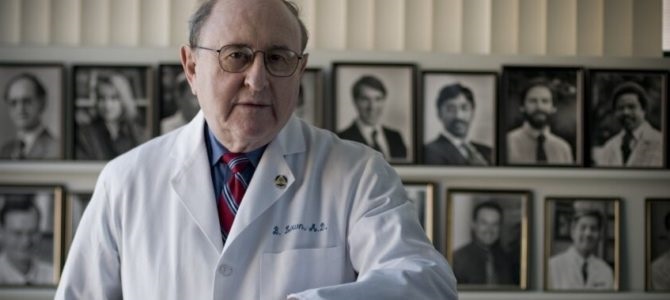
One of the first events was the unveiling of a street sign on Žydų gatvė (Jewish Street) in the town of Utena with the name of the street in Hebrew and Yiddish. Earlier a portrait of kosher butcher Kavinskis appeared on a wall next to the street to recall the formerly large Jewish community there. Between the two world wars most of the central parts of the town was inhabited by Jews. Nobel prize winner Bernard Lown, the inventor of the defibrillator, came from Utena.

Utena regional administration mayor Alvydas Katinas said at the unveiling ceremony Lithuania and Utena are on the right path: “Jewish commemorations, cherishing Jewish history and culture and keeping up cemeteries–this activity should become a daily one. I believe honoring Jews shouldn’t be limited to just memories or knowing how many Jews lived in Utena and how they lived here. Our work primarily should testify to the fact Jews live with us in the here and now.” LJC chairwoman Faina Kukliansky, MP Emanuelis Zingeris and others including many local residents attended the ceremony as well.

Lithuanian MPs Send Rosh Hashanah Greetings

Lithuanian MPs Send Rosh Hashanah Greetings

Members of Lithuania’s parliament Gediminas Kirkilas and Aušrinė Armonaitė sent Rosh Hashanah greetings to the Lithuanian Jewish Community as the country’s Jewish community marked the beginning of the new year, 5781 on the Jewish calendar.

Former prime minister Gediminas Kirkilas, now deputy speaker of parliament and chairman of the European Affairs Committee there as well as heading his Social Democratic Labor Party, regularly sends greetings to the Community on major holidays and occasions.

Aušrinė Armonaitė was voted in as an MP in 2016 on the Liberal Movement ticket and was a member of the independent faction there. In 2019 she helped found and was voted in as chairwoman of the new Freedom Party. Vilnius mayor Remigijus Šimašius is a deputy chairman in the new party.

Remembering the Victims in Žagarė

Remembering the Victims in Žagarė

On Sunday, September 13, foreign ambassadors, Lithuanian Jews and local residents gathered in Žagarė in northeast Lithuania to remember the once-thriving Jewish community who were murdered in the Holocaust.

Israeli ambassador Yossi Avni-Levy, German ambassador Matthias Sonn, Lithuanian Jewish Community chairwoman Faina Kukliansky and Sania Kerbelis of Šiauliai, among others, gathered at the small Dmitrijus Naryškinas park in the center of the rural Lithuanian town. Kerbelis’s grandmother, cousins and other relatives were shot in this park in 1941. They were killed in a mass murder operation where German, Lithuanian and Latvian police mowed down starving Jewish men, women and children with machine guns.

Around 800 victims were murdered in there in the town square. Smaller children were murdered by smashing their heads against trees and walls. Those who weren’t killed on the town square were marched into the nearby forest to pits where another 3,000 victims were cast.

One 15-year-old Jewish girl survived the massacre on the town square, taken and hidden by a Lithuanian family. That girl’s granddaughter is Kornelija Tiesnesytė, Lithuanian deputy minister of education, who was at the ceremony Sunday.

Jewish Symbols in the Calendar for 5781

Jewish Symbols in the Calendar for 5781

The Lithuanian Jewish Community is greeting the new year, 5781, with the publication and distribution of our Jewish calendar for the coming year. As well as being attractive and nice to look at, this year’s calendar, as in past years, points back to our shared Litvak legacy. Every featured item once belonged to the Lithuanian Jewish communities and Lithuanian synagogues.

Dr. Aistė Niunkaitė has written a text about Jewish symbols and shared it with us in Lithuanian and in English translation below.

§ § §

See, the Lord has called by name Bezalel…

LJC Marks New Year 5781 This Week with New Jewish Calendar

LJC Marks New Year 5781 This Week with New Jewish Calendar

The year 5781 is almost upon us. The Lithuanian Jewish Community is celebrating the new year with our calendar, which has become a tradition, dedicated this time to the unique symbols of the Jewish people and their significance.

Before talking about the next year, I can’t pass over the foregoing which became a year of challenges and coming together for the entire world. The corona virus restricted our social life and the Community’s operation, but at the same time showed to us we are capable of taking care of our members, especially the elderly, that we can apply and perfectly well use digital technology and that even under the most difficult conditions we were able to mark the dates so important to Jews, Israel, Lithuania and the world and our own holidays.

The Community was not able to mark appropriately the Year of the Vilna Gaon and Litvak History declared by the Lithuanian parliament because of the pandemic. But the historical past of Jews and its importance for Lithuania’s culture don’t fit within the frames of a single year, so I promise we will continue to organize events dedicated to Lithuania’s Jews, to Eliyahu ben Shlomo Zalman aka the Vilna Gaon and other important people. There can never be too many such events.

Twelve Thousand Holocaust Victims Commemorated Near Ukmergė

Twelve Thousand Holocaust Victims Commemorated Near Ukmergė

The annual commemoration in fall of about twelve thousand Holocaust victims killed in the Pivonija forest near Ukmergė (Vilkomir) were commemorated at their mass murder site Sunday. The annual commemoration takes place at noon on the first Sunday in the month of September.

Members of the Ukmergė Regional Jewish Community and a significant group of Jews from Vilnius, Šiauliai and the Kaunas Jewish Community attended the commemoration of the third largest mass murder site in Lithuania. So did representatives of the Ukmergė Regional Administration and the US embassy.

Ukmergė Regional Jewish Community chairman Artūras Taicas spoke, recalling the sea of people who moved from Ukmergė to the Pivonija woods 79 years ago, including thousands of children.

Who Is That Gaon?

Who Is That Gaon?

by Sergejus Kanovičius. Photo by Evgenia Levin/Bernardinai.lt

Soon the Year of the Vilna Gaon will end: the news websites will stop carrying out the internet education plans dedicated to Jewish history and the school curricula will remain as they always were: impoverished, and with the suppression of history. Everything will depend on the teacher’s initiative, again. The statues to the Gaon and Tsemakh Shabad will stare out, with acid poured over them. Plaques will hang commemorating the “desk murderer” in Vilnius and the statue to a murderer of Jews will continue to stand in the center of Ukmergė, and schools will continue to be named in their honor. The center tasked with researching genocide will offer jobs to people who think the “Lithuanian Activist Front would have found it easy to agree with Zionists.” Only suppressing the fact the LAF helped those Zionists travel into the bosom of Abraham.

Virtual internet reality will never coincide with true reality, and the proposition of living in two worlds will continue to be proposed. The official one will soon mourn at Paneriai and on Rūdninkai square because that’s what’s required. Actually, the pandemic in the true sense of the word helped save a pile of money which would have been used for those pompous but failed events. I would ask, couldn’t the money saved be used to change the school curricula so that a student who reads a headline or title “The Vilna Gaon…” doesn’t have to search the internet to find out who he was and why he’s important?

The best surrogate education–sampling Jewish foods–takes place via the stomach, and via internet. In both cases the effect of learning is equal to the time spent by the learner chewing a bagel or reading about some shtetl lost to oblivion, sipping coffee while reading the screen. There’s no need to even raise the question of enduring value or the long-term effect…