
Heritage

Litvak Wit in Yiddish Sayings

Dita Sperling2 2016

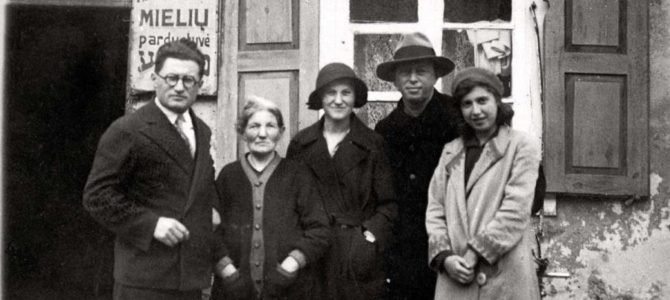
It’s important for people to hear the sound of Yiddish. There are many interesting sayings. My grandma used to say “one butt can’t be at two fairs at once.” Takhrikhim is a linen cloth used as a burial shroud. I remember I had this rich uncle who was stingy. Something needed to be purchased for the bathtub, but he’s not buying it. I said to him: “Uncle, takhrikhim have no pockets. And what do we keep in our pockets? Money. When they are burying you, you can’t take your money with you.” After I said that, uncle went and bought everything right away. Incidentally, pockets in Yiddish are “keshenes,” almost the same as Lithuanian “kišenės.”

Aphorisms, sayings and etc.

On Sunday I thought I’d go on Monday, but I put it off, and I didn’t go on Tuesday, either, because there was market on Wednesday. And why should I go on Thursday, since Friday is the start of Sabbath?

When the mouse is full, the flour is bitter.

No man scratches his head without reason: either he has worries, or lice.

Molėtai Holocaust Procession Draws Record Crowd

eisena-skirta-iszudytiems-moletu-krasto-zydams-pagerbti-faina

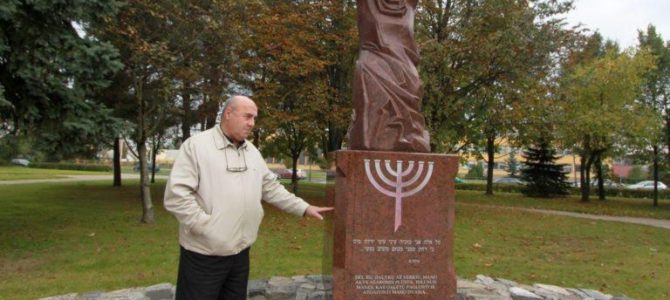
More than 2,600 and perhaps as many as 4,000 people attended a rally and walked the route along which 2,000 Jews were marched to their deaths 75 years ago in the sleepy Lithuanian town of Molėtai Monday. The population of Molėtai was roughly 6,400 when last counted in 2011.

The town center and surrounding streets were filled with local residents and people from around the world, including Holocaust survivors and their descendants. Many Lithuanians brought their children and there were people from Estonia and a number of Lithuanian officials in the crowd. One group of young people waved Polish flags–the Polish Armia Krajowa operated in the area in 1944. A small group of Lithuanian boy and girl scouts attended, while another small group carried a Lithuanian flag, and others sported Israeli flags. A monk in black robes stood by the stage, on the other side of which there was a long line of people holding posters with names, faces and descriptions. A central area contained about twenty folding chairs for elderly and distinguished guests, including Vytautas Landsbergis and Holocaust survivor Irena Veisaitė. Lithuanian MP Emanuelis Zingeris, a Litvak, also attended. The priest Tomas Šernas was also there, as was Lithuanian Jewish partisan Fania Brancovskaja. Other distinguished guests included Conservative Party and parliamentary opposition leader Andrius Kubilius, Lithuanian defense minister Juozas Olekas and deputy foreign minister Mantvydas Bekešius.

Record Turnout for Biržai Holocaust Commemoration

Around 200 people attended an annual commemoration of the Holocaust victims of Biržai, Lithuania Sunday, August 28, 2016. In prior years those travelling to the rural town near the Latvian border numbered in the dozens. Only members of four families survived the Holocaust in Biržai. Their descendants now live in other locations in Lithuania and Israel and have been making the pilgrimage back to honor their murdered relatives since the end of World War II.

A Holocaust historian who attended said larger interest this year was likely the result of publicity for the Molėtai Holocaust commemoration on August 29.

Ten speakers spoke at the commemoration, including a moving speech by Lionginas Virbalas, the Catholic archbishop of Kaunas who was born and grew up in Biržai. Lithuanian Jewish Community chairwoman Faina Kukliansky also spoke eloquently about the past and the future. Israeli ambassador Amir Maimon spoke and a representative from the US embassy whose Jewish family roots are in Biržai also participated.

There wasn’t a formal march to the killing site. Instead there was a walking tour of Jewish sites in Biržai, including the former synagogue, Jewish houses and buildings and the old Jewish cemetery, where a portion of the Jews of Biržai were murdered. The group then moved to the killing site about 2 kilometers outside town where prayers were said by representatives of different religious communities.

Israeli Embassy Invites You to an Exhibit of Children’s Drawings

ldj

Children’s Art Exhibit Let’s Draw Jerusalem

The Israeli embassy and municipalities of Vilnius and Elektrėnai have the pleasure of inviting you to attend the opening of the Let’s Draw Jerusalem exhibition of drawings by children in the second-floor foyer of the Vilnius Municipality building at Konstitucijos prospect no. 3, Vilnius at 2:00 P.M. on September 12.

The artwork is the result of a student contest the Israeli embassy and the municipality of Elektrėnai sponsored in April of 2016 called “Let’s Draw Jerusalem.” The idea was to combine symbolically the past and the future and the children were instructed to draw anything they associate with Jerusalem and Vilnius, Israel and Lithuania and the history and legacy of Litvaks. Come take a look at the wonderful pictures they came up with!

The exhibit will run till September 23.

Events by Tolerance Center of Dukstyna Grade School in Ukmergė for September 23

Program of events by the Tolerance Center of Dukstyna Grade School in Ukmergė (Vilkomir) for September 23:

8:00-9:00 traditional “Memory Track” jog in Pivonija woods; candle lighting ceremony to honor the dead;

11:00 Ukmergė Old Town Architecture: Past, Present, Personal Stories (walking tour of sites)

12:00 Lesson at regional history museum; screening of parts of the film The Dark with discussion to follow; meeting Stasė Staputienė, daughter of Righteous Gentiles Kazimieras and Marcijona Ruzgys.

Information provided by Tolerance Center coordinator Vida Pulkauninkienė

Ramūnas Bogdanas: How Many Lithuanians Are Still Peeking out the Window

R. Bogdanas. Kiek lietuvių tebežiūri pro langą

Almost all Jews in Lithuania were exterminated in the Holocaust. It sounds correct, but I tend to say it differently: the Jewish part of Lithuanian society was exterminated during the Holocaust. It seems the same, but there’s an essential difference which demonstrates one’s attitude towards the country and its past. In the first case it is admitted that, besides Lithuanians, Jews lived in this land, who did not survive. Their history ended, while ours, so far, continues. Two separate paths. In the second case, we say that Jews, while different from Lithuanians, are part of that same Lithuania, like an arm and a leg; while separate, still part of the same body. While Jews lived in a rather closed community, their centuries of proximate existence and work made them part of Lithuania. It seems like the simple truth, but it’s so hard to accept it. Because then there will come a time to explain what madness possessed Lithuania that one of her arms cut off the other and pulled the gold rings from its cold, dead fingers.

Full editorial in Lithuanian here.

Wooden Synagogues: Lithuania’s Unique Ethnic Architectural Legacy

Medinės sinagogos – unikalus etninės Lietuvos architektūros paveldas

The relicts of the Jewish cultural landscape created over more than 600 years in cities, towns and villages throughout Lithuania can be placed in four categories: mass murder sites; cemeteries; synagogues and other heritage buildings; monuments and other commemorative markers. Martynas Užpelkis, Lithuanian Jewish Community heritage protection expert delivering a lecture at an event dedicated to the European Day of Jewish Culture, said: “The Lithuanian Jewish Community, almost exterminated during the Holocaust, is not able to maintain and protect heritage sites throughout Lithuania alone today. The role of the Lithuanian state and municipal institutions, NGOs and citizens is crucial. Many challenges are arising, but great results have been achieved in cooperation with the Cultural Heritage Department and the municipalities.”

To what use should the synagogue buildings be put?

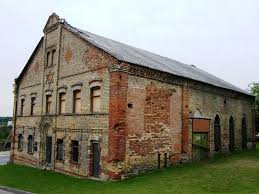
About 80 synagogues survive in Lithuania today, and 43 of them are listed on the register of cultural treasures. There are only two working synagogues and all other buildings are being put to other uses or are not being used at all. The LJC owns 13 synagogues and synagogue complexes. Most of the buildings are not in use and are in serious disrepair.

Gefilte Fish: Stuffed Fish, or Fish Ball? Secrets of the Litvak Kitchen Revealed

gefilte

by Dovilė Rūkaitė

The issue of survival is an urgent one in the history of cuisine just as much as it is in the history of humanity. Do the fittest and most delicious survive? So what are we to make of the apparent success of this boiled ball, a brownish gray mass with a slice of carrot atop, either sweet or salty, framed by a pink jelly, or just as often with a sauce of indeterminate color? Gefilte fish is an established dish in world cuisine; in the kosher food section you can find several different types and it is an essential food during the holidays at European Jewish homes.

Gefilte fish is an Ashkenazi Jewish dish of epic proportions which has survived the challenges of the centuries remaining almost unchanged to the present time. Litvaks make this stuffed fish in the following way: the carp or trout is gutted, the bones are removed from, the fish fillet is combined with spices and the mixture is placed back within the skin of the fish or strips of it and boiled in a pot with carrots. The stuffed fish cools in the fish broth which gels into a jelly, is decorated with lateral slices of carrot and served with horseradish. Jewish housewives in Vilnius used to put bits of beet in the pot so the jelly would take on a pink color and a more interesting taste.

European Day of Jewish Culture 2016

European Day of Jewish Culture 2016
Vilnius speaks Yiddish again!

Sunday, September 4, 2016
Lithuanian Jewish Community, Pylimo street No. 4, Vilnius, September 4

Program:

10:00 Bagel breakfast Boker Tov-בוקר טוב – A guten morgn – Labas rytas!
Location: Bagel Shop Café, Pylimo street No. 4, Vilnius

11:00-11:45 Hebrew lessons for kids and parents with Ruth Reches, author of the Illustrated Dictionary of Hebrew and Lithuanian for Beginners, registration required
Meet at the Bagel Shop Café, Pylimo street No. 4, Vilnius

12:00-12:45 Rakija Klezmer Orkestar performance
Location: White Hall, LJC

Learning about Jewish Heritage through Languages

Pažintis su žydų kultūros paveldu šiemet vyks pasitelkiant kalbas

We invite you to participate in events scheduled throughout Lithuania for September 2 to 5 to celebrate the European Day of Jewish Culture. This year the theme is Jewish languages. Events will include the now almost traditional excursions and tours of Jewish heritage buildings with a focus this time on Hebrew language and calligraphy lessons, discussions, exhibits, concerts, educational games and even bagel breakfasts!

Diana Varnaitė, director of the Cultural Heritage Department under the Lithuanian Ministry of Culture, said: “We still have a significant amount of architectural heritage in Lithuania despite the intense destruction of Jewish material and intangible culture carried out during the Soviet era. Most of it, especially in Vilnius and the other larger cities of Lithuania, as a consequence of Sovietization, is still undiscovered, unrecognized and ‘unread.’ We invite you to take a look at our Jewish cultural heritage, to take it in and to understand that it is not just our past, but also an opportunity for the future. By educating the public and developing cultural tourism, we can slowly impart new vitality to our cities and towns.”

Full story in Lithuanian here.

Jewish Languages in Lithuania

by Akvilė Grigoravičiūtė, Germanic studies doctoral candidate, Sorbonne

We invite those interested in Lithuanian Jewish culture and heritage to participate in walking tours, attend exhibitions, meetings and concerts and take part in other cultural activities scheduled for Sunday, September 4. The point is to regain a portion of our own historical memory, to disrobe it from a mantle of suppression and to add color beyond black and white to a rather amicable and good-willed former life together.

Full story in Lithuanian here.

Vilnius Sholem Aleichem ORT Gymnasium Principal on New School Year

Vilniaus Šolomo Aleichemo ORT gimnazijos direktorius Miša Jakobas sveikina su naujaisiais mokslo metais

The first day of school, September 1, is a real holiday event for children, their parents and their teachers at the Sholem Aleichem school in Vilnius. This is the school’s second year in new premises renovated and built to the latest construction standards, located in the Žvėrynas neighborhood of Vilnius. This year there are 390 students. Principal Miša Jakobas says the large student body shows the school is an attractive one for city residents, and that people are talking about the school.

“In ratings of Lithuanian gymnasia, we take 17th place, and 5th in Vilnius. That’s a good indicator. We will work and strive, and competition is growing. The last school year was successful. Our graduates entered higher education and chose different subjects, including microbiology, chemistry, philology, engineering and technological fields,” he said.
ŠAmokykla

Kaunas Jewish Community Commemorates Holocaust Victims in Kėdainiai

Kauno žydų bendruomenė pagerbė Holokausto aukas Kėdainiuose

Members of the Kaunas Jewish Community commemorated Holocaust victims at a ceremony held in Kėdainiai, Lithuania. Some come from Kaunas every year to commemorate the dead in Kėdainiai. The families and relatives of Aleksandras Meškauskas and Israelis Kaganas lie buried in the mass grave.

Kedainiai

Kaunas community members walked through the historic old town section of Kėdainiai where there are many reminders of the large Jewish community who lived here before the Holocaust. They met Kėdainiai Tolerance Center representative Giedrė Kurovienė and thanked her for preserving memory and for taking such good care of the memorial site.

The Life of Jacques Lipchitz in Sculpture

Žako Lipšico gyvenimas skulptūroje

by Ieva Šadzevičienė

Jacques Lipchitz, a sculptor whose name became synonymous with cubism and who later invented his own baroque cubist style is without dispute one of the most famous artists to have lived in Lithuania. He was born in Druskininkai to a Litvak family in 1891 and has always been more famous outside Lithuania than at home, where Soviet art scholarship ignored him as a decadent modernist whose work lay outside the bounds of canonical artistic norms. Lipchitz stayed in contact with Lithuania and his correspondence with Vytautas Landsbergis and the sculptor Vladas Vildžiūnas has been preserved.

Currently the Vilna Gaon State Jewish Museum’s Tolerance Center is hosting an exhibition of his work called “Life in Sculpture: Jacques Lipchitz at 125” which follows his creative path from childhood in his native Druskininkai to his student period in Paris surrounded by creative people, to his later life in the United States.

Full article in Lithuanian here.

Discover Jewish Lithuania Mobile App

Artūras Taicas, chairman of the Ukmergė Jewish Community, reports there will be a public launch of a new mobile telephone application called Discover Jewish Lithuania on September 4 during a commemoration of Holocaust victims in Ukmergė. The app uses what’s called augmented reality to overlay graphics, text and information on mobile phone and tablet screens displaying live camera views. The app will aid in finding sites and then offers additional information about the location in one of five languages, Lithuanian, English, Hebrew, Polish and Russian. So far it works in Ukmergė, Vilnius, Kėdainiai, Joniškis, Žagarė, Valkininkai and the village of Degsniai.

Lithuanian Prime Minister Commemorates Holocaust Victims in Šeduva

Premjeras pagerbė Holokausto aukas Šeduvoje

Vilnius, August 30, BNS–Lithuanian prime minister Algirdas Butkevičius Tuesday commemorated Lithuanian Holocaust victims at the Pakuteniai and Liaudiškiai mass murder sites and at the old Jewish cemetery in Šeduva, where kaddish was said for the dead.

“The Holocaust is our shared agony, our tragedy. It is our obligation that in the future never again would our human nature face such danger,” the prime minister was quoted in a Government press release. The PM said unfading memory is a duty to the dead and those who suffered.

The prime minister thanked the organizer, the Šeduva Jewish Memorial Foundation, and its representatives, who are conducting the Lost Shtetl project to commemorate Jewish life in Šeduva and the mass murder of that community in the forests near the town.

The Government’s internet site features photographs from the commemoration:
http://ministraspirmininkas.lrv.lt/lt/naujienos/premjeras-seduvoje-pagerbe-holokausto-auku-atminima

Holocaust Mass Grave in Vilnius Region Hidden by Bushes

masine kapaviete
15min.lt

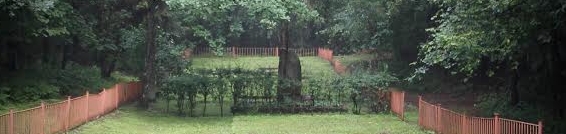
One thousand, one hundred and fifty-nine. Historians say that many Jews from Shumsk, Kena, Naujoji Vilnia and other towns in the area were murdered by the Special Unit in Vėliučioniai Forest just a few kilometers from Vilnius on September 22, 1941. Although the number of victims is truly terrifying, it’s very difficult to find the mass murder site itself. The Vilnius regional administration responsible for maintaining the site doesn’t think this is a real problem.

Full story in Lithuanian here.

LJC Greetings on First Day of School

LŽB sveikina su Rugsėjo 1-ąja
A classroom at Sholem Aleichem Gymnasium

Lithuanian Jewish Community chairwoman Faina Kukliansky sends greetings to all the children of our members in school, from first grade to university students, and to all their parents on September 1, the official start of the school year throughout Lithuania. Whatever your age, we all get nervous on this day, we remember our childhoods, we smile and we grimace and we wish one another success in our studies.

I especially congratulate all the students of the Vilnius Sholem Aleichem ORT Gymnasium and their parents, because you have selected to study at one of the best schools in Vilnius, the Jewish gymnasium run by principal Miša Jakobas, who has brought most highly-qualified teachers who love their profession and children together to staff the school. The school is doing well in its new building with modern classrooms and an atmosphere conducive to learning.

Another piece of good news for the school is that negotiations are under way with the Vilnius municipality for improvements there. Mayor Remigijus Šimašius responded quickly to a request by the school principal and me to improve athletics for students by covering the square used for sports there, since the school doesn’t have an indoors gym.

Today I am also happy about a new law which allows students to get credit for public service. High school students will receive extra points for volunteer activity on their university entrance exams. I am hoping this will encourage you, dear students, to do volunteer work at the Lithuanian Jewish Community. Those entering institutions of higher education in 2018 will receive additional credit for graduation work and volunteering.

I wish all of you to experience the joy of learning which imparts an appetite for knowledge, and not to be discouraged by failures along the way.

I wish you an interesting school year!

Holocaust Commemoration in Ukmergė

HOLOKAUSTO AUKŲ MINĖJIMO RENGINYS UKMERGĖJE

Gathering in the Pivonija grove in Ukmergė on Sunday, September 4, 2016

Program

12:00-12:45 Commemoration of Holocaust Victims: minute of silence, introductory speech by Ukmergė Jewish Community chairman Artūras Taicas, presentation of Tolerance Center by director Vida Pulkauninkienė, statements by participants;

12:45 Meeting of participants at Big Stone Restaurant, Kauno street no. 5, Ukmergė: snacks and coffee or tea, presentation of mobile app Discover Jewish Lithuania;

2:00-2:20 Short tour of Old Town, end of event.

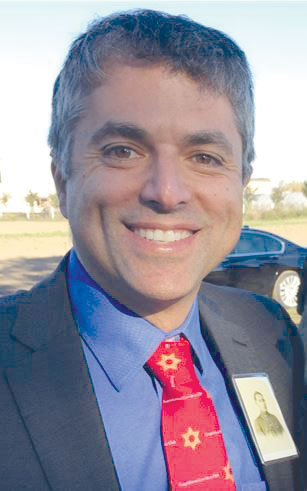
Tzvi Kritzer: I Was Horrified No One Would Remember the Mass Murder of Molėtai

Kritzerby Karolis Kaupinis, Lithuanian Radio and Television show Savaitė, from 15min.lt

There’s a street in Molėtai along which 2,000 unarmed people, the town’s Jews, were led to their deaths 75 years ago. The mass grave now lies on the edge of town, although it’s difficult to call the location a grave site. Relatives of the murdered flocked to Molėtai Monday from around the world to join a procession along the route to the mass murder site.

Writer and director Marius Ivaškevičius invited Lithuanians to join the march. “You don’t have to do anything, just walk several kilometers through the town of Molėtai together with our Jews. To be silent, together, to look one another in the eyes. I have almost no doubts someone will cry, because such scenes are moving. Someone among them, someone from our side. And that’s enough. Just that, to show them and ourselves we are no longer enemies,” Ivaškevičius wrote. The LRT TV program Savaitė interviewed Tzvi Kritzer, an organizer of the march who was born in Vilnius in 1973 and moved to his Israel with his parents at the age of 17, about the event in Molėtai on August 29.

Could you tell us briefly the story of your family who lived in Molėtai?

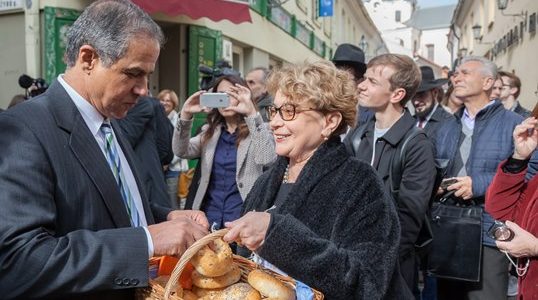
My father lived in Molėtai with his parents and two brothers. We had more relatives there, aunts, uncles. They owned a bakery where they made bagels. Even today when we were filming a film in Molėtai and talking with many of the old-time residents of Molėtai, many of them remembered there was this very famous bakery which made especially delicious bagels, but which is now gone.

Full interview in Lithuanian here.