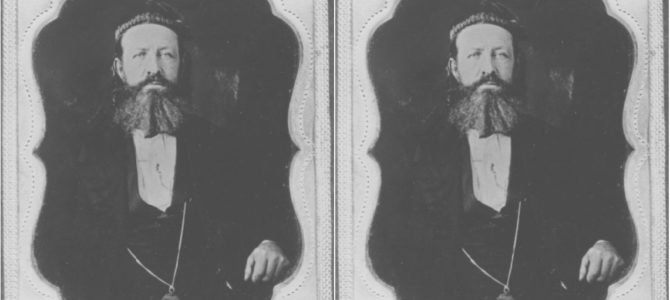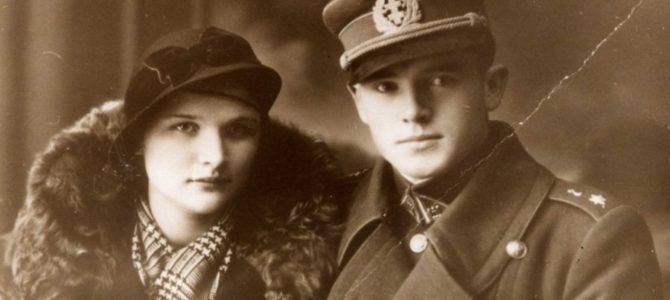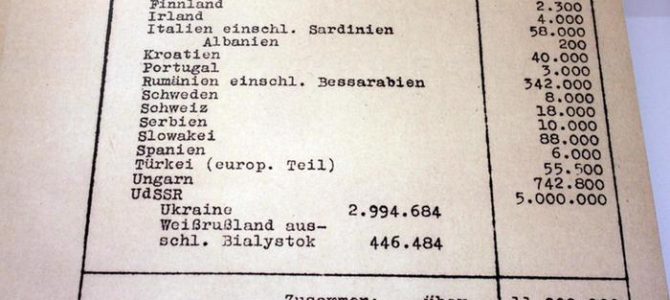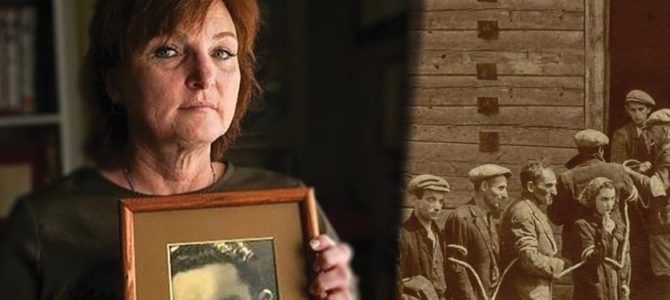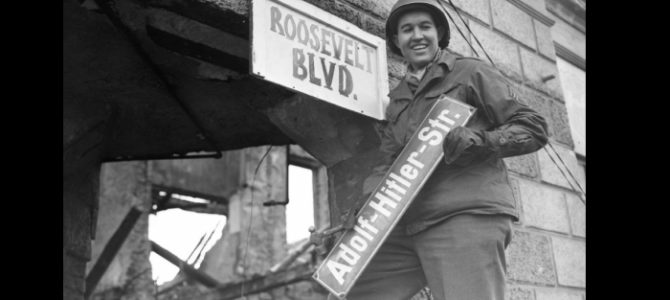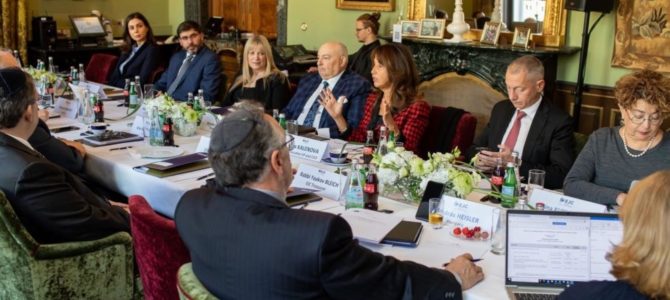
The following was sent from the Lithuanian consulate in Tilsit, aka Tilžė in Lithuanian, in East Prussia to the Political Department of the Lithuanian Foreign Ministry on November 10, 1938. The second page is a telegram from Königsberg to the Lithuanian Foreign Ministry dated November 12, 1938.

Austria Commemorates Kristallnacht
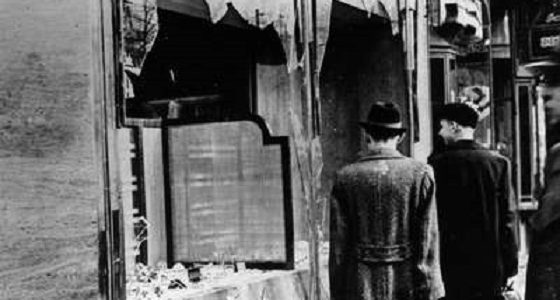
In the night between November 9 and 10, 1938, Nazi paramilitary brownshirts and German citizens went on a staged rampage destroying Jewish stores, homes and synagogues and killing Jews. At that time Austria had been annexed by the Third Reich. Today, on November 9, 2021, the president of Austria, members of the European Commission and EJC representatives gathered to commemorate the dead in Vienna.
On Thursday the Austrian capital will present two projects to mark the 80th anniversary of the violent attacks against Jewish homes, companies and houses of prayer. Kristallnacht, or the Night of Broken Glass, is considered a milestone on Hitler’s path towards the total extermination of European Jewry. The names of 68 Jews murdered during the bloodletting will be projected every evening of the week at 7:38 P.M. local time till dawn every twelve minutes on the front of the building housing the Uniqa insurance agency in the center of Vienna.
“We want to preserve the memory of every person murdered by the Nazis,” Austrian Resistance Archive (DOW) director Gerhard Baugmartner said. The Tower of Names will likely be seen by tens of thousands of people.

Joe Slovo Remembered
by Alistair Boddy-Evans
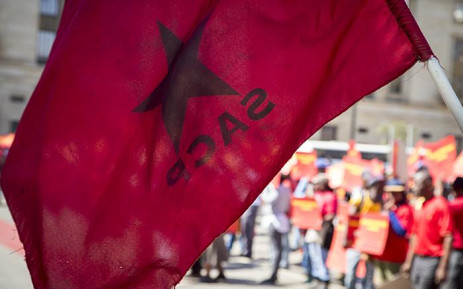
Joe Slovo, the anti-Apartheid activist, was one of the founders of Umkhonto we Sizwe (MK), the armed wing of the ANC, and was general secretary of the South African Communist Party during the 1980s.
Early Life
Joe Slovo was born in a small Lithuanian village, Obelai, on May 23, 1926, to parents Woolf and Ann. When Slovo was nine years old the family moved to Johannesburg in South Africa, primarily to escape the increasing threat of anti-Semitism which gripped the Baltic states. He attended various schools until 1940, including the Jewish Government School, when he achieved Standard 6 (equivalent to American grade 8).

Silvia Foti at the Tolerance Center
Silvia Foti presented her book “The Nazi’s Granddaughter: How I Discovered My Grandfather Was a War Criminal” at the Tolerance Center of the Vilna Gaon Jewish History Museum October 29.
She spoke about her painful experience confronting and coming to terms with the fact her grandfather Jonas Noreika collaborated with the Nazis in Lithuania and committed Holocaust crimes. She said she regretted he is still revered in Lithuania as a hero and an example to follow.
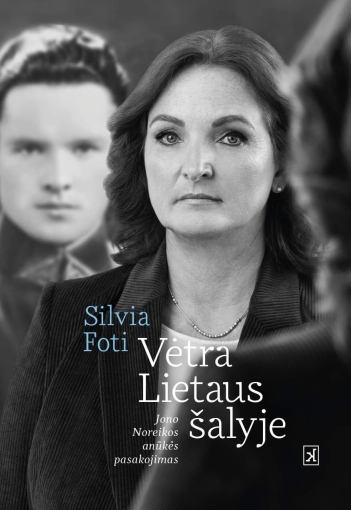
The book will be published in Lithuanian translation by Kitos Knygos publishing house in 2022 under the title “Vėtra lietaus šalyje” [Storm in the Country of Rain].
Lithuanian Jewish Community chairwoman Faina Kukliansky took part in the discussion as well, saying: “I have no doubt at all that, despite the fact the media are ignoring this discussion, after this event we will hear heavy criticism from people who were not here and did not participate. But as I have said many times, Lithuania’s reputation is being tarnished not by those who speak the truth, but by those who hide it.” She said she understood how hard it was for Foti and how much courage and sincerity she had shown in telling the truth about a close family member.

European Days of Jewish Culture Lead to Regular Discussions
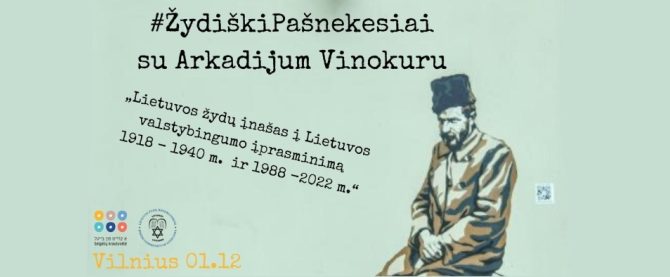
The #ŽydiškiPašnekesiai web discussion started as part of the European Days of Jewish Culture this fall, whose motto this year was “Dialogue,” has turned into real-life meetings and discussions. Starting now every second Wednesday of the month will be devoted to discussions of Jewish history and heritage, subtle aspects of history and the issues which came up last fall with political, educational and public figures, held at 5:00 P.M. at the Bagel Shop Café at the Lithuanian Jewish Community, Pylimo street no. 4, Vilnius. There will also be relevant passages of music performed at these events.
The first such discussion is scheduled for November 10 under the title “Reflections of the Holocaust in Political Rhetoric and the Media.” The discussions will likely be held in Lithuanian. Founder of this new discussion club Arkadijus Vinokuras says: “Today only a small portion of Lithuanian society and especially politicians are able to speak at least respectfully about the tragedy which befell us all in the mid-20th century. Yes, all of us, all of Lithuanian society, without regard to ethnicity. It’s important to realize that ‘speaking respectfully’ about the Holocaust is one thing, and understanding the connections between the Holocaust and institutionalized anti-Semitism is another thing altogether. This kind of dualism arises often in speeches by politicians and is reflected in their actions. There are cases in the media (not just in Lithuania) where there is a lack of reflection and ‘innocent’ opinions are expressed, under the alleged right to ‘an alternative view of the holocaust.’ And no, writing the Holocaust uncapitalized is not an unintentional mistake here.”

LJC Chairwoman Faina Kukliansky Speaks at Commemoration of Grosse Aktion in Kaunas
Your excellency, the president of the Republic of Lithuania,
Honorable mayor of Kaunas,
Ladies and gentlemen,
The Passion, the path of suffering leads us to this place from Democrat Square, which eighty years ago was witness to a disgusting and horrific crime committed against ten thousand Jewish residents of Kaunas.
Earlier that same year the kommandant and the burgermeister of Kaunas issued order no. 15, point 4 of which evicted all Jews of Kaunas from their homes and lives: “All people of Jewish ethnicity living within the borders of the city of Kaunas without regard to sex or age must remove to the Kaunas suburb Vilijampolė between July 15 and August 15 of this year.”
WJC Thanks Lithuanian PM for Boycotting Durban Process

Holocaust Seminars for Teachers
The Lithuanian Jewish Community, the Olga Lengyel Institute for Holocaust Studies and Human Rights and the secretariat of the International Commission to Assess the Crimes of the Nazi and Soviet Occupational Regimes in Lithuania are currently implementing a project to educate Lithuanian teachers about the Holocaust and human rights.
The goal of the project is to improve quality of education by examining different aspects of the Holocaust and human rights and social justice in light of the main historical events of the 20th century. The project is aimed at teaching new teaching methods and talking about opportunities for including them in the education process.
The lessons and seminars are intended to provide a deeper understanding of the effect stereotypes, superstitions and discrimination have on people, different groups and society as a whole. There is also broad discussion with teachers about Jewish life before the Holocaust and after. The sessions include painful and uncomfortable topics and histories which need to be told to the younger generation.

Silvia Foti to Speak at Vilna Gaon Museum
Silvia Foti will present her book “The Nazi’s Granddaughter: How I Discovered My Grandfather Was a War Criminal” at the Vilna Gaon Jewish History Museum located at Naugarduko street no. 10 in Vilnius at 3:00 P.M. on Friday, October 29. She is the granddaughter of Jonas Noreika, the Lithuanian Nazi war criminal whom some in Lithuania consider a hero and an example to follow. Also participating in the discussion will be Lithuanian Restoration of Independence Act signatory and chairman of the International Commission to Assess the Crimes of the Nazi and Soviet Occupational Regimes Emanuelis Zingeris, International Commission director Ronaldas Račinskas, Jewish Public Library founder and director Žilvinas Bieliauskas, Lithuanian ambassador Marius Janukonis, Vilnius University professor Jurgita Verbickienė and Lithuanian Jewish Community chairwoman Faina Kukliansky.

Snapshots from Book Presentation
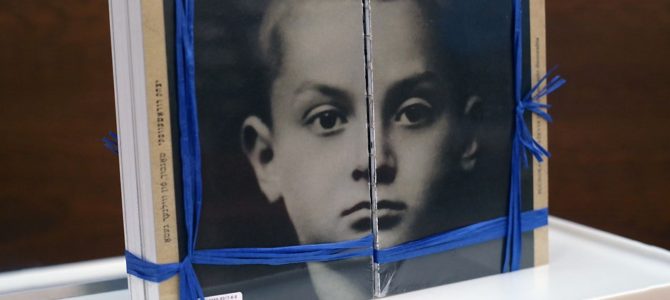
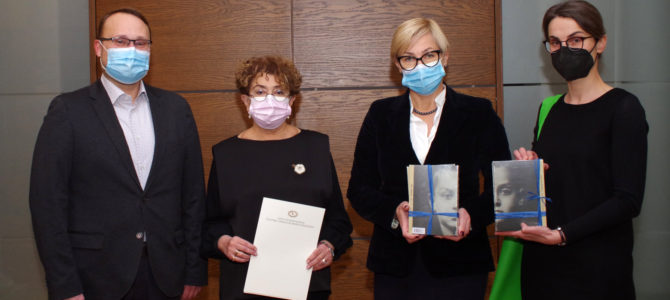
Some snapshots taken at the presentation of the book “Dešimties stebuklų liudytojai” held at the Lithuanian Jewish Community on October 19.

POLIN Museum and the Polish Memory Wars
At 4:00 P.M. on October 15 the Lost Shtetl project and Vilnius University will continue the series of discussions called “Public Conversations about History.” During these discussions we will raise the issues of historical truth, memory wars and the motivations behind choosing to serve one ideology or another.
This time the topic is “The POLIN Museum and Poland’s Memory Wars.” We will engage historian and former POLIN director Dariusz Stola in conversation.
POLIN, the Polish museum of Jewish history, opened in 2014 and has had millions of visitors since then. The museum successfully addresses the complex past of Poles and Jews. But when POLIN demonstrated an exhibit about the anti-Zionist campaign of 1968 and expressed opposition to Poland’s new law on Holocaust complicity, right-wing nationalists and politicians in the ruling party attacked the museum.
Dariusz Stola will talk about the museum’s achievements and about how everything changed when the culture wars began dividing the country. In the discussion we’ll talk about how national commemoration policy rejects a critical judgment of the past as a “shaming methodology.” We will reflect on how these factors affect us.
Moderators: Sergejus Kanovičius and Paulius Gritėnas
The discussion will take place in English in the Theater Hall of Vilnius University. Certificate of vaccination or equivalent required for entry.
More information available here.

Lithuanian Pledges Made at Malmö Forum
Statement by Lithuania at the Malmö International Forum on Holocaust Remembrance and Combating Anti-Semitism
Malmö International Forum on Holocaust Remembrance and Combating Anti-Semitism
October, 12-13, 2021
Pledges by Lithuania for 2021-2025
The Lithuanian government is engaged in a number of initiatives on Holocaust remembrance and education, which are to be implemented within a 5-year perspective. The most significant of them include opening new museum spaces and updating existing school curricula incorporating modern teaching recommendations on the Holocaust. This is an important contribution to raising awareness and educating society not only about the Holocaust but also the ages rich history of Jews in Lithuania. It was extensively presented during the year 2020, which was officially dedicated to the Vilna Gaon and saw a significant increase of interest in Jewish life, history and heritage in Lithuania.

Lithuanian President Says Country Ready to Implement EU Strategy for Fighting Anti-Semitism
Lithuanian president Gitanas Nausėda at the Malmö International Forum on Holocaust Remembrance and Battling Anti-Semitism Thursday called for educating young people and resisting hate-speech and attempts to falsify history.
He said the great tragedy of the Jews of Lithuania touched almost every city and town and left a void. He said while it’s not possible to fill that void, it is necessary to insure the lessons of the Holocaust are not forgotten.
“We have to make sure the future generations remember and think about what happened. There is no other way to guarantee the horrific events of the past never happen again. Our pledges today must become specific actions aimed at the young generation and all of society,” he said.
Presenting Lithuania’s pledges for Holocaust remembrance and fighting anti-Semitism, the president stressed the importance of educating society, strong academic research and the preservation of Lithuanian Jewish heritage. The Vilna Gaon Jewish History Museum being expanded for this purpose will help better reveal the rich history of the Jews of Lithuania, he said.

LJC Chairwoman Faina Kukliansky Attending Forum in Sweden to Battle Anti-Semitism
Lithuanian Jewish Community chairwoman Faina Kukliansky is taking part in meetings in Malmö, Sweden, for commemorating the Holocaust and battling anti-Semitism. The forum is addressing issues of preservation of historical memory, Holocaust education and the crimes of anti-Semitism and other hate crimes.
“This forum draws attention to the sad truth that there remain very few people throughout the world who survived the Holocaust and are able to testify about it. Today we must find new ways to preserve and transmit memory, new methods of education. Another big challenge is that the history of the Holocaust is being distorted and used for disinformation and propaganda, and a rising tide of anti-Semitism, both in real life and especially on the internet. In order to fight this, we must rally the education system and museums, but also educate our governments and the public, and that’s what this forum is about,” Faina Kukliansky said.
The LJC chairwoman who was officially invited to the forum will meet with European Commission’s coordinator for fighting anti-Semitism Katharina von Schnuberin, World Jewish Congress executive vice-president Maram Stern and other officials responsible for preserving Holocaust memory and fighting anti-Semitism. Kukliansky said the international community is watching how Lithuania acts towards Holocaust victims with a special focus on historical memory and justice.
Following the forum in Malmö, chairwoman Kukliansky plans to return to Lithuania with Rabbi Andrew Baker, director of the international affairs department of the American Jewish Committee, who will discuss anti-Semitism, Holocaust commemoration and the future of the Jewish community with representatives of the Lithuanian government and public figures.
The forum taking place in Malmö on October 13 and 14 is graced by the presence of the King of Sweden and his consort, King Carl XVI Gustaf and HM Queen Silvia, and more than 80 heads of state, journalists and influencers. It is being held at the initiative of the Kingdom of Sweden and the motto for the forum is “Remember, React.” It is being held on the 75th anniversary of the liberation of the Auschwitz-Birkenau concentration camp and on the 20th anniversary of the founding of the International Holocaust Remembrance Alliance, with the date moved from 2020 to 2021 because of the public health panic.

LJC Chairwoman Attends International Forum in Malmö
Lithuanian Jewish Community chairwoman Faina Kukliansky has travelled to Sweden to attend an international forum in Malmö dedicated to Holocaust commemoration and fighting anti-Semitism.
“Anti-Semitism is an attack on European values, and any racist actions or those fueled by hate are irreconcilable with human rights and the principles of democracy. Let’s try to overcome division in society by actively presenting Jewish culture and traditions to the broader public. The indirect or hidden anti-Semitism and the distortion and denial of Holocaust history we are still seeing continue to be a painful insult to people of Jewish ethnicity,” Kukliansky said.
During the discussions in Malmö Kukliansky will meet with heads of delegations and special envoys and officials responsible for preserving Holocaust memory and fighting anti-Semitism, including the EU’s Katharina von Schnuberin and others.
In Sweden she will also meet with Rabbi Andrew Baker, director of international affairs for the American Jewish Committee.

Launch of Book about Rescuers
The Lithuanian Jewish Community will host the launch of the Lithuanian book “Dešimties stebuklų liudytojai” [Witnesses to 10 Miracles] by Rimantas Stankevičius at 6:00 P.M. on Tuesday, October 19, 2021, at the Community located at Pylimo street no. 4 in Vilnius.
The book’s title comes from a quote by Litvak Holocaust survivor Sameul Bak, who said at least ten miracles had to occur for him to have survived. It tells the story of rescuers at the Benedictine Monastery in Vilnius, Juozapas Stakauskas, Vladas Žemaitis and Marija Mikulska, who hid twelve Jews from September of 1943 to July of 1944.
The book launch will feature a panel of speakers including Ginas Dabašinskas, Libertas Klimka, Indrė Valantinaitė, Benediktas Stakauskas and author Rimantas Stankevičius. The discussion will take place in Lithuanian.

LJC Holding Human Rights Roundtable
The Lithuanian Jewish Community is hosting a round-table discussion on human rights and specifically the rights of Jews in Lithuania at 6:00 P.M. on October 20 at the Bagel Shop Café at Pylimo street no. 4 in Vilnius. The discussion will be broadcast via internet as well.
As a member of the Lithuanian Coalition of Human Rights Organizations, the LJC has contributed this year to a “shadow report” to the United Nations initiated and presented by the Law and Justice and the Educational and Scientific and Human Rights Committees of the Lithuanian parliament, intended to improve the human rights situation for ethnic minorities in Lithuania, including Jews.
Those recommendations are available in Lithuanian here.
Participants will include LJC chairwoman and attorney Faina Kukliansky, Sholem Aleichem principal Ruth Reches, human rights expert Jūratė Juškaitė, diplomat Marius Janukonis, equal opportunities ombudsman Birutė Sabatauskaitė, MP and chairwoman of the parliament’s Commission on Battles for Freedom and State Historical Memory Paulė Kuzmickienė, MP and Lithuanian Supreme Court judge Stasys Šedbaras, General Prosecutor’s Office prosecutor Justas Laucius, former Constitutional Court judge and dean of the International and EU Law Faculty at Mykolas Romeris Justinas Žilinskas and others.
More information about registering and attending virtually available on facebook here.

EJC Condemns Belgian Constitutional Court Decision Upholding Ban on Kosher Butchering
Brussels, October 1, 2021–The European Jewish Congress expresses its profound regret at the decision of Belgium’s Constitutional Court to uphold a ban on the Jewish method of slaughter of animals for meat, known as shechita.
The Court upheld two decrees adopted in 2017 which banned shechita in the Flemish and Walloon regions of Belgium in 2017, ruling that these did not violate religious freedoms according to the Belgian constitution.
This follows a 2020 decision by the European Court of Justice that ruled that Belgium was allowed to impose stricter rules on the slaughter of animals than those prescribed by the EU.

Vilnius University to Hold Public Lecture by German Historian Christoph Dieckmann
Vilnius University and the Lost Shtetl Museum are launching jointly a series of lectures and discussions called “Open Conversations on History” which will raise topical questions of historical truth, memory wars and society’s ability to resist the pressure to serve one or another ideology.
We invited Christoph Dieckmann, a prominent historian and author of books on German occupation policy and the Holocaust in Lithuania, to the first discussion at 6:00 P.M. on October 1. He will give a lecture called “Looking back on our past. Lithuanians, Germans, and Jews.”
Dieckmann will share his insights on the relationship between history and memory, talk about personal searches trying to find the best way to study the Holocaust in Lithuania and the method used to help incorporate the different perspectives of Holocaust participants.

LCJ Chairwoman Faina Kukliansky’s Speech at Ponar
Honored guests,
I stand before you in order to deliver a speech, but this place and this sad occasion calls for concentrating and remaining silent. The reflection, respect and humble silence which meets every thinking and feeling person in this place cannot be confused with the silence of apathy, ignorance and fear. All of us have kept silent too long. Too long. We have kept quiet about what happened, where it happened and why. It was kept quiet for most of those eight decades we count since the beginning of the Holocaust in Lithuania. Out of fear? Ignorance? Apathy?