The Vilna Gaon State Jewish Museum and the embassy of the United States of America in Vilnius kindly invite you to a screening of the documentary film “Holocaust Escape Tunnel” at the museum’s Tolerance Center (Naugarduko St. 10/2, Vilnius) on Tuesday, July 18, at 5:30 P.M. The screening will be followed by a discussion with the archaeologists featured in the film.
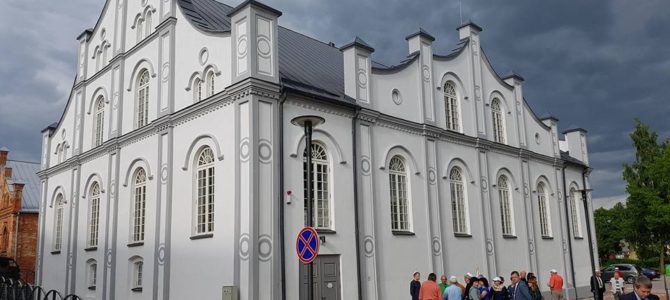
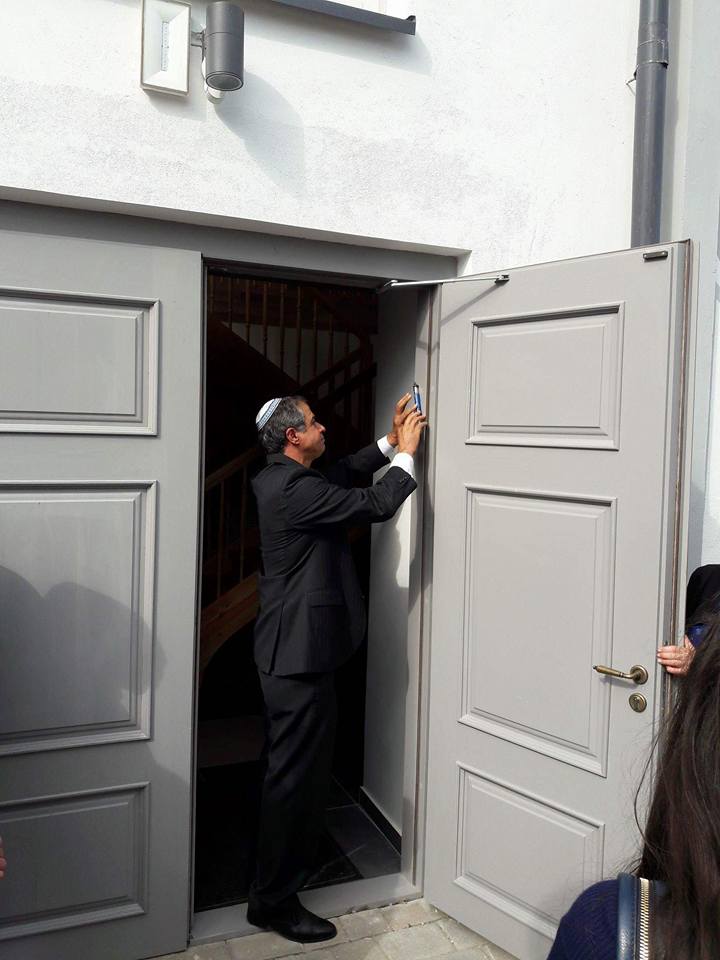
Just before Sabbath on Friday, July 7, 2017, Israeli ambassador to Lithuania Amir Maimon hung a mezuzah on the doorway of the newly-restored white synagogue in Joniškis and he and members of the Lithuanian Jewish Community celebrated the beginning of Sabbath there together.
The Vilnius Jewish Religious Community in great concern categorically stands against any plans to build new buildings on the remains of the foundations of the Great Synagogue of Vilnius.
The Great Synagogue of Vilnius was and is the holiest site for Lithuanian Jews. We consider any plans calling for new buildings to commemorate the supposedly non-extant temple blasphemy and the appearance of new buildings a desecration rather than a commemoration.
We consider it an expression of total disrespect that, without asking the Vilnius Jewish Religious Community and without regard to earlier public statements against this by the Lithuanian Jewish Community, certain organizations are undertaking initiatives whose implementation would, without doubt, offend Jewish religious sentiments and bring on criticism by the followers of the Vilna Gaon around the world. We hope organizations which are attempting to initiate construction projects at the Great Synagogue site will take into account the request made by the Vilnius Jewish Religious Community and give up the plans they have announced.
The Great Synagogue of Vilnius, destroyed by the Nazis and the Soviets, or more accurately its remains which are still being investigated by archaeologists, should be left in peace. At the same time, we note there is an abundance of heritage sites in Vilnius and throughout Lithuania which truly need greater attention.
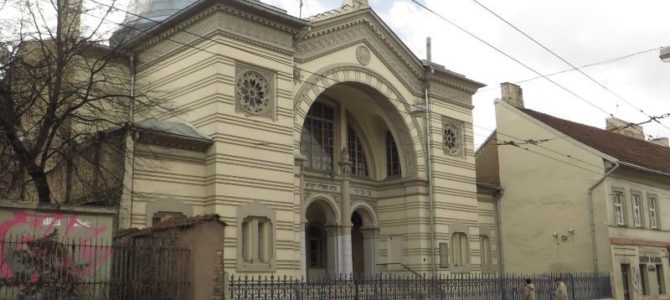
The Vilnius Choral Synagogue, for example, needs greater attention. It still has no ritual bath or mikveh, and needs authentic restoration of its interior.
If something must be changed at the Great Synagogue site, we suggest the sign with incorrect information be replaced, and that the statue to the Vilna Gaon which looks like some sort of caricature be removed and given to some museum in the city. With all respect to the sculptor, it was made without any understanding of Judaic tradition.
We invite those organizations which want to undertake construction at the Great Synagogue site to take into account the real and urgent actual needs of religious Jews.
The Great Synagogue of Vilnius is important as a symbol of annihilated Jewish civilization. There are less ostentation, cultured and respectful ways to mark the site where it once stood, without earth-moving equipment and construction cranes.
Shmuel (Simas) Levinas, chairman
Vilnius Jewish Religious Community
The weird memory wars continue. Thank God they are being waged only in the virtual arena and, it seems to me, the atmosphere surrounding these memory gun-battles is becoming calmer and more on-topic.
Just last year after one large public event, the term “fellow citizens” began to be used very widely to refer to Jewish Holocaust victims. In one discussion where I objected that it wasn’t useful to underline the fact that “our fellow citizens” were murdered, because beyond the limits of this invitation to repentance remain many non-citizens of Lithuania who were victims of mass murder in Ponar and the Ninth Fort in Kaunas, I was presented with a rather unique argument, which goes something like this: by saying “our” fellow citizens were murdered, we make the victims “our own people,” meaning they become closer or dearer to us. Perhaps. I have noticed that even refined and let’s say modern nationalists who before now have not wanted even to mention the Holocaust, much less the victims, have begun gradually to get used to the idea, which becomes for them a kind of indulgence of forgiveness for saying anything at all on the topic. From among those modern and rather square nationalists you might overhear the following: “Well, since it was our ‘fellow citizens’ who were murdered, that’s a bad thing; killing Jewish ‘fellow citizens’ is unpatriotic.” This is the deconstruction of the nationalist’s reasoning having undergone, excuse the phrase, some degree of liberalization. But what about murdering non-citizens?
I’m not a lawyer, but it seems to me this constant emphasis–sincere or not–on Holocaust victims being Lithuanian citizens tends to undermine any sort of human compassion expressed, whether it be Christian, Jewish or Buddhist, undermining the moral dimension of regret, the feeling when you want to say simply and sincerely: I am sad for them, that shouldn’t have happened. And it doesn’t matter in which country those people held citizenship.
And for those whom the legal aspect is important: let them determine and count how many holders of Polish passports from occupied Vilnius, how many French nationals, how many citizens of independent or Soviet-occupied Lithuania lie buried in those pits. If someone is truly sorrowed for these people, it’s surely not because they were citizens of a certain country.
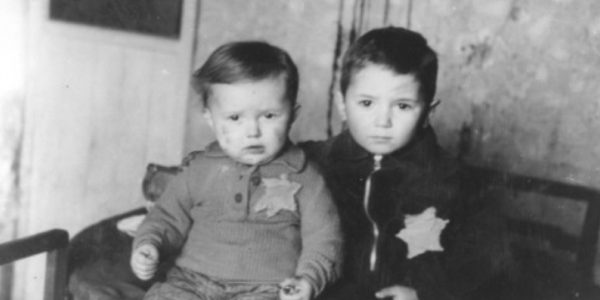
I was moved to write this by a photograph posted recently on social media; it seems there are people who still remember and remind others of the Lietūkis Garage massacre carried out on June 27, 1941. The photograph has in common with the massacres that it is from another future site of tragedy, the Kaunas ghetto. The photograph secretly taken by Kaunas ghetto inmate Zvi Kadushin (Hirsh (George) Kadish) is of two children. They will be murdered. As will be so many children, so many it seems pointless to write the number.
When we think about regret and repentance (if we are really thinking about it), do we need to note or be interested in the citizenship of these two souls?
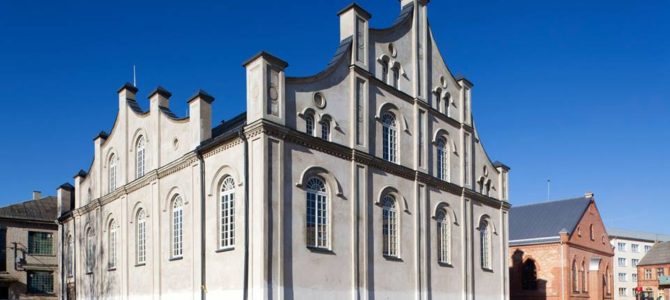
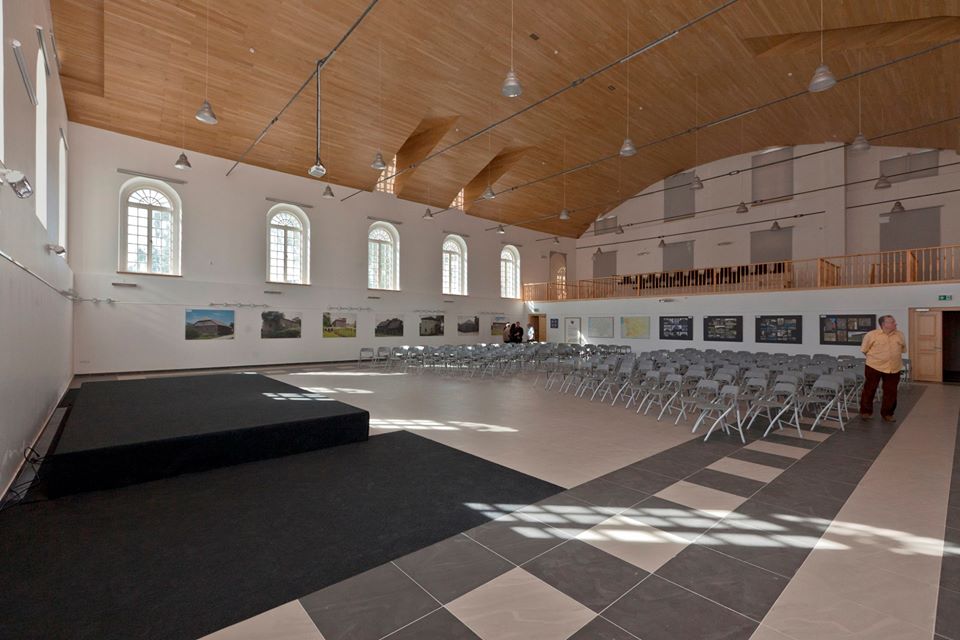
During celebrations of Joniškis’s own city day next week the restored White Synagogue there is to host a re-opening ceremony. The synagogue was built in 1823 and its external face combines features of the late classicism and romantic styles.
Restoration of the synagogue was financed by European Economic Area grants allocated by the Republic of Lithuania, the state budget and the Joniškis regional administration for a total of 389,358.35 euros.
Larger Lithuanian cities but even smaller towns often featured two synagogues, built at different periods. Few double-synagogue complexes are still standing in Lithuania, only in Joniškis, Kalvarija and Kėdainiai.
The Joniškis synagogue complex is located on the eastern side of the town square. Two adjacent brick buildings, the White and the Red Synagogues, form the complex. They were built at different periods and have different architecture and interiors. Their location by the central town square but set back among other buildings is fairly typical. They are very visible from side streets but looking from the main street they are blocked by other buildings. Both synagogues have smaller one-storey and two-storey buildings surrounding them.
Jews settled in Joniškis around the middle of the 18th century when charter rights were granted the cities of Joniškis and Šiauliai. Jewish communal life was intimately connected with religion and the synagogues. In 1797 the Jews of Joniškis received permission to build a synagogue and acquire a piece of land for a Jewish cemetery. A synagogue is first mentioned in 1823. According to the inventory of the Šiauliai economy conducted in 1825 and 1826, there were 49 Jewish families in Joniškis. In the mid-1800s there were 1,042 Jews living there. A second synagogue is first mentioned in 1865, and in 1866 there are records of a third synagogue and a Jewish inn. By 1897 the Jewish population had grown to 2,277. The third synagogue located at Vilniaus street no. 8 was turned into a store and residential building in 1965 and 1966.
Vilnius, June 27, BNS—The Lithuanian Jewish Community is proposing the creation of a cultural museum in the former Vilnius ghetto. There are considerations to include an open-air section beyond a single building housing the museum using modern technology. The LJC presented these ideas to Vilnius mayor Remigijus Šimašius Thursday.
Creative analyst Albinas Šimanauskas, one of the authors of the idea, said they hadn’t decided on a specific location for the museum yet, but there was a proposal to establish it near Rūdininkų square.
“Rūdininkų square, for example, where there is a statue commemorating Tsemakh Shabad, could be the site for a memorial to Righteous Gentiles. It’s a fine square which could host international events, concerts, thematic festivals… this would be a Vilnius Jewish cultural museum exhibiting historical events and cultural phenomena through living story-telling,” he told BNS.
Lithuanian Jewish Community chairwoman Faina Kukliansky said they are waiting for basic confirmation of the idea from the municipality and will decide on a location for the museum after that.
As of now, the Lithuanian Jewish Community is a member of the European Association for the Preservation and Promotion of Jewish Culture and Heritage, better known by the French acronym AEPJ. The AEPJ supports the preservation, appreciation and promotion of Jewish culture and heritage in Europe. The association is especially devoted to making Jewish cultural and heritage buildings and locations accessible to the public. To achieve that goal, the AEPJ conducts two main programs: the European Day of Jewish Culture and the European Jewish heritage tourism routes.
Vilnius, June 25, BNS—Archbishop Teofilius Matulionis, persecuted by the Soviets, was beatified and a ceremony was held to commemorate the event at Vilnius Cathedral Square Sunday.
The first-ever beatification ceremony held in Lithuania drew over 15,000 people where the Pope’s Franciscan envoy cardinal Angelo Amato made the announcement.
Matulionis was imprisoned for 16 years under the Soviets and he received his longest sentence in 1946 after refusing to collaborate with the Soviet regime in their demand he help squash the partisan movement in Lithuania and after criticizing the Communists for persecuting religious people. He was allowed to return to Soviet-occupied Lithuania after ten years of imprisonment. Although he was constantly followed, he was able to receive secret permission from the Vatican to consecrate bishop Vincentas Sladkevičius. Matulionis passed away in 1962 at the age of 89. Some believed he was poisoned by the KGB, although that hasn’t been demonstrated conclusively.
Matulionis becames the second person from Lithuania beatified. Bishop Jurgis Matulaitis’s beatification was announced in Rome in 1987. In order for Matulionis to be canonized, i.e., made a saint, evidence of a miracle must be presented, including those that occur posthumously, such as any which occur in invoking his name in a prayer to God.
Lithuania has a patron saint, Casimir, the grand duke of Poland and Lithuania who was canonized in 1602.
Teofilius Matulionis helped rescue a Jewish girl from the Holocaust. Dalia Epšteinaitė speaks about her childhood friend Estera Elinaitė whom he helped rescue.
by Martynas Užpelkis, LJC heritage protection specialist
An historical event! In recent days, almost a coincidence of sorts but more likely the result of dedicated and constant preparation, three historical Jewish community buildings in Vilnius have been repaired and restored at the same time. In spite of the temporary convenience, our thanks go out to everyone who contributed to the preservation of these Jewish historical heritage sites.
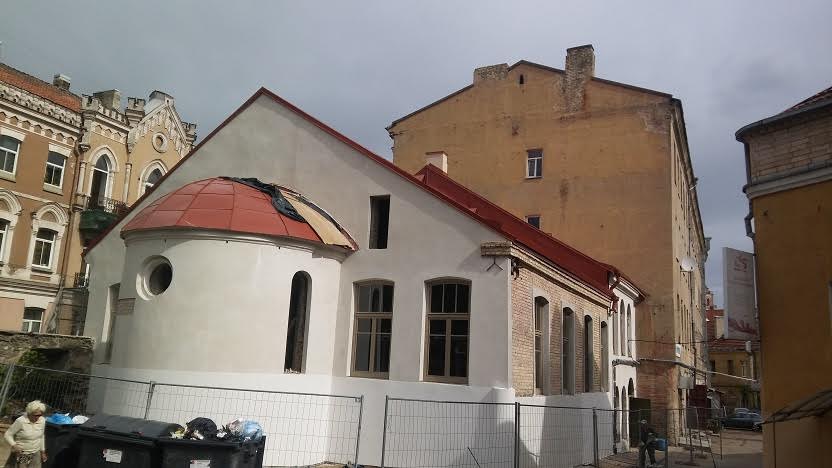
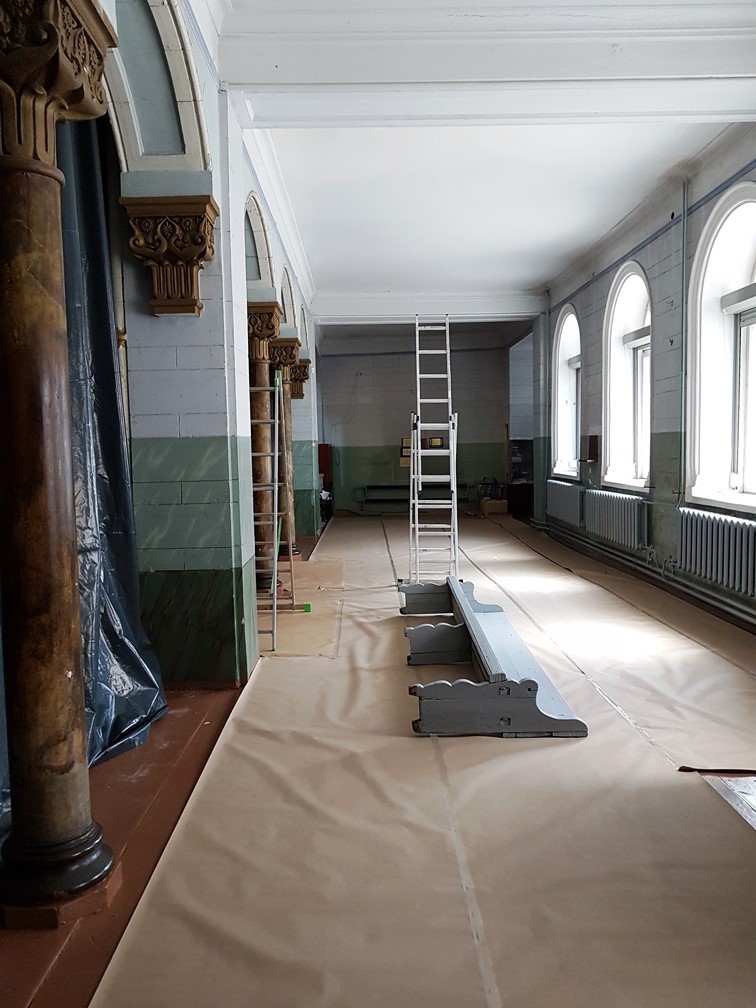
Renovation on the synagogue on Gėlių street in Vilnius, the Zavl Germaize and David Levinson Synagogue, continues, but work has been completed on the façade and floor, and new doors and windows in line with the traditional ones were installed. The Lithuanian Jewish Community owns the building. The role of contractor for renovation work was carried out by the public sector Lietuvos Paminklai [Monuments of Lithuania] enterprise and renovation was conducted by the Nivara company. This year as in the foregoing three reconstruction work was financed by the Lithuanian state and the Goodwill Foundation. In 2017 the Cultural Heritage Department under the Lithuanian Ministry of Culture allocated 120,000 euros and the LJC contributed 16,000 euros allocated by the Goodwill Foundation.
The Lithuanian documentary film festival Nepatogus Kinas [Uncomfortable Cinema] is to present a thematic program on discrimination this fall. To bring attention to how widespread this problem is, organizers are inviting people to share specific examples of the violation of their rights. The festival organizers are hoping their call to the public for personal experiences of discrimination will help break the existing wall of silence surrounding the subject. All examples provided, publicly or anonymously, will be presented to readers in the press and on social media.
“The word ‘discrimination’ often doesn’t mean anything, it’s an abstraction. But very specific personal stories are described by this word. Sometimes painful, sometimes inspiring. These stories allow us to realize we will all face discrimination at some stage in life,” festival director Gediminas Andriukaitis commented.
Lithuanian law forbids direct or indirect discrimination and harassment based on age, gender, sexual preference, disability, racial and ethnic identity, religion and beliefs. Uncomfortable Cinema organizers have also provided categories of language, social status, gender identity and family status for people who want to tell their stories.
Staff from the Lithuanian Jewish Community’s Social Programs Department are currently visiting the Warsaw Jewish Community whose webpage is jewish.org.pl
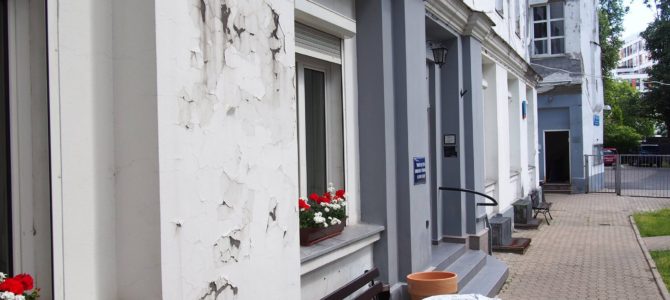
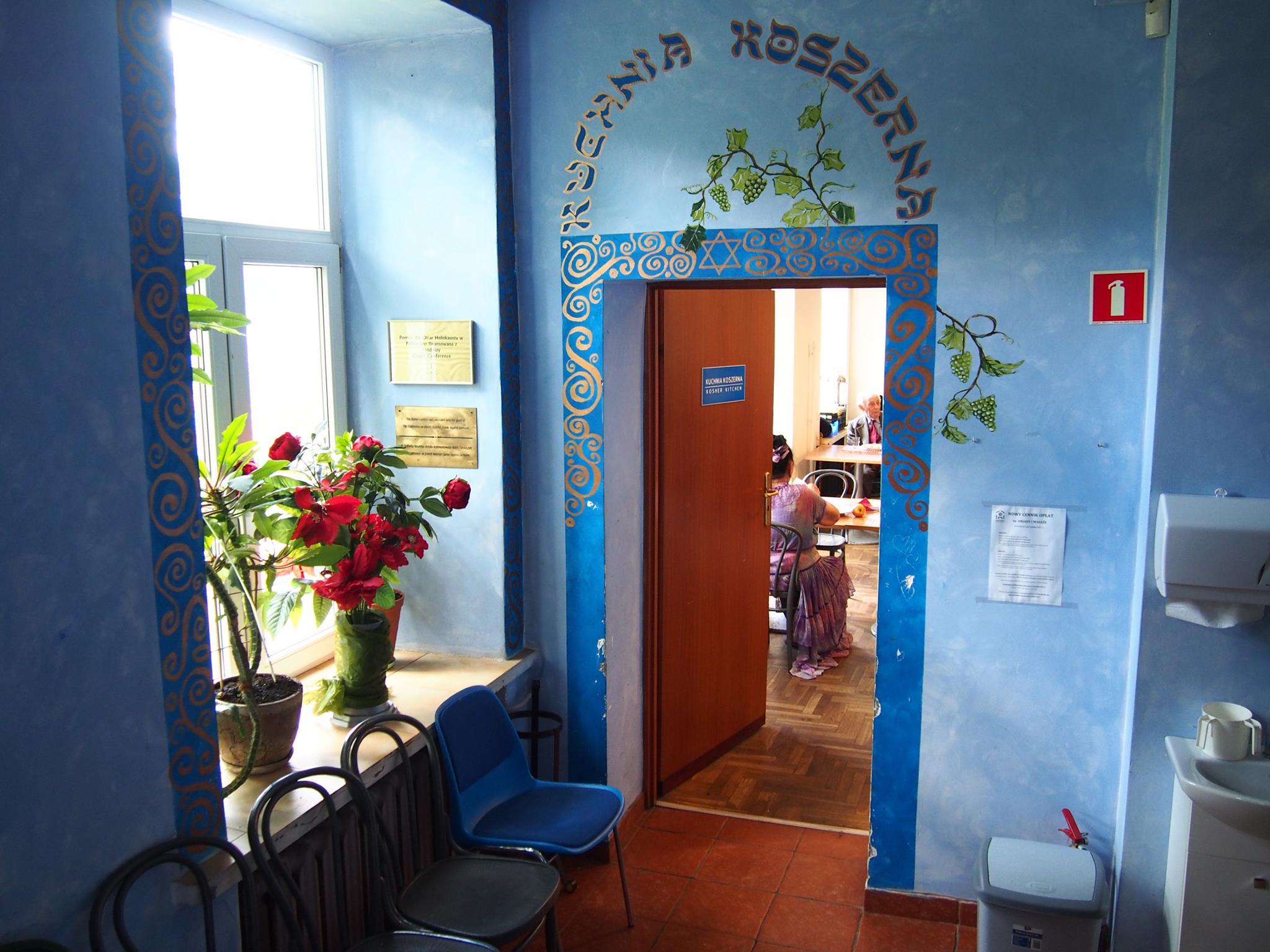
The main community building is located in the center of the Polish capital with a Scandinavian-model kindergarten, a senior citizens day center and a kosher cafeteria adjacent to it.
Currently ten employees are building their skills set in Germany, France and Poland under the Erasmus + program in order to expand the social services network for the elderly and improve quality of services provided to clients.
About 1.3% of members of the Lithuanian Jewish community were deported to the Soviet Union in 1941. This percentage of deportations is the highest for any ethnic group in Lithuania. The deportations failed, however, to extinguish Jewish nationalism, and Zionist groups operated underground, organizing Hebrew education and exerting all efforts to allow Jews to leave for Palestine. According to Jewish historiography, in June of 1941 alone about 3,000 Jewish activists from the right and the left and Jewish owners of large industrial concerns and factories were deported. It is a great shame Lithuanian society today has almost no understanding of these deportations, or has chosen to ignore them, designating deportation an exclusively ethnic Lithuanian tragedy.
Historian Solomon Atamuk found there were 16 Jewish daily newspapers, 30 weeklies and 13 intermittent periodicals along with about 20 collections of literature published in Lithuania before World War II. After the June 14, 1940, ultimatum by the Soviet Union to Lithuania and the occupation which quickly followed, the Jewish community bore the brunt of social and cultural repressions. All leftist and rightist Jewish newspapers were shut down. Even Folksblat, popular among Communists and the organ of the Jewish People’s Party, was banned. Beyond the ban on the Jewish newspapers, editors of Jewish publications were fired and the new regime undertook a complete reorganization and shutting down of existing academic institutions. YIVO was made to heel, employees were fired, various books, newspapers and collections were seized. Opportunities to read in Hebrew were systematically lessened and Jewish libraries were shut down.
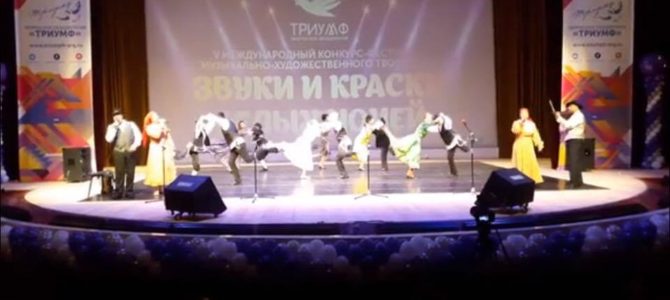
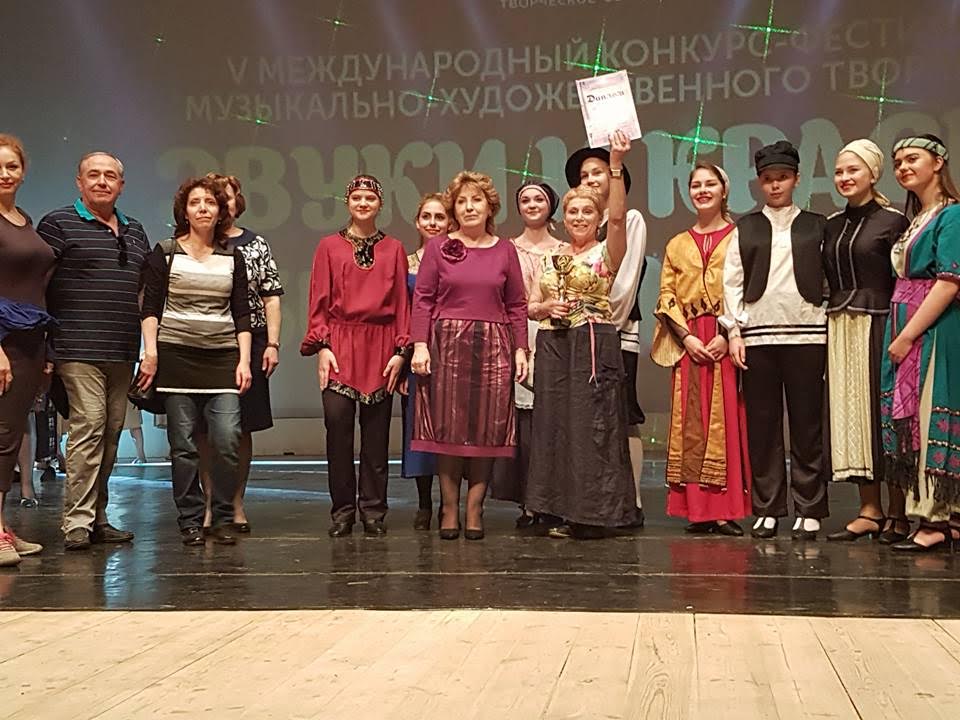
The Fayerlakh Jewish song and dance ensemble performed at the White Nights music and art festival-contest in St. Petersburg, Russia, from June 8 to 11, 2017.
Fayerlakh competed in the category Folk Ensembles and Folk Songs, along with 65 other contestants. Fifty-nine finalists competed in the final concert, where Fayerlakh took first place. The Lithuanian Jewish group was also presented a gift certificate for high art in celebrating Jewish culture and traditions, which they will be able to use at the next festival-contest.
Their performances at such festivals not only demonstrate the ensemble’s excellence and professionalism, but also stimulates tolerance between peoples and faiths. Besides presenting Jewish culture, Fayerlakh also presents multicultural Lithuania on the international stage. These sorts of tours and performances abroad also build real solidarity among members of the song and dance collective, crucial for further creative work.
The competition also provided members of the collective the opportunity to see one of the world’s most beautiful cities, an important education inspiring and expanding the horizons of younger members of the ensemble. Fayerlakh performed a small concert at the Choral Synagogue in St. Petersburg.
Director Larisa Vyšniauskienė and the entire Fayerlakh collective thank the Lithuanian Jewish Community, the Goodwill Foundation and the Joint Distribution Committee for their full support.
Welcome to the Lithuanian Jewish Community, welcome to Vilnius.
You will soon experience it for yourself. This isn’t a promotional film, it’s the reality, slightly beautified. Beautified, because you won’t see all the hard work that goes on every day and the people who do it.
I thank them. We work, we make mistakes, we fall down and we get back up and work harder. But we’re here. There are not so many of us, of course, and we are all different, and sometimes we argue, sometimes we embrace, but we are all here together and we are beautiful, able, talented, loving and dedicated. We’re the Lithuanian Jewish Community, the family of Lithuanian Jews, a part of our country. We have been here for six centuries now. We have experienced the greatest afflictions and disasters but we never gave up and we have remained.
We have to pass something on to our children and grandchildren. I personally want to pass on to them our Jewish identity, my story and deeds and those of my ancestors. I am trying to do this together with the community because I know that I alone will not succeed. I believe it is better to act and to make mistakes than to do nothing.
I wish everyone the greatest success. Let’s take pride in our Lithuanian Jewish Community.
Sincerely yours,
Faina Kukliansky, chairwoman
Lithuanian Jewish Community
§§§
The activities of the Lithuanian Jewish Community are broad-ranging and interesting, and the makers of the following film decided to include footage from just four days in the life of the LJC. To show more would require a series of films.
One of the most important goals of the Community is listening to and taking care of our members, children, adolescents and senior citizens. Care and aid from the Community’s Social Programs Department is allocated to Holocaust survivors, the ill, disabled and socially marginalized.
An important benchmark in our work recently was the restoration and protection of our country’s wooden synagogues, unique in Europe. The opening ceremony for the restored and reconsecrated synagogue in Pakrojis, Lithuania, is included in the film. Work was conducted with the Lithuanian Cultural Heritage Department under the Ministry of Culture and with local municipal and regional administrations.
If the film were continued, we would have included more young people, students, the young Jewish parents clubs, of course our regional Jewish communities and lots of fun moments from the different events and holidays put on by the Lithuanian Jewish Community.
To date Fettle Animation, a Marsden-based company, have won a BAFTA and two Royal Television Society awards for their animated Holocaust documentaries. We wanted to know how they’re being used to help children understand this pivotal moment in history
From the Cold War to the bombing of Hiroshima, our children learn about important but traumatic moments in history while they’re at school. But although most of us are aware of the atrocities of the Holocaust, can anyone truly understand what it felt like to be a child in the concentration camps? It’s an emotionally complex scenario for anyone to comprehend. But a Marsden-based company, Fettle Animation, are leading the way with engaging and educative animated films for children. We spoke to their founder and Producer Kath Shackleton to find out more about this great company and their award-winning films.
Fettle Animation was created by Kath (a former art development officer) and her partner Zane Whittingham, who has over 25 years of experience working in animation. After the birth of their daughter, they decided to leave London and move back to Kath’s native Yorkshire, to set up in Marsden. “We set the company up hoping to get some work-life balance, but I think we’ve exploited ourselves far harder than any employer would in the end,” Kath jokes, “But it’s definitely worth it.”
Surrounded by rolling hills and the idyllic countryside, Kath and Zane have an enviable lifestyle. But both have they worked hard. In the five years since they set up their company, which specializes in the production of animated films from freehand drawings, they’ve flown all over the world appearing at prestigious film festivals and collecting awards. Alongside the Children’s BAFTA, and two Royal Television Society awards, they have countless other international commendations. They’re so popular that two awards that they’ve been nominated for recently, the Japan Prize in Tokyo and the Prix Europa in Berlin, are being presented on the same night. What to do?
Vilnius, June 13, BNS–A new tender for construction of a proposed Congress Center to replace the former Vilnius Palace of Sports is planned for this fall and there will be no Jewish history museum there, Lithuanian prime minister Saulius Skvernelis said.
“We confirm an international tender will be announced very soon, taking into account that the earlier process was halted because of a possible lack of transparency. This project will be continued and developed further, but, unfortunately, the deadlines will be extended now,” the prime minister told BNS after meeting with Vilnius mayor Remigijus Šimašius. “I will check, but this should be accomplished by the month of September,” he said after being asked when the tender for a new contractor would be announced.
A few months back Skvernelis and Šimašius met and said following that meeting that they were considering setting up a Jewish history museum inside the building during reconstruction. The idea drew swift criticism from Jewish representatives in Lithuania and the USA. Skvernelis now says the idea for a museum isn’t being considered any longer.
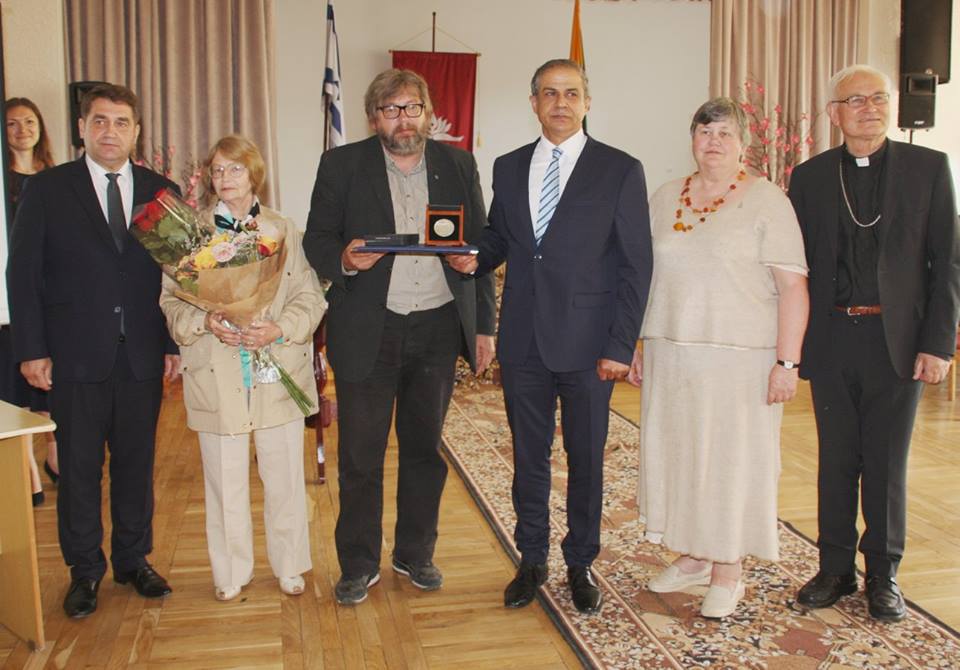
Panevėžys Jewish Community chairman Gennady Kofman and Community member Grafman attended a ceremony at the Povilas Matulionis Pre-Gymnasium in Kupiškis, Lithuania, May 30 held by the Israeli embassy to Lithuania to award the title of Righteous among the Nations posthumously to the priest Feliksas Ereminas (1890-1962). The Catholic cleric rescued the Jewish girl Rachel Rozenberg during World War II. For rescuing and further taking care of her, ambassador Amir Maimon presented Ereminas’s relative Tauras Budzys the Righteous among the Nations medallion and certificate issued by the Yad Vashem Holocaust authority in Israel.
The ambassador said the event is a lesson for our future. Professor Aldona Vasiliauskienė told the moving story of the rescue and how she collected the material required for the award.
Ambassador Maimon said: “We are happy and proud to have the opportunity today to recognize Feliksas Ereminas. Eighty years have passed since that time. Today we can only imagine those difficult times when Jews had to seek asylum.”
Faina Kukliansky was elected to a second term as chairwoman at Lithuanian Jewish Community elections held last Sunday. Monika Antanaitytė, Chief of Staff at the LJC, said the chairwoman won with a majority of votes, explaining all votes were cast for her with three abstentions. No votes were cast for Simonas Gurevičius, Antanaitytė told Lithuanian media.
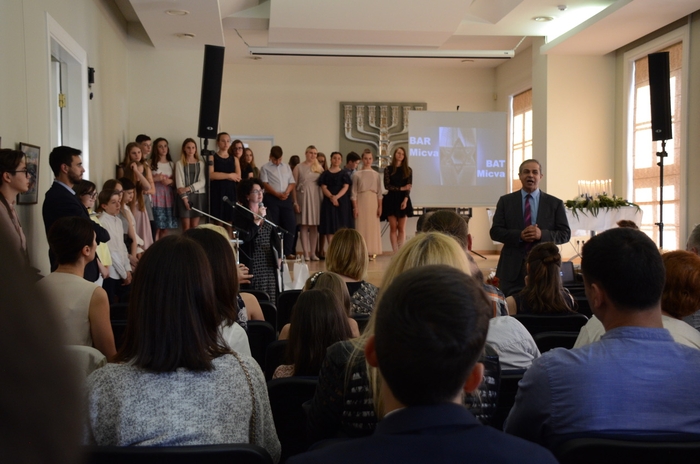
As the school year comes to an end and summer vacation begins, the ORT Sholem Aleichem Gymnasium held their annual combined bar and bat mitzvah ceremony Monday at the Choral Synagogue and the Lithuanian Jewish Community.
Parents and children arrived in their finest attire for the symbolic coming-of-age service which was conducted in Russian and Hebrew. Proud parents watched their boys and girls of different ages receiving Rabbi Samson Izakson’s blessing as they stood under the hoopa or canopy, praents took pictures and the audience rained candies down on the hoopa as the service concluded. Sholem Aleichem school principal Miša Jakobas delivered a moving address to his students in Russian. The service ended with children passing by the Torah scroll but no readings by boys or girls.
The party then moved to the third floor of the Lithuanian Jewish Community where the children or young adults had a candle-lighting ceremony to honor their parents, school, homeland, Israel and fallen Israeli soldiers. The festivities here were in Lithuanian and Hebrew. Israeli ambassador Amir Maimon spoke in a very genuine manner, translated to Lithuanian by Sholem Aleichem Hebrew teacher Ruth Reches, and recounted the parable of rabbi asked to repeat the whole of the law while standing on one foot. The young people performed songs, dance and did short skits in Lithuanian based on the writings of the author Sholem Aleichem and other Yiddish writers. After the young people were presented token gifts from the Lithuanian Jewish Community, the party moved into the foyer where there was abundant snacks, juice, coffee, wine and water. A series of artworks by students made especially for the occasion lined a long table as people helped themselves to hors d’oeuvres and waiters and waitresses circulated through the crowd with plates laden with food.
The electrical system and roof of the Choral Synagogue in Vilnius are being replaced thanks to financial aid from the Lithuanian Ministry of Culture and the Lithuanian Cultural Heritage Department. The schedule for services will not change. During construction tourists will not be admitted into the synagogue. We apologize for the temporary inconvenience.
Shmuel (Simas) Levinas, chairman
Vilnius Jewish Religious Community