Learning

YIVO to Lend Lithuania Vilna Gaon Synagogue Pinkas

YIVO to Lend Lithuania Vilna Gaon Synagogue Pinkas

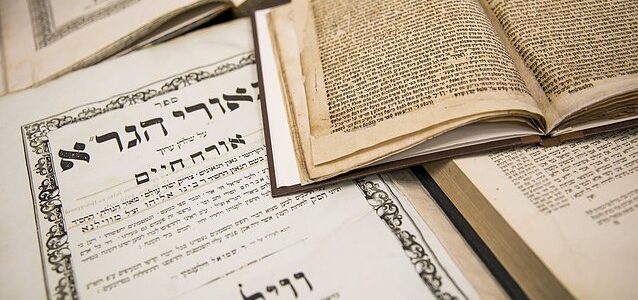
The board of directors of New York’s YIVO has voted to lend the pinkas of the Vilna Gaon synagogue to Lithuania for exhibition following a meeting with Lithuanian minister of culture Dr. Mindaugas Kvietkauskas, YIVO director Jonathan Brent said.

This is the book of vital statistics for the local Jewish community, a priceless source of information on the life of the Vilnius Jewish community. The document will be lent in 2020 as Lithuania marks its Year of the Vilna Gaon and Litvak History. The plan is to show it at the Lithuanian National Martynas Mažvydas Library.

Full story in Lithuanian here.

Story of a Man of God

Story of a Man of God

Arkadijus Gotesmanas working together with director Adolfas Večerskis and artist Linas Liandzbergis created the Story of a Man of God almost a decade ago. Author of the music and text, he was also the performer of this drama. One week ago it was presented to an audience in Uzhgorod, Ukraine. In the one-man play Gotesmanas recalled horrible, funny, sad and happy events from his own life accompanied by creative percussion, the life of one man, one family, one people marked by the tragedies of the 20th century but nonetheless filled with unconditional love for faltering humanity.

The audience in Uzhgorod listened and watched in rapt attention. Arkadijus was born there 60 years ago. The “hometown boy” appears to have impressed the audience with his high degree of creativity, talent and musical ability. Arkadijus said he only really knew about “our Uzhgorod” from his parents before this. In infancy he and his parents left the city. So the next performance of Story of a Man of God might include this trip as well.

Full story in Lithuanian here.

Thank You

Thank You

Lithuanian Jewish Community chairwoman wants to thank Bagel Shop Café director Dovilė Rūkaitė and senior cook Riva Portnaja for their wonderful idea to hold a Litvak culinary luncheon with a delegation from the Taube Jewish Heritage Tours with partial support from the Ethnic Minorities Department, and for their tireless enthusiasm in promoting and passing on the Litvak Jewish culinary heritage. Thank you to Taube delegation leader and Ashkenazi cooking expert Jeffrey Yoskowitz and to all the volunteers and guests who made this event so much fun. It was good to sit down together at a shared table and it was very delicious.

Launch of Book about Vilkija Ghetto in Kaunas

Launch of Book about Vilkija Ghetto in Kaunas

The rare books department of the Kaunas Public Library hosted the launch of the book “Vilkijos getas. 1941 metai” by Aleksandras Vitkus and Chaim Bargman. Vilkija deputy alderman Algimantas Smolenskas led the event.

Kaunas Jewish Community chairman Gercas Žakas spoke about Lithuanian Jewish community activities before 1940 and the active participation of Jews in the country’s cultural, economic and social life.

Participants discussed current commemoration policies, Lithuanian and Jewish relations, what goes into determining Nazi collaboration, education and other topics.

The Jewish community formed in the village of Vilkija, just 30 kilometers from Kaunas, in the late 18th century. According to the censuses, there were 652 Jews in Vilkija in 1766, 789 in 1847 and 1,431 out of a total population of 2,012 in 1897.

Sukkot Celebration with Guests from America and Baked Gefilte Herring

Sukkot Celebration with Guests from America and Baked Gefilte Herring

It’s long been the tradition during SUkkot to set up a booth, invite guests and treat them to various family recipes. While they say there is no traditional Sukkot dish, it does seem to be characteristic to make things which are stuffed and rolled, like the Torah scroll. Stuffed cabbage and filled pancakes are popular.

Ashkenazi cooking expert Jeffrey Yoskowitz visited the Lithuanian Jewish Community on the first day of Sukkot and made select dishes from the Litvak culinary legacy. Guests–loves of Litvak cooking–joined in and for every dish there were multiple stories and recollections from childhood. There was even a dispute on the correct form cut carrots should take.

Jeffrey Yoskowitz is leading a Taube Jewish Heritage Tours tour currently in Lithuania. He and Dovilė from the Bagel Shop Café had a long discussion on which dishes to include in cooking workshops. In the end they arrived at the solution of Litvak exceptionalism: to select the dishes which Polish Jews don’t make and which are unknown to the American Jewish community.

Have a Happy Sukkot with Friends and Family

Have a Happy Sukkot with Friends and Family

Members of the Lithuanian Jewish Community traditionally gather in the Sukkot tent–the sukka–to talk and eat. The happy holiday lasts seven days.

Sukkot (the Feast of Tabernacles or tents) is one of three pilgrim holidays mentioned in the Bible as shalosh regalim. In earlier times it was an agricultural holiday to give thanks for the harvest. The sukka is a tent, the only home Jews knew for the 40 years they wandered the desert after the exodus from Egypt. As a temporary shelter, the sukka also reminds us existence is fragile, and Sukkot is a time when we should appreciate our home and body.

The sukka is a necessary part of the holiday of Sukkot and needs to be built. Jews are supposed to sit in the booth and eat and celebrate. It is celebrated for seven days in Israel. There, where it’s usually warm, people even sleep in the make-shift dwellings and children especially enjoy the holiday. The dwelling place is decorated on the eve of the holiday and it is forbidden to work on the first day of the holiday.

Four species of plant are required and are placed together on a platter or plate and waved around. This is written in the Bible. The species are the fruit of the citron tree, palm fronds, myrtle fronds and willow branches. On the seventh day of Sukkot Jews circle seven times in synagogue reciting the prayer used on that day.

Children Invited to Sukkot Event

Children Invited to Sukkot Event

The Lithuanian Jewish Community and the Ilan and Dubi Clubs invite children to a fun gathering at 1:00 P.M. on October 13 called “From Rosh Hashanah to Sukkot.” We’ll “dwell” in the Sukkot booth and have traditional Jewish snacks and treats. Lego engineering teachers will be on hand for building and playing. Come to the Ilan Club at the Lithuanian Jewish Community. Registration is required, so call 8 601 46656 or send an email to sofja@lzb.lt

Yom Kippur, the Day of Spiritual Cleansing and Hope

Yom Kippur, the Day of Spiritual Cleansing and Hope

The tenth day of the Jewish New Year is the Day of Atonement, Yom Kippur. It is the only day of the year when the Torah calls upon the person to do nothing at all except reflect upon his actions and thoughts. Contrition over one’s sins.

The prayer Kol Nidrei rings out, a symbol of the entire holiday. It is sung loudly three times. Its motif is wonderful, originating in mediaeval Spain, and is beloved by world-renowned symphony orchestras.

Prayers of remembrance for dead parents are also read during Yom Kuppur. Today we add two more parts: for Holocaust victims and for the soldiers who have fallen defending the State of Israel.

Special significance attaches to the final prayer, which is read at evening twilight. This is the time when forgiveness is sought from the Most High. The plea is either accepted or rejected.

The blowing of the shofar horn concludes the Yom Kippur rituals. The traditional Jewish wish is heard: “Next year in Jerusalem.” Everyone wishes every other “gmar khatima tova,” Hebrew for wishing someone a conclusive entry in the Book of Life.

Simas Levinas, chairman
Vilnius Jewish Religious Community

Šiauliai Regional Jewish Community Celebrates Rosh Hashanah

Šiauliai Regional Jewish Community Celebrates Rosh Hashanah

Šiauliai Regional Jewish Community celebrated the advent of the new Jewish year 5780 with a dinner and ceremony. Community chairman Naum Gleizer welcomed participants and wished everyone a good, sweet and healthy coming year. Frida Šteinienė began the celebration by lighting candles and saying a prayer. She reminded participants of the significance and traditions of the holiday.

Traditional foods graced the dinner table, including challa, apples with honey, pomegranates, gefilte fish, chicken liver and chopped herring. Community housewives provided traditional Jewish sweets such as teigalakh, imberlakh and apple pie.

Live Jewish song and dance provided by Vadim Kamrazer enlivened the celebration and the children Sofija, Karina and Natanas also sang.

Young and old appeared to have a great time. Animator and children’s event organizer Simona provided a special program for the kids. Every family received the new 5780 Jewish calendar published by the Lithuanian Jewish Community.

History of the Destruction of the Šiauliai Jewish Cemetery

History of the Destruction of the Šiauliai Jewish Cemetery

Nerijus Brazauskas, PhD, has written a history of the destruction of the old Jewish cemetery in the Lithuanian city of Šiauliai up to 2016. The newspaper Šiaulių kraštas has published the study in Lithuanian on their website. He attempts to determine whether the former cemetery, which is state-protected heritage site, should be protected by the Šiauliai Jewish Community or whether it is a matter for the local municipal administration. He details the partial destruction of the cemetery, along with the complete destruction of the Lutheran cemetery, in the 1964-1965 period by the Soviet authorities and calls it an attempt to erase Jews from public memory. He concludes it should be restored and maintained as a sacred site of memory and says both institutional and civic efforts could be harnessed to that purpose.

Full paper in Lithuanian here.

Lost Yanishok: Two Synagogues and the Last Jewish Woman

Lost Yanishok: Two Synagogues and the Last Jewish Woman

15min.lt

Note: On October 3 Irena Gečienė passed away. The Lithuanian Jewish Community expresses its condolences to her daughter Jurgita and brother Eduardas.

Before the tragic losses of World War II, Joniškis in northern Lithuania was a very Jewish town known as the shtetl of Yanishok with a vibrant Jewish community. Nothing was left after the Holocaust which only a few Jews survived here, as was the case throughout Lithuania. Now only the two restored synagogues and the only living Jew recall that Yanishok.

They Donned White Armbands and Went to Shoot Jews

Irena Gečienė remembers November 27, 1944, when the war hadn’t ended yet, in the town of Žagarė.

Rosh Hashanah at the Panevėžys Jewish Community

Rosh Hashanah at the Panevėžys Jewish Community

The Panevėžys Jewish Community celebrated Rosh Hashanah September 29 at the Park Café. It began with the lighting of candles, then Community chairman Gennady Kofman read a prayer for the new year, 5780, and Michailas Grafman blew the shofar horn.

Community member ate traditional foods such as apples dipped in honey, pomegranates, gefilte fish and challa bread. Children received presents and learned about Jewish traditions. At the end of the celebration the new Jewish calendar published by the Lithuanian Jewish Community.

Chairman Kofman read out greetings from Israeli president Reuven Rivlin and from Israeli ambassador to Lithuania Yossi Levy. Greetings were also received from LJC chairwoman Faina Kukliansky and the heads of Lithuania’s regional Jewish communities.

Chaim Frankel Sculpture Vandalized

Chaim Frankel Sculpture Vandalized

Local resident reported Saturday evening the statue commemorating Jewish Lithuanian industrialist Chaim Frankel in the Lithuanian city of Šiauliai had been vandalized. Male genitalia were painted on his trousers with what appeared to be white paint. This follows the appearance of a swastika at the Lithuanian Jewish Community headquarters in Vilnius in August. The male genitalia remained on the Frankel statue as of midnight as Sunday turned to Monday, October 7.

LJC chairwoman Faina Kukliansky commented on the incident: “Maybe the Frankel statue was vandalized by drunken youth, or maybe not, but this again is an opportunity to talk about anti-Semitism, especially as we prepare to participate in International Holocaust Day events in January and to mark 2020 as the Year of the Vilna Gaon and Litvak History in events around Lithuania.”

Lithuanian television channel TV3 ran the incident as their top story on Sunday with an interview with chairwoman Kukliansky, who said Frankel put Šiauliai on the map and his factory later served as a life saver for Jewish ghetto inmates who were allowed to work there, “as in Schindler’s List.”

Speaking directly to www.lzb.lt, Faina Kukliansky said: “This was just one Jewish family whose contribution to Lithuanian industry was priceless and whose memory has been desecrated so brutally just as the Jews were brutally murdered during the second half of 1941.”

Another Scandal: It’s Becoming Clear Not All Names on Martyrs’ Wall Were Angels

Another Scandal: It’s Becoming Clear Not All Names on Martyrs’ Wall Were Angels

by Vytautas Bruveris for Lietuvos rytas, photo by R.Danisevičius courtesy lrytas.lt

Are all the people murdered by the Soviets whose names are engraved on a building right in the center of Vilnius worthy of this sort of exceptional respect? Documents from researchers which Lietuvos rytas examined raise this question.

They helped in murdering Jews and seizing their property. They murdered and raped family members–women and children–of Soviet collaborators. There was a thief who pretended to be a partisan. Most of them fought on the side of the Nazis and in their military.

These hair-raising shadows darken the biographies of many of the people whose names are inscribed on the outer wall of the former KGB headquarters on Gediminas prospect across from Lukiškių square in Vilnius.

It’s becoming clear the Center for the Study of the Genocide and Resistance of Residents of Lithuania was likely too hasty in so exceptionally honoring people murdered by the Soviet occupiers and many of them probably don’t deserve commemoration.

This is clear from documents the Center itself has.

Rimvydas Valatka on Rehabilitating Lithuanian Nazis as National Heroes

Rimvydas Valatka on Rehabilitating Lithuanian Nazis as National Heroes

Not Only the Names of Angels Decorate the Wall of Martyrs in Central Vilnius

Another scandal is brewing: it’s becoming clear not just the names of angels decorate the wall of martyrs in central Vilnius

by Rimvydas Valatka, lrytas.lt, from facebook

It would appear the hunger to rehabilitate the looters and murderers of Jews by incorporating them in the ranks of those who have laid down their lives for their country, the partisans, has become a sort of auxiliary to the discipline of history for the Genocide Center.

Six murderers and looters of innocent people commemorated as heroes–this is not just a plaque commemorating General Storm [Jonas Noreika] who collaborated with the Nazis on this question. This is already a very brown matter. Perhaps some Pro Patria Lithuanian teacher will splash brown paint upon the wall?

The forces of the defenders of Nazi collaborators should move quickly to the former KGB headquarters because the historians are beating “our own people.”

Vilnius Mayor Remigijus Šimašius Awards Best Teachers of the Year

Vilnius Mayor Remigijus Šimašius Awards Best Teachers of the Year

Photo: Sholem Aleichem teacher Rasa Belgerienė with mayor Remigijus Šimašius at awards ceremony

In anticipation of World Teachers’ Day on October 5, Vilnius mayor Remigijus Šimašius presented awards to Vilnius teachers of the year. The prize commission selected 11 from 42 nominations, with the winners including Sholem Aleichem ORT Gymnasium teacher Rasą Belgerienė.

“Education is undoubtedly one of the most important areas for Vilnius and the country. We want to encourage cooperation between the schools of Vilnius and institutions of higher learning as we create the concept of the modern school. You are crucial as the engines of daily wins, but also of our great shared goals and as forces for reform. I feel pride to see before me so many professionals in their field whose daily work is to raise independent, free and responsible people,” the mayor said.

Full story in Lithuanian here.

Concert to Celebrate 90th Birthday of Grigoriy Kanovitch

Concert to Celebrate 90th Birthday of Grigoriy Kanovitch

A series of several concerts with world-famous performers, composers and material from the works of Grigoriy Kanovitch will be held to celebrate Kanovitch’s 90th birthday. Kanovitch is the author of a number of classics in Jewish literature and is a recipient of the Lithuanian National Art and Culture Prize. Lithuanian Jewish Community members will receive a 40% discount on the ticket price.

For more information, see here.

Easy Anti-Semitism Test

Easy Anti-Semitism Test

by Sigitas Parulskis

When I think about Lithuanian anti-Semitism, there is a lack of reasoning. How can you hate someone who isn’t there? And there are almost no Jews left in Lithuania. It would be the same as being afraid of or hating the Wizard of Oz because he didn’t give you a brain.

Lithuanian anti-Semitism’s list of grievances, its casus belli, was fully formed in the period from 1939 to 1941. The loss of the Klaipeda region, the Soviet occupation, deportation, massacres, the Nazi invasion–all good reasons to look for a culprit. And here we are, still afflicted by this hapless anti-Semitism. Is it in our subconscious? In our genes? We are no longer living under conditions of occupation and war, so where does this anachronism come from?

Is it possible for us to overcome our warped relationship with Jews? Everything’s possible, if there’s a will and reason. And this is a political rather than a cultural relationship. The political man proclaims truth is on my side, while the cultural man asks what in the hell truth is anyway, and to me this question seems more interesting, more imaginative and more human.

Full text in Lithuanian here.

Lithuanian President Visits YIVO

Lithuanian President Visits YIVO

Lithuanian president Gitanas Nausėda and his wife Diana visited YIVO on the last day of the president’s trip to the United Nations in New York City. They met staff, viewed exhibits and learned about the world-famous Jewish research institution founded in Vilnius in 1925.

“Jewish history and culture have formed the identity of all countries of the world, not just Lithuania. Since the 15th century the Lithuanian and Jewish communities have been united by a common rich history. Vilnius was even called the Jerusalem of the North. Activities of Lithuanian Jews have left behind a priceless religious and philosophical legacy for the entire world Jewish community which is celebrated by the YIVO institute in New York,” the newly-elected president said.

information from the President’s Office

New Israeli Ambassador Tells Lithuania to Look in Mirror

New Israeli Ambassador Tells Lithuania to Look in Mirror

Photo by J. Stacevičius/LRT

by Mindaugas Jackevičius, LRT.lt

We’re not ordering you, we’re only asking you to take a mirror and take a look at yourself, to open the history books and check out what happened in the dark chapters. That’s what Israeli’s new ambassador to Lithuania Yosi Levy said in an exclusive interview with LRT.lt . He thinks most Lithuanians don’t know what happened to the Jews of Lithuania during the war, that it is a story which hasn’t been told appropriately.

At the same time, he says, Israel doesn’t blame today’s Lithuania, and emphasizes mature and good relations between the countries.

On the person of Jonas Noreika, Levy said: “He wasn’t a murderer, but he collaborated with the devil.”

Levy, who began his work in Lithuania over a month ago, is a well-known writer and has worked as ambassador in Belgrade and worked at the embassies in Bonn, Berlin and Warsaw. In the interview we spoke about the fate of Lithuania’s Jews, bilateral relations and an intriguing book which will open the eyes of Lithuanians to a different side of Israel and its ambassador.