Learning, History, Culture

Lox on Bagels: An Answer to Eggs Benedict?

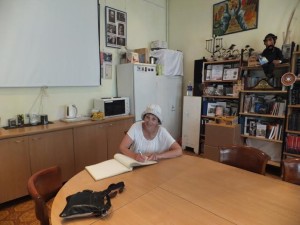
OLYMPUS DIGITAL CAMERA

A Bit about Bagels

The history of the bagel is surrounded by myth and legend but seems to begin in the 12th century. One version has it that a Church ban on commercial Jewish bakeries was responsible for its appearance. In 1264 Polish grand duke Bolesław the Pious issued his Statute of Kalisz or Charter for Jews of Grand Poland which allowed Jews to freely by, sell and touch bread in common with Christians. In response a group of Polish bishops forbade Christians from buying any food at all from Jews, as it were anathema. As Moses ben Israel Isserles put it in the 16th century” “it is preferable to live on dry bread and in peace in Poland” than to remain in better conditions in lands more dangerous for Jews. At some point Jews were allowed to work with bread which was boiled, and they created the bagel to comply with his ruling, according to this version. In 1610 the first mention appears of the word “bagel” in Yiddish in the written sources, in regulations issued by the Jewish council of Kraków, which stated that bagels were to be given as a gift to women in childbirth.

Whatever the case, the bagel was popular among Jews in Eastern Europe, and came with them to America in the 19th and 20th centuries.

Lithuanian Psychologist: Three Years Ago I Believed the Double Genocide Theory

rb
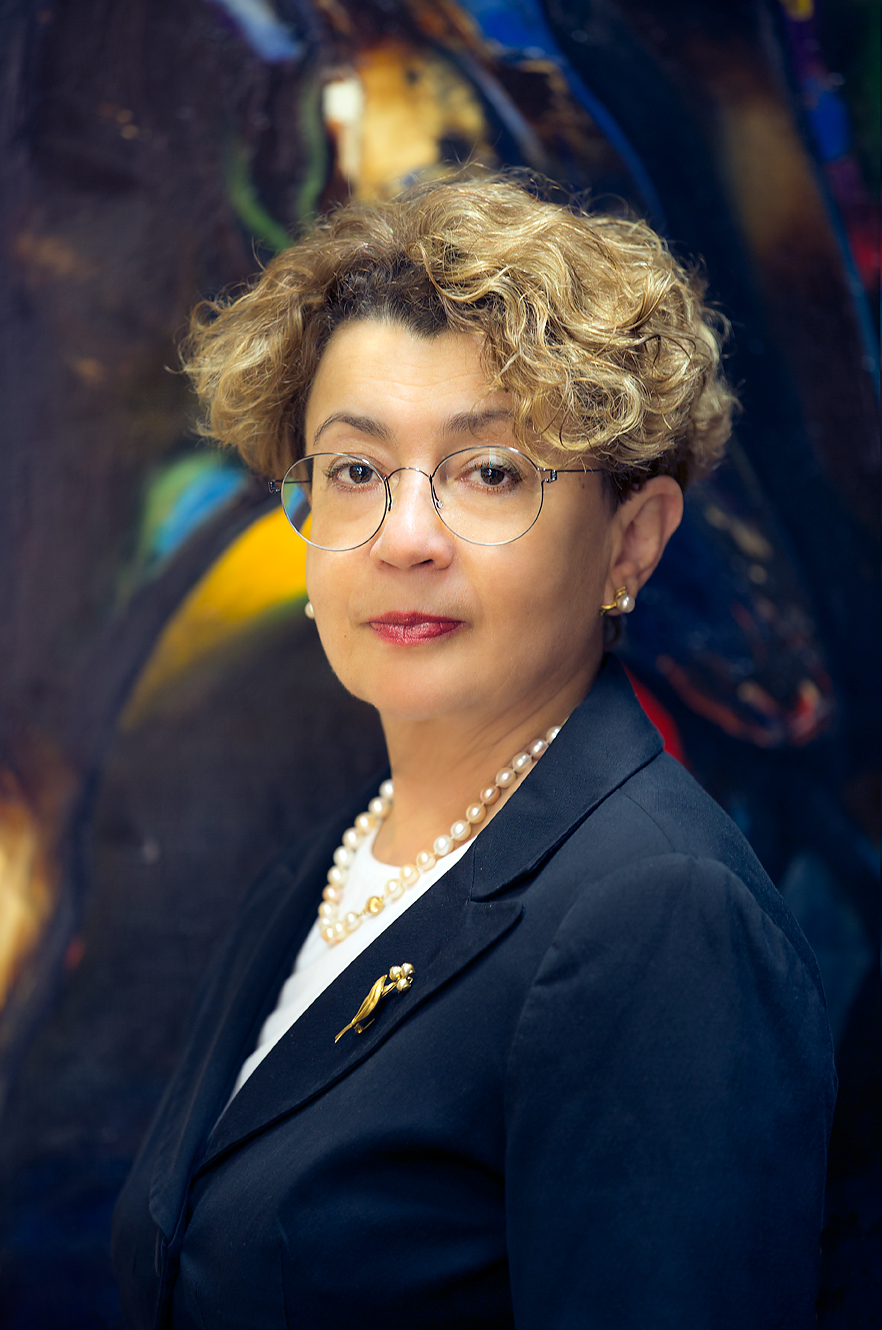
Rasa Bieliauskaitė, photo: Ugnius Babinskas

Three Years Ago I Believed the Double Genocide Theory
by Geoff Vasil

So said Rasa Bieliauskaitė, a psychologist specializing in trauma therapy, at what was, for Lithuania, a remarkable meeting of the minds recently.

The Vilnius Jewish Public Library hosted a panel discussion featuring historians and psychologists on the topic of the Holocaust and collective memory.

In their introductory statements several of the speakers, including Bieliauskaitė, mentioned Rūta Vanagaitė’s new book about the Lithuanian Holocaust, and the unexpected popularity of that book became the backdrop for much of the conversation which lasted several hours and which became a much larger discussion when distinguished members of the audience chimed in towards the end.

Is Turkey Planning to Destabilize Lebanon?

jn
by colonel (retired) Dr. Jacques Neriah
March 27, 2016

Institute for Contemporary Affairs
Founded jointly with the Wechsler Family Foundation

Vol. 16, No. 6
March 27, 2016

Interviewed by Lenny Ben-David, Director of Publications

• The Turkish leadership saw the uprising in Syria and Egypt as an opportunity to replace regimes opposed to Turkey’s policies in the Middle East. Turkey looked at two targets: Egypt and Syria. In both countries, the Islamic opposition was headed by the Muslim Brotherhood, natural allies of Turkish president Erdogan.

• Turkey viewed developments in Syria as an opportunity to intervene and topple the Alawite regime. Turkish military intelligence was instructed to assist rebel factions opposed to the Assad regime almost from the very first days of the civil war in Syria.

• Testimony in Turkish courts alleges that rocket parts, ammunition and semi-finished mortar shells taken from Turkish intelligence depots were carried in trucks accompanied by state officials to parts of Syria under hardline Islamist rebel control.

• Turkey may have chosen to take advantage of the already boiling situation in Lebanon between Hizbullah and its Sunni opponents and try to provoke a renewed civil war in Lebanon.

• Greek authorities intercepted a ship recently, loaded with a Turkish shipment of weapons, supposedly destined for Muslim radicals in the northern part of Lebanon.

Lithuanian Prime Minister Thanks Fayerlakh Ensemble

To the Vilnius Cultural Center Jewish song and dance ensemble

Fayerlakh

Dear guardians of ethnic tradition,

There is no doubt the identity of a people resides in the depths of their folklore where a unique world of music beckons to us and symbolic meanings cavort. For many a year now the Fayerlakh ensemble in their concerts have brought lovers of folklore together and have popularized Yiddish culture wonderfully.

Inventive musicians, great singers and expressive dancers have come together nicely under the Fayerlakh flag. And so your concerts are dominated by a sense of beauty and cohesion. Your playful appearances are eagerly awaited by many admirers around the world.

You are probably the only ensemble in Europe who so creatively, cleverly and tightly present your own musical sources and roots.

I sincerely congratulate the entire Fayerlakh collective on the beautiful 45th anniversary of your establishment.

Let your music ring out widely across the nations for many centuries. Celebrate and preserve your foundational values. I wish you great success, creative talent and many happy meetings with the real lovers of folklore on all continents.

Algirdas Butkevičius
March 22, 2016
Vilnius

A Letter of Thanks to the Fayerlakh Ensemble from the Lithuanian Jewish Community

Celebrating their 45th anniversary, the Jewish song and dance ensemble Fayerlakh provided a real celebration for the people of Vilnius with their performance, and a packed hall of spectators applauded, swayed to the beat and tapped their feet because the musicians enchanted them and warmed everyone’s hearts. The Lithuanian Jewish Community is grateful to and proud of the Vilnius Cultural Center Jewish song and dance ensemble Fayarlakh, whose name is Yiddish for “little flames.”

Let the creative fire of this ensemble led by Larisa Vyšniauskienė continue to burn, reminding everyone of the rich culture of the Litvaks. It is extremely important to our community that the ensemble with Yiddish songs and dances which over many years has achieved a highly professional level has preserved our dear Jewish cultural legacy. Thank you, our thanks to the ensemble and their director, to the wonderful performers, for the program The Shtetl Once Upon a Time, which is now being offered to audiences in Lithuania and abroad. The program is about the small town, or shtetl in Yiddish, where until the Holocaust Jewish people and people of other ethnicities lived together in harmony. The mood of the concert is one of happy songs, dances, music which gives rise to good emotions, nostalgic and exciting, in everyone’s hearts. We appreciate that the ensemble celebrates the Yiddish language and that Jewish works in this language are performed in concert. It fills us with gladness to see all the ensemble’s groups, from children to senior citizens, on stage. Our sincerest gratitude to all of you.

Faina Kukliansky, chairwoman
Lithuanian Jewish Community

Purim at the Gesher Club

Pur6

The Gesher Club of the Lithuanian Jewish Community celebrated Purim March 25 at the Natali Restaurant in Vilnius. Since carnival costumes are a usual part of Purim, all participants were required to come in costume or at least partially dressed in costumes. LJC program coordinator Žana Skudovičienė took care of those who for one or another reason were unable or did not have time to get ready for the holiday. She let them chose a mask or costume accessory provided by Fayerlakh ensemble director Larisa Vyšniauskienė for the occasion.

Kaunas Jewish Community Marks 72nd Anniversary of Children’s Aktion

vaikuakcija4

On March 25, 2016, members of the Kaunas Jewish Community marked the 72nd anniversary of the Children’s Aktion (mass murder operation) in the Kaunas ghetto. The operation to kill all the children living in the ghetto and the elderly unfit for use as labor resulted in the murder of about 1,700 people. Children under 12 were torn from their mothers’ arms, thrown in trucks and driven away to be murdered. Other parents came back from forced labor to find their children missing. Tobijas Jafetas has spoken about his own rescue many times before, and this year was joined by Kaunas ghetto inmate Juozas Vocelka.

Old Prescriptions from the Interwar Period Recall the Kukliansky Pharmacy in Veisiejai

Receptas2

Danutė Selčinskaja, director of the Rescuers and Commemoration Department of the Vilna Gaon State Jewish Museum, has sent us an image of a new item worthy of display at a museum: prescriptions from the Kukliansky Pharmacy which operated in the period between the wars. This pharmacy, the only one in Veisiejai, Lithuania, operated right up until the Holocaust. The pharmacists managed to escape and were rescued by people from Sventijanskas. At the present time there is a Veisiejai Regional History Museum operating in Veisiejai. Museum director Regina Kaveckienė scanned two new items, prescriptions, which were brought to the museum by a relative of an elderly female pharmacist from the town who is no longer alive.

Danutė Selčinskaja sent the regional history museum the Vilna Gaon museum’s mobile exhibit “The Rescued Child Tells the Story…” which she created. This includes a film about the rescue of the Kukliansky family. The regional history museum shows the film to students every year. A young woman from the Kapčiamiestis School Museum who lives with her parents in Sventijanskas said everyone there had already seen the film, which is being passed around as a DVD from person to person, and it has caused a great deal of excitement there. The people understand what happened and recognize the people and places portrayed in the film.

LJC Children’s Purim Was the Most Fun

Vaiku Purimas

This isn’t the first time LJC Youth Programs coordinator Pavelas Guliakovas has organized a holiday celebration. This year he decided there should be costume play based on excerpts from the Book of Esther with all the heroes and villains: the Persian king, Haman, Esther and all the others. But there were also samurai, cowboys, doctors and princesses. The entire play was performed in rhyme. During the breaks between acts, the children rushed off to change masks, apply glitter and use it as coloring, then came back to the performance space. Dancers from the Fayerlakh ensemble danced. All of the children and several of the parents as well had grown up attending the small children’s club Dubi, and Dubi, Dubi Mishpakha and Ilan Club children aged 2 to 12 took part in the Purim celebration. Samuel Gar, a professional teacher of Jewish dance, taught dances to the children. Their performance was amazing and the celebration lasted for about two hours.

When Will Our Mayors Take Down Monuments to Holocaust Perpetrators?

lr
Marius Lukošiūnas

More than 25 years ago I spoke on C-SPAN about the pogrom the Soviet troops had prepared after the 1991 putsch before quitting the Lithuanian Television and Radio building.

Live, I explained to Americans our path to independence and showed images and montages of our ravaged television studios. Studio guests and callers were angered by this pogrom.

Just as the show was ending, an elderly woman called and asked why the Lithuanian government was rehabilitating Holocaust perpetrators. I replied I believed that was a mistake which would be corrected. I assured her they would receive neither forgiveness nor honor in independent Lithuania.

Full story in Lithuanian here.

Businessman with Litvak Roots Has Successful Chain of Restaurants

Brozinas PA

The first time South African Litvak Robert Brozin came to Lithuania, he was most surprised by the fact it was in color. It sounds funny, one of the creators of the large restaurant chain Nando’s says, but that his first impression of the land of all four of his grandparents because he’d only seen Lithuania in black and white photographs before. When he cam back again for the fifth time in late March, he already had a number of interests going here, both business and representing the Litvak community in South Africa.

“Most Jews in South Africa have roots in Lithuania. There is a total of about 80,000 Jews here and I think about 95 percent have Lithuanian roots. It’s an interesting fact that the Jewish community in South Africa is very tight-knit, and the majority of Jews who have remained living in South Africa marry Jews from the community. My son is also married to a Litvak girl. We still maintain many Litvak traditions in the family and even have dishes from Lithuania…”

Read more in Lithuanian here.

Lithuanian Conservative/Christian Democratic Party Member on Trial for Anti-Semitic Remarks

Teismas-Kofmanas-Pankevicius-10-virsus

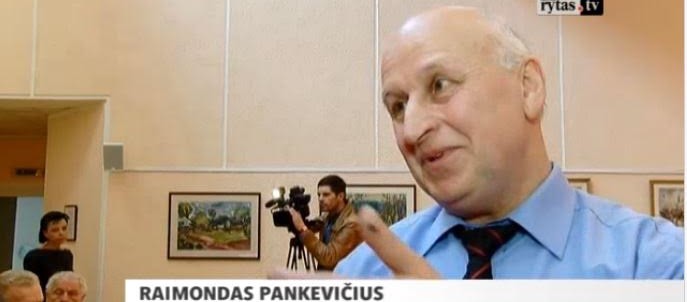
The news website sekunde.lt reports Raimundas Pankevičius, leader of the Panevėžys faction of Political Prisoners and Exiles and a member of the Lithuanian Conservatives/Christian Democratic Party, has gone on trial for anti-Semitic remarks made during a meeting of the Panevėžys city council. The right-wing politician is accused of public statements to the effect Jews shot Jews during World War II in Lithuania.

As a member of the city council, Pankevičius is alleged during deliberations on the erection of a monument to commemorate the Joint Distribution Committee’s work there in September of 2014 of having denied Nazi crimes against the Jewish people by saying Lithuanian Holocaust victims killed each other and that the Jewish police in the ghettos in Lithuania sent thousands of their fellow Jews to their deaths in a single day.

That meeting of the city council apparently adopted unanimously a decision to erect a stele to commemorate the 100th anniversary of the Joint. Pankevičius, however, also said he didn’t see any evidence of the Joint’s work and suspected elements of fraud in the story. He said Jewish SS shot 5,000 Jews in southwestern Lithuania in one day during World War II.

Purim at the Choral Synagogue in Vilnius

sin6

There was a celebration of the Purim holiday at the Choral Synagogue in Vilnius March 24, which was also proclaimed a day of mourning in Lithuania to pay honors to the dead in the bombings in Brussels. Everyone observed a moment of silence for the victims at the synagogue.

Lithuanian Jewish Religious Community chairman Simas Levinas presented holiday greetings to the assembled and spoke about the meaning of Purim: Haman’s attempt to kill all the Jews. “History has seen more than one Haman, who sought to destroy the Jewish people. Stalin, Hitler and now ISIS, but no one has succeeded,” Levinas said.

Rabbi Samson Daniel Isaacson also gave holiday greetings and said Purim is a unique holiday which is about getting drunk, which seems strange, since this is considered a bad thing among Jews. “Only during Purim is it remembered that salvation comes from affliction. After all, getting drunk was suggested so that no one would be able to tell the difference between Haman and Mordecai. And it so happens that way often in life, when you think one thing, but it happens another way. Purim sameach!”

Fayerlakh ensemble musicians Miša Filipov Jablonskis and Leonardas Zinkevič performed a rousing set of Purim songs for young and old.

LJC deputy chairwoman Maša Grodnik said she was glad that things were finally getting back to normal at the synagogue and that the holiday was being celebrated with a rabbi, which for a long time was missing from the community. “Today the tragic events in Brussels remind us that Israel is setting an example for Europe on how to protect society,” Grodnik commented.

Israeli ambassador Amir Maimon recalled how he looked forward to Purim as a child, and that it always began to rain when Purim came around. “Today in Vilnius on Purim the sun was shining, and we are celebrating the liberation of the Jews. The victory of the Jews of Lithuania that they can celebrate in their own synagogue,” the Israeli ambassador remarked.

More snapshots from the event here.

Psychologist Explains Why Lithuanians Can’t Mourn Holocaust Victims

The Vilnius Jewish Public Library hosted a roundtable discussion called “The Psychological Problem of Integrating the Holocaust into the Collective Memory of the People of Lithuania” March 22.

“In childhood we ran around there, no one said even a single word about synagogues or where they were. They evaporated, and all of a sudden you realize that, as in the world of Harry Potter, something exists in parallel, but you don’t know what it is. It’s as if that world hadn’t existed, and there’s no one you can ask about it,” psychoanalyst Tomas Kajokas said. Dr. Kajokas says people don’t understand Jews are part of our society. The question of identification is extremely important, but, according to classical psychoanalysis, it can only be formed when you have lost and understand what it is you have lost. If you have nothing to lose, then in effect you cannot identify with those who have.

“Currently we are unable to identify with Jews exactly for this reason, that we don’t really comprehend the scale of loss,” Kajokas offered. He said Lithuanians will only be able to deal with the topic of the Holocaust when they are able to accept honestly their Soviet past.

Article in Lithuanian here.

Stay tuned to lzb.lt for fuller coverage of this discussion.

German Activist Visits Kaunas Jewish Community to Talk about Karl Jäger

Kaubendr1

A German man named Jürgen Dettling, described on facebook as the initiator of various social projects and public education programs, visited the Kaunas Jewish Community recently. He said he is currently involved in a project concerning Karl Jäger, the author of the infamous Jäger Report and mass murderer of Lithuanian Jews. He took photographs of mass murder sites in Lithuania and spoke with Holocaust survivors. He said he is planning a return trip in April and hopes to interview survivors for a film about the mass murderer. Jäger was commander of the SD Einsatzkommando 3a in Kaunas during World War II, which included command over the Rollkommando Hamann mobile death squad. He was captured after the war and hung himself in jail in 1959.

Purim in Panevėžys

pan1purim

The Panevėžys Jewish Community kicked off their Purim celebrations in the events hall of the Panevėžys Community Center March 20. Panevėžys Jewish Community chairman Gennady Kofman greeted a large party of guests from Vilnius, Ukmergė, Šiauliai and Panevežys and read an excerpt from Magilat Ester.

Artūras Taicas, deputy chairman of the Lithuanian Jewish Community and chairman of the Ukmergė Jewish Community, greeted guests as well and passed on the good wishes of LJC chairwoman Faina Kukliansky. Panevėžys city deputy mayor Petras Luomanas and city council member Alfonsas Petrauskas also gave wonderful addresses.

pan6purim

Rabbi Isaacson Speaks at Screening of Film “Kaddish”

filmas3

The film club of the Lithuanian Jewish Student Union screened the film “Kaddish” on March 10, an event during which the public was able to meet one of Lithuania’s newest rabbis, Rabbi Samson Daniel Isaacson. Before the film started, Rabbi Isaacson gave a short talk welcoming the audience and telling about the film made by a friend of his. Kaddish is the story of Rabbi Yitzhak Yosef Zilber, born in Russia in 1917 (died 2003, a Russian, later Israeli Haredi rabbi and a leader of the Russian baal teshuva movement, author of several books, Russian Israeli religious authority). Zilber studied Judaism privately, at home, because his father Ben-Tzion Haim Zilber (originally Tsiyuni) refused to allow him to attend ant-religious Soviet schools.

rabinas zilberis

At the age of 15 he began to teach Judaism in his hometown of Kazan, although it was illegal under Soviet law to do so. After a life filled with hardship, oppression by the Soviets and incarceration in the gulag, he and his family were finally allowed to leave the USSR for Israel in 1972, where he continued to teach, practice traditions and attract a large group of young people.

Discussion followed the screening of the film as audience members asked the rabbi questions and he responded. The several dozen members of the audience and the rabbi were treated to snacks and tea after the discussion, allowing people to get to know the rabbi better in a somewhat informal setting.

filmas2

Bagel Shop Café Purim Holiday Schedule

purim3

The kosher Bagel Shop Café of the Lithuanian Jewish Community is in full gear getting ready for the Purim holiday. There are several new pastry items the chefs there have cooked up, including the “red velvet” pastry taking the Jewish culinary internet by storm. Their special hamantashen recipe passed down through the generations uses yeast as well.

Senior chef Riva Portnaja says her family calls hamantashen “omentashen,” and that her mother always put yeast in the dough. According to her, Litvak hamantashen only contain poppy-seed fillings, and the triangular pastry is made so that is almost closed.

Lithuania to Investigate Jewish Treasures Stolen by Nazis

March 23, BNS–Investigation into cultural treasures the Nazis stole from Jews in Lithuania has begun, the newspaper Lietuvos žinios reports.

Last week a meeting of the International Commission for Assessing the Crimes of the Nazi and Soviet Occupational Regimes in Lithuania reached agreement on conducting several large studies, commission chairman Emanuelis Zingeris confirmed. He said the Rosenberg task force drew up lists of rare and valuable items held by Jewish organizations, libraries and museums before the war even started. “So we’re asking for additional research, which is being performed by researchers in Lithuania and abroad. I believe we will approach the German Government on with a request for clarification, because there shouldn’t be any lingering doubts regarding this,” Zingeris said.

He also spoke about the items listed in the book “Lietuvos inkunabulai” [Incunabula of Lithuania] by Nojus Feigelmanas from the Strashun library in Vilnius. “There are clear indications there were four incunabula in this library in Hebrew which the Germans took. The incunabula were printed in an Italian city in 1475. They are priceless,” Zingeris commented. His commission’s work was resumed by presidential decree in the fall of 2012. After a break of eight years, the renewed commission met again in 2013. As reported at that time, the commission only discussed technical and financial issues at that meeting. The chairman said the subcommittee investigating crimes of the Soviet occupational regime would meet in early summer this year.

BNS_logotipas

What Would Queen Esther Eat Today?

Esther, the star of the Purim story, is one of the bravest heroines for so many reasons–she not only strategized to save the Persian Jews from certain death (breaking social norms in doing so), but she also maintained a kosher diet as an undercover Jew in the Persian palace. Wait, what?

Legend has it that like many Jews today, Esther kept kosher by avoiding things like non-kosher meat, and instead enjoyed a plant-based diet full of fresh produce, grains, legumes, nuts, and seeds. For those of you with eating restrictions, you know how hard it is to turn down foods that everyone else is noshing!

In the story of Purim, food and celebration are central to her strategic success. In order to earn the favor of her husband, King Ahasuerus, she hosted two impressive (and probably extremely delicious!) banquets that set the stage for her requests of the King to save the Jews of Persia.

After all these years, delicious food and drink–like hamantaschen, Haman’s fingers, and plenty of wine–are essential parts of the celebration of Queen Esther and Purim.

If you’d like to party like Esther this Purim, click here for recipes.