Litvaks

Israeli Ambassador Presents Publication of His Novel in Lithuanian

Israeli Ambassador Presents Publication of His Novel in Lithuanian

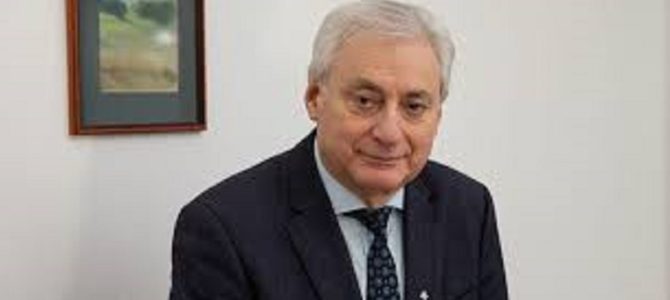
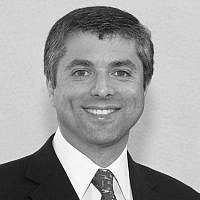
Israeli ambassador to Lithuania Yossi Levy is a veteran novelist with some six titles under his belt in the Hebrew book market. His latest, Love Peddlers (a provisional title since no English translation yet exists), was translated to Lithuanian and published by Sofoklis in Vilnius just recently under the title Meilės preikeiviai, roughly, “Merchants of Love,” certainly a more intriguing if not salacious hook for readers than the classic anti-war work Merchants of Death.

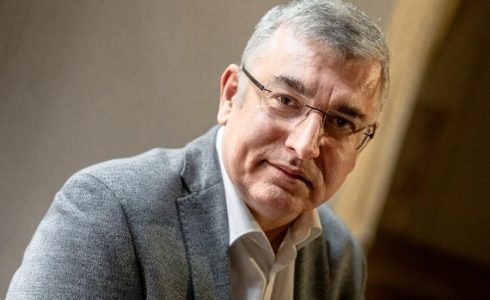
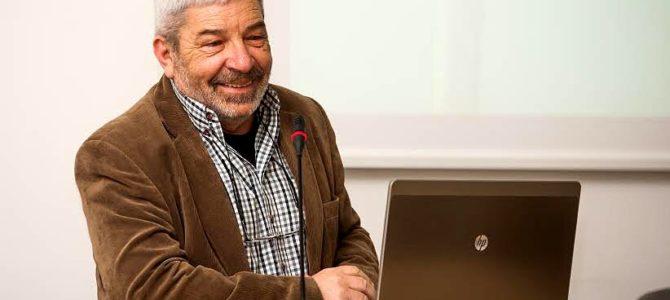
To celebrate the publication, a book launch was held at the Lithuanian National Library, moderated by Litvak author and former director of the Vilna Gaon Museum Markas Zingeris. The format was a sort of back-and-forth loose discussion, with Mr. Zingeris posing questions and thoughts, and Mr. Yossi responding. Unfortunately for whatever reason Markas Zingeris’s voice didn’t carry in the room in Lithuanian or English, so the effect was of some random words and phrases, followed by monologues by the Israeli ambassador which might or might not have addressed the question.

Yossi Levy’s side of the discussion was charming, personal, funny and at times spell-binding. He spoke about himself more than his work, which he said was both autobiographical and not autobiographical. He talked about his diplomatic career, which he said was wholly in Europe, and wondered why he chose Europe, since his family has no roots there. He shared the difficulties of being gay in Israel and elsewhere, and talked about his husband and their child. He also said there was a tension in his life between his role as writer and diplomat. As a writer he was able to explore topics which would be strictly taboo in the diplomatic sphere. As an example, he talked about something he wrote about a Jewish homeland in Europe, loosely centered on present-day southeastern Poland, whence Israeli Jews could be evacuated from the tense situation in the Middle East. “I called one city Tel-Lvov,” he said with a smirk.

Condolences

Condolences

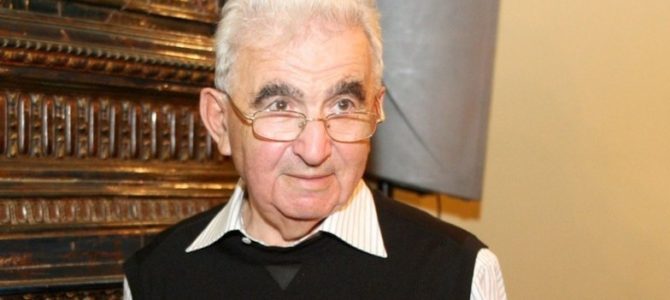
Simonas Dovidavičius passed away December 14. He was deputy chairman of the Kaunas Jewish Community, the founding light and director of the Sugihara House museum in Kaunas, highly educated, a tour guide and a good friend. His loss is a great loss to the Lithuanian Jewish Community and the Kaunas Jewish Community. Our condolences to his many friends and loved ones.

Those wishing to bid him farewell may do so at the St. Anthony of Padua Church in Kaunas, Radvilėnų highway no. 15A, Kaunas, on Tuesday, December 17, beginning at 5:00 P.M. He will be buried at noon on December 18 at the Aleksotas Jewish cemetery in Kaunas.

Property of Murdered Jews Cannot Be Shrugged Off

Property of Murdered Jews Cannot Be Shrugged Off

by Vytautas Bruveris

How should the state and its politicians act when they come across some sort of passionate, sensitive issue, or one which causes controversy: should they stick their heads in the sand, or nonetheless speak and discuss it?

It seems as if it’s a lot more useful and clever to talk. This seemingly self-evident matter, though, seems to be a mystery to almost the complete majority of Lithuania’s political elite.

This eternal truth was again confirmed last week at a conference held by the Lithuanian Jewish Community (LJC) and the Goodwill Foundation on restitution of Jewish property stolen during the Holocaust.

Launch of Lithuanian Translation of Yossi Levy’s Love Peddlers

Launch of Lithuanian Translation of Yossi Levy’s Love Peddlers

The Lithuanian translation of Israeli writer and Israeli ambassador to Lithuania Yossi Avni-Levy’s book Love Peddlers will take place at the Lithuanian National Library in Vilnius at 6:00 P.M. on December 18. The book-launch event will be moderated by Litvak writer Markas Zingeris. Promotional materials for the event say it will be held in English.

New Book by Dr. Aušra Pažėraitė

New Book by Dr. Aušra Pažėraitė

The publishing house of Vilnius University has published a new book called “Nesuk į kelią iš takelio. Lietuvos žydų religinės ir filosofinės minties paveldo trajektorijomis” [Don’t Quit the Path for the Road: Along the Trajectories of the Litvak Religious and Philosophical Thought Heritage]. The Lithuanian-language book contains extracts from the texts of the Vilna Gaon, Chaim of Volozhin, Grozdinsky, Israel Salanter and Emmanuel Levinas with commentaries.

Dr. Aušra Pažėraitė has written a bit about her book especially for the www.lzb.lt website:

“It has long been my dream to write a book talking about, examining and interpreting the heritage of Litvak religious and philosophical thinking. … [Among others,] another problem which arose was the time-period and the range of what Litvak means. I mean the problem of geographical boundaries in which we can look for the Litvak heritage, which has changed drastically over history, and it happens that the same historical figures are assigned to Lithuania’s, Poland’s and Russia’s legacy… So I chose a narrower problem, the Litvak-ness which is associated with religious tradition, historically connected with the Vilna Gaon and his circle of followers. So this allowed for choosing a specific perspective which would allow me to connect schools of thought otherwise hard to reconcile: the Western understanding of religion which is still forming in the modern period, which seems to so many people self-evident… i.e., between the written sacred texts and the oral texts, the traditional of passing traditions on orally. …”

The book is available at the Vilnius University bookstore, at the Versmė chain of bookshops and on the internet sites patogupirkti.lt, knygos.lt and humanitas.lt

Not in Our Name

by Grant Arthur Gochin

The first mass murders of Jews in the Holocaust began in Lithuania. Germany had not yet decided to annihilate the Jews of Europe; they had put forth the idea to relocate Jews to Madagascar or Uganda, but the war made this plan impossible. Lithuania proved to the Nazis that there was indeed an alternative.

Between occupations by Russia and Germany in 1941, Lithuania was governed by an interim Provisional Government, led by Prime Minister Juozas Ambrazevičius Brazaitis. The Lithuanian Provisional Government displayed to Nazis how easily a population could be enticed into perpetrating genocide.

Upon Nazi arrival, Einsatzkommando 2 of the German Security Police asserted charge of murders of Jews. Einsatzkommando 2 reported the murder of 114,856 Lithuanian Jews as early as December 1, 1941. One hundred and thirty-nine Nazi personnel, of whom forty-four were secretaries and drivers, and ninety-five were murderers, directed this slaughter. Local Lithuanians enthusiastically and voluntarily conducted the looting, raping, torture, enslavement and murders of their Jewish neighbors. Thereafter, Germany introduce the Final Solution of the Jewish problem in January 1942.

Full text here.

Presentation by Joachim Tauber at Holocaust Property Restitution Conference

Presentation by Joachim Tauber at Holocaust Property Restitution Conference

Among other notables, renowned German historian Joachim Trauber delivered a presentation at the Goodwill Foundation’s conference on Jewish property restitution held at the Lithuanian Jewish Community this week. Professor Trauber is a lecturer at the Institute for the Culture and History of the Germans in Northeast Europe of the Nordost-Institut at the University of Hamburg in Lüneburg and is a member of Lithuania’s International Commission for Assessing the Crimes of the Nazi and Communist Occupational Regimes in Lithuania as well as of similar commissions in Latvia and elsewhere. He is the author of number books and academic articles about the Holocaust in Lithuania and Northeast Europe. We are please to be able to post a copy of the slideshow presentation he gave Monday for those who were unable to attend the conference in Vilnius.

holocaust in lithuania 1941-1944_6
Presentation by International Law Expert Dirk Haupt at Holocaust Restitution Conference

Presentation by International Law Expert Dirk Haupt at Holocaust Restitution Conference

International law expert Dirk Haupt of Lund University in Sweden delivered a presentation at the conference held at the Lithuanian Jewish Community on December 2 organized by the Goodwill Foundation and dedicated to discussing Jewish property restitution in Lithuania and Europe. We are pleased to be able to share his slideshow presentation below with those who were unable to attend.

haupt dirk roland - presentation 2019-12-02 compensating for nazi injustice and indemnifying jewish victims - the german experience2
Regimes Change, but Cowards and Brown-Nosers Don’t

Regimes Change, but Cowards and Brown-Nosers Don’t

by Arkadijus Vinokuras

The epic of the presentation of the play Mūsiškiai [Our People] by the Juozas Miltinis Theater in Panevėžys, Lithuania, just demonstrates once again that the cowardly and obsequious appear to travel through time: they stay exactly the same under all systems of government.

The possession of these character traits turns their owner into the worst kind of tool in the hands of any kind of government. It doesn’t matter if it’s a Nazi, Communist or democratic regime. In all of them, the coward becomes an ultra-patriot ready to carry out any order by the government or mob, for example, by banning a play someone doesn’t like without even viewing it beforehand.

Who will take responsibility for the persecution of theater art director Andrius Jevsejevas? Who will take responsibility for the critique of Polish playwright Michal Walczak by someone who either did read the play or did not, but in any case didn’t understand it? Who will apologize to the highly talented young actors who performed their roles flawlessly? Who at the theater will take responsibility for the idiotic requirement in the contract with the playwright that his work must have no connection with Rūta Vanagaitė’s book Mūsiškiai?

The wild spirit of the Soviet Party political enforcers roams the perfomance spaces. It would appear that, out of fear of the street or out of fear of some sorts of bureaucrats, acting theater director A. Venckus didn’t even welcome the creators of the play during the premiere. Well, cowards shouldn’t become theater directors, because theater is for the courageous. Although it takes real civic courage to express one’s opinion in a dictatorship, this is the basic norm in the frame of democratic government.

Goodwill Foundation Conference on Holocaust Restitution Update

Goodwill Foundation Conference on Holocaust Restitution Update

Press Release (updated)

Regional Consultation about Restitution of Holocaust Era Assets

Next week regional consultation regarding restitution of Holocaust era assets will be held in Vilnius. The experiences of returning assets of European countries will be reviewed and well-known historians will present their research about what happened in Lithuanian during WWII.

The conference is dedicated to commemorate the 10th anniversary of Terezin declaration. In 2009 47 countries, Lithuania among them, has signed the document in Prague and announced a program of activities directed at securing assistance, compensation and commemoration of Nazi victims’ memory. It is noteworthy the countries stressed the importance of ensuring communal and private property restitution.

“Noting the importance of restituting communal and individual immovable property that belonged to the victims of the Holocaust (Shoah) and other victims of Nazi persecution, the Participating States urge that every effort be made to rectify the consequences of wrongful property seizures, such as confiscations, forced sales and sales under duress of property, which were part of the persecution of these innocent people and groups, the vast majority of whom died heirless,” the Terezin declaration says.

Honoring Lithuania’s Jewish Soldiers in Kaunas

Honoring Lithuania’s Jewish Soldiers in Kaunas

by Dr. Raimundas Kaminskas

A ceremony to honor Jewish volunteer soldiers was held at the Žaliakalnis Jewish cemetery in the Gričiupis aldermanship in the Kaunas region on November 23. Kaunas Jewish Community chairman Gercas Žakas recalled for the audience historic Jewish-Lithuanian relations and the contribution Jewish Lithuanian soldiers made in the battles for Lithuanian independence in 1919 and 1920 and later in the national Lithuanian military.

Director of the Kovo 11-osios Street Community Dr. Raimundas Kaminskas shared his thoughts on the civic-minded and patriotic Jewish soldiers in the period of Lithuanian independence from 1918 to 1940 and presented the chairman of the Kaunas Jewish Community a medal commemorating the Union of Jewish Volunteer Soldiers Who Served in the Liberation of Lithuania.

After the commemoration the audience moved to the St. Antthony of Padua Church where the mortal remains of church builder, rescuer of Jews and Lithuanian military volunteer father Juozas Želvys (1899-1985) are interred. The Žaliakalnis Jewish cemetery was established in 1861 and operated until 1952. The Lithuanian Cultural Heritage Department reports among the burials of many noted public, cultural, political and religious figures there, 14 of the graves are those of Lithuanian Jewish soldiers who perished in the battles for Lithuanian independence.

Photographic Facts: Interwar Newspaper Verslas (“Business”) Heavily Fertilized Ground for Events of 1941

Photographic Facts: Interwar Newspaper Verslas (“Business”) Heavily Fertilized Ground for Events of 1941

by Pinchos Fridberg and Polina Pailis

Slogan “Lithuania for Lithuanians”

[Photo: banner: “Lithuania for Lithuanians,” inscription: “The Pavasarininkai [literally “spring workers”] carried these kinds of banners and the coat of arms of Lithuanian businessmen through the streets of Kaunas during their Anniversary Congress.”]

This slogan didn’t just appear yesterday or the day before. We see it in the photograph over 80 years ago. And it wasn’t just in some small rural newspaper, but on the first page of the well-known weekly Verslas (“Business”) on July 7, 1938, published by the Union of Lithuanian Merchants, Industrialists and Tradesmen, 1932-1940, Kaunas.

We would like to point out the banners featuring hatred of other ethnic groups were carried by religious youth. The Pavasarininkai were members of the Federation of Lithuanian Catholic Youth, of whom there were about 100,000 in 1940.

The Columns of Gediminas: Symbol of Lithuanian Statehood

The Columns of Gediminas: Symbol of Lithuanian Statehood

Seven hundred years ago the Lithuanian grand duke Gediminas used this symbol on letters inviting Jews to come settle in Lithuania and contribute to the creation of the state.

Over many centuries Lithuanian Jews–Litvaks–considered themselves citizens of the Grand Duchy of Lithuania and worked to improve the state in common with ethnic Lithuanians and the other peoples who lived here.

In 1919 and 1920 Litvak members of the Union for Liberating Independent Lithuania rose up under this banner to fight for the freedom of their country and many of them perished fighting under the Lithuanian-Jewish battle flag decorated with the columns of Gediminas.

Goodwill Foundation Announcement on Holocaust Restitution

November 22, 2019

Press Release

Regional Consultation on Restitution of Holocaust-Era Assets

At the beginning of December a regional conference on the restitution of Holocaust-era assets will be held in Vilnius. The experiences of returning assets of European countries will be reviewed and well-known historians will present their research about what happened in Lithuania during WWII.

The conference is dedicated to commemorate the 10th anniversary of Terezin declaration. In 2009, 47 countries, Lithuania among them, signed the document in Praha and announced a program of activities directed at securing assistance, compensation and commemoration of the memory of the victims of the Nazis. It’s noteworthy these countries stressed the importance of ensuring communal and individual property restitution.

“Noting the importance of restituting communal and individual immovable property that belonged to the victims of the Holocaust (Shoah) and other victims of Nazi persecution, the Participating States urge that every effort be made to rectify the consequences of wrongful property seizures, such as confiscations, forced sales and sales under duress of property, which were part of the persecution of these innocent people and groups, the vast majority of whom died heirless,” the Terezin declaration says.

Launch of Book “Gaon Code”

Launch of Book “Gaon Code”

On Wednesday, November 20, the Lithuanian Jewish Community hosted the launch of a new book called the Gaon Code, a slightly dramatized retelling of Litvak history in Lithuania and abroad.

LJC chairwoman Faina Kukliansky introduced author Rytis Sabas and journalist and historian Rimvydas Valatka, who spoke about his media colleague and the skepticism he felt when Sabas told him he had written a book. That skepticism soon turned to enthusiasm as Valatka, who says he isn’t a literary critic, was drawn into story, which he called a thriller. Valatka played an interview he had conducted with Sabas for LNK television.

Rytis Sabas spoke briefly before presenting a slideshow on the overhead with diverse images of Jewish Lithuania. He then spoke about the book, saying it was 80% historical fact.

During questions Sabas said he had named the book Gaon Code intentionally with Dan Brown’s Da Vinci Code in mind. He said he initially wanted to write a book which would be interesting to an international audience, but after he learned more about Litvak history, he realized Lithuanians needed to learn this part of their country’s own incredible history.

Photography by Dovilė Abromavičiutė

Presentation of the Gaon Code

Presentation of the Gaon Code

You’re invited to a presentation of the adventure novel the Gaon Code at 6:00 P.M. on November 20 at the Lithuanian Jewish Community in Vilnius. The novel stems from a Lithuanian man’s desire to demonstrate the significance of Litvaks in Lithuanian and world history. The book presents in an easily readable form numerous facts and stories about the Jewish communities of Vilnius, Želva and Ukmergė and about their contributions to learning and history.

Author Rytis Sabas and Lithuanian historian and journalist Rimvydas Valatka will discuss the book and its inspiration.

Rytis Sabas is also a journalist from Vilnius interested in history. He has travelled extensively including in Bosnia. Kosovo, Afghanistan and Iraq.

The book is an adventure including a plethora of historical fact and some light fiction. While it attempts to show the grandeur and influence of the Vilna Gaon, it’s intended more to showcase Litvak history and the Litvak heritage. It’s aimed at outsiders, readers who might not know much about Lithuanian Jews.

The book is written in Lithuanian and the presentation will be conducted in Lithuanian. For more information, call 8 678 81 514.

Lithuanian Jewish Community Hopes for Peace for Jews in Israel on Global Sabbath

Lithuanian Jewish Community Hopes for Peace for Jews in Israel on Global Sabbath

The Israeli military is attempting to stop Hamas from joining in on acts of aggression by Islamic Jihad. The search for peace is on. Jews in southern Israel feel insecure and despite the announcement of a cease-fire the fighting continues with schools closed across the region including in Ashkelon, Sderot and Netivot. Communities near the border with the Gaza Strip fear a new attack out of Gaza.

A spokesman for the Israeli Defense Forces said Islamic Jihad is continuing hostilities and that the number of rockets fired today, November 15, had already reached 250.

This Friday evening Jews around the world are joining the Shabat Project’s global sabbath celebration intended to celebrate Jewish unity.

The Lithuanian Jewish Community wishes peace and tranquility for Jews living in Israel and hopes the truce announced before the sabbath will hold.

Lithuanian Jews will mark the sabbath this evening at the Choral Synagogue in Vilnius.

Vil, Nor Goen: Lithuanian Mint to Issue 10 Euro Vilna Gaon Coin

Vil, Nor Goen: Lithuanian Mint to Issue 10 Euro Vilna Gaon Coin

The Bank of Lithuania is planning to issue a coin commemorating the 300th anniversary of the birth of the Vilna Gaon in 2020.

It will bear an inscription in Yiddish and Lithuania, the phrase “Vil, Nor Goen,” which is a Yiddish pun meaning: if you want, you, too can become a genius, or gaon (sounds like “vilner Gaon”). “Gaon” originally comes from the word “genius” in Greek and traditionally refers to the Jewish exarch or spiritual leader in rabbinical Judaism. The Vilna Gaon is the latest and best-known of these figures.

The reverse side of the coin features the Hebrew letter shin, which also means 300. The letter shin is featured in well-known portraits of the Gaon wearing phylacteries. The shin on the phylacteries means that besides the Sabbath, the Jewish year has 300 days devoted to prayer.

Juozas Ambrazevičius-Brazaitis Was Neither Exonerated Nor Rehabilitated

Juozas Ambrazevičius-Brazaitis Was Neither Exonerated Nor Rehabilitated

by Arkadijus Vinokuras

That was what U.S. congressman Brad Sherman told Lithuanian prime minister Saulius Skvernelis in his letter. He asked the prime minister to provide evidence demonstrating Juozas Ambrazevičius-Brazaitis, the head of the Lithuanian Provisional Government in 1941, was rehabilitated and acquitted by the U.S. Congress and the U.S. Immigration and Naturalization Service in 1974. Because this is something the Lithuanian Genocide Center has been claiming for about 10 years now. The congressman said this belief is baseless and contradicts U.S. law.

Sherman in the letter says without any doubt the Genocide Center’s findings on the exoneration and rehabilitation of the former LPG leader has no legal foundation at all. He says an investigation in 1974 was dropped because the man died and there was a lack of documents on Ambrazevičius-Brazaitis’s activities in Holocaust crimes. He said the U.S. Justice Department created a new section in 1979 which with the appearance of new information went on to investigate 60 Nazi criminals who had immigrated to the United States.

Why weren’t documents found? First, in 1944 Juozas Ambrazevičius changed his name to Juozas Brazaitis. In other words, he hid the fact of his change of surname from the U.S. immigration service. Second, the U.S. had a policy after the war of granting immunity to alleged war criminals who had information of use to the Central Intelligence Agency. Third, the section created by the Justice Department in 1979 had a staff of just three people who had no training or experience in investigating Holocaust crimes. Fourth, the Lithuanian archives only opened their doors after the fall of the Soviet empire.