

Litvaks

Wooden Synagogue in Pakruojas, Lithuania

psp

EEA and Lithuanian state support as well as from the Pakruojas regional administration has been allocated for fixing the wooden synagogue in Pakruojas, Lithuania.

The plan is to house a children’s literature section of the Juozas Paukštelis Public Library in the synagogue and to use it for educational activities and cultural events. The synagogue has no heat and will have to be outfitted with a heating system for year-round use.

A team of architectural experts, cultural heritage protection specialists, restorers and engineers visited Lithuania’s oldest wooden synagogue April 27. This mission organized by Lithuania’s Ministry of Culture was intended to come up jointly with experts the best solution to the heating problem and other outstanding issues at the site. Participants said the meeting was highly productive and hoped similar heritage issues would see the same sort of good practices applied in the future.

From EEA Grants for Culture in Lithuania

Photos from the trip here.
Lithuanian and Indian Jewish Communities Make Contact

bz51light

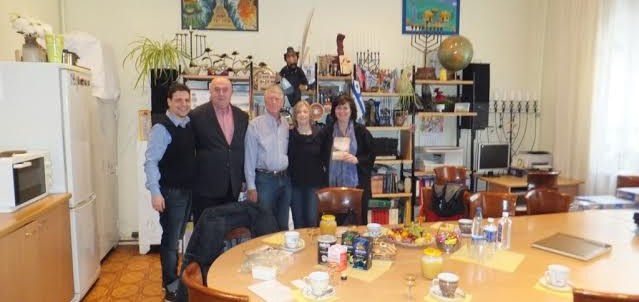
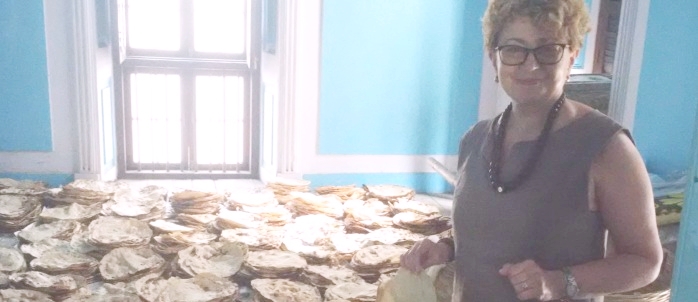
On Sunday, April 16, Lithuanian Jewish Community chairwoman Faina Kukliansky met with representatives of the Indian Jewish Community and discussed opportunities for working together.

Chairwoman Kukliansky visited synagogues, met with local Jews and learned about their history and activities in India.

Kukliansky was visiting Mumbai, formerly Bombay, India’s largest city and home to a number of religious minorities in the country.

In discussions with local Jewish leaders, Kukliansky spoke about the experience of Litvaks and proposed holding a screening in Mumbai of documentary films about the history of Lithuanian Jews.

Her visit took place with the help of the Lithuanian embassy in India. Until now there has been no official contact between the Indian Jewish community and the Lithuanian Jewish Community.

About 4,000 Jews call Mumbai home and the city of around 12.5 million people has 8 working synagogues.

Photos here.

Source

LJC Chairwoman Faina Kukliansky with Passover Greetings and a Message about Anti-Semitism

fff

Recently US State Department special envoy for Holocaust affairs Nicholas Dean visited the Lithuanian Jewish Community. This was not just a coincidence. The rise of Holocaust denial in Lithuania was the reason for his visit. Jews from Lithuania and their offspring living in Israel and South Africa have been receiving negative answers regarding their applications for Lithuanian citizenship for some time.

As the questions mount over why one set of people have received Lithuanian passports while others haven’t, despite similar circumstances, the Lithuanian Foreign Ministry, the Interior Affairs Ministry, Migration Department officials and members of parliament have begun to investigate. While the law on citizenship says one thing, officials are saying other things, and one wonders why it is left to each individual bureaucrat to interpret history. Yet another revision of history is being carried out in Lithuania, which is an essential element in denials of the Holocaust. The vitality of anti-Semitism in Lithuania is shown by the way citizenship is restored, attempting to foist upon Jews who fled persecution that they left Lithuania for other reasons, not for political reasons, not for opposing the occupational regime, not because of persecution by that regime. Another example of the upturn in anti-Semitism is provided by Laisvas Laikraštis, a newspaper which prints openly anti-Semitic articles without commentary. The Community has lodged a complaint against the newspaper with the prosecutor, but no action has been taken.

Oldest Jewish Community in South Africa Looks Back over 175 Years

gardens3

The oldest Jewish congregation in South Africa, Cape Town’s Gardens Shul, celebrated its 175th anniversary recently. The community was established in 1841. The initial service was held in the house of Benjamin Norden and under the leadership of Joel Rabbinowitz the first synagogue in South Africa, the Gardens Shul, was erected in 1862. Philip Krawitz, a recipient of the prestigious Yakir award from Keren Hayesod-United Israel Appeal in Jerusalem and called “the unofficial mayor of the Jewish community in Cape Town,” in other words, the Cape Town Jewish Community chairman, spoke at the birthday celebrations.

pk

Address by Philip Krawitz
Gardens Synagogue 175th Anniversary Celebration
March 31, 2016

The Role of Jewish Business in South Africa: “A Light unto Nations”

Cast your mind back a few years… You leave your Sea Point Apartment designed by Dennis Fabian and built by the Berman Brothers. You hop into your Toyota bought from the Sanks. You pop into Pick ‘n Pay (founded by Raymond Ackerman) for some groceries. You’re off to Artscape to watch a matinee starring Aviva Pelham in La Traviata. Thereafter you’re off to the Spur (don’t tell the Rabbi!) created by Allen Ambor. (By the way, they now serve kosher burgers.) Tomorrow you’ll visit the V&A where you’ll find an outfit for your granddaughter from Jonni Katz’s Earthchild. Perhaps you’ll even get a chance to get a new down jacket from Cape Union Mart, sneakers from Barry Selby’s “The Athletes Foot” or a suit from Arie Fabian’s Fabiani. And if you’re feeling peckish, you grab a cappuccino from Ian Halfon’s Balducci. Charge it all to Kantor & Koseff’s Investec Card. Fortunately your Liberty Life Pension cheque (thanks to Donny Gordon) will more than cover your expenses. Indeed you could be forgiven for believing that the whole world is Jewish!

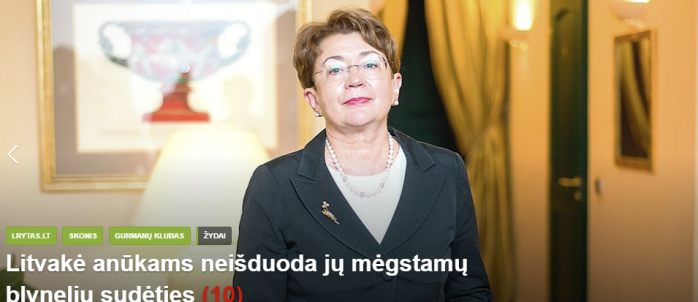
Litvak Won’t Give Grandchildren Pancake Recipe

pp

As kosher cafés open around Vilnius and it’s possible to eat kosher food and bagels, Lithuanians are rediscovering Jewish culture with an emphasis on cuisine. That pleases the chairwoman of the Lithuanian Jewish Community, attorney Faina Kukliansky, 61.

Jewish cuisine has always been popular in Lithuania. And it’s no wonder, since many Jews have lived in our country from ancient times, the Lifestyle Section of the Lietuvos rytas newspaper writes.

Some dishes which everyone thinks are traditional Lithuania are actually borrowings from Jews.

One such is potato pancakes, called latkes in Jewish cuisine. Kugel is also of Jewish origin.

Many are shocked to discover that even zeppelins, of which we are so proud, are also somewhat connected with Jews. They travelled to our country about 100 to 150 years ago from northern Germany together with Jews.

Read the entire article in Lithuanian here.
img class=”alignnone wp-image-9629″ src=”http://www.lzb.lt/wp-content/uploads/2015/07/lr.png” alt=”lr” width=”83″ height=”26″ />

Kaunas Jewish Community Celebrates 125th Anniversary of Birth of Daniel Dolski

dolskis-7

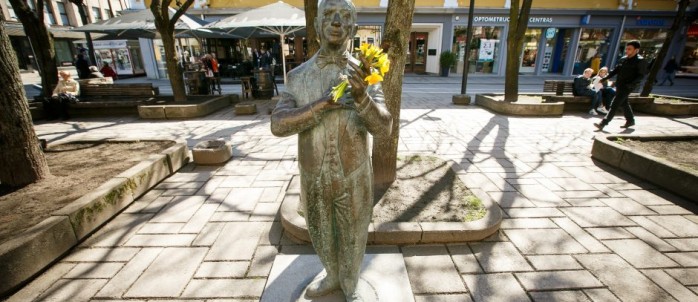
The Kaunas Jewish Community is celebrating the 125th anniversary of the birth of Daniel Dolski in Vilnius. Dolski was a pioneer of the Lithuanian stage. Highly educated and extremely charming, he debuted on the Russian stage, moved to Western Europe after the October Revolution and settled in Kaunas in late 1929, becoming a pioneer on the popular Lithuanian musical stage. He was one of the first to perform popular songs in the Lithuanian language, having learned it over the course of a half year upon his return.

Full story in Lithuanian here.

Litvaks Didn’t Suffer Enough to Deserve Lithuanian Citizenship?

Grant profile pic

by Grant Gochin

Lithuanian officials state that Jews were not oppressed in Lithuania:

In an astonishing display regarding the ignorance of rampant anti-Semitism in inter-war Lithuania, Lithuanian Foreign Minister Linas Linkevicius stated that there was “no violence, repressions or anything like that at the time”, against Jews in Lithuania during the period 1918 – 1939. Based on this assumption, Lithuania intends to deny citizenship applications for descendants of Lithuanian Jews. The belief that Jews did not suffer enough, in Interwar Lithuania, to warrant citizenship is simply preposterous.

http://www.baltictimes.com/litvaks_continually_rejected_restoration_of_lithuanian_citizenship/

At the beginning of the 20th Century, Jews represented about 14% of Lithuania’s population. In May 1915, the Czarist regime deported and exiled approximately 100,000 Lithuanian Jews to the Russian interior. After the war ended, Lithuanian Jews, who had lived in Lithuania for centuries and often constituted half of the population of many towns, were promised that the new independent Lithuanian state would be tolerant to minorities. Jews provided considerable political support for Lithuania in international forums and enlisted into the Lithuanian army to defend their country’s independence. A great many war medals were awarded to these soldiers for their extraordinary bravery and many lost their lives fighting for Lithuanian independence. In return for their contributions, the government granted full autonomy to the Jewish community and created a Cabinet-level Ministry for Jewish Affairs. Unfortunately, these promises were not kept; in 1923 funding for this Ministry was withdrawn, and in 1924 the Ministry was abolished. Sadly, the Ministry had served little purpose, because in 1923 the Lithuanian Government reportedly rounded up and expelled Jews whom they considered to be “alien”.

About Taverns, the Vilna Gaon and the Shared History of Lithuanians and Jews

by Nijolė Bulotaitė

American academic Glenn Dynner is teaching a module at the History Faculty of Vilnius University called “Socio-cultural History of Ethnic Minorities in the Central and Eastern European Context.” The professor specializes in the history of Eastern European Jews and has written several books, including “Men of Silk: The Hasidic Conquest of Polish Jewish Society” (Oxford University Press, 2008) and “Yankel’s Tavern: Jews, Liquor and Life in the Kingdom of Poland” (Oxford University Press, 2014). What prompted the professor to take an interest in taverns and Lithuanian and Polish Jews, and what has he discovered? We asked him those questions in Vilnius recently.

Q. Why Poland and Lithuania exactly? Was Jewish life here somehow special?

A. When I was a naïve American student, as soon as I started professor Antony Polonsky’s class at Brandeis University I learned the majority of the world’s Jews lived in Poland and Lithuania before the Holocaust. The professor was my doctoral dissertation supervisor later. I learned three quarters of the world’s Jews in the 19th century lived in Eastern and Central Europe. My problem was I didn’t know any languages. At first I had to learn Hebrew, then Polish, Yiddish and several more. Only then did all the rich sources become available to me. Not many Americans are able to do research in this area because the languages are rather difficult, and it’s difficult for us Americans to learn languages.

Full interview in Lithuanian here.

Bagel Shop Editor Published in Israeli Academic Journal

Radvilė
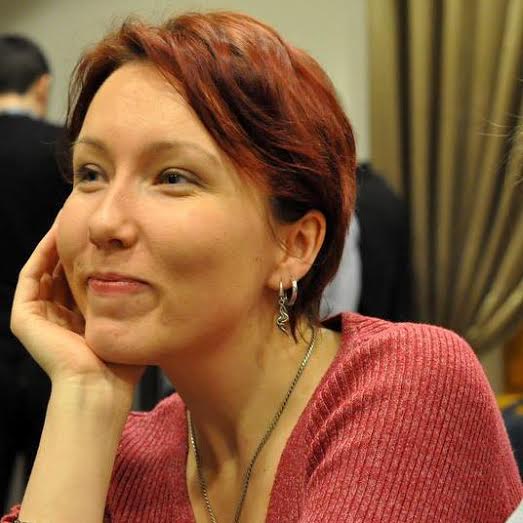
Radvilė Rimgailė-Voicik

Radvilė Rimgailė-Voicik, who writes and compiles the quarterly Bagel Shop newsletter, has had an academic article published by the Israel Journal of Plant Sciences. The article, called “Plant Community Associations and Complexes of Associations in the Lithuanian Seashore: Retrospective on the Studies and Tragic Fate of the Botanist Dr Abromas Kisinas (1899–1945),” pursues the topic Radvilė wrote about in a previous issue of the Bagel Shop newsletter.

Abstract:

The life and scientific activities and discoveries of Dr Abromas Kisinas (1899–1945, also appearing in the literature as Avraham, Abraham, Kisin or Kissin) are presented here for the first time. He was a botanist, a Lithuanian, a graduate of Vytautas Magnus University in Kaunas, a polyglot and a social figure. In 1936, Kisinas’ major phytosociological work “Plant Associations and Complexes of Associations in Lithuanian Seaside (without Klaipėda Region)” was published in the Works of Vytautas Magnus University Faculty of Mathematics and Natural Sciences. The publication was written in Lithuanian with a summary in German and summarized Kisinas’ PhD dissertation, which was defended in 1934 under the supervision of Prof. Constantin Regel. In his research, Kisinas applied ideas proposed by the Uppsala School of Phytosociology. For plant communities evaluation he used linear transects with 1 m², 4 m² and 16 m² sampling squares. In a 15 km seashore range Kisinas determined 63 plant community associations and 26 sub-associations. The fate of this gifted scientist was tragic. In 1941 he and his family were deported to the Kaunas Ghetto. In 1945 Kisinas died at the Dachau concentration camp in Germany.

Litvaks Told No on Lithuanian Citizenship

VILNIUS, Apr 11, BNS–Jews and their descendants living in Israel and South Africa who left Lithuania in the interwar period have been receiving negative answers about restoration of Lithuanian citizenship for some time now.

Since November of 2015 the Lithuanian Migration Department has rejected the majority of applications for restoration of citizenship for people who left Lithuania in the 1920-1939 period and their descendants.

Under Lithuanian citizenship law, people who left Lithuania before March 11 of 1990 and acquired citizenship in a different country can be citizens of Lithuania, as can their descendants. About 1,000 Jews living in South Africa have taken advantage of the legal provision, but the process of citizenship restoration was suspended for some people in mid-2015.

Joint Visits Panevėžys

JointPan
JOINT atstovai lankosi Panevėžyje

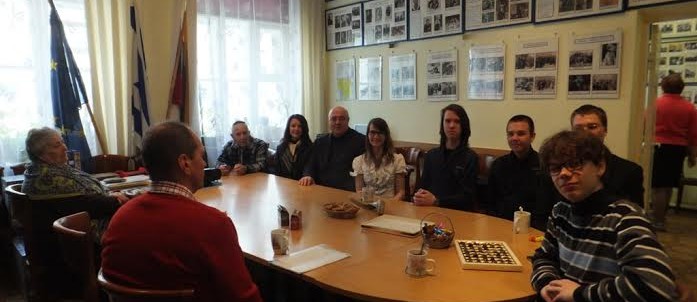
AN event was held at the Panevėžys Jewish Community April 6 to welcome honored guests during their brief visit. One of them, Lee Seidler, arrived with his family. American Joint Distribution Committee director Diana Fiedotin and JDC representative in the Baltic states Moni Beniosev also came and took an interest in the history of the Jews of Panevėžys, visited Jewish sites and viewed the stele on Zikaro street, which was named Joint Street in 1923 in honor of the Joint Distribution Committee.

Remembering Jewish Vilna in Painting

Vilnius topografija

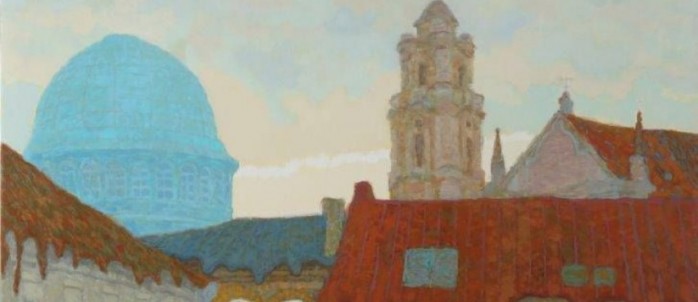
The catalog of the exhibit of Lithuanian painting and photographs called “Zakhor. Remember. Topography of Images of Jewish Vilnius” will be launched at the Lithuanian Jewish Community at 7:00 P.M. on Thursday, April 14. The catalog and exhibit are the work of curators Linas Liandzbergis, Elke-Vera Kotowski and Gabrielė Žaidytė. The exhibit has been at show at the Old Town Hall in Vilnius and at the Konrad Adenauer Foundation in Berlin.

From May to August the exhibit will grace the halls of the Cape Town Jewish Museum and the Johannesburg Holocaust Museum in South Africa, then travelling on to Israel, Argentina and other destinations where sizeable populations of Litvaks live. The presentation, to be attended by Dr. Julius Schoeps, director of the Moses Mendelssohn Center and the Center for Jewish Studies Berlin-Brandenburg, is also to include a short film documenting earlier showings of the exhibit. Improvisational jazz is to be performed at the presentation by Lithuanian musician Kęstutis Vaiginis.

New Book on Litvak Art in Private Hands

TMP000_470

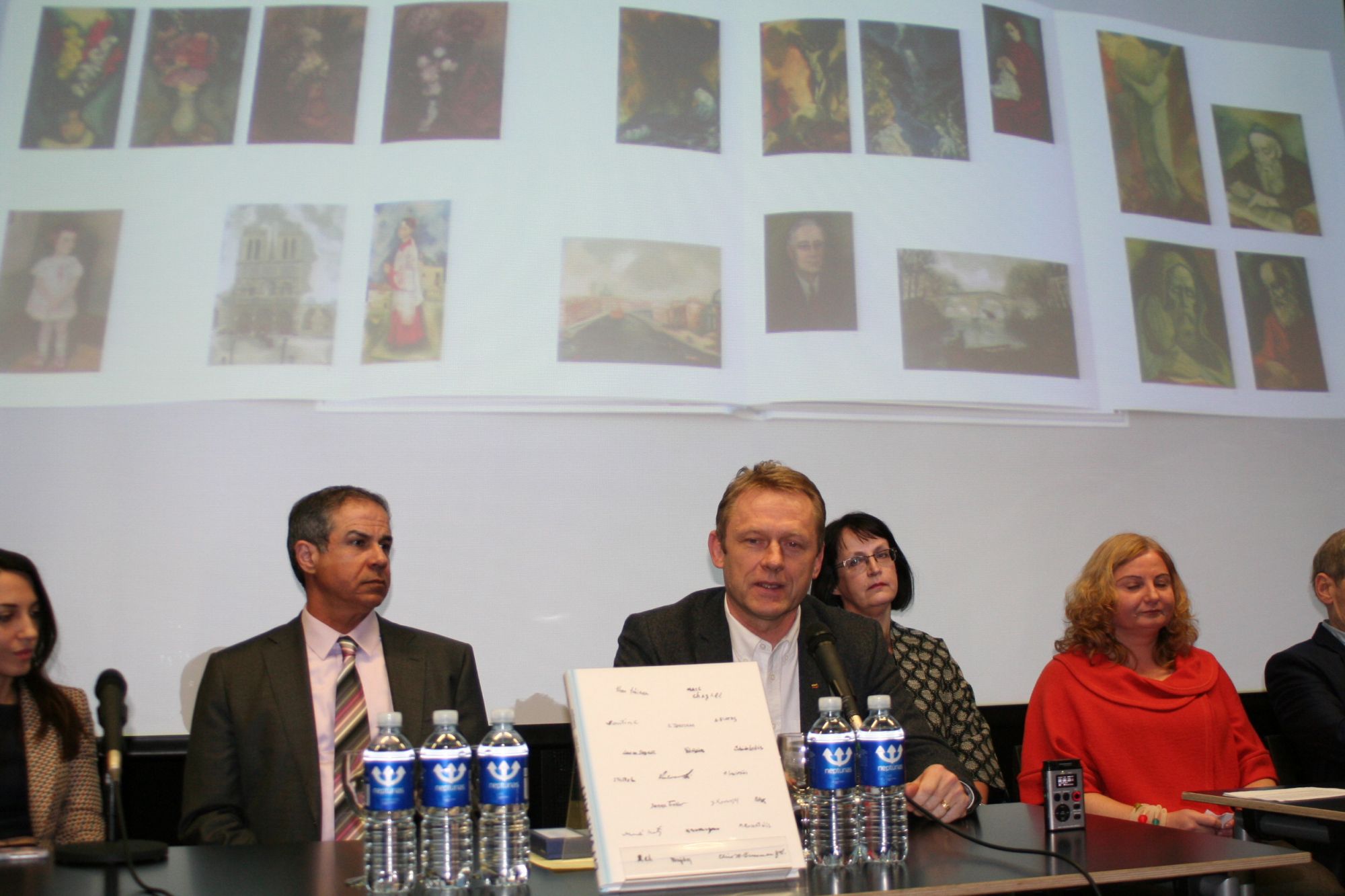
A new book/catalogue called “Litvakų dailė privačiose Lietuvos kolekcijose” [Litvak Art in Private Lithuanian Collections] was presented at the National Art Gallery on April 5. The book is bilingual in Lithuanian and English, and contains about 250 works by 44 Litvak artists, including paintings, water colors and sculpture, many of which have never been seen by the public before. The publication is the fruit of exhaustive research by Dr. Vilma Gradinskaitė, an historian at the Vilna Gaon State Jewish Museum’s History Department.

Lithuanian minister of culture Šarūnas Birutis spoke at the book launch and said: “This serious album spans more than 150 years from the mid-1800s to current artists working within the Litvak artistic tradition. I hope this publication will interest the broader public as well as professionals, hooking the reader and reminding us of the names and works of little-known and forgotten artists.” He said it was the only book in Lithuania which so broadly and comprehensively surveys Litvak ark, graphics and sculpture held in private collections.

litvak art

Rakija Klezmer Orkestar

Rakija klezmer1

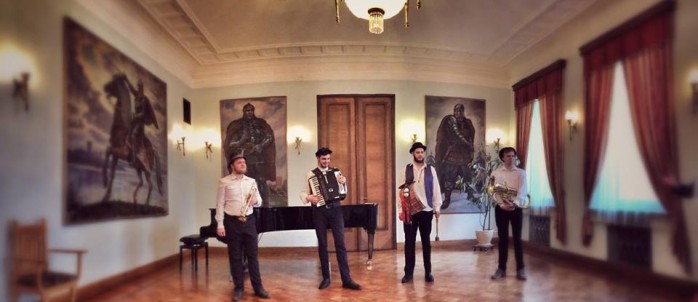
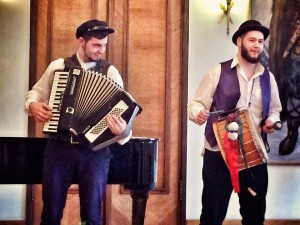
Rakija Klezmer Orkestar is a klezmer group which formed three years ago in Kaunas, Lithuania. They have performed Hanukkah concerts at the Lithuanian Jewish Community.

Rakija Klezmer2

The group say they want to revive Litvak klezmer traditions. The four-set will soon become five with addition of Mantas Ostreika on saxophone. The other members are Darius Bagdonavičius, Mikas Kurtinaitis, Skirmantas Rumševičius and Povilas Jurkša.

International Meeting of Young Rabbis at Panevėžys Jewish Community

rabinaiP

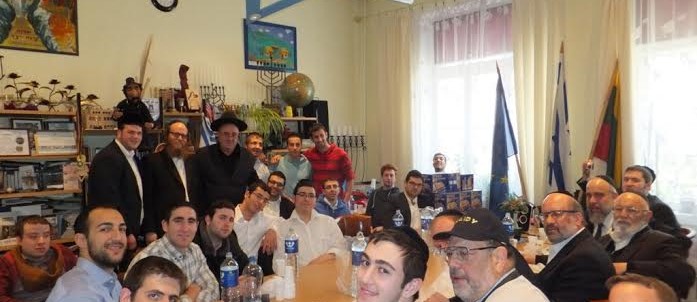
Two groups of young rabbis from Canada, England, France, Israel, Japan and the United States came to the Panevėžys Jewish Community April 7, interested in Jewish life before World War II and now. The first group was led by Rabbi Meir Wunder, who leads trips by high school students to Panevėžys annually. The young people were interested in the life of Rabbi Yosef Shlomo Kahaneman.

Kahaneman was born in the village of Kuliai in 1886 and studied at the yehsivas in Plungė and Telšiai before going on to the yeshiva in Novogrudok, now in Belarus. He became yeshiva director. He lived with his family in Panevėžys from 1919 to 1940. In 1923 he became a Lithuanian MP. In Panevėžys he set up a poorhouse, an orphanage and the Yavne Jewish religious school for girls, and headed the yeshiva. Later he and his son moved to Israel where he continued to maintain Litvak religious traditions. On the wall of an orphanage he founded are the names of the yeshivas of Lithuania. The Panevėžys yeshiva was also restored in 1919 due to his efforts.

rabinaiP1

The second group was led by Rabbi Tuvia Konn and Rabbi Nesivos Tours. They spoke about how they had heard of the Bokhrim yeshiva and became interested in the city of Panevėžys, and when there was opportunity to visit, they gladly came in search of their roots. They visited Jewish sites in Panevėžys and viewed a film about the history of the Jews of Panevėžys which they said opened a window onto the past.

Documentary Filmmaker Visits Panevėžys Jewish Communtiy

filmavimas

A documentary film crew shot footage at the Panevėžys Jewish Community April 8 for a new film about Panevėžys Jewish architecture before World War II. Panevėžys Jewish Community chairman Gennady Kofman spoke about the history of Panevėžys Jews to an audience of the director and guests from the Margarita Rimkevičaitė Technical School.

Happy Birthday, Simas Levinas!

Happy birthday to Simas Levinas on his 70th birthday! Simas has been and is both an initiator and one of the most active members of the Lithuanian Jewish Community from its modern inception and earlier was the first principal and intellectual leader of the Sholem Aleichem school, among other things. He spoke forcefully and clearly for the creation of that school. Now that the Sholem Aleichem ORT Gymnasium is one of the best rated in Lithuania, no one questions the need for a Jewish school anymore. Currently Simas is doing very important work as both the head of the LJC’s Social Center and as the chairman of the Jewish Religious Community. Always bright, cultured, intelligent and professional, Simas greets everyone with a smile and is ready to talk to everyone without anger or rancor. He is also very moral man, and these qualities make him stand out in any crowd.

Happy Birthday, Simas. Allow us to wish you even more success and that good health would follow you always. Cheerfulness makes us all look younger than our years. You have chosen a meaningful and long path and you have lit up the hearts of those around you with love. Please accept our small thanks today and may your winning smile never fade from your face. Many happy and beautiful days lie ahead. The contented and generous heart never grows old and gray! May you live to at least 120!

Mazl tov!

Many came to give warm wishes and presents to Simas on this milestone occasion. For snapshots from the celebration, click here.

Lox on Bagels: An Answer to Eggs Benedict?

OLYMPUS DIGITAL CAMERA

A Bit about Bagels

The history of the bagel is surrounded by myth and legend but seems to begin in the 12th century. One version has it that a Church ban on commercial Jewish bakeries was responsible for its appearance. In 1264 Polish grand duke Bolesław the Pious issued his Statute of Kalisz or Charter for Jews of Grand Poland which allowed Jews to freely by, sell and touch bread in common with Christians. In response a group of Polish bishops forbade Christians from buying any food at all from Jews, as it were anathema. As Moses ben Israel Isserles put it in the 16th century” “it is preferable to live on dry bread and in peace in Poland” than to remain in better conditions in lands more dangerous for Jews. At some point Jews were allowed to work with bread which was boiled, and they created the bagel to comply with his ruling, according to this version. In 1610 the first mention appears of the word “bagel” in Yiddish in the written sources, in regulations issued by the Jewish council of Kraków, which stated that bagels were to be given as a gift to women in childbirth.

Whatever the case, the bagel was popular among Jews in Eastern Europe, and came with them to America in the 19th and 20th centuries.

Lithuanian Psychologist: Three Years Ago I Believed the Double Genocide Theory

rb
Rasa Bieliauskaitė, photo: Ugnius Babinskas

Three Years Ago I Believed the Double Genocide Theory
by Geoff Vasil

So said Rasa Bieliauskaitė, a psychologist specializing in trauma therapy, at what was, for Lithuania, a remarkable meeting of the minds recently.

The Vilnius Jewish Public Library hosted a panel discussion featuring historians and psychologists on the topic of the Holocaust and collective memory.

In their introductory statements several of the speakers, including Bieliauskaitė, mentioned Rūta Vanagaitė’s new book about the Lithuanian Holocaust, and the unexpected popularity of that book became the backdrop for much of the conversation which lasted several hours and which became a much larger discussion when distinguished members of the audience chimed in towards the end.