Litvaks

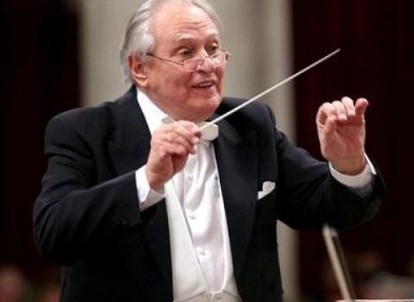
In Memoriam Saulius Sondeckis

Sondeckis-Likimai

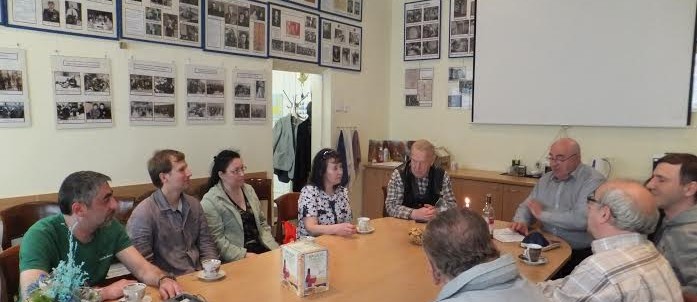
The Destinies series of lectures, seminars and meetings invite you to attend our 26th evening in the series,

In Memoriam Saulius Sondeckis

featuring the premiere of the film “… mūsiškiai žydai muzikai” [“…Our Own Jewish Musicians”]

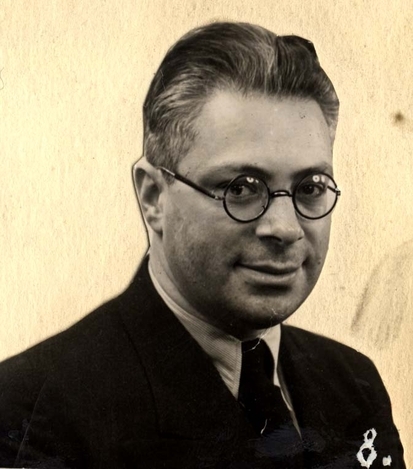
In the film maestro Saulius Sondeckis shares his memories of his friends and colleagues, Lithuanian Jewish musicians.

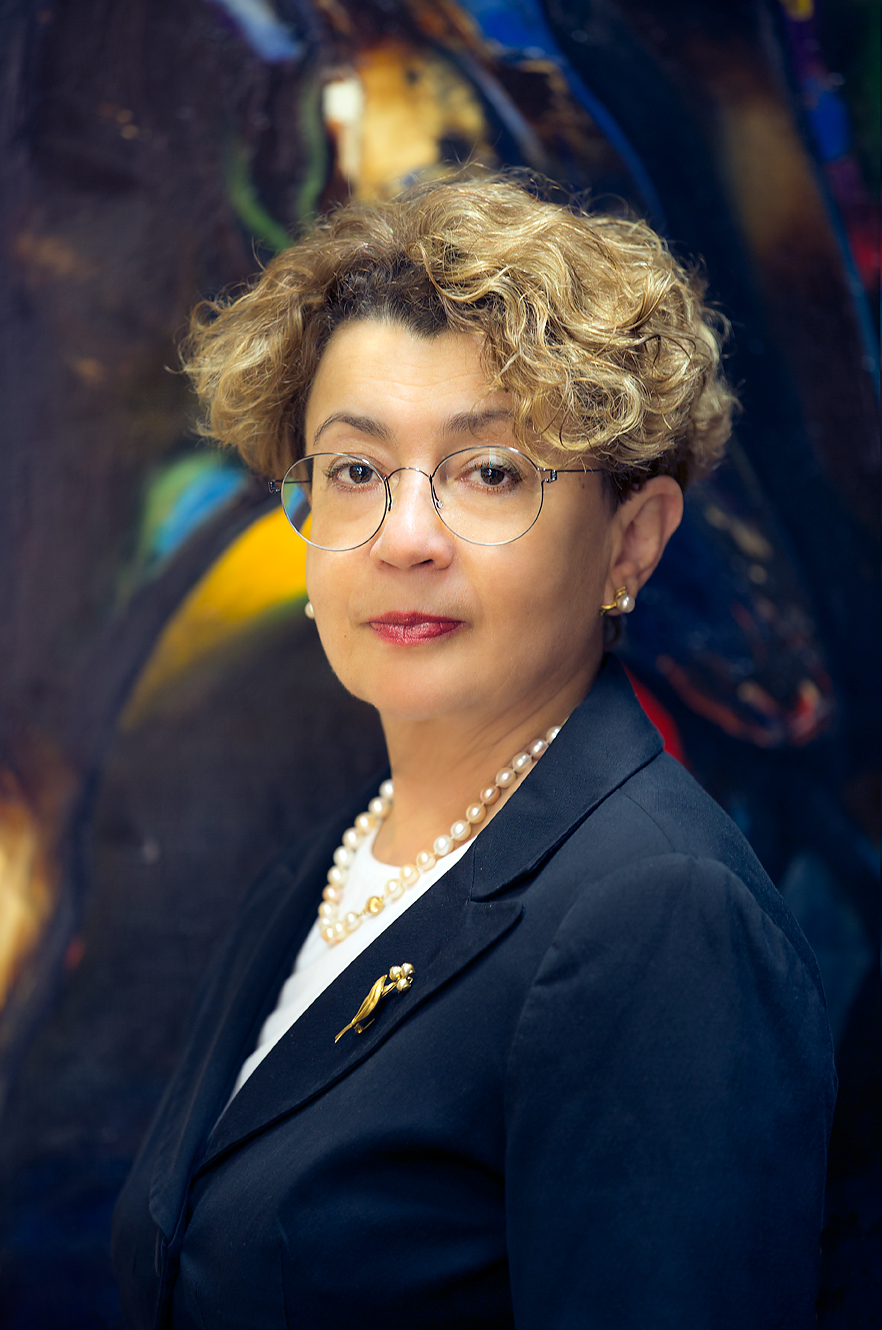
Participants to include: the filmmaker and journalist Saulius Sondeckis and professor Silvija Silvija Sondeckienė

Moderator: Dr. Leonidas Melnikas.

Time: 6:00 P.M., Thursday, May 19, 2016.
Location: Lithuanian Jewish Community, Pylimo street no. 4, Vilnius

Event initiator and MC: LJC deputy chairwoman Maša Grodnikienė

Lithuania to Grant 30,000 Euros to Vilnius YIVO Project in 2017

maxw

The Lithuanian Ministry of Culture plans to allocate 30,000 euros in 2017 for the Vilnius YIVO project.

The Vilnius YIVO project is a seven-year endeavor to preserve, digitize and join together virtually two pre-war YIVO collections in New York and Vilnius. The project will also attempt to recreate digitally the Strashun library, one of the largest collections of judaica in pre-war Europe. YIVO, the Lithuanian Central State Archives and the Lithuanian Martynas Mažvydas National Library are partners in the project.

The project covers approximately 10,000 rare and unique books and publications and around 1.5 million documents. Material includes literary works, correspondence, memoirs, theater posters, photography, rare books, brochures, newspapers, political pamphlets and documentation of religious and communal activities.

lrkm.lrv.lt

LJC Chairwoman Speaks on Lithuanian National Radio about Citizenship for Litvaks

MILDAR-0065web

Lithuanian Jewish Community chairwoman Faina Kukliansky was one of three distinguished guests on the late morning Aktualiju studijas [News Studio] program on Lithuanian radio May 12.

“This question keeps bothering me: when did the institution of citizenship, when did that institution stop, when was it interrupted? Was it when the person was imprisoned in the ghetto? When he was transported to the concentration camp? Nobody saved those passports anywhere. You see this is such an inhumane, such an unintelligent step when you look to the future. But as the chairwoman of the Lithuanian Jewish Community I would like to say, that Litvaks are welcome in our community, with or without a passport, and we would be very proud if our Lithuanian Jewish Community grew thanks to those people who left Lithuania. So we gladly invite and welcome them without regard to their political status,” Faina Kukliansky said during the discussion.

The main topic for the show as “Why don’t we want to grant citizenship to Litvaks?” The introductory blurb for the show was: “Lithuanian Jews–Litvaks–are not just people who have achieved great things in the world, they contributed greatly to the strengthening of the Lithuanian state as well. They sought Lithuanian independence and they fought in the battles for independence [in 1918-1919]. Unfortunately, almost all of them were murdered during World War II. Only a small portion survived. Today some Lithuanian bureaucrats don’t want to grant citizenship to the small group of Jews who want it. Why not?”

The other two guests were former Lithuanian prime minister, current deputy parliamentary speaker MP Gediminas Kirkilas and the historian Alvydas Nikžentaitis.

The audience was invited to call in and pose questions.

Rabbi Moshe Shapiro Visits Lithuanian Jewish Community

Shapiro1

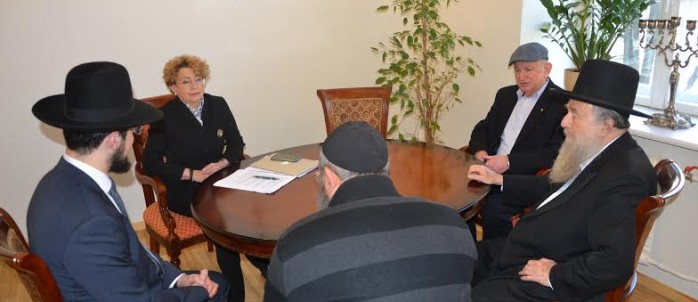
The well-known Rabbi Moshe Shapiro, a follower of the Gaonic scholarly and Litvak tradition, has paid the Lithuanian Jewish Community a visit, where he met with chairwoman Faina Kukliansky, religious community leader Simas Levinas and Rabbi Samson Isaakson.

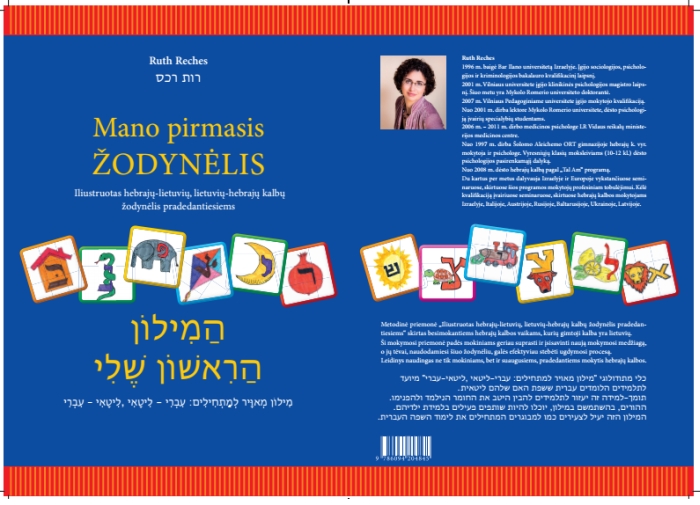
Illustrated Hebrew-Lithuanian Wordbook for Beginners Presented at LJC

virs3

The publication of Ruth Reches’s “Iliustruotas hebrajų-lietuvių kalbų žodynėlis pradedantiesiems” [“Illustrated Hebrew-Lithuanian Wordbook for Beginners”] is an important event for Jews and Lithuanians who want to learn Hebrew and who had to rely in the past on textbooks in Russian and English. The arrival of the book was eagerly awaited by the students of the Vilnius Sholem Aleichem ORT Gymnasium and their parents. The announcement of the book’s official launch instantly drew thousands of interested people on facebook from all over Lithuania. The author presented her book at the Community May 9.

Ruth Reches was graduated from Bar Ilan University in Israel in 1996 with a bachelor’s degree sociology, psychology and criminology. In 2001 she completed a master’s degree at Vilnius University in clinical psychology. In 2007 she received a teaching credential from Vilnius Pedagogical University. Currently she is doing doctoral work at Mykolas Romeris University, where she has been teaching psychology to students pursuing a variety of disciplines since 2001. She worked as a psychologist at the medical center of the Lithuanian Interior Ministry from 2006 to 2011. Since 1997 she has also taught Hebrew at the Sholem Aleichem Gymnasium in Vilnius and served as school psychologist. She teaches psychology as an elective to upper-level (sophomore to senior class) students there.

The “Illustrated Hebrew-Lithuanian Wordbook for Beginners” is for teaching Hebrew to children whose native language is Lithuanian. The learning aid will help pupils understand better and acquire new material, while parents can use the book to follow the progress of their children. The book is useful for adults beginning Hebrew as well.

Ten Years of Cooperation

It’s been 10 years now since the Panevėžys Jewish Community and the Rožynas Pre-Gymnasium first began carrying out joint projects to encourage tolerance, education and friendship between the peoples who call Panevėžys home. This time the project was about Holocaust commemoration in the Panevėžys region. It’s called “A Bridge between Past and Present.” The project is financed by the Goodwill Fund. Around 200 students from the upper classes participated and learned about the history of the Holocaust. The Panevėžys Jewish Community shared information with Rožynas Pre-Gymnasium pupils and administrators, history teacher Genutė Žilytė and pre-gymnasium principal Aida Adiklienė and provided the information the Panevėžys Jewish Community possesses about the Holocaust in the city and region of Panevėžys.

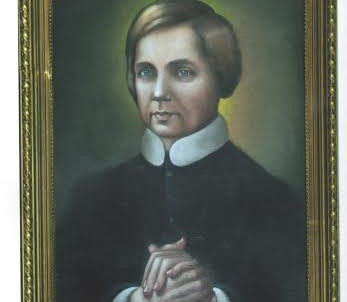
Commemorating Sister Marija Rusteikaitė in Panevėžys

Rusteikaite2

A project to commemorate sister Marija Rusteikaitė was discussed with mother superior and general director Jūratė Marcinkevičiūtė and sister S. Klara–Hana Bivil of the God’s Love Monastery at the Panevėžys Jewish Community. The project to commemorate Rusteikaitė in Panevėžys and to teach city residents about her remarkable story in the rescue of 15 Jewish children during the Holocaust was prepared by the Panevėžys Jewish Community and presented to the city’s Architecture and Urban Planning Department.

The goal of the project is to commemorate Righteous Gentile Marija Rusteikaitė (1892-1949), the founder of the God’s Love congregation, by naming a new street after her and posting a memorial sign at the start of the street briefly describing her noble deeds.

Marija Rusteikaitė was an intellectual person, a social activist, a medic, a teacher and a nun who was very important to the city and area of Panevėžys. She grew up in the family of estate owners Stanislovas and Jadvyga, a family of nine children, four sons and five daughters. Marija was the third child. Her mother Jadvyga was dedicated to charity work, her children and homemaking. Both parents were extremely loving towards their children and guided their education, belief in God and moral development. The people of Vaiguva who knew her say her charisma was something akin to that of Mother Teresa in Calcutta. She spent her nights sitting up with sick patients, quietly praying.

Plans to Amend Lithuanian Citizenship Law for Litvaks

As the Lithuanian Migration Department and the courts issue rejections on applications for Lithuanian citizenship by Litvaks, parliamentarians are preparing to amend the Lithuanian law on citizenship, even though, they say, the current law provides for granting citizenship to the aforementioned people.

The Lithuanian parliament’s European Affairs Committee met Wednesday and decided to form a working group to prepare the amendment to the law.

Conservative opposition leader Andrius Kubilius proposed expanding the existing definition in the law on who should be considered a person who left Lithuania before March 11, 1990.

A Difficult Trip

by Linas Vildžiūnas

Rūta Vanagaitė’s [book] “Mūsiškiai” [“Our Own”] differs from other books about the Holocaust in Lithuania in that it was conceived and written as a best seller. As an appeal by the popular author who has a good understanding of public relations to the contemporary Lithuanian public, posing to them the most painful and urgent–although deeply repressed in the subconscious–problem of historical responsibility. The author doesn’t try to make it impersonal (and it would probably be impossible to do so anyway, because the issue involves personal attitudes and personal responsibility), and even sharpens the edges, using a macabre black humor, and also has a certain aplomb and a sense of heralding progress. The latter can be annoying, but the author has sufficient basis to do so. All of this could be perceived as an additional measure to create an effect in aiming for the top ten (or straight for the jugular), and her aim is true because it reached its mark.

Panevėžys Jewish Community Marks Victory Day

PPergales d 2

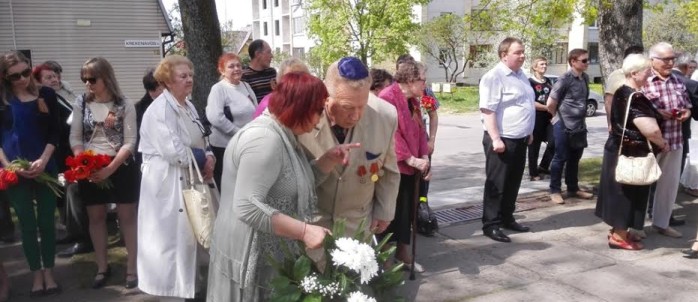
The Panevėžys Jewish Community marked Victory Day on May 8 and 9. On May 8 members laid wreaths at a monument to Jews murdered in the Holocaust. Candles were lit and honor was paid to the dead, both in the city and in Europe at large, to those who were murdered during World War II at mass murder sites in Panevėžys and more than 200 other mass murder sites around Lithuania. Almost no Jewish eyewitnesses survived in Panevėžys.

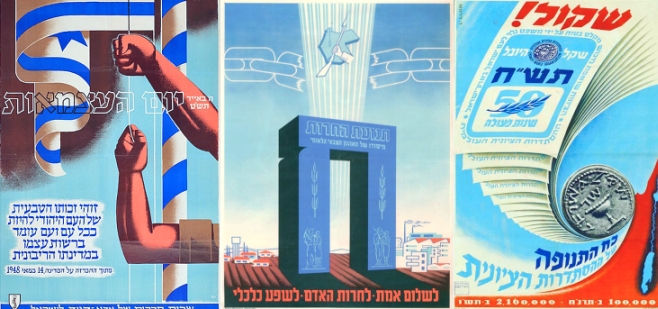
Israel at 68

iid

by David Harris
May 9, 2016

Israel celebrates its 68th Day of Independence this week. Let me put my cards on the table. I’m not dispassionate when it comes to Israel. Quite the contrary.

The establishment of the state in 1948; the fulfillment of its envisioned role as home and haven for Jews from around the world; its wholehearted embrace of democracy and the rule of law; and its impressive scientific, cultural, and economic achievements are accomplishments beyond my wildest imagination.

For centuries, Jews around the world prayed for a return to Zion. We are the lucky ones who have seen those prayers answered. I am grateful to witness this most extraordinary period in Jewish history and Jewish sovereignty–in the words of Israel’s national anthem, “to be a free
people in our land, the land of Zion and Jerusalem.”

Guests from Belarus Visit Panevėžys Jewish Community

THAI

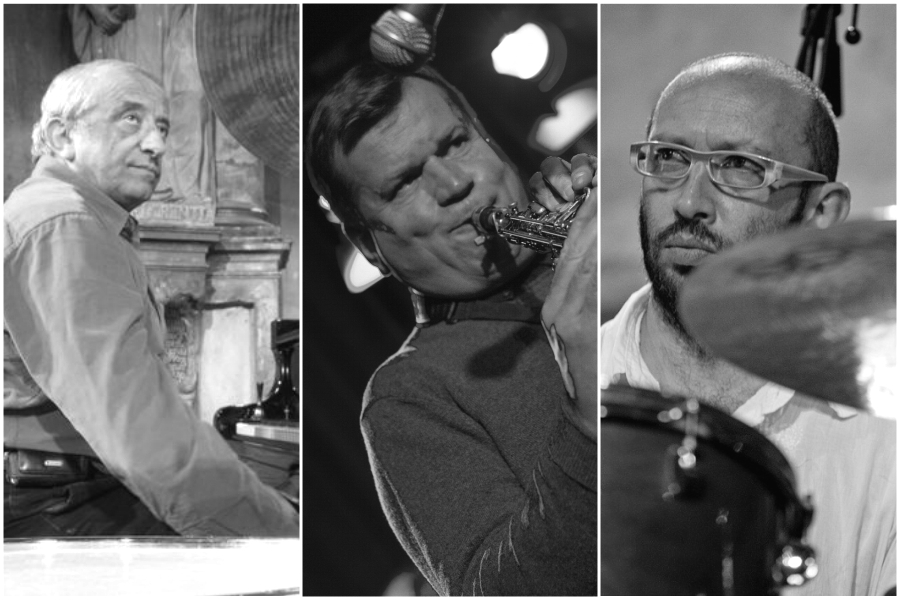
A jazz group from the city of Bobruisk (Babruysk), Belarus visited the Panevėžys Jewish Community. The members of the band are Jews and Belarusians who teach at the Children’s Music School in Bobruisk. They formed their own group called Thia. Over tea Panevėžys Jewish Community chairman Gennady Kofman told them about the city of Panevėžys and the history of the Jews living there. The guests were very interested in city industry, what enterprises operate there and the economic situation. They spoke about the economic conditions in Belarus and discussed migration problems. Bobruisk is famous for its marshmallow-like candies which the guests said have a special flavor. They were impressed by Panevėžys, how clean and orderly it was and with such a nice natural environment. They were interested in local Jewish affairs. Their first stop upon arriving in the city was the Jewish Community. Jewish Community members Yefim Grafman and Mikhail Grafman also shared their memories of the former Jewish population with the guests. The guests spoke about the Jewish communities operating in their city and about the close cooperation and friendship between them.

Lithuanian Parliament to Investigate Why Litvaks Aren’t Getting Citizenship

Vilnius, May 8, BNS–Lawsuits by Litvaks living in Israel and South Africa regarding Lithuanian citizenship have come to the attention of the Lithuanian parliament. Soon at least two parliamentary committees plan to make inquiries into why Lithuanian Jews who left the country between the two world wars and their offspring have been receiving negative responses to their applications for restoration of Lithuanian citizenship for some time now.

“We want to ask what is truly going on, why now these questions have begun to receive a negative answer. At least the information which is reaching us from the embassy, those explanations are very undiplomatic and are offensive to people. They say you are such and such people, that no one persecuted you. It’s not good to talk that way against the entire backdrop of the Holocaust,” deputy speaker of parliament and chairman of the European Affairs Committee Gediminas Kirkilas told BNS.

Flood of Court Cases over Lithuanian Citizenship for Jews

Why since last year hasn’t the Lithuanian Migration Department followed the law on citizenship currently in force, under which since April of 2011 people of Jewish ethnicity and ethnic Lithuanians who emigrated between 1918 and 1940 and their offspring have the right to Lithuanian citizenship? This question, recently aired in Israel, has been heard by members of the ruling majority and opposition in the Lithuanian parliament, but no one has been able to offer a clear explanation to Litvaks.

Until the middle of last year, about one thousand requests by Litvaks from Israel, South Africa, America and other countries for restoration of Lithuanian citizenship had been granted.

In their requests, Jews from Lithuania have argued that their parents and grandparents were forced to leave the country because of specific internal and external dangers and lack of security. This meets the requirements listed in the law on citizenship for acquiring citizenship.

When the Migration Department under the Lithuanian Interior Ministry began rejecting requests by Litvaks for citizenship, Litvaks, not understanding why the law in force on citizenship was being ignored, began seeking redress in Lithuania’s courts.

Children’s and Youth Club Activities in April

The Ilan Club and its young directors continued their work and planned for the end of the season and children’s camps. There was a drop-off in attendance as the weather improved and parents kept their children home Sunday afternoons.

April 10, 2016: Activities at the Children’s Club of the LJC. As usual, children came to have both a fun and informative time. This time the activities centered around Jewish love and weddings. We spoke about customs and traditions.

April 17: These activities at the Children’s Club were regarding the upcoming Eilat Beach Party. We had fun, played games and tried to give a sense of the pleasantness of Eilat.

Holocaust Commemoration Features Criticism of Lithuanian Government for Denying Litvaks Citizenship

yhs1

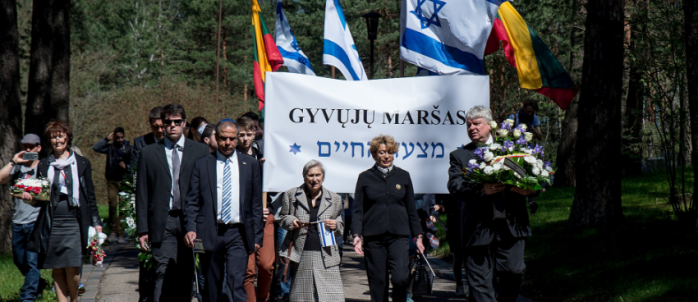
Ponar, May 5, BNS–During the annual commemoration of Holocaust victims Lithuanian Jewish Community chairwoman Faina Kukliansky Thursday blasted decisions by migration officials not to grant Lithuanian citizenship to Litvaks–Lithuanian Jews–and their offspring who left the country between the two world wars.

During the official ceremony on Holocaust Remembrance Day at Ponar, Kukliansky said Lithuanian officials needed “history lessons.”

The event consisted of a march lasting under 20 minutes with marchers carrying Lithuanian and Israeli flags from the Ponar railroad station to the Paneriai (Ponar) Memorial Complex, where the commemorative ceremony too place. This is the route Jews of the Vilnius ghetto marched before they were murdered in the Ponar forest.

The Jewish Disease

logo_sm2

Miami, May 3, 2016–Yom HaShoah, Holocaust Remembrance Day, is May 4–5. Targum Shlishi’s support of projects related to Holocaust awareness and education is one of its core areas of giving. For many years, this category was primarily focused on pursuing justice for Nazi war crimes—Targum Shlishi worked with Efraim Zuroff, director of the Simon Wiesenthal Center’s Israel office, on many initiatives, including partnering on Operation Last Chance. As time has passed, the focus has shifted to the critical importance of issues around awareness, education, and combatting denial.

“The Jewish Disease is not that in every generation there arises an enemy that seeks to destroy us, as we read just two weeks ago in the Passover Haggadah; that has been our destiny. Instead, the Jewish Disease is that in every generation, Jews, wherever their locale, believe that this time is different,” says Aryeh Rubin, director of Targum Shlishi. “Whether it is thirteenth-century England; fifteenth-century Spain; nineteenth-century Ukraine; twentieth-century Germany; or twenty-first century France, England, or elsewhere, anywhere that Jews have achieved an exalted status in society, a confidence sets in that blocks their sense of historical reality. The details vary—perhaps there are Jews who are advisors to their country’s rulers, or on the highest corporate levels of large multinational companies, or one serves as the finance minister in a democratic state—regardless of circumstance, the refrain is always the same. Over and over, the Jews have stated: ‘It can’t happen here.’ Holocaust Remembrance Day serves to remind us that anti-Semitism has a long history and that it can happen anywhere. And this extreme anti-Semitism of yesterday extends to Israel today.”

Expanding on this, Rubin continues: “Israel is increasingly pilloried in ways that are the current face of anti-Semitism. It is critical that on Holocaust Remembrance Day we do much more than see the Holocaust as an historic event. The terrible truth is that we are in no position to call the Holocaust history. With anti-Semitism steadily rising throughout Europe, we are all obligated to do our job in increasing awareness and knowledge of the Holocaust as well as disseminating truth and countering lies about Israel and the Jewish people. Every year we help support a series of initiatives that are dedicated to expanding awareness of the Holocaust. We are very proud of the important work being accomplished by these programs.”


Kaunas Jewish Community Celebrate Last Day of Passover

PesK11

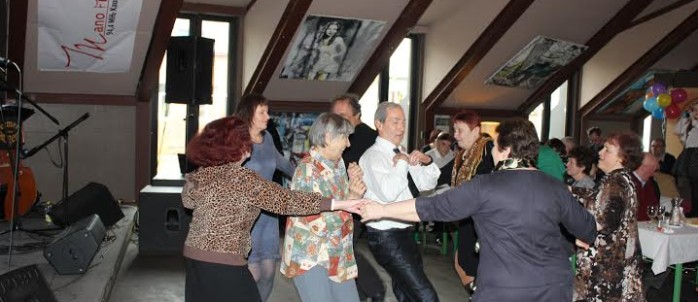
Kaunas Jewish Community members gathered at the Punto Jazz café to celebrate the last day of Passover. They were treated to a surprise concert by the family klezmer group Klezmer Klangen, reportedly performing their first concert in Kaunas ever. The crowd seemed to love them and there was much dancing. The band performed tight songs in Yiddish with good choreography down to their smallest member, four-year-old Ramunė. While the klezmer musicians took breaks, celebrants took to the stage to compete in now-traditional Passover skits. The last day of Passover coincided with the birthday celebration of Veronika Pečkienė who wasn’t forgotten amid the general party-going and was plied with flowers and birthday greetings.

An Unforgettable Concert

foto (48)

Dutch pianist Marcel Worms performed melodies by interwar Jewish composers at the Lithuanian Jewish Community on April 29, in the same hall where he played 11 years ago. Most of the composers were murdered in the Holocaust, and Worms said if their music was forgotten, they would die a second death.

Works by Rosy Wertheim, Erwin Schulhoff, Gideon Klein, Alexander Tansman, Szymon Laks, Anatolijus Šenderovas, Leo Smit, Dick Kattenburg and George Gershwin were performed. Anatolijus Šenderovas’s “Sonatina” lent a local flavor to the concert.

Concert-goers were got more than just wonderful music: the children of Dutch diplomat Jan Zwartendijk attended. Robert Zwartendijk and Edith Jes spoke about their father who helped rescue at least 2,000 Jews in Lithuania by issuing visas for the Dutch possession of Curaçao, a somewhat fictitious “end-visa” the Soviets demanded of holders of Sugihara’s transit visas through Japan. He and his sister Edith were glad their father was being commemorated and also happy to have a chance to visit Kaunas again, where the Zwartendijk family lived and which Edith, then 13, remembers well.