
Litvaks

Old Prescriptions from the Interwar Period Recall the Kukliansky Pharmacy in Veisiejai

Receptas2

Danutė Selčinskaja, director of the Rescuers and Commemoration Department of the Vilna Gaon State Jewish Museum, has sent us an image of a new item worthy of display at a museum: prescriptions from the Kukliansky Pharmacy which operated in the period between the wars. This pharmacy, the only one in Veisiejai, Lithuania, operated right up until the Holocaust. The pharmacists managed to escape and were rescued by people from Sventijanskas. At the present time there is a Veisiejai Regional History Museum operating in Veisiejai. Museum director Regina Kaveckienė scanned two new items, prescriptions, which were brought to the museum by a relative of an elderly female pharmacist from the town who is no longer alive.

Danutė Selčinskaja sent the regional history museum the Vilna Gaon museum’s mobile exhibit “The Rescued Child Tells the Story…” which she created. This includes a film about the rescue of the Kukliansky family. The regional history museum shows the film to students every year. A young woman from the Kapčiamiestis School Museum who lives with her parents in Sventijanskas said everyone there had already seen the film, which is being passed around as a DVD from person to person, and it has caused a great deal of excitement there. The people understand what happened and recognize the people and places portrayed in the film.

Businessman with Litvak Roots Has Successful Chain of Restaurants

Brozinas PA

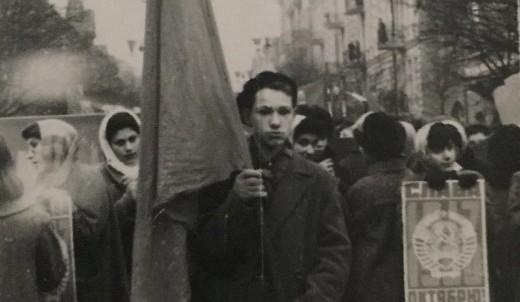
The first time South African Litvak Robert Brozin came to Lithuania, he was most surprised by the fact it was in color. It sounds funny, one of the creators of the large restaurant chain Nando’s says, but that his first impression of the land of all four of his grandparents because he’d only seen Lithuania in black and white photographs before. When he cam back again for the fifth time in late March, he already had a number of interests going here, both business and representing the Litvak community in South Africa.

“Most Jews in South Africa have roots in Lithuania. There is a total of about 80,000 Jews here and I think about 95 percent have Lithuanian roots. It’s an interesting fact that the Jewish community in South Africa is very tight-knit, and the majority of Jews who have remained living in South Africa marry Jews from the community. My son is also married to a Litvak girl. We still maintain many Litvak traditions in the family and even have dishes from Lithuania…”

Read more in Lithuanian here.

Bagel Shop Café Purim Holiday Schedule

purim3

The kosher Bagel Shop Café of the Lithuanian Jewish Community is in full gear getting ready for the Purim holiday. There are several new pastry items the chefs there have cooked up, including the “red velvet” pastry taking the Jewish culinary internet by storm. Their special hamantashen recipe passed down through the generations uses yeast as well.

Senior chef Riva Portnaja says her family calls hamantashen “omentashen,” and that her mother always put yeast in the dough. According to her, Litvak hamantashen only contain poppy-seed fillings, and the triangular pastry is made so that is almost closed.

Post-War Vilnius: Legless Beggars, Bread Lines and Accusations of Murdering Christ

SamYosman

Mažoji leidykla publishing house, 2016

I am a post-war child. I was born in Vilnius October 8, 1946. I remember my life from about the age of four. Lithuanians, Jews (including Jews from the ghetto), Poles and Russians, we lived in an old building at the intersection of K. Giedrio and J. Garelio streets (now Šv. Ignoto and Dominikonų streets). Above us there lived Mr. Valteris, a former translator for the Gestapo. No one spoke to him about that, but everyone knew he had collaborated with the Germans.

For those living behind the iron curtain, for BBC radio listeners, Sam Yossman, who did the popular program Babushkin Sunduk (Grandmother’s Chest) and Perekati Pole (Tumbleweed), was better known by the pseudonym Sam Jones. Born and raised in Soviet Lithuania, Yossman decided after many years to record his memories in the book “Šaltojo karo samdinys” (Cold War Hired Hand).

Read more in Lithuanian here.

Stories about Rabbis: Exhibit of Pastel Work

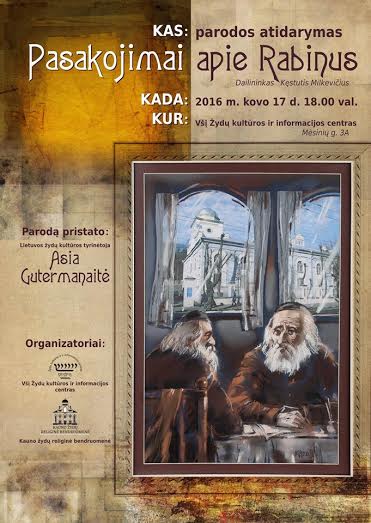
The Jewish Culture and Information Center’s Shofar Gallery (Mėsinių street no. 3, Vilnius) presented an exhibit of pastel works by Kęstutis Milkevičius called “Stories about Rabbis” March 17.

pAroda-rabinai

The collection on exhibit was formed at the initiative of the leader of the Kaunas Jewish religious community, Maushe Bairak. Artist Raimundas Majauskas commented on Milkevičius’s artworks:

“The old portraits of wise Jewish rabbis are suffused with time and come down to us from a modified Rembrandtesque chromatic environment. The artist is a master of line and composition. The individualized, artistically realistic works betraying a deep aesthetic foundation are part of the cultural and communal life of Kaunas and Lithuania.”

Litvak cultural heritage scholar Asia Gutermanaitė opened the exhibit. The opening including stories and interesting tales about rabbis. The exhibit will run until April 12.

Vytautas Mikuličius, Journalist and Son of Righteous Gentiles, Has Died

With deep sadness we note the passing of journalist Vytautas Mikuličius who with his parents Petras and Ona rescued Julija Remigolskytė-Flier, now a Canadian violinist, during World War II.

Petras and Ona lived with their three children at Minkovskių street no. 110 in Kaunas. Jews from the Kaunas ghetto were used as forced labor near their home, including Klara Gelman. During the winter of 1942-1943 Klara asked Ona and Petras to save her two-year-old daughter Julija. Petras and Ona took her in and raised her as their won. The little girl quickly learned to speak Lithuanian, and her foster parents told the neighbors she was the daughter of Ona’s dead sister.

From Vytautas Mikuličius’s recollections:

Our family had many friends and acquaintances. Our mother was very involved with the women in the area especially. Russians, Jews, Poles… When the Nazis put their regime in place, mother didn’t drop her girl friends, but visits became brief and secret.

Rina Zak: “Markas Petuchauskas: Theater in the Shadow of Death”

Publisher, translator and editor Rina Zak [Zhak, Žak, Рина Жак], one of the iconic figures in Russian-speaking Israel, is also well known outside of the biggest linguistic community in the country. Rina also engages in educational activities, in the everyday activities of the Geographical Society of Israel and in the periodical press, writing in Isrageo magazine, as well as on facebook, where she posts little-known passages from Jewish and Israeli history. Rina Zak was born in Kaunas and was graduated from the Journalism Faculty of Vilnius University.

We are pleased to offer for your consideration a passage by Rina Zak:

Markas Petuchauskas: Theater in the Shadow of Death

In 2015 he published a book of memoirs of his time as a young prisoner of the Vilnius ghetto called “Price of Concord.”

Strange as it might seem to some, the ghetto was a venue for musical performances and festivals, literary competitions and art exhibitions. There clinics and hospitals, schools and kindergartens, a youth club and a café. There were plans for a museum, a publishing operation… but these ideas were not destined to happen. The Vilnius ghetto lasted only two years, and its population of about 40 thousand people was almost completely exterminated.

Serious Work Planned at Old Jewish Cemetery in Žaliakalnis District of Kaunas

Posėdis kaune

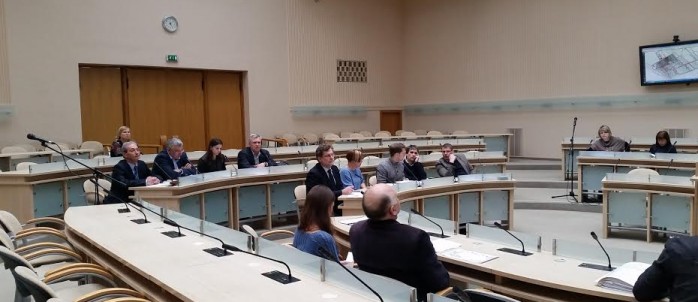
A working group for refurbishing the old Jewish cemetery in Žaliakalnis neighborhood of Kaunas met March 3. Under an agreement with the municipal administration, experts from the public agency Registrų centras [Registry Center] performed a survey and inventory of the Žaliakalnis Jewish cemetery. All gravestones were counted (5,808) and every grave was assigned a number and its exact location determined. This work took about 2 months and cost 8,000 euros. It was financed by the city of Kaunas. The work performed so far will allow the next steps to be taken: to photograph each grave, to read and translate headstone inscriptions, to identify the graves (to determine the identity of the people buried) and to create a virtual database. After that’s done, drafting and implementing a technical plan for refurbishing the cemetery will be possible. So far there is no funding for these tasks, so the plan is to approach different foundations, and the idea of recruiting volunteers for grave identification is also being considered.

The municipality is preparing a territorial planning document (designating the plot of land) for the cemetery and is planning to set up surveillance cameras at cemeteries this spring. The cemetery is always mowed and maintained.

Lithuanian Jewish Community Statement on the March 11 Holiday and Neo-Nazi Chants

0311

March 4, 2016, No. 197

To:

the honorable Algirdas Butkevičius
Government of the Republic of Lithuania
Gedimino prospect 11
Vilnius 01103

the honorable Remigijus Šimašius
Konstitucijos prospect 3
LT-09601 Vilnius

the honorable Visvaldas Matijošaitis
Laisves alley 96
LT-44251 Kaunas

cc:

Chancellory of the President of the Republic of Lithuania
S. Daukanto square 3
LT-01122 Vilnius

Statement
March 4, 2016
Vilnius

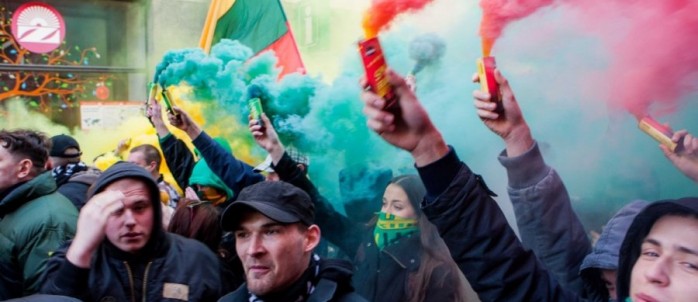
The Lithuanian Jewish Community proposes the Government of the Republic of Lithuania and the municipal governments of the cities of Vilnius and Kaunas take all possible measures to ensure the holiday to mark the 26th anniversary of the restoration of the Lithuanian state does not include neo-Nazi chants, marches and symbols and events of a similar nature.

We would like to underline the importance of this holiday for all of Lithuania’s citizens, including the Litvak community in Lithuania with its unique and long-standing traditions, and the importance of fostering in the international arena an image of Lithuania as a modern state based on democratic principles and celebrating a tradition of multiculturalism over many centuries.

We would like to remind you of the march held by the Union of Patriotic Youth and the Lithuanian National center on March 11, 2015 with permission from the Vilnius municipality. This march featured fascist and racist symbols and chants and slogans promoting ideas of segregation.

The Government and the municipal institutions should continue to make efforts so that neo-Nazi ideas do not become acceptable in Lithuanian society and especially that they shouldn’t be propagated under cover of state holidays and through manipulation of the concept of patriotism.

Sincerely,

Faina Kukliansky
chairwoman
Lithuanian Jewish Community

Meeting the New Rabbis

Rebbe3

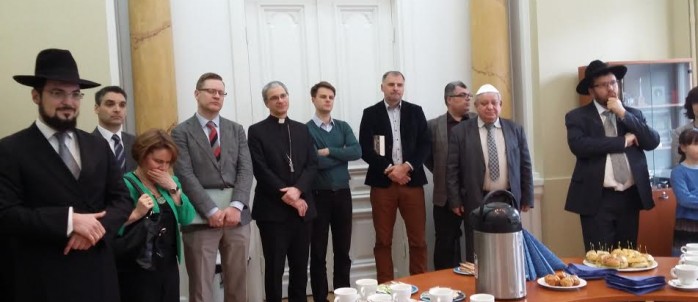
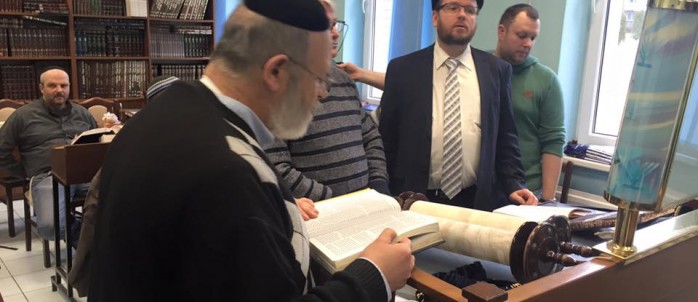
A meeting of the newly appointed rabbis Kalev Krelin and Shimshon Daniel Izakson (Isaacson) was held at the Lithuanian Jewish Community February 29. Participants included representatives of foreign embassies in Vilnius, the Lithuanian Foreign Ministry, Parliament, the Catholic Church, the Lithuanian Ministry of Culture and the regional Jewish communities in Lithuania. Also attending was Vilnius auxiliary bishop Arūnas Poniškaitis.

Shmuel Levin, director of the Lithuanian Jewish Religious Community, spoke at the meeting and said: “The physical genocide by the Nazis and the spiritual genocide by the Soviet regime destroyed the Jewish communities in Europe and especially in Lithuania. Today Judaism is an exotic religion, not just for the other religions, but for us ourselves. We hope Rabbi Izakson and Rabbi Krelin will be successful in reviving and preserving the Litvak tradition, Jewish spiritual life.”

Lithuanian Jewish Community chairwoman Faina Kukliansky welcomed the new rabbis to the community and wished them every success in their work.

Roseanne Barr to Attend Anti-BDS Conference in Israel

American Jewish comedian Roseanne Barr will participate in a March 28 conference in Jerusalem about fighting the Boycott, Divestment and Sanctions, or BDS, movement. Barr was invited to the conference, which is sponsored by Israeli newspaper Yedioth Ahronoth, because of her involvement with the pro-Israel group Stand With Us, according to Ynet.

“I am proud to stand with Israel during the week of Purim,” Barr said Thursday, according to Ynet. “This is the holiday where Esther mobilized the Jewish community, and because of her strong and unifying stance, she succeeded in overturning the brutal decree to destroy us.”

Barr, who starred in the long-running sitcom “Roseanne,” will tour the country for two weeks prior to the conference and will be accompanied by her mother. The comedian, who frequently posts on Twitter, is an outspoken critic of the pro-Palestinian left and BDS. She has even called Jews who support BDS “anti-Semites” and recently retweeted a post from JTA’s partner website Jewniverse noting that the Bataclan, the Paris nightclub where at least 130 people were killed in a recent attack, was named for a 19th-century Jewish operetta.

Others expected at the conference include Israeli President Reuven Rivlin, several government ministers and Knesset members and Sodastream CEO Daniel Birnbaum.

Full story here.

Užupis Jewish Cemetery to Be Declared National Protected Site

Užupio kapinės

February 26, BNS–An old Jewish cemetery in Vilnius is being put forward to become a state-protected cultural heritage site. Cultural Heritage Department director Diana Varnaitė initiated the process.

“There are surviving headstones there and there should be a certain amount of state protection. The cemetery is already on the registry, it is already a cultural heritage treasure. The registry is so construed that significance determines whether the state or a local government is the party to make a decision and declare sites protected,” Cultural Heritage Department deputy director Algimantas Degutis told BNS. He said state-protected cultural treasures have stricter protection, financing and maintenance requirements.

The move to change the status of the Užupis Jewish cemetery is unconnected with plans by the adjacent funeral home to build a crematorium, Degutis said. The Vilnius municipality is against the crematorium plan.

Documentary Film about Osip Mandelshtam

The Vilnius Jewish Public Library is to host the premiere of a film about the life of the poet Osip Mandelshtam called Sokhani Moyu Rech Navsegda [Save My Speech Forever]. The film was completed in 2015 by director Roman Liberov of Moscow. Its running time is 84 minutes. It is in Russian but the premiere will make Lithuanian subtitles available. This year is the 125th anniversary of the birth famous poet and essayist who worked in the Russian language but who is often described as a Polish Jew. In fact his father, grandfather and great-grandfather allegedly all hailed from Žagarė, Lithuania. Director Liberov is to attend the premiere to be held at the Vilnius Jewish Public Library located at Gedimino prospect no. 24 in Vilnius at 5:30 P.M. on Monday, February 29.

“I’m a BBC Patriot”

Gorbaciovas

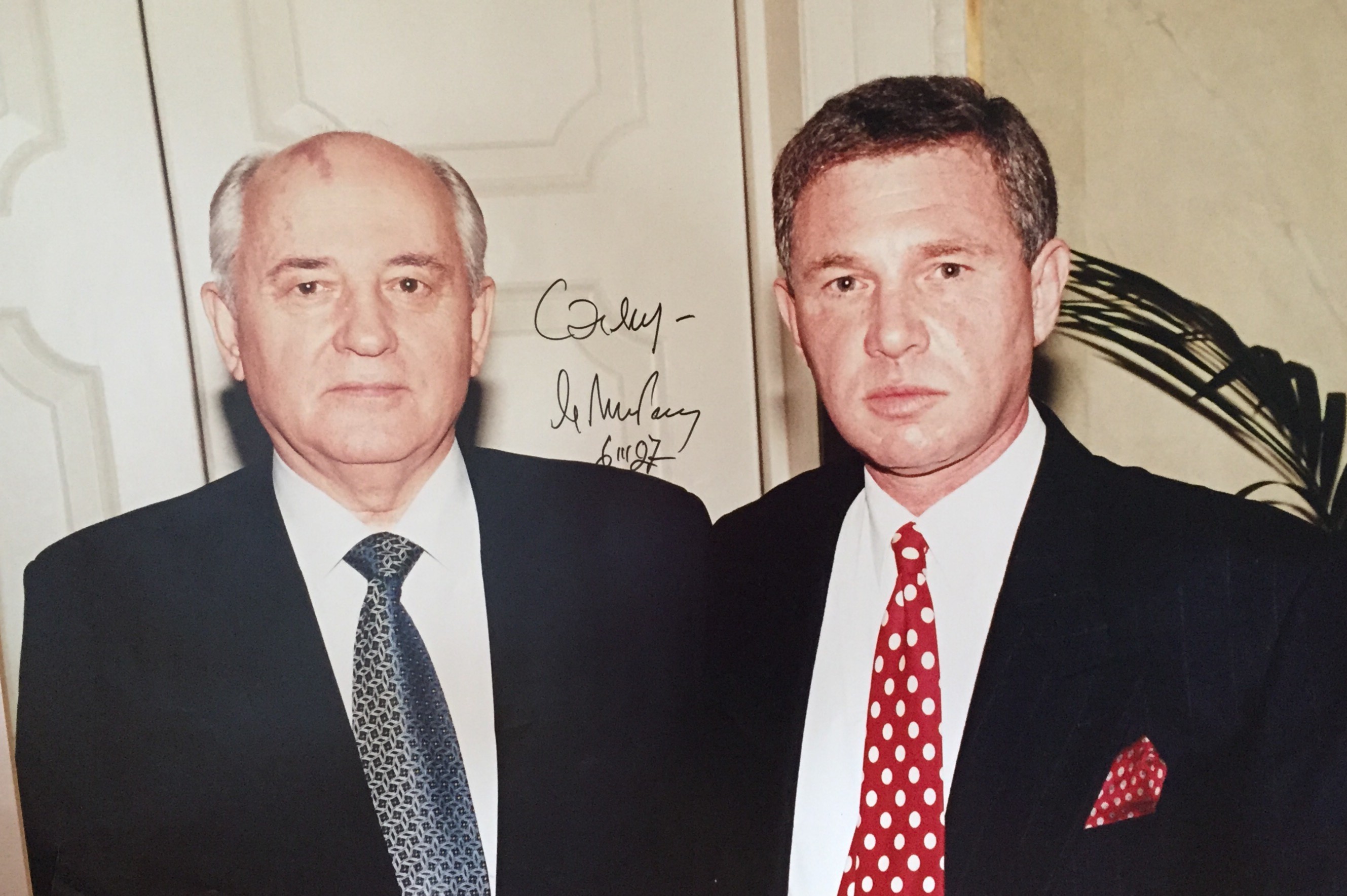
That’s how Sam Yossman described his love for the Beeb at an event to introduce his new autobiography, “Šaltojo Karo Samdinys” [Cold War Hired Hand], co-authored with Inga Liutkevičienė.

Trying to sum up his book, itself only a brief summary of a very rich life, Yossman spoke about his Litvak roots in Vilnius, the post-war period, Jews in the Soviet Union and the eventual success he and his friend Yefim Kybarskis, whose family includes a well-known Litvak doctor, and others had in exiting the USSR for Israel. Kybarskis traveled to Lithuania for several presentations of the new book of which the first was hosted by Lithuania’s Department of Minorities as part of a series called “Litvakai sugrįšta” or “Litvaks return.” Also accompanying Yossman was a team of children and grandchildren and assorted friends from Lithuania and elsewhere. The audience included Department personnel, reporters, interested parties from other Lithuanian institutions and a representative from the embassy of Azerbaijan in Vilnius. A representative expected from the Turkish embassy did not appear. Algis Gurevičius, director of the Jewish Cultural and Information Center in Vilnius, also attended.

Holding up the new book, a much younger Yossman gazed out from the cover, a corporal in the Israeli army in khaki fatigues, binoculars half raised, rifle at the ready. The dashing figure of the young corporal was almost immediately contradicted by Yossman’s own account of his time in Israel: he didn’t like it much. It wasn’t what and his friends had expected, it was too hot for a son of the north and he felt he might as well have gone to Uzbekistan or some Arab country. He stayed long enough to fight for Israel in the Yom Kippur war in 1973, but soon repatriated, to England.

On Jewish Motifs, Historical Facts and Lithuanian Identity in Kristina Sabaliauskaitė’s Work

Kristina Sabaliauskaitė

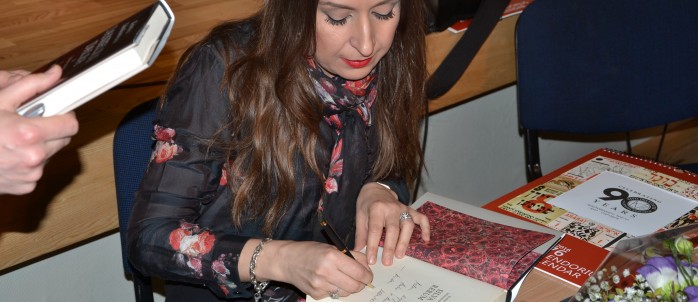
The 24th meeting in the Destinies series of seminars and lectures took place at the Lithuanian Jewish Community on February 17, called “Jewish Motifs in the Works of Writer and Art Historian Dr. Kristina Sabaliauskaitė. Teacher and essayist Vytautas Toleikis moderated the meeting and LJC deputy chairwoman Maša Grodnikienė, the organizer, served as MC and introduced Sabaliauskaitė in person to the audience, noting she was very popular outside of Lithuania as well in Poland and Latvia.

Moderator Toleikis addressed the full hall saying “Kristina has returned Lithuania’s historical memory. She brought back 200 years of history which, due to [historian] Šapoka’s paradigm were lost to Lithuanian consciousness. ‘Silva Rerum’ [‘Forest of Things’ trilogy by Kristina Sabaliauskaitė, 2008, 2011 and 2014] is for us an unexpected historical good fortune, as if the nation had won the lottery. We are lucky Kristina has brought back centuries of history. The author’s memory is not selective, she writes about everything in the past, about Poles and Jews as if they were her own people. This is the attitude of a 21st-century person, it could not be otherwise.”

The conversation during the Destinies meeting revolved around Jewish characters and how the figure of the Jew came to be included in Kristina Sabaliauskaitė’s works in a way very different from the more common portrayal found in Lithuanian literature. Sabaliauskaitė chose the elite person of the doctor Aaron Gordon.

How Jews Were Exterminated in Molėtai: Locked in the Synagogue, Held without Food or Water

Moletų žydai, nužudyti 1941

Excerpts from the book “Molėtai 625 – žmonės, istorija, gamta: [Molėtai 625: People, History, Nature] by Vaidotas Žukas

According to the Lithuanian census of 1923, Molėtai had a population of 1,772, of whom 1,343 were Jews.

Even after Jewish autonomy was abolished in 1926, a very functional Jewish education system remained in place. The Lithuanian state had an interest in having Jews learn Lithuanian as well as Yiddish and Hebrew in order distance them from the influence of the Russian and German languages. The founding of the Lithuanian state allowed Jewish associations and welfare organizations to flourish.

There was a section of the Union of Jewish Soldiers in Molėtai as well where Jewish soldiers who fought for the reestablishment of Lithuanian independence operated. The union supported Jewish interests and was engaged in spreading Lithuanian patriotism among Jews. Also operating in Molėtai were the Palestine Foundation Fund [Keren ha’Yesod] and a local department of the Jewish National Fund [Keren Kayemet LeYisrael]. When the USSR occupied Lithuania in 1940, most Jewish associations, unions and organizations were shut down.

Rabbi Kalev Krelin Visits Klaipėda Jewish Community

Klaipeda

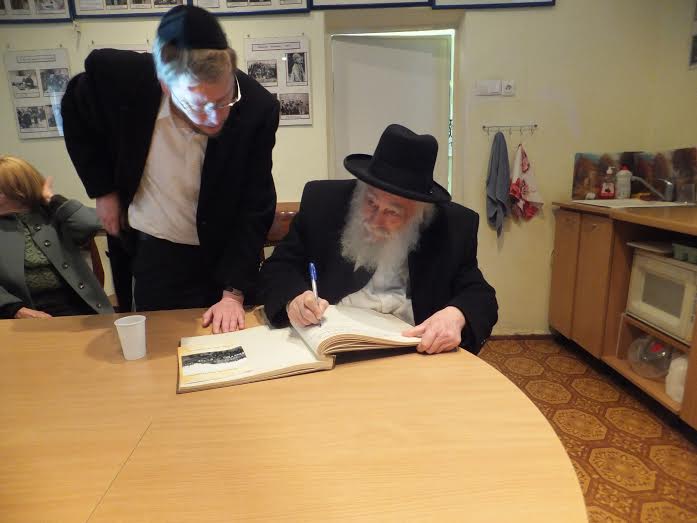
Rabbi Kalev Krelin, appointed the Gaon’s successor by the Lithuanian Jewish Community and himself a rabbi of the Litvak Mitnagdim persuasion, began his acquaintance with the regional Lithuanian Jewish communities with a trip to Klaipėda. Klaipėda Jewish Community chairman Feliks Puzemskij presented the rabbi to the audience and called for a continuation of work begun in Lithuania. The rabbi told them about himself and learned of the aspirations and problems in the small Jewish community. Rabbi Krelin shared his insights and later prayed with the congregation. The rabbi left a good impression upon the entire community with the clear explanations of his thinking he provided and his patent goodwill.

Marijus Jacovskis: “Every New Creations Begins in Existential Terror”

M.Jacovskis
Bernardinai.lt Austėja Mikuckytė

Scenographer Marijus Jacovskis’s worktable is covered with designs and drawing implements. He says the fall is a very productive time for him. The atmosphere of creative ferment is palpable in the artist’s studio. Jacovskis talks about his taste for drama, memorable works, relationships with directors and about authorities in the field, and gives an assessment of his own artistic tendencies.

How did you decide to study scenography?

It’s connected with family, of course. My father and aunt graduated from the Art Academy. It was almost a given I would study there, too. There was a moment, though, when I was thinking I would study painting, but I changed my mind at the last moment.

On the one hand, I realized painting is not a profession, but something intangible, something impossible to learn formally. On the other hand, painting is a very complex and complicated activity. I realized painting was too serious for me. I thought, well, I can paint without a studio just as well, but I didn’t become a painter. I only work in the theater.

Full interview in Lithuanian here.
bbb

Delegation from Argentine Rabbinate Visits Panevėžys Jewish Community

Panevez vasaris

Rabbi Shmuel Arieh Levin from Argentina visited the Panevėžys Jewish Community on February 15. He arrived with eight members of his religious community. The purpose of the visit was for the delegation to observe with their own eyes the state of the Jewish community in Panevėžys, to learn more about their history, to learn about the world-renowned yeshiva and to find out more about the founder of the Ponevezh yeshiva, Rabbi Yosef Shlomo Kahaneman, the Ponovezher Rov and chief rabbi and former member of the Lithuanian parliament who founded in 1919 the yeshiva where 500 students from Europe studied. Rabbi Kahaneman and his eldest son, who had diplomatic status, left for America in 1940, and during World War II moved the Ponevezh yeshiva to, or reëstablished it in Bene Berak (Bnei Brak, with a sister institution in Ashdod), Israel. Rabbi Levin was graduated from the Ponevezh yeshiva in Israel and personally knew Rabbi Kahaneman and his son Elias Kahaneman. Today the world-famous yeshiva where more than 1,000 students study is led by his grandson, Rabbi Eliezer Kahaneman (Cohenman).

Lithuanian Jews, Fostering Lithuanian Independence since 1918. An excerpt from Vilius Kavaliauskas’s book

sarasas2
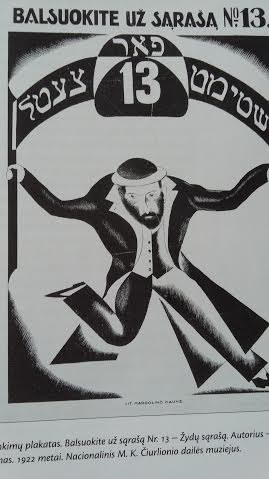
Election poster. Vote for List Number 13–the Jewish List.

A translated excerpt from Vilius Kavaliauskas’s book “Pažadėtoji žemė – Lietuva,” or “Lithuania, the Promised Land”:

After independence was reestablished and the Lithuanian state was established on democratic principles on February 16, 1918, one of the most important events in Lithuanian Jewish history was the Jewish Affairs Institute established by the independent state in 1919, which in essence performed the functions of a government ministry. Dr. Maksas Soloveičikas became minister without portfolio.

From 1918 to 1926 Lithuania’s Jewish population successfully involved themselves in the country’s governance structures and actively ran for posts in elections to municipal bodies and the parliament of the Republic of Lithuania. There were a number of Jewish members of the ministerial cabinet of the Lithuanian government as well: minister without portfolio for Jewish affairs [sic] Jokūbas Vygodskis, Maksas Soloveičikas, Bernardas Fridmanas (from Panevėžys, judge at the Panevėžys District Court in 1925) and Simonas Rozenbaumas.

Doctor of philosophy Maksas Soloveičikas (1883-1957) was exceptional for his erudition and education. He studied in Petropol [Petrograd, Leningrad, Saint Petersburg. etc.], Germany and Switzerland. He was an active member of the Zionist movement and a Jewish press correspondent. He spoke Russian with his fellow ministers. In 1921 he was elected to the World Zionist executive committee in London.

The cabinet of ministers tolerated the Jewish community’s aspiration to turn the ministry into a political institution while the Vilnius question remained unsolved. When the Christian democrats came to power in 1924, the accreditation for the ministry was withdrawn and the ministry ceased to exist.