History of the Jews in Lithuania

Not in Our Name

by Grant Arthur Gochin

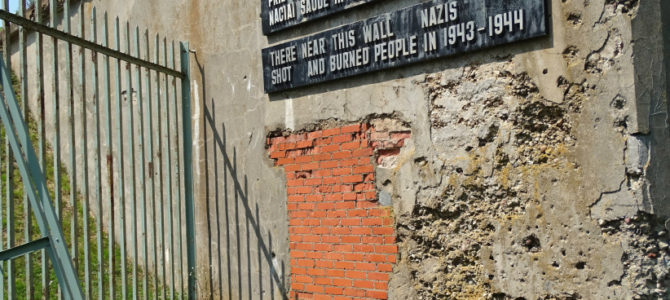
The first mass murders of Jews in the Holocaust began in Lithuania. Germany had not yet decided to annihilate the Jews of Europe; they had put forth the idea to relocate Jews to Madagascar or Uganda, but the war made this plan impossible. Lithuania proved to the Nazis that there was indeed an alternative.

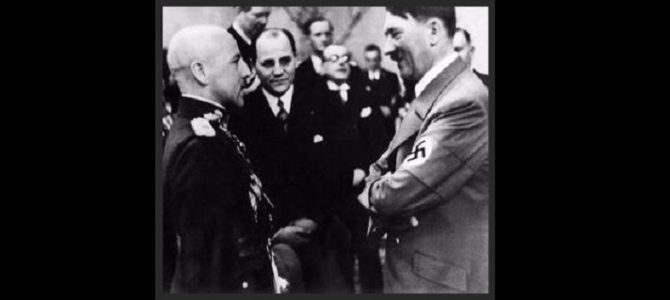
Between occupations by Russia and Germany in 1941, Lithuania was governed by an interim Provisional Government, led by Prime Minister Juozas Ambrazevičius Brazaitis. The Lithuanian Provisional Government displayed to Nazis how easily a population could be enticed into perpetrating genocide.

Upon Nazi arrival, Einsatzkommando 2 of the German Security Police asserted charge of murders of Jews. Einsatzkommando 2 reported the murder of 114,856 Lithuanian Jews as early as December 1, 1941. One hundred and thirty-nine Nazi personnel, of whom forty-four were secretaries and drivers, and ninety-five were murderers, directed this slaughter. Local Lithuanians enthusiastically and voluntarily conducted the looting, raping, torture, enslavement and murders of their Jewish neighbors. Thereafter, Germany introduce the Final Solution of the Jewish problem in January 1942.

Full text here.

Presentation by Joachim Tauber at Holocaust Property Restitution Conference

Presentation by Joachim Tauber at Holocaust Property Restitution Conference

Among other notables, renowned German historian Joachim Trauber delivered a presentation at the Goodwill Foundation’s conference on Jewish property restitution held at the Lithuanian Jewish Community this week. Professor Trauber is a lecturer at the Institute for the Culture and History of the Germans in Northeast Europe of the Nordost-Institut at the University of Hamburg in Lüneburg and is a member of Lithuania’s International Commission for Assessing the Crimes of the Nazi and Communist Occupational Regimes in Lithuania as well as of similar commissions in Latvia and elsewhere. He is the author of number books and academic articles about the Holocaust in Lithuania and Northeast Europe. We are please to be able to post a copy of the slideshow presentation he gave Monday for those who were unable to attend the conference in Vilnius.

holocaust in lithuania 1941-1944_6
Presentation by International Law Expert Dirk Haupt at Holocaust Restitution Conference

Presentation by International Law Expert Dirk Haupt at Holocaust Restitution Conference

International law expert Dirk Haupt of Lund University in Sweden delivered a presentation at the conference held at the Lithuanian Jewish Community on December 2 organized by the Goodwill Foundation and dedicated to discussing Jewish property restitution in Lithuania and Europe. We are pleased to be able to share his slideshow presentation below with those who were unable to attend.

haupt dirk roland - presentation 2019-12-02 compensating for nazi injustice and indemnifying jewish victims - the german experience2
EJC President Kantor Praises French Parliament Resolution to Fight Anti-Semitism

EJC President Kantor Praises French Parliament Resolution to Fight Anti-Semitism

Wednesday, December 4, 2019–European Jewish Congress president Dr. Moshe Kantor praised the French National Assembly’s decision adopting the IHRA working definition of anti-Semitism and recognizing explicitly that this includes hatred against the state of Israel as a Jewish state.

“We applaud this decision because it is logical and important,” Dr. Kantor said. “Anti-Zionism is almost always just a mask for hatred of Jews and Jewish collectivity and is just the most modern manifestation of the oldest hatred.”

“In the past, anti-Semites used religious, racial and ethnic slurs, and now they use national. Anti-Zionists co-opt all the worst antisemitic libels and motifs throughout history against Jews and merely reapply them to the Jewish state.”

The motion passed with 154 in favor and 72 opposed in the parliament’s lower house. It was proposed by lawmaker Sylvain Maillard of La Republique en Marche, president Emmanuel Macron’s centrist party.

LJC Hosts Regional Conference on Holocaust Restitution

LJC Hosts Regional Conference on Holocaust Restitution

Marking the 10th anniversary of the Terezin declaration, the Lithuanian Jewish Community hosted a regional conference on Holocaust restitution issues Monday.

The conference covered experience of communities in other European countries in the return of Jewish property stolen during the Holocaust. Renowned Holocaust historians and others gave presentations and spoke on the past and goals and tasks for the future.

Rabbi Andrew Baker, director of international Jewish affairs at the American Jewish Committee, knows the issues in Lithuania well. He was a participant in Lithuania’s road towards restitution and the small country’s historic decision in 2011 to pay compensation worth 37 million euros to be used to support Jewish community life. The Goodwill Foundation was formed then to manage these monies. Baker spoke about class-actions suits brought by attorneys representing Jews in America. He noted Austria and France have solved the problem of property restitution. Austria has paid out compensation for pre-war property and France has done the same.

Regimes Change, but Cowards and Brown-Nosers Don’t

Regimes Change, but Cowards and Brown-Nosers Don’t

by Arkadijus Vinokuras

The epic of the presentation of the play Mūsiškiai [Our People] by the Juozas Miltinis Theater in Panevėžys, Lithuania, just demonstrates once again that the cowardly and obsequious appear to travel through time: they stay exactly the same under all systems of government.

The possession of these character traits turns their owner into the worst kind of tool in the hands of any kind of government. It doesn’t matter if it’s a Nazi, Communist or democratic regime. In all of them, the coward becomes an ultra-patriot ready to carry out any order by the government or mob, for example, by banning a play someone doesn’t like without even viewing it beforehand.

Who will take responsibility for the persecution of theater art director Andrius Jevsejevas? Who will take responsibility for the critique of Polish playwright Michal Walczak by someone who either did read the play or did not, but in any case didn’t understand it? Who will apologize to the highly talented young actors who performed their roles flawlessly? Who at the theater will take responsibility for the idiotic requirement in the contract with the playwright that his work must have no connection with Rūta Vanagaitė’s book Mūsiškiai?

The wild spirit of the Soviet Party political enforcers roams the perfomance spaces. It would appear that, out of fear of the street or out of fear of some sorts of bureaucrats, acting theater director A. Venckus didn’t even welcome the creators of the play during the premiere. Well, cowards shouldn’t become theater directors, because theater is for the courageous. Although it takes real civic courage to express one’s opinion in a dictatorship, this is the basic norm in the frame of democratic government.

Goodwill Foundation Conference on Holocaust Restitution Update

Goodwill Foundation Conference on Holocaust Restitution Update

Press Release (updated)

Regional Consultation about Restitution of Holocaust Era Assets

Next week regional consultation regarding restitution of Holocaust era assets will be held in Vilnius. The experiences of returning assets of European countries will be reviewed and well-known historians will present their research about what happened in Lithuanian during WWII.

The conference is dedicated to commemorate the 10th anniversary of Terezin declaration. In 2009 47 countries, Lithuania among them, has signed the document in Prague and announced a program of activities directed at securing assistance, compensation and commemoration of Nazi victims’ memory. It is noteworthy the countries stressed the importance of ensuring communal and private property restitution.

“Noting the importance of restituting communal and individual immovable property that belonged to the victims of the Holocaust (Shoah) and other victims of Nazi persecution, the Participating States urge that every effort be made to rectify the consequences of wrongful property seizures, such as confiscations, forced sales and sales under duress of property, which were part of the persecution of these innocent people and groups, the vast majority of whom died heirless,” the Terezin declaration says.

Honoring Lithuania’s Jewish Soldiers in Kaunas

Honoring Lithuania’s Jewish Soldiers in Kaunas

by Dr. Raimundas Kaminskas

A ceremony to honor Jewish volunteer soldiers was held at the Žaliakalnis Jewish cemetery in the Gričiupis aldermanship in the Kaunas region on November 23. Kaunas Jewish Community chairman Gercas Žakas recalled for the audience historic Jewish-Lithuanian relations and the contribution Jewish Lithuanian soldiers made in the battles for Lithuanian independence in 1919 and 1920 and later in the national Lithuanian military.

Director of the Kovo 11-osios Street Community Dr. Raimundas Kaminskas shared his thoughts on the civic-minded and patriotic Jewish soldiers in the period of Lithuanian independence from 1918 to 1940 and presented the chairman of the Kaunas Jewish Community a medal commemorating the Union of Jewish Volunteer Soldiers Who Served in the Liberation of Lithuania.

After the commemoration the audience moved to the St. Antthony of Padua Church where the mortal remains of church builder, rescuer of Jews and Lithuanian military volunteer father Juozas Želvys (1899-1985) are interred. The Žaliakalnis Jewish cemetery was established in 1861 and operated until 1952. The Lithuanian Cultural Heritage Department reports among the burials of many noted public, cultural, political and religious figures there, 14 of the graves are those of Lithuanian Jewish soldiers who perished in the battles for Lithuanian independence.

Photographic Facts: Interwar Newspaper Verslas (“Business”) Heavily Fertilized Ground for Events of 1941

Photographic Facts: Interwar Newspaper Verslas (“Business”) Heavily Fertilized Ground for Events of 1941

by Pinchos Fridberg and Polina Pailis

Slogan “Lithuania for Lithuanians”

[Photo: banner: “Lithuania for Lithuanians,” inscription: “The Pavasarininkai [literally “spring workers”] carried these kinds of banners and the coat of arms of Lithuanian businessmen through the streets of Kaunas during their Anniversary Congress.”]

This slogan didn’t just appear yesterday or the day before. We see it in the photograph over 80 years ago. And it wasn’t just in some small rural newspaper, but on the first page of the well-known weekly Verslas (“Business”) on July 7, 1938, published by the Union of Lithuanian Merchants, Industrialists and Tradesmen, 1932-1940, Kaunas.

We would like to point out the banners featuring hatred of other ethnic groups were carried by religious youth. The Pavasarininkai were members of the Federation of Lithuanian Catholic Youth, of whom there were about 100,000 in 1940.

The Columns of Gediminas: Symbol of Lithuanian Statehood

The Columns of Gediminas: Symbol of Lithuanian Statehood

Seven hundred years ago the Lithuanian grand duke Gediminas used this symbol on letters inviting Jews to come settle in Lithuania and contribute to the creation of the state.

Over many centuries Lithuanian Jews–Litvaks–considered themselves citizens of the Grand Duchy of Lithuania and worked to improve the state in common with ethnic Lithuanians and the other peoples who lived here.

In 1919 and 1920 Litvak members of the Union for Liberating Independent Lithuania rose up under this banner to fight for the freedom of their country and many of them perished fighting under the Lithuanian-Jewish battle flag decorated with the columns of Gediminas.

Kaunas Synagogue Vandalized with Heil Hitler Graffiti

Kaunas Synagogue Vandalized with Heil Hitler Graffiti

The entrance to the Choral Synagogue in Kaunas was vandalized with a Heil Hitler inscription in black paint. The desecration was discovered Saturday morning and was likely committed during the foregoing night.

Lithuanian Jewish Community chairwoman Faina Kukliansky says this anti-Semitic attack against the synagogue in Kaunas confirms attacks on Jews are continuing. There have been five in just the last few months in Vilnius, Kaunas and Šiauliai. Despite criminal investigations, no one has been brought to account so far.

Police spokesman Ramūnas Matonis told BNS said the incidents were undoubtedly anti-Semitic. He said investigations have been started on sowing ethnic discord.

LJC chairwoman Kukliansky said the attacks coming just before important Lithuanian Jewish events were especially surprising.

Goodwill Foundation Announcement on Holocaust Restitution

November 22, 2019

Press Release

Regional Consultation on Restitution of Holocaust-Era Assets

At the beginning of December a regional conference on the restitution of Holocaust-era assets will be held in Vilnius. The experiences of returning assets of European countries will be reviewed and well-known historians will present their research about what happened in Lithuania during WWII.

The conference is dedicated to commemorate the 10th anniversary of Terezin declaration. In 2009, 47 countries, Lithuania among them, signed the document in Praha and announced a program of activities directed at securing assistance, compensation and commemoration of the memory of the victims of the Nazis. It’s noteworthy these countries stressed the importance of ensuring communal and individual property restitution.

“Noting the importance of restituting communal and individual immovable property that belonged to the victims of the Holocaust (Shoah) and other victims of Nazi persecution, the Participating States urge that every effort be made to rectify the consequences of wrongful property seizures, such as confiscations, forced sales and sales under duress of property, which were part of the persecution of these innocent people and groups, the vast majority of whom died heirless,” the Terezin declaration says.

Launch of Book “Gaon Code”

Launch of Book “Gaon Code”

On Wednesday, November 20, the Lithuanian Jewish Community hosted the launch of a new book called the Gaon Code, a slightly dramatized retelling of Litvak history in Lithuania and abroad.

LJC chairwoman Faina Kukliansky introduced author Rytis Sabas and journalist and historian Rimvydas Valatka, who spoke about his media colleague and the skepticism he felt when Sabas told him he had written a book. That skepticism soon turned to enthusiasm as Valatka, who says he isn’t a literary critic, was drawn into story, which he called a thriller. Valatka played an interview he had conducted with Sabas for LNK television.

Rytis Sabas spoke briefly before presenting a slideshow on the overhead with diverse images of Jewish Lithuania. He then spoke about the book, saying it was 80% historical fact.

During questions Sabas said he had named the book Gaon Code intentionally with Dan Brown’s Da Vinci Code in mind. He said he initially wanted to write a book which would be interesting to an international audience, but after he learned more about Litvak history, he realized Lithuanians needed to learn this part of their country’s own incredible history.

Photography by Dovilė Abromavičiutė

Presentation of the Gaon Code

Presentation of the Gaon Code

You’re invited to a presentation of the adventure novel the Gaon Code at 6:00 P.M. on November 20 at the Lithuanian Jewish Community in Vilnius. The novel stems from a Lithuanian man’s desire to demonstrate the significance of Litvaks in Lithuanian and world history. The book presents in an easily readable form numerous facts and stories about the Jewish communities of Vilnius, Želva and Ukmergė and about their contributions to learning and history.

Author Rytis Sabas and Lithuanian historian and journalist Rimvydas Valatka will discuss the book and its inspiration.

Rytis Sabas is also a journalist from Vilnius interested in history. He has travelled extensively including in Bosnia. Kosovo, Afghanistan and Iraq.

The book is an adventure including a plethora of historical fact and some light fiction. While it attempts to show the grandeur and influence of the Vilna Gaon, it’s intended more to showcase Litvak history and the Litvak heritage. It’s aimed at outsiders, readers who might not know much about Lithuanian Jews.

The book is written in Lithuanian and the presentation will be conducted in Lithuanian. For more information, call 8 678 81 514.

Survey of Anti-Semitism in the European Union

Dear friends and colleagues,

Tomorrow, 81 years ago, the Nazi regime ordered a concentrated pogrom against Jewish communities. At least 91 Jews were murdered, hundreds of synagogues were burnt down and thousands of Jewish-owned businesses and houses were looted. Krytasllnacht or the Night of Broken Glass would be remembered as the beginning of the Holocaust and the extermination of six million Jews. More than 75 years after the Holocaust some prefer to think anti-Semitism has been banished from our societies, yet as we witness again and again violence and murder inspired by a hatred of Jews, we can see that anti-Semitism remains deeply ingrained in Europe. The anti-Semitic attack last month on the synagogue in Halle, Germany, once again reminded us anti-Semitism remains a threat to our European values and that we must remember we have responsibilities arising from our shared history.

City of Vilnius Again Promises to Remove School from Great Synagogue Site

City of Vilnius Again Promises to Remove School from Great Synagogue Site

The newspaper Kauno Diena reports the Vilnius city council has voted to raze and remove a brick school building from the Great Synagogue archaeological site in the Lithuanian capital.

The school built 55 years ago hasn’t been in operation for several years but is being rented by 10 renters, following an earlier announcement by the city of Vilnius it would be completely removed. The city’s promise of the imminent removal of the school has become a standing joke among the team of international archaeologists who have been conducting digs every summer there for five years.

Lithuanian news report here.

Vil, Nor Goen: Lithuanian Mint to Issue 10 Euro Vilna Gaon Coin

Vil, Nor Goen: Lithuanian Mint to Issue 10 Euro Vilna Gaon Coin

The Bank of Lithuania is planning to issue a coin commemorating the 300th anniversary of the birth of the Vilna Gaon in 2020.

It will bear an inscription in Yiddish and Lithuania, the phrase “Vil, Nor Goen,” which is a Yiddish pun meaning: if you want, you, too can become a genius, or gaon (sounds like “vilner Gaon”). “Gaon” originally comes from the word “genius” in Greek and traditionally refers to the Jewish exarch or spiritual leader in rabbinical Judaism. The Vilna Gaon is the latest and best-known of these figures.

The reverse side of the coin features the Hebrew letter shin, which also means 300. The letter shin is featured in well-known portraits of the Gaon wearing phylacteries. The shin on the phylacteries means that besides the Sabbath, the Jewish year has 300 days devoted to prayer.

Juozas Ambrazevičius-Brazaitis Was Neither Exonerated Nor Rehabilitated

Juozas Ambrazevičius-Brazaitis Was Neither Exonerated Nor Rehabilitated

by Arkadijus Vinokuras

That was what U.S. congressman Brad Sherman told Lithuanian prime minister Saulius Skvernelis in his letter. He asked the prime minister to provide evidence demonstrating Juozas Ambrazevičius-Brazaitis, the head of the Lithuanian Provisional Government in 1941, was rehabilitated and acquitted by the U.S. Congress and the U.S. Immigration and Naturalization Service in 1974. Because this is something the Lithuanian Genocide Center has been claiming for about 10 years now. The congressman said this belief is baseless and contradicts U.S. law.

Sherman in the letter says without any doubt the Genocide Center’s findings on the exoneration and rehabilitation of the former LPG leader has no legal foundation at all. He says an investigation in 1974 was dropped because the man died and there was a lack of documents on Ambrazevičius-Brazaitis’s activities in Holocaust crimes. He said the U.S. Justice Department created a new section in 1979 which with the appearance of new information went on to investigate 60 Nazi criminals who had immigrated to the United States.

Why weren’t documents found? First, in 1944 Juozas Ambrazevičius changed his name to Juozas Brazaitis. In other words, he hid the fact of his change of surname from the U.S. immigration service. Second, the U.S. had a policy after the war of granting immunity to alleged war criminals who had information of use to the Central Intelligence Agency. Third, the section created by the Justice Department in 1979 had a staff of just three people who had no training or experience in investigating Holocaust crimes. Fourth, the Lithuanian archives only opened their doors after the fall of the Soviet empire.

Rule of Law? Not Funny

Rule of Law? Not Funny

by Arkadijus Vinokuras

Today’s Lithuania has utterly failed to give birth to political visionaries prepared to replace society’s erroneous tolerance of legal nihilism. What other explanation could there be for president Gitanas Nausėda’s reluctance to criticize the wanton behavior of the nationalists? It seems the state has been encompassed by legal paralysis again, just as in the “good old days” of the violet criminals [apparently a reference to a pedophilia scandal in Lithuania–translator].

It requires exceptional courage to change society’s flawed tenets. Especially when a portion of citizens consumed by fear still seek strength from Lithuania’s authoritarian past.

Looking back over 30 years of Lithuanian society’s process of becoming freer, one cannot fail to see this process has become stuck. Over these years no Lithuanian political party has been able to look directly without fear at Lithuanian history in the bloody years from 1941 to 1944. No political party has been able to offer an alternative to the pre-war authoritarian nationalism which holds no respect for the principles of the legal state and the rule of law.

Faina Kukliansky Proposes Special Attention Be Paid to Anti-Semitic Crimes

Faina Kukliansky Proposes Special Attention Be Paid to Anti-Semitic Crimes

Lithuanian Jewish Community chairwoman Faina Kukliansky says in light of increasing anti-Semitic graffiti recently the Lithuanian criminal code could be expanded to include acts of vandalism against Jews.

“Anti-Semitism is assigned a special article in the criminal code in Britain. I don’t know whether anyone in Lithuania is making graffiti against Tatars. But the swastika is a thing which recalls the Holocaust during which the community was exterminated. So it’s clear these crimes need to be taken care of. If we are given such exceptional treatment from the anti-Semite camp, then perhaps we should be given special treatment by the state as well,” she said.

Justice minister Elvinas Jankevičius says the criminal code currently allows for bringing to criminal account the sowing of ethnic or religious discord, and that such law would be excessive. Kukliansky told BNS there were five such incidents over the past month in Vilnius, Šiauliai and the Kaunas region, with swastikas, crossed-out stars of David and the vandalization of a statue in Šiauliai honoring 20th century industrialist Chaim Frenkel.

Full story in Lithuanian here.