
History of the Jews in Lithuania

Our Freedom We Won Back Thirty Years Ago on January 13

Our Freedom We Won Back Thirty Years Ago on January 13

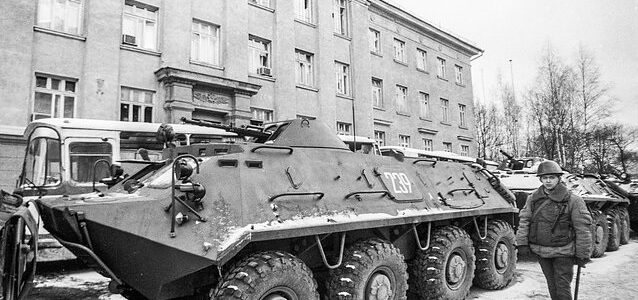
Tanks next to Lithuanian Radio and Television. Photo: P. Lileikis

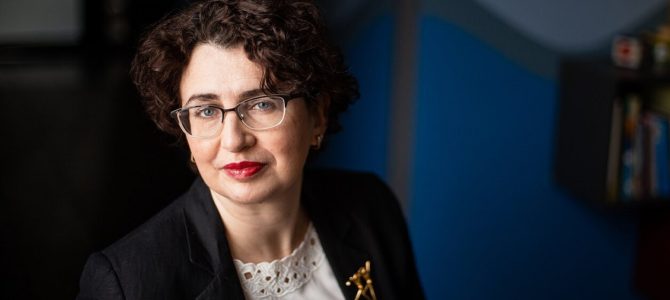
Aleksandra Jacovskytė, scenographer, photographer, graphic artist

Šura Jacovskytė remembers those days in January of 1991. She lived in the center of Vilnius and her friends used to gather at her apartment during those tense days and they watched events unfold together on LRT television.

“I saw and I still remember the final frames when Soviet soldiers broke into the television [studio], the image vanished and there was darkness… It was a horrible feeling,” Šura recalled. “I felt the same as everyone else did. I couldn’t believe the Soviet miasma would come back. The people of Lithuania were already different, they had got a taste of freedom, so it was impossible to go back. It was by then inconceivable to support the actions of the government of the Soviet Union, what they were getting up to, that was totally clear. Even a few months later, after the coup began, I told myself: ‘No, this cannot be…'”

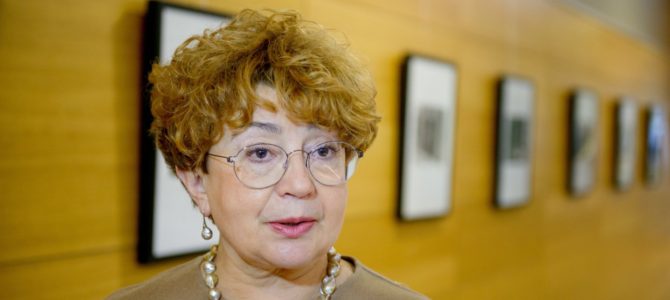
Algirdas Malcas, director, Vilnius the Jerusalem of Lithuania Jewish Community

“I was at the parliament during those days. I walked every day from one site to another, and I had arrived with my dog. I used to go day and night, like a watchman’s rounds. I lived in the center so friends used to come to me to warm up. I was young then and the memories are unerasable.

Join the Civic Initiative to Celebrate the Restoration of Freedom

Join the Civic Initiative to Celebrate the Restoration of Freedom

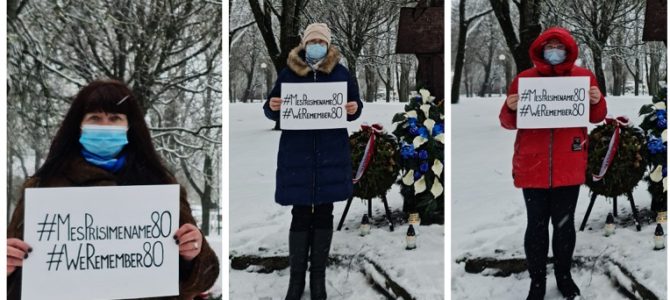
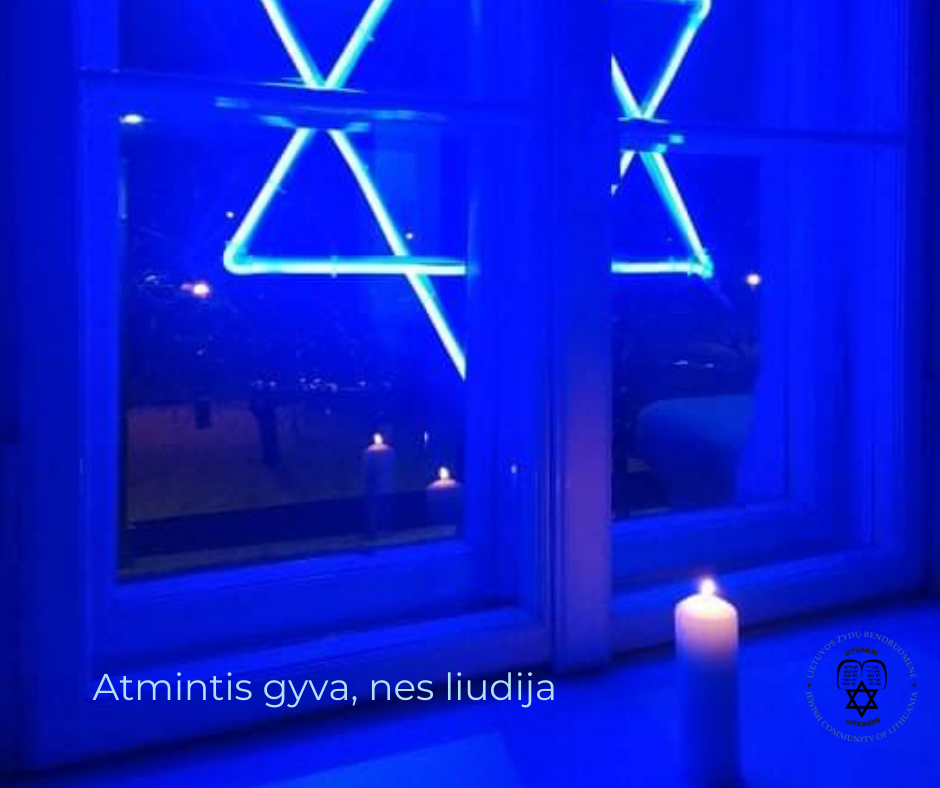
The International Commission for Assessing the Crimes of the Nazi and Soviet Occupational Regimes in Lithuania and Lithuanian president Gitanas Nausėda are inviting educational and state institutions, departments and agencies and all people of good will to remember the victorious struggle to win back freedom from the aggressors in January of 1991 and to join the civic initiative “Memory Lives Because It Testifies.”

Everyone is invited to remember and mark the 30th anniversary of the restoration of Freedom. At 8:00 A.M. on January 13, 2021, we will place lit candles together in our windows for 10 minutes to remember, unite and celebrate our victory.

In January, 1991, Lithuanian citizens, motivated by the aspiration to freedom and unity, achieved an historic victory. The nation withstood the aggression of the Soviet occupiers and local collaborators and the attempt to effect a coup d’etat through military force, and defended the independence of the restored state.

Drawing Contest to Mark January 13 Holiday

Drawing Contest to Mark January 13 Holiday

Dear leaders, members and friends of the Lithuanian Jewish Community,

As January 13th, Lithuania’s Day of the Defenders of Freedom, approaches we intend to mark the 30th anniversary of the blood events at the Vilnius Television Tower when Soviet troops killed unarmed civilian protestors.

On January 13, 1991, Soviet tanks and troops attempted to take over the television tower, the Radio and Television Committee headquarters and other sites in the capital of the breakaway Soviet republic.

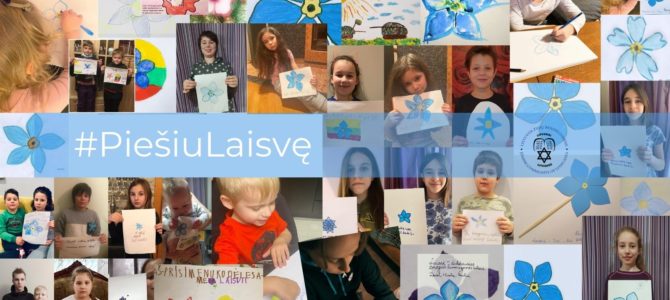
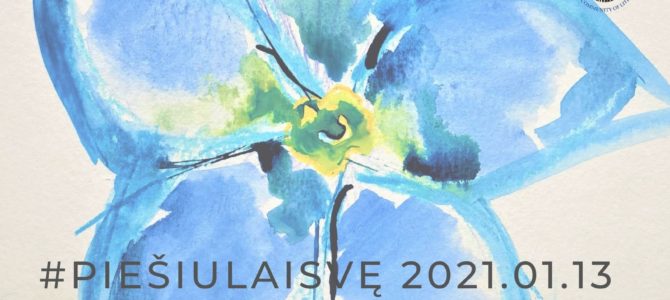
The LJC invites children and young people to use the day to learn about this history and to don in solidarity with Lithuanians the forget-me-not flower symbol. Please draw your own forget-me-not and send in a high resolution photograph of the drawing or of you holding the drawing in your hand.

Lithuanian Translation of Chaimas Kurickis’s Holocaust Memoirs Launched in Utena

Lithuanian Translation of Chaimas Kurickis’s Holocaust Memoirs Launched in Utena

Chaimas Kurickis was born in Utena, Lithuania, in 1921. He and his mother fled east as the German army approached in June of 1941. They were arrested, separated and imprisoned in Daugavpils, Latvia, his mother being sent to the ghetto and he to jail.

The hero of his book was also in the ghetto and several concentration camps, where he fought to survive right up till May 5, 1945, when Germany was defeated finally. Chaimas Kurickas set down his recollections and experiences along with several poems in a book called “To Survie and Tell the Tale,” translated to Lithuanian under the title “Išgyventi ir papasakoti” by Edmundas Kutka. The book has also been translated to Hebrew and Russian, and has caught the interest of Latvians who utilize it to talk about the tragic events of the Daugavpils ghetto, and Germans. The Lithuanian translation is expected to be of keen interest to Lithuanians and especially people from Utena who might be interested in the native author’s youth and experiences.

The launch of the Lithuanian translation of the book, published with aid from the Goodwill Foundation, included a panel of speakers, including tour guide and historian Chaim Bargman, Vilna Gaon Jewish History Museum RIghteous Gentiles Department director Danutė Selčinskaja, teacher and historian Danguolė Jonaitienė who knew Kurickas from before the war, translator Tamara Jefremova and the translator of this book Edmundas Kutka.

The 20-year-old Utena native learned of the onset of war in his hometown. The rapid progress and unexpected moves of the German military forced him to adapt quickly to change. He and his mother and sisters were forced to flee, but the Kaunas-Daugavpils route was overcrowded with much military transport, Russian tanks and hundreds if not thousands of fleeing civilians, mainly Jews, trying to make their way towards Russia.

Interview with Simas Levinas, First Principal of the First Post-War Jewish School, Chairman of Lithuanian Jewish Religious Community

Interview with Simas Levinas, First Principal of the First Post-War Jewish School, Chairman of Lithuanian Jewish Religious Community

by Ilona Rūkienė

The entire Lithuanian Jewish community knows Simas Levinas as the head of the Lithuanian Jewish Religious Community, which includes two Jewish religious communities in Kaunas and the Klaipėda and Vilnius Jewish Religious Communities. Mr. Levinas was the first principal at the post-war Jewish school in Vilnius and has also served as the head of the Lithuanian Jewish Community’s Social Center.

Vilnius has only one working synagogue [excluding Chabad Lubavitch House], the Choral Synagogue on Pylimo street. How are prayer services conducted there?

Prayer services are held three times daily. There are sufficient numbers of those who come to pray. Judaism is complicated, people come to prayer in the morning, afternoon and evening. Life is structured by coming and going to synagogue. They only come once during Sabbath. There are a lot of people in attendance during the summer and famous rabbis come, the followers of the Vilna Gaon. People are frequently proud of their Lithuanian roots, because being Litvak means the continuation of the Gaon’s school, meaning that their parents or ancestors came from the Lithuanian Grand Duchy, many of them from [the smaller ethnically-defined nation-state of] Lithuania. They dedicate an entire day to prayer, then travel on to Volozhin, where Chaim of Volozhin [1749-1821], a disciple of the Vilna Gaon, taught the Gaon’s method of textual analysis at the yehsiva he [Chaim] established especially for that purpose. During the Jewish holy days the synagogue is packed, at least before the pandemic, and it’s not just Jews who come, many Lithuanian guests do as well. Ambassadors from many countries resident in Vilnius also participate.

The Unbelievable Story of the Kėdainiai Kloiz Being Restored

The Unbelievable Story of the Kėdainiai Kloiz Being Restored

by Rasa Jakubauskienė and Vaidas Banys for 15min.lt

Kėdainiai [Keydan] is a city rich in history, culture, heritage and synagogues. Currently one of the synagogues houses the Multicultural Center of the Kėdainiai Regional History Museum, another an art school, and yet another is undergoing restoration. Restoration of the exterior of the latter was finished last year and this year the interior is being restored.

Jorūnė Liutkienė, advisor to the mayor of the Kėdainiai regional administration, said work is ongoing inside and isn’t complete. Kėdainiai historian Vaidas Banys reported, as we were writing this article, that he had discovered interesting facts never before published concerning the emergence of this synagogue, and shared them for the first time with readers of the newspaper Rinkos aikštė [local Kėdainiai newspaper].

Klaipėda to Remember Synagogue Put to Torch by Nazis

Klaipėda to Remember Synagogue Put to Torch by Nazis

by Gediminas Pilaitis, Lrytas.lt

Many residents of Klaipėda don’t know the city’s largest synagogue once stood on Daržų street.

There are plans to commemorate the synagogue which operated in the interwar period in the Klaipėda Old Town. A commemorative plaque is to be placed on the hotel which now occupies the location. The city has approved the plan initiated by the local Jewish community.

Condolences

We are saddened to report the death of Baruch Shub. Born in Vilnius, a Holocaust survivor and a young Jewish partisan in the Vilnius ghetto, Shub went on to work as a member of the board of the Conference on Jewish Material Claims against Germany for many years. Our deepest condolences to children, grandchildren and many friends.

Anniversary of Birth of Jewish Artist and Sculptor Antonietta Raphaël-Mafai

Anniversary of Birth of Jewish Artist and Sculptor Antonietta Raphaël-Mafai

by Geršonas Taicas

This year marks 125 years since the birth in Lithuania of the famous artist and sculptor Antonietta Raphaël-Mafai. She was born in what is now the Kaunas neighborhood of Viljampolė, aka Slobodka, although the town didn’t extend that far then, to a large family. According to archival information the family had 12 children, although other sources say 14, but Antonietta was the only girl.

Her father Simon Rafael was a melamed, Hebrew for teacher, and he taught Hebrew and Jewish traditions at a heder, or primary school. Her mother Mariam was a seamstress and tailor. Simon died in 1903 and her mother took the remaining children to live in London in 1905.

Secrets of Jewish Graves Deep Underground

Secrets of Jewish Graves Deep Underground

by Artūras Jančys

Should we restore desecrated Jewish grave markers and set up meditation and commemoration spaces in Jewish cemeteries, or should we leave the dead in peace and leave everything as it was? There is still no one good answer to the these questions.

Several years ago the municipality of Kaunas took resolute steps to include old Jewish cemeteries in the general context of the historical heritage of Kaunas. Students from Vytautas Magnus University were organized and sent to make photographic records, recording almost 6,000 Jewish headstones on film.

Each gravestone was photographed from several different angles resulting in well over 10,000 individual photographs. They will be entered in a general database which will aid in the continuing project to restore Jewish graveyards. The students’ work will also be displayed on a special internet site created for that purpose.

“Traditions are a sacred thing, but even they change, and now there are even female rabbis,” Gercas Žakas, chairman of the Kaunas Jewish Community, said.

Full story in Lithuanian here.

With One Hand the State Comforts Jews, With the Other It Points Them to the Street

With One Hand the State Comforts Jews, With the Other It Points Them to the Street

by Vytautas Bruveris, lrytas.lt

The country is marking the end of the ceremoniously declared Year of the Vilna Gaon and Litvak History, while the Lithuanian Jewish Community is looking at its front door and thinking it might have to leave its home. Because disagreements with state institutions are driving the Community from its longtime building in the center of the Lithuanian capital, located near the remains of Jewish Vilna and the city’s working synagogue.

Bailiffs and bricklayers in broad daylight have walled off one of the corridors in the building housing the LJC. This is the grotesque turn of events these days resulting from continuing disagreements between the LJC and the Vilna Gaon Jewish History Museum along with the Lithuanian Ministry of Culture. And even before this there were also episodes which seem rather odd, for example, letters from the museum to the members of the executive board of the LJC with accusations against the latter’s leadership, attempting to put political pressure directly upon the ethnic community/

With the new wall built, the LJC is now deciding on its future course: whether to dive headlong into legal battles, or simply pack its bags and hit the street. So why is all this happening? Because of disputes on how to share the courtyard which both the museum and the LJC, housed in the same building, claim. Instead of trying to act as moderator and as a moderating force, the Lithuanian Ministry of Culture has done the opposite. The neighbors are there next to each other, but separate.

Faina Kukliansky on the Death of Irena Veisaitė: Holy People Go During the Holy Days

Faina Kukliansky on the Death of Irena Veisaitė: Holy People Go During the Holy Days

December 11, BNS–Intellectual, theater expert, literary expert and human rights activist Irena Veisaitė who passed away December 11 was an exceptionally good person and didn’t feel anger despite many tragic life events, Lithuanian Jewish Community chairwoman Faina Kukliansky told BNS.

“This is a great loss for us. What can you do, people die and let them rest in peace. They say holy people die during the holy days. She died during Hanukkah,” Kukliansky said.

She remembered Veisaitė as an active community member who taught goodness, forgiveness and understanding through the life she lived and in her daily activities.

“This was a unique person who spent half her life in a Jewish family, lived some portion of her life with a family of non-Jewish rescuers and acquired a very varied experience of life, her mother’s death, the goodness of rescuers, she spent some of her life in occupied Kaunas and was sent to Siberia with her rescuers. And despite all these hardships in life, all these problems and losses, she remained very much a person of goodwill. Not just that she was moral and wished everyone well, you’ll almost never hear an ill word about her. Life did not make her angry,” Kukliansky recalled.

Candle of Solidarity on Hanukkah Menorah for International Human Rights Day

Candle of Solidarity on Hanukkah Menorah for International Human Rights Day

Today the world marks International Human Rights Day which began when the General Assembly of the United Nations adopted the Universal Human Rights Declaration on December 10, 1948. The call to stand up for human rights invites us to get involved and engaged in creating solidarity and societies respecting human rights, and calls on us to learn more about ethnic, religious and cultural communities and the way they live. Lithuanian Jewish Community chairwoman Faina Kukliansky calls it symbolic that this year’s International Human Rights Day coincides with the beginning of the traditional Jewish holiday of Hanukkah, a celebration of victory in perhaps the first battle for freedom of worship and freedom of conscience.

“The victory for our religion two millennia ago has continuity with modern Lithuania where all people have religious freedom. Hanukkah is an opportunity for the broader society to undersant and discover traditional Jewish culture as well as the activities of our community. We believe that it is only through understand and communication that we can overcome miscommunication and stereotypes, to insure respect for the rights of all people living in Lithuania,” chairwoman Kukliansky said.

Respect for human rights is urgent right now, she continued, because Jewish communities around the world are facing anti-Semitic sentiments. The European Union Council has responded to increasing attacks against Jews and all manner of anti-Semitic expressions, and on December 2 adopted a declaration on joint-efforts to fight anti-Semitism. The European Jewish Congress representing the Jewish communities of EU member-states and other European countries is asking national leaders to listen to the words of the declaration, follow it and pay additional attention towards creating a relationship of solidarity with the Jewish communities.

Year of Vilna Gaon Final Event to Discuss Future Direction

Year of Vilna Gaon Final Event to Discuss Future Direction

The Lithuanian Jewish Community in partnership with the Lithuanian History Institute and others invites you to a series of virtual discussions called “Litvak History: Directions for Today” beginning December 9. This is the final event to mark Lithuania’s Year of the Vilna Gaon and Litvak History and is open to all who are interested in Jewish culture and history in Lithuania.

Litvak History: Directions for Today
A virtual academic discussion
Live streamcast with synchronous translation to English

The discussion begins at 9:45 A.M. and will run till 4:00 P.M., UTC+2, December 9, 2020. Participants will be able to pose their own questions live.

Event page: https://renginiai.puslapiai.lt/diskusiju-ciklas-lietuvos-zydu-istorija/

Facebook event link: https://www.facebook.com/events/704750490450977

Event program: https://bit.ly/3mGsr5g

For more information contact Marija Navickaitė Kajotienė, tel.: +370 628 71246, marija.navickaite12@gmail.com

Lithuanian Jewish Community Presents Year of Vilna Gaon and Litvak History Commemorative Medallion to Lithuanian President

Lithuanian Jewish Community Presents Year of Vilna Gaon and Litvak History Commemorative Medallion to Lithuanian President

December 4, 2020

As Lithuania’s Year of the Vilna Gaon and Litvak History draws to a close, Lithuanian president Gitanas Nausėda met via internet with Lithuanian Jewish Community chairwoman Faina Kukliansky and discussed current issues of concern to the Community.

“Lithuanian Jews are an inseparable part of our society and have been since the time of the Grand Duchy of Lithuania. For centuries we built our country together, strengthening our learning, culture, business and security. Lithuanian Jews living in their homeland and abroad publicize Lithuania’s name,” the president said.

The Litvak contribution was celebrated around the country and the world as Lithuania marked the 300th anniversary of the birth of the great Lithuanian rabbi and Talmudist Elyahu ben Solomon Zalman, better known as the Vilna Gaon, and the 700th anniversary of Jewish history in Lithuania. The World Litvak Congress scheduled to meet in Vilnius and Israeli president Reuven Rivlin’s planned visit to Lithuania were postponed because of corona virus fears.

Chairwoman Faina Kukliansky presented the Lithuanian president a medallion commemorating the Year of the Vilna Gaon and Litvak History in the name of the entire Lithuanian Jewish Community. The medallion and commemorative coin issued by the Bank of Lithuania bears a symbol composed of the Jewish Menorah and the Post of Gediminas, an early symbol of Lithuanian statehood and power. The medallion also bears an inscription in Lithuanian from Moshe Kulbak’s poem Vilne: “You are a dark cameo set in Lithuania…”

In their discussion the president said the state is solving and will solve issues involving historical memory and will maintain a policy course of intolerance towards expressions of xenophobia.

The head of state thanked the Jewish community for its active role in society and wished the community light and peace as the holiday of Hanukkah approaches.

Communications group of the Office of President

Veisiejai Synagogue Testifies to Multicultural Past

Veisiejai Synagogue Testifies to Multicultural Past

Photo: Kostas Kajėnas

Veisiejai is one of the oldest settlements in Lithuania and was first mentioned in an act in 1253 by Lithuanian king Mindaugas. Later in 1409 Lithuanian grand duke Vytautas also mentioned this town set on the banks of Lake Ančia. The old section of the town has been declared an urban monument.


Town synagogue. Photo courtesy Yad Vashem.

The network of streets, the layout of the square from the latter 18th century and early 19th century, portions of constructions, the panorama of the old town and the natural surroundings are all protected. The town is surrounded on all sides by water and it seems as if you are on an island as the waves of the emerald lake lit by the autumn sun lap along its banks everywhere.

Beginning in the 18th century, Veisiejai became one of the homes of the Lithuanian Jewish communities. Just a few weeks ago on November 3, the 79th anniversary of the extermination of the Veisiejai Jewish community was commemorated. When Nazi Germany went to war with the Soviet Union, Wehrmacht units occupied Veisiejai on the first day of hostilities, on June 22, 1941. At the end of June and in early July the Jews living in different parts of the town were forced into the area around the synagogue and then removed to a ghetto. On November 3, 1941, the once-thriving and large local Jewish community was no more. Soldiers from the Kaunas self-defense battalion aided by local police shot them all. Post-war exhumation indicated at least 1,503 people had been murdered. The corpses were laid in several rows without clothes and shoes, only in their underwear. Only a very few manages to escape and hide in neighboring villages and the forest. Items left behind by the Jews were sold, their farms were inventoried and parceled out to Lithuanian neighbors and some Jewish buildings were turned over to the local municipality.

The History of the Veisiejai Jewish Community

Full text in Lithuanian here.

ECRI Says Anti-Semitism Incompatible with Values, Wants National Strategies from Member-States

ECRI Says Anti-Semitism Incompatible with Values, Wants National Strategies from Member-States

The European Commission against Racism and Intolerance, aka ECRI, adopted an “Opinion on the Working Definition of Anti-Semitism of the International Holocaust Remembrance Alliance (IHRA)” at its 84th plenary session on December 2. The full text is available here.

IHRA’s working definition begins:

“Anti-Semitism is a certain perception of Jews, which may be expressed as hatred toward Jews. Rhetorical and physical manifestations of anti-Semitism are directed toward Jewish or non-Jewish individuals and/or their property, toward Jewish community institutions and religious facilities.”

ECRI noted while many states have adopted the working definition, there are problems applying it legally because of the vagueness of some of the language, and said there are concerns because criticism of the State of Israel might be equated with anti-Semitism in a future redaction. There is also no academic consensus on a definition, the document said.