Heritage

Lithuanian Students Experience Hanukkah in Perth for Second Time in Two Years

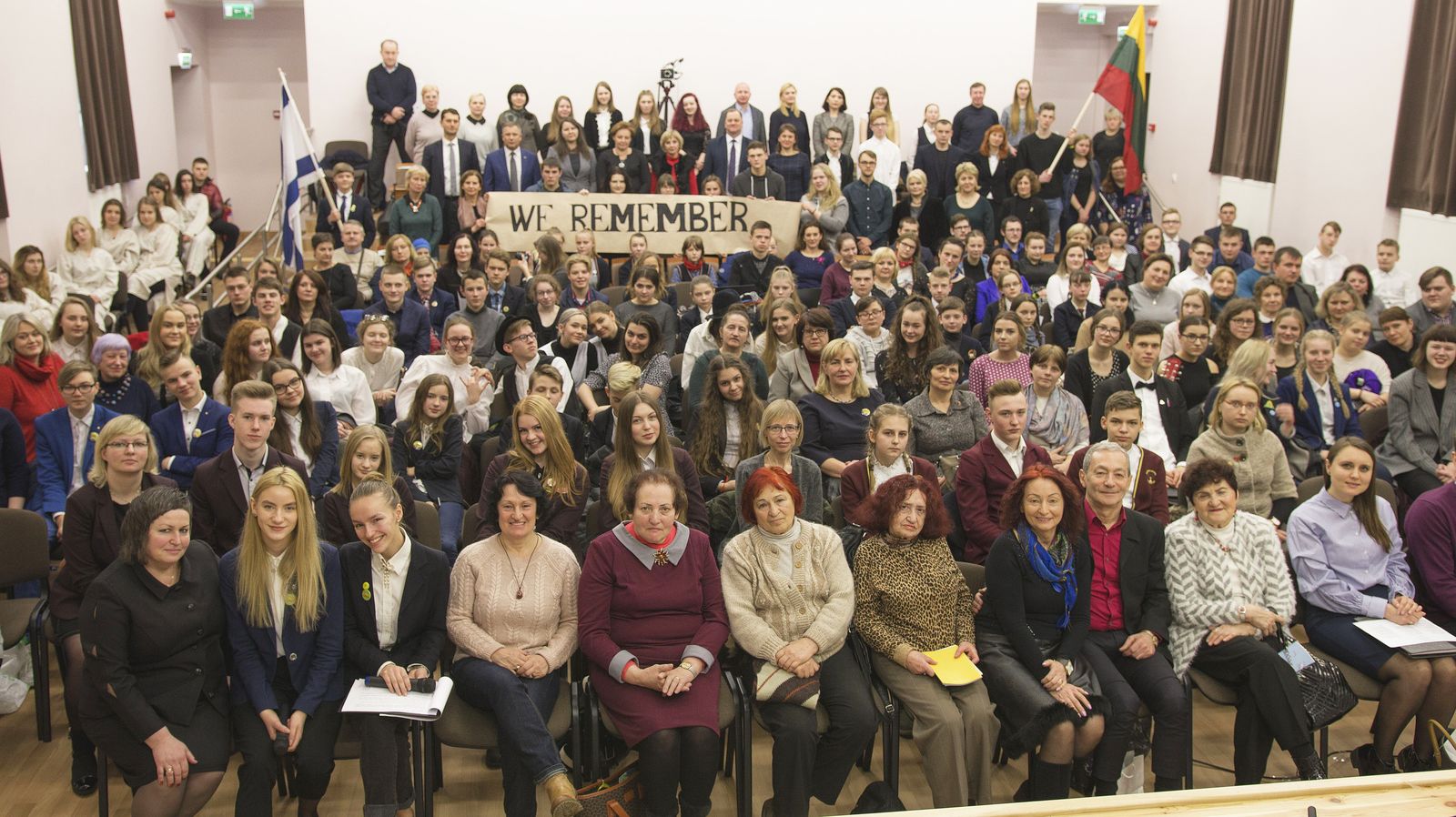
For the second year in a row students from Atžalynas High School in Kėdainiai, Lithuania, experienced Hanukkah in Perth, Australia, via skype on a large screen in their classroom.

Last year they heard Dylan Kotkis, Carmel School captain for 2018, sing Maoz Tzur while Western Australia’s Chabad Rabbi Shalom White explained the festival and the message of Hanukkah to the 15-year-olds.

This was probably the first time in 75 years this Hanukkah song had been heard in this town in central Lithuania once so important to Jews. No Jews live in Kėdainiai today.

This year teacher Laima Ardavičienė and her class attended the candle-lighting ceremony at Ben-Gurion Park in Perth with members of the Western Australian Jewish Community via skype. The ceremony performed by Rabbi Shalom White of Chabad Lubavitch House was preceded by an enjoyable performance by the entertainer Mickey Shaked. The Lithuanian students also had the opportunity to meet some of the locals via skype.

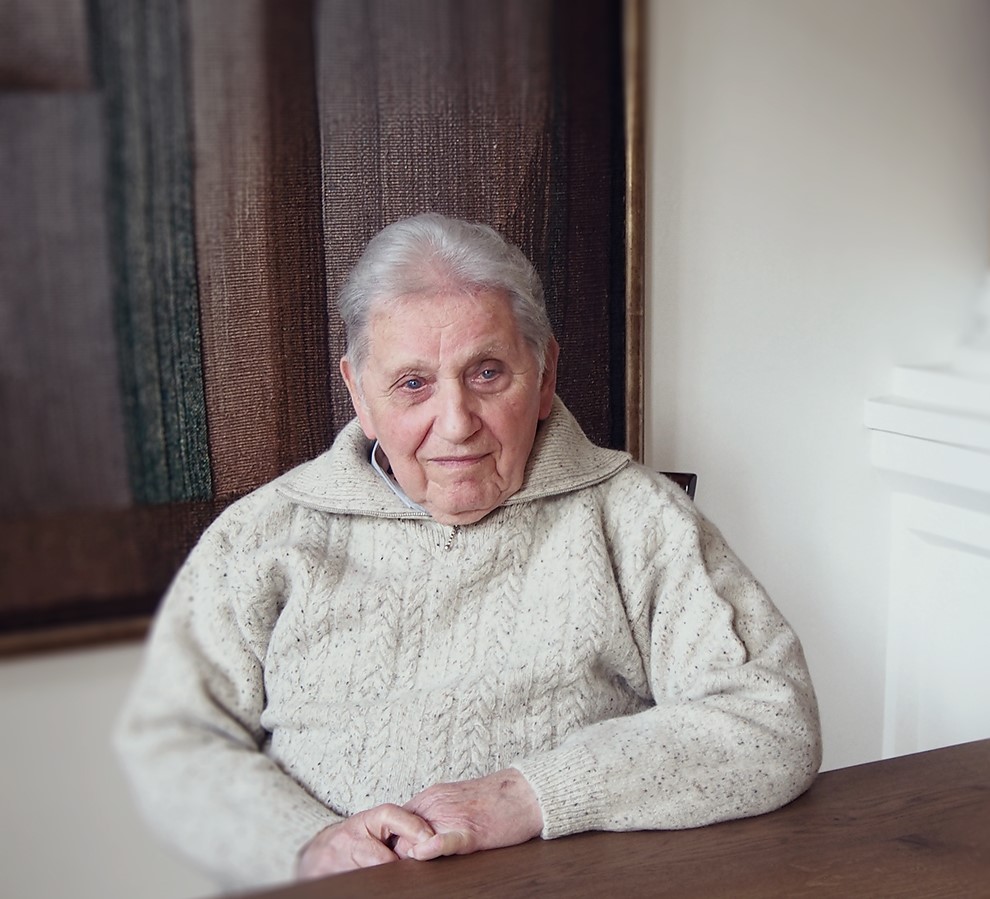
One of these was Heiny Ellert, a 95-year-old Lithuanian Holocaust survivor from Neishtot-Tavrig, today known as Žemaičių Naumiestis. I filmed his testimony for the Western Australian Holocaust Institute in 2014. It can be viewed at https://youtu.be/118HN2_NYHs

You can read more about this and last year’s Hanukkah activities and about Heiny and his shtetl at http://elirab.me/chanukah-in-the-park/

Eli Rabinowitz
Perth, Western Australia
December 13, 2017

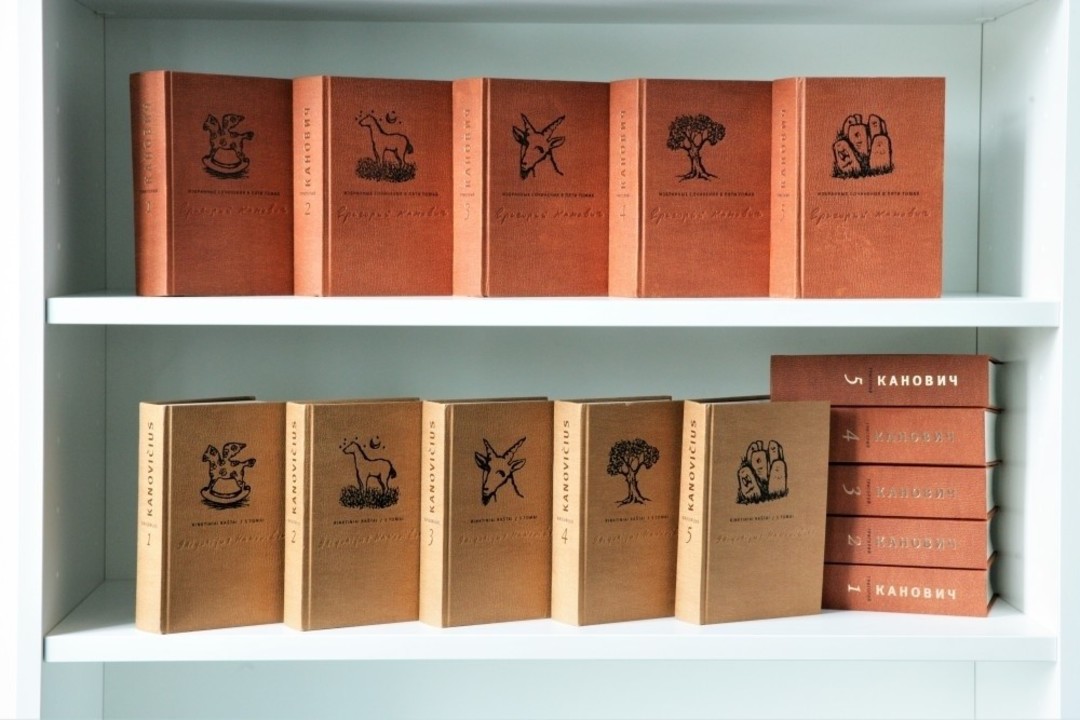
Dmitrijus Kanovičius Donates 250 Grigorijus Kanovičius Books to LJC

The Lithuanian Jewish Community sincerely thanks Dmitrijus Kanovičius for the wonderful gift of 250 books of the selected writings of Grigorijus Kanovičius.

Everyone, not just Jews, read Grigorijus Kanovičius’s books written with his great talent and profound emotional notes because they give the true story of the life of Lithuania made more charming with a sincere sense of nostalgia. These books are like living portraits with images of the past, of our forefathers, memories with color, words, laughter and pain. Today they stand as a monument and testament to all the murdered Jews… Grigorijus Kanovičius’s works for us are important as a treasury of memories, of those we have lost who shall live on forever in their shtetlakh, now mostly abandoned towns. It is said truly that Jews will live on even when there is no one left to remember them. We are so glad that thanks to the creative work of Grigorijus Kanovičius Lithuania has a rich saga of Jewish life featuring our ancestors from the 18th century to today.

Thank you, Dmitrijus.

Return Jerusalem to the Arabs? Fine. Let’s Return Vilnius to Poland, Too


by Arkadijus Vinokuras

Well, I’ll present a somewhat more modest proposal to Lithuanian foreign minister Linas Linkevičius. To those who say East Jerusalem should be returned to the Arabs of Palestine.

He missed an opportunity to stay silent. It is unseemly for the foreign minister of Lithuania to say the same thing over and over like a parrot, or more precisely, to recognize the rules of the Middle Eastern game thrown down by the United Nations which is inimical to Israel. So my modest proposal would be this: let’s return part of Vilnius, with the Gates of Dawn, to Poland. After all, for centuries they’ve had an historical and religious connection with Vilnius. If Lithuania opposes it, Poland can appeal to the United Nations whose 151 member-states, full of hate for Lithuania, will recognize the Vilnius Old Town with the Gates of Dawn Polish territory. How does that scenario suit you, Mr. Foreign Minister? If you don’t like it, then recognize all of Jerusalem as the capital of Israel.

Full editorial in Lithuanian here.

Forgetfulness Is an Incurable and Dangerous Disease

An interview with Litvak writer Grigory Kanovich by Stephan Collishaw

SC – To what extent is the novel Shtetl Love Song autobiographical?

GK – True, Shtetl Love Song is an autobiographical novel.

Your character in the novel seems very close to his grandmother and goes with her regularly to the synagogue. Is the synagogue still a part of your life?

My grandmother Rokha was a very religious person. When I was a child the synagogue played a big role in my life. There was not a single Saturday, nor a Jewish holiday when my grandmother wouldn’t take me to synagogue. My grandfather was religious, but didn’t go to synagogue so often. He joked, ‘If you hear something interesting from Him, you won’t be able to keep it from me long, you’ll tell me.’ I, myself, am not religious; the synagogue doesn’t play such a strong role in my life now as in my childhood.

The Woman Who Rescued Jewish Books from the Vilna Ghetto


by Erika Dreifus

Some 75 years ago a group of Jews under German occupation in Vilna was assigned to assist Nazi authorities in curating books and other cultural items destined for shipment to Germany. There, the selection of Judaica materials was to be conserved as a collection of artifacts from an extinct people.

Some items were indeed shipped away as ordered. Some the authorities destroyed and diverted to be used for scrap.

Others were smuggled and hidden by the same Jewish scholars, teachers and writers who had been designated to sift through and catalog them. The heroism of this Paper Brigade has recently received new attention, thanks largely to two developments: the discovery of another trove of materials that the squad managed to squirrel away, and the publication of historian David E. Fishman’s fascinating new study, “The Book Smugglers: Partisans, Poets, and the Race To Save Jewish Treasures From the Nazis” (ForeEdge).

Bagel Shop and Israeli Embassy at Charity Christmas Fair in Vilnius


Photo, from right: Prime minister Saulius Skvernelis, LJC chairwoman Faina Kukliansky, Israeli embassy deputy chief of mission Efrat Hochstetler, PM’s wife Silvija Skvernelė

An international Christmas fair fundraiser was held again this year at the Old Town Square in Vilnius. Visitors were invited to purchase handicrafts, Christmas decorations, sweets and other knick-knacks made and sold by the spouses of foreign ambassadors resident in Vilnius, embassy personnel, social welfare organizations.

Photo: President Valdas Adamkus, Faina Kukliansky, former first lady Alma Adamkienė

The international Christmas fair is an annual initiative by the International Women’s Association of Vilnius, which includes women from Lithuania and foreign women temporarily living and working in Lithuania as members.

Photo: Apostolic nuncio archbishop Pedro Quintana

Lithuanian Jewish Community and Bagel Shop volunteers went all out this year to make this event a success. The Israeli embassy’s booth sold Lithuanian and Israeli products and collected almost 4,500 euros for charity, three times more than last year’s amount.

More photos here.

Saulius Sužiedėlis Interview on Lithuanian Holocaust Collaboration


by Mindaugas Jackevičius, www.delfi.lt

U.S.-based professor emeritus of history Saulius Sužiedėlis says it’s inappropriate for the state to honor those who contributed in any way to the Holocaust, and calls upon Lithuania to review for whom statues have been erected

Sužiedėlis says Lithuania could have and should have done more to detect and prosecute Holocaust perpetrators. He says Lithuania doesn’t have to admit complicity in the murder of Jews, but finally needs to admit collaboration by Lithuanians without excuses and to stop downplaying the significance of that collaboration.

The historian says this is harming Lithuania’s reputation which is important for defending national sovereignty. Sužiedėlis says no one will want to defend a country with such a poor reputation.

Well-known German historian Dr. Christoph Dieckmann, who in 2011 wrote the fundamental work “Germany’s Occupation Policy in Lithuania 1941-1944” [co-authored by Saulius Sužiedėlis], in an interview with Delfi last spring raised the moral question of why Lithuanian society, seeing and hearing the Jews being killed around them, didn’t protest. Do you think this is a well-founded question?

I think the question is not completely justified, because there were few opportunities to resist. And let’s remember that in the first two months the Lithuanian consciousness was still focused on the deportations, and Red Army soldiers shot at least 1,000 innocent Lithuanians as they withdrew. The psychology was completely different. What Lithuanian would die for Stalin? So resisting would have been difficult psychologically.

Grigory Kanovich: A Good Book is a Life Teacher

G. Kanovičius: gera knyga visada yra gyvenimo mokytoja
by Donatas Puslys, www.bernardinai.lt

Rūta Oginskaitė’s book “Gib a Kuk: Žvilgtelėk” recently hit the book shops, in which the author, Grigory Kanovich and his wife Olia paint a portrait of the Lithuanian writer and an entire era. On November 29 London’s Central Synagogue will host the launch of the English translation of Kanovich’s book “Shtetl Love Song.” We spoke with Grigory Kanovich about his relationship with his readership, love of homeland and the painful moments in our history.

There’s a proverb that a prophet is not recognized in his homeland. Your work is an important monument to the history of the Jews of Lithuania and their memory. The book requires, however, a reader who is able to enter into a dialogue with the text. Do you sense the presence of such readers in Lithuania, do you think there is a dialogue and discussion going on with your texts? Should we conclude from your recent works published abroad that your work is more interested to foreign than Lithuanian readers?

I hold to the view that prophets are rare in their homeland, and one more frequently encounters only clairvoyants and the righteous. I think “prophet” is hyperbole. I won’t deny that my novels are an attempt to create a monument to pre-war Jewish history and to commemorate my compatriots.

I wouldn’t dare claim some wide-ranging discussion is taking place between me and my readers in Lithuania, but I do receive a lot of good-willed responses from different locations from readers reading my work in Lithuanian and Russian. I can’t complain about that. I am happy foreign publishers are interested in my work. For instance, the recent publication of my Shtetl Love Song by a leading London publisher.

Full interview in Lithuanian here.

Japanese Volunteer Teacher Visits Panevėžys Jewish Community

Svečio iš Japonijos Susumu Nakagawa vizitas Panevėžio miesto žydų bendruomenėje

Last week Susumu Nakagawa from Japan visited the Panevėžys Jewish Community. Mr. Nakagawa is visiting Panevėžys for the second time as a volunteer teacher, teaching beginning Japanese at the Panevėžys Technology and Business Faculty of Kaunas Technology University. Mr. Nakagawa is building a bridge of friendship between the two countries, he says. He’s interested in Litvak history and culture, and when he learned there is a living Jewish community in the Lithuanian city, he decided to visit. He was accompanied by art teacher Loreta Januškienė.

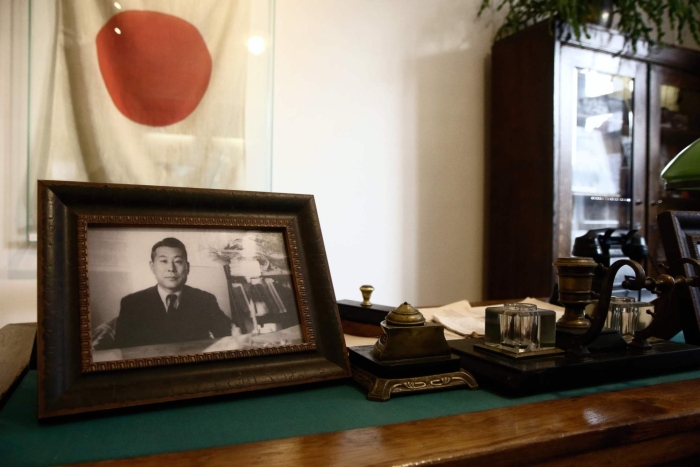
Mr. Nakagawa and his family are Christians and interesting in the Old Testament and Jewish history and traditions. Panevėžys Jewish Community chairman Gennady Kofman told Mr. Nakagawa about the history of the Panevėžys Jewish community over tea, and showed him documents and photographs. Mr. Nakagawa posed a number of questions to the chairman, and they touched upon the legacy of Chiune Sugihara, the Japanese diplomat who rescued Jews in Kaunas during the first stages of the Holocaust.

Faina Kukliansky Says Jews and Lithuanians Need to Resolve Disagreements


Photos: BNS
by Birutė Vyšniauskaitė, www.lrt.lt

Although the scandal caused by writer Rūta Vanagaitė’s statements on the partisan Adolfas Ramanauskas has subsided, Lithuanian Jewish Community chairwoman Faina Kukliansky believes the tranquility is only temporary. Vanagaitė’s book Mūsiškiai about the mass murder of Jews in Lithuania is soon to appear in English translation. She also enjoys the support of the European Jewish Congress and has many proponents in Israel. In an interview with LRT [Lithuanian Public Radio and Television], Kukliansky said we shouldn’t fear coming scandals.

“I really liked historian Saulius Sužiedėlis’s idea that it’s possible to read a given document or set of documents a number of times and come to different conclusions. It takes special training and understanding to study documents. An elderly grandmother could read the same documents, and while they might be interesting to her, she won’t be able to make sense of them. So, what if a book is written for public relations, seeking profit and to sensationalize readers and listeners?” Kukliansky told LRT regarding the aftermath of the Vanagaitė scandal.

Tens of Thousands of Jewish Documents Lost during Holocaust Discovered in Vilnius


YIVO announces the discovery of 170,000 Jewish documents thought to have been destroyed by the Nazis. Photo: Thos Robinson/Getty Images for YIVO

NEW YORK (JTA)–A trove of 170,000 Jewish documents thought to have been destroyed by the Nazis during World War II has been found.

On Tuesday the New York-based YIVO Institute for Jewish Research announced the find which contains unpublished manuscripts by famous Yiddish writers as well as religious and community documents. Among the finds are letters written by Sholem Aleichem, a postcard by Marc Chagall and poems and manuscripts by Chaim Grade.

YIVO, founded in Vilnius in what is now Lithuania, hid the documents, but the organization moved its headquarters to New York during World War II. The documents were later preserved by Lithuanian librarian Antanas Ulpis who kept them in the basement of the church where he worked.

Most of the documents are currently in Lithuania but 10 items are being displayed through January at YIVO, which is working with Lithuania to archive and digitize the collection.

“These newly discovered documents will allow that memory of Eastern European Jews to live on, while enabling us to have a true accounting of the past that breaks through stereotypes and clichéd ways of thinking,” YIVO executive director Jonathan Brent said Tuesday in a statement.

United States Senate minority leader Charles Schumer, democrat from New York state, praised the discovery.

“Displaying this collection will teach our children what happened to the Jews of the Holocaust so that we are never witnesses to such darkness in the world again,” Schumer, who is Jewish, said in a statement.

Israeli consul general in New York Dani Dayan compared the documents to “priceless family heirlooms.”

“The most valuable treasures of the Jewish people are the traditions, experiences and culture that have shaped our history. So to us, the documents uncovered in this discovery are nothing less than priceless family heirlooms, concealed like precious gems from Nazi storm troopers and Soviet grave robbers,” he said.

Full story here.

New Fall Issue of the Bagel Shop Newsletter

After skipping a beat this summer, the newest Bagel Shop newsletter has hit the stands. The fall issue includes a complete news round-up from spring to the present, the usual sections and articles about the history of the Bund, efforts to restore Jewish headstones removed from Soviet-era public works projects around Vilnius to their rightful locations and the history of the Jews of Skuodas. The Jewish Book Corner this issue features a book about the tractate Nazir from the Babylonian Talmud and the Telšiai Yeshiva.

Look for the newest issue at the Bagel Shop Café, available for free, or download the electronic version below:

Bagel Shop Newsletter No. 2, 2017

Unique Jewish Archive Emerges in Vilnius

Vilnius, November 3, BNS–As Judaica studies intensify in Vilnius, scholars have identified thousands of important Jewish manuscripts this year which had laid forgotten in a church basement during the Soviet years and were scattered to separate archives for two decades following Lithuanian independence.

Some of the newly identified documents are currently on display in New York City and there are plans to exhibit some of the collection in Lithuania in the near future as well.

Lithuanian National Martynas Mažvydas Library director Renaldas Gudauskas said the identification of ever more documents makes him confident the library currently conserves one of the most significant collections of Judaica in the world.

Hidden at a Church

Vilnius had hundreds of Jewish communal, religious, cultural and education organizations before World War II. YIVO, the Jewish research institute founded in 1925, was an important member of that group. YIVO did work on Jewish life throughout Eastern Europe, from Germany to Russia and from the Baltic to the Balkans, collecting Jewish folklore, memoirs, books, publications and local Jewish community documents, and published dictionaries, brochures and monographs.

New Calls for Jewish Restitution


by Vytautas Bruveris, www.lrytas.lt

After adopting a law on compensating Jewish religious communities, Lithuania should go further and compensate Holocaust survivors for their private property. Both US officials and the Lithuanian Jewish Community are calling for this.

The Lithuanian prime minister’s advisor on foreign policy Deividas Matulionis said: “The issue of returning Jewish private property was raised earlier, but it’s being discussed more frequently now. I wouldn’t say there’s pressure, but the Americans have let us know return of Jewish property remains on the agenda.”

Matulionis was government chancellor in the earlier Government led by Andrius Kubilius when the law creating the Goodwill Foundation was adopted. Under that law the state pays out compensation for Jewish religious community property lost during the war, financing Jewish cultural, religious, educational and other socially useful activities.

The Lithuanian Government is obligated to pay 37 million euros in total to the foundation.

US Diplomat Visits

Matulionis recently spoke with Thomas Yazdgerdi, the US State Department’s special envoy for Holocaust issues, in Vilnius.

The American diplomat also met MPs and leaders of the Lithuanian Jewish Community.

One of the Yazdgerdi’s main topics of discussion was the continuing return of Jewish property.

He said Lithuania following the examples of other Central and Eastern European countries should keep moving forward by returning private property to Holocaust survivors and their descendants or by paying out compensation.

US Officials Urge Lithuania to Return Jewish Property

Vilnius, November 8, BNS–US officials and the Lithuanian Jewish Community are calling upon the Lithuanian Government to return private property to Holocaust survivors and their descendants, the daily Lietuvos Rytas reported Wednesday.

“The issue of restitution of private Jewish property has been raised in the past, but it is being increasingly discussed lately,” Deividas Matulionis, foreign policy adviser to prime minister Saulius Skvernelis, told the paper.

Matulionis recently discussed the issue with US State Department special envoy for Holocaust issues Thomas Yazdgerdi in Vilnius. The Lithuanian prime minister’s advisor told Lietuvos Rytas they hadn’t discussed any specific measures for restitution or numbers.

Matulionis said they talked about possibly compensating Jews for a portion of the value of their property and said that would be more of a symbolic gesture.

Six years ago Lithuania committed to paying 37 million euros compensation for Jewish religious communal property by 2023.

Public Relations Horoscope


by Sergejus Kanovičius

The weighing ritual from the Soviet era has impressed itself deeply in memory: a plump woman standing behind the counter in a store with a white apron, the apron is somewhat wrinkled and with grease stains, the scales have larger and smaller weights, and she stands and watches, if she has something to way. One weight, and another, then another is needed to reach complete balance, placed on the right-hand plate of the scales, always a deficit, whose weight is measured by this very important woman. The woman is all-powerful. Usually she set some fifty or more grams aside, she also had to supplement her salary. Why do I remember this? I see how today the PR masters and the politicians who have taken up their ideas are joyfully weighing and trying to place a weight or two on a much emptier plate of the scales of historical truth. But one gets the impression that they, just as the woman in the Soviet store did, are setting a bit aside. Sometimes more, sometimes less. Usually more, unfortunately.

You leave their store and unwrap the purchase and hey, either it’s just paper, or else they’ve taken a bit for themselves again. And then you wait again until they decide the time has come to mete out some sort of historical deficit.

As I understand it, the quota for naming the year of the coming 100th anniversary of the state has been used up. Other years are being suggested, maybe the year of the bear on the Chinese calendar, or perhaps the year of the dragon or the cat on the Japanese, one year under the Jewish calendar and a different one according to Christ. Well anyway, we like to baptize, to be baptized and to attend baptisms, it’s fun. Even if there is no baby, we’ll make one up.

LJC Challa-Making Event Big Success

The challa-making event at the Lithuanian Jewish Community on October 26 was a fun-filled evening with klezmer music and treats from the Bagel Shop Café. Four generations of women participated, some with their children and grand-children, others with friends, kneading and braiding the dough which was then baked and taken home.

The event was in solidarity with the annual Shabbos Project, now in its fourth year.

More photos here.

Righteous Gentile Marija Rusteikaitė to Be Commemorated in Panevėžys

Dear members,

A ceremony to unveil a stele honoring Marija Rusteikaitė, rescuer of Jews, teacher, nurse, public figure and founder of the Congregation of the Sisters of the Love of God, will be held at 1:00 P.M. on Friday, October 27.

The ceremony will be held at the intersection of Tilvyčio and Krekenavos streets in Panevėžys. Bus transportation from Vilnius will be provided from the Lithuanian Jewish Community at Pylimo street no. 4 in Vilnius at 10:45 A.M. There are ten seats left at the time of this writing. Those wishing to take the bus should send an email to info@lzb.lt

Those riding by bus will be delivered back in Vilnius in time for the special Sabbath at the Choral Synagogue in Vilnius.

One People, One Sabbath

For the fourth time in as many years, Jews around the world will meet in their communities for an evening of making challa and greeting the Sabbath. The point of the international Shabbos Project is to unite Jews at least once a year wherever they may be around the world and to celebrate Sabbath together. This time, October 26 to 28, over a million Jews in 96 countries and 1,357 are expected to take part.

Last year 6,000 volunteers in 95 countries and 1,152 cities organized challa-making events during a single Sabbath, events which included over 8,000 women and participants speaking more than 10 different languages in Buenos Aires, and five city blocks in Los Angeles were closed to traffic for setting up cooking tables in the streets. In Melbourne 10,000 people attended the havdala concert and the event generated 61,884,223 images posted on the internet.

The Shabbos Project has been called the Jewish spring, a global social phenomenon and an incredible experience.

We’re inviting everyone to the Lithuanian Jewish Community at 6:00 P.M. on October 26 for an evening of challa-making and baking. The program includes kneading and baking, a contest for the best braided loaf, a presentation of women’s obligations on Sabbath and song and dance with the Rakja Klezmer Orekstar. So far over 100 Community members and friends have signed up, spanning four generations. Riva Portnaja, the senior chef at the Bagel Shop Café, will be showing her one-year-old great-granddaughter how challa is made at the event.

Everyone is welcome. We begin activating the yeast at 6:00 P.M. on October 26 at the Bagel Shop Café inside the Lithuanian Jewish Community at Pylimo street no. 4 in Vilnius.

For more information, contact Dovilė Rūkaitė at projects@lzb.lt