
Religion

Israeli Media Report on Parties at Seventh Fort in Kaunas

7thfort

Vilnius, July 25, BNS—Parties held at the Seventh Fort in Kaunas have received attention by the media in Israel following efforts last year to resolve conflicts between the fort’s owners and Jews concerned about the Jewish mass grave discovered there several years ago.

Cultural heritage protection specialists say there haven’t been any complaints recently about unethical activities at the Seventh Fort, and Lithuanian Jewish Community chairwoman Faina Kukliansky said the Israeli press was just bringing up “old stories.”

Discussion of entertainment events at the Seventh Fort came up last year when the Cultural Heritage Department sent the fort’s owners a letter calling upon them not to hold celebrations, games or similar events there.

An article in the Jerusalem Post Monday told the story of the fort’s privatization, the fee charged visitors to the museum territory there and parties held there despite the discovery there in 2011 of a Jewish mass grave.

The article said the Seventh Fort is a popular venue for graduation parties and wedding receptions and the space is available to be used for parties, for cooking on campfires and to host summer camps for children.
This Lithuanian Concentration Camp is Now a Wedding Venue

CROP2-1
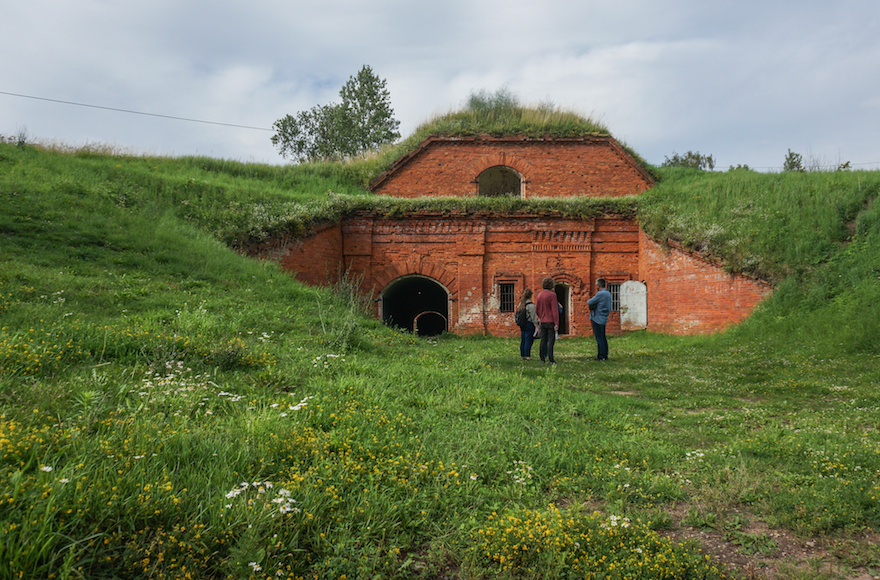
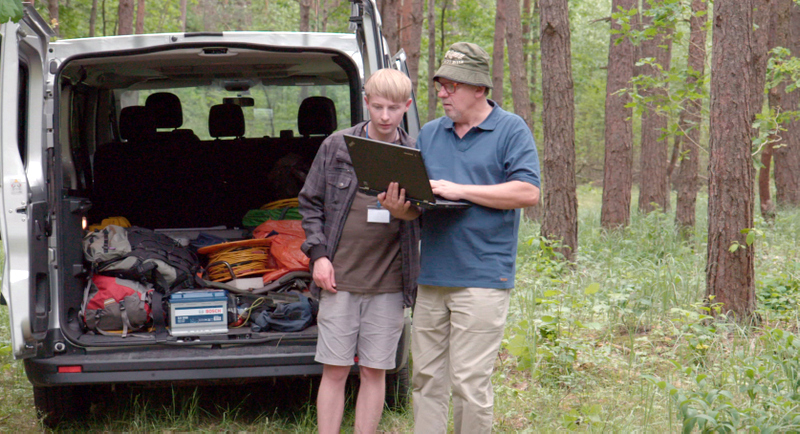
A film crew preparing to record at the former concentration camp known as the Seventh Fort in Kaunas, Lithuania, on July 12, 2016. (JTA/Cnaan Liphshiz)

KAUNAS, Lithuania (JTA) — In this drab city 55 miles west of Vilnius, there are few heritage sites as mysterious and lovely looking as the Seventh Fort.

This 18-acre red-brick bunker complex, which dates to 1882, features massive underground passages that connect its halls and chambers. Above ground, the hilltop fortress is carpeted with lush grass and flowers whose yellow blooms attract bees and songbirds along with families who come here to frolic in the brief Baltic summer.

It’s also a popular venue for graduation parties and wedding receptions, complete with buffets and barbecues, as well as summer camps for children who enjoy the elaborate treasure hunts around the premises.

Most of the visitors are unaware that they are playing, dining and celebrating at a former concentration camp.

Israeli Antiquities Authority Reports Major Finds in Lithuania

2.Historical with team
Photo: Ezra Wolfinger/NOVA

Historical Discovery in Lithuania: The Escape Tunnel of the “Burning Brigade” in Ponar (Paneriai) Has Been Rediscovered

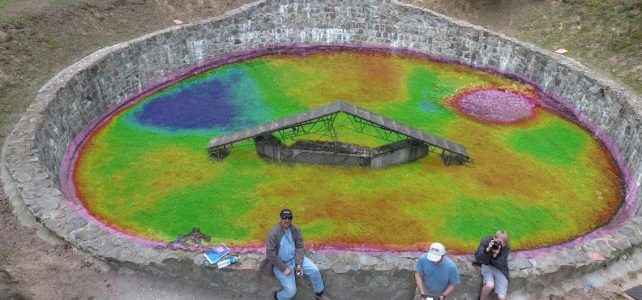
For the first time since the Holocaust the famous tunnel used by the prisoners of Ponar to escape from the Nazis has been located using new technologies for underground predictive scanning.

In an exciting new discovery using electric resistivity tomography at the Ponar massacre site near Vilnius in Lithuania, the escape tunnel used by the so called “burning brigade” to elude captivity and certain death at the hands of the Nazis has been pinpointed.

Some 100,00 people, of whom 70,000 were Jews originating in Vilna and the surrounding area, were massacred and thrown into pits in the Ponar forest near the Lithuanian capital during World War II. With the retreat of the German forces on the eastern front and the advance of the Red Army, a special unit was formed in 1943 with the task of covering up the tracks of the genocide. In Ponar this task was assigned to a group of 80 prisoners from the Stutthof concentration camp.

At night the prisoners were held in a deep pit, previously used for the execution of Vilna’s Jews, while during the day they worked to open the mass graves, pile up the corpses on logs cut from the forest, cover them with fuel and incinerate them. All the while their legs were shackled and the worked in the full knowledge that on the completion of their horrendous task, they, too, would be murdered by their captors. Some of the workers decided to escape by digging a tunnel from the pit that was their prison. For three months they dug a tunnel some 35 meters in length, using only spoons and their hands. On the night of April 15, 1944, the escape was made. The prisoners cut their leg shackles with a nail file, and 40 of them crawled through the narrow tunnel. Unfortunately they were quickly discovered by the guards and many were shot. Only 15 managed to cut the fence of the camp and escape into the forest. Twelve reached partisan forces and survived the war.

Ponar Escape Tunnel Found

Mokslininkai Lietuvoje rado tunelį, kuriuo žydai bėgo nuo nacių

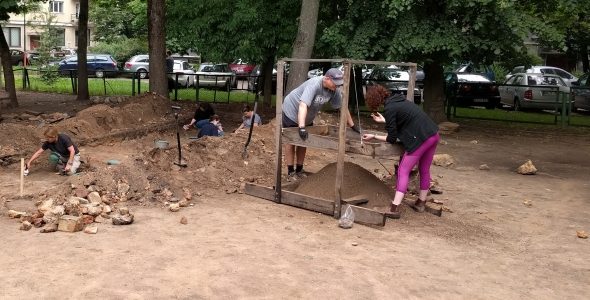
An international group of scholars has completed nearly two weeks of archaeological digging at two sites of importance to Lithuanian Jewish history. They looked for a tunnel known from Holocaust testimonies and attempted to confirm information about the Great Synagogue and surrounding buildings in Vilnius. They used new non-invasive techniques: ground-penetrating radar and electrical resistivity tomography. The international group of scholars included scientists from Israel, Canada, the US and Lithuania. Project leader Dr. John Seligman is the head of the archaeological digging department of the Israeli Antiquities Service. US student volunteers helped at the sites. Some were in Eastern Europe and Lithuania for the first time.

Full story in Lithuanian on Vilnius University’s web site.

Simnas Synagogue to Get New Life

Simno sinagogą bus bandoma prikelti naujam gyvenimui

Dzukija logo

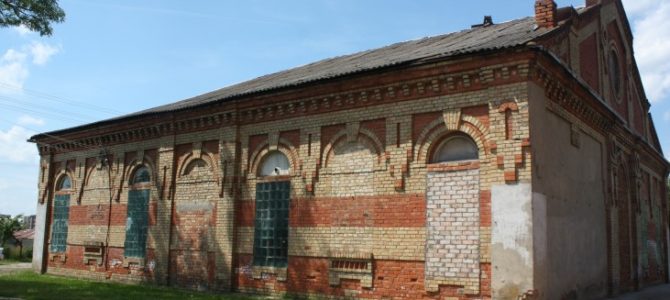
The Alytus regional administration will look for ways to use the synagogue located in Simnas for cultural activities. The head of the regional administration discussed the issue with representatives of the Lithuanian Jewish Community, the Ministry of Culture and the Cultural Heritage Department.

The synagogue was built in 1905 to replace the old wooden synagogue at the same site and was reconstructed in the mid-20th century. In 1952 it became a palace of culture, and later a school athletics gymnasium. Currently it belongs to the Alytus regional administration.

Judah Passow Thanks LJC Chairwoman Faina Kukliansky for Celebration for Return of Torah

Juda Passow dėkoja LŽB ir pirmininkei F.Kukliansky už Toros sugrįžimo šventę

“I just want to thank you once again for making possible such a moving and memorable day with the Lithuanian Jewish community,” Judah Passow said in the note.

“It was an honour and a privilege to be with all of you. I’m especially grateful to you for the time and effort you put into making what began as an idea a year ago into a reality,” he wrote.

Judah Passow’s father, professor David Passow at Philadelphia University, received a Rockefeller Foundation grant to commemorate Jewish life behind the iron curtain in 1960. When he went to Vilnius that same year, local Jewish leaders asked him to take away with him one of two Torah scrolls which were used in the Vilnius ghetto and survived the Holocaust intact, saying they were unsure what the future held for Jews in the Soviet Union. The Passows protected the Torah ever since then, for 56 years, and used it for three bar mitzvahs in the family. When he came to Vilnius last year for a showing of his photography work, Judah Passow met Lithuanian Jewish Community chairwoman Faina Kukliansky and the idea was fleshed out of returning the scroll to Vilnius. Just last week Passow returned the Torah dating from the time of Vilna Gaon, with a silver decoration his mother Aviva Passow made for the scroll.

Picking Up the Pieces

top
by Geoff Vasil

“Don’t get too close!” an attractive and sunburned young Lithuanian warned at the edge of a large pit just behind what was the Great Synagogue of Vilnius. He’s friendly and it quickly becomes clear he’s the lead archaeologist on the dig, but he’s just as quick to point out he’s formally the lead archaeologist, but Dr. Richard Freund of the University of Hartford in Connecticut is the real force behind the whole initiative.

Mantas Daubaras is doing his doctoral thesis at the Lithuanian Institute of History on a Neolithic site far to the west in Lithuania. He has no personal connection to Jewish Vilna and approaches it as he would any site, dispassionately.

“Yesterday we found what we think is the ritual bath,” he explains, pointing to a small hole in the top of what looks like a vaulted brick ceiling. They sent a camera in to take a look and found a large space terminated by rubble and fill. Does it connect to the Great Synagogue? He doesn’t know yet, but it looks as if it extends right up to the line where they think the back wall of the synagogue once stood.

Celebration to Welcome Torah Scroll at Choral Synagogue

Toros įnešimo šventė Vilniaus choralinėje sinagogoje vyko birželio 27d.

The Lithuanian Jewish Community is tremendously grateful to Judah Passow for his initiative in bringing the 350-year-old Torah scroll back to Vilnius.

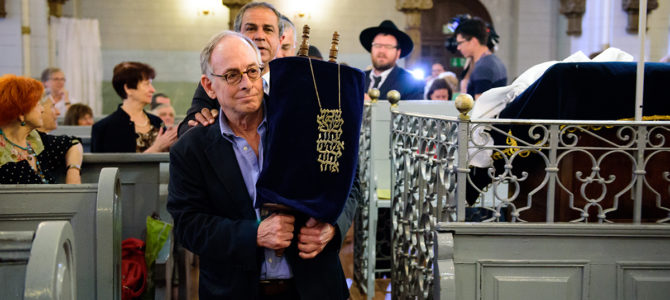
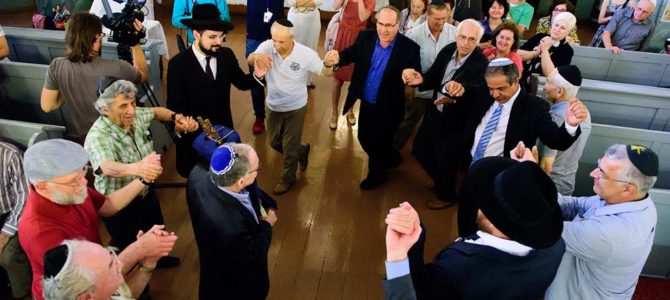
Those assembled at the Choral Synagogue in Vilnius June 27 waited in anticipation of something extraordinary: for the carrying in of a 350-year-old Torah scroll, from the period when the Vilna Gaon walked among us, a witness to the Vilnius of the 17th century, experiencing all the passages and changes together with the Jews, used for innumerable bar mitzvah ceremonies until it ended up in the Vilnius ghetto during World War II, and miraculously survived the Holocaust.

In 1960 professor Passow of the University of Philadelphia in the United States came to Vilnius after receiving support from the Rockefeller Foundation to commemorate Jewish communal life behind the iron curtain. Jews in Vilnius asked him to take with him one of two Vilnius ghetto Torah scrolls to survive the Holocaust, uncertain about the future of Jewish life in the Soviet Union. That’s how the Torah entered into the Passow family and was used in three bar mitzvahs. The family protected the scroll for 56 years. Last year the professor’s son, London-based photojournalist Judah Passow, came to Vilnius for an exhibition of his photographic works and spoke with LJC chairwoman Faina Kukliansky. This year he’s come back with the Torah scroll with a silver ornament his mother made.

Gaon-Era Torah Scroll Returns to Vilnius

350 m. skaičiuojatis toros ritinys grįžta į Vilniaus choralinę sinagogą

Vilnius, June 27, BNS–A 350-year-old Torah scroll used in Jewish religious services in the Vilnius ghetto has returned to Vilnius. British photojournalist Judah Passow decided to turn the scroll over to the Lithuanian Jewish Community for use in the Choral Synagogue in Vilnius.

“What’s important is not the [scroll itself], but that he decided to give the Torah to our synagogue. The Torah belonged to his family, it was safeguarded during the war and the entire time. Boys became men during bar mitzvah in front of this Torah and began to read from this Torah, so it is a great honor for us,” Lithuanian Jewish Community chairwoman Faina Kukliansky told BNS. According to Jewish religious tradition, Torah scrolls must be written by hand. Kukliansky said this Torah will replace the one currently being used, which is worn out.

Passow, whose roots are in Ukraine and Poland, told how Lithuanian Jewish community representatives gave the scroll to his father, a professor at an American university in Philadelphia, almost six decades ago when he visited Vilnius in 1960.

Glimpse into Azerbaijan’s Hidden Jewish Village

ganceman
by Lee Gancman

KRASNAYA SLOBODA, Azerbaijan –“Not good,” Rabbi Yona Yaakobi says in Hebrew, expressing his distaste while pointing to a grave featuring a statue of a man who died in 1988.

Carved in white marble, the nearly life-size statue of the deceased portrays him staring ahead, cane in hand, flanked by two pots of artificial flowers. Just below, on a black tombstone, is inscribed the man’s name, date of birth and the day he died in Hebrew. But lower it is engraved again much more prominently in Russian.

“All of this is influenced by the Muslims who got it from the Russians,” Yaakobi continues.

Although this particular grave is among the more ostentatious in the three cemeteries of Krasnaya Sloboda, an all-Jewish town in the mountainous north of Azerbaijan, it is surrounded by hundreds of others showing lifelike pictures of the dead in various poses, sometimes bordering on the absurd.

“I knew all of these people personally. I know the story of each one of them,” Yaakobi laments as he strolls past a large tombstone depicting a middle-aged man in a business suit reclining on a throne-like chair. “This guy for instance went fishing one day, and when he cast his line, it ended up hitting some wires, he got electrocuted and died.”

Let’s Remember Together: Steps for Life in Riga

The Shamir Association and the Riga Ghetto and Latvian Holocaust Museum are holding an event called Steps for Life on Holocaust Memorial Day in Riga. The event starts at 11:00 A.M. on July 3 at the corner of of Lomonosov and Ebreju streets in Riga. Participants will walk through the Riga ghetto area to the Great Choral Synagogue on Gogola Street. Shamir is inviting those able to come participate and remember, together.

Facebook event: https://www.facebook.com/events/545798345593250/
facebook.com/samir.latvija
facebook.com/rigaghettomuseum

The Significance of Holocaust Memorial Day in Latvia

Lithuania: Vilnius Begins Dismantling Building Constructed of Jewish Gravestones

uzupis-cemetery-oct-20161
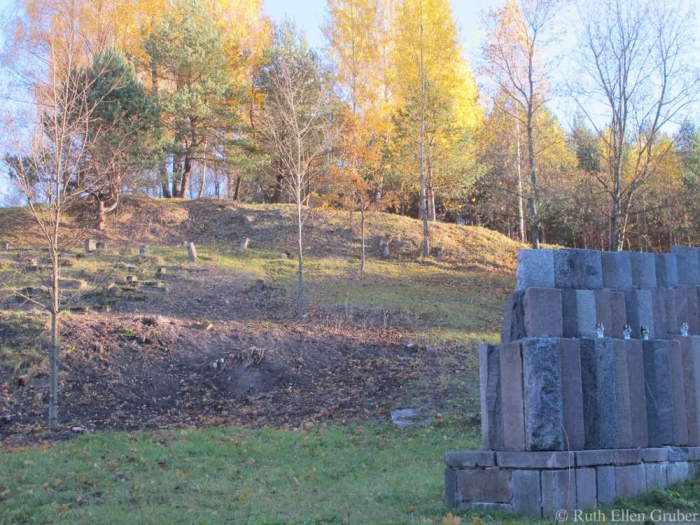
The destroyed Uzupis Jewish cemetery in Vilnius, showing part of the memorial there

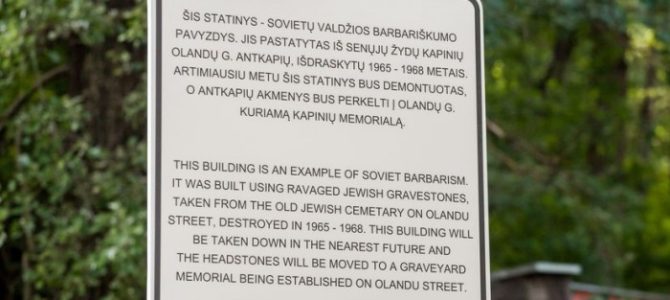
Work has begun to remove part of an electric transformer station in Vilnius which was built during the Soviet era using gravestones from Jewish graves of the once-vast Užupis Jewish cemetery on Olandu street, which was almost totally razed.

The Viilnius city web site, and the Lithuanian Jewish community web site, said Vilnius mayor Remigijus Šimašius personally surveyed work begun this week to dismantle the electric substation on Olandų street and posted a video of him (see below).

Full story here.

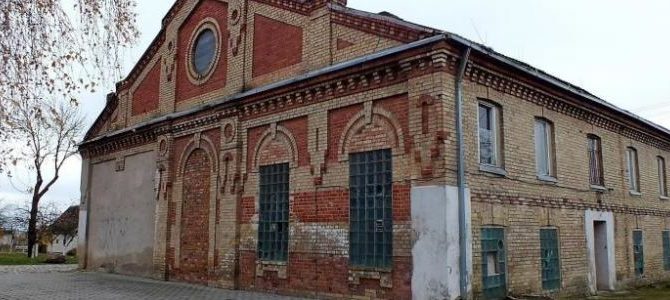
Alytus Regional Administration Sells Synagogue on Protected Heritage List as Sports Facility

Kultūros vertybių sąraše esančią sinagogą Alytaus rajono valdžia parduoda kaip sporto salę

The Alytus regional administration in Lithuania might be on the verge of causing an international scandal. The synagogue in Simnas near the city of Alytus, registered as a cultural heritage treasure, is being put on the auction block for sale. The regional administration says the synagogue isn’t of any use even to Jews, while the Cultural Heritage Department is demanding an immediate halt to the planned sale. Regional authorities say they will sell the building anyway.

The Alytus regional administration is offering to sell the unique Jewish synagogue as a sports hall, although the former house of prayer enjoys legal protection. Public servants have even set an opening price for the building, 19,600 euros. The date of the auction has been as June 30, with tours of the property being made available next week.

Full story in Lithuanian here.

Removal of Jewish Headstones from Electric Substation Begins in Lithuanian Capital

Sostinėje pradėta ardyti pastotė iš sunaikintų Žydų kapinių paminklinių akmenų
photo: Saulius Žiūra

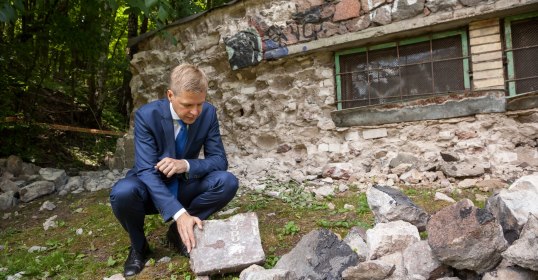
Vilnius mayor Remigijus Šimašius is keeping his promise: now that the centralized hearing season is over, work has begun to remove part of an electric transformer station whose construction during the Soviet era employed stones from Jewish graves. The mayor today surveyed the work to disassemble the electric substation on Olandų street. After consulting with the Lithuanian Jewish Community, the decision was made to remove the headstone fragments to the site on Olandų street where a Jewish cemetery memorial is being constructed.

It’s clear that 26 years after the declaration of Lithuanian independence, it has long been time to get rid of such symbols of disrespect for our history. Today the Jewish headstones are being removed from the substation and will be used for a Jewish cemetery memorial on Olandų street. We consulted with the Lithuanian Jewish Community on how to return the fragments of gravestones in the most honorable manner, showing due respect to the memory of the dead,” Vilnius mayor Šimašius said.

Full story in Lithuanian here.

Jewish Gravestones Removed from Electric Substation

Iš elektros pastotės išimami žydų antkapių akmenys

VILNIUS, June 22, BNS–This week removal began of fragments of Jewish headstones used in the construction of an electric substation in Vilnius. The fragments will be removed to the Jewish cemetery on Olandų street to be used in a Jewish cemetery memorial to be erected there, the municipality informed BNS. “Currently work is underway to remove stones set in different walls,” Kęstutis Karosas, acting director of the city’s Heating and Water Department said. The plan is to remove all the stones by September 1.

The cost to the municipality is unknown so far. Karosas said payment will be made for work done. The electric substation on Olandų street was constructed during the Soviet period using headstones from the Jewish cemetery there. Jewish headstones, especially from the cemetery on Olandų street, were used all over Vilnius for construction during the Soviet era.

Archaeologists Dig at Vilnius Great Synagogue

Vilniaus Didžioji sinagoga žydams buvo svarbi, kaip katalikams Vatikanas

VILNIUS, June 21, BNS–A team of experts from the United Kingdom, Canada, Israel and Lithuania is starting to investigate the remains of the Great Synagogue of Vilnius and other buried buildings.

An international team of archaeologists using non-invasive geophysical techniques plans to investigate the remnants of a mikvah buried 2 meters below the surface under a school built by the Soviet regime after 1960.

“Our geophysical studies can map below the street without destroying any infrastructure and then to identify exactly where to dig, map and retrieve artifacts to understand the historical context,” one researcher said.

350-Year-Old Torah Scroll Returns to Vilnius

350 m. skaičiuojatis toros ritinys grįžta į Vilniaus choralinę sinagogą

The Vilnius Jewish Religious Community cordially invites you to celebrate this extraordinary event, the return of the Torah scroll, at the Vilnius Choral Synagogue.

This 350-year-old Torah scroll, which survived the destruction of the Vilnius ghetto during World War II and was taken out of the country to protect it, is finally coming home.

The ceremony of bringing in the Torah is to take place at 1:00 P.M. on Monday, June 27, at the Choral Synagogue in Vilnius.

The Vilnius Jewish Community is tremendously grateful to Judah Passow for his initiative in returning the Torah scroll. The family of London-based photojournalist Judah Passow safeguarded the Torah scroll for 56 years after it left Vilnius. The ceremony will feature a short presentation of the history of the Torah and what this most important book means.

Presentation of Archaeological Finds from Ponar and Great Synagogue in Vilnius

Participating: professor Richard Freund (Hartford University) and Dr. Jon Seligman (Israel Antiquities Authority, Jerusalem)

This team of renowned investigators began work on the Ponar mass murder site near Vilnius in early June. Using non-invasive archaeological methods, they examined a large portion of the site of the largest mass murder in Lithuania.

The archaeologists focused on the tunnel excavated by burners’ brigade and other items of high interest according the museum specialists. A film crew travelled with professor Freund to Lithuania and plan to release a documentary called Lost Vilnius.

The Israeli-American duo also looked at the site of the former Great Synagogue in Vilnius.

The Tolerance Center of the Vilna Gaon State Jewish Museum will host their presentation of their findings June 22. The public is invited to attend. The event will be held in Lithuanian and English. The Tolerance Center is located at Naugarduko street no. 10, Vilnius.

Chairwoman Faina Kukliansky’s Speech at the Lithuanian Parliament at Commemoration of the Day of Mourning and Hope and the Day of Occupation and Genocide

LŽB pirmininkės Fainos Kukliansky kalba Lietuvos Respublikos Seime, minėjime, skirtame Gedulo ir vilties bei Okupacijos ir genocido dienoms atminti

Over the entirety of Lithuania’s 25 years of independence the Lithuanian Jewish Community hasn’t had the opportunity to share our thoughts publicly during the marking of the Day of Mourning and Hope at the Parliament of the Republic of Lithuania. Seventy-five years have passed since the beginning of the mass deportations of Lithuanian citizens. For the Jewish people, who suffered prophetic exile from the times of the Assyrians, Babylonians and Romans, the experience of exile could be considered part of our historical identity. Seventy-five years ago about one precent of the Lithuanian Jewish community at that time were deported, and as a percentage represent the largest group to be deported from Lithuania. State repression did not put an end to Jewish identity: Zionist organizations operated underground, there was a Hebrew educational system, and all sorts of measures were employed to enable members of the Jewish community to leave for Palestine.

According to Jewish historiography, during the deportations of June, 1941, alone about 3,000 Jews were deported, including Jewish activists from the left and right side of the political spectrum and owners of large industrial enterprises and factories, with about 7,000 people being deported in total during the first year of Soviet rule. On the eve of the first Soviet occupation the majority of Lithuanian Jews were involved in different cultural, social and political organizations and associations. The tradition of Zionism, however, has always been especially strong in the Lithuanian Jewish community; in Lithuania between the two world wars members of the Jewish conservative cultural orientation were the most active and influential, and spoke out for the creation of an independent Jewish nation-state in Palestine. In this regard the confrontation with the Soviet system was especially vivid.

Solomon Atamuk reports there 16 Jewish daily newspapers, 30 weeklies and 13 non-periodical publications as well as 20 collections of literature being published in Lithuania before World War II. After the June 14, 1940 ultimatum to Lithuania and the consequent occupation the Jewish community soon experienced social and cultural repression. All newspapers, belong both to organizations on the Jewish political left and the right, were shut down. Even the Folksblat newspaper, popular with Communists and issued by the Jewish People’s Party, was closed.